説明
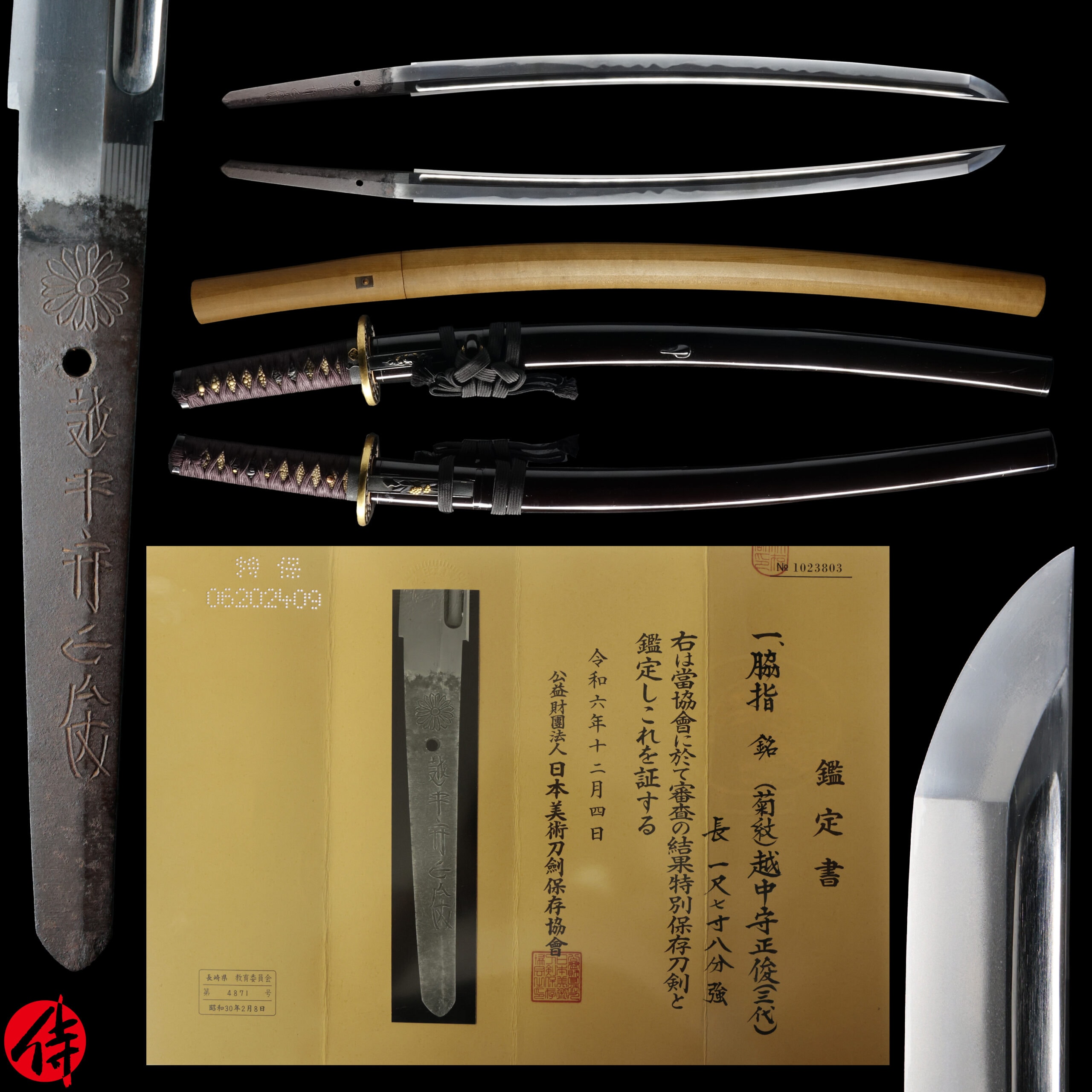
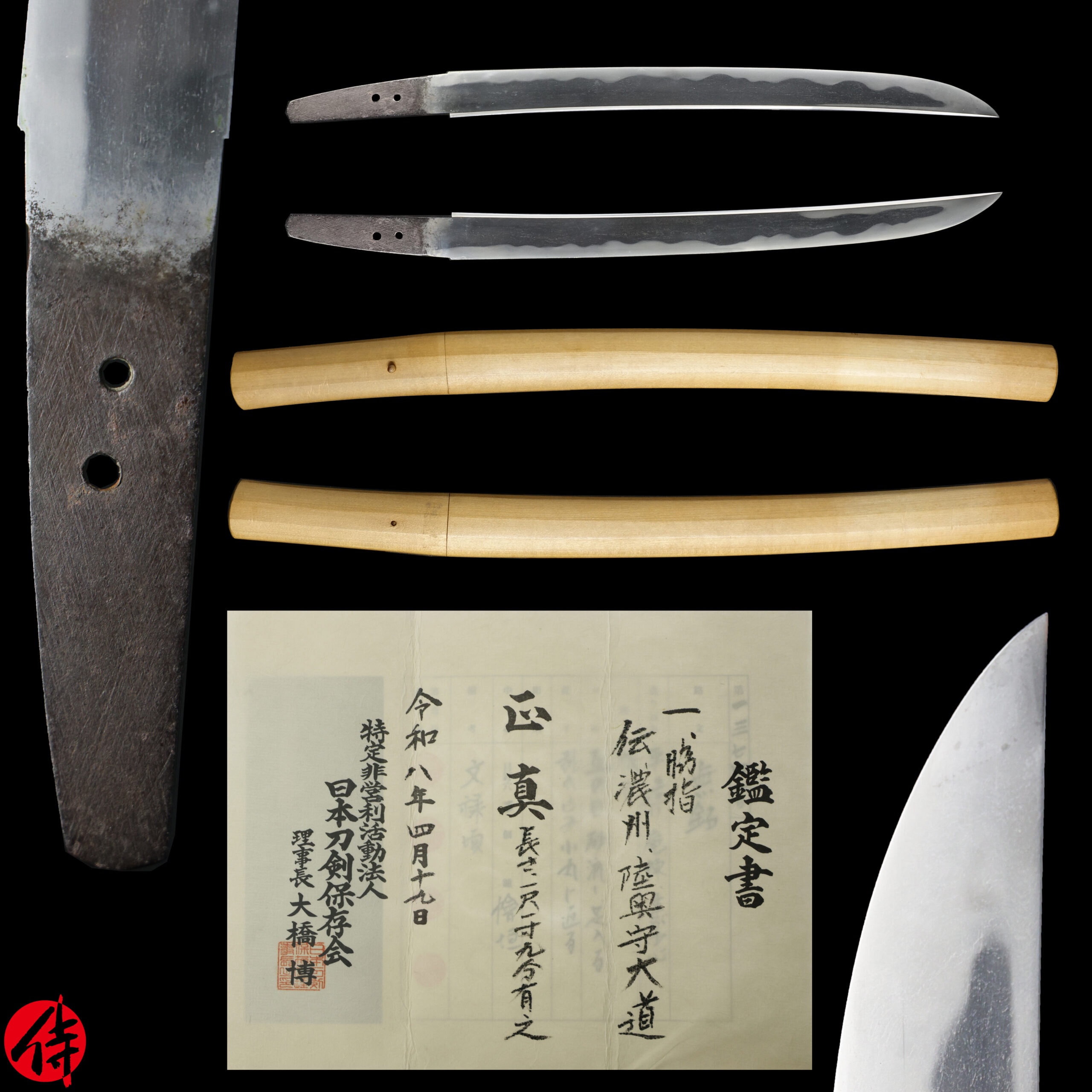
Antique Japanese Sword Wakizashi Signed by the third-gen Masatoshi with NBTHK Tokubetsu Hozon Certificate
【Description】
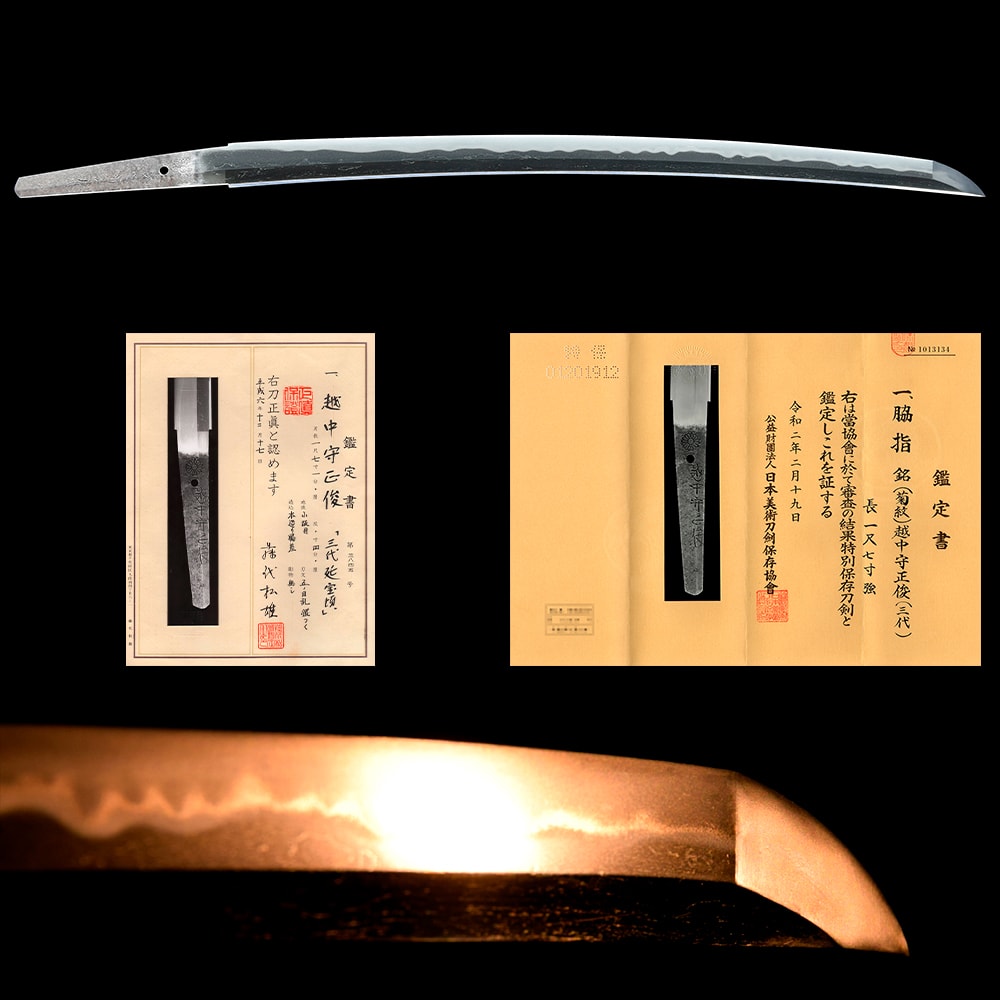
This blade was signed by the third-gen Etchu no Kami Fujiwara Masatoshi (三代越中守藤原正俊) . The maker’s name, Masatoshi, lasted four generations. Based on the characteristic of this blade, including the signature, NBTHK concluded that it was made by the third-gen, who was active during 1673-1688. The first-gen Masatoshi was the fourth son of Seki Kanemichi(関兼道). The generations of Masatoshi belonged to Mishina (三品) school and received an honorable official title of Etchu no Kami in their career. The firs-gen was especially active during 1600-1624.
The founder of Mishina School
Seki Kanemichi was originally from Mino province, exclusively forging blades for Shingen Takeda, a famous feudal lord. In 1593, he moved to Kyoto in 1593 by bringing his four sons, Iga no Kami Kinmichi(伊賀守金道)、Izumi no Kami Rai Kinmichi(和泉守来金道), Tanba no Kami Yoshimichi(丹波守吉道) and
Echu no kami Masatoshi(越中守正俊)
. Seki Kanemichi established Mishina school in Kyoto, one of the most prestigious schools in the early Edo period.
The first-gen Etchu no Kami Masatoshi was known as Kyoto Gokaji(京都五鍛冶), five prestigious swordsmiths living in Kyoto in the early Edo period. It is said that the first-gen Masatoshi was the most skilled one among other brothers, and his craftsmanship was passed down to his son, the second-gen Masatoshi. The second-gen Masatoshi was allowed to inscribe a chrysanthemum emblem, which is the symbol of the Japanese emperor. His sword-forging technique was so great that the emperor licensed him to use this emblem, which was quite honorable for any swordsmiths. The third-gen was also allowed to inscribe this emblem.
It is appraised as a
Tokubetsu Hozon Token
(特別保存刀剣) issued by NBTHK (Nihon Bijutsu Touken Hozon Kyokai: 日本美術刀剣保存協会). This authentication paper was only given to authentic Japanese swords, especially well preserved and high quality with artistic value.
*Please keep in mind that there are a couple of Kitae Kizu on this blade. If you like to know the detailed condition, please feel free to contact us.
【Blade】
Cutting Edge Length (Nagasa)
:
53.9
cm (21.2inches)
Curvature (Sori)
:
1.51 cm (0.59 inches)
Hamon
:
The crystalline structure which forms along the cutting edge of a blade as a result of the hardening process.
Jimon(Jihada)
:
visible steel surface pattern created by folding and hammering during forging process
Kissaki
:
Kissaki is the tip of the Japanese sword.
Nakago
:
Nakago is the tang of the Japanese sword.
Japanese swordsmiths left the black rust on the tang because it prevents red rust while the tang is in its handle. And the discoloration of the tang was created over time, and it is a great indicator for a Japanese sword specialist to estimate when the sword was forged.
This blade has this chrysanthemum emblem. The third-gen was allowed to inscribe a chrysanthemum emblem(菊花紋章, Kikka-monsho), which is the symbol of the Japanese emperor. Their sword forging technique was so great that the emperor permitted him to use this emblem, which was honorable for any swordsmith.
Koshirae
:
Koshirae is the mounting of the Japanese sword. There are several parts that consist of Koshirae such as Saya (Scabbard), Tsuka (Handle), Tsuba (Handguard).
Fuchi-Kashira
:
A pair of matching sword fittings that cover the upper and bottom parts of its sword hilt.
Tsuka and Menuki
:
Tsuka is the handle of the Japanese sword and Menuki is its decoration.
It appears the theme of this Menuki is wild goose (雁: Kari). You can check the symbolism of Kari from the description of the Tsuba.
Tsuba and Habaki
:
Tsuba is the handguard for the Japanese Sword and Habaki is the equipment to make the blade not touch its scabbard inside. It prevents the blade from getting rusty and chipped.
This tsuba features an intricate openwork design of wild goose (雁, Kari).
The wild goose is a migratory bird that represents fall. Its pattern is also called “Kari