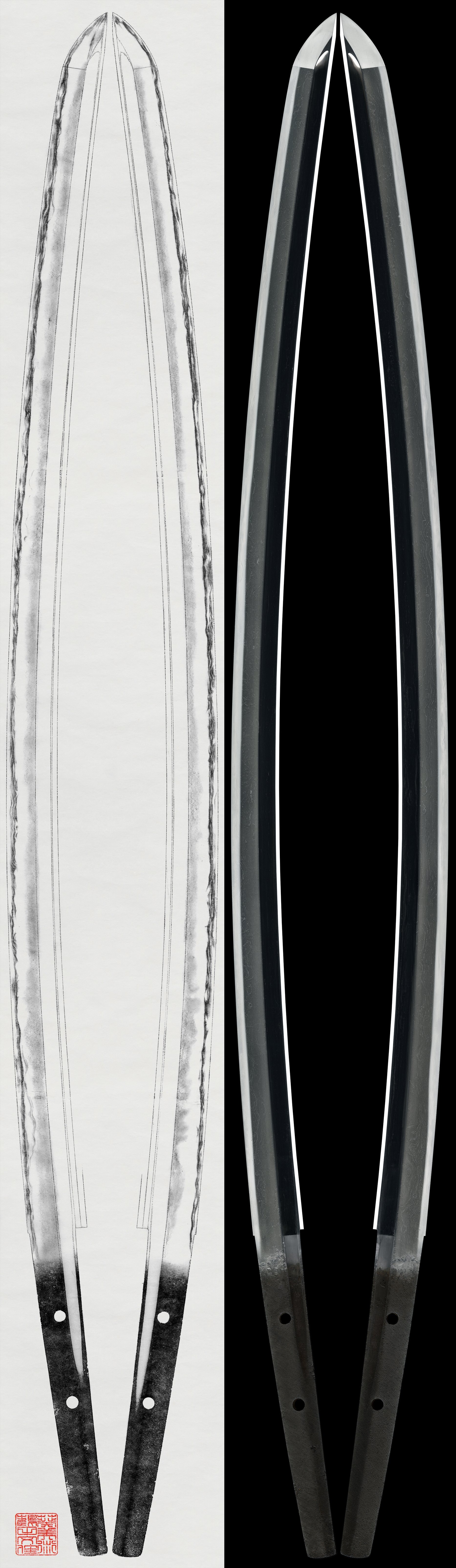
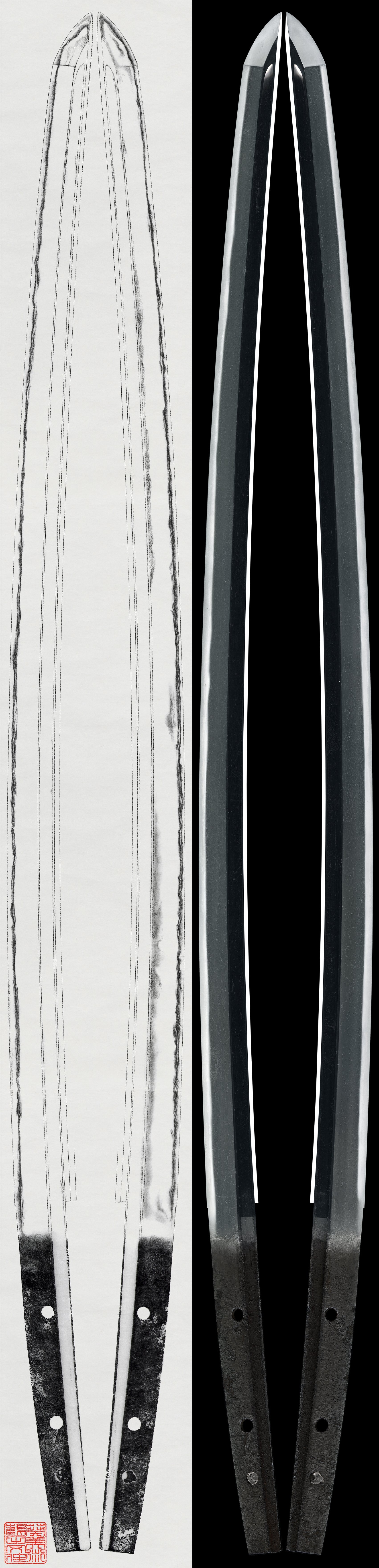
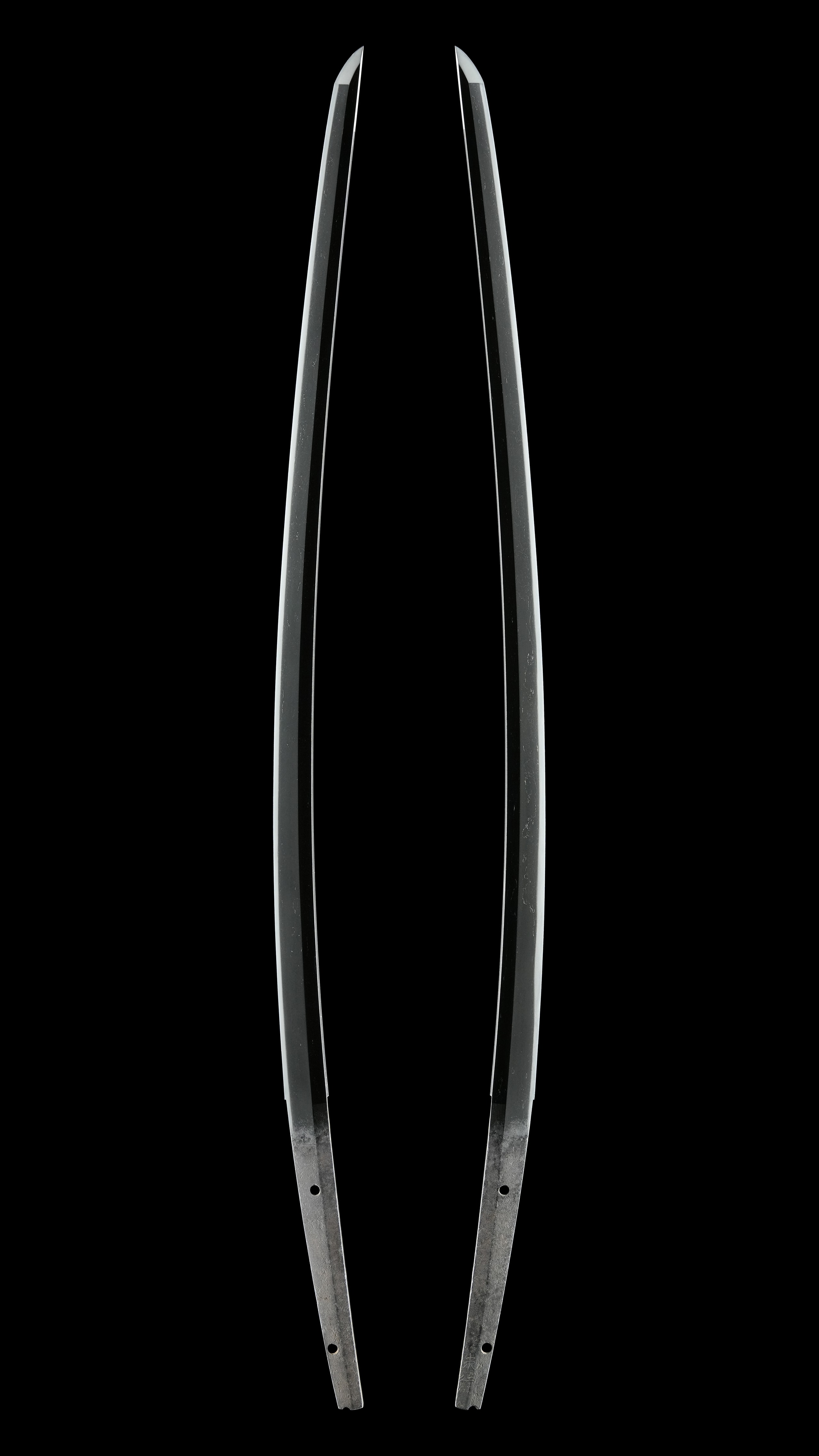
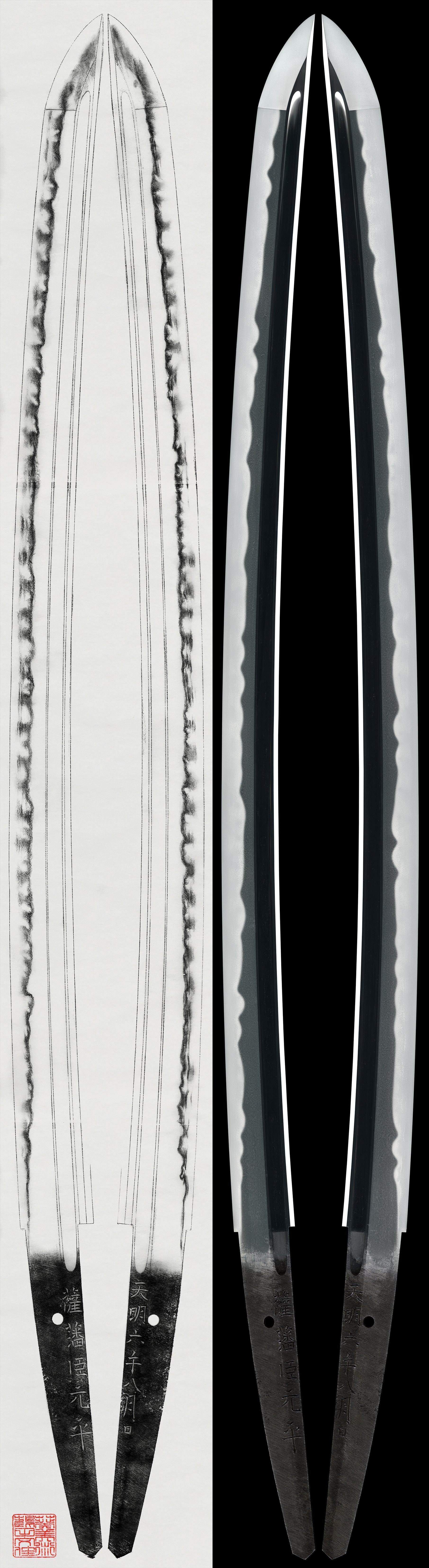
Kuniyuki is regarded as the founding master of the Taima school, one of the five great traditions of Yamato Province, and his activity is placed in the late Kamakura period. While sword compendia list many smiths of this group, extant signed works are exceedingly few; only a small number survive bearing signatures by Kuniyuki and Aritoshi, and most examples are mumei pieces identified through appraisal. The school flourished from the late Kamakura period through the Nanbokucho era, producing blades that embody the essential character of the Yamato tradition.
The construction of Kuniyuki's surviving works displays the hallmarks of Yamato craftsmanship with pronounced clarity. Wide shinogi-ji and a high shinogi-suji plainly manifest the tradition's structural principles, while the jihada — itame-hada mixed with mokume or masame — is consistently well-forged from base to tip. The hamon is characteristically suguha-based, with hotsure appearing along the habuchi, sunagashi and kinsuji intermingling to produce lively activity, and the boshi tending toward hakikake ending in yakizume — features the NBTHK identifies as "Yamato's traditional method." In certain works, a somewhat rough nie is mixed into the temper, introducing what the NBTHK describes as "an element of Soshu temperament," a quality consistent with the older attributions by the Hon'ami family for blades of this group.
Despite the rarity of signed examples, the designated works confirm Kuniyuki as a smith of genuine accomplishment. A tachi retaining a two-character signature following suriage is praised as displaying his characteristic features "conspicuously" and is described as "an excellent work." The ji and ha across his corpus are noted for being "bright and clear," with chikei and kinsuji interweaving to give the steel a vibrant quality. These qualities affirm the Taima school's standing among the five Yamato traditions and Kuniyuki's role as its defining voice.