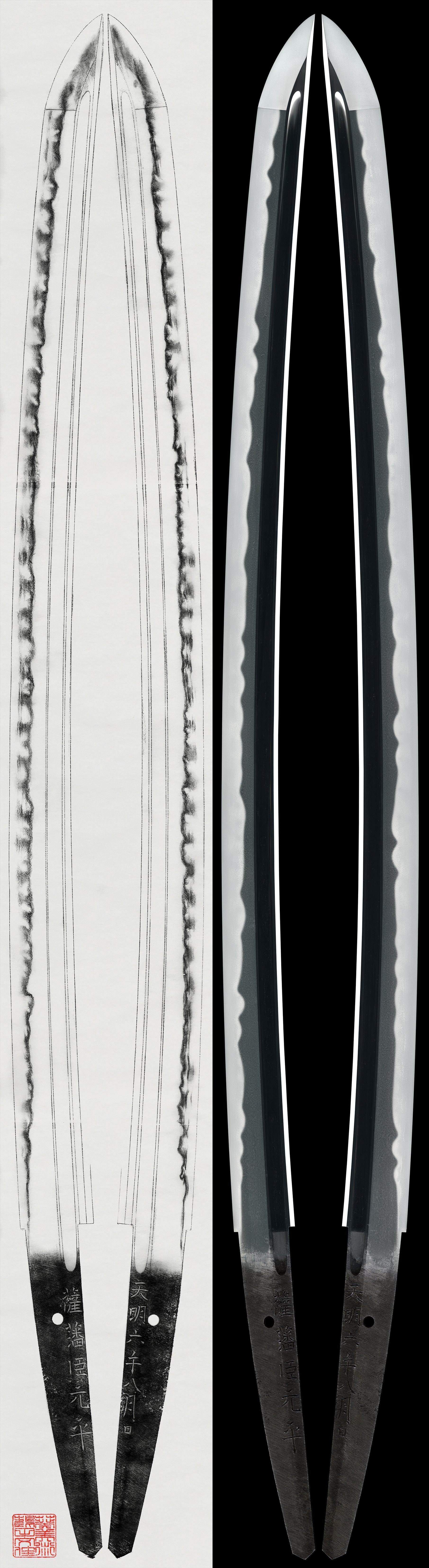
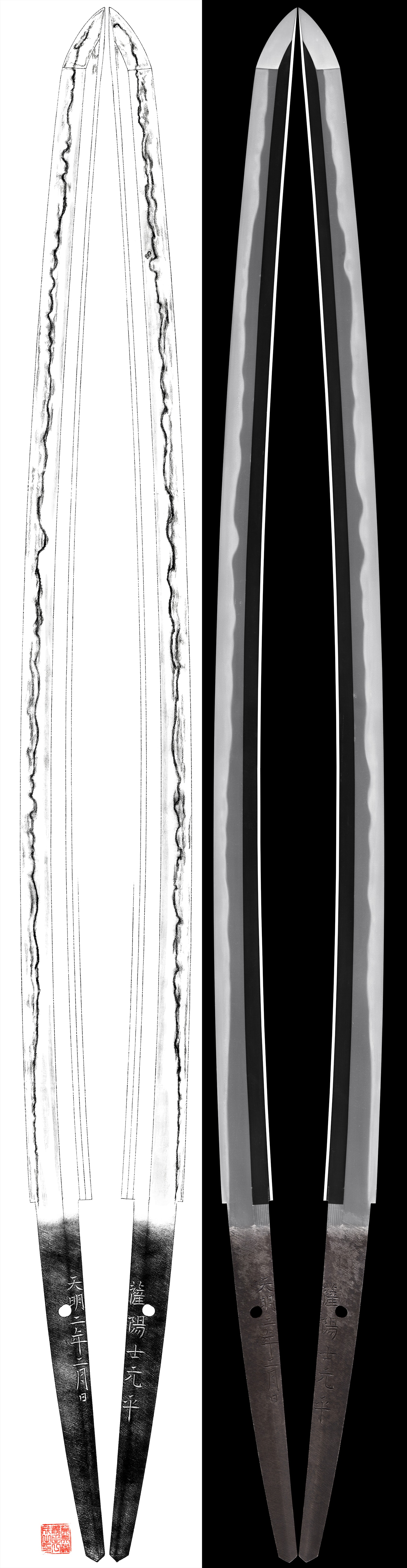
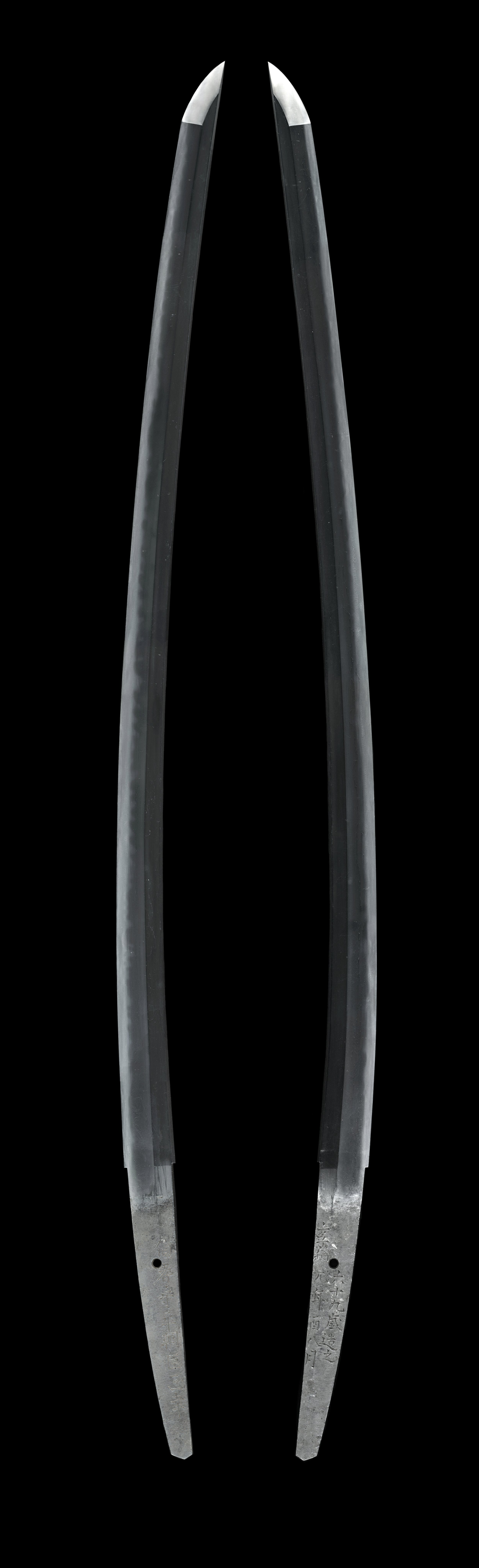
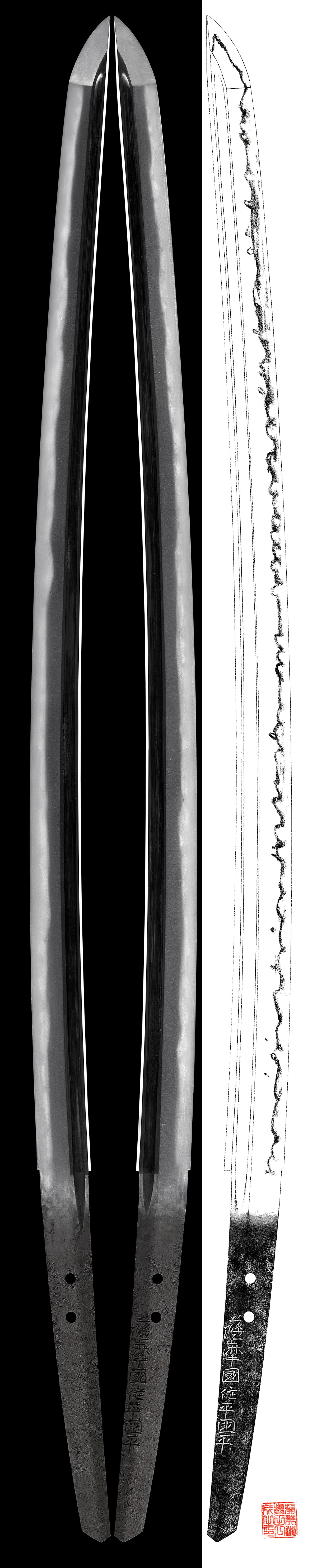
Mondo-no-Sho Masakiyo is said to have been born in 10 (1670) at Izumi-go in Satsuma, common name Miyahara Seiemon, also called Kakudayu. He learned forging from the Satsuma domain smith Maruta Sozaemon Masafusa, first signing Kiyomitsu and later changing the name to Masakiyo. In the first month of Kyoho 6 (1721) he was summoned together with his townsman Ippei Yasuyo by the eighth shogun Tokugawa Yoshimune to forge in , and his skill was such that the bakufu granted him the right to cut the single-leaf hollyhock crest of the Tokugawa on his tang. On his return journey the Imperial Court raised him to the title Mondo-no-Sho. He died in Kyoho 15 (1730) at sixty-one. The published sources frame him by a single pairing they return to whenever they place him: with Yasuyo he is, in their words, one of "the twin pillars of Satsuma ", and where Yasuyo often tempered a calm -toned , Masakiyo tempered the varied, vigorous that became the recognized hand of the school.
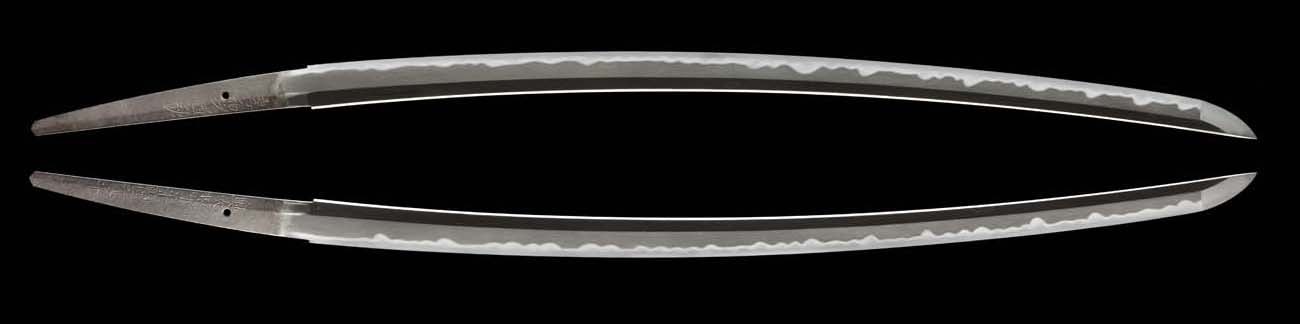
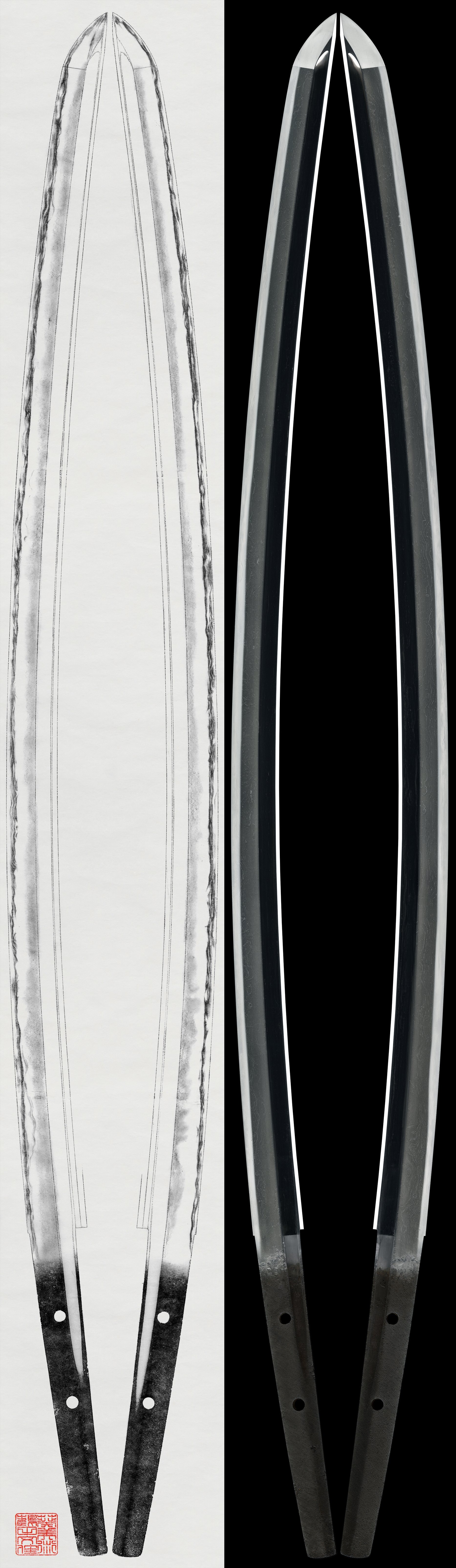
His characteristic work is the - the published sources say he handled with greatest mastery, modelled on the old manner. Over a strongly forged he tempers a into which he sets , and pointed , the temper deep in and the thick and strong with coarse mixed in. Through the run long, frequent and with , the streaming -lines of a Satsuma hand, and and enter well. The pointed teeth set into the undulating are the spine of his recognition, the feature that separates his varied from the level of his fellow pillar. The sources name the manner plainly as "the -style working range that he most excelled in", and on his finest blades they say the result comes near old superior work.
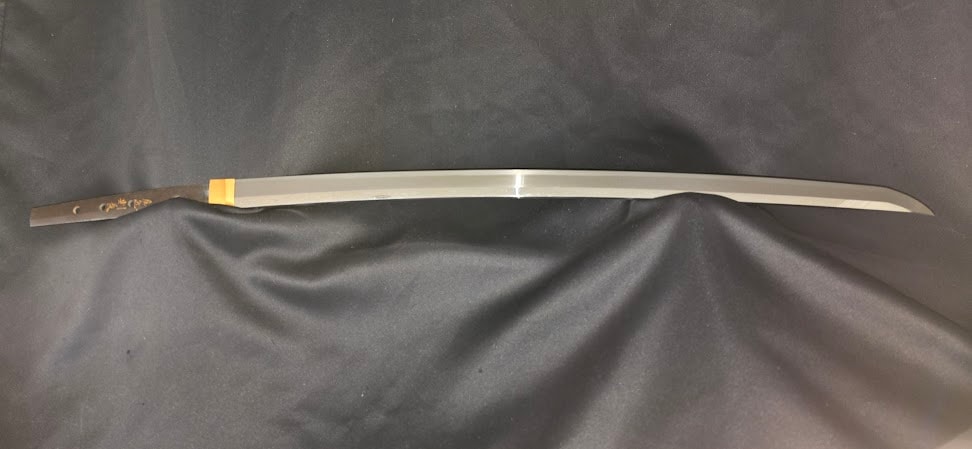
The beneath is the constant. It is a well-forged that overall flows strongly and turns -inclined, at times a tighter mixed with , carrying thick with coarse mixed and vigorous the sources liken to a distinctive metallic figuring. The steel is -prone precisely because the model asks for it, and the long ride that flowing grain into the , which runs in or to a pointed return, swept with and turning back deeply. The is bright and clear and only here and there a little uneven. His body is the grand Satsuma form, extremely wide in with thick and ample , an extended and a sense of , and the published commentary calls such a blade bold, heroic and robust, with the feeling of a decisive downward cut.
There is a second feature the judges single out as a recognition point and read as antique. Especially in the upper half, at the crests of the temper, vigorous gather and present an appearance like , the double temper-line of old work, while long and run through and accompanies them. The sources name it directly, writing that "the manner in which are vigorously applied at the crests of the temper to produce a -like appearance conveys an impression of antique flavor". This is not a separate manner but the upper reach of his characteristic hand, the -activity pushed to its fullest over the flowing . His tang carries its own constant: almost always , tapering to an or sword-shaped tip with shallow file marks, the large long signature cut boldly, and on the blades made before the shogun a single-leaf hollyhock crest with a date. The published sources also caution the collector that in his later years many surviving blades were made as by his son Masachika and his pupil Masamori, so a late Masakiyo signature is read against that workshop.
What sets him within his province is exactly the pairing the judges name and the manner they keep returning to. He is read first against his elder townsman Yasuyo, the two held together as the twin pillars of Satsuma , and the distinction is precise: Yasuyo is the calm -toned , Masakiyo the varied -style with its pointed , its coarse and its long running . His own bright deep- , his gathering and the of antique flavor are the grounded traits that mark him out, not a borrowed comparison, and the published sources go so far as to say his best work can be mistaken "for old superior blades". He stands at the head of the Ichinohira-allied Satsuma masters, the hand by which a varied -style Satsuma blade of his generation is read.
For the collector he is one of the great names of Satsuma , and his work survives almost wholly and signed. He has no National Treasures and no Important Cultural Properties; his record on the modern designation tiers runs through the and ranks, where twenty-three of his works are held, several dated and many carrying the hollyhock crest granted before the shogun. His provenance reaches the highest houses of his age: his masterpiece and , presented together with a blade by Yasuyo by the Satsuma lord Shimazu Tsuguhisa to Konoe Iehisa, Minister of the Left, who treasured them so that he sent both smiths gifts of fine silver and a set of poems of the Six Immortal Poets endorsed by court nobles, the documents still surviving; and pieces preserved with the provenance of the Tokugawa shogunal house and the Imperial family. Most designated blades, including those in private hands, are held rather than traded, and a fine signed Masakiyo of his -style - comes to market only from time to time and with patience. His work is, comparatively, among the more findable of the first-rank masters, more so than the locked heritage of the old traditions, but a dated, crest-bearing in his full vigorous manner remains a landmark acquisition, a document of how the Satsuma school reached its early summit.