Moriie worked at in in the mid- period, and from that place he is called Moriie. The published sources keep the lineage deliberately open: the prevailing account places two smiths under the one name, the first contemporary with Mitsutada and the second with Nagamitsu, while noting that a clean division of first and second generations on the carved characters alone is difficult and remains a subject for future study, and that some hold there was only a single Moriie. The earliest dated example bears a Bun'ei 9 (1272) date and the name runs on into the years, so the body of work is broad and a flat reading of one hand is not forced on it.
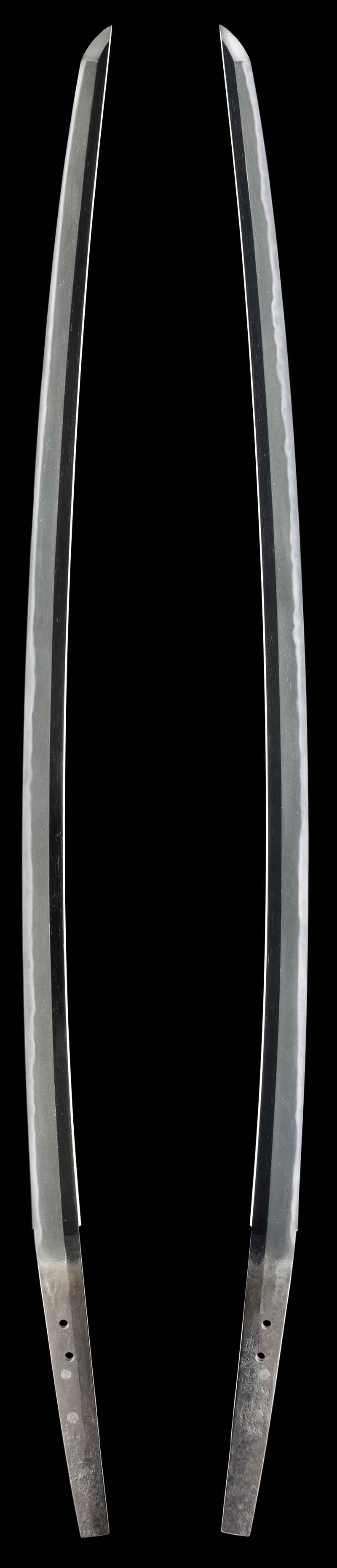
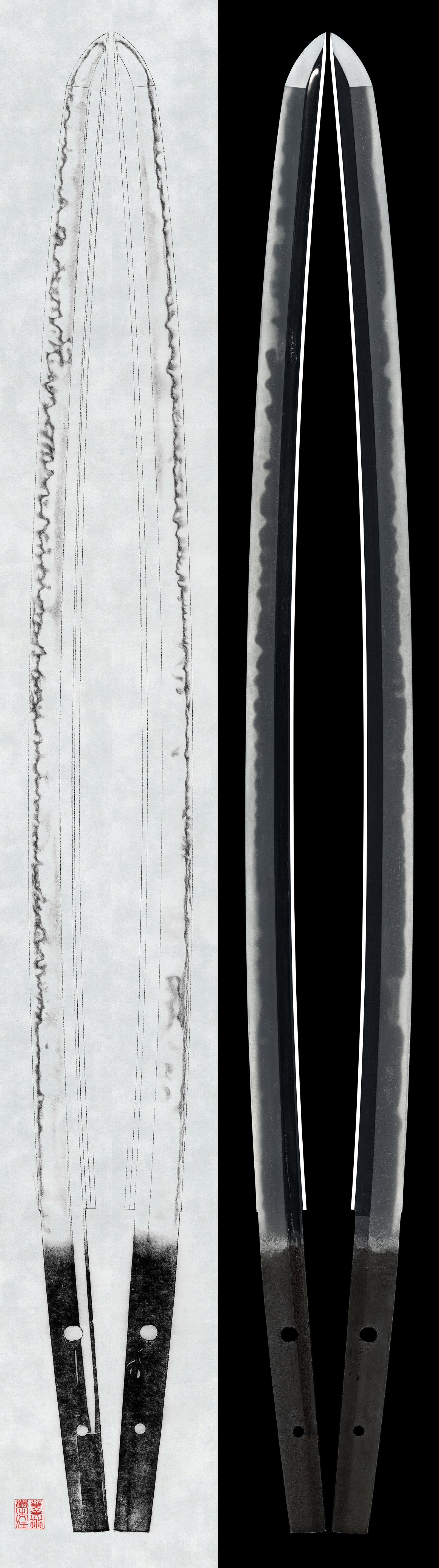
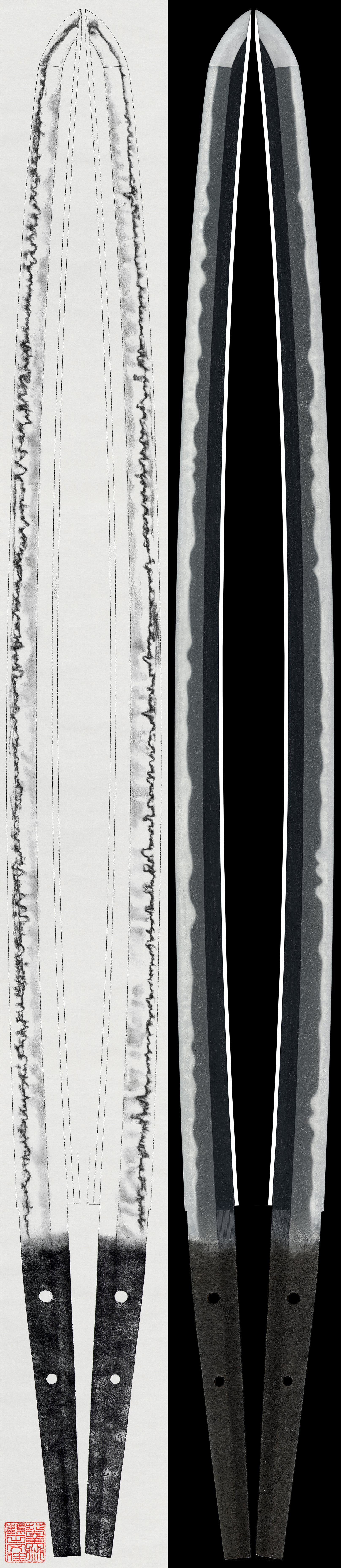
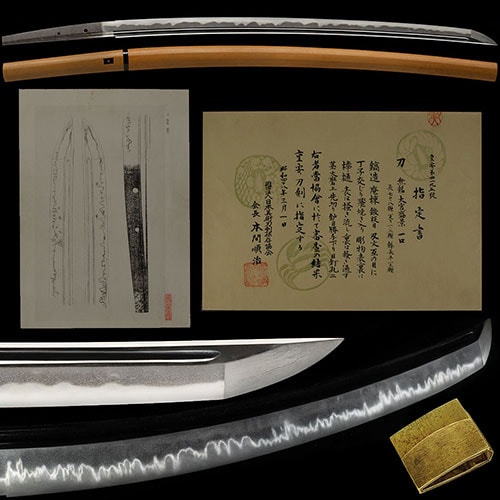
What the sources do fix is the manner. His workmanship sits close to the contemporary smiths, yet is set apart by a that tends to stand and by a temper in which the toad-spawn clove is conspicuous: the recurring phrase is that the stands and the - in the edge is prominent. The forging is , often with and a flowing tendency, the grain standing in places, with fine thickly laid, fine entering, and a vivid (乱れ映り) rising clearly in the . This standing, -lit is the first half of his fingerprint.
The temper is the part that carries his name. His representative construction is described as a clove laden with the waist-pinched toad-spawn form, an undulating, restless edge. Over the standing he forges a large mixed with - (袋丁子) and the - (蛙子丁子), with and entering vigorously, attaching, and appearing about the , fine and running, and a bright . The clove is the single most useful point of recognition: Mitsutada and others touch it, but no contemporary makes it so central, so that a blade thick with toad-spawn clove over a standing, -drawing reads as Moriie almost on that count.
The the older reading flattened to a plain . The corpus is more specific and more varied. It runs and settles into a , but it frequently turns pointed and sweeps out in : one is described as turning back , pointed at the tip, with , and others show with a pointed feeling, or against an that tends to a point. The pointed, brushed turnback is part of the signature, not an exception to it, and it belongs in any honest reading of him.
There is a second register the connoisseur should know. On a group of his later pieces the edge quiets into and over the standing, -lit , a calmer construction the published sources tie to the late- mainline and to Nagamitsu's dated . These pieces matter beyond their quietness: one signed is read as indispensable for substantiating the proposed lineage of Moriie, Morishige and Motoshige, and so the calmer Moriie is a documentary key as much as a stylistic one. Even here his hand shows through, in the strongly standing grain, the frequent and the fine that the calmer work does not carry to the degree.
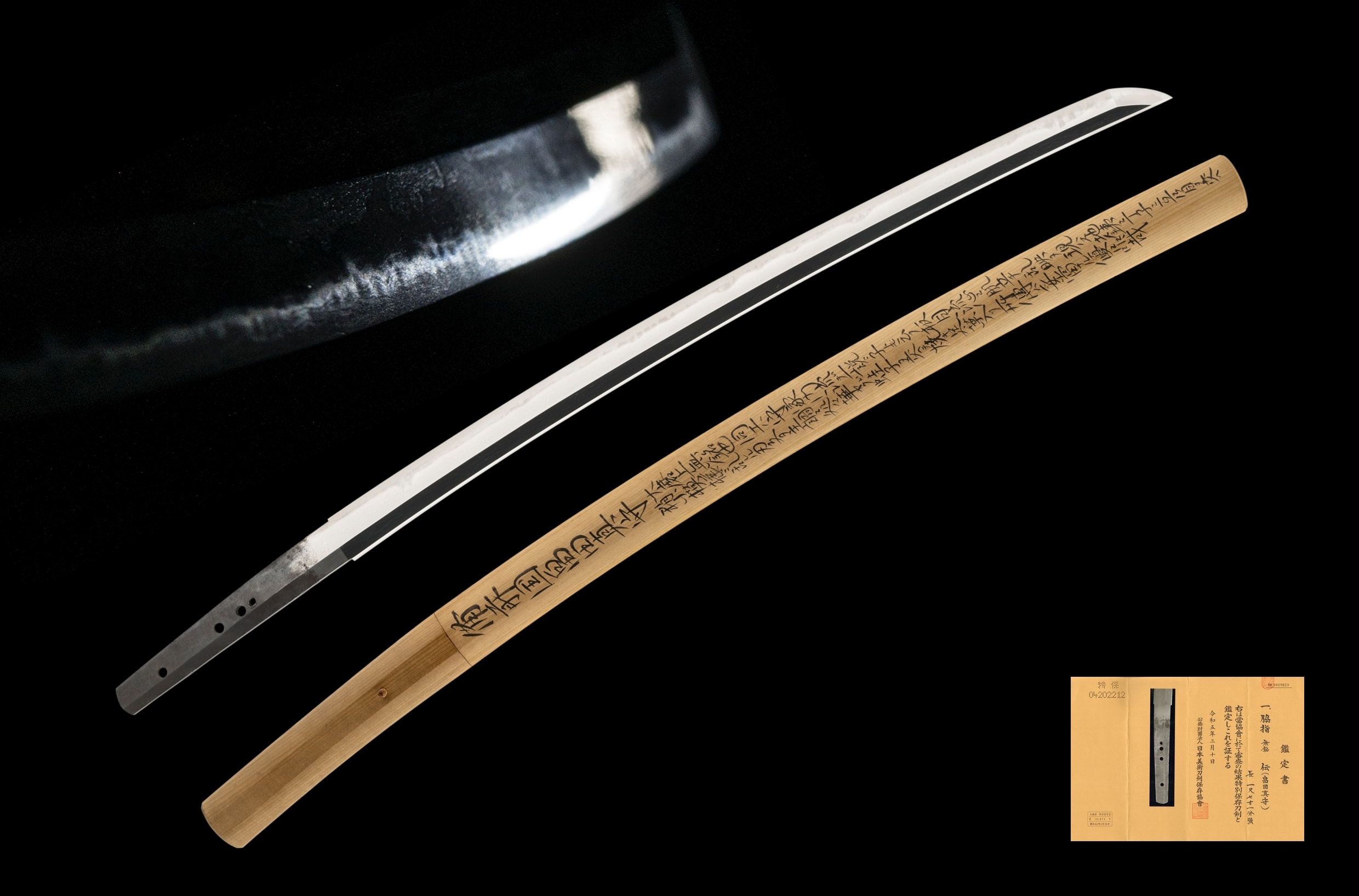
For the collector Moriie is, for a name of his class, comparatively reachable, though the best of him does not move. Fujishiro grades him Jo-jo , and his work runs to Important Art Objects and , held in such collections as the Tokugawa Art Museum and the Seikado Bunko. His blades carry the histories of the great houses: a long-signed reading no ju Moriie was bestowed by Tokugawa Ieyasu on Okudaira Iemasa and descended in the Okudaira family; another passed through Date Munekage; a and a descended in the Yamauchi family of Tosa. His signed are genuinely scarce, noted as a rare surviving example of a by this smith, so the in particular reward patience. A Moriie does appear in public and private hands, and for the collector a standing, -laden of his is a strong acquisition.