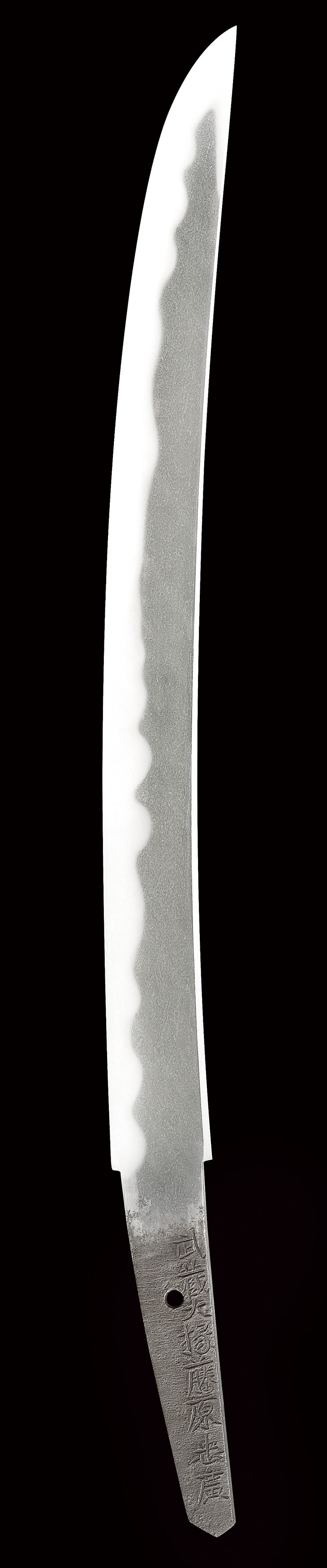
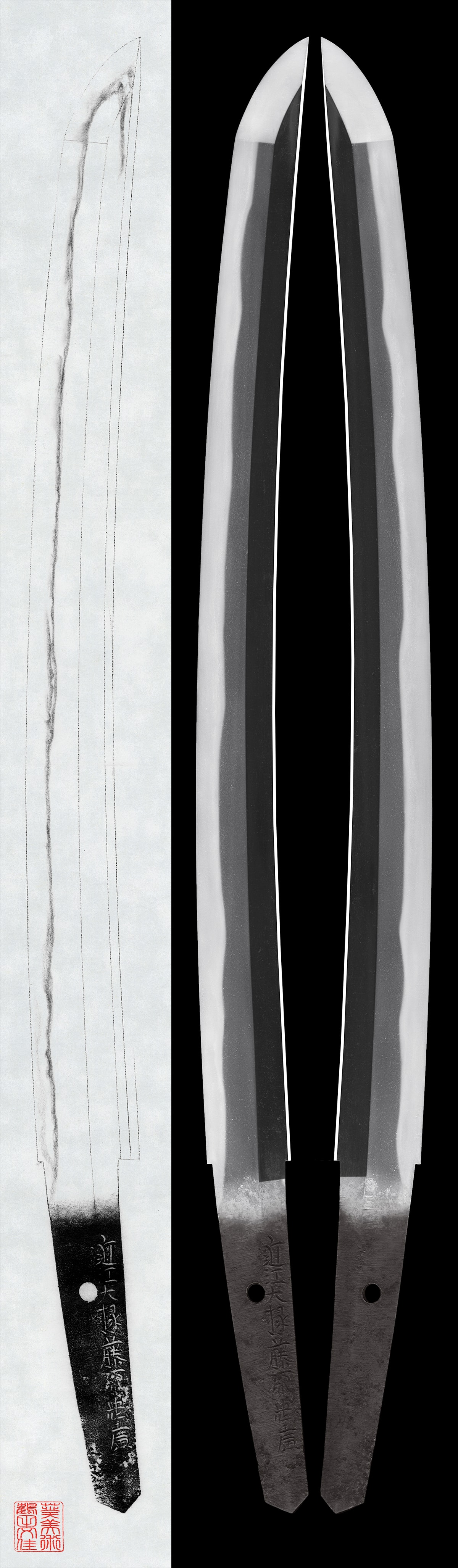
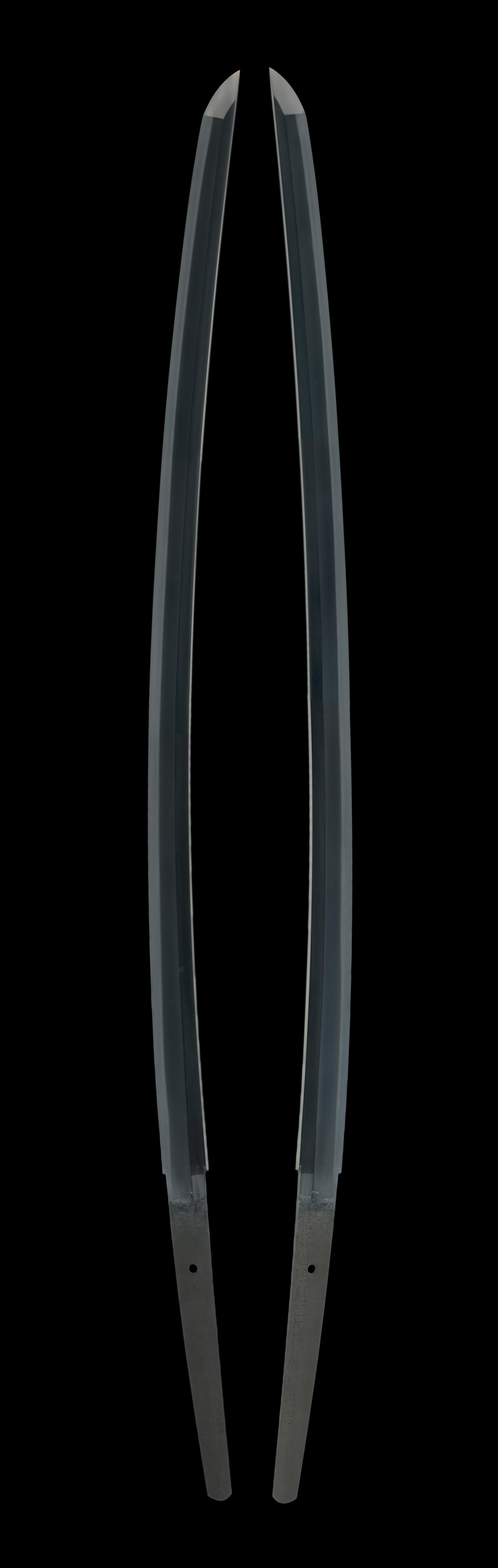
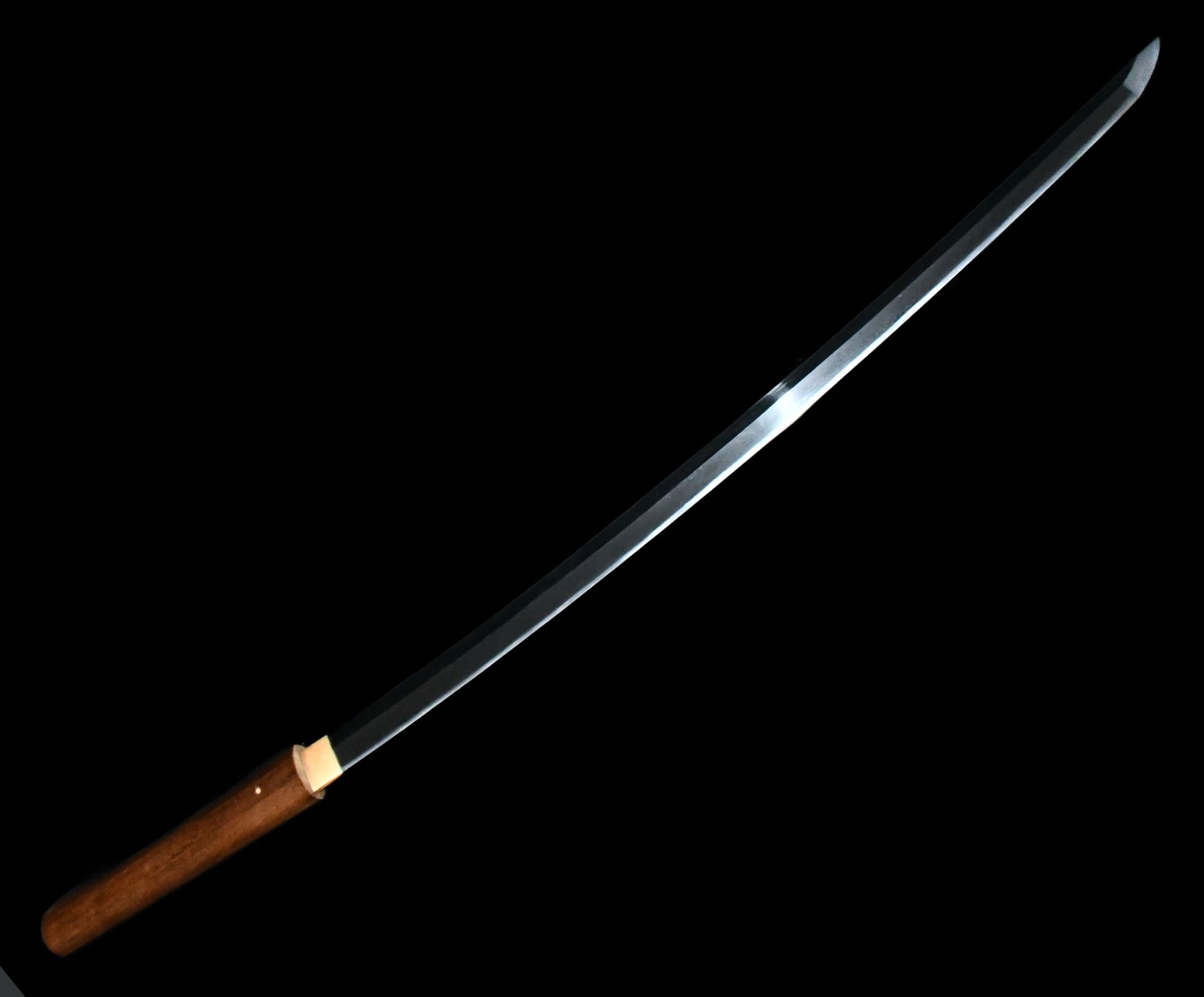
Masanaga was a swordsmith of the school in Province, active during the late period. He is recorded as a student of Nagamitsu, and his dated works span from the Shoan era through Kagen and Enkyo, with a signed bearing the date Enkyo 3 (1310). Most of his signatures appear as the two-character "Masanaga," though examples with a long signature reading " no Junin Masanaga " are also known. It is said that he served as one of the (substitute makers) for his master Nagamitsu, and he was active in the period as Kagemitsu.
The forging of Masanaga's blades is characteristically a tight , well consolidated and showing magnificent standing clearly in the steel. The favors -- typically a with tight , small , and on occasion slight mixed in. The of his retain the classic late proportions, with -zori and . The and tempering are consistently praised as excellent, and the clarity of the is a distinguishing feature that links his work firmly to the mainstream tradition of the Nagamitsu lineage.
Among Masanaga's surviving works, signed and dated examples are of considerable documentary value. He has a relatively substantial body of extant work compared to many of his contemporaries, and works such as the in the Imperial Collection demonstrate his adherence to the refined idiom at its height. One blade bearing the date Shochu 3 (1326) has been singled out as particularly valuable for its documentary significance. His workmanship has been assessed as superior to that of contemporaries such as Kageyori and Yasuhiro, reflecting a smith who faithfully maintained the high standards of the school during its most distinguished era.