 NihontoWatchBETA
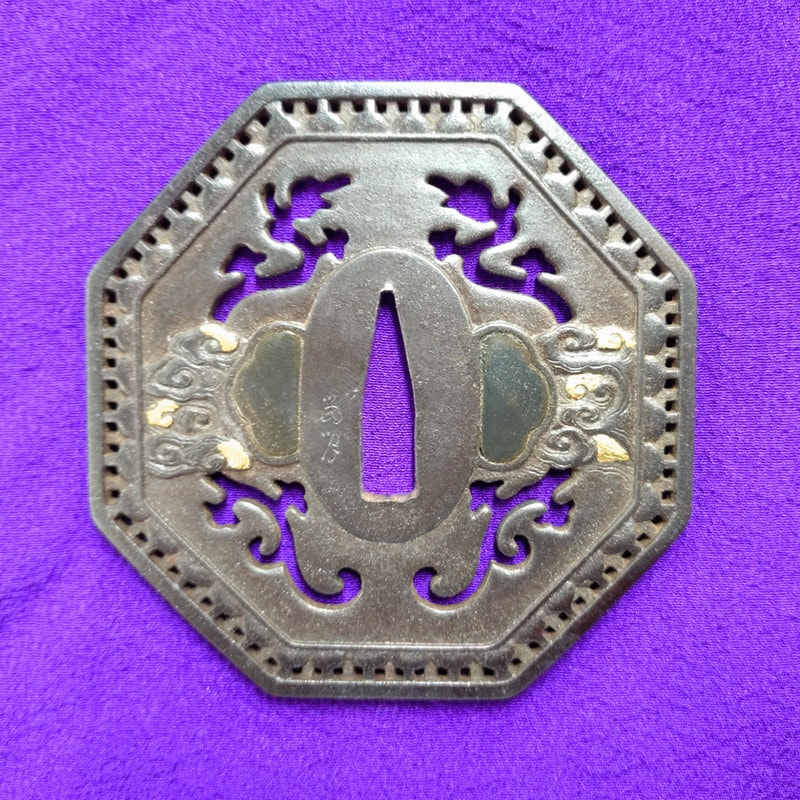
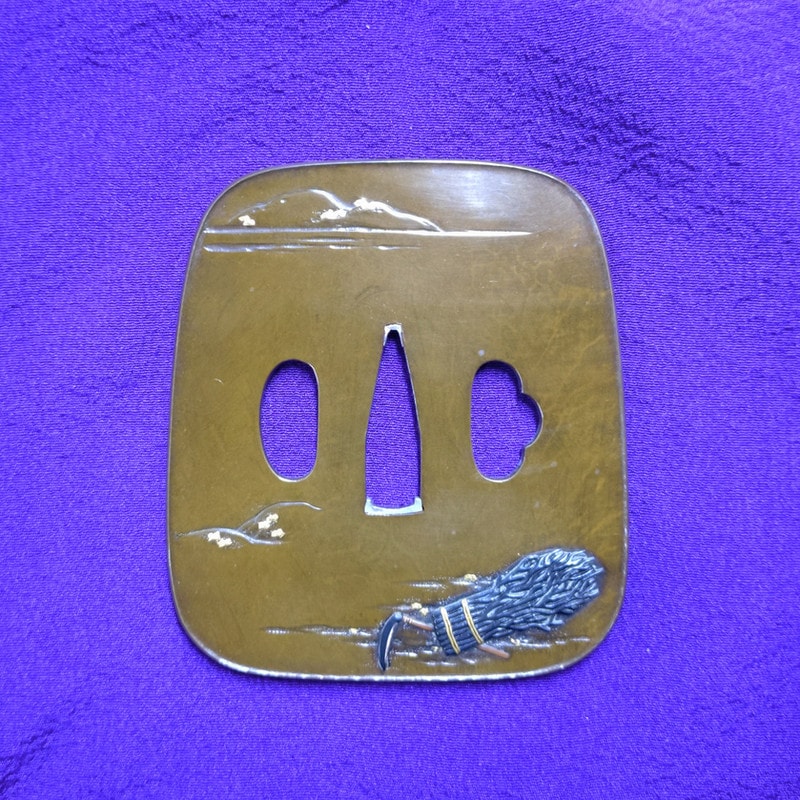
(Mei) Matsushitatei Tomotsune Saku - Momotaro Mukashibanashi-zu Tsuba. It comes with Tokubetsu Hozon Tosogu papers. Vertical × Horizontal: 7.6cm × 6.8cm, Thickness: 0.4cm The ji is a calm-toned cha-shibuichi. On the omote, a scene of brushwood gathering (shibakari) and a sickle against distant mountains is depicted, while the ura features a tub placed by a riverside and the appearance of a slowly flowing river surface, each expressed through katakiri-bori. While the depiction of the mountains provides a grand and relaxed atmosphere, the rendering of the river surface, brushwood, and barrel displays exquisite refinement, marking this as a work by a master craftsman. Matsushitatei Tomotsune: Family name Ogawa. In his later years, he used the go Sho-o and lived until the early Meiji era. He signed as Tomotsune (kao), Matsushitatei Tomotsune Saku, and Naniwa-ju Tomotsune; there is a work dated Keio 2, Year of the Ox. He carved birds, animals, flowers, and figures on shakudo and shibuichi migaki-ji using the takabori iro-e technique. Originally from Matsuyama in Iyo Province. A highly skilled hand. Resided in Kyoto and Osaka. Metal Smith: Tomotsune Matsushitatei Period: The end of Edo Era Place: Kyoto, Osaka Nagasa × Width: 7.6cm × 6.8cm Thickness: 0.4cm Paper: Tokubetsu Hozon (NBTHK issued)
NihontoWatchBETA(Mei) Matsushitatei Tomotsune Saku - Momotaro Mukashibanashi-zu Tsuba. It comes with Tokubetsu Hozon Tosogu papers. Vertical × Horizontal: 7.6cm × 6.8cm, Thickness: 0.4cm The ji is a calm-toned cha-shibuichi. On the omote, a scene of brushwood gathering (shibakari) and a sickle against distant mountains is depicted, while the ura features a tub placed by a riverside and the appearance of a slowly flowing river surface, each expressed through katakiri-bori. While the depiction of the mountains provides a grand and relaxed atmosphere, the rendering of the river surface, brushwood, and barrel displays exquisite refinement, marking this as a work by a master craftsman. Matsushitatei Tomotsune: Family name Ogawa. In his later years, he used the go Sho-o and lived until the early Meiji era. He signed as Tomotsune (kao), Matsushitatei Tomotsune Saku, and Naniwa-ju Tomotsune; there is a work dated Keio 2, Year of the Ox. He carved birds, animals, flowers, and figures on shakudo and shibuichi migaki-ji using the takabori iro-e technique. Originally from Matsuyama in Iyo Province. A highly skilled hand. Resided in Kyoto and Osaka. Metal Smith: Tomotsune Matsushitatei Period: The end of Edo Era Place: Kyoto, Osaka Nagasa × Width: 7.6cm × 6.8cm Thickness: 0.4cm Paper: Tokubetsu Hozon (NBTHK issued)
NihontoWatchBETA