The twentieth century nearly killed the craft twice: wartime distortion, then the occupation ban. The NBTHK’s founding in 1948 and licensed forging from 1953 rebuilt the sword as an art, crowned by Living National Treasures and the mukansa rank.
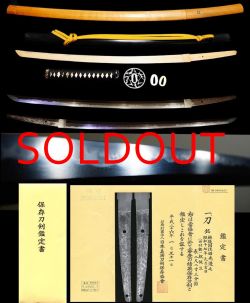
五十嵐昭光は明治38年生まれで栗原彦三郎昭秀の門人であり現代刀匠の暫定位列で貴品の列 最上大業横綱格としています。当刀は本作は豪壮体配でたっぷりと付いた沸、ほつれ絡んで刃中は明るく冴え。働きはに見事でライトにあてない状態でも尋常ではない働きを見ることができ地肌大変よく詰みずば抜けた出来で本工が残す傑作だと云えます。
Akimitsu昭光
Offered by Kusanagi
This piece has sold
Get an email when a new Akimitsu piece hits the market.


As written by the shop
Niigata · around 1926-1989
Tōken Taikan top 100%
1 piece on the market now
Shōwa to the present: destruction and revival
The twentieth century nearly killed the craft twice: wartime distortion, then the occupation ban. The NBTHK’s founding in 1948 and licensed forging from 1953 rebuilt the sword as an art, crowned by Living National Treasures and the mukansa rank.
Certifies a genuine blade worth preserving: a signature confirmed correct, or, if unsigned, an era, province, and school that the NBTHK can reliably identify.
The NBTHK (Nihon Bijutsu Tōken Hozon Kyōkai, the Society for the Preservation of Japanese Art Swords) is a public-interest incorporated foundation founded in 1948 and supervised by Japan’s Agency for Cultural Affairs (Bunkachō); it is based at the Japanese Sword Museum in Tokyo. Its expert panels physically examine each submitted work (shinsa) and issue a certificate (kanteishō) ranking it by artistic and historical merit. NBTHK papers are the most widely recognized standard of authentication for Japanese swords and fittings.
NBTHK official sitePlease notify us of your intention to return, by email or fax, no later than the day after the item's arrival. Return shipping, insurance, and refund transfer fees are the customer's responsibility.