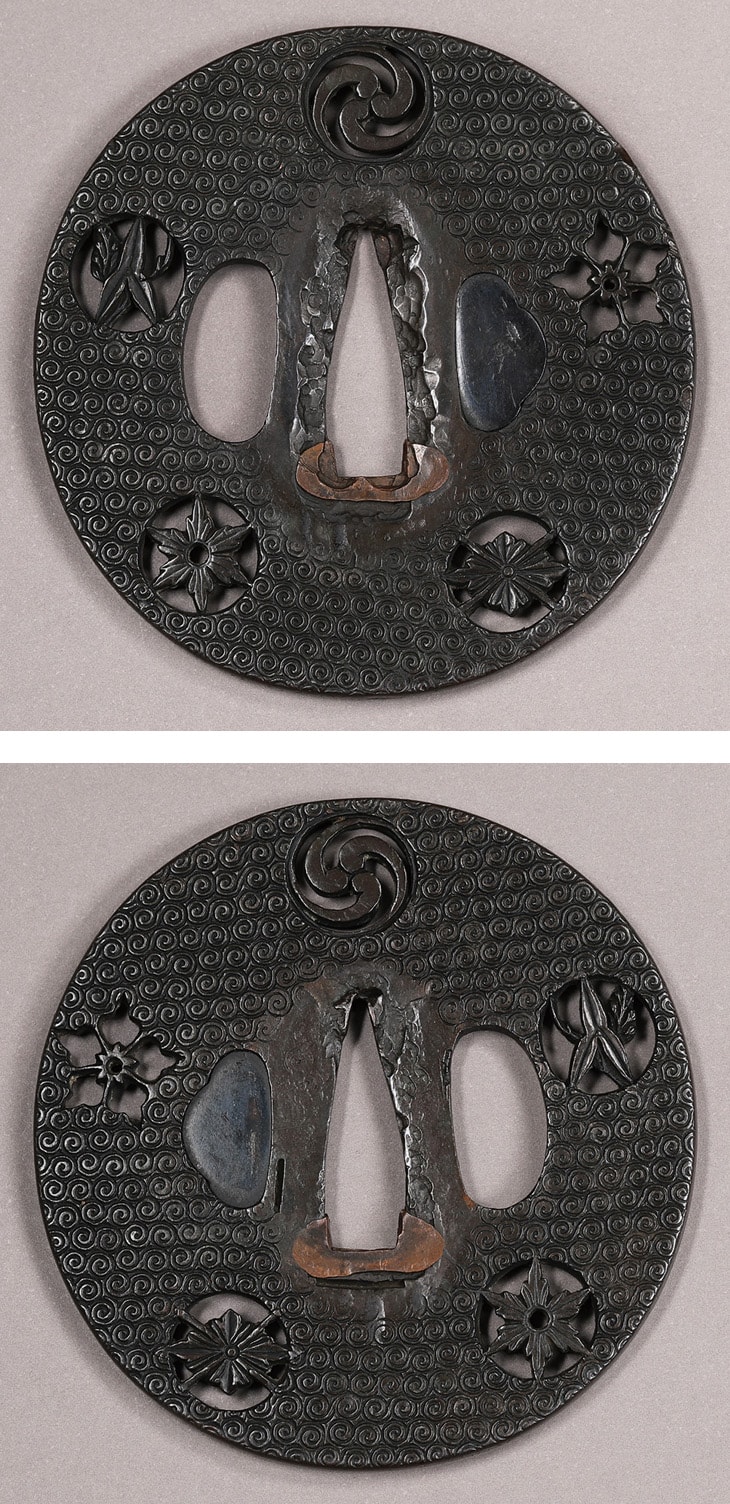
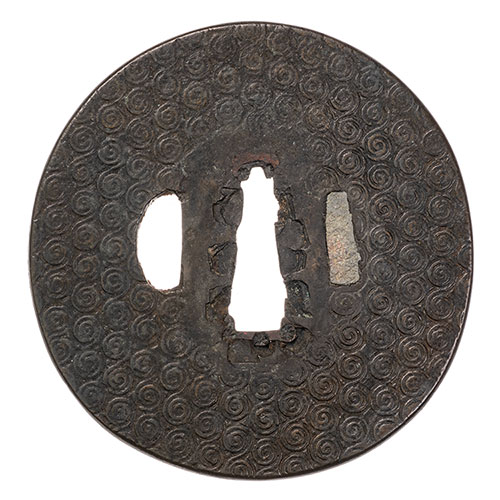
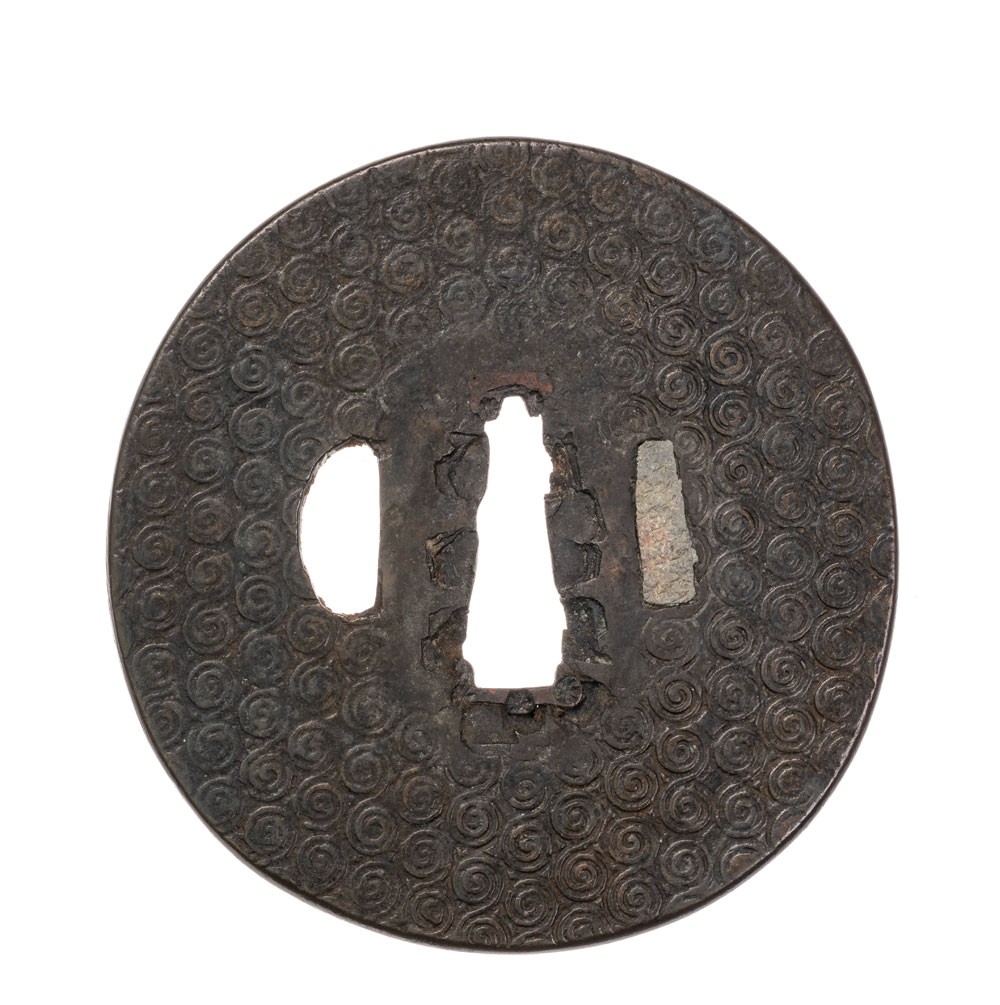
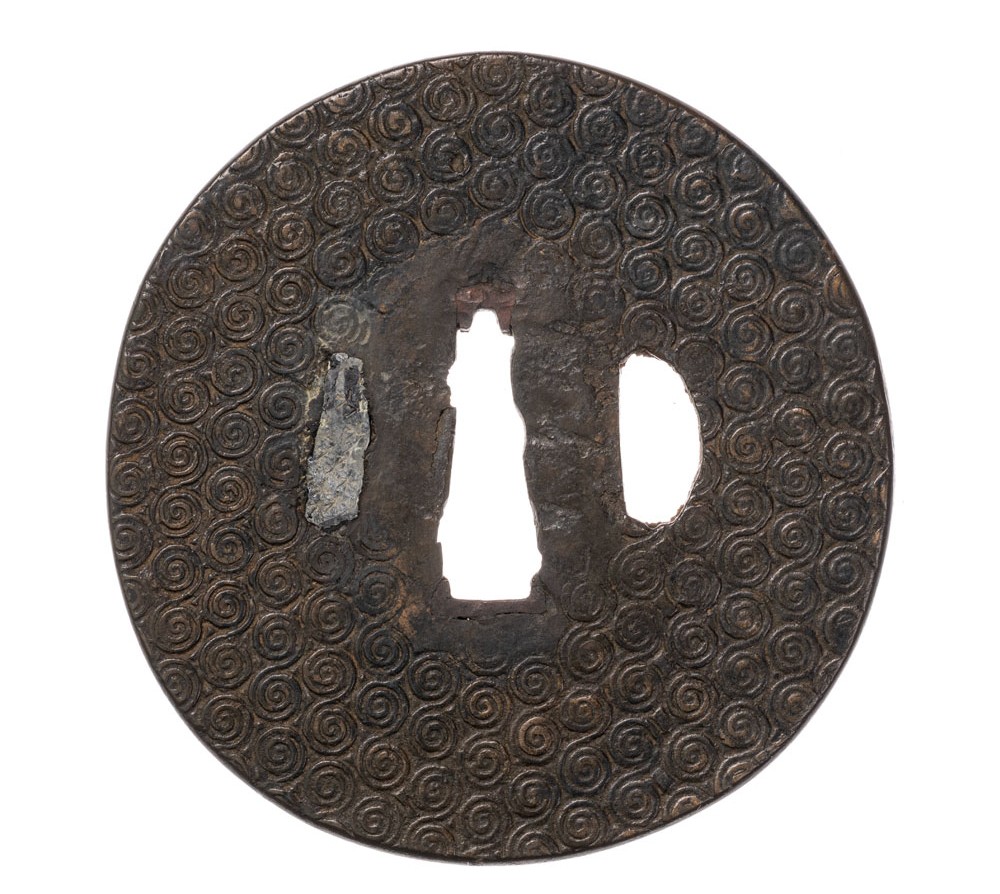
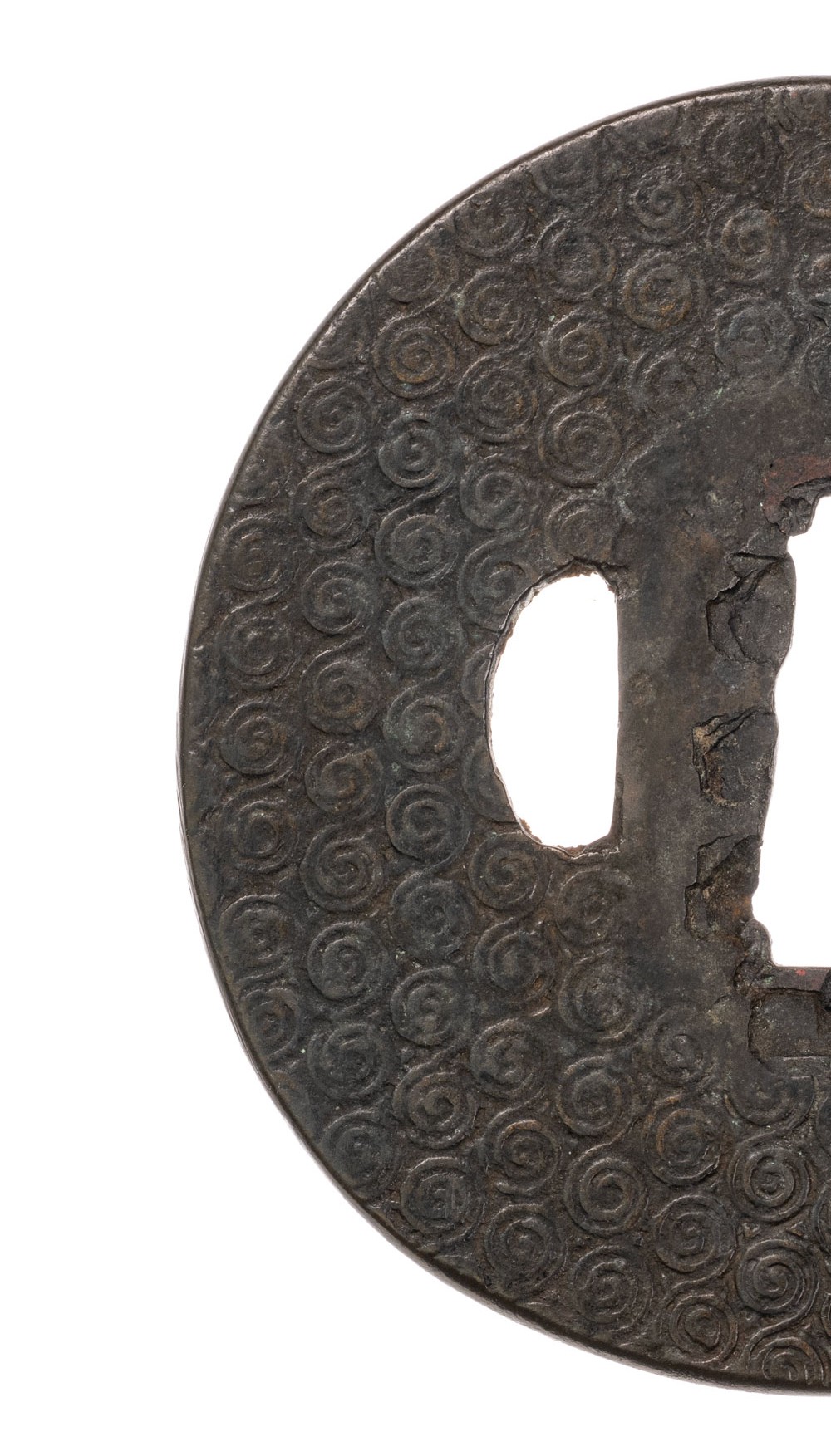
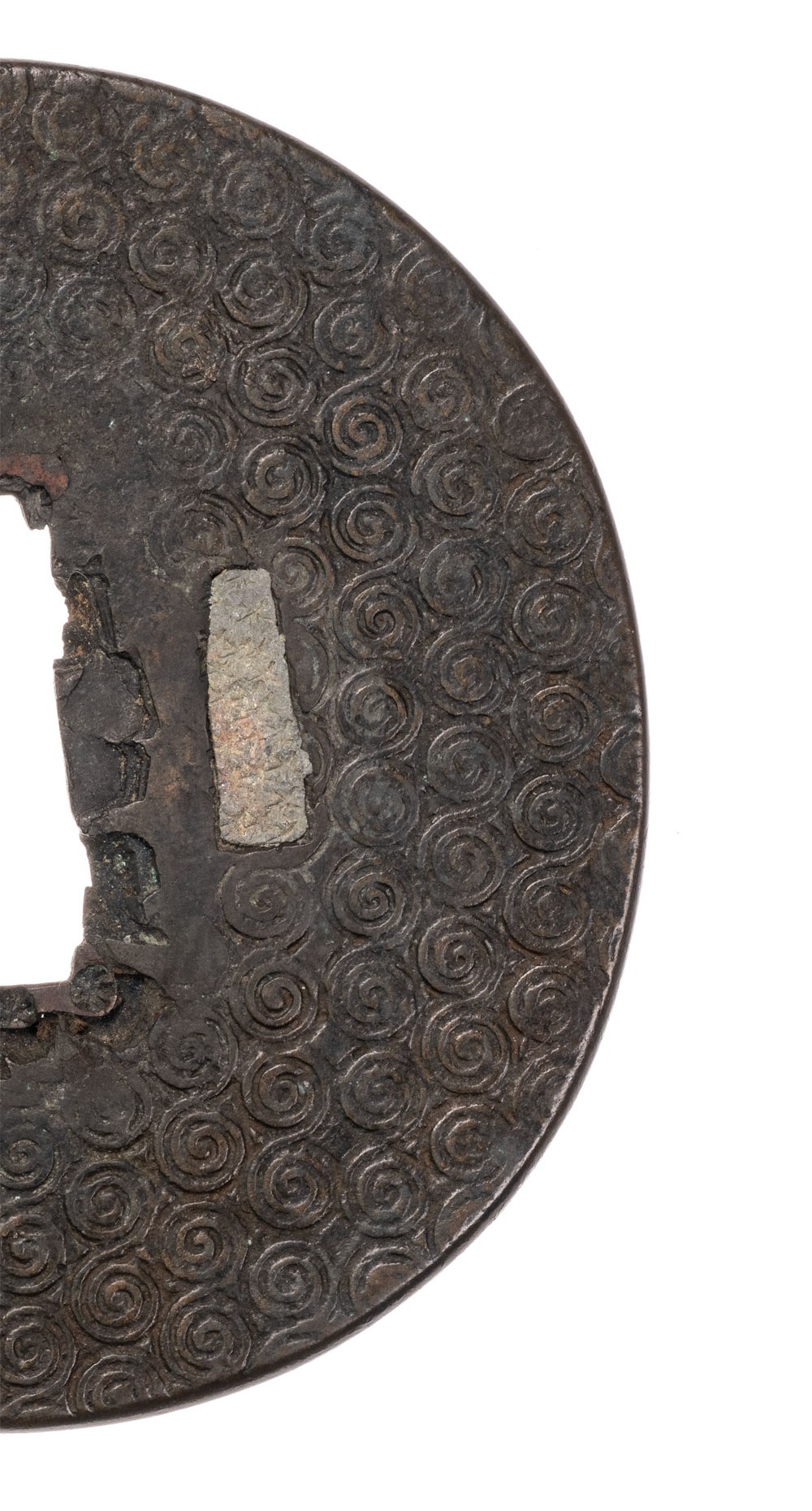
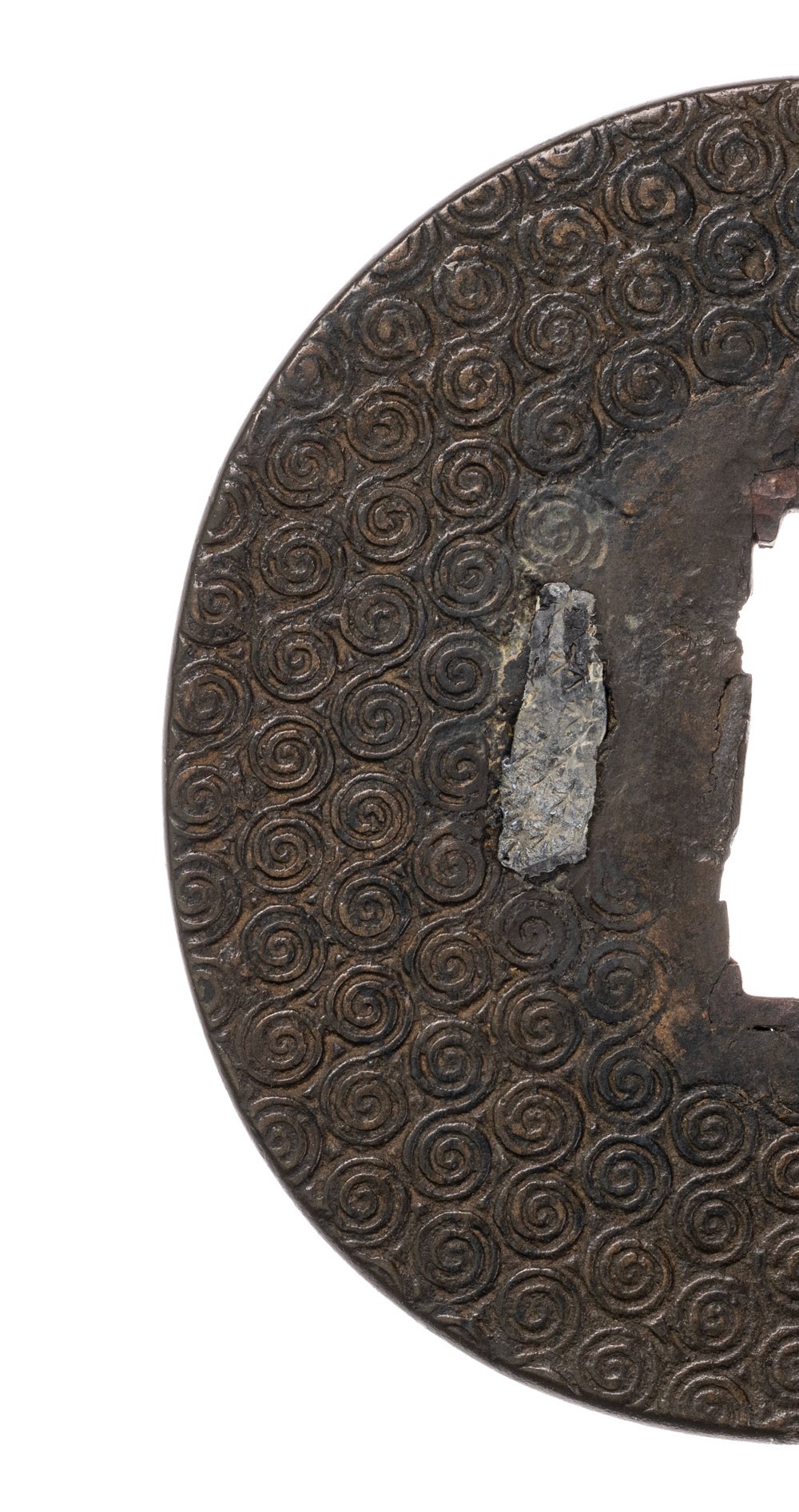
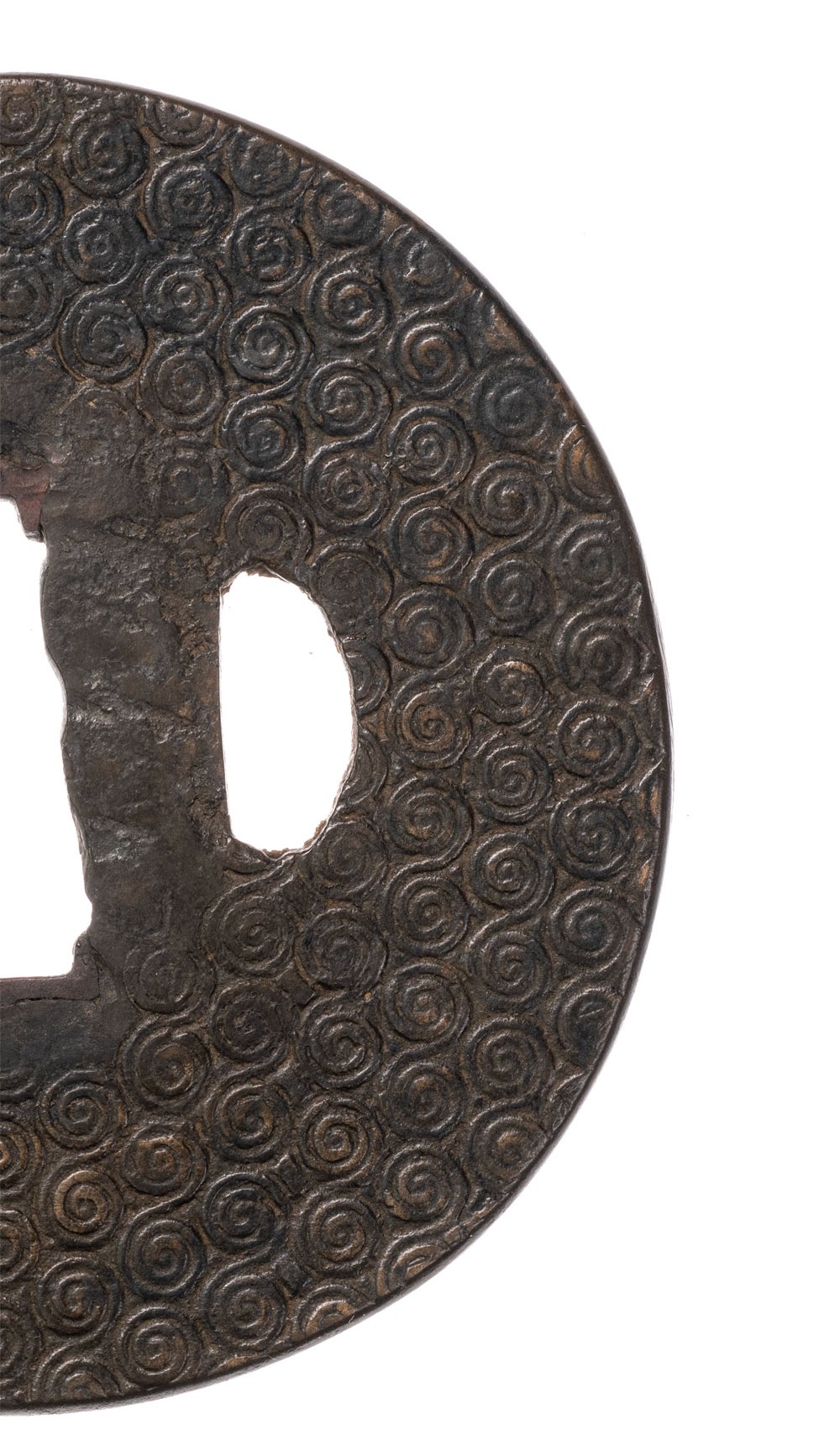
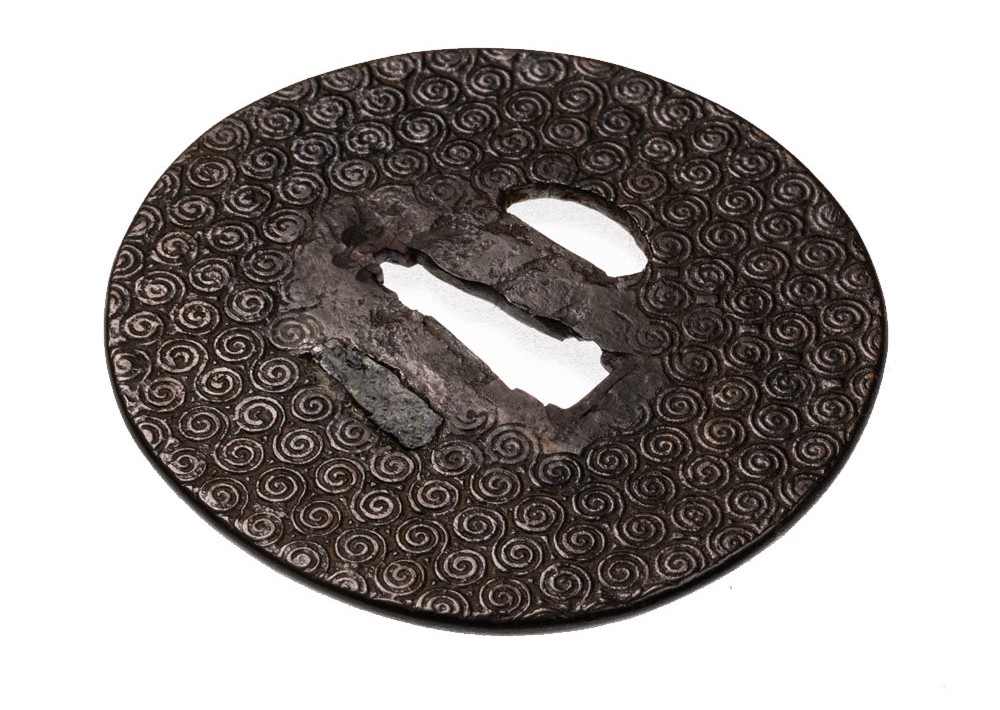
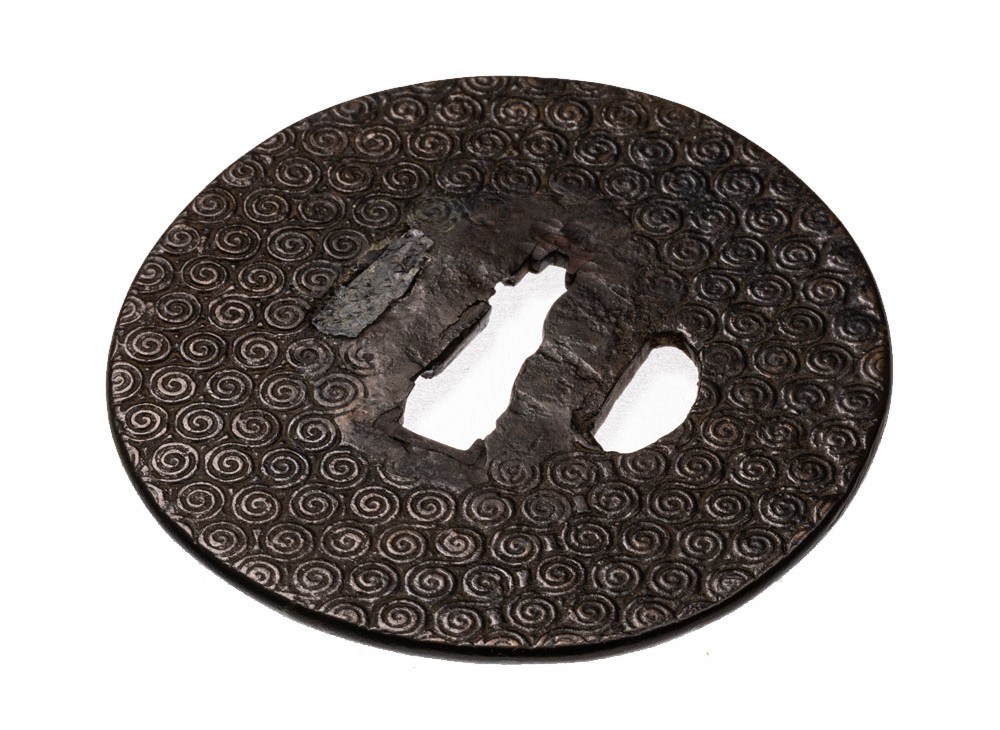
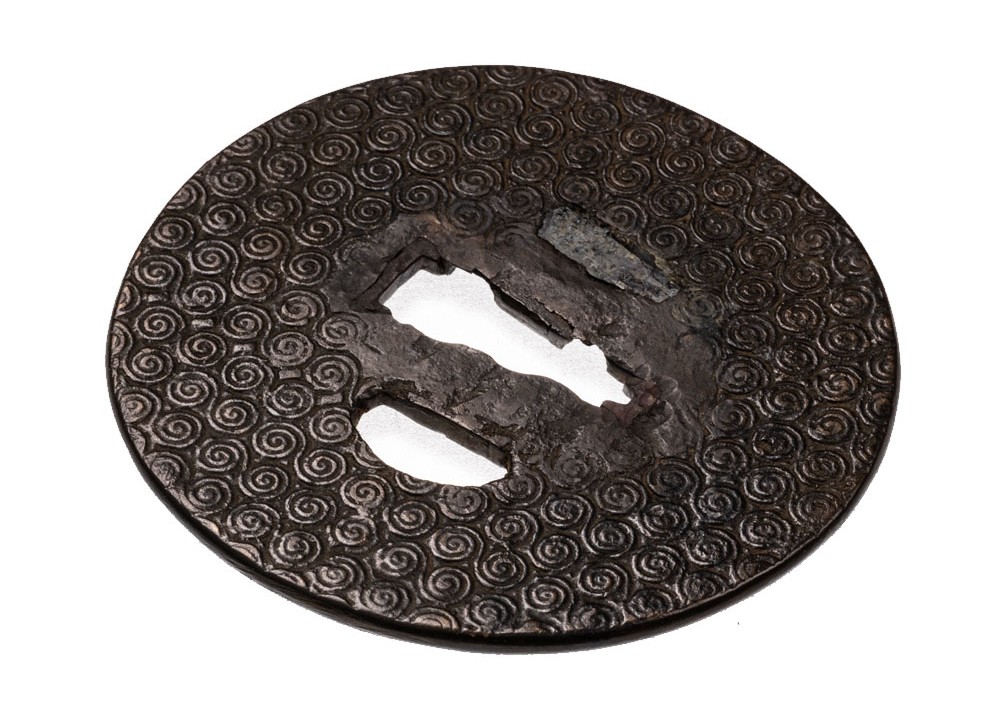
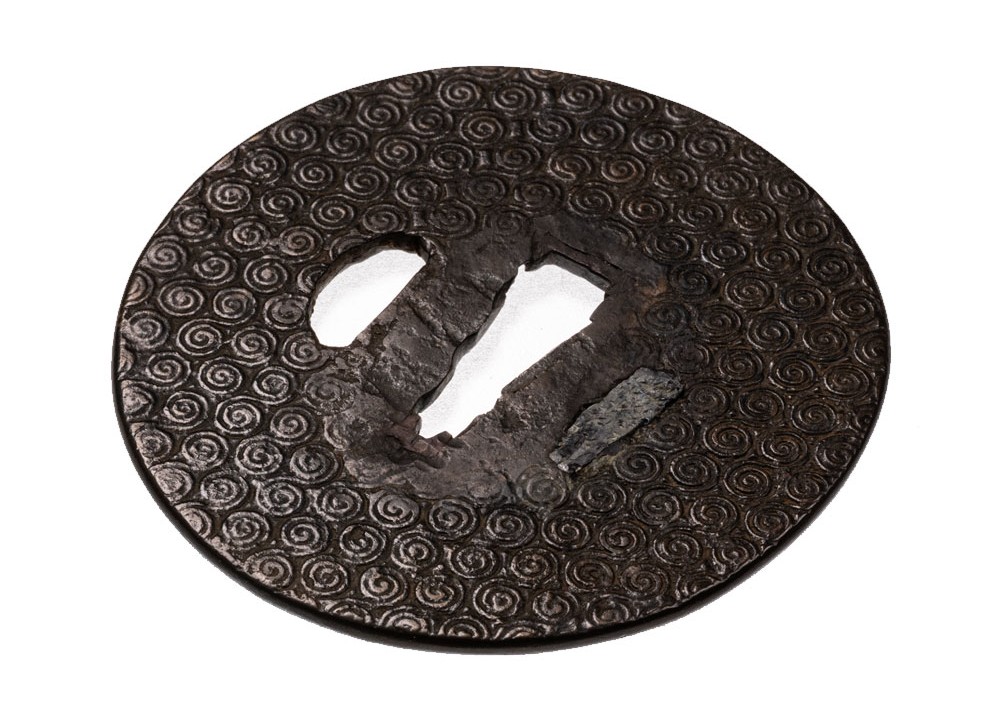
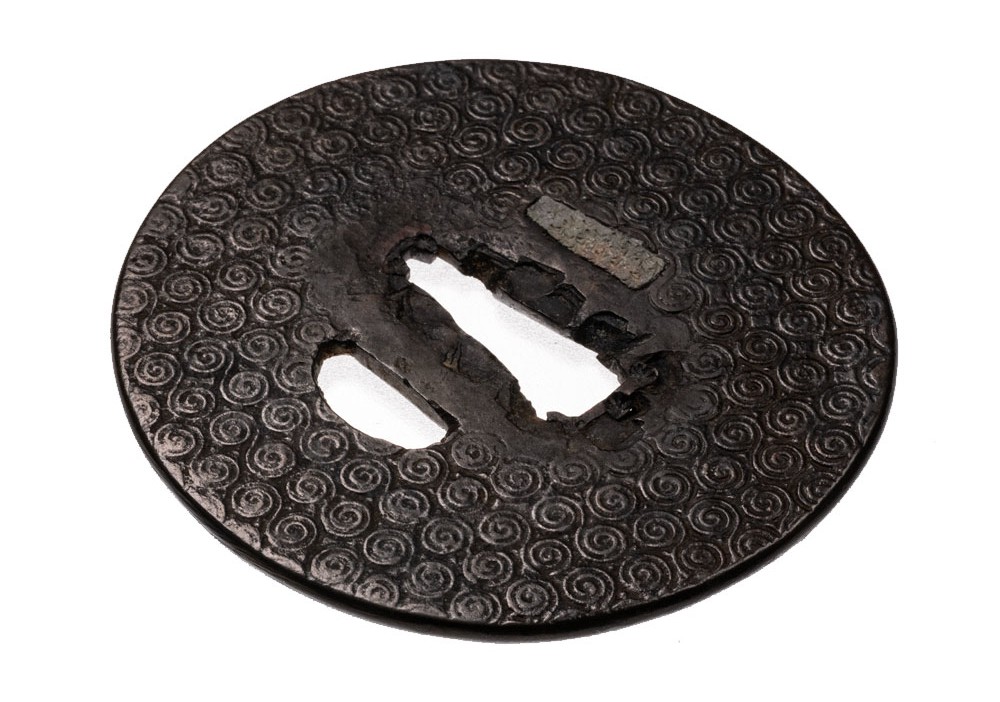
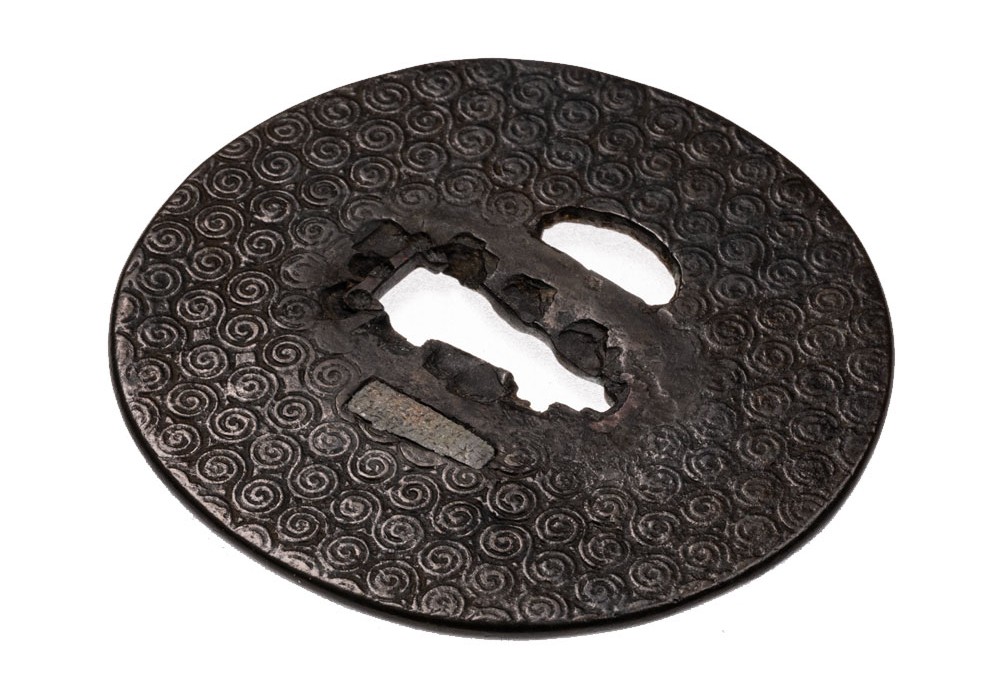
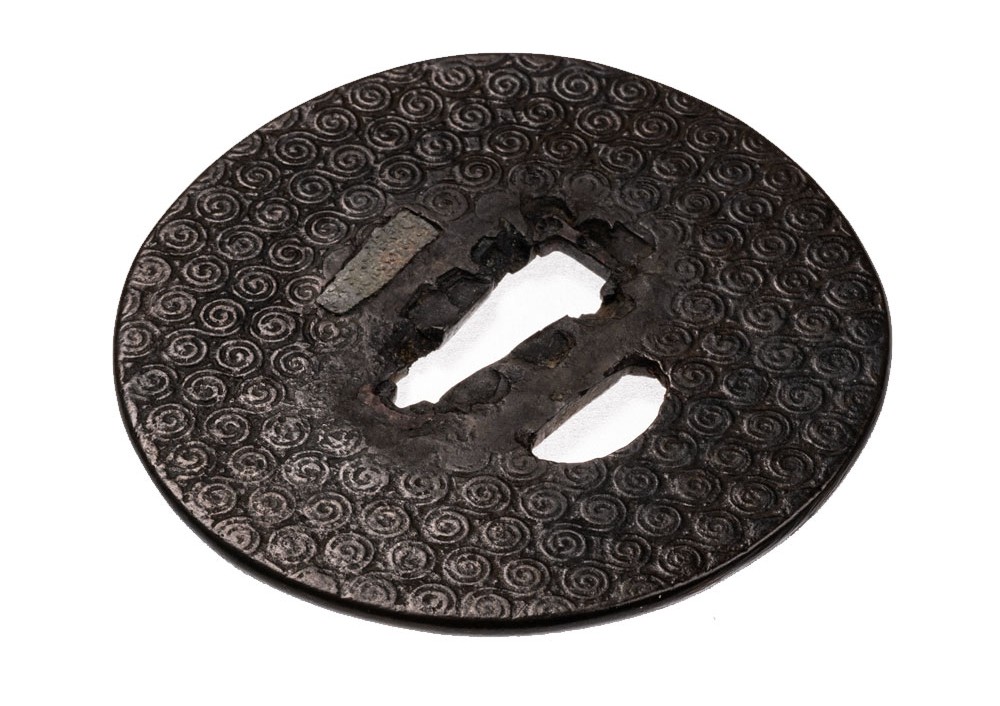
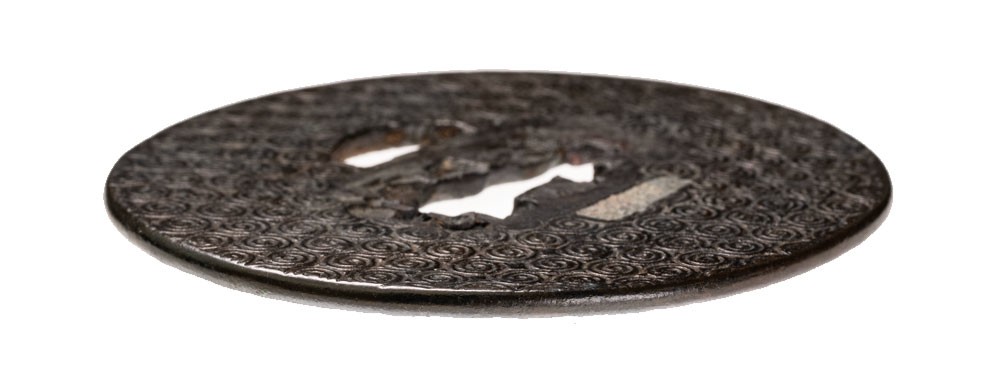
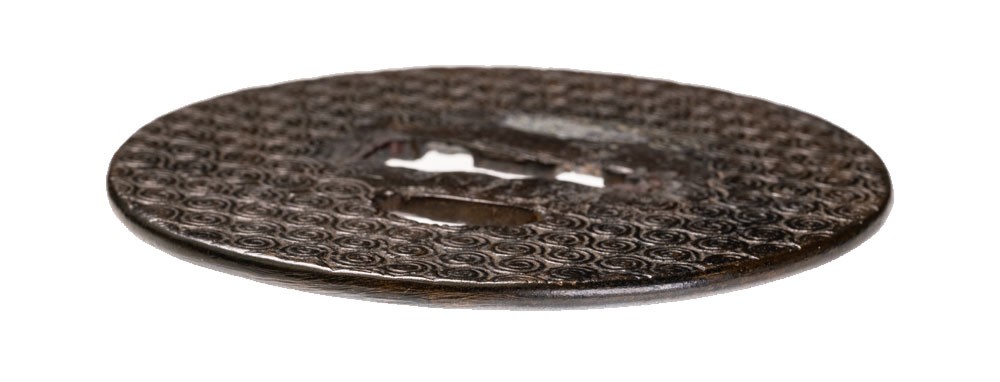
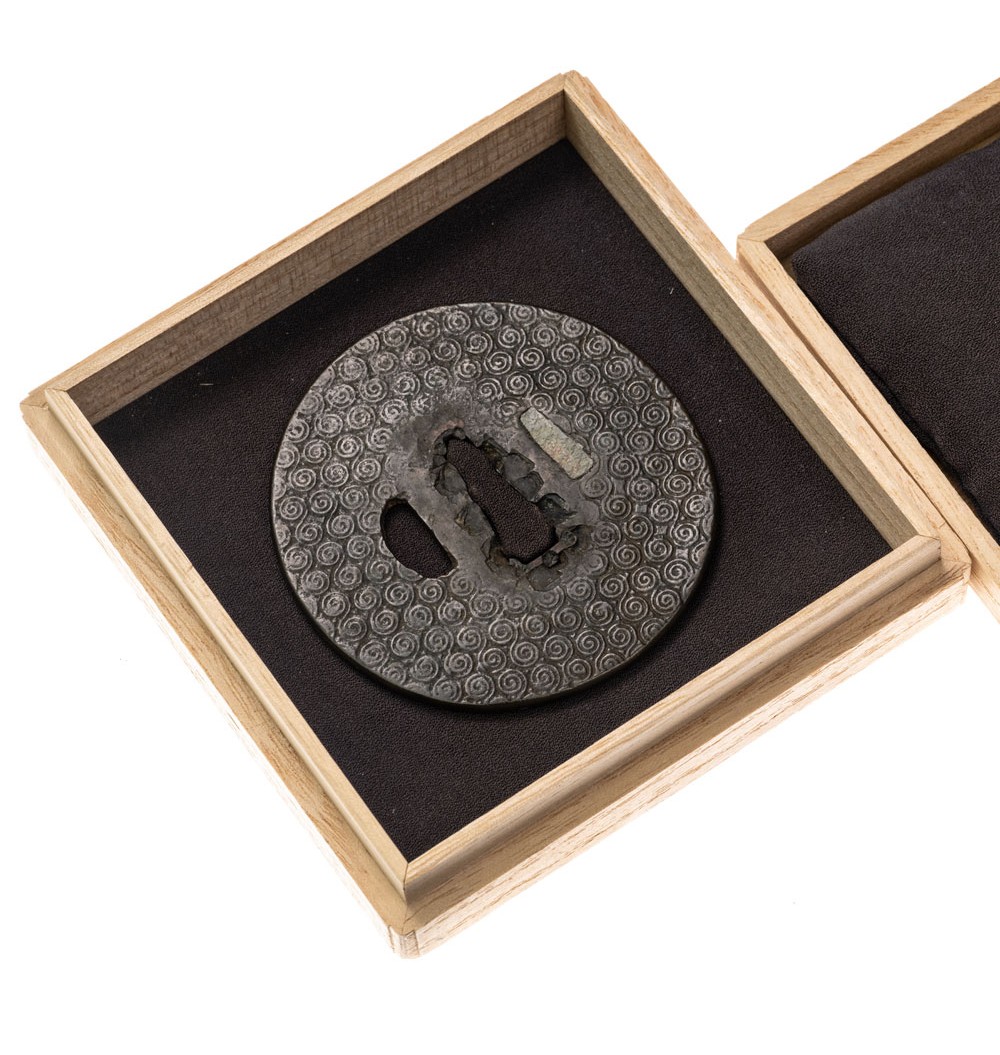
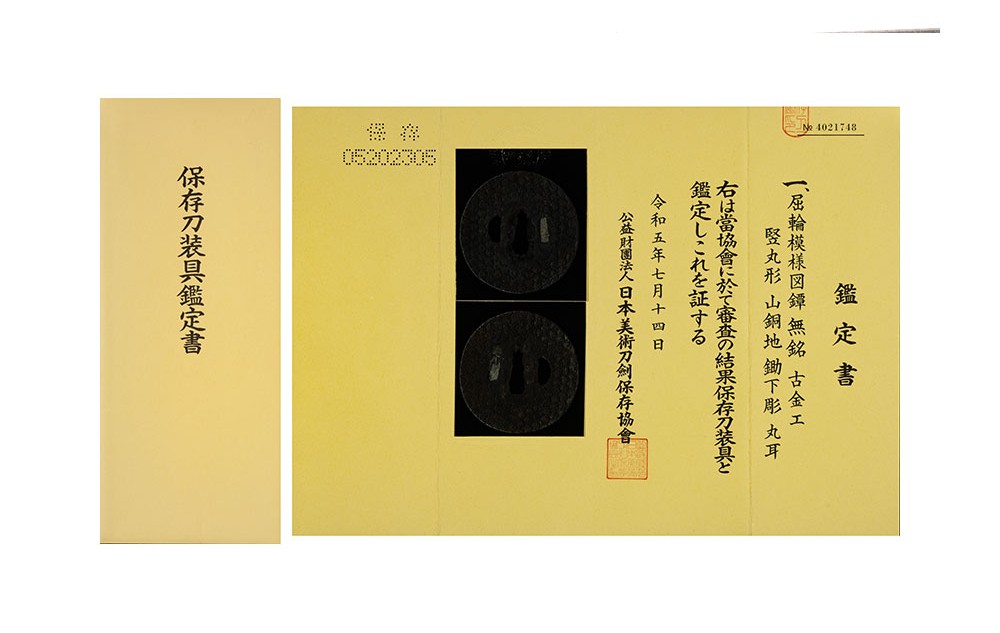
This is a tsuba made by Kokinko school. The tsuba features a guri design and has a round shape. It is designated as Hozon Tosogu.
Certificate reading — 無銘(古金工)
 NihontoWatchBETA
mumei · Ko-Kinko · Muromachi
Ko-kinko School
Muromachi
Unsigned
Hozon (NBTHK)
Kinko
The term Ko-kinkō (古金工) denotes a collective category of metalworkers whose lineages extend from archaic times and continue through the Momoyama period, representing traditions that predate the formalized schools of the Edo period. Rather than constituting a single unified workshop, this attribution encompasses multiple regional traditions that shared certain technical and aesthetic principles while maintaining distinct local characteristics. Learn more →
Certifies a genuine fitting worth preserving: a correct signature, or, if unsigned, an identifiable era and school, with recognized artistic and craft value.
The NBTHK (Nihon Bijutsu Tōken Hozon Kyōkai, the Society for the Preservation of Japanese Art Swords) is a public-interest incorporated foundation founded in 1948 and supervised by Japan’s Agency for Cultural Affairs (Bunkachō); it is based at the Japanese Sword Museum in Tokyo. Its expert panels physically examine each submitted work (shinsa) and issue a certificate (kanteishō) ranking it by artistic and historical merit. NBTHK papers are the most widely recognized standard of authentication for Japanese swords and fittings.
NBTHK official siteReturns/exchanges/cancellations not accepted after shipment except for significant defects; if defective, return/exchange possible within 3 days of arrival (return shipping paid by customer).
This is a tsuba made by Kokinko school. The tsuba features a guri design and has a round shape. It is designated as Hozon Tosogu.
Certificate reading — 無銘(古金工)
NihontoWatchBETAmumei · Ko-Kinko · Muromachi
Ko-kinko School
Muromachi
Unsigned
Hozon (NBTHK)
Kinko
The term Ko-kinkō (古金工) denotes a collective category of metalworkers whose lineages extend from archaic times and continue through the Momoyama period, representing traditions that predate the formalized schools of the Edo period. Rather than constituting a single unified workshop, this attribution encompasses multiple regional traditions that shared certain technical and aesthetic principles while maintaining distinct local characteristics. Learn more →
Certifies a genuine fitting worth preserving: a correct signature, or, if unsigned, an identifiable era and school, with recognized artistic and craft value.
The NBTHK (Nihon Bijutsu Tōken Hozon Kyōkai, the Society for the Preservation of Japanese Art Swords) is a public-interest incorporated foundation founded in 1948 and supervised by Japan’s Agency for Cultural Affairs (Bunkachō); it is based at the Japanese Sword Museum in Tokyo. Its expert panels physically examine each submitted work (shinsa) and issue a certificate (kanteishō) ranking it by artistic and historical merit. NBTHK papers are the most widely recognized standard of authentication for Japanese swords and fittings.
NBTHK official siteReturns/exchanges/cancellations not accepted after shipment except for significant defects; if defective, return/exchange possible within 3 days of arrival (return shipping paid by customer).