The twentieth century nearly killed the craft twice: wartime distortion, then the occupation ban. The NBTHK’s founding in 1948 and licensed forging from 1953 rebuilt the sword as an art, crowned by Living National Treasures and the mukansa rank.
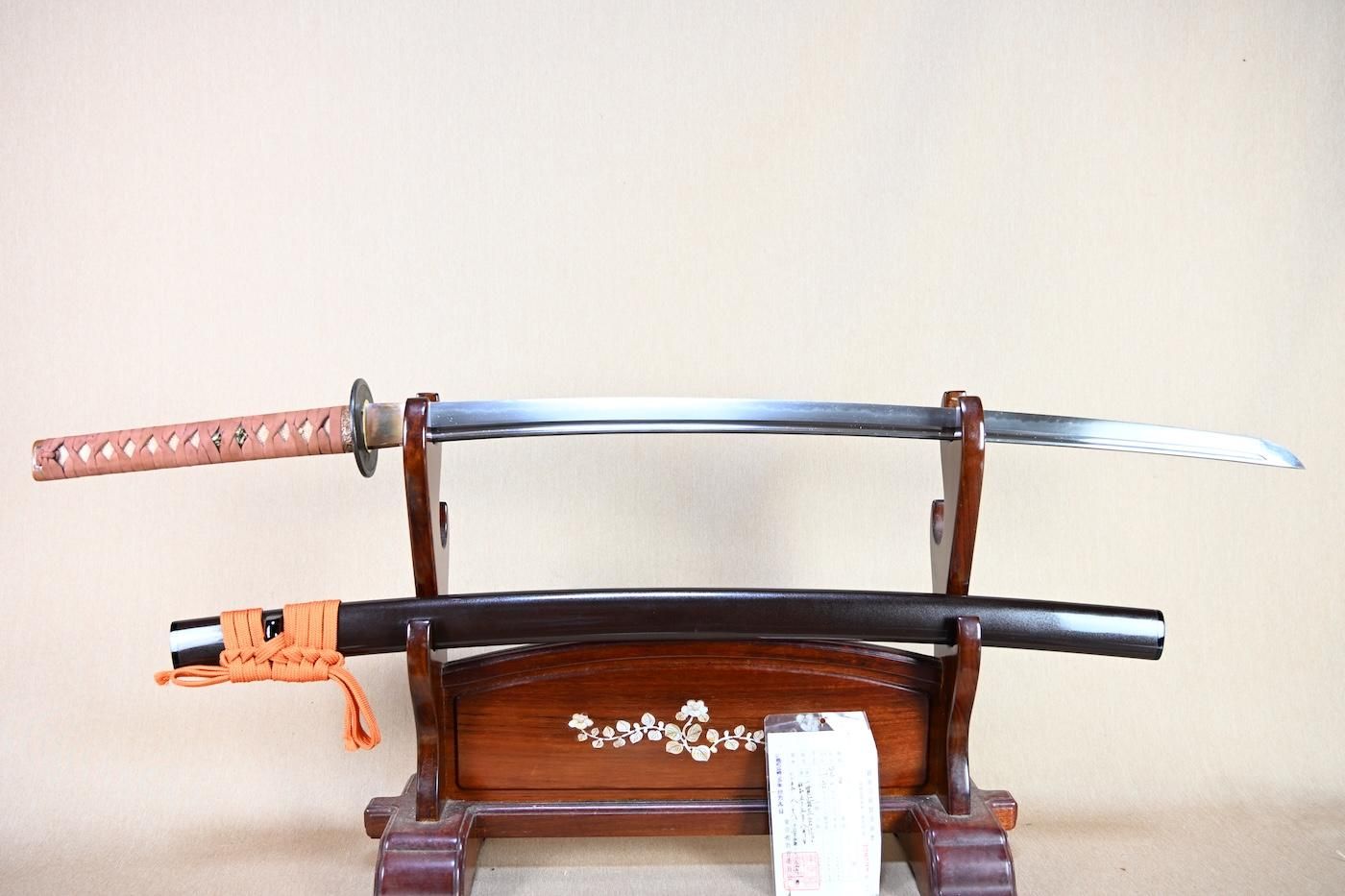
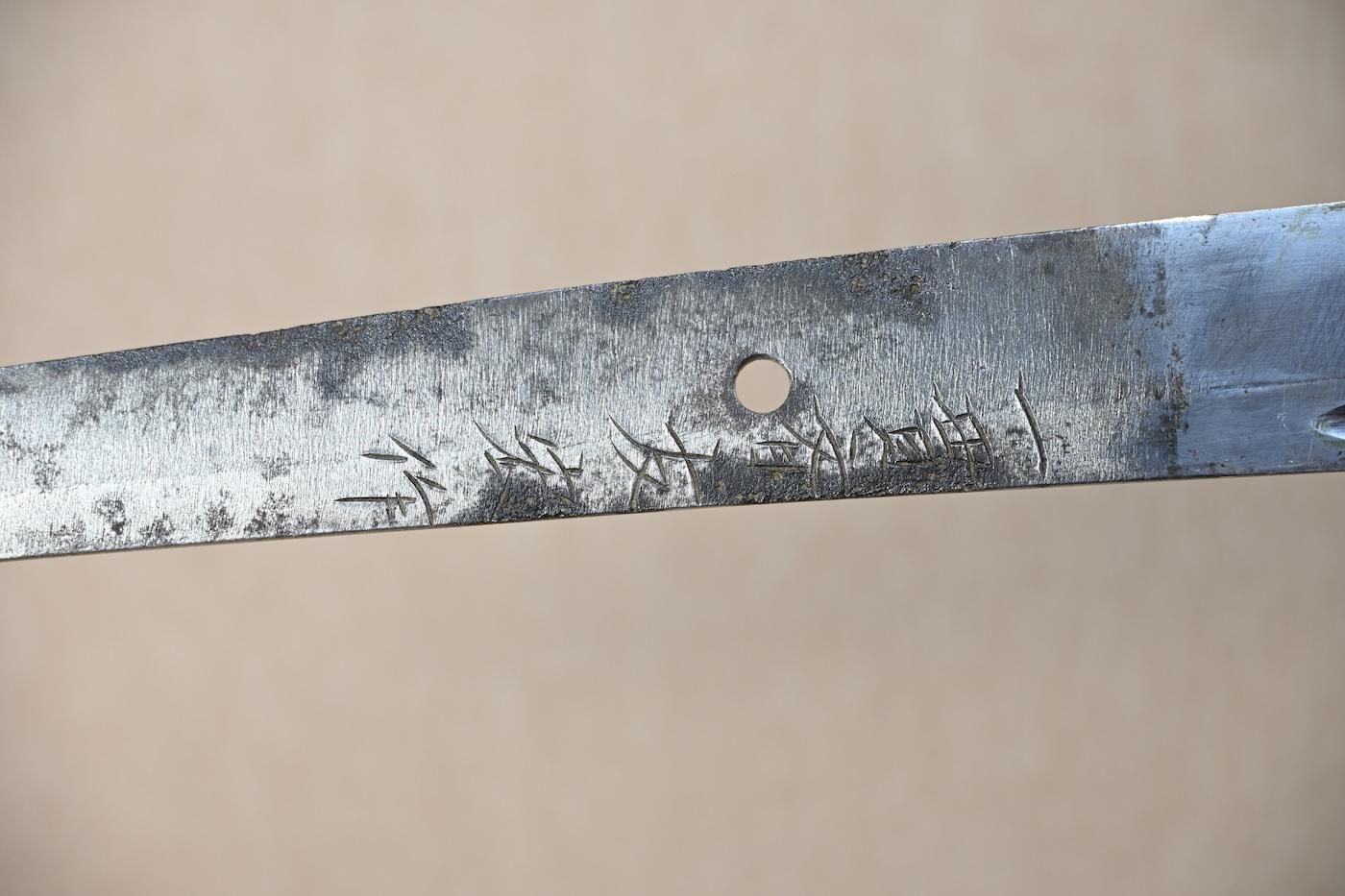
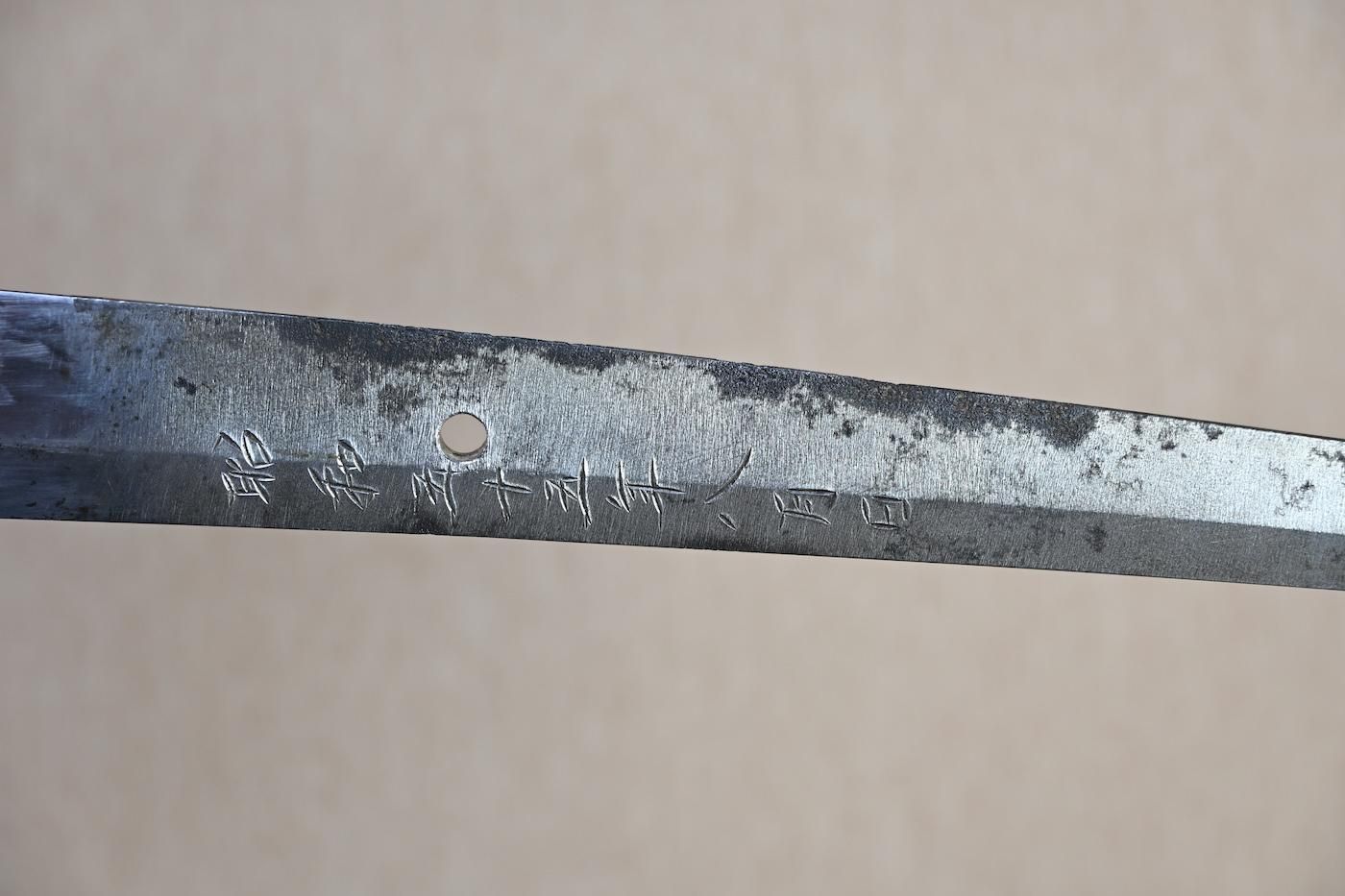
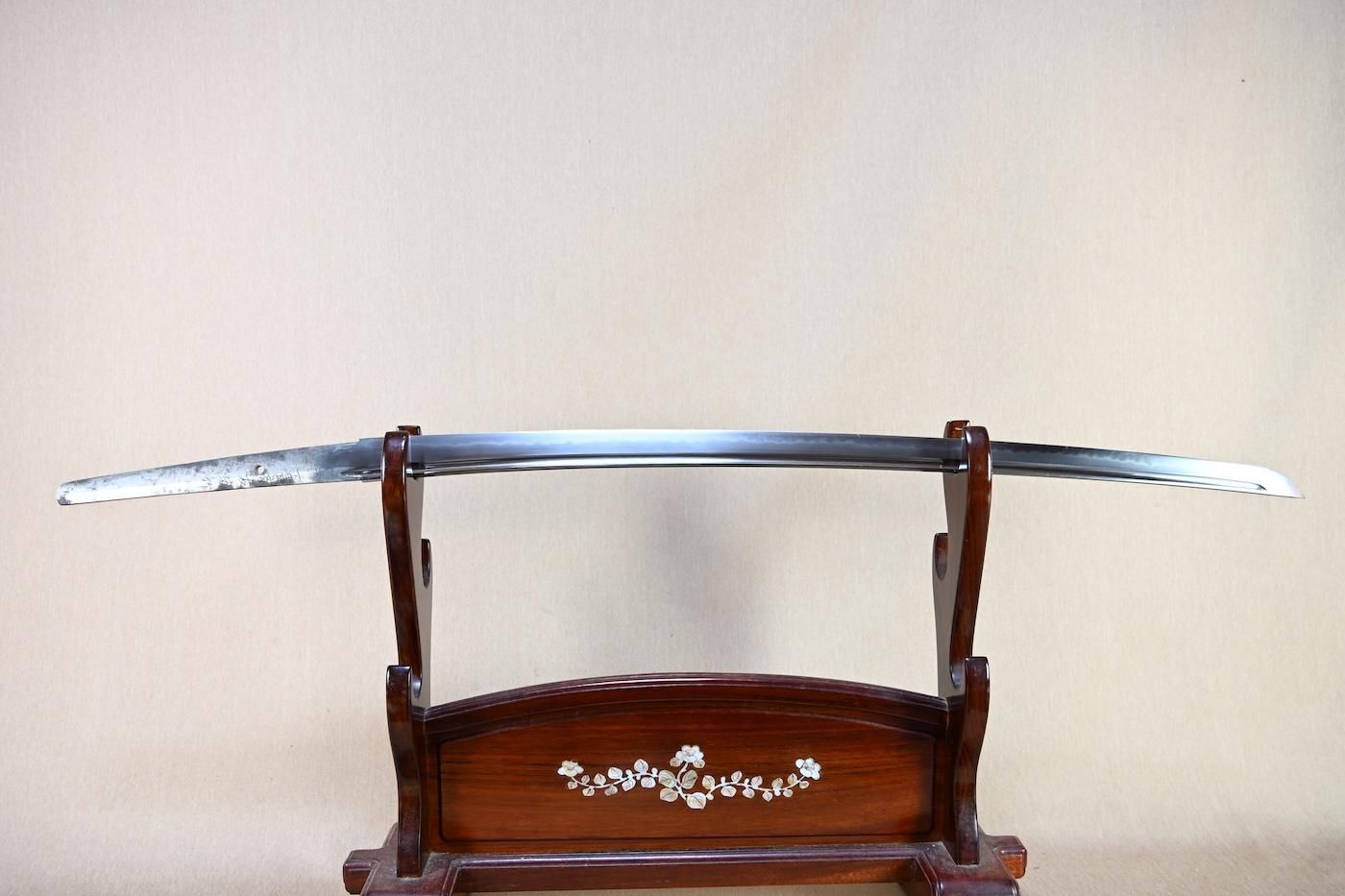
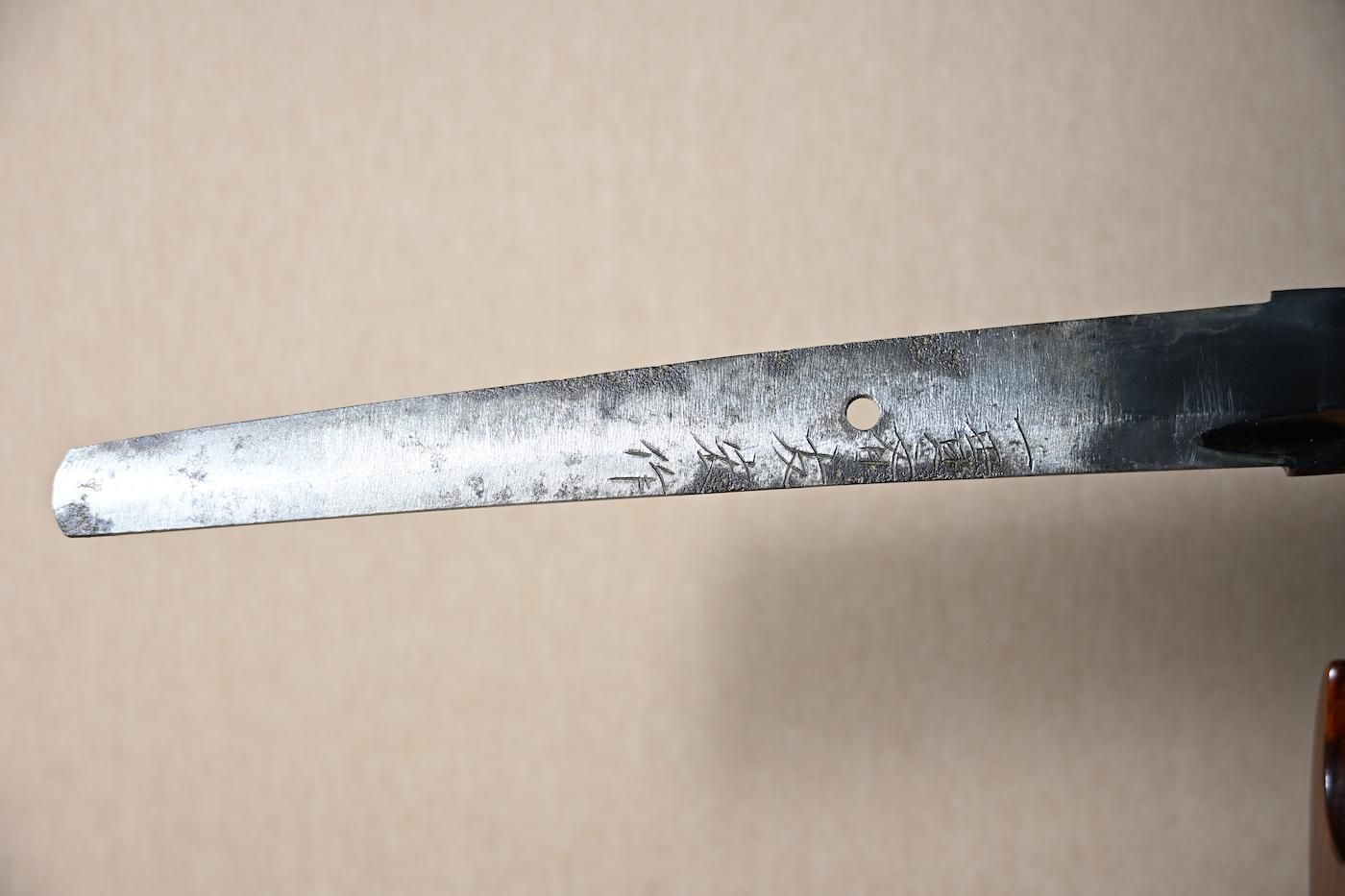
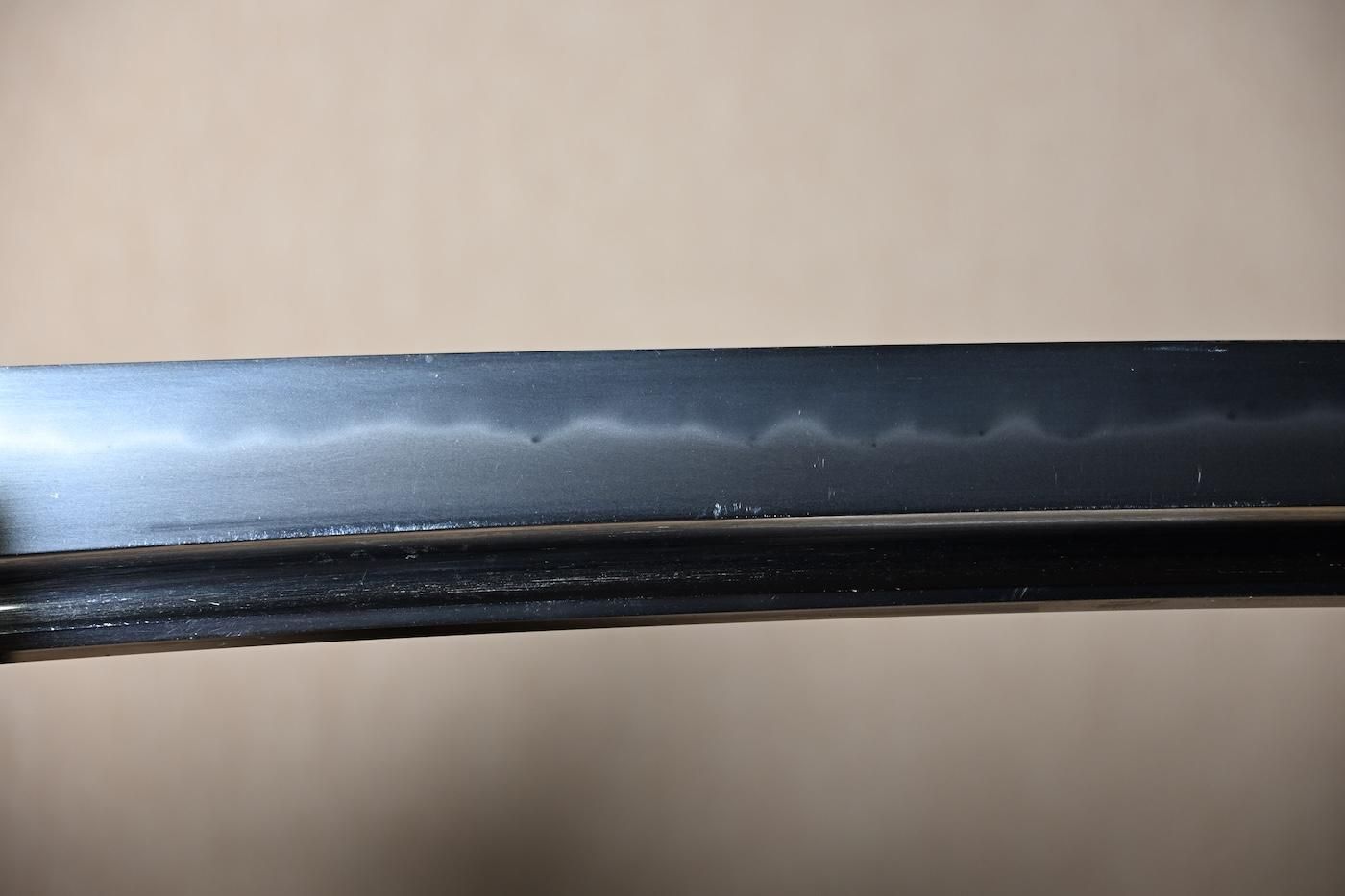
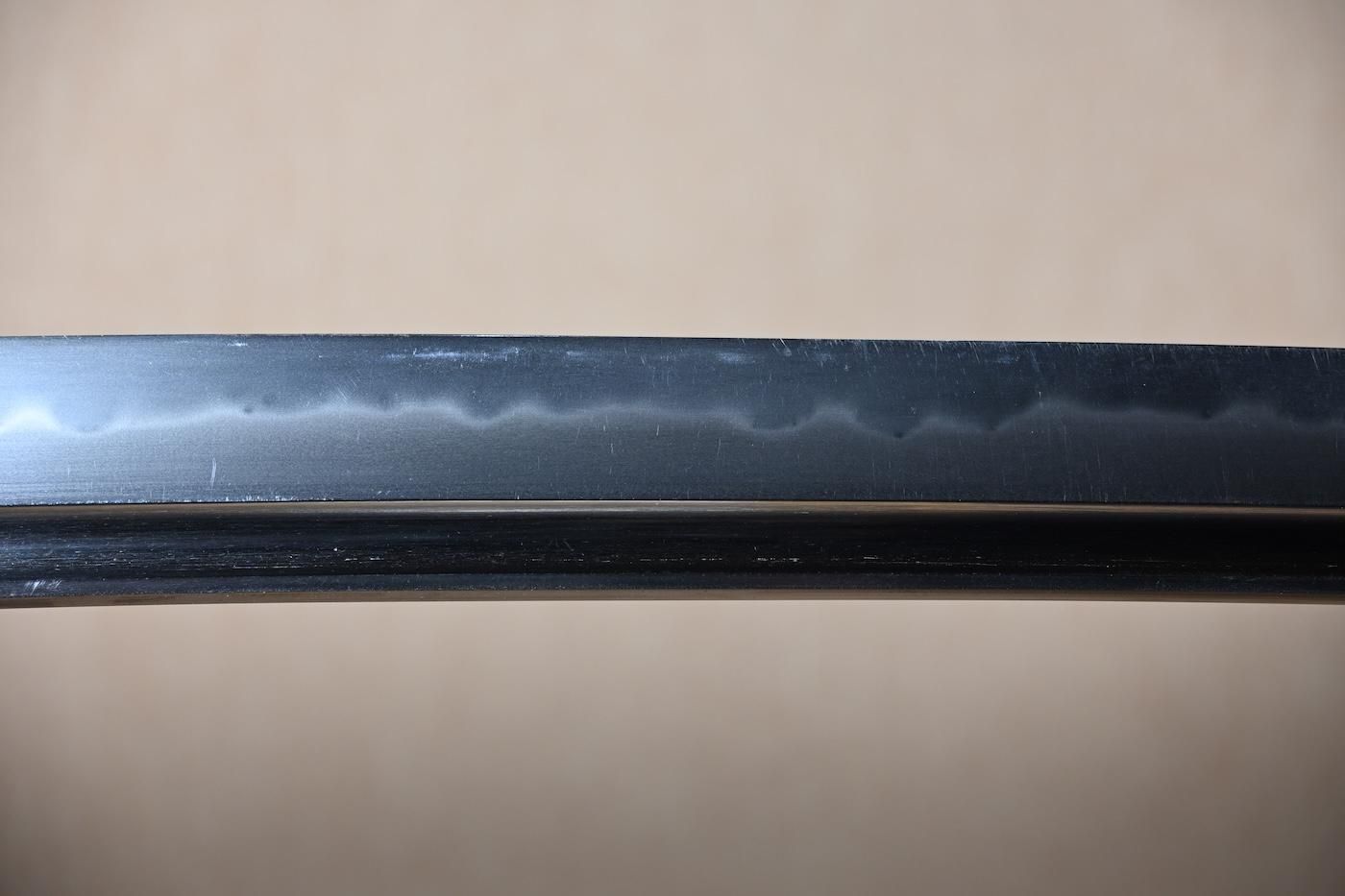
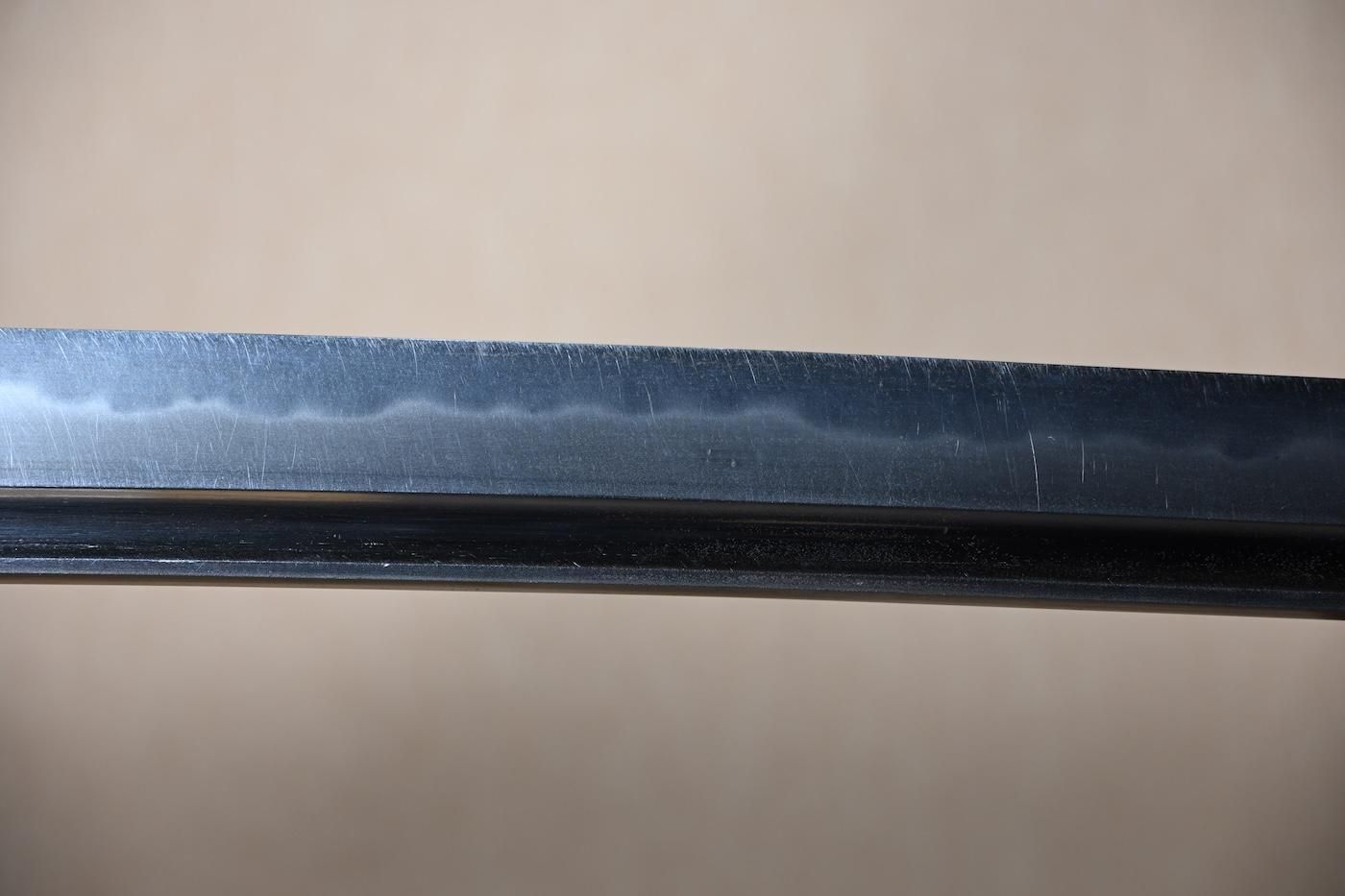
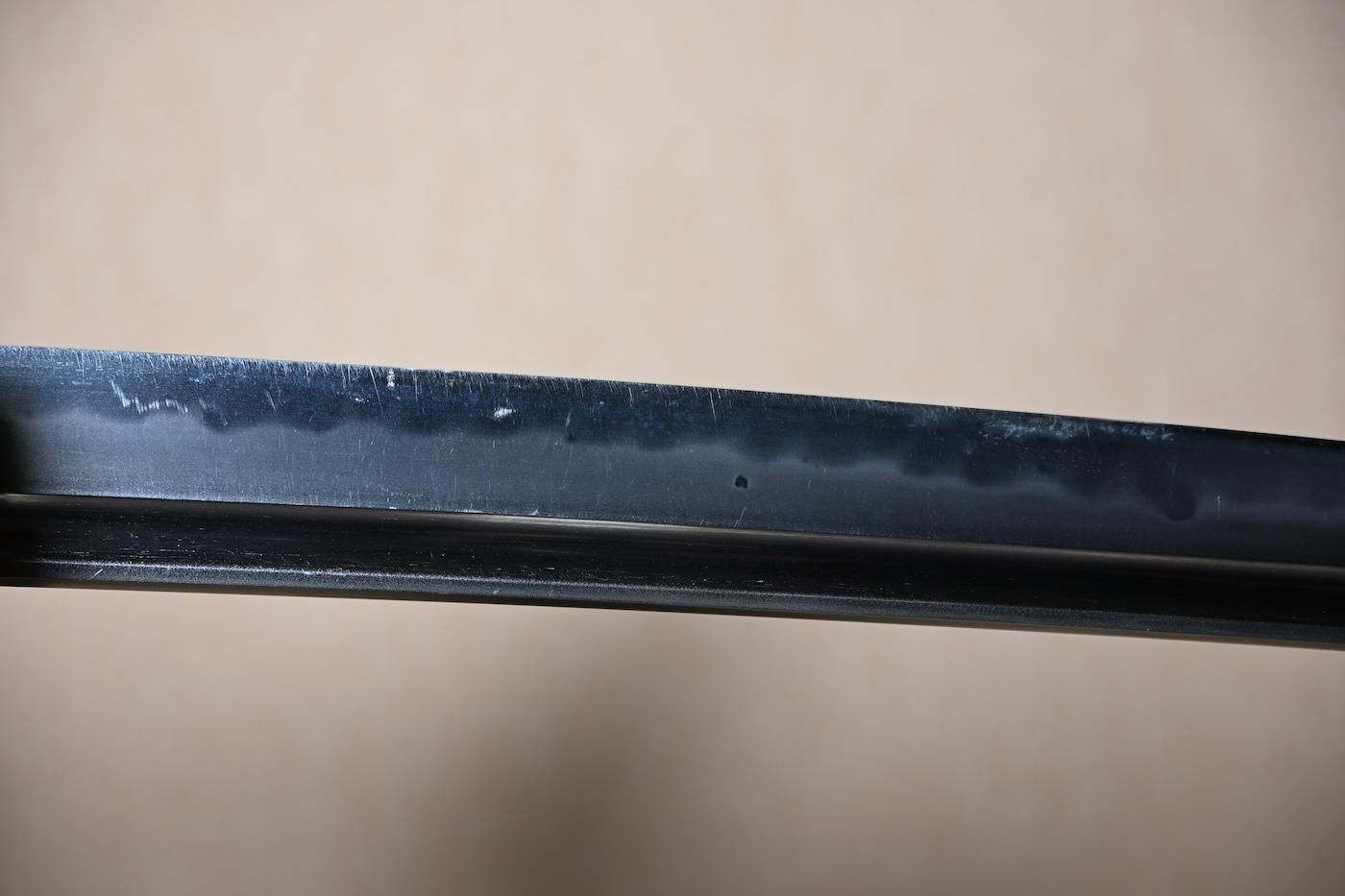
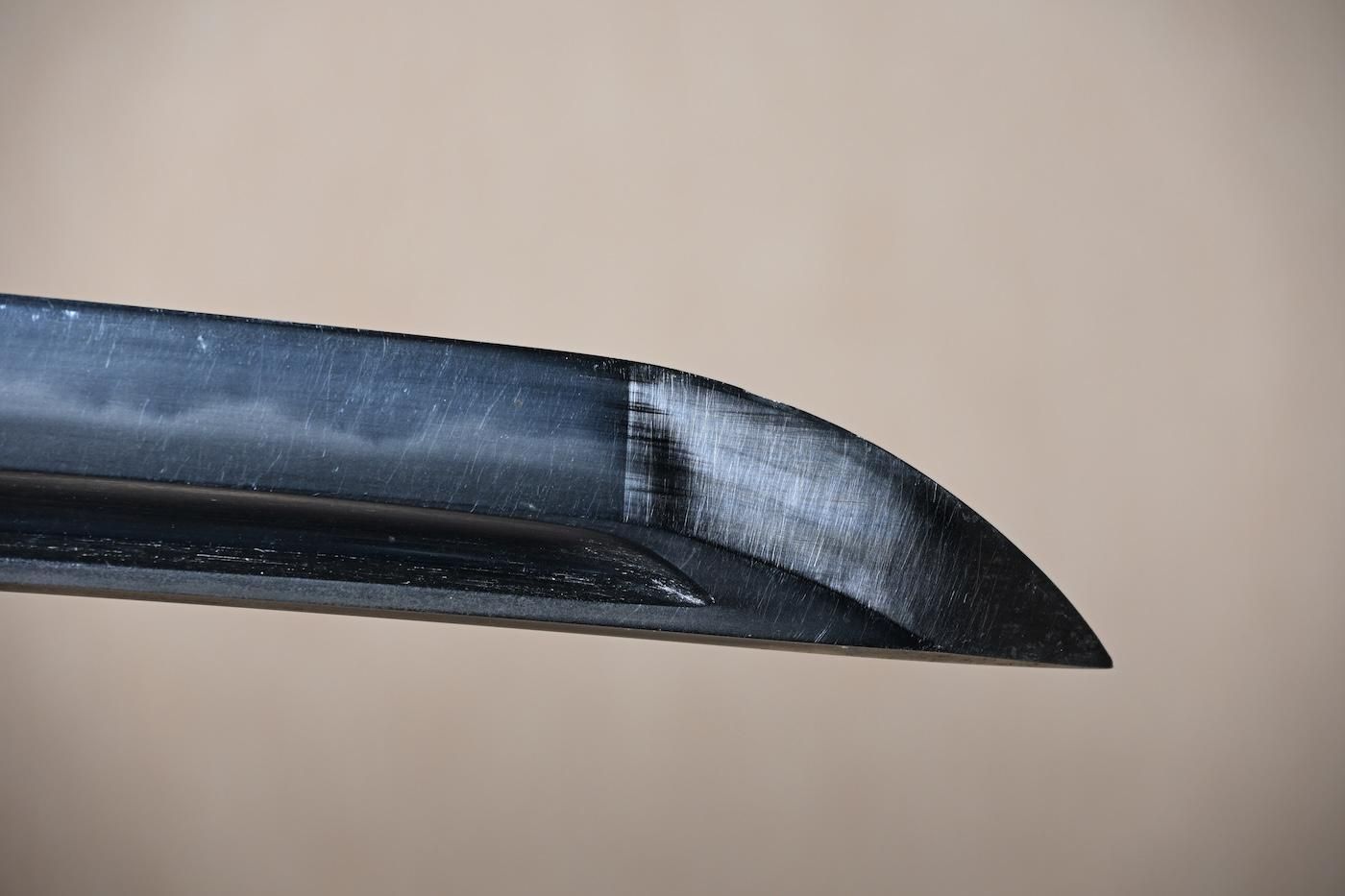
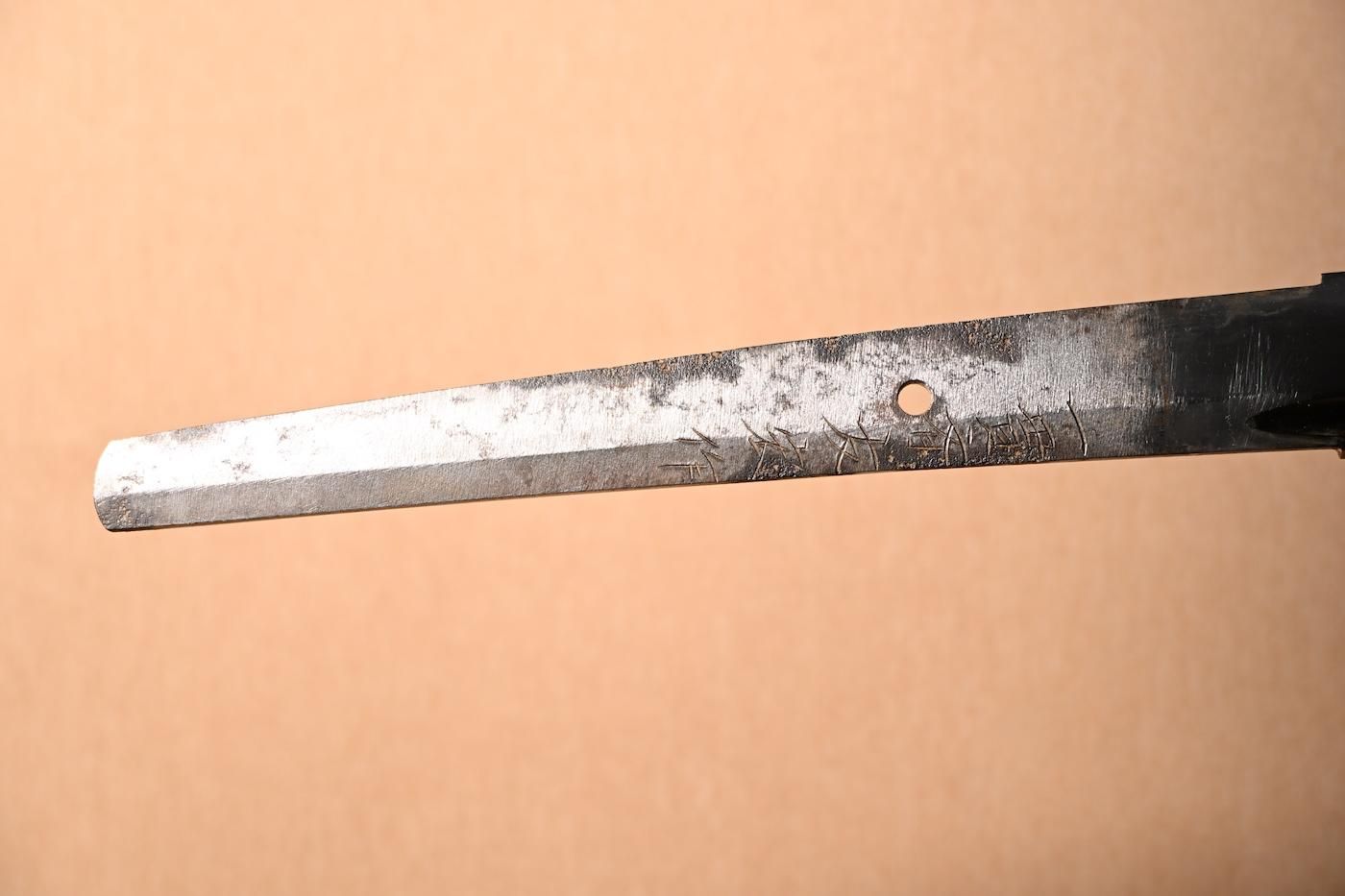
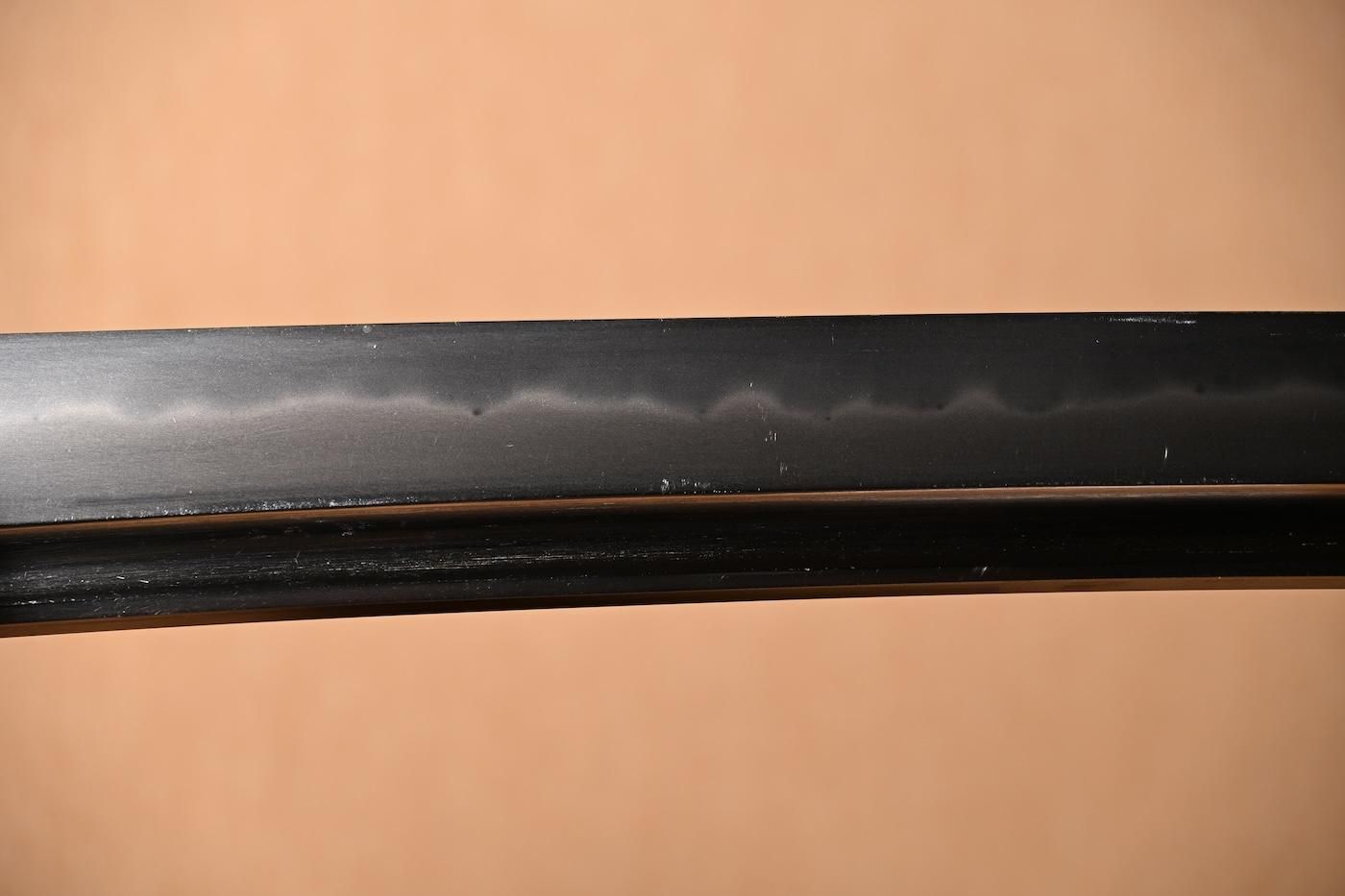
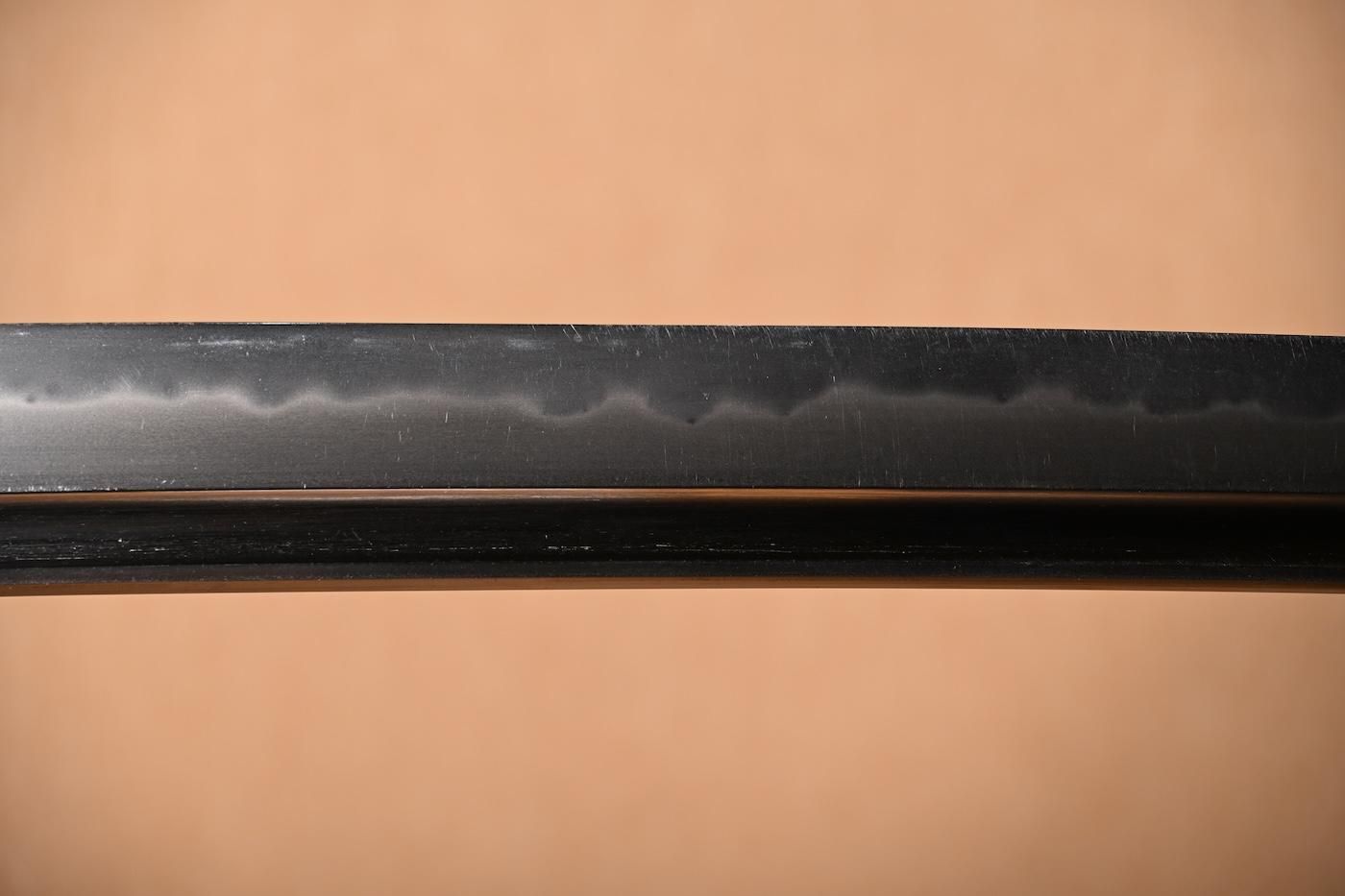
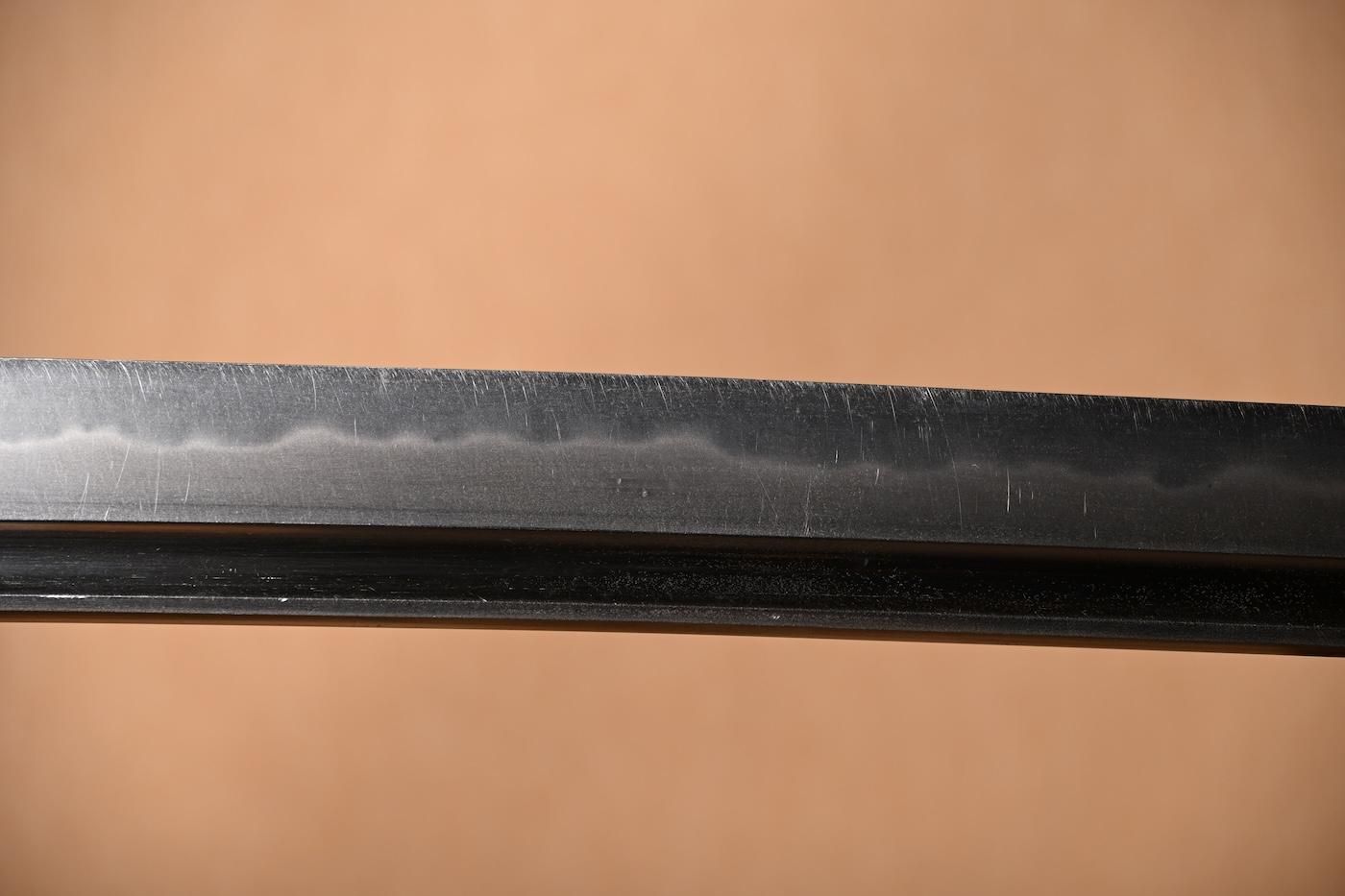
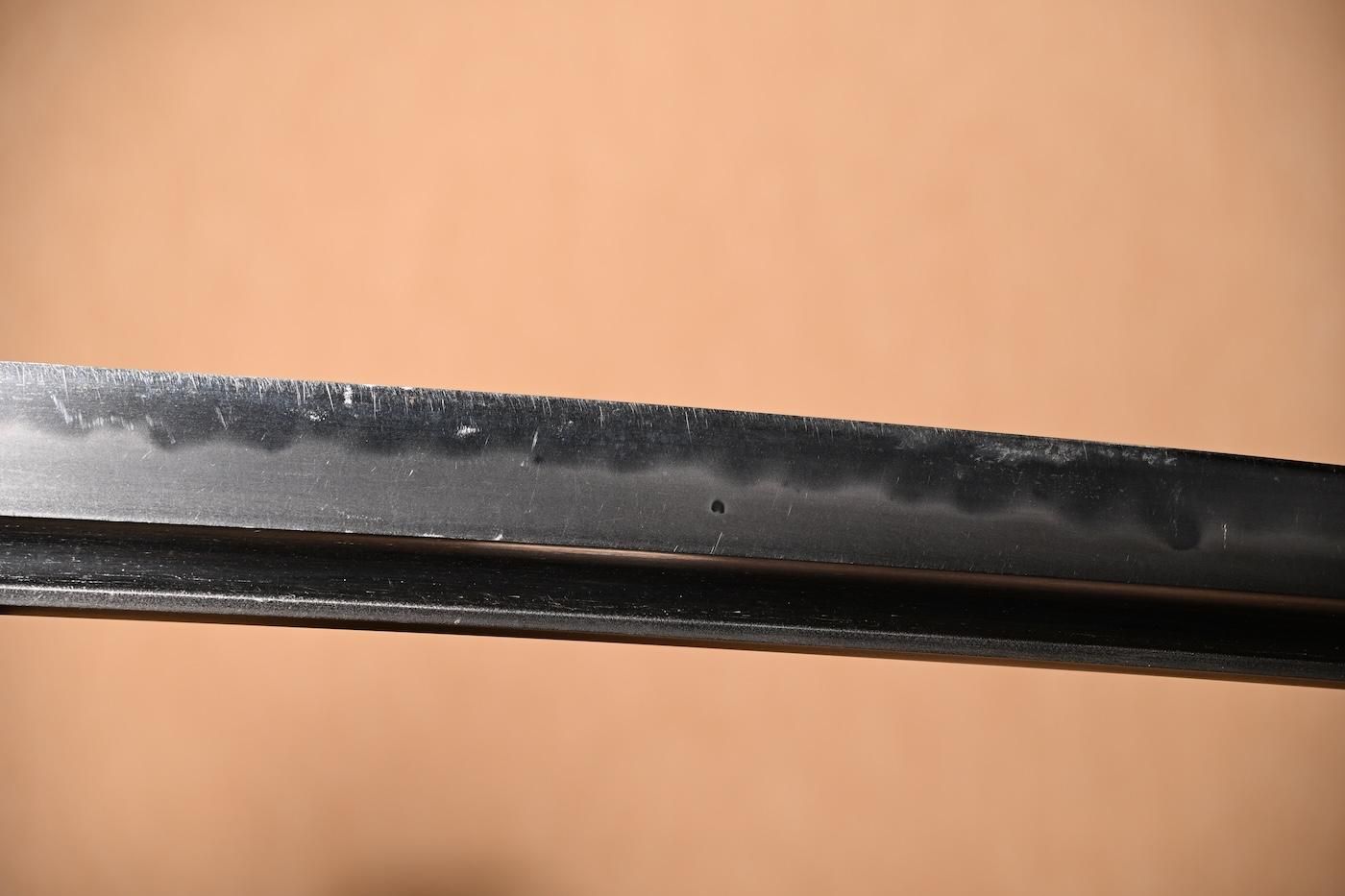
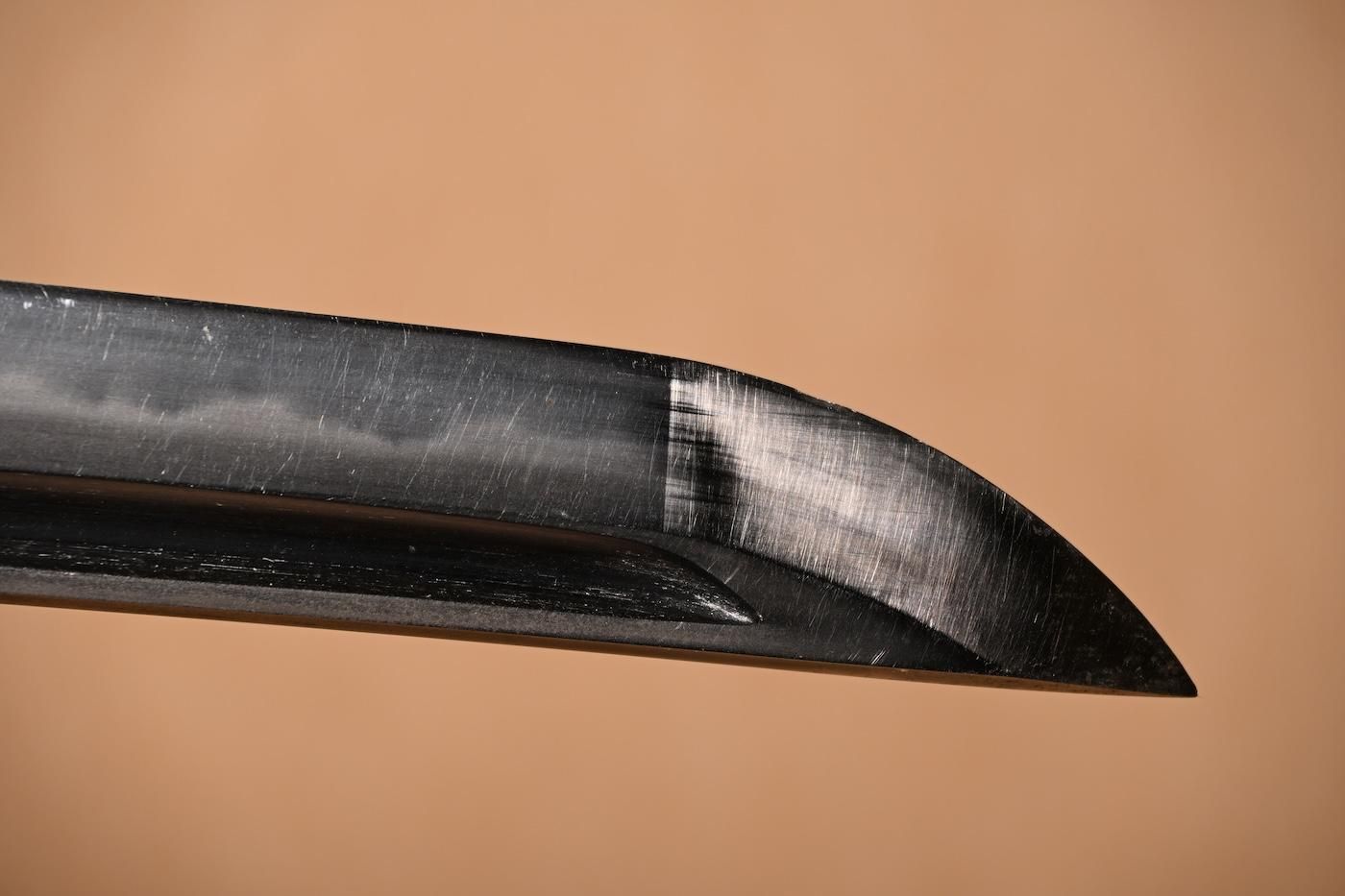
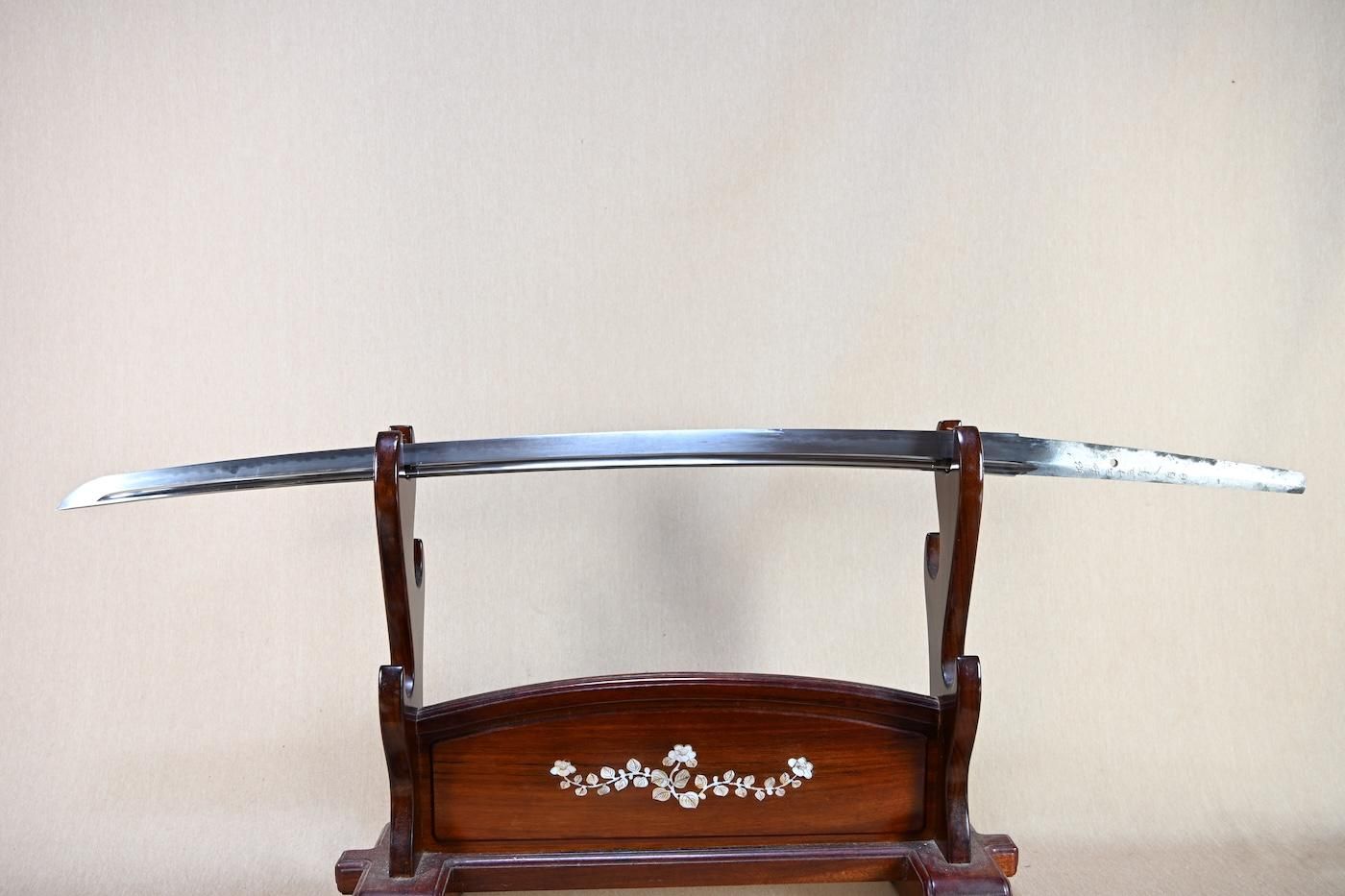
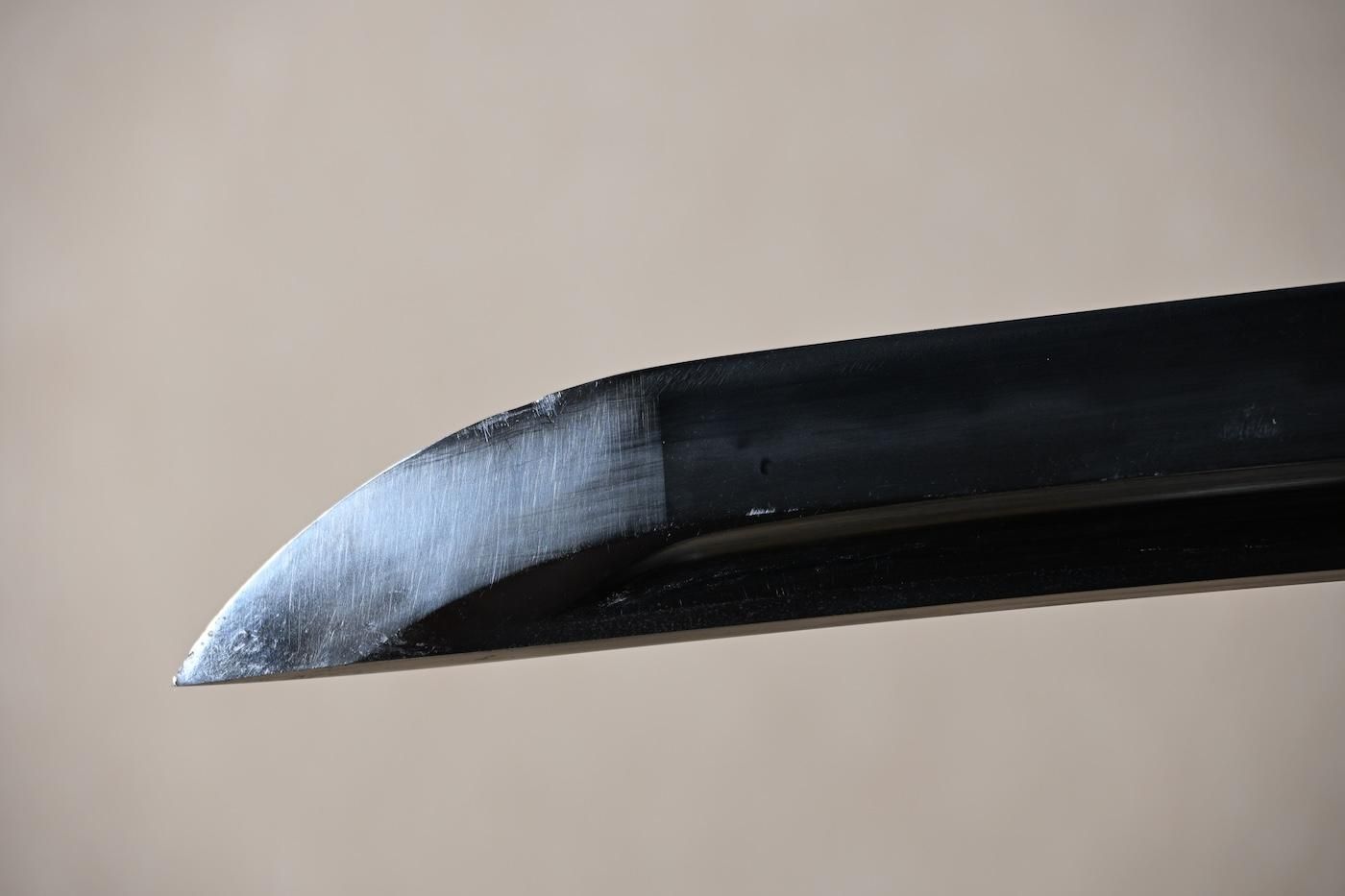
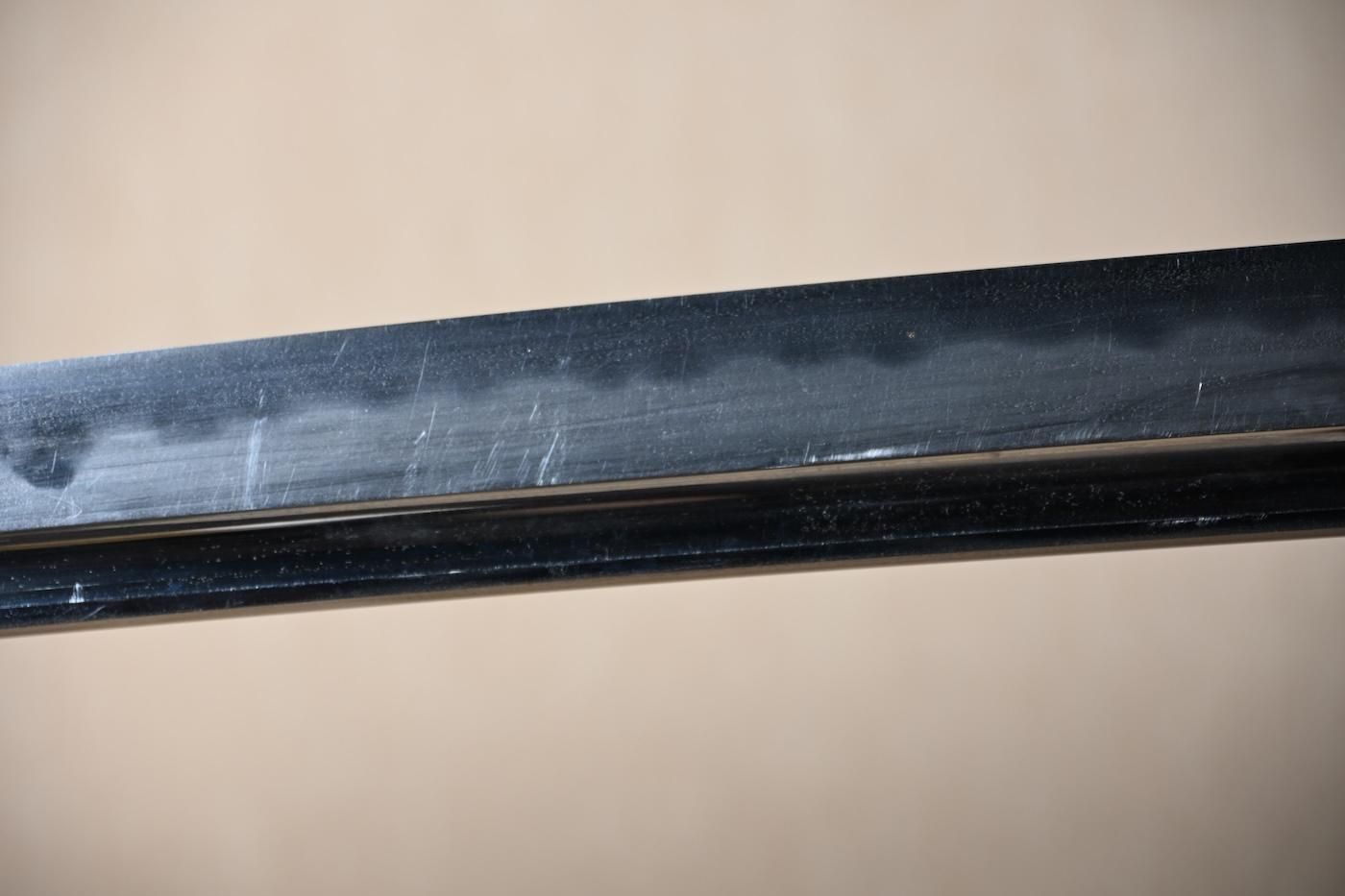
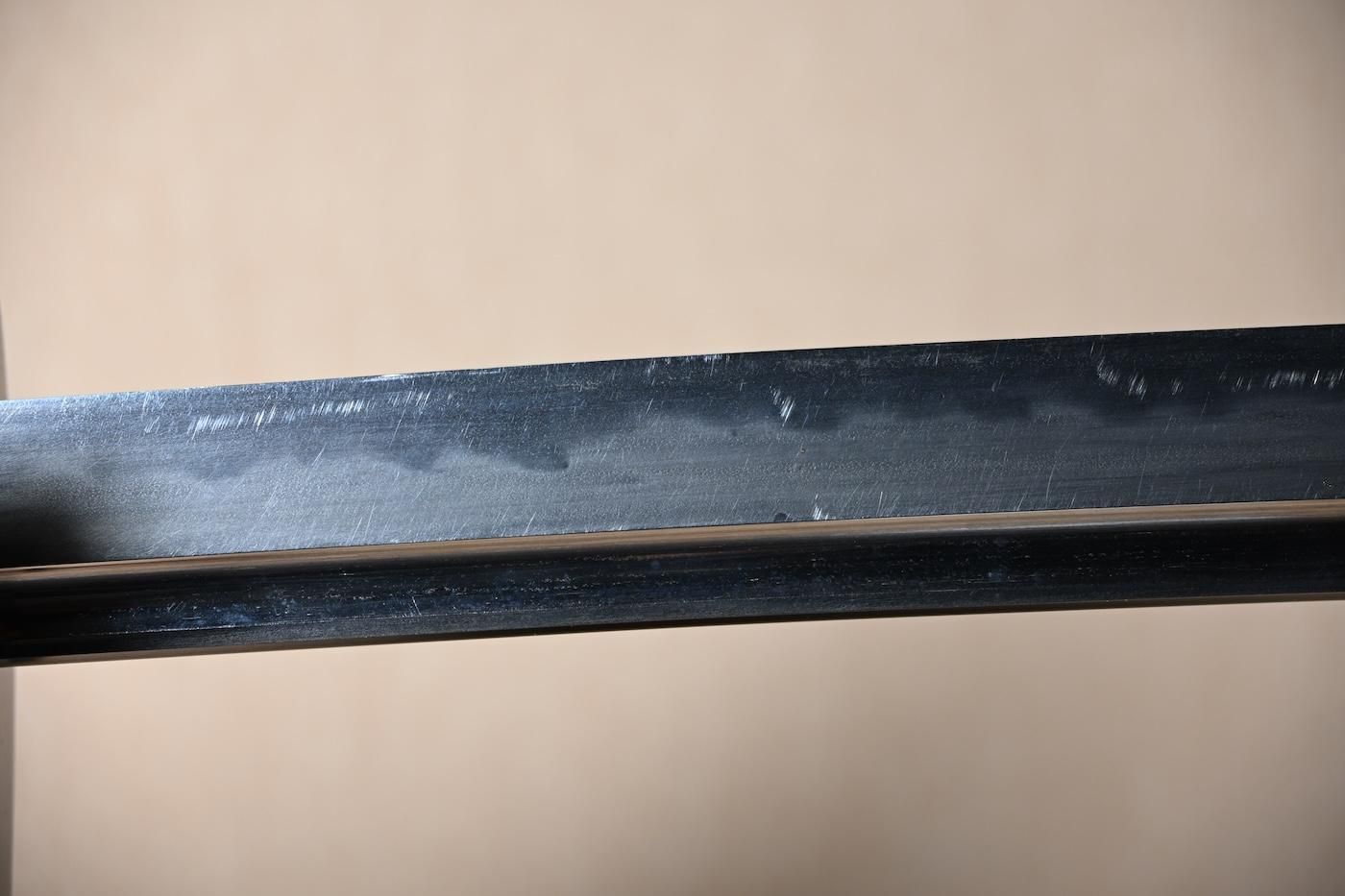
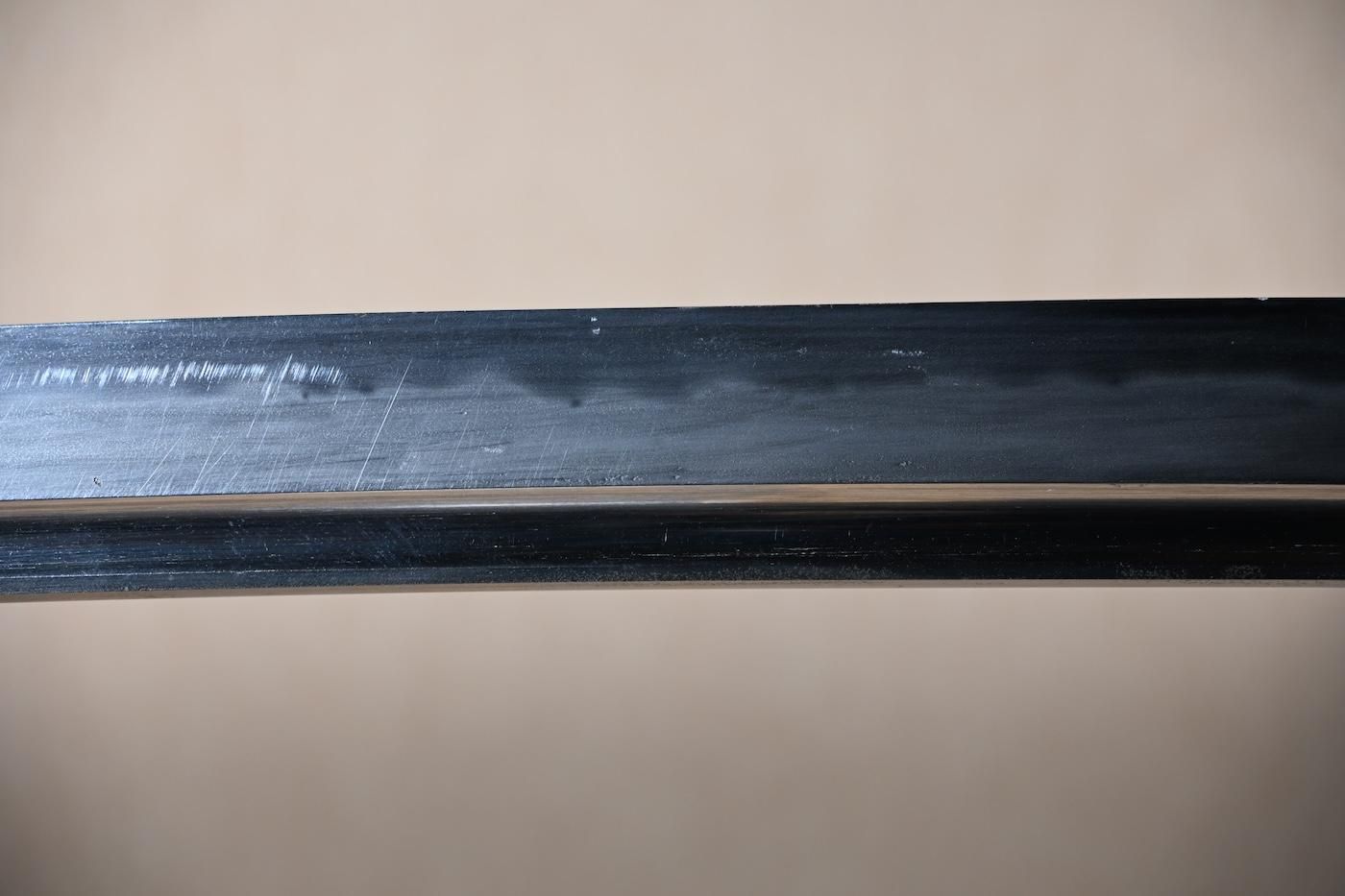
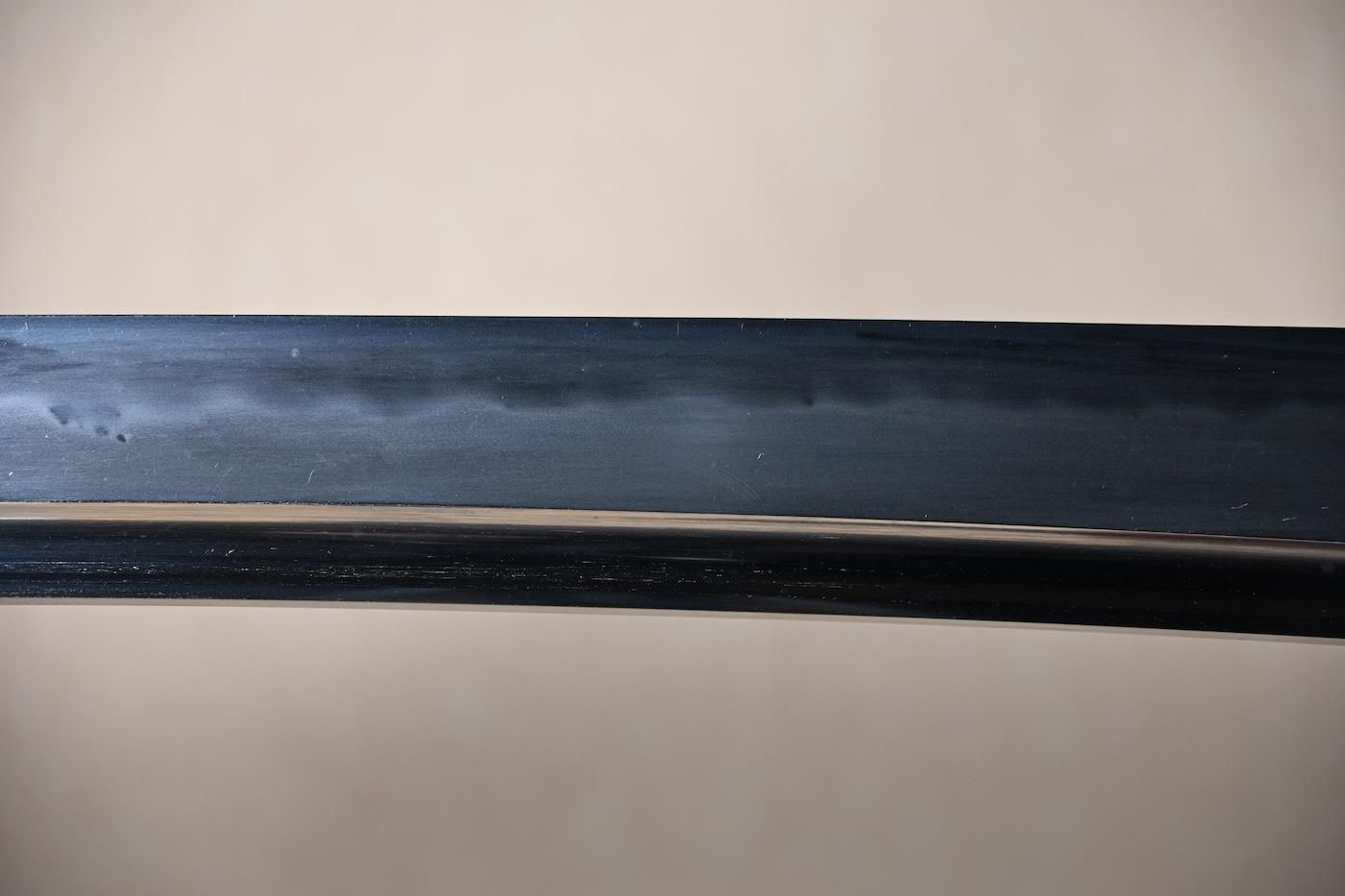
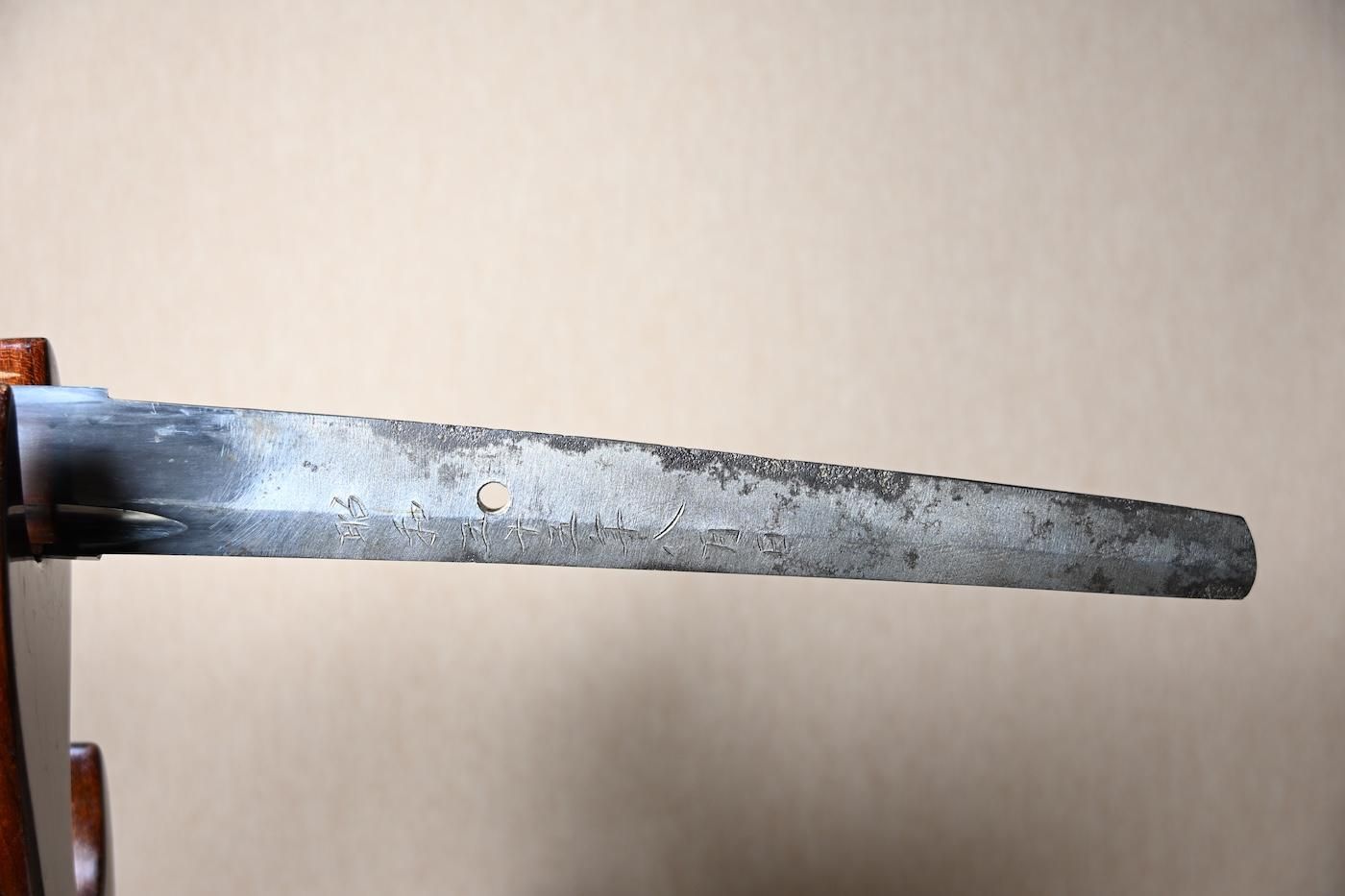
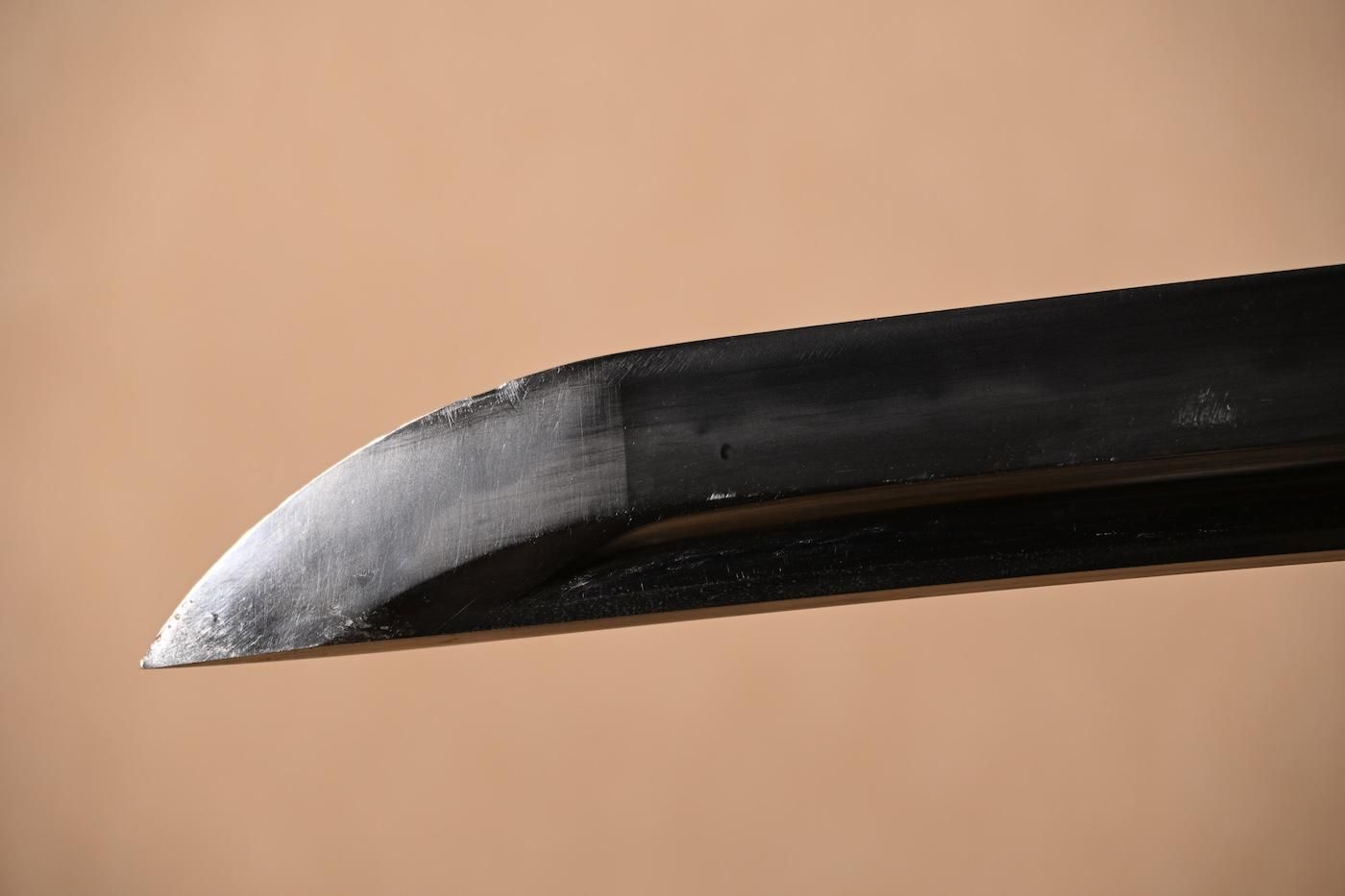
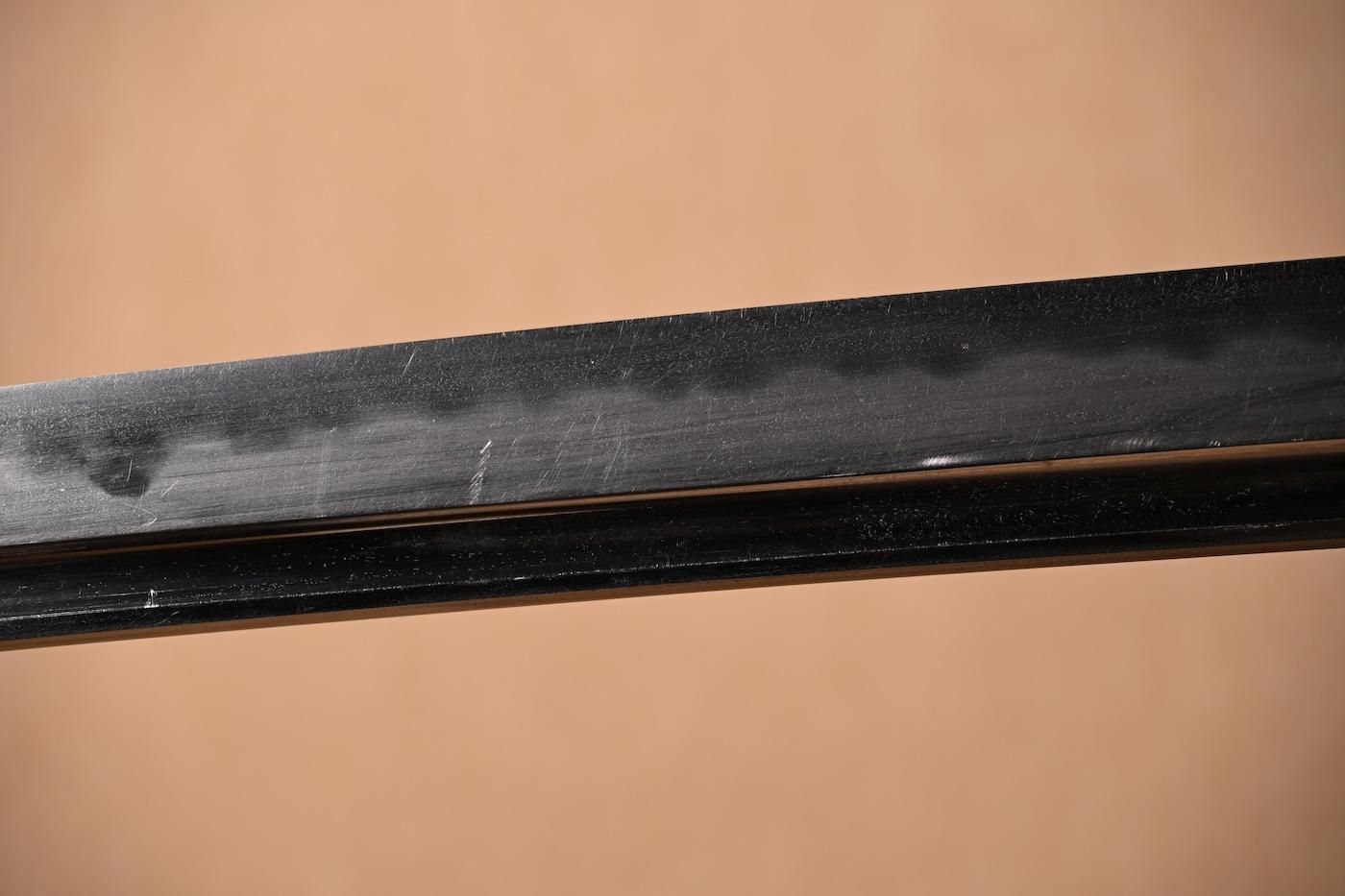
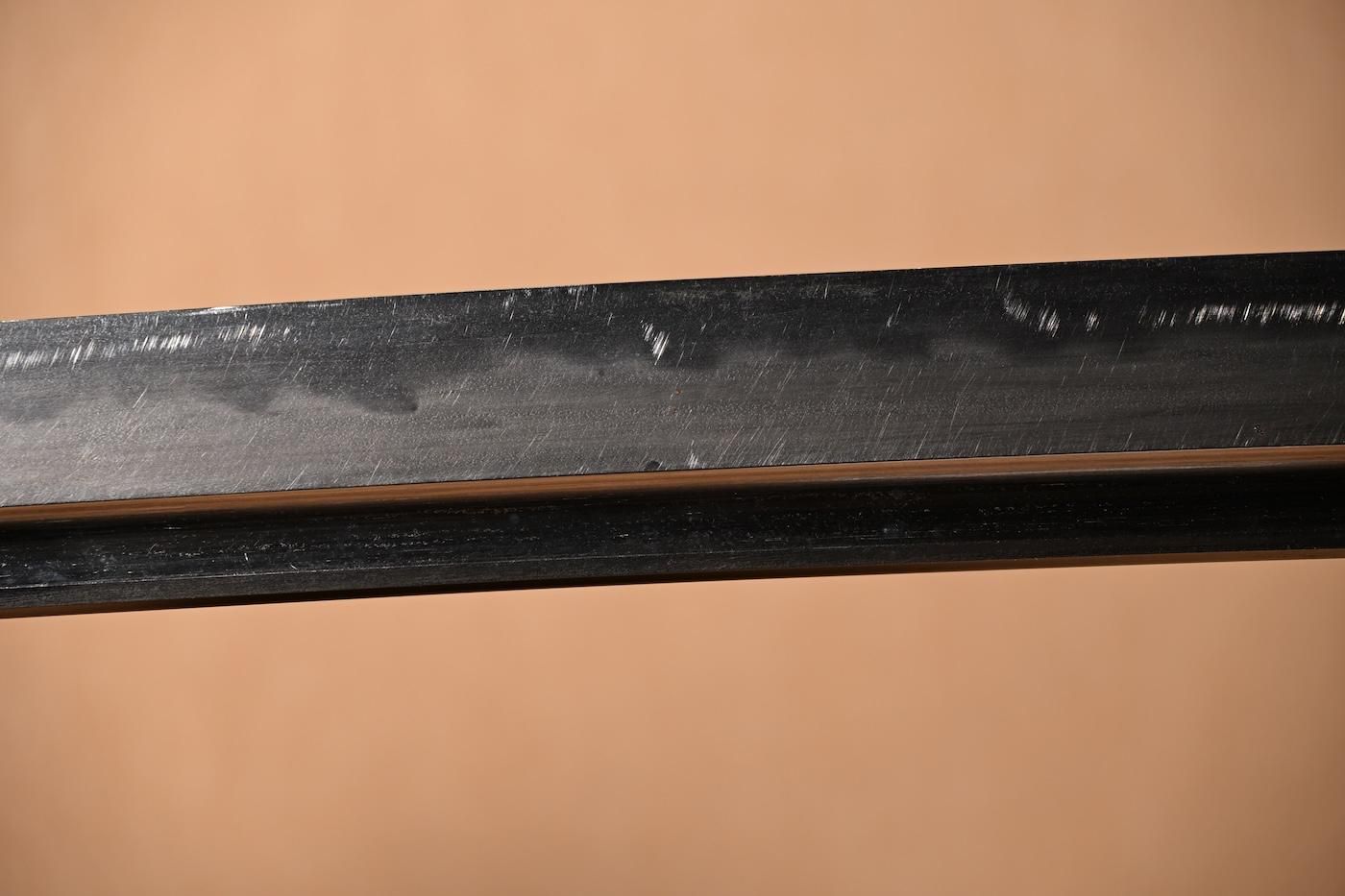
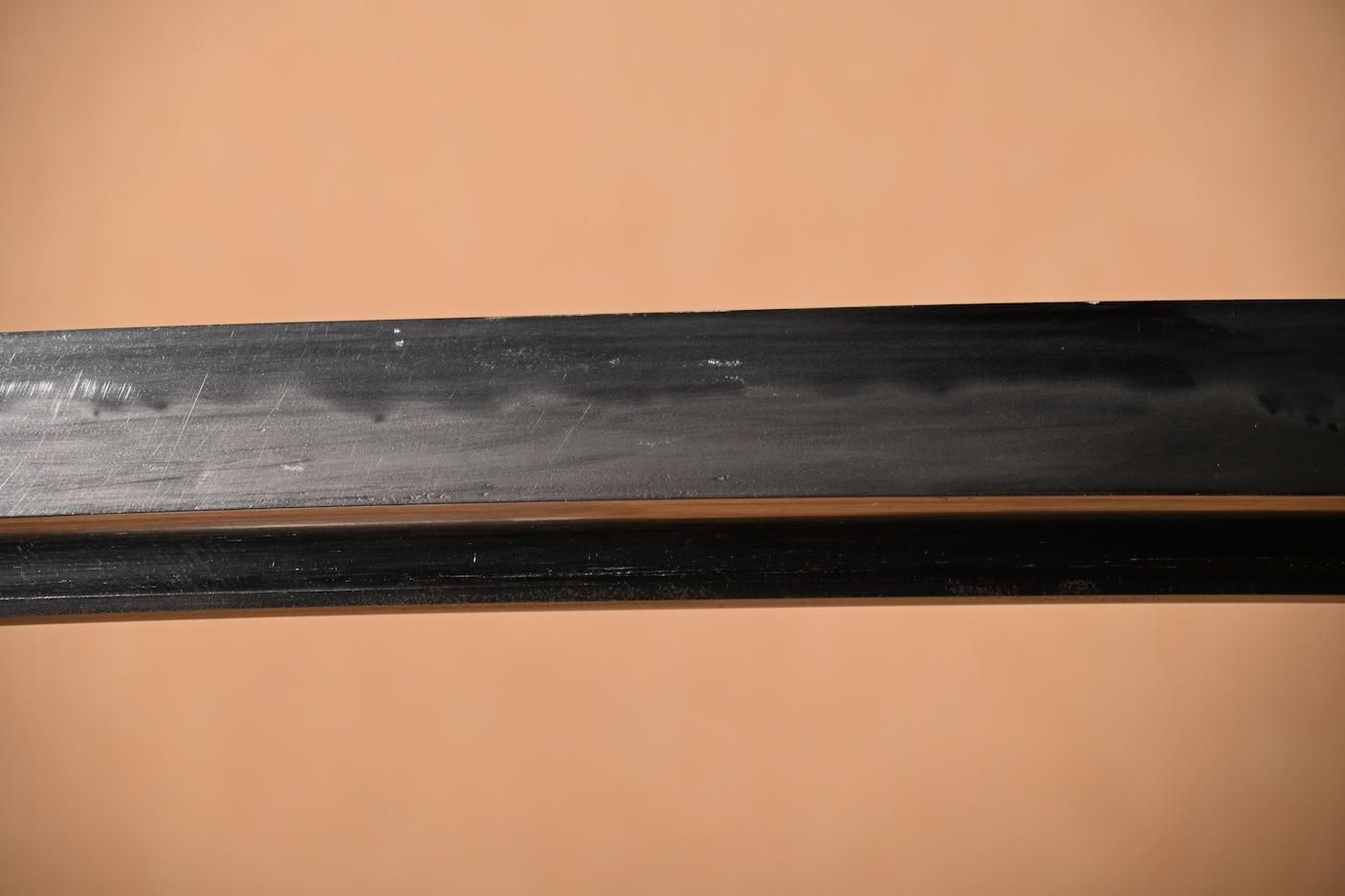
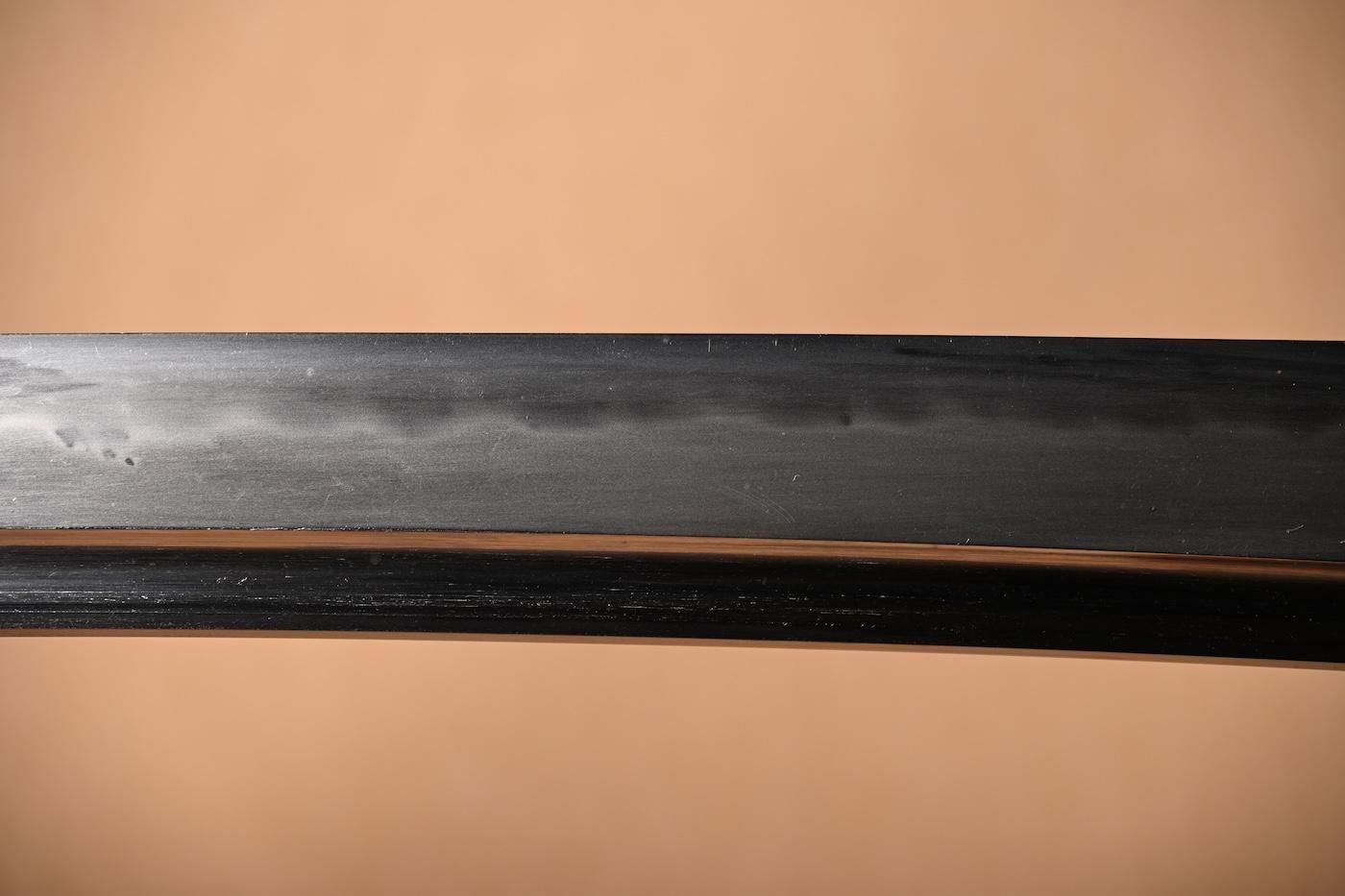
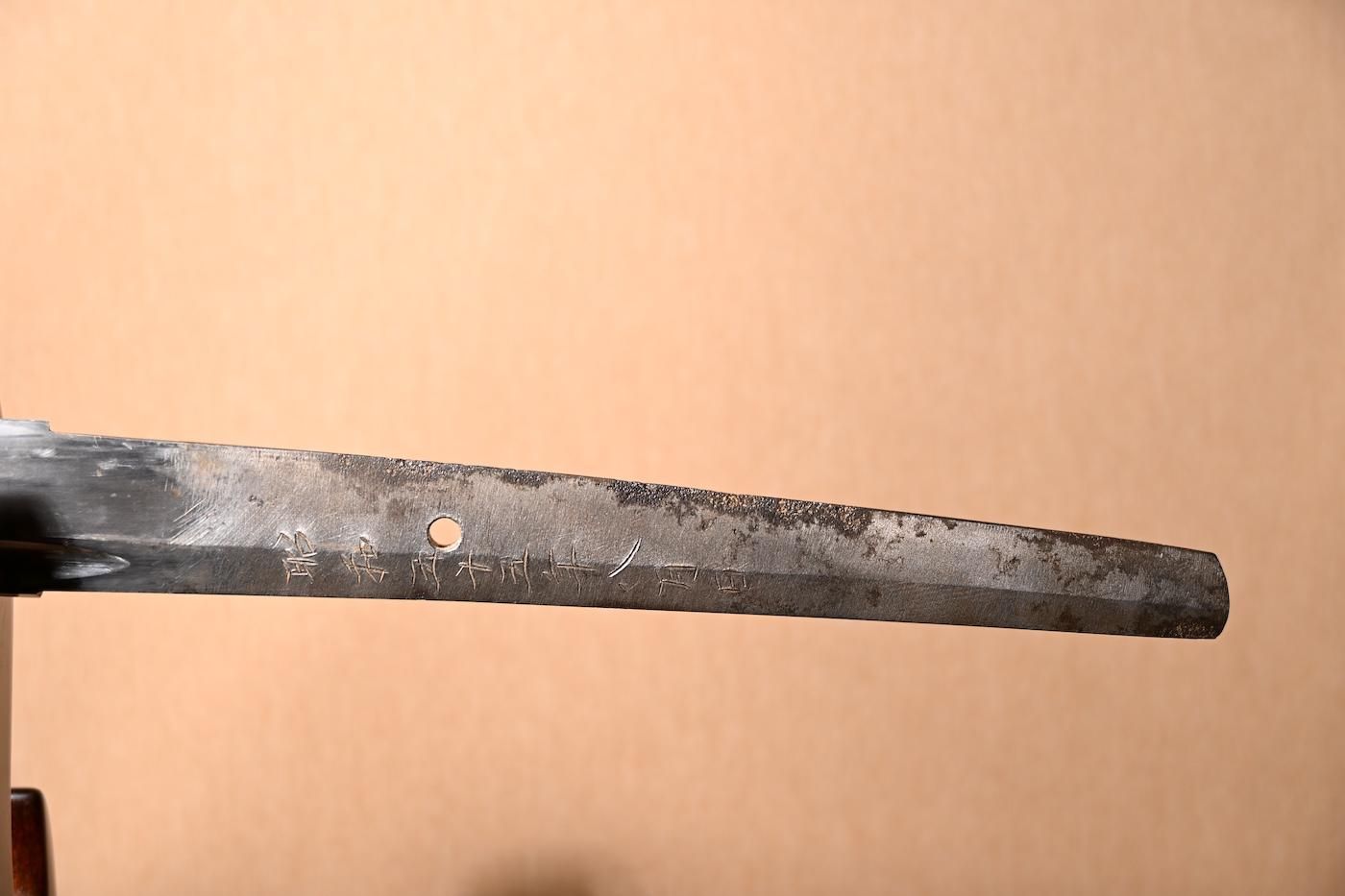
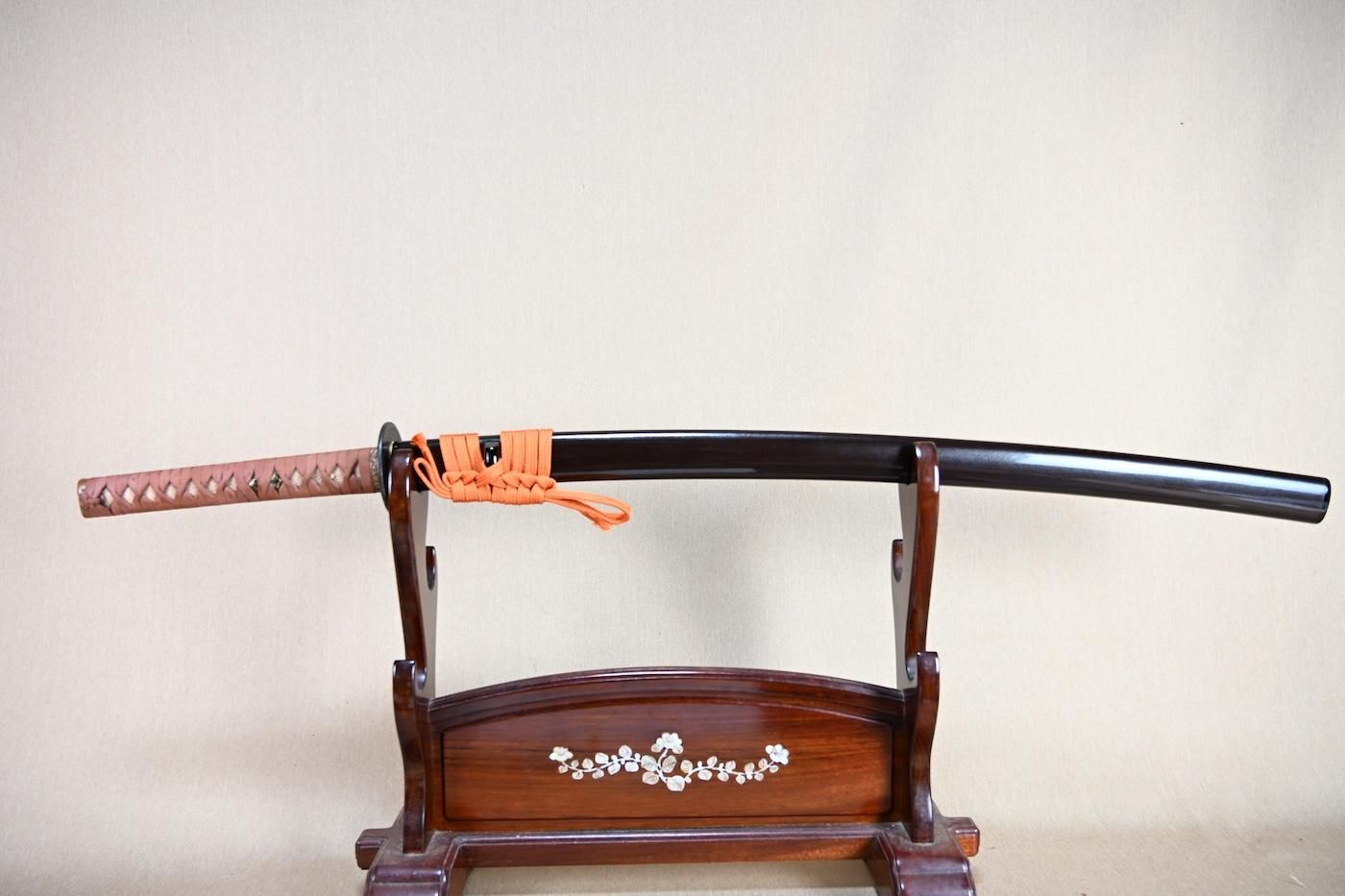
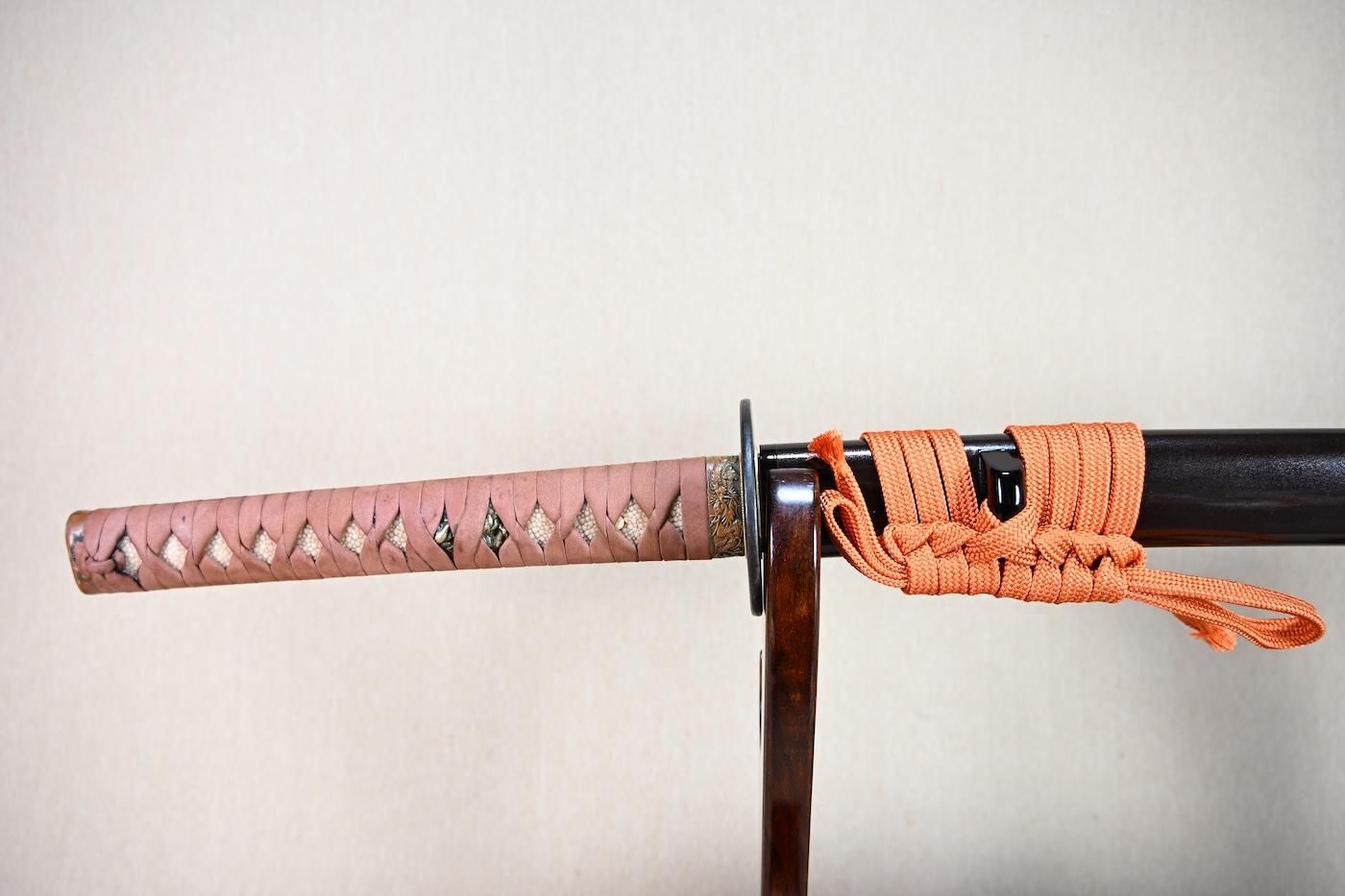
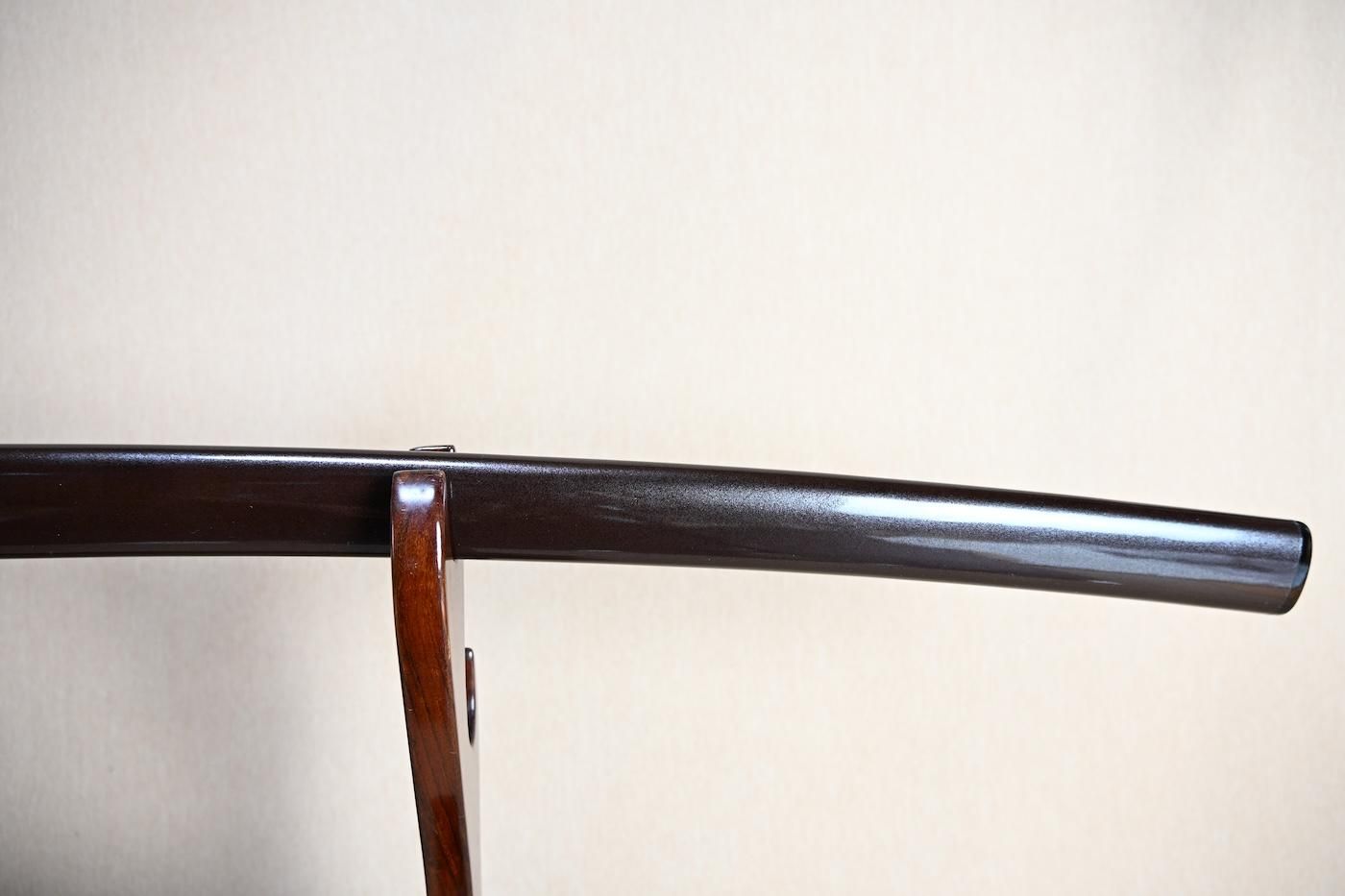
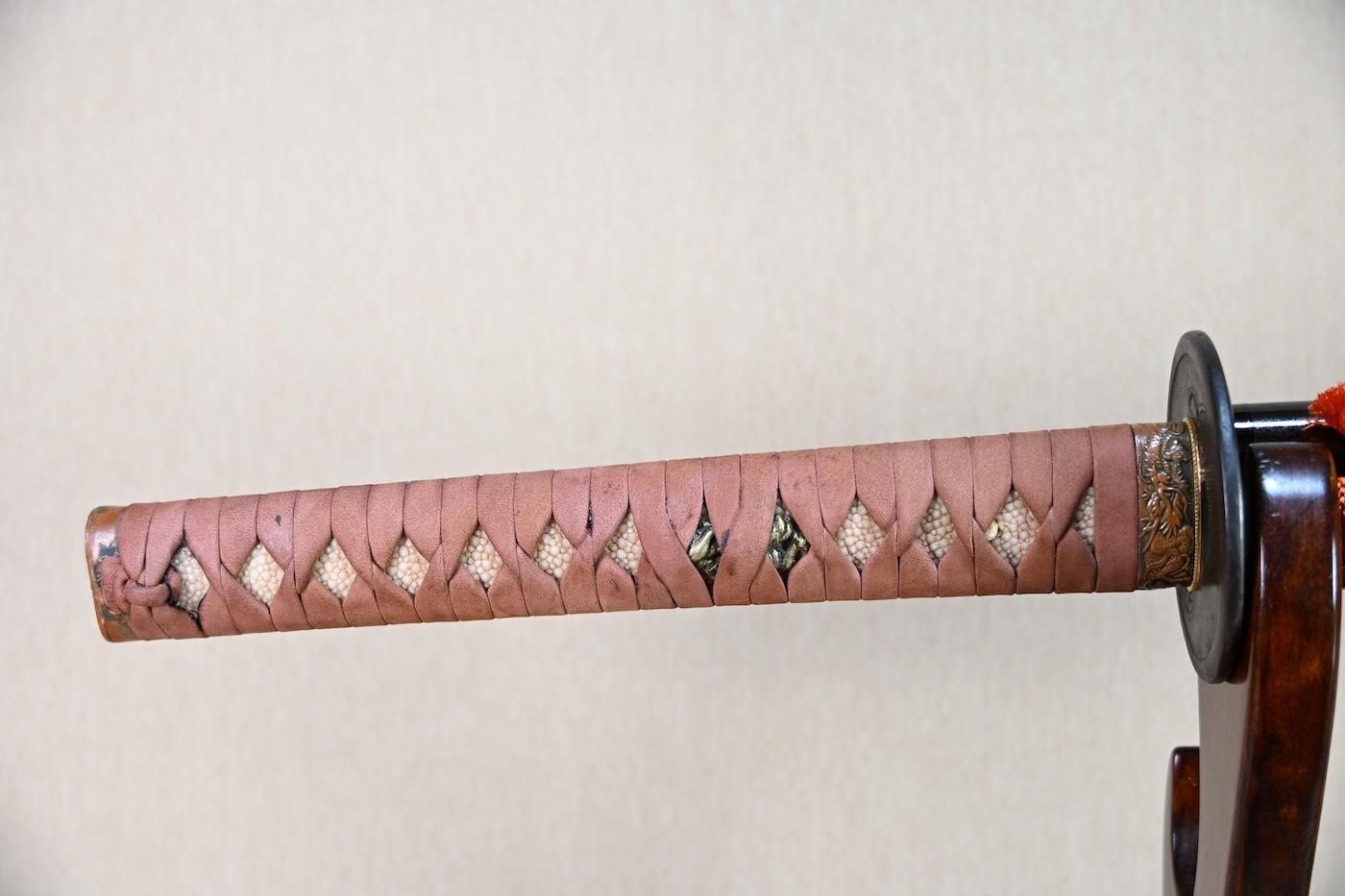
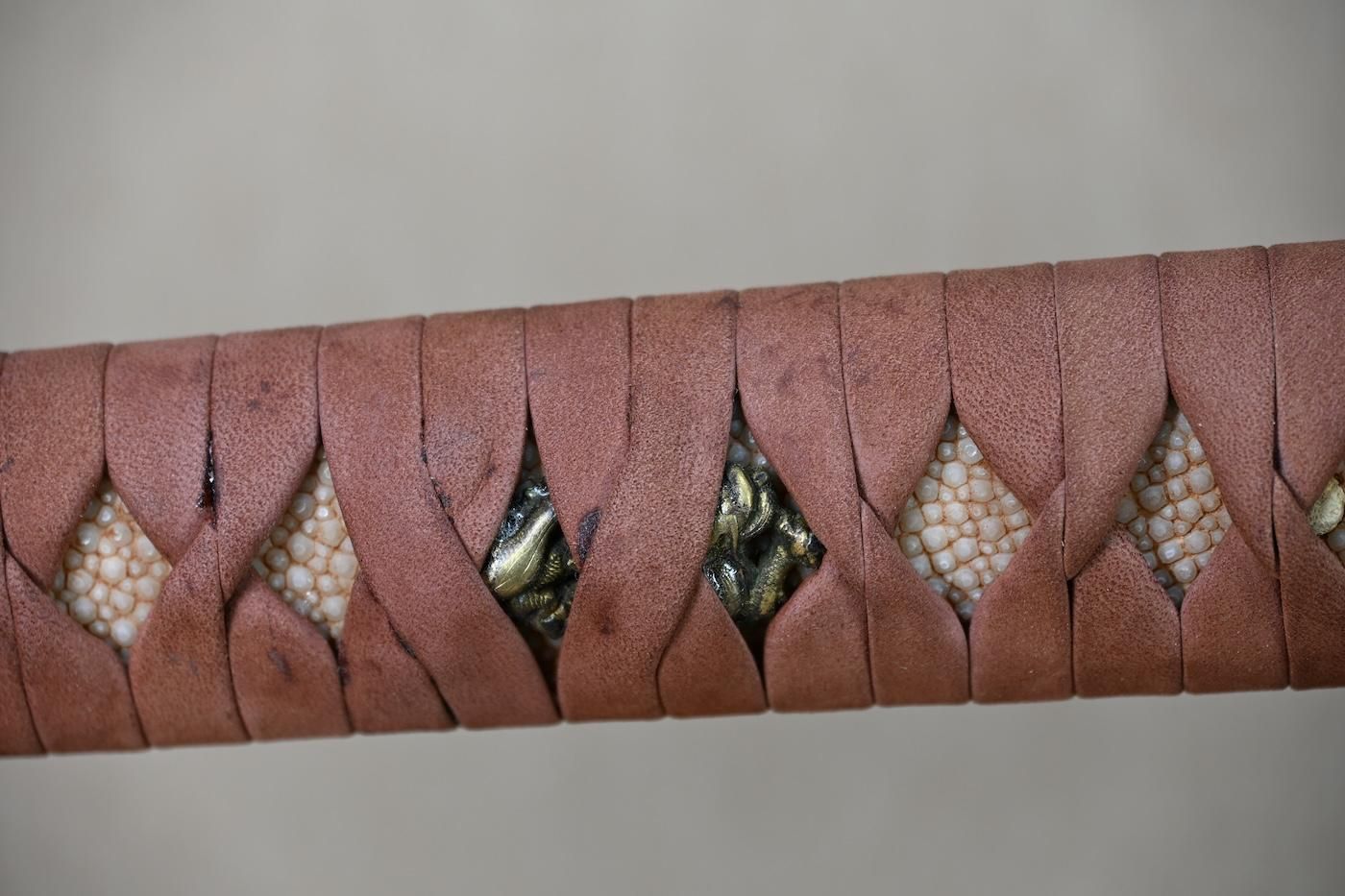
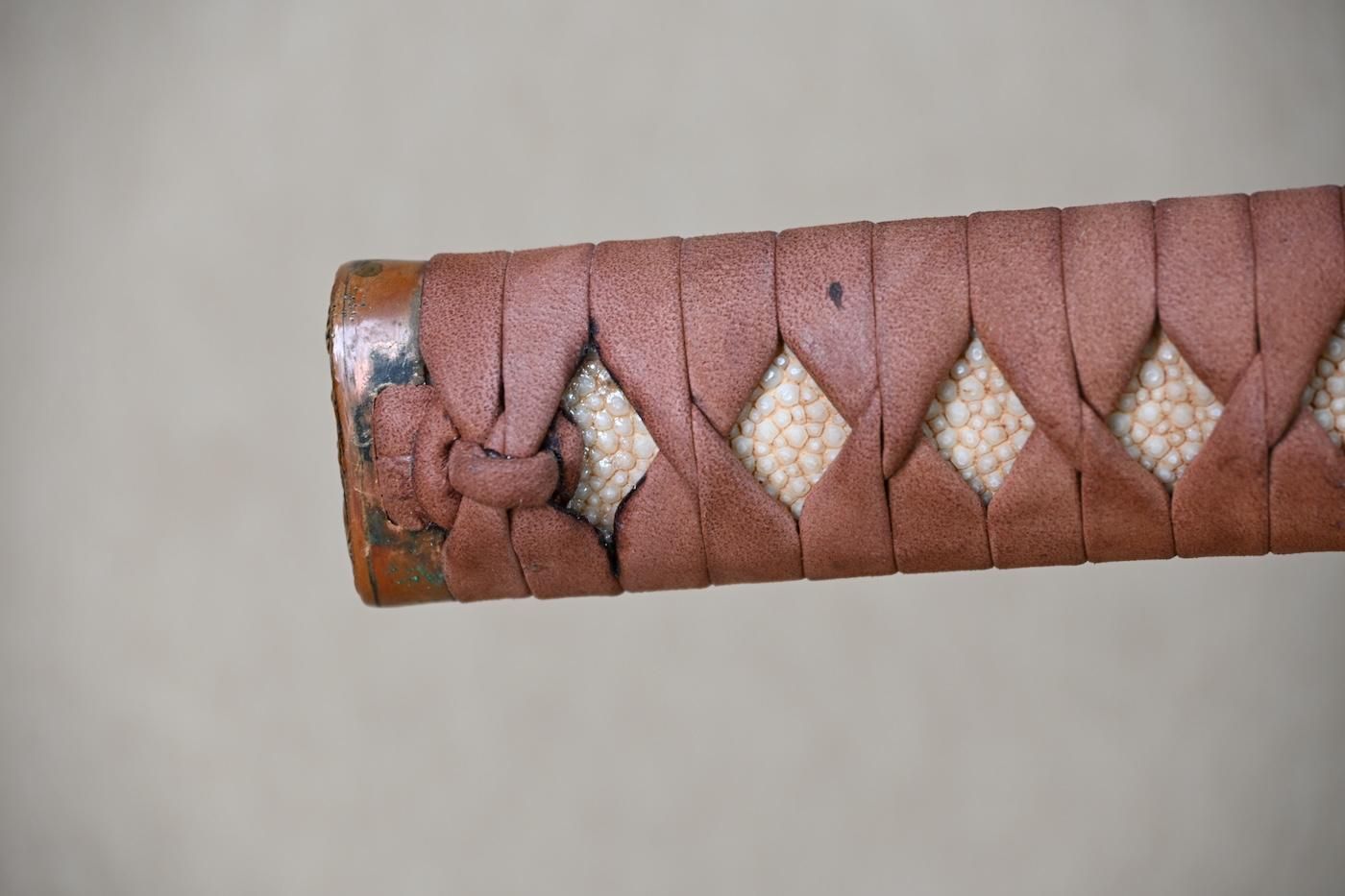
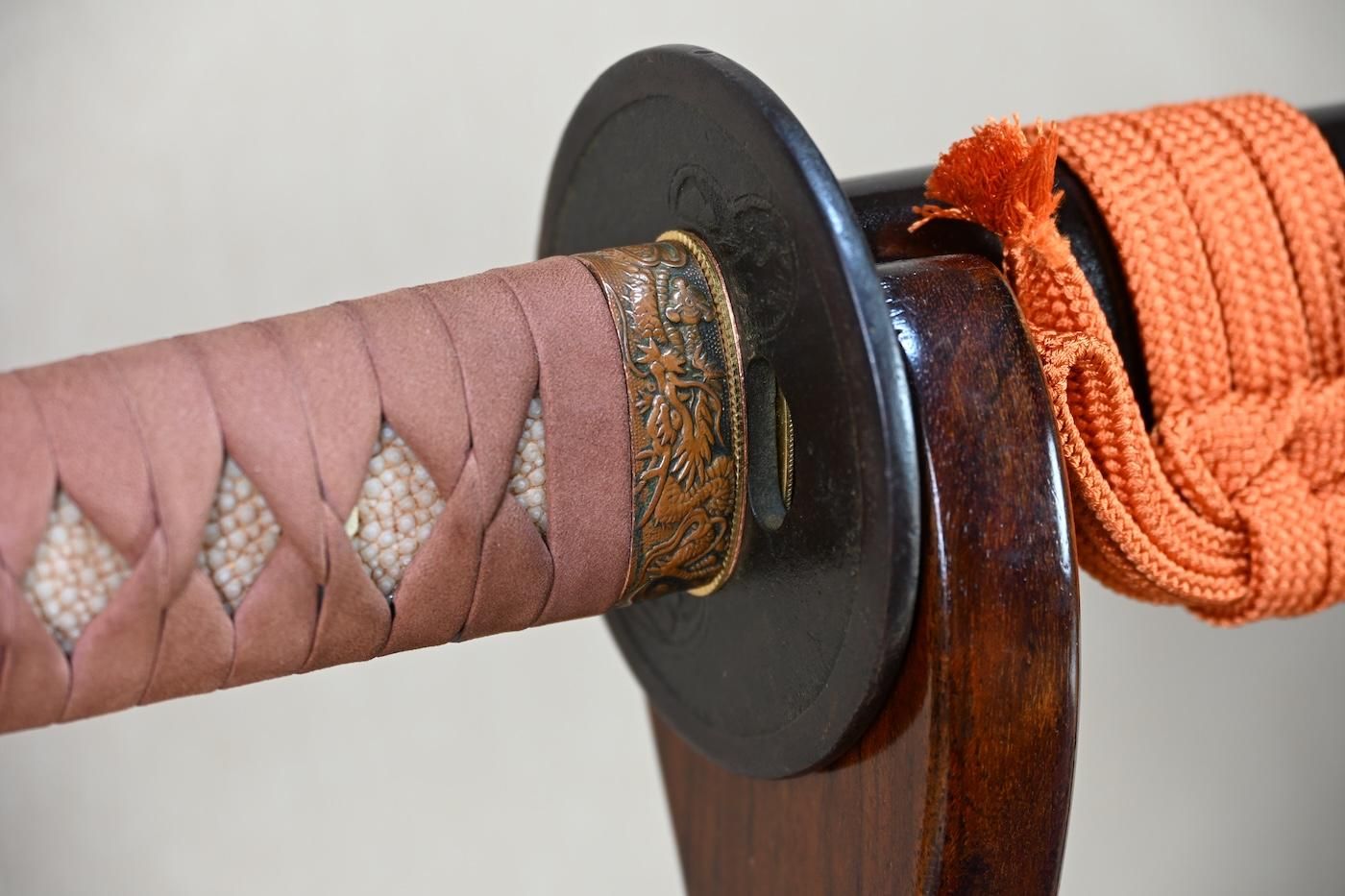
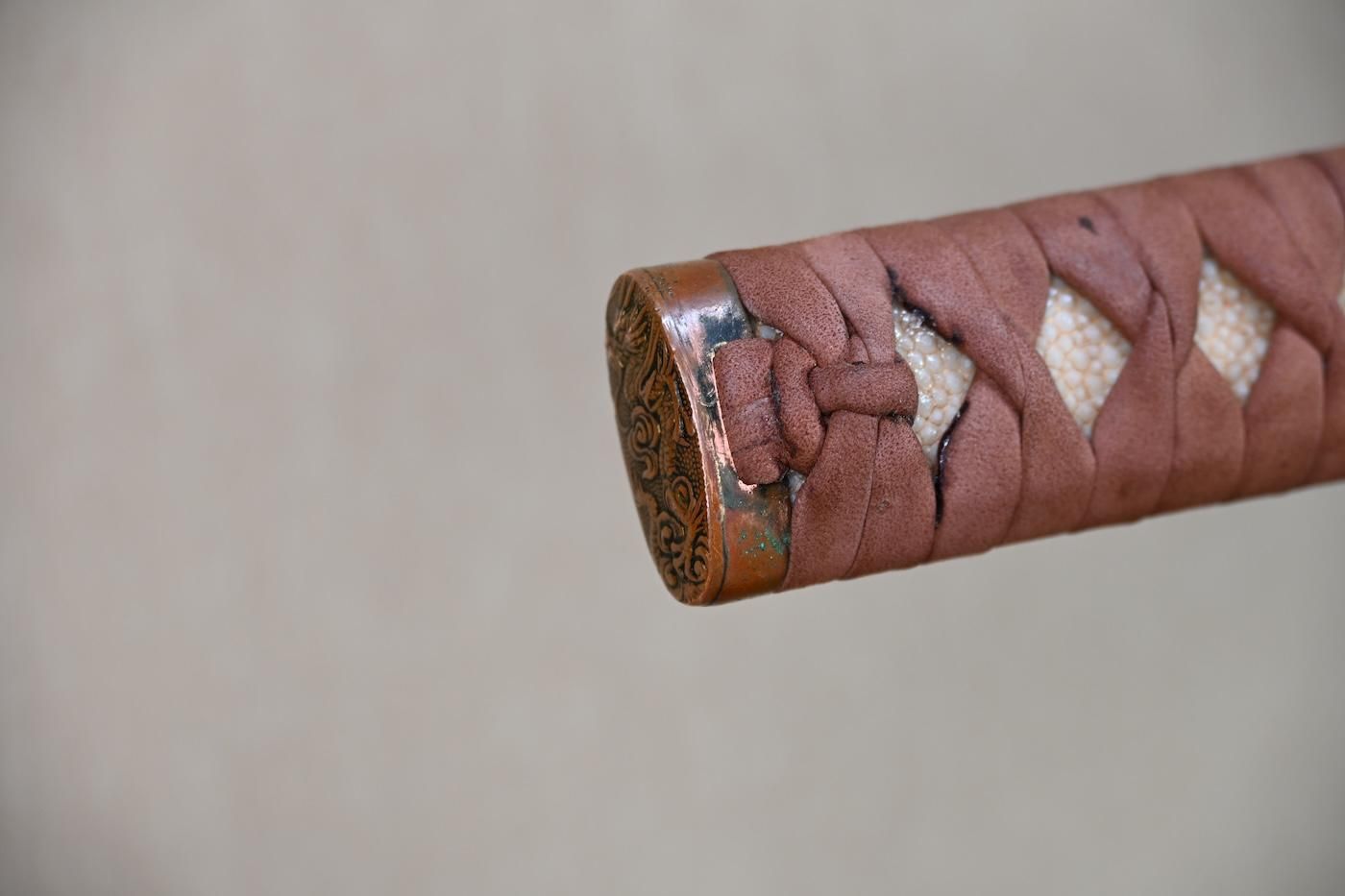
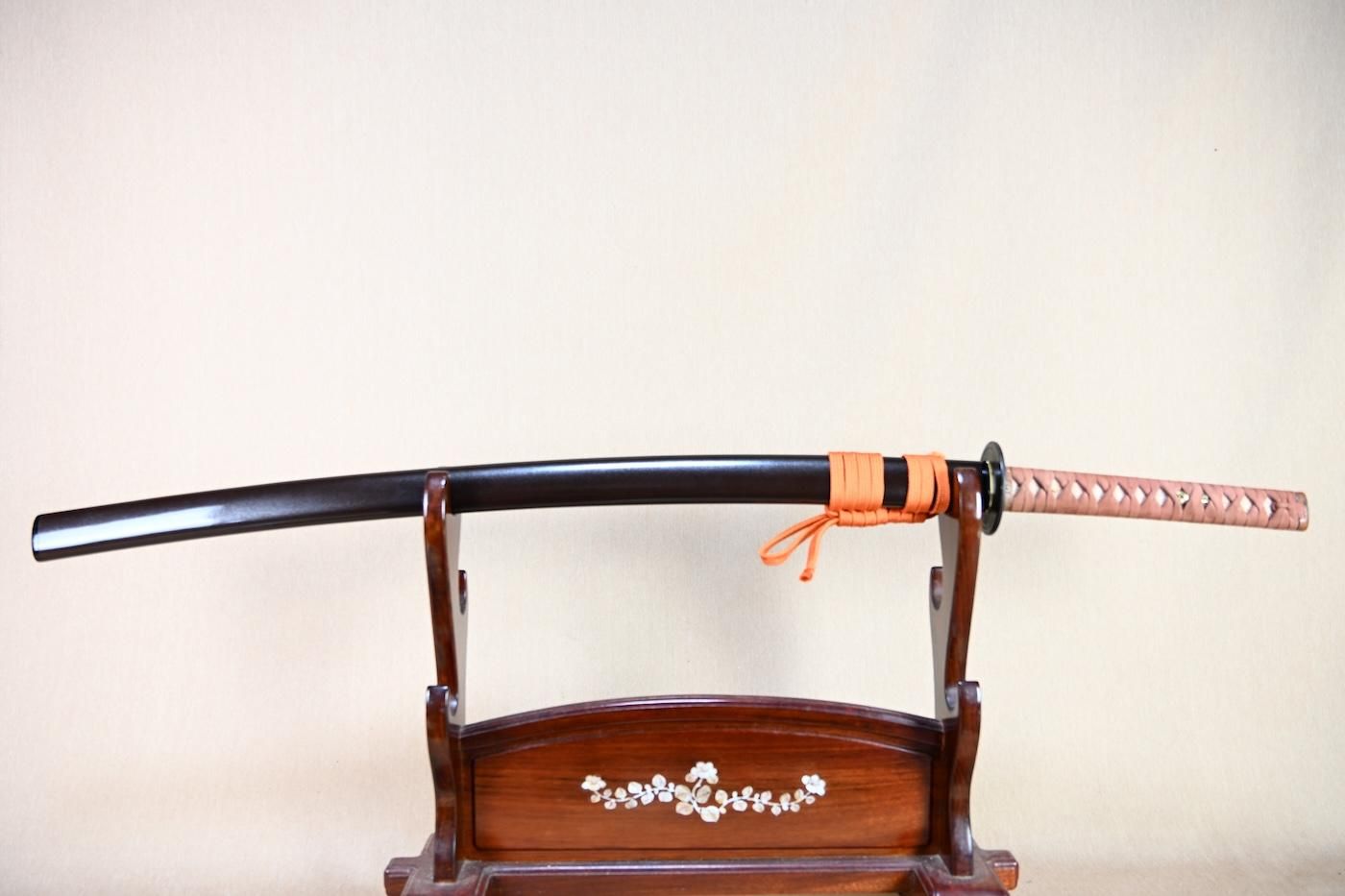
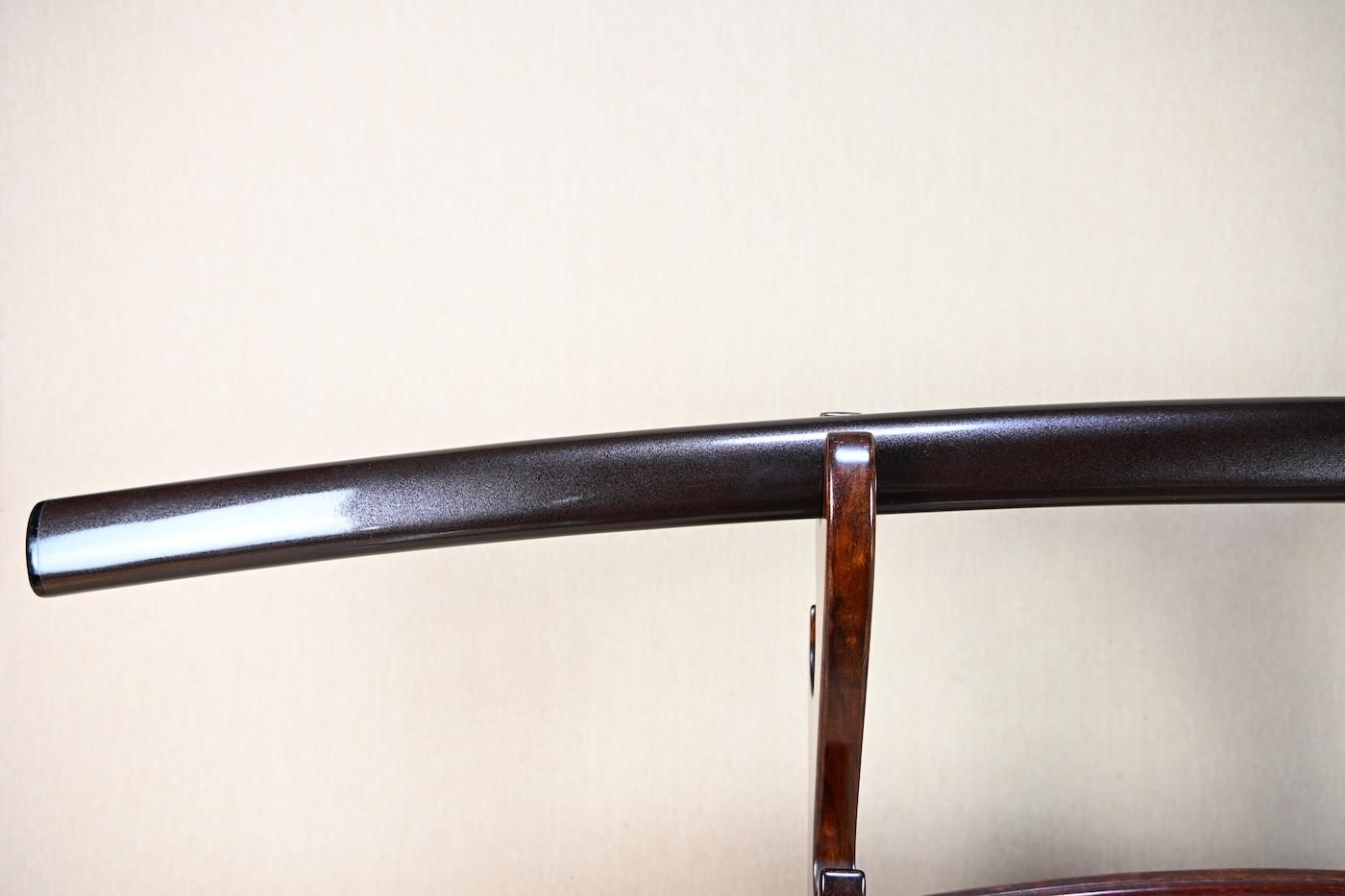
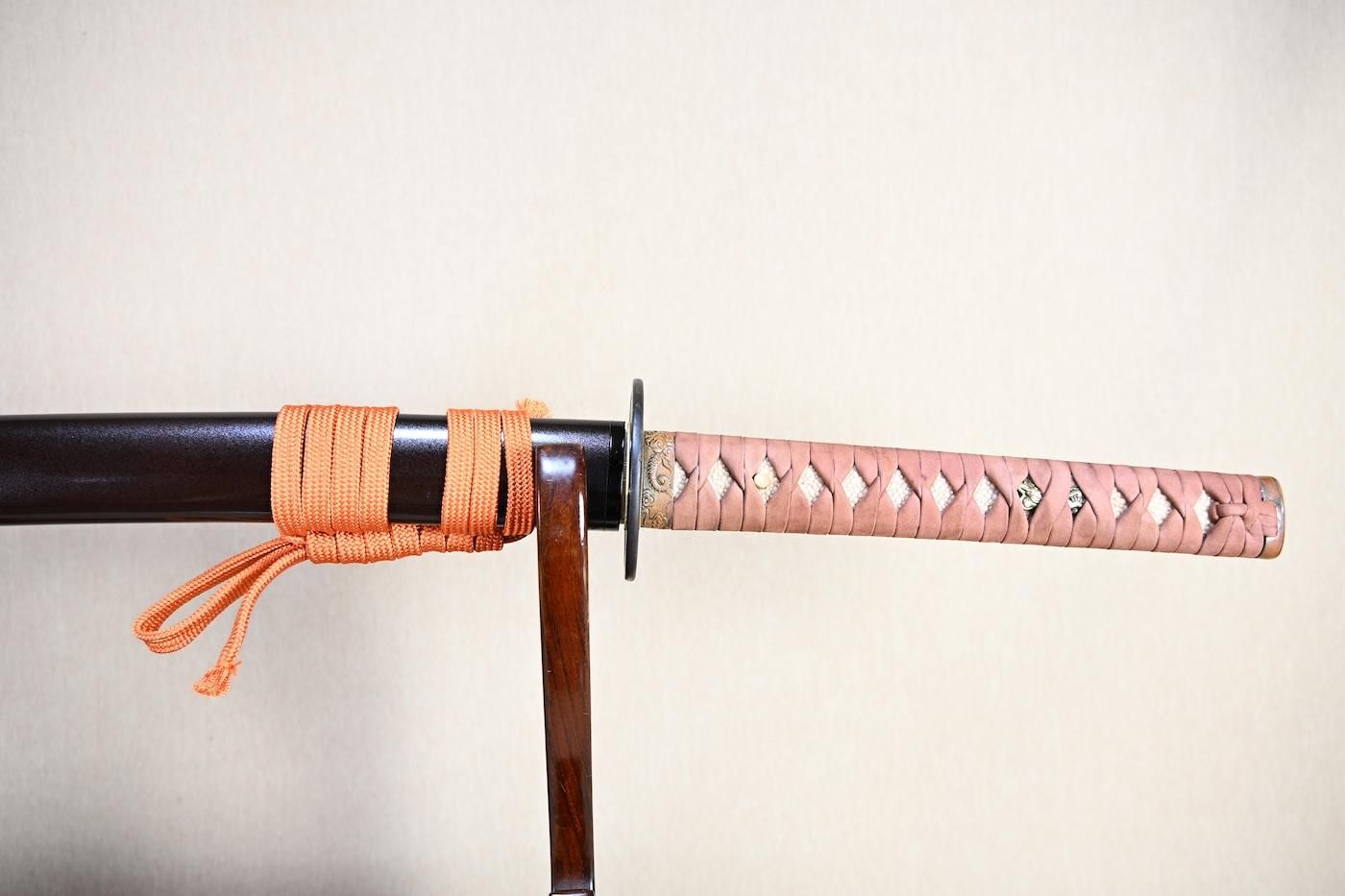
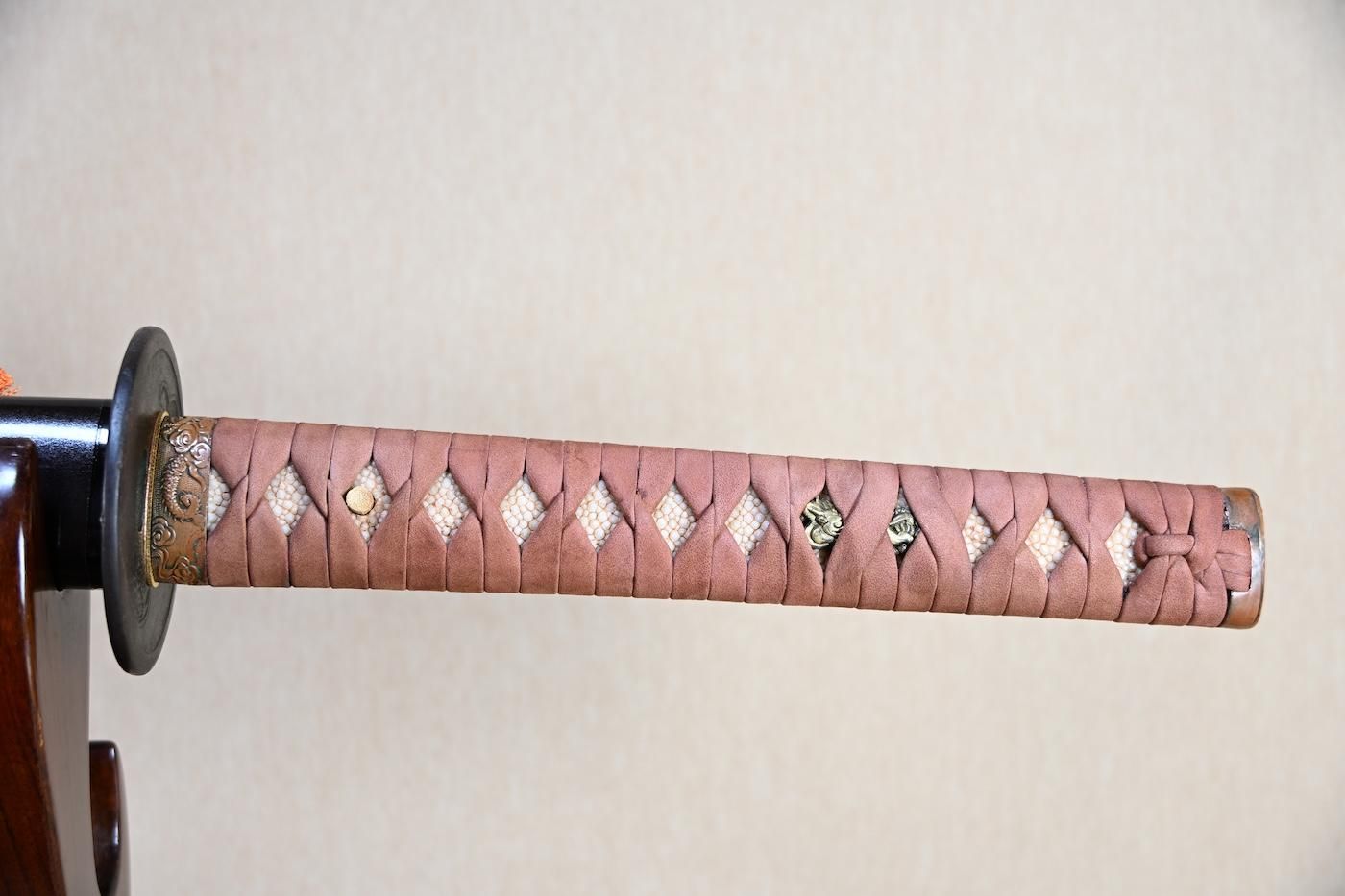
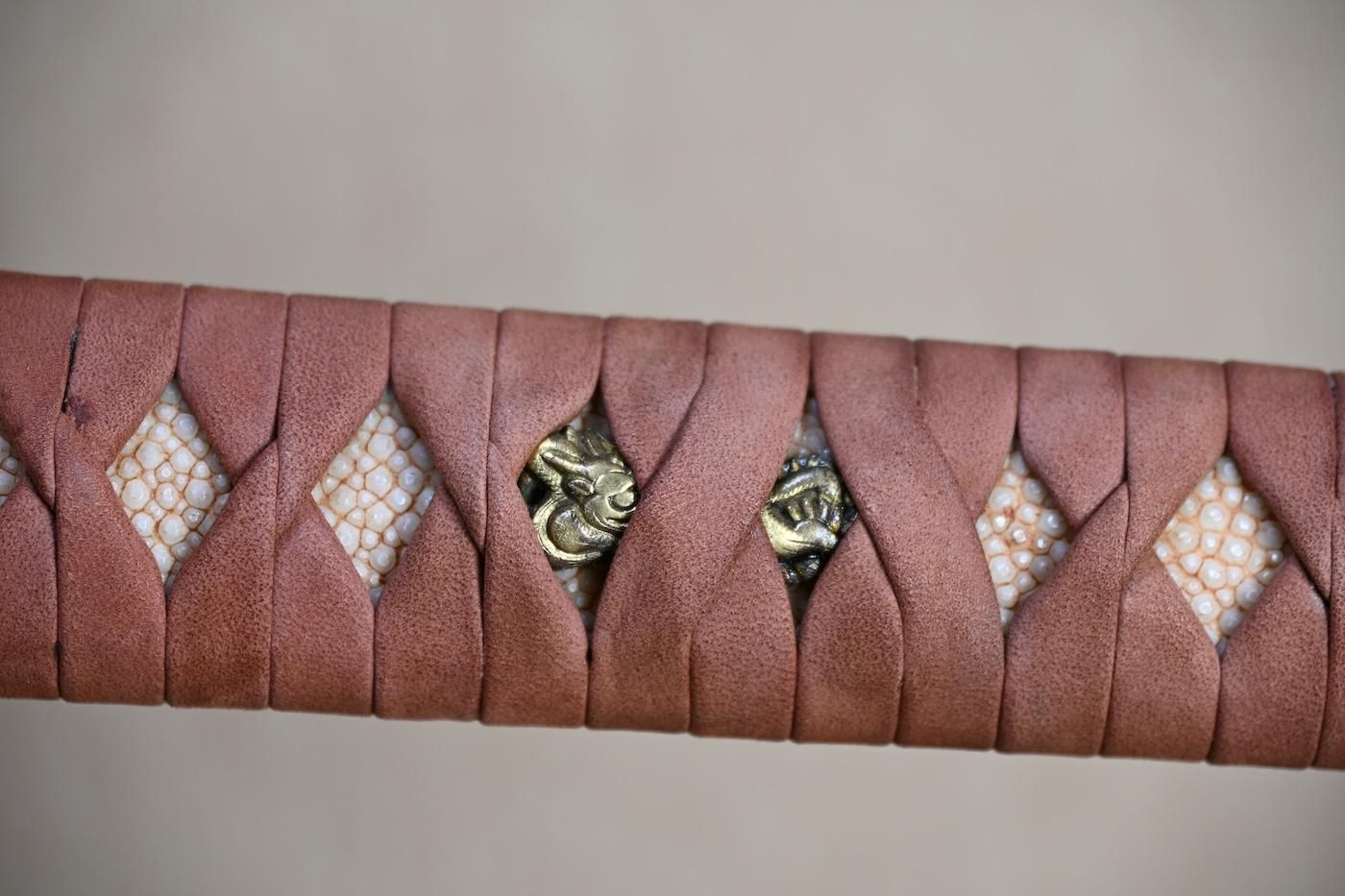
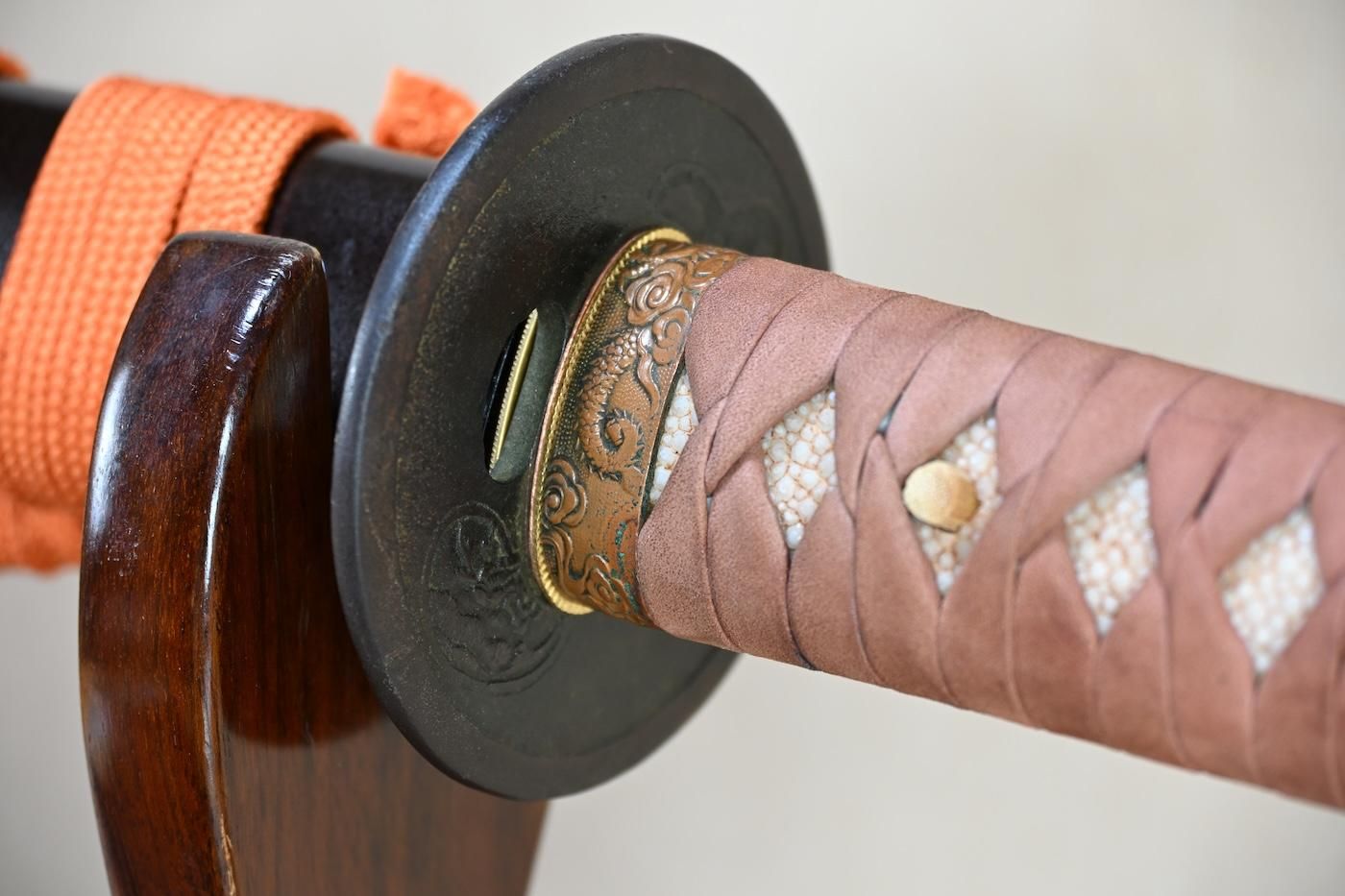
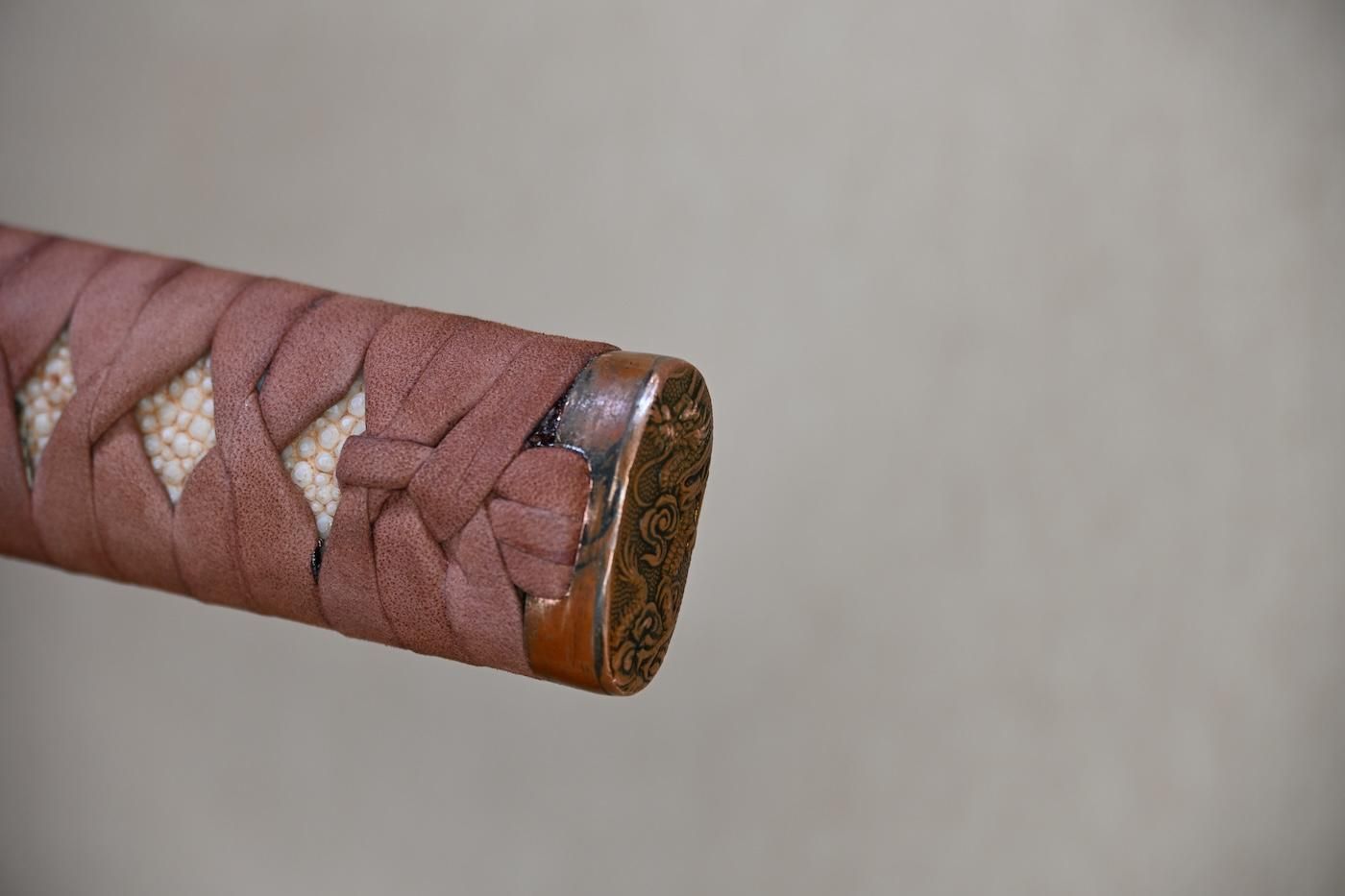
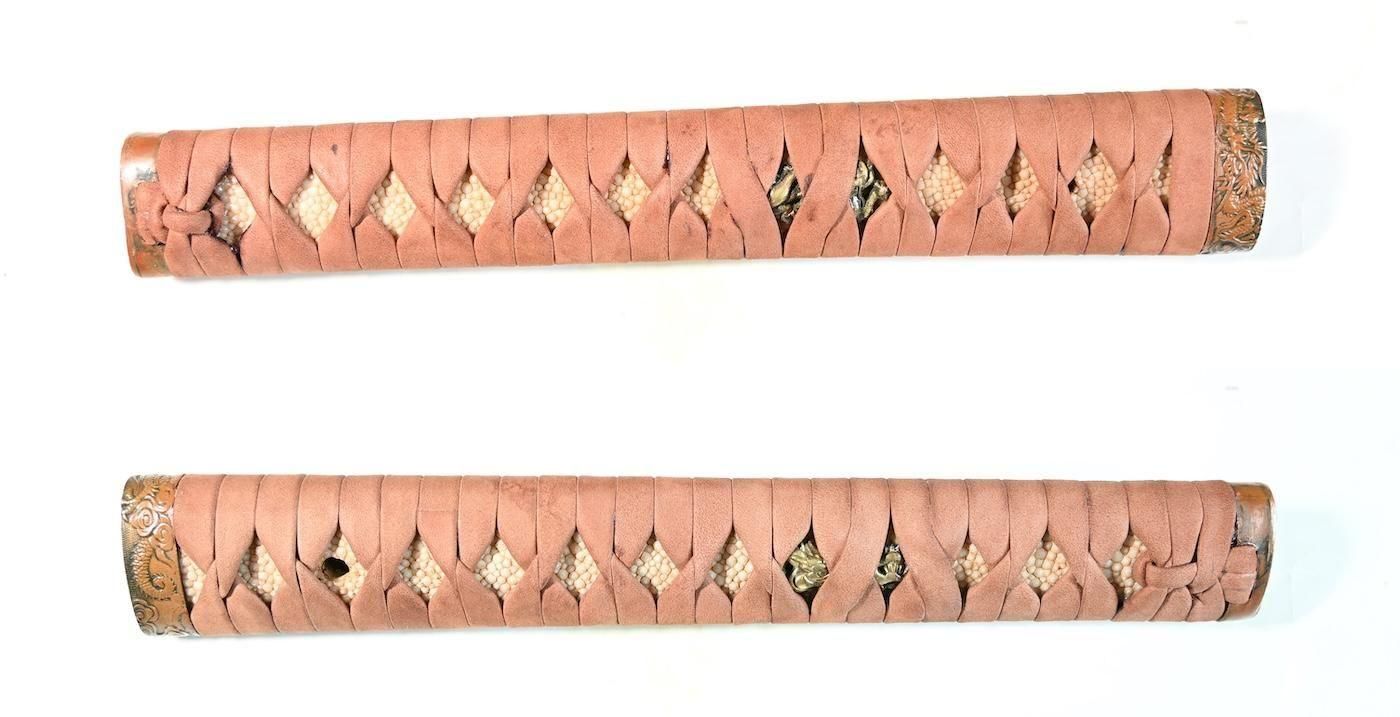
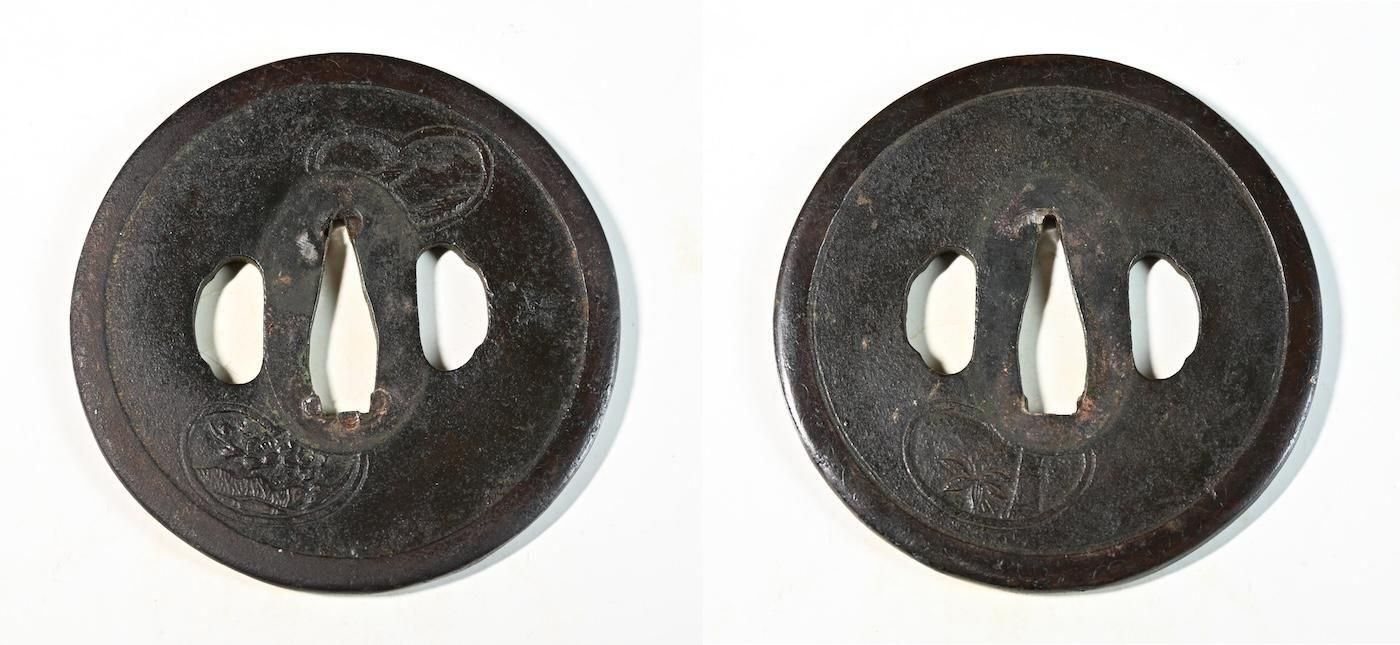
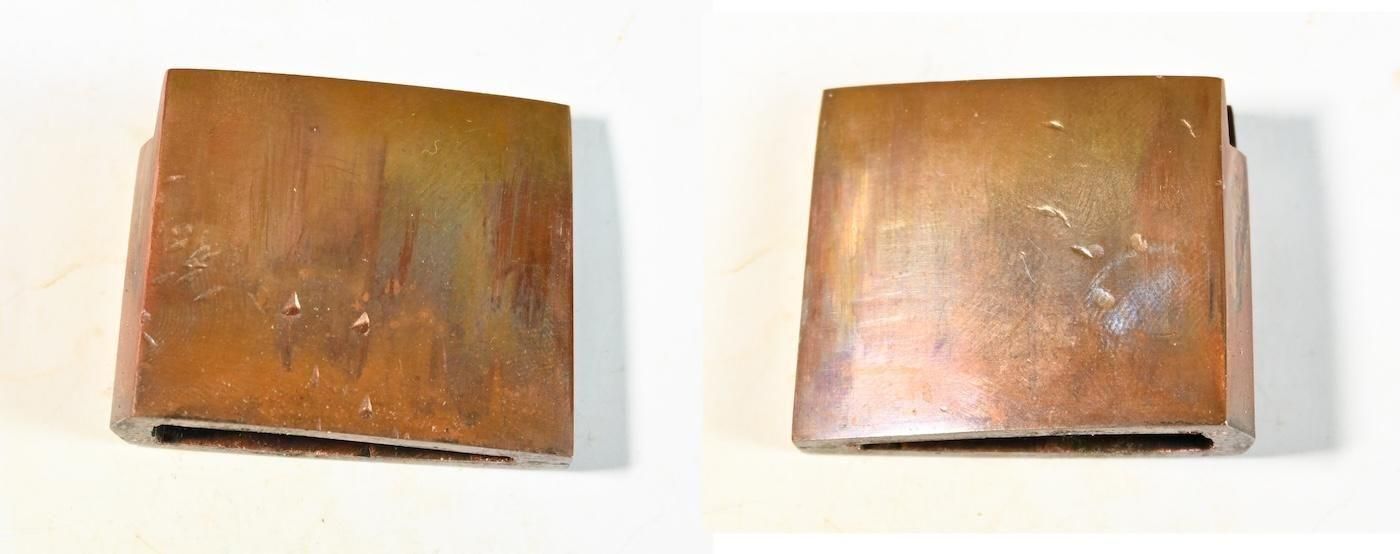
This is a gendaito katana by Ikkanzai Tomohiro (Otake Shinichi), a rare swordsmith working in Tokyo. Made in Showa 55 (1980), it features a wide body with a strong fumbari, a muji-style jigane, and a tight gunome hamon. The sword comes with a newly made koshirae featuring modern fittings, a round plate tsuba, and a new tea-ishime saya.
 NihontoWatch
mei · Showa (1926-1989) · nagasa 73cm · sori 1.6cm
Musashi · around 1980-1995
2 pieces on the market now
Shōwa to the present: destruction and revival
The twentieth century nearly killed the craft twice: wartime distortion, then the occupation ban. The NBTHK’s founding in 1948 and licensed forging from 1953 rebuilt the sword as an art, crowned by Living National Treasures and the mukansa rank.
We could not find an authenticity certificate on the seller’s listing. Japanese swords and fittings are normally papered by the NBTHK (or the NTHK). Without one, the attribution is the seller’s own assessment and has not been independently verified — treat it with caution and ask the dealer about certification before buying.
Please contact us promptly after the item's arrival. Except where the item is defective, we cannot accept returns. For returns due to customer circumstances, the cost is the customer's responsibility. In the case of a defective item, we bear the cost.
¥352,000
This is a gendaito katana by Ikkanzai Tomohiro (Otake Shinichi), a rare swordsmith working in Tokyo. Made in Showa 55 (1980), it features a wide body with a strong fumbari, a muji-style jigane, and a tight gunome hamon. The sword comes with a newly made koshirae featuring modern fittings, a round plate tsuba, and a new tea-ishime saya.
NihontoWatchmei · Showa (1926-1989) · nagasa 73cm · sori 1.6cm
Musashi · around 1980-1995
2 pieces on the market now
Shōwa to the present: destruction and revival
The twentieth century nearly killed the craft twice: wartime distortion, then the occupation ban. The NBTHK’s founding in 1948 and licensed forging from 1953 rebuilt the sword as an art, crowned by Living National Treasures and the mukansa rank.
We could not find an authenticity certificate on the seller’s listing. Japanese swords and fittings are normally papered by the NBTHK (or the NTHK). Without one, the attribution is the seller’s own assessment and has not been independently verified — treat it with caution and ask the dealer about certification before buying.
Please contact us promptly after the item's arrival. Except where the item is defective, we cannot accept returns. For returns due to customer circumstances, the cost is the customer's responsibility. In the case of a defective item, we bear the cost.
¥352,000


