Muromachi turned sword making into an industry: the uchigatana rose with massed infantry warfare, Osafune and Seki produced bundle swords beside custom orders, and the Ming trade carried Japanese blades abroad by the tens of thousands.
 NihontoWatchNihontoWatch
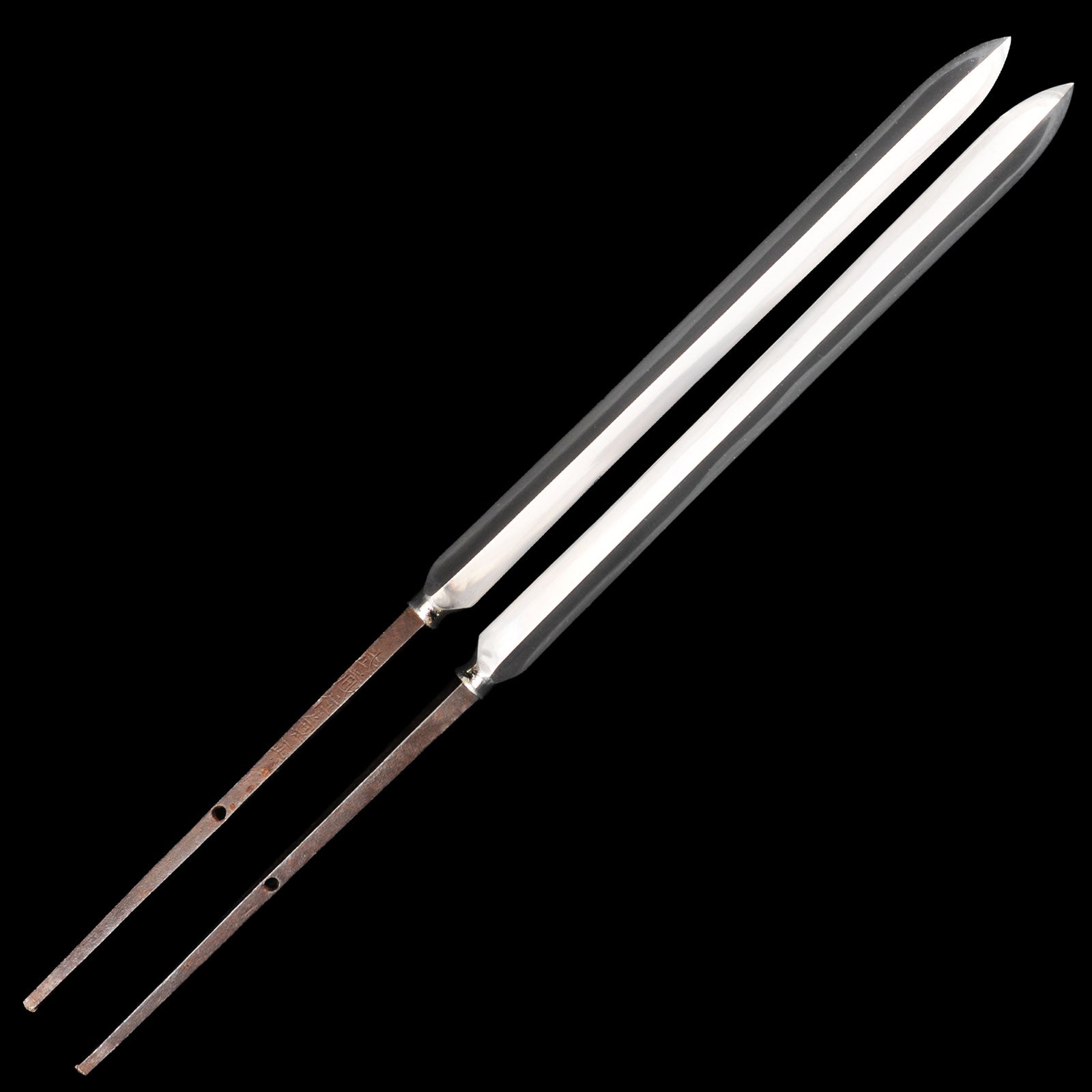
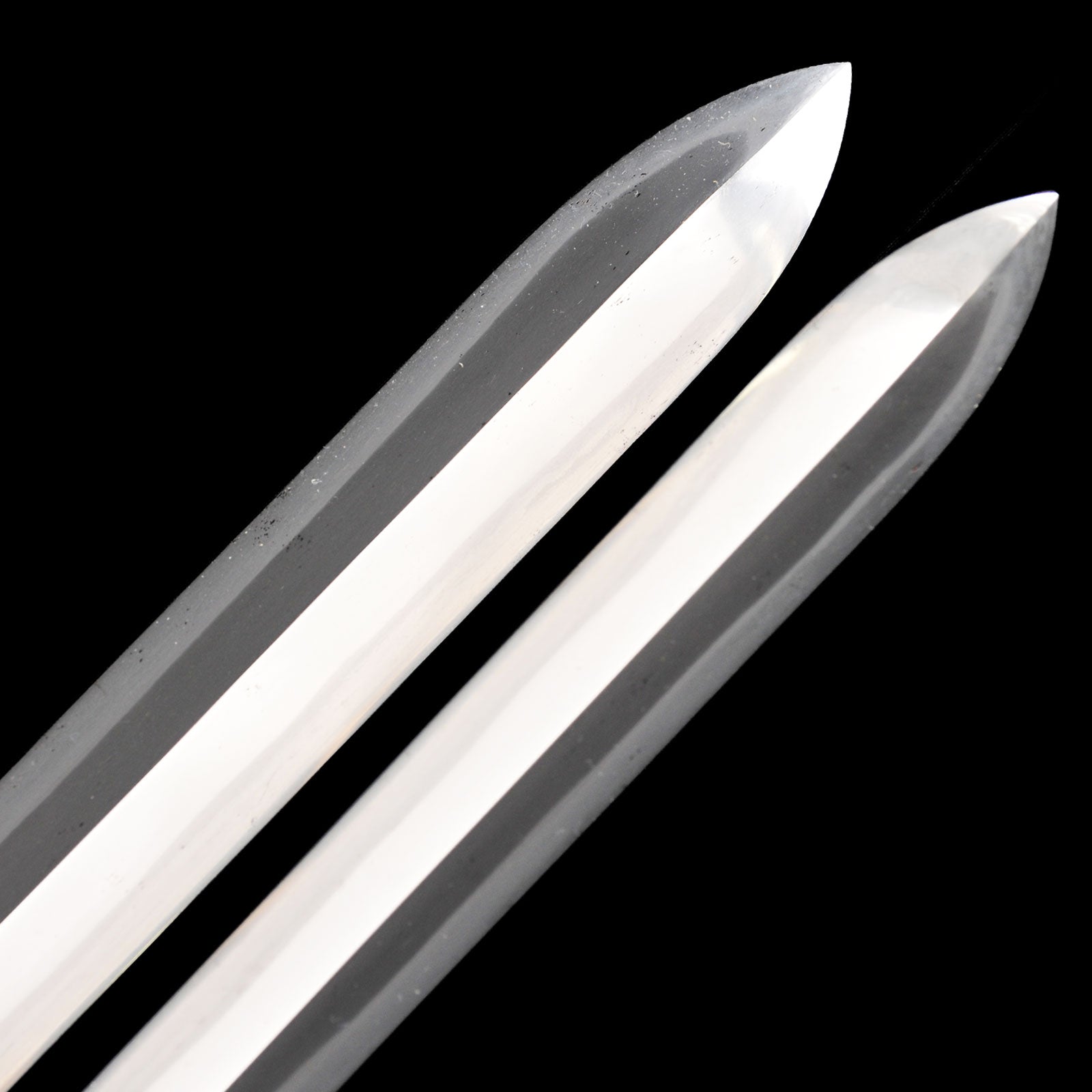
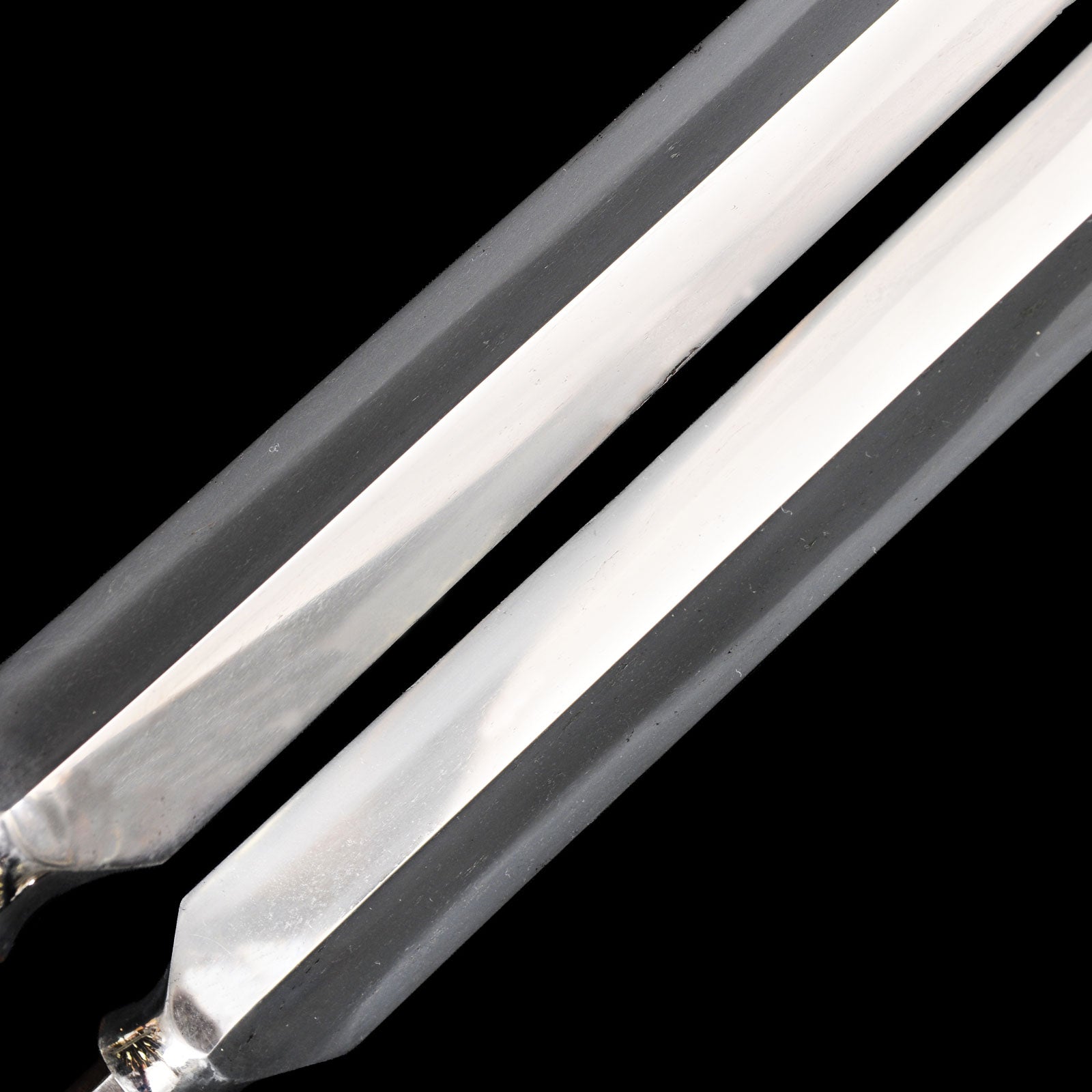
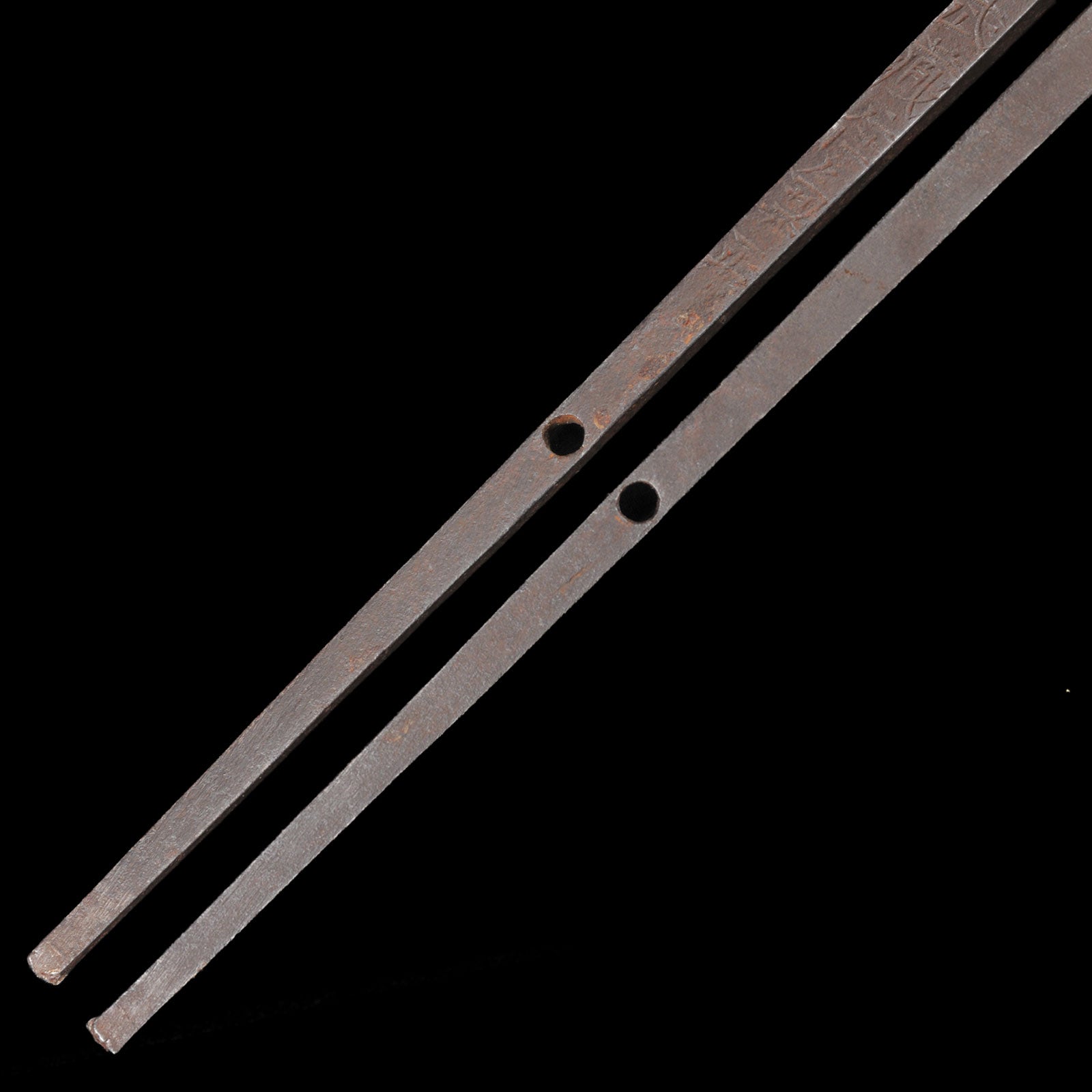
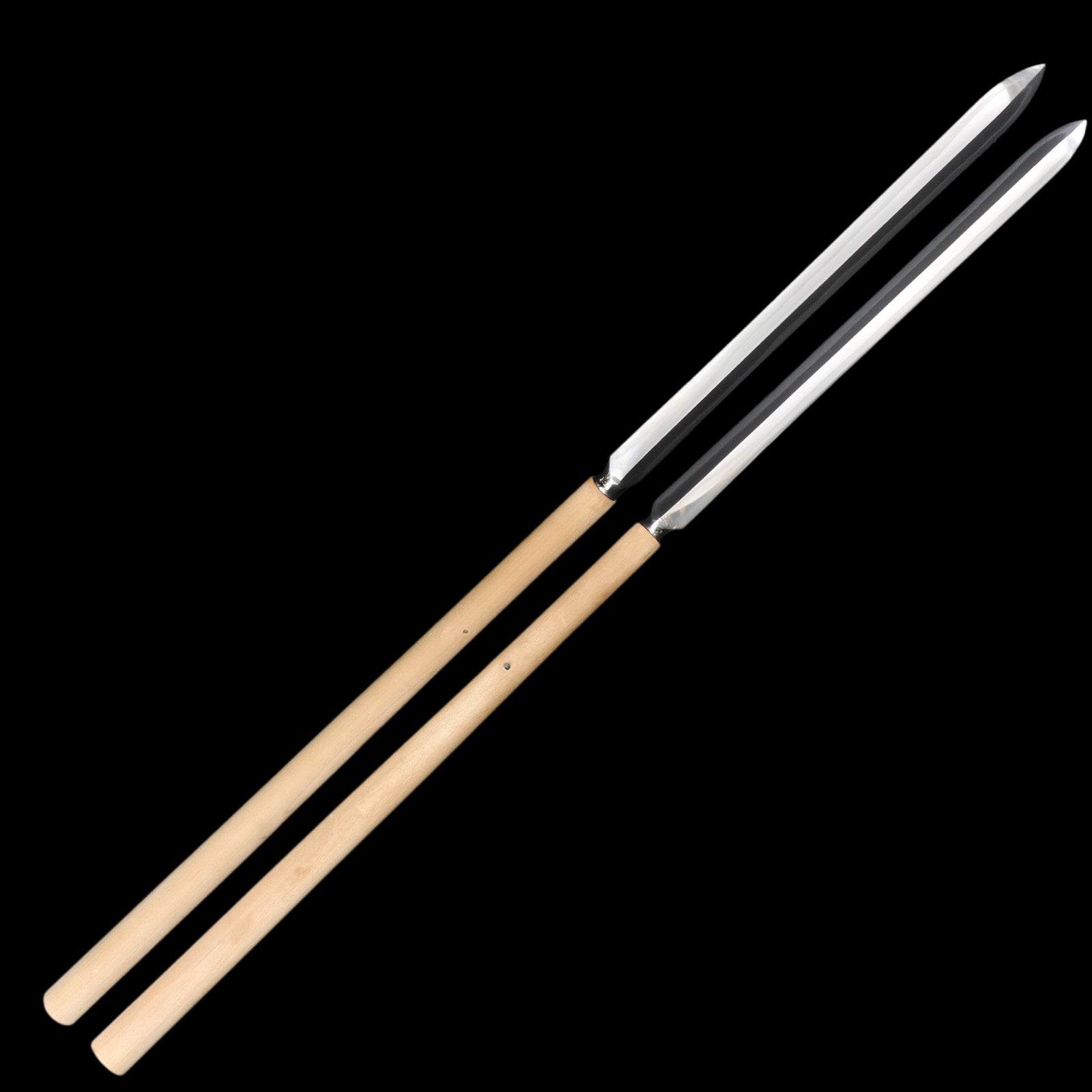
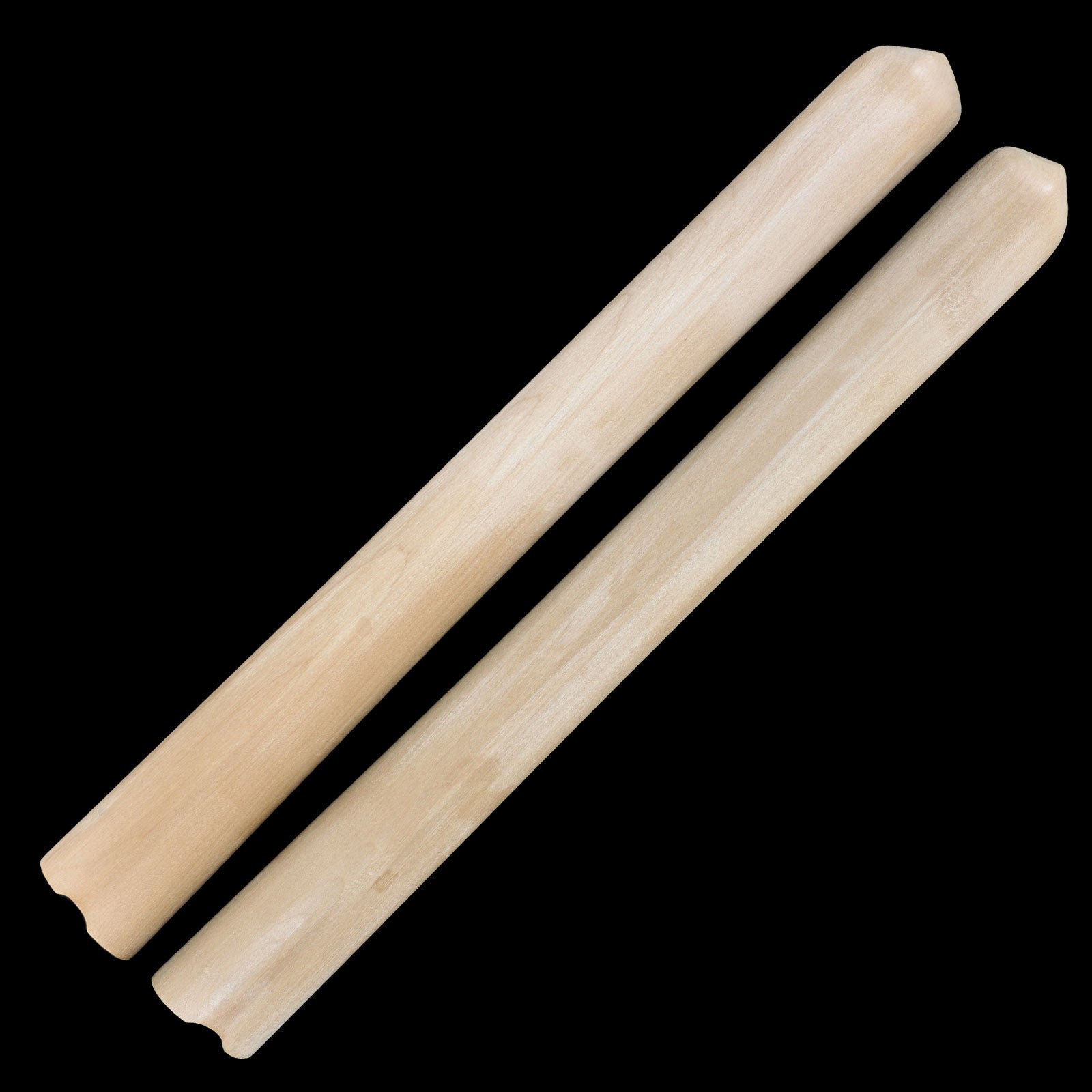
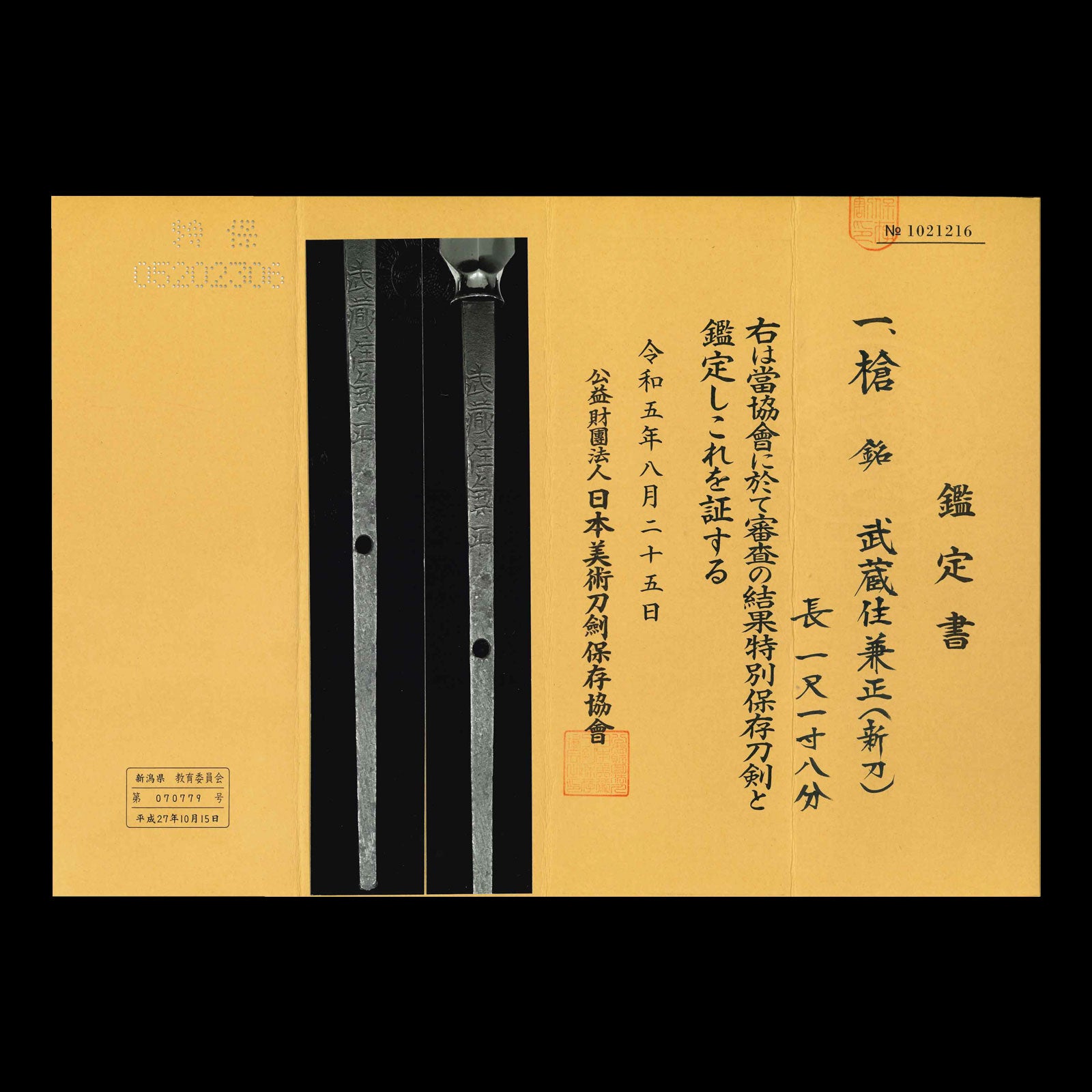
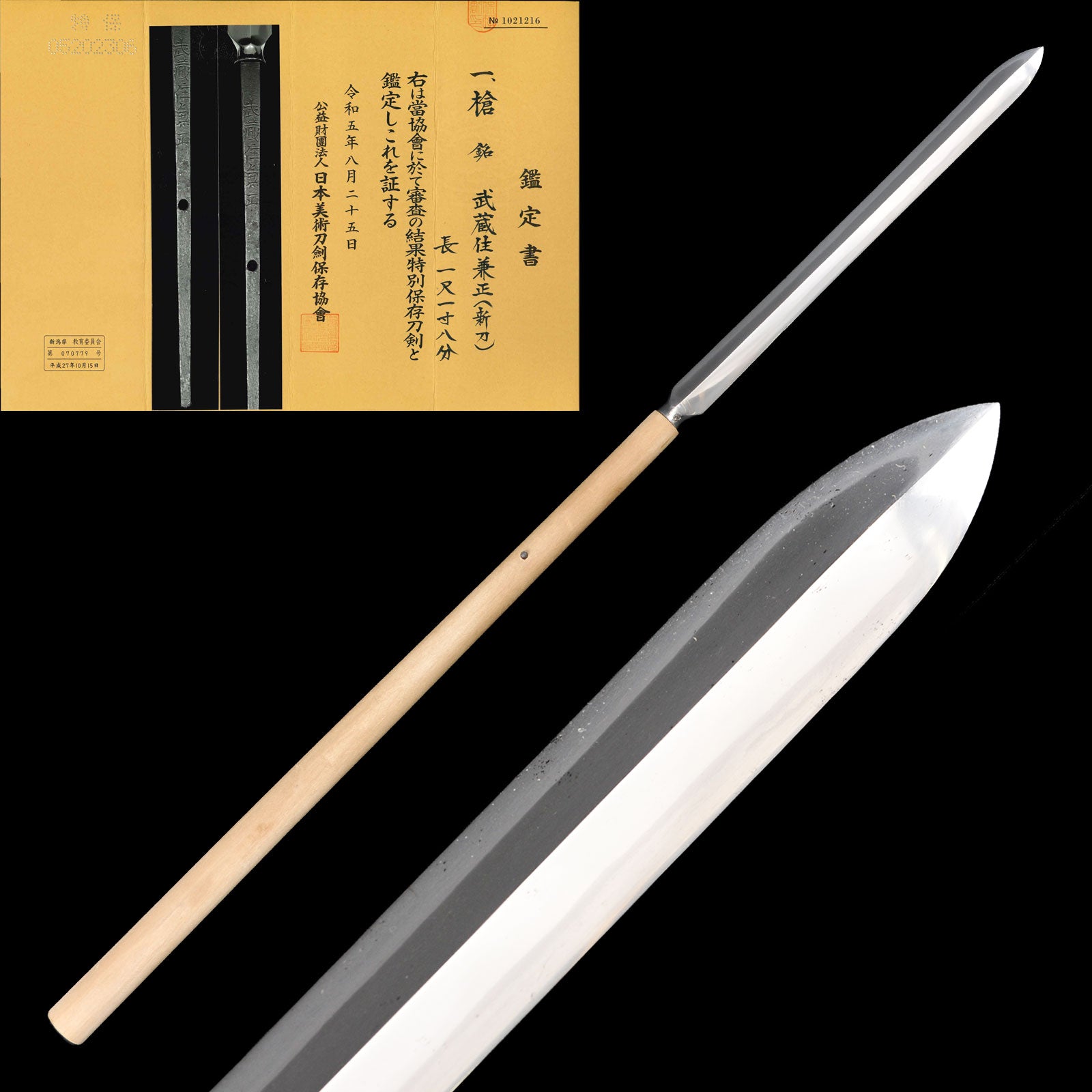
Antique Japanese Yari (spear), signed "Musashi-jū Kanemasa" (武蔵住兼正) — a grand ōmi sasa-ho yari, NBTHK Tokubetsu Hozon Tōken An imposing large bamboo-leaf-shaped spear by an early-Edo (Shintō) smith of the Mino/Seki Kanenori line — thick, healthy, and finely forged; in shirasaya with a display shaft A guaranteed piece designated "Tokubetsu Hozon Tōken" (Especially Worthy of Preservation) by the NBTHK (Nihon Bijutsu Tōken Hozon Kyōkai). With the overwhelming presence unique to a large ōmi sasa-ho yari (great bamboo-leaf spear) and the sure forging that inherits the tradition of the Seki Kanenori school, it can be recommended with full confidence — both as a centerpiece for an existing sword collection and as a single work for savoring the beauty of the Japanese spear. Workmanship and condition The jigane is an itame with flowing masame , showing a beautiful, clear steel character. The temper line is a midare of leisurely notare mixed with ko-gunome ; fine nie gather along the temper border, glowing with a bright, clear brilliance when the light catches them. Freshly polished — though the very finest faint scratches can be seen, the overall condition of steel and temper is very good. The contrast between the grain spreading across the broad flat surface ( hira-ji ) unique to a large spear and the clear temper border is a major highlight for the Japanese-sword enthusiast. Form A grand ōmi sasa-ho yari (large bamboo-leaf-shaped spear) boasting a blade length of 35.8 cm. It has a full, beautiful fukura (curved swell) while drawing in to a dignified taper toward the base — a crisp, upright construction. It retains a thick, solid kasane from base to tip (about 11 mm at the base), uniting the sturdiness of a practical spear with sculptural beauty as a work of art at a high level. On the smith — Kanemasa (兼正) Kanemasa, the maker of this work, was a fifth-generation descendant of Kanenori (兼法), a master smith of Mino Province (Seki) in the late Muromachi period. A smith of rea
NihontoWatchKanemasa兼正
Offered by Tozando
This piece has sold
Get an email when a new Kanemasa piece hits the market.

Mino · around 1558-1570
The Muromachi period (1392 to 1573)
Muromachi turned sword making into an industry: the uchigatana rose with massed infantry warfare, Osafune and Seki produced bundle swords beside custom orders, and the Ming trade carried Japanese blades abroad by the tens of thousands.
A Hozon-certified blade judged to show notably superior workmanship and a better state of preservation. The bar is higher: re-tempered blades and most unsigned Muromachi/Edo works are excluded.
The NBTHK (Nihon Bijutsu Tōken Hozon Kyōkai, the Society for the Preservation of Japanese Art Swords) is a public-interest incorporated foundation founded in 1948 and supervised by Japan’s Agency for Cultural Affairs (Bunkachō); it is based at the Japanese Sword Museum in Tokyo. Its expert panels physically examine each submitted work (shinsa) and issue a certificate (kanteishō) ranking it by artistic and historical merit. NBTHK papers are the most widely recognized standard of authentication for Japanese swords and fittings.
NBTHK official siteAs a general rule, returns/exchanges are not accepted on Japanese sword orders unless damaged upon delivery. Other items: returns/exchanges accepted within 7 days of delivery. Cancellation for personal reasons incurs a 30% restocking fee (70% refunded). Return shipping must be prepaid and insured by the buyer; shipping/handling fees are non-refundable. Contact katana@tozando.co.jp to initiate a return.