

The twentieth century nearly killed the craft twice: wartime distortion, then the occupation ban. The NBTHK’s founding in 1948 and licensed forging from 1953 rebuilt the sword as an art, crowned by Living National Treasures and the mukansa rank.
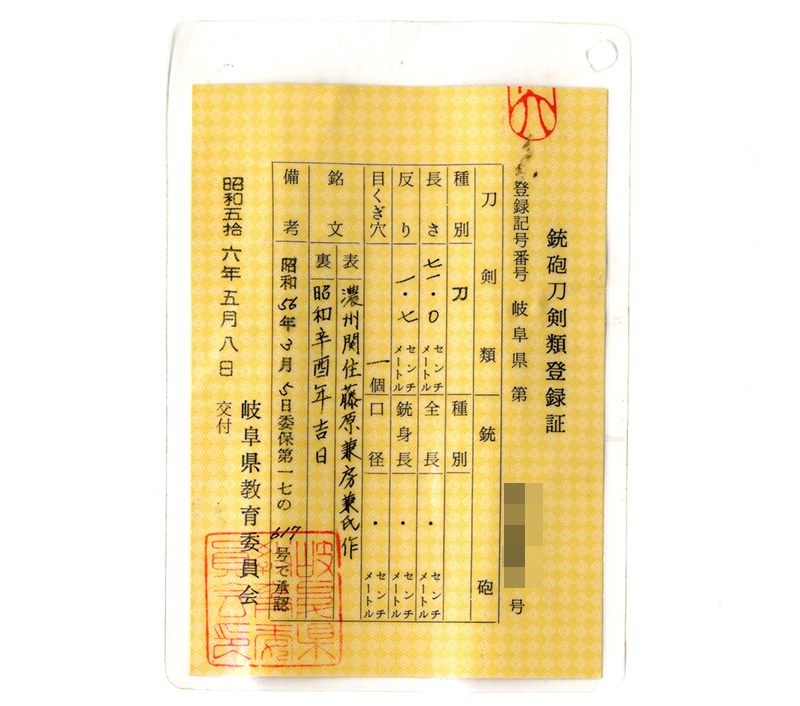
The real name of the 24th generation Fujiwara Kanefusa swordsmith was Kato Takao. Born in Taisho 11, residing in Sakaemachi, Seki City, Gifu Prefecture. A student of his father, the 23rd generation Fujiwara Kanefusa swordsmith. Recipient of many awards including the Kunzan Prize, Excellence Prize, and Effort Prize. The 25th generation Fujiwara Kanefusa, who is the son and student of the 24th generation Fujiwara Kanefusa, opened a Japanese sword forging dojo in 1984 (Showa 56) and succeeded to the name of the 25th generation Fujiwara Kanefusa. The real name of the swordsmith Kaneuji is Kato Minoru, residing in Kawama, Seki City, Gifu Prefecture, and a member of the All Japan Swordsmith Association.
Offered by E-sword


As written by the shop
Machine translation from the shop's Japanese · may contain errors ·
Shōwa to the present: destruction and revival
The twentieth century nearly killed the craft twice: wartime distortion, then the occupation ban. The NBTHK’s founding in 1948 and licensed forging from 1953 rebuilt the sword as an art, crowned by Living National Treasures and the mukansa rank.
We could not find an authenticity certificate on the seller’s listing. Japanese swords and fittings are normally papered by the NBTHK (or the NTHK). Without one, the attribution is the seller’s own assessment and has not been independently verified — treat it with caution and ask the dealer about certification before buying.
Cooling-off (returns or exchanges) is accepted within 3 days of the item's arrival. Return shipping and refund transfer fees are the customer's responsibility. Fees other than the item price (transfer fees, credit card fees, etc.) cannot be refunded. Returns and refunds are not available for overseas destinations.
¥550,000