Made by the 25th generation Fujiwara Kanefusa. His real name is Kato Katsuo. Born in Showa 32 into the Fujiwara Kanefusa family of swordsmiths, which has continued since the Muromachi period. Resides in Oze, Seki City, Gifu Prefecture. In Showa 50, he became a pupil of the Living National Treasure Gassan Sadakazu, and his first mei was Sadafusa. In Showa 57, he became a swordsmith certified by the Agency for Cultural Affairs. From Showa 58, he studied under his father, the 24th generation Fujiwara Kanefusa, and since then has won many awards including the Kunzan Sho, Yusyu Sho, Doryoku Sho, and others. In Showa 59, he opened the 25th generation Fujiwara Kanefusa Nihonto Tanren Dojo. He succeeded to the name of the 25th generation Fujiwara Kanefusa. He has dedicated swords to Meiji Jingu, Atsuta Jingu, Yasukuni Jinja, and others. Furthermore, he is one of the representative smiths of Seki currently active, having made mamori-tanto for the Imperial Family. Former Executive Director of the All Japan Swordsmith Association. Former Vice Chairman of the Seki-den Gijutsu Hozonkai, and former Chairman of the Seki-den Tosho-kai.
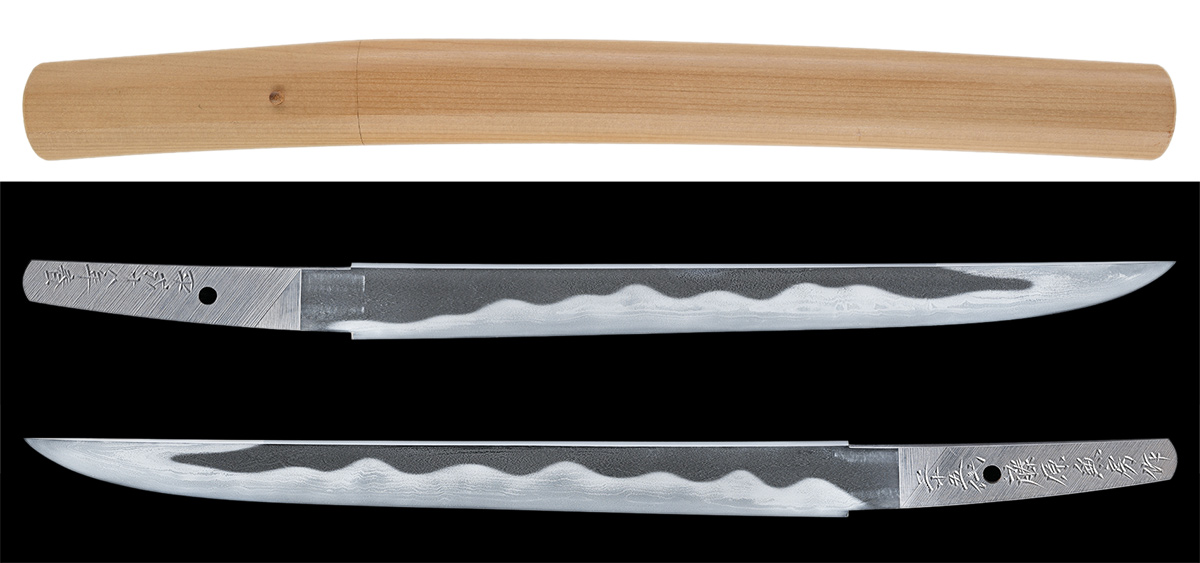
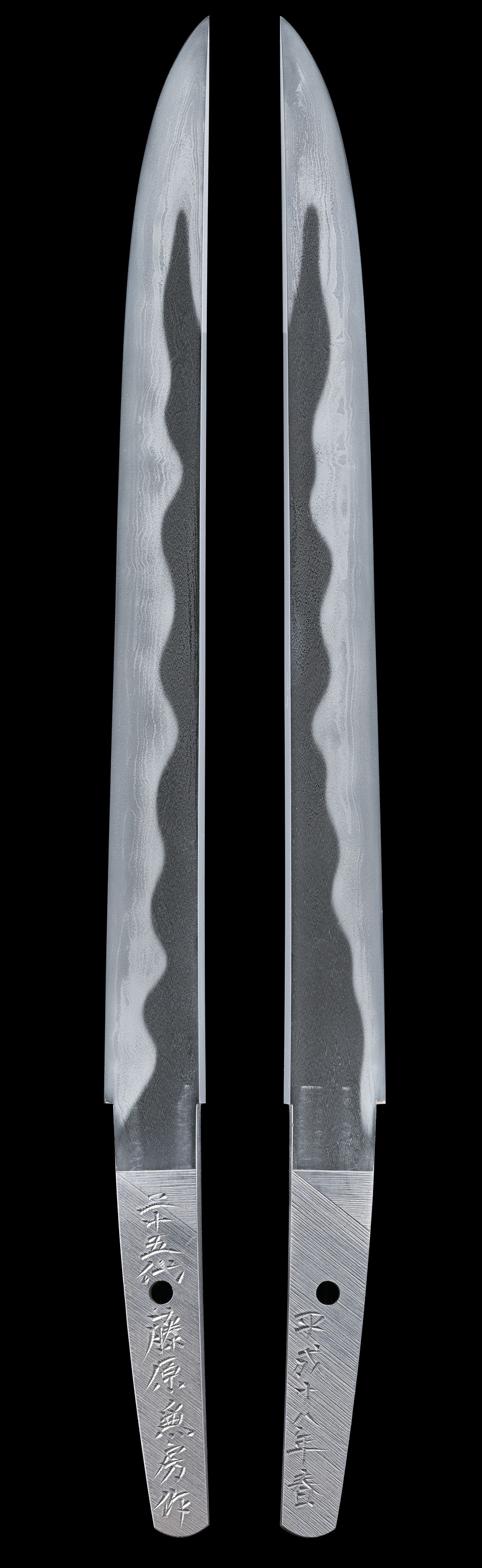
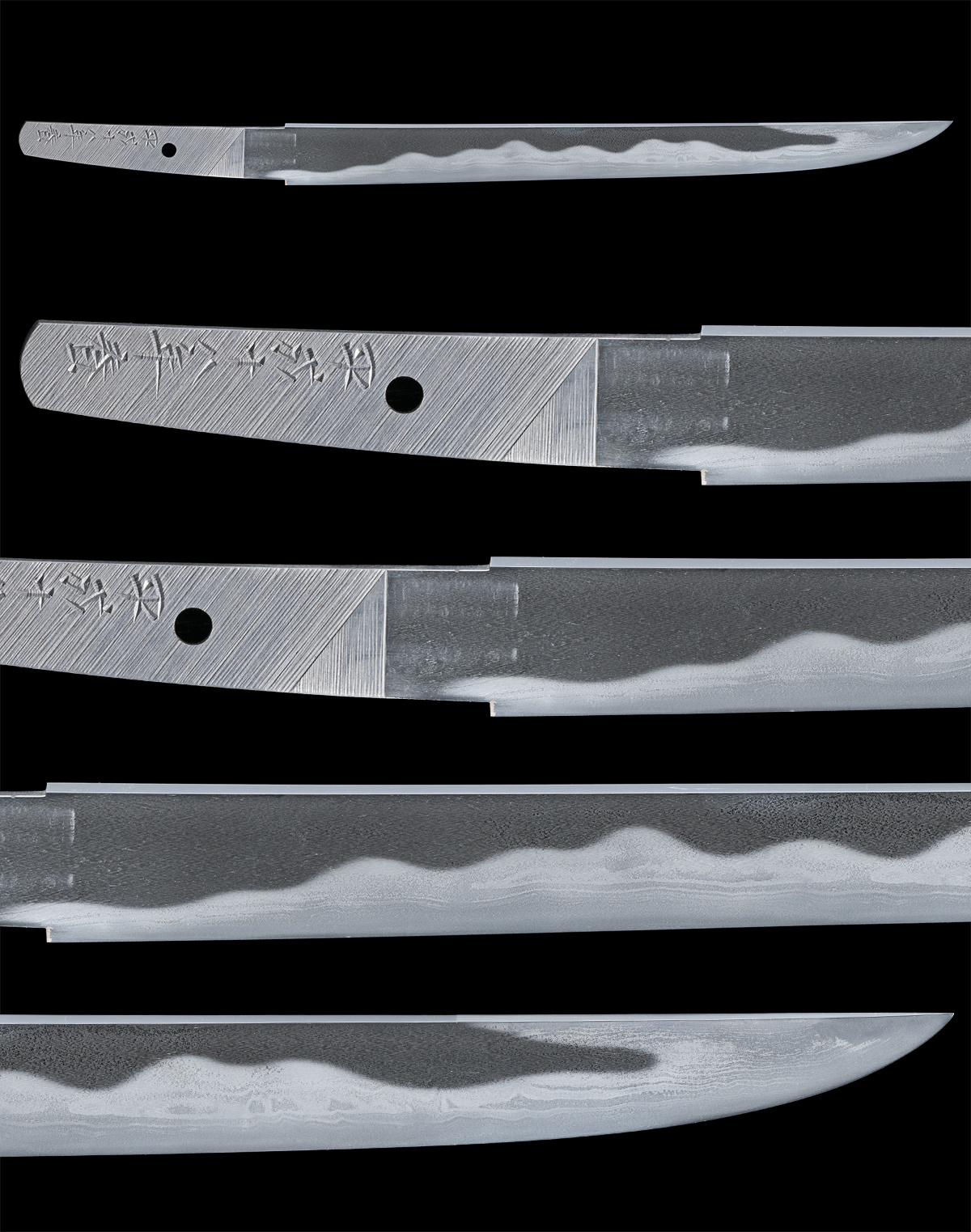
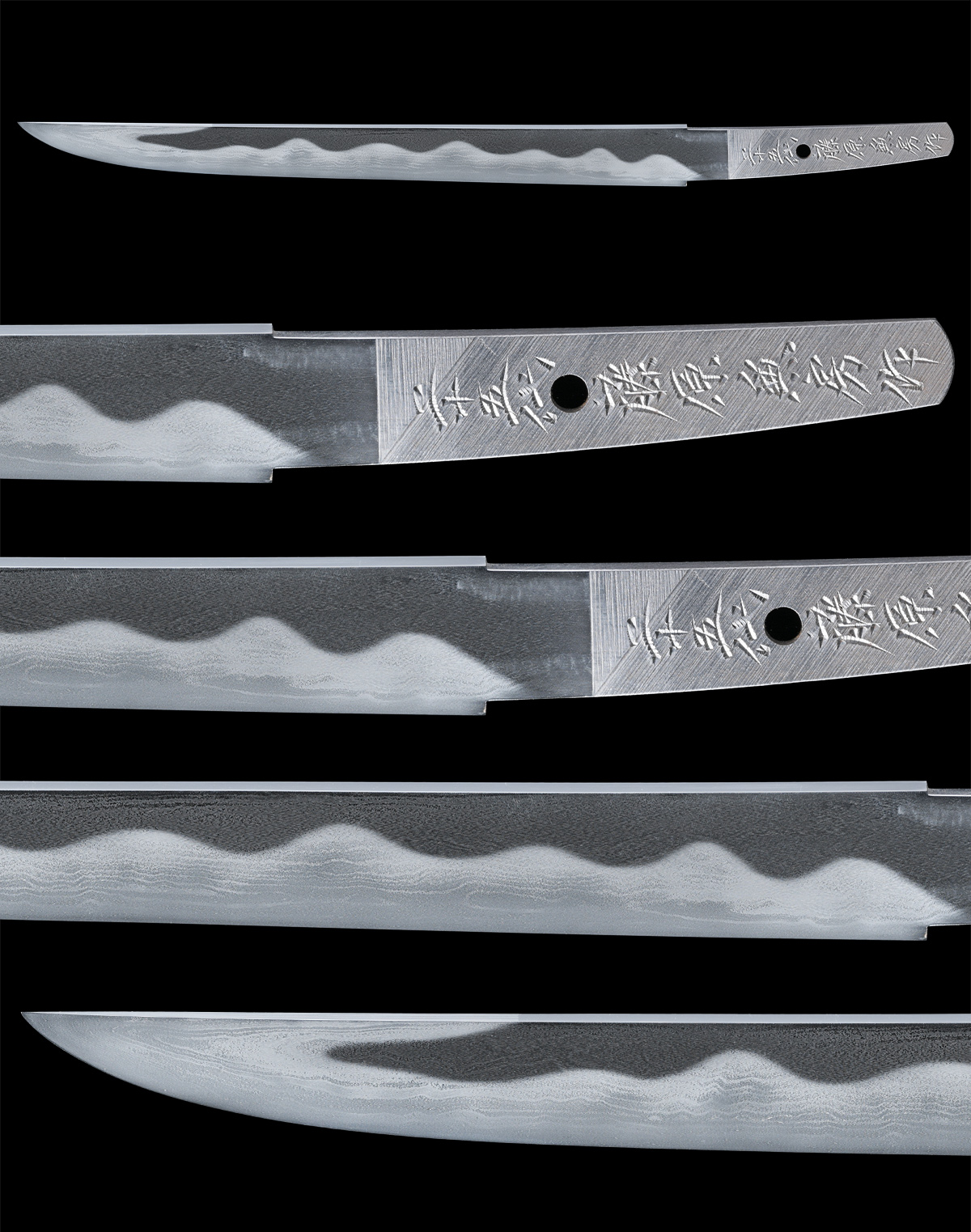
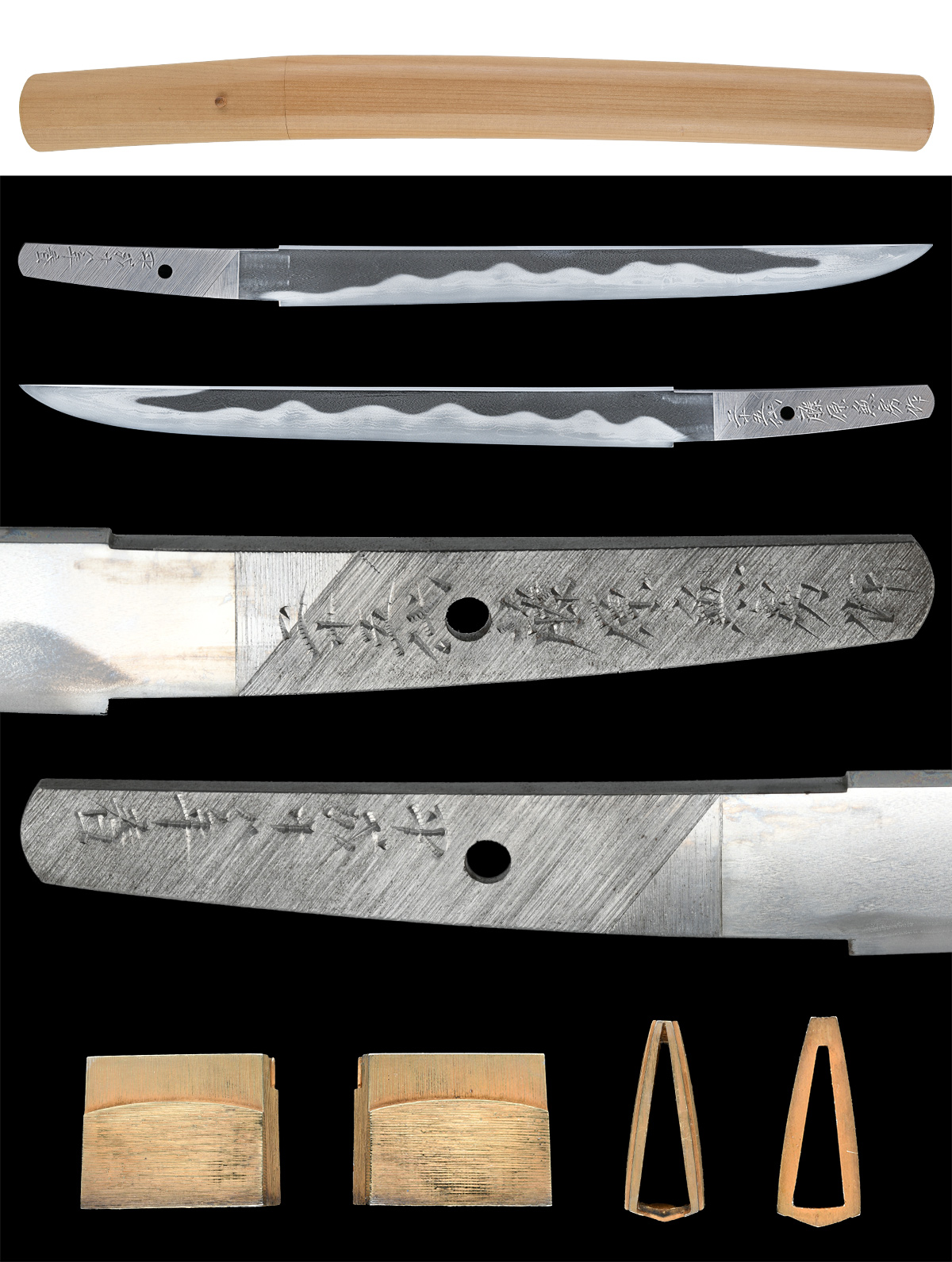
The taihai of this work has a hacho of 7 sun 7 bu. It is a tanto in hira-zukuri sugata. The jitetsu is itame hada well-tightened, with thick chikei entering along the kitae, well-covered in ji-nie, presenting a refined and clear texture of the steel. The hamon is gunome choji midare in nie-deki, with frequent sunagashi and kinsuji throughout the yakiba, making for a very spirited yakiba with a clear nioiguchi. The boshi continues as midare-komi with a saki-hakikake kaeri. This work is a single blade by the 25th generation Kanefusa of the prestigious Kanefusa lineage of Seki smiths continuing since the Muromachi period. It is a sword with the charm of a powerful ji and ha reminiscent of Soshu-mono. Shirasaya, gold-plated niju habaki.
Machine translation from the shop's Japanese · may contain errors ·
Made by the 25th generation Fujiwara Kanefusa. His real name is Kato Katsuo. Born in Showa 32 into the Fujiwara Kanefusa family of swordsmiths, which has continued since the Muromachi period. Resides in Oze, Seki City, Gifu Prefecture. In Showa 50, he became a pupil of the Living National Treasure Gassan Sadakazu, and his first mei was Sadafusa. In Showa 57, he became a swordsmith certified by the Agency for Cultural Affairs. From Showa 58, he studied under his father, the 24th generation Fujiwara Kanefusa, and since then has won many awards including the Kunzan Sho, Yusyu Sho, Doryoku Sho, and others. In Showa 59, he opened the 25th generation Fujiwara Kanefusa Nihonto Tanren Dojo. He succeeded to the name of the 25th generation Fujiwara Kanefusa. He has dedicated swords to Meiji Jingu, Atsuta Jingu, Yasukuni Jinja, and others. Furthermore, he is one of the representative smiths of Seki currently active, having made mamori-tanto for the Imperial Family. Former Executive Director of the All Japan Swordsmith Association. Former Vice Chairman of the Seki-den Gijutsu Hozonkai, and former Chairman of the Seki-den Tosho-kai.
The taihai of this work has a hacho of 7 sun 7 bu. It is a tanto in hira-zukuri sugata. The jitetsu is itame hada well-tightened, with thick chikei entering along the kitae, well-covered in ji-nie, presenting a refined and clear texture of the steel. The hamon is gunome choji midare in nie-deki, with frequent sunagashi and kinsuji throughout the yakiba, making for a very spirited yakiba with a clear nioiguchi. The boshi continues as midare-komi with a saki-hakikake kaeri. This work is a single blade by the 25th generation Kanefusa of the prestigious Kanefusa lineage of Seki smiths continuing since the Muromachi period. It is a sword with the charm of a powerful ji and ha reminiscent of Soshu-mono. Shirasaya, gold-plated niju habaki.
The twentieth century nearly killed the craft twice: wartime distortion, then the occupation ban. The NBTHK’s founding in 1948 and licensed forging from 1953 rebuilt the sword as an art, crowned by Living National Treasures and the mukansa rank.
No cooling-off period or returns; refund only if the purchased sword is proven fake, capped at purchase price (excludes commission sales, accessories, auction items).

 NihontoWatch