 NihontoWatchNihontoWatch
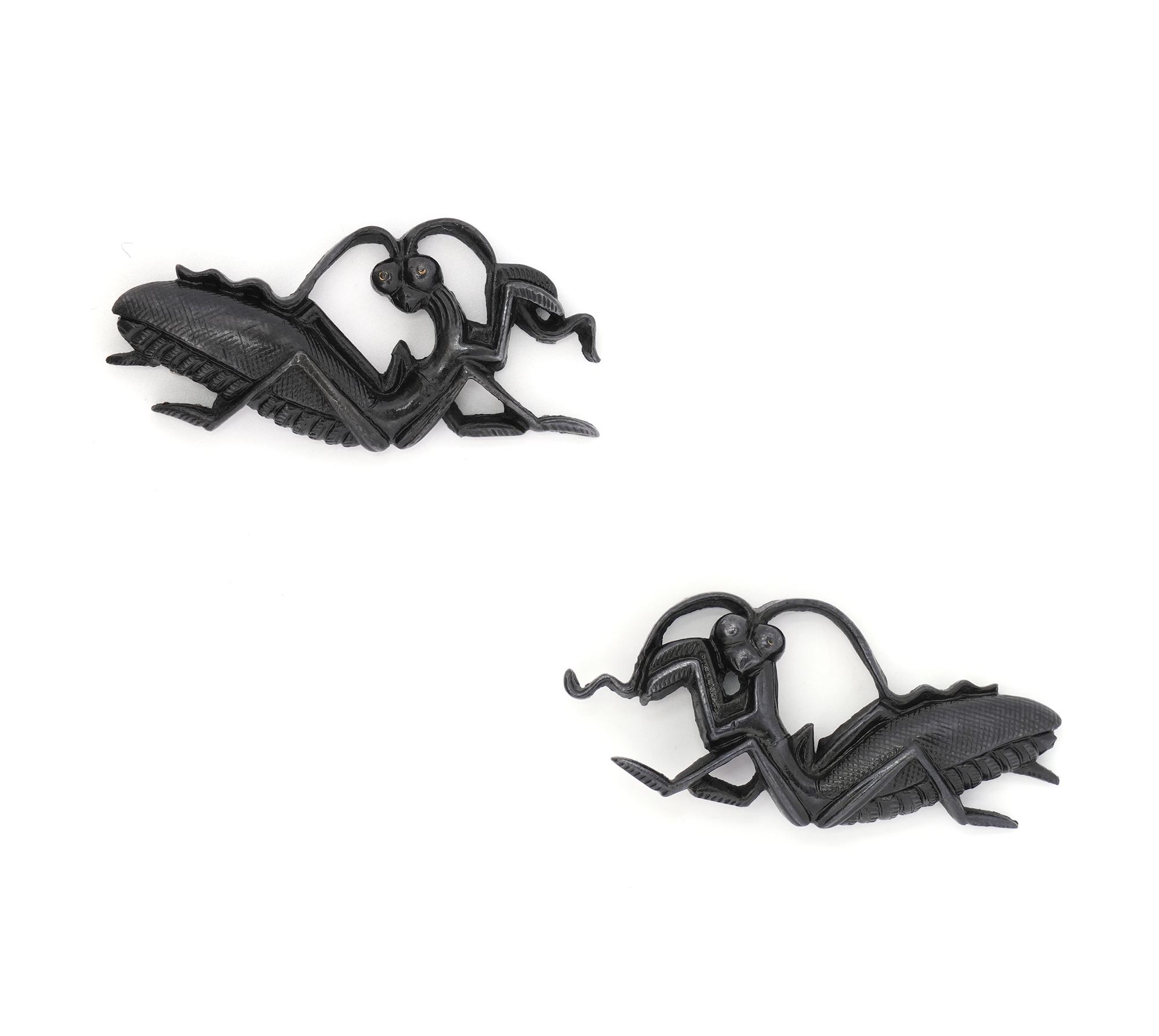
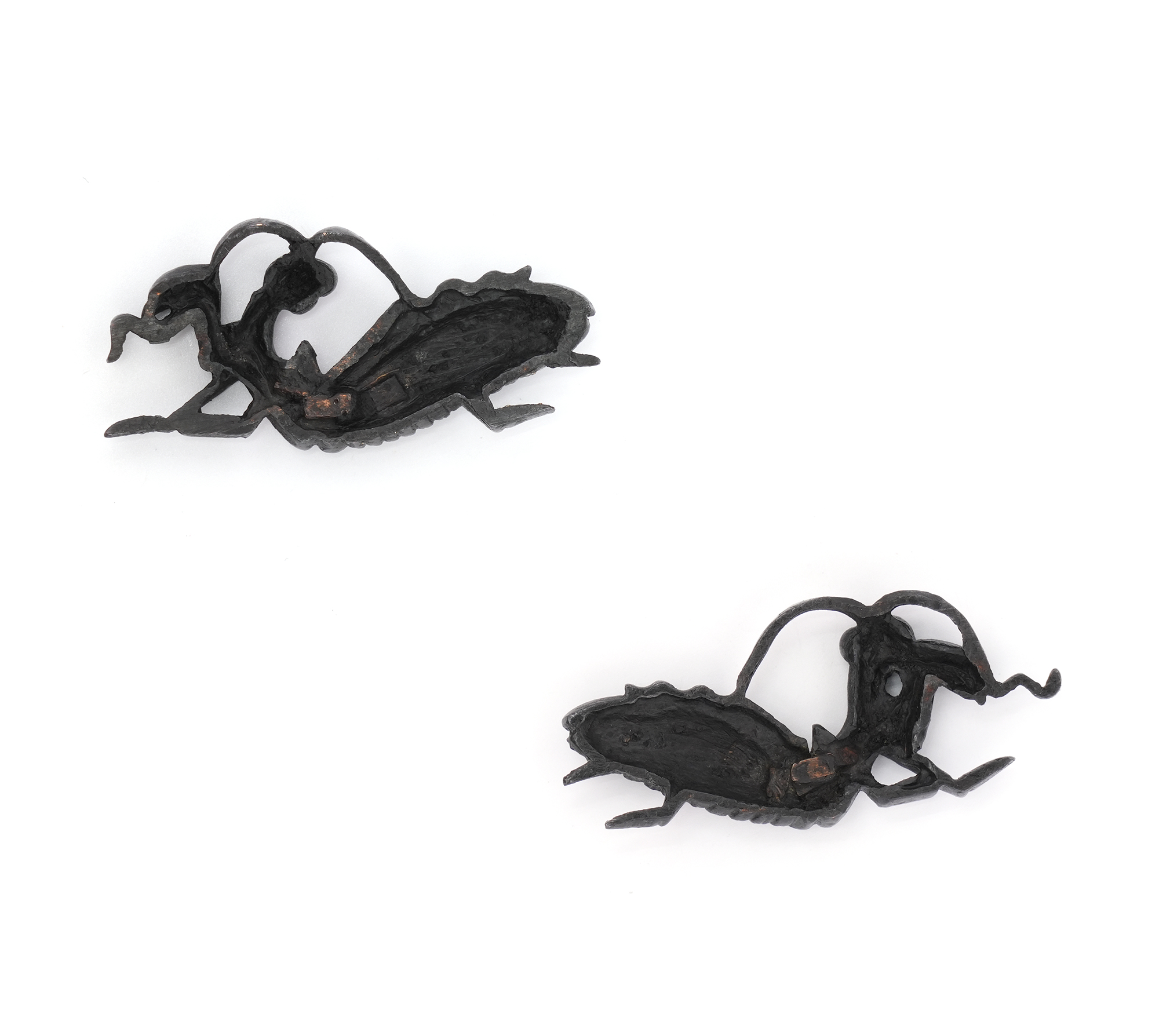
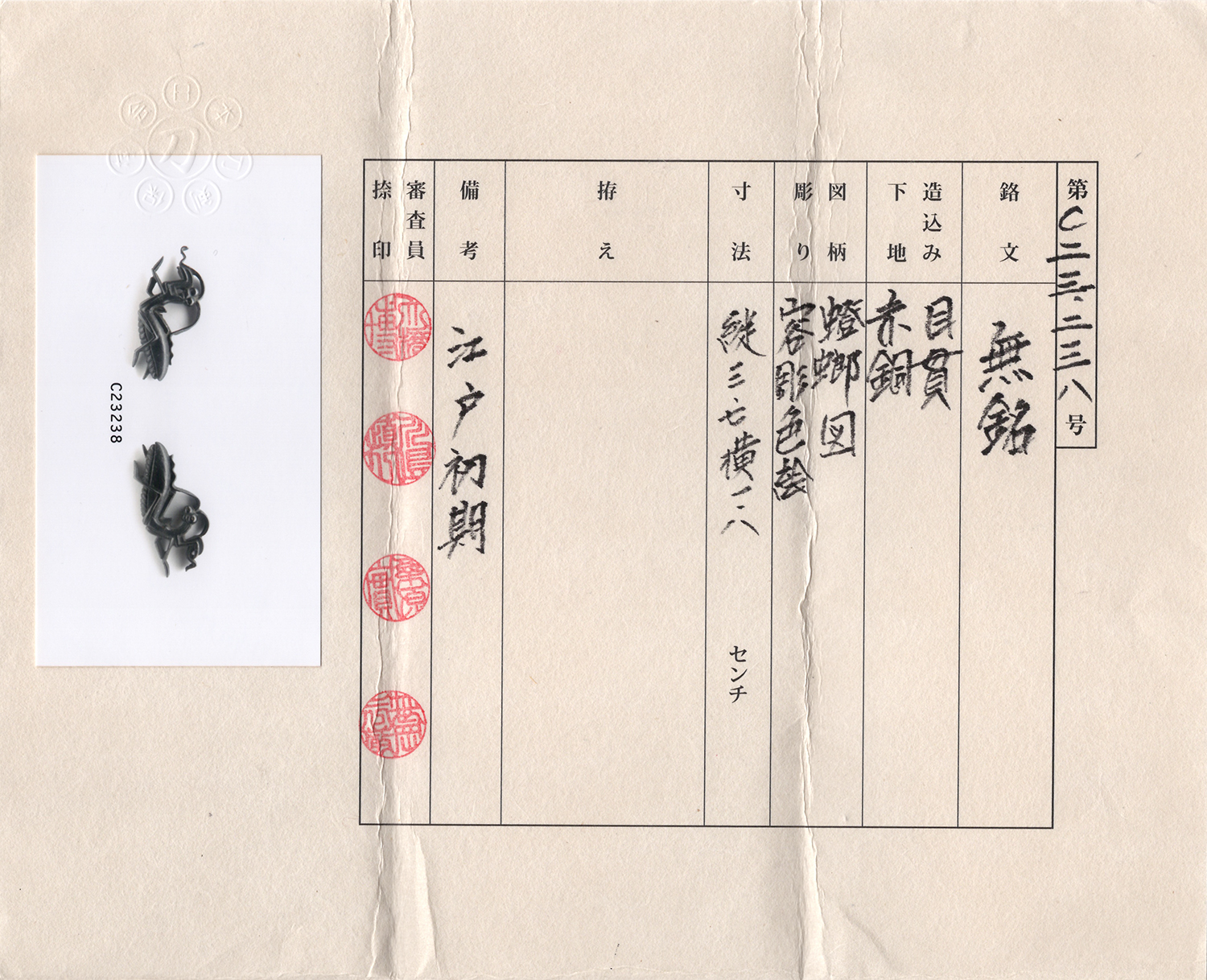
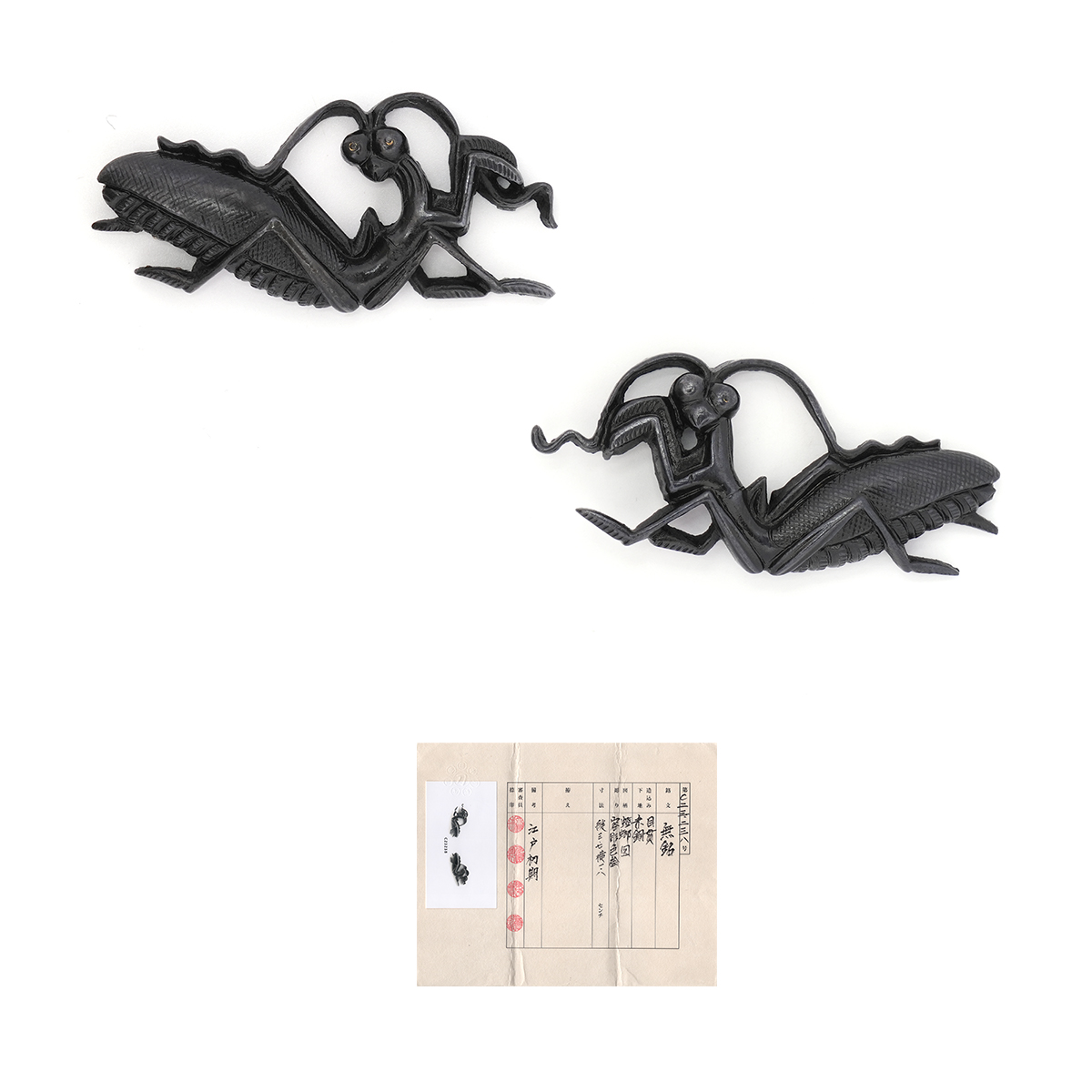
Mino kinko developed primarily in Mino Province and is known for three-dimensional carving with deep, sharp tagane strokes into shakudoji, along with vivid color expression using gold at key points. There are many masterpieces among works featuring flowers, plants, and insects as subjects; by layering high-density tagane work into details while cutting clear outlines, a sense of life and decorativeness is condensed within these small tosogu, and these characteristics are well-expressed in this piece. The mantis, with its sickle-shaped forelegs raised and its posture of facing opponents larger than itself without retreating, is a subject suitable for the fittings of samurai as a motif symbolizing courage, determination, and an indomitable will. In its slender body's hidden tension and its posture of watching prey while waiting for a momentary opportunity, a sharp spirit dwells within the stillness, allowing one to simultaneously enjoy the realism unique to insect designs and the allegory of bravery. This piece is crafted in katachibori on a shakudoji exhibiting a deep black color, depicting two mantises as a pair responding to each other on the left and right. On the abdomen, fine incisions are regularly aligned to express the volume of the segmented body and the tightened outline, while on the wings covering them, intersecting fine lines are carved to distinguish the thin, delicate texture. Furthermore, from the long, arching antennae and the legs bending at each joint to the sharply raised sickle-shaped forelegs, these extremely thin parts are vividly modeled without any breakage. The eyes, which harbor a slight golden color, become a sharp gaze within the black shakudoji; from the front, they emphasize the power of bracing for prey, and from an angle, they highlight the rich three-dimensionality of the head, thorax, abdomen, and wings overlapping in many layers. The two are not simply inverted versions of the same form; subtle changes are given to the movement of the leg tips and antennae and the tilt of the bodies, bringing them together as a pair where each pays attention to a different direction, and when placed on a tsuka, they exert a powerful presence that tightens the entire koshirae from both sides. Possessing the Edo Shoki period stated in the kanteisho, the heavy koshoku of the shakudo, the deep and sharp carving characteristic of Mino kinko, and the skillful presentation that restrains kin-iroe to concentrate it on the eyes—the core of life—this is a highly attractive pair with excellent modeling ability that I recommend not only to those who like insect designs but also to those who wish to keep a symbol of courage and indomitability close at hand.
Offered by Toushin

Edo
Mino
Unsigned
Hozon (NBTHK)
Machine translation of the shop's Japanese ·
Machine translation from the shop's Japanese · may contain errors ·
Certifies a genuine fitting worth preserving: a correct signature, or, if unsigned, an identifiable era and school, with recognized artistic and craft value.
The NBTHK (Nihon Bijutsu Tōken Hozon Kyōkai, the Society for the Preservation of Japanese Art Swords) is a public-interest incorporated foundation founded in 1948 and supervised by Japan’s Agency for Cultural Affairs (Bunkachō); it is based at the Japanese Sword Museum in Tokyo. Its expert panels physically examine each submitted work (shinsa) and issue a certificate (kanteishō) ranking it by artistic and historical merit. NBTHK papers are the most widely recognized standard of authentication for Japanese swords and fittings.
NBTHK official siteAs a rule we do not accept returns, except when we have sent a different item from the one ordered or when there is a significant discrepancy between the description and the item. If you wish to return an item, please contact us within 3 days of its arrival and then send it back.
¥181,500