The twentieth century nearly killed the craft twice: wartime distortion, then the occupation ban. The NBTHK’s founding in 1948 and licensed forging from 1953 rebuilt the sword as an art, crowned by Living National Treasures and the mukansa rank.
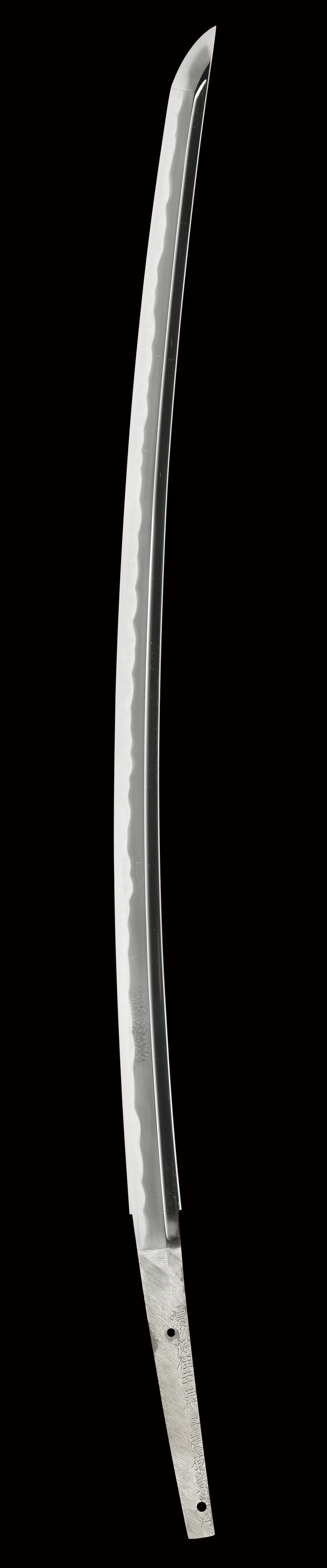
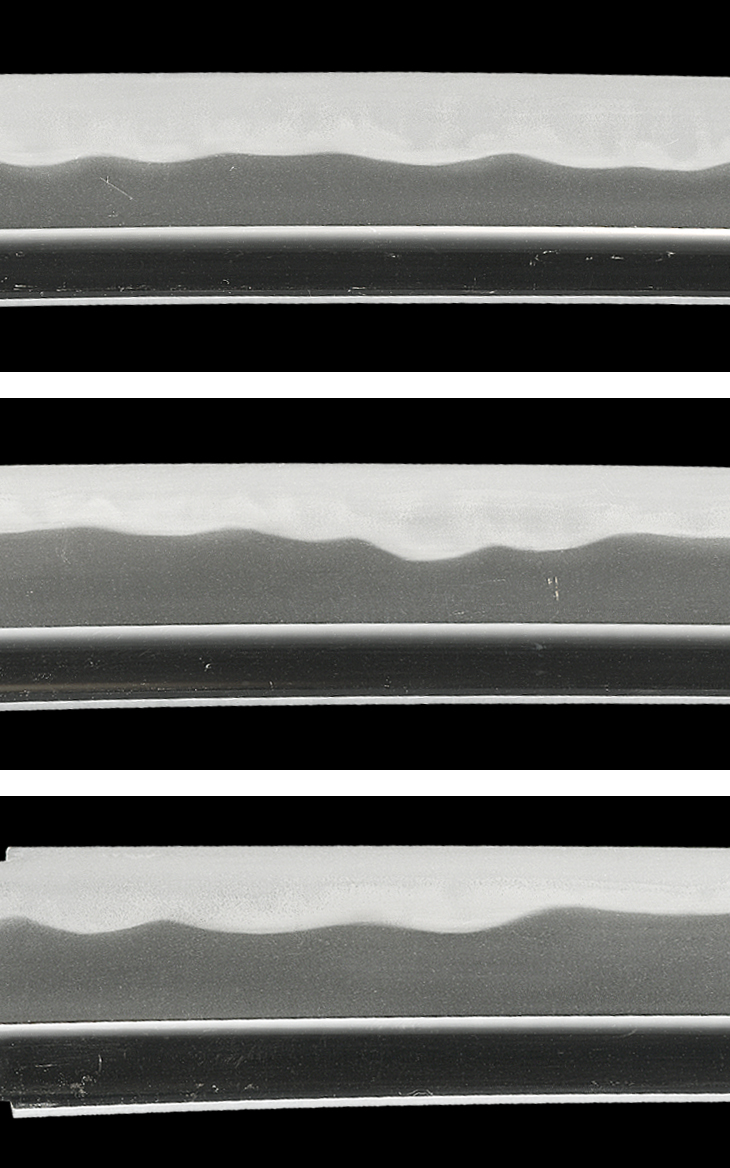
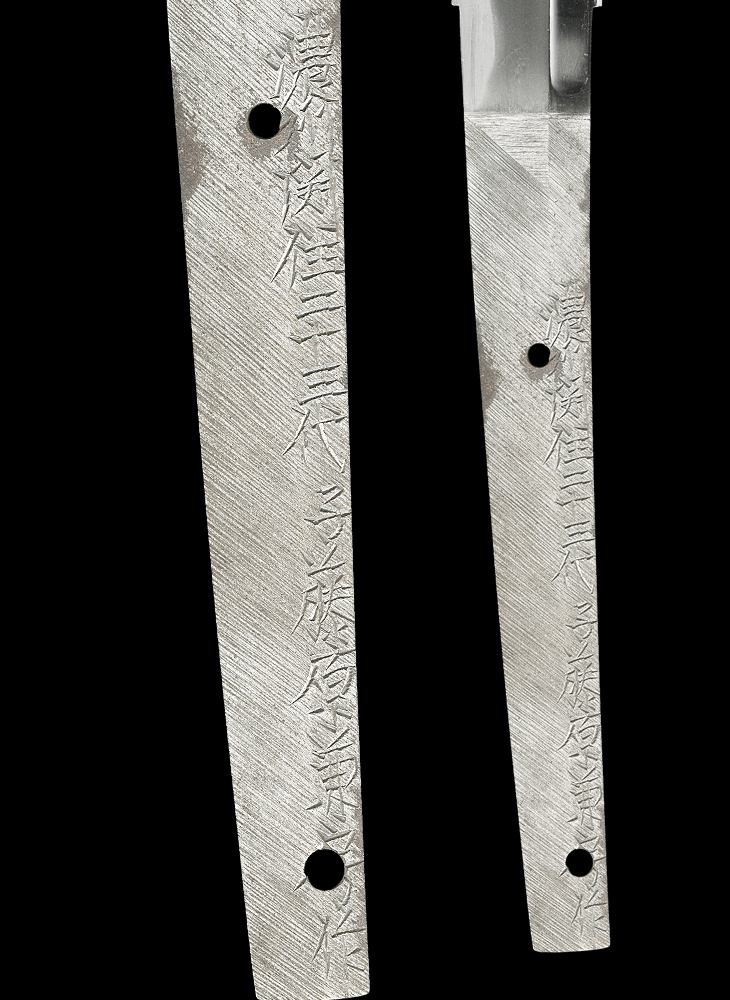
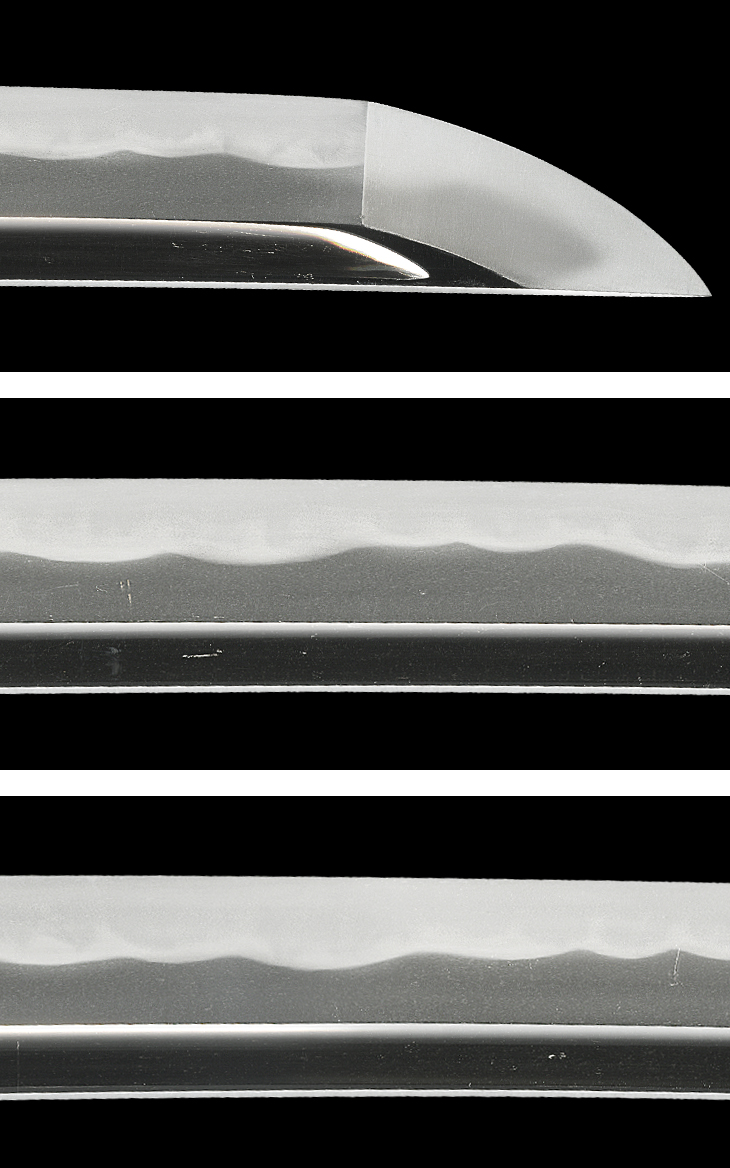
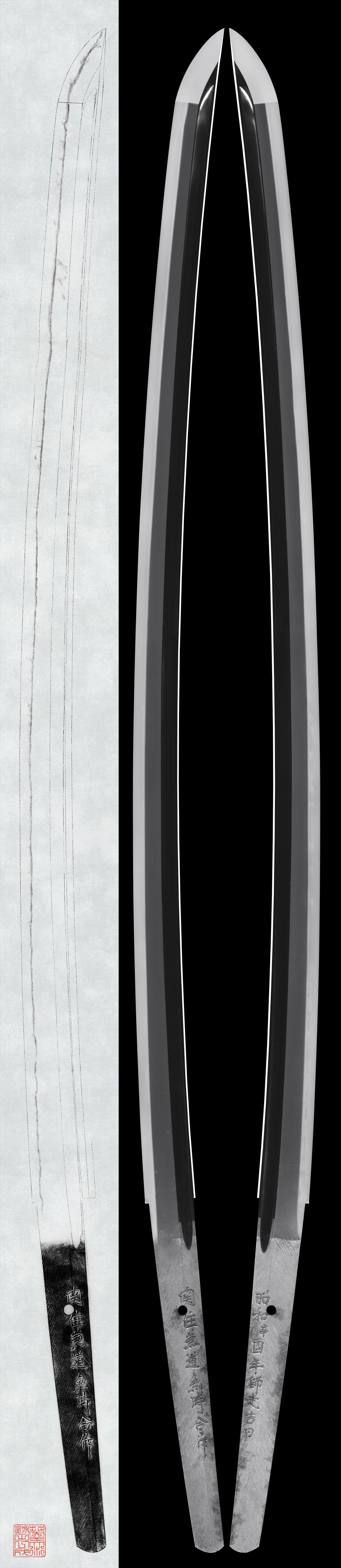
This katana is signed by the 24th generation Kanefusa, made in 1979. The smith, Kato Takao, was designated an Important Intangible Cultural Property of Gifu Prefecture. The blade features a vibrant gunome midare hamon with kinsuji and sunagashi, and a unique hada in some areas. Despite having a bo-hi, the blade is heavy, weighing 968g without koshirae.
 NihontoWatch
mei · Gendaito · nagasa 78cm · sori 2.4cm
Shōwa to the present: destruction and revival
The twentieth century nearly killed the craft twice: wartime distortion, then the occupation ban. The NBTHK’s founding in 1948 and licensed forging from 1953 rebuilt the sword as an art, crowned by Living National Treasures and the mukansa rank.
We could not find an authenticity certificate on the seller’s listing. Japanese swords and fittings are normally papered by the NBTHK (or the NTHK). Without one, the attribution is the seller’s own assessment and has not been independently verified — treat it with caution and ask the dealer about certification before buying.
For one-of-a-kind items such as swords, sword fittings, and antiques, please contact us about a return within 3 days of the item's arrival and ship it back within 8 days. Refunds are issued the same day the returned item arrives.


¥390,000
This katana is signed by the 24th generation Kanefusa, made in 1979. The smith, Kato Takao, was designated an Important Intangible Cultural Property of Gifu Prefecture. The blade features a vibrant gunome midare hamon with kinsuji and sunagashi, and a unique hada in some areas. Despite having a bo-hi, the blade is heavy, weighing 968g without koshirae.
NihontoWatchmei · Gendaito · nagasa 78cm · sori 2.4cm
Shōwa to the present: destruction and revival
The twentieth century nearly killed the craft twice: wartime distortion, then the occupation ban. The NBTHK’s founding in 1948 and licensed forging from 1953 rebuilt the sword as an art, crowned by Living National Treasures and the mukansa rank.
We could not find an authenticity certificate on the seller’s listing. Japanese swords and fittings are normally papered by the NBTHK (or the NTHK). Without one, the attribution is the seller’s own assessment and has not been independently verified — treat it with caution and ask the dealer about certification before buying.
For one-of-a-kind items such as swords, sword fittings, and antiques, please contact us about a return within 3 days of the item's arrival and ship it back within 8 days. Refunds are issued the same day the returned item arrives.
¥390,000


