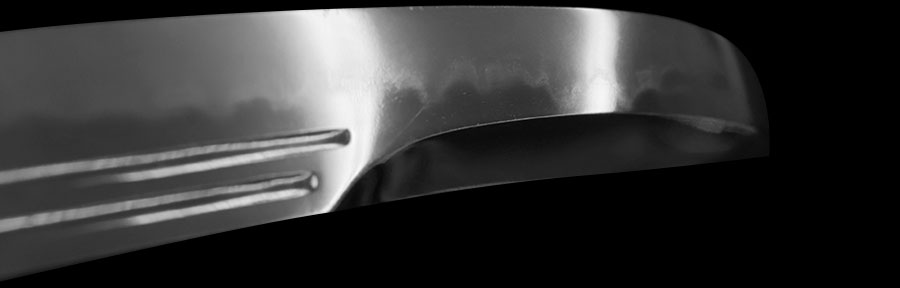
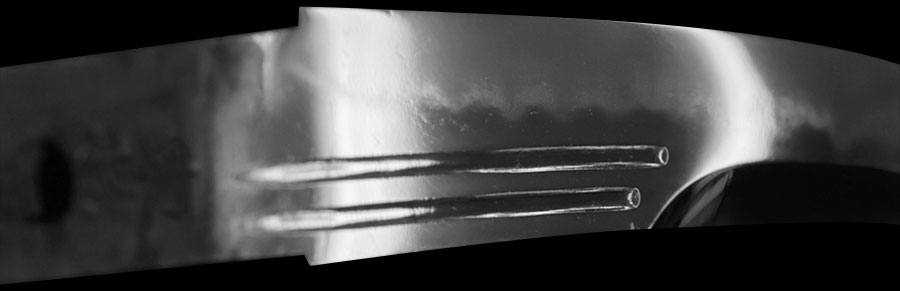
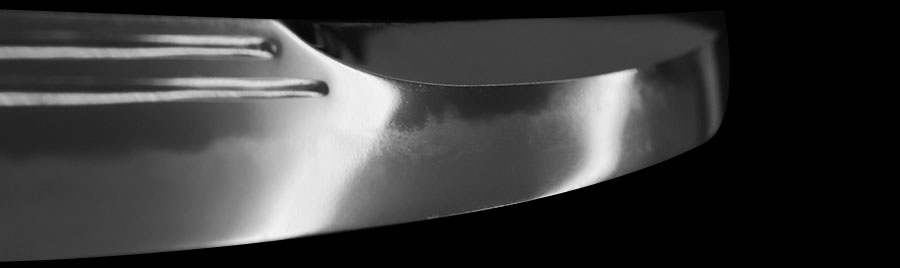
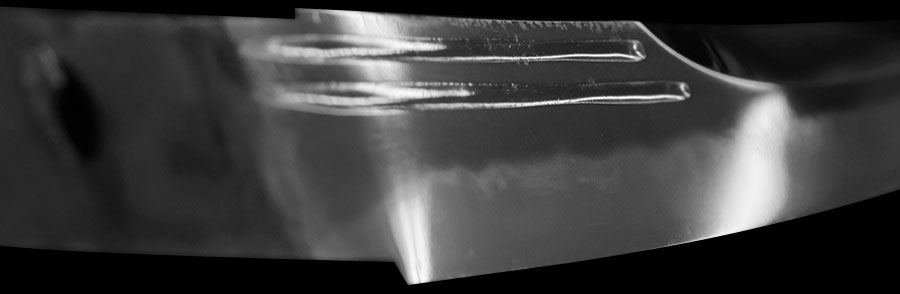
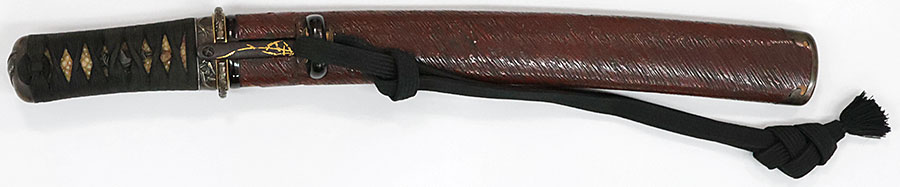
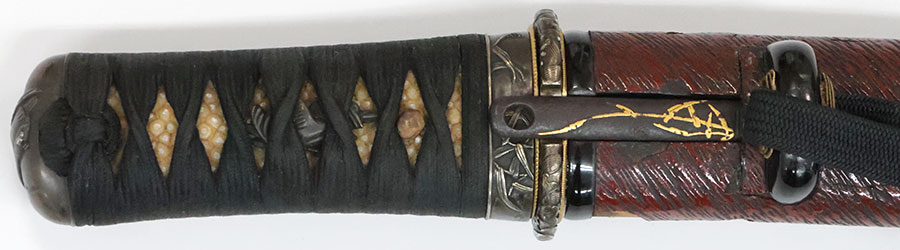
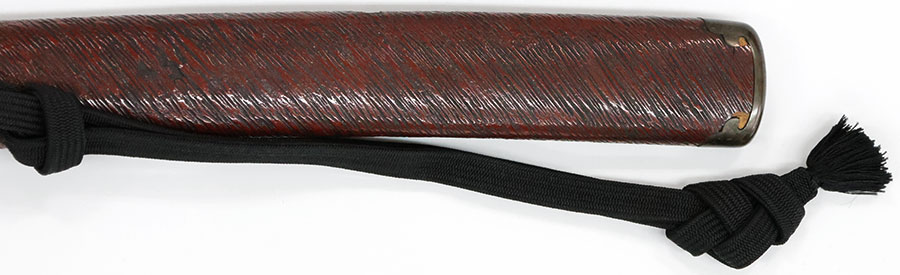
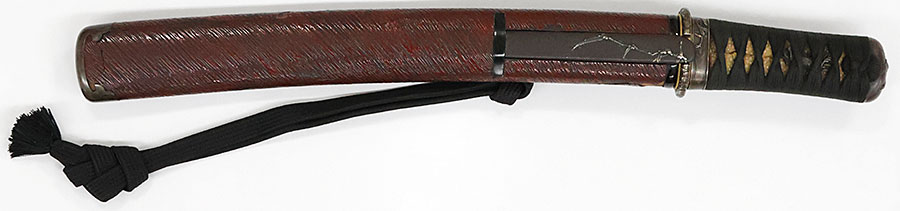
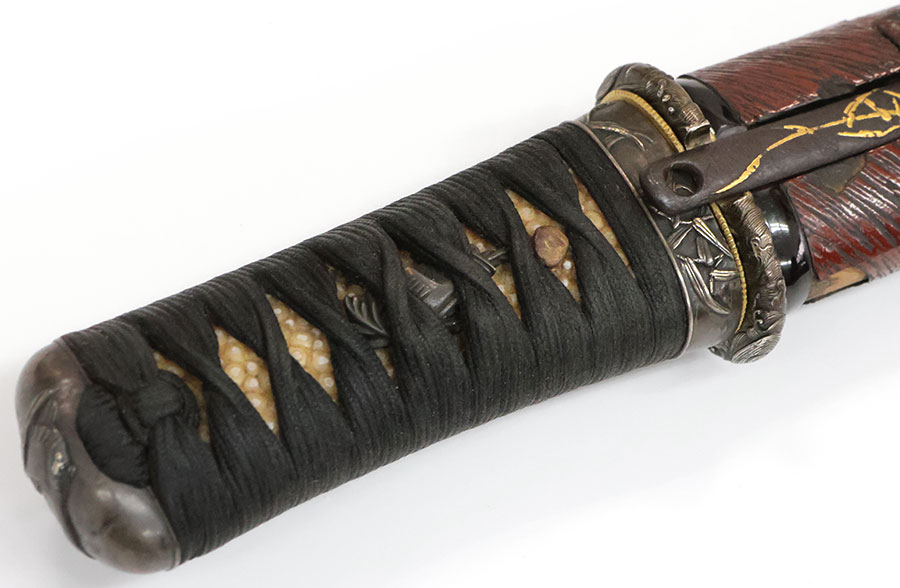
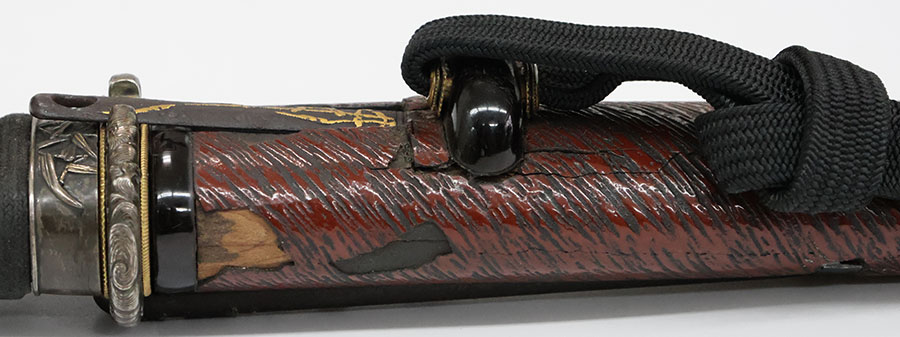
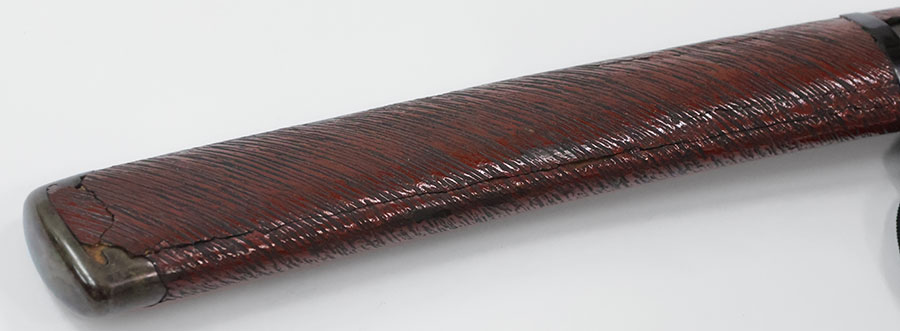
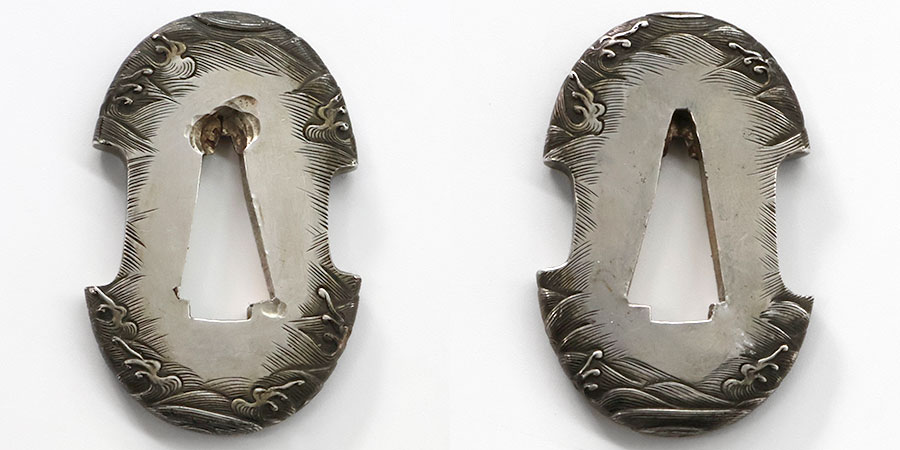
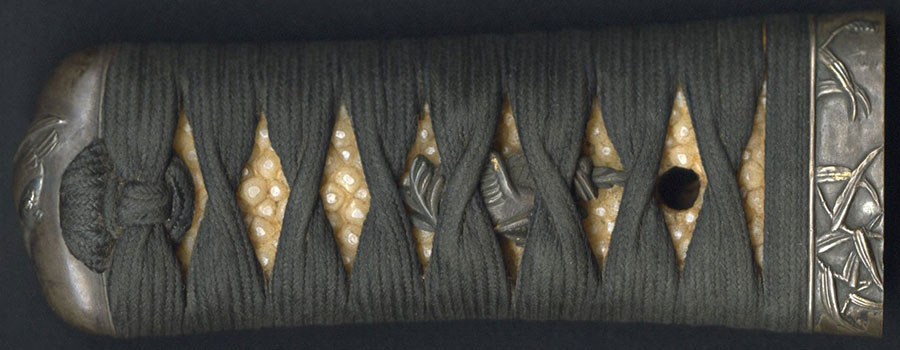
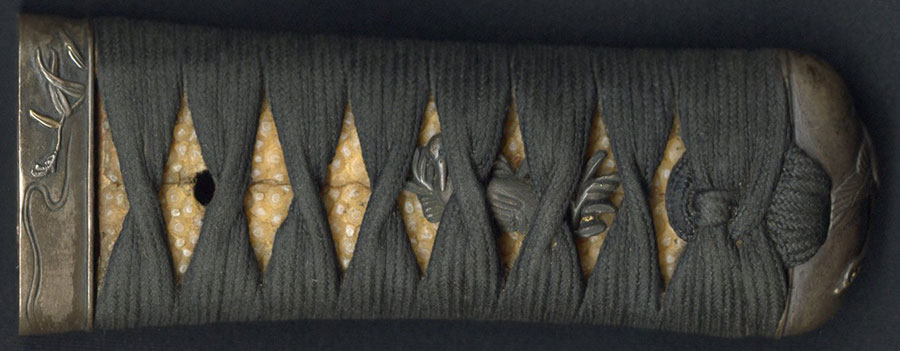
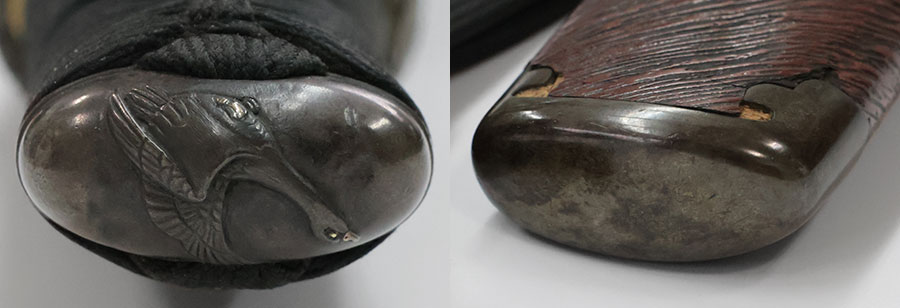
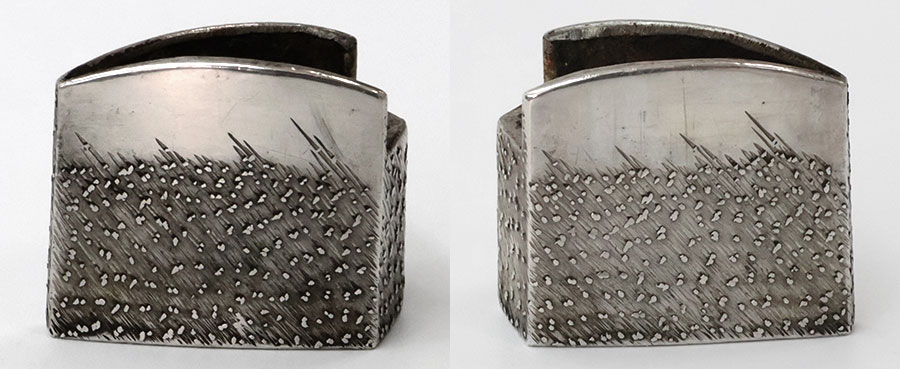
It has appeared, it has appeared, a precious tanto by Tohanjyu Minamoto Toshiyuki, who built the foundation of plane blacksmithing in Miki City, Hyogo Prefecture, has appeared; at the Omiya Shrine in Miki City there is a monument to Mr. Kurokawa, and according to it, his real name was Kurokawa Ichitaro, his father was Kyubei, born on Bunsei 11 September 2 (1838) (187 years ago) in Shinmachi, Miki-cho, his father Kyubei worked as a blacksmith and was engaged in the production of planes and chisels, etc., and also had a reputation as a swordsmith, and it is recorded that when Kurokawa Taichiro reached adulthood he intended to establish the family name exclusively as a swordsmith, devoted himself to study, and his sword name was called Tohanjyunin Minamoto Toshiyuki. Later he became a purveyor swordsmith for the Akashi Domain, but due to the abolition of domains and establishment of prefectures during the Meiji Restoration, when the domain lord moved to Tokyo, he went to Tokyo along with the group of domain retainers moving to the capital and was forging swords, but due to the passage of time he gave up being a swordsmith and later gained fame as a plane blacksmith. He passed away in Tokyo on Meiji 39 November 1. According to the story of his descendant, Ms. Kurokawa Takako, Taichiro was favored by the lord and visited the castle every month. Once every year, the domain elder came to inspect Taichiro's forge. Also, it is said that one year the lord himself came to observe the forge in Miki. And Taichiro moved to Tokyo following the lord. This tanto is a precious work by Minamoto Toshiyuki from around Genji in the Bakumatsu period when he was about 26 years old (1864) (161 years ago), at the exact time when the Hamaguri Gomon Incident occurred, where the allied forces of the Tokugawa Shogunate and Satsuma Shimazu fought a fierce battle against the Choshu army at the Hamaguri Gate of the Kyoto Imperial Palace, and the First Choshu Expedition was started, it is a tanto made for an elder of the Akashi Domain. The sugata of this tanto shows a sharp tanto sugata with an extremely thick moto-kasane and a difference between the moto-mihaba and saki-mihaba, with the shinogi-ji carved away to form u-no-kubi-zukuri, the jigane is forged in ko-itame hada, and the horimono is a magnificent carving of a bamboo comparison on the omote and ura. The hamon is a sugu-cho blade tempered in nioi-deki with ko-nie, forging a truly tough tanto. The koshirae is also as it was at the time, a chiisagatana tanto koshirae that is luxurious and precious, with a tsuba of gin-muku-ji with a wave design, fuchi-kashira of shibuichi-ji with a design of reeds and wild geese, menuki also with a design of wild geese, kojiri of shibuichi migaki-ji, and a kozuka and bashin of tetsu-ji with a design of reeds. Even for the cutlery town of Miki City, this tanto is such a precious work that it must be owned by Miki City, as there are no works by the swordsmith Kurokawa Taichiro who was making swords in Miki City due to the Meiji Edict Prohibiting Swords. This time, it is a tanto that has been cherished for generations in an old house, but because we received it with the request to pass it on to someone who will cherish it for future generations, and because there is a little damage from over 160 years of age-related change to the koshirae, we are offering it at a special bargain price, please enjoy it.
Machine translation from the shop's Japanese · may contain errors ·
It has appeared, it has appeared, a precious tanto by Tohanjyu Minamoto Toshiyuki, who built the foundation of plane blacksmithing in Miki City, Hyogo Prefecture, has appeared; at the Omiya Shrine in Miki City there is a monument to Mr. Kurokawa, and according to it, his real name was Kurokawa Ichitaro, his father was Kyubei, born on Bunsei 11 September 2 (1838) (187 years ago) in Shinmachi, Miki-cho, his father Kyubei worked as a blacksmith and was engaged in the production of planes and chisels, etc., and also had a reputation as a swordsmith, and it is recorded that when Kurokawa Taichiro reached adulthood he intended to establish the family name exclusively as a swordsmith, devoted himself to study, and his sword name was called Tohanjyunin Minamoto Toshiyuki. Later he became a purveyor swordsmith for the Akashi Domain, but due to the abolition of domains and establishment of prefectures during the Meiji Restoration, when the domain lord moved to Tokyo, he went to Tokyo along with the group of domain retainers moving to the capital and was forging swords, but due to the passage of time he gave up being a swordsmith and later gained fame as a plane blacksmith. He passed away in Tokyo on Meiji 39 November 1. According to the story of his descendant, Ms. Kurokawa Takako, Taichiro was favored by the lord and visited the castle every month. Once every year, the domain elder came to inspect Taichiro's forge. Also, it is said that one year the lord himself came to observe the forge in Miki. And Taichiro moved to Tokyo following the lord. This tanto is a precious work by Minamoto Toshiyuki from around Genji in the Bakumatsu period when he was about 26 years old (1864) (161 years ago), at the exact time when the Hamaguri Gomon Incident occurred, where the allied forces of the Tokugawa Shogunate and Satsuma Shimazu fought a fierce battle against the Choshu army at the Hamaguri Gate of the Kyoto Imperial Palace, and the First Choshu Expedition was started, it is a tanto made for an elder of the Akashi Domain. The sugata of this tanto shows a sharp tanto sugata with an extremely thick moto-kasane and a difference between the moto-mihaba and saki-mihaba, with the shinogi-ji carved away to form u-no-kubi-zukuri, the jigane is forged in ko-itame hada, and the horimono is a magnificent carving of a bamboo comparison on the omote and ura. The hamon is a sugu-cho blade tempered in nioi-deki with ko-nie, forging a truly tough tanto. The koshirae is also as it was at the time, a chiisagatana tanto koshirae that is luxurious and precious, with a tsuba of gin-muku-ji with a wave design, fuchi-kashira of shibuichi-ji with a design of reeds and wild geese, menuki also with a design of wild geese, kojiri of shibuichi migaki-ji, and a kozuka and bashin of tetsu-ji with a design of reeds. Even for the cutlery town of Miki City, this tanto is such a precious work that it must be owned by Miki City, as there are no works by the swordsmith Kurokawa Taichiro who was making swords in Miki City due to the Meiji Edict Prohibiting Swords. This time, it is a tanto that has been cherished for generations in an old house, but because we received it with the request to pass it on to someone who will cherish it for future generations, and because there is a little damage from over 160 years of age-related change to the koshirae, we are offering it at a special bargain price, please enjoy it.
For two and a half centuries of peace the sword was the warrior’s legal badge rather than his weapon. Each great city developed its own manner, Edo’s tested strength against Ōsaka’s polished brilliance, until demand thinned in the era’s last decades.
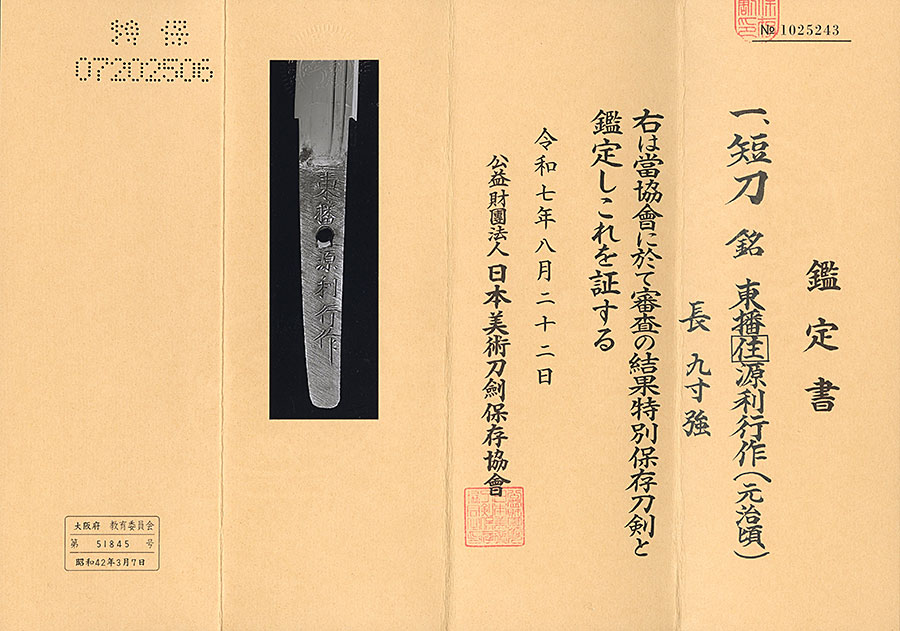
A Hozon-certified blade judged to show notably superior workmanship and a better state of preservation. The bar is higher: re-tempered blades and most unsigned Muromachi/Edo works are excluded.
Signed: 東播住源利行作 (Toshiyuki)
As written on the certificate
About the NBTHK›
The NBTHK (Nihon Bijutsu Tōken Hozon Kyōkai, the Society for the Preservation of Japanese Art Swords) is a public-interest incorporated foundation founded in 1948 and supervised by Japan’s Agency for Cultural Affairs (Bunkachō); it is based at the Japanese Sword Museum in Tokyo. Its expert panels physically examine each submitted work (shinsa) and issue a certificate (kanteishō) ranking it by artistic and historical merit. NBTHK papers are the most widely recognized standard of authentication for Japanese swords and fittings.
For returns due to customer circumstances, the cost is the customer's responsibility. For returns due to our mis-shipment or a defective item, we bear the cost.














 NihontoWatch