Business Name: Meirin Sangyo Co., Ltd. Operations Manager: Takashi Tomano Location: 1-32 Rokumantai-cho, Tennoji-ku, Osaka-shi, Osaka 543-0074 Phone Number: TEL 06-6772-3026 FAX 06-6772-3028 Business License: Art Dealer / Antique Dealer, Osaka Prefectural Public Safety Commission License No. 621102002025 Additional Charges Beyond Product Price: Shipping fees, bank transfer fees (for payments other than Yucho transfer). Cash on Delivery (COD) fees apply when purchasing items other than token. Consumption tax is included in the product price. Payment Methods: Yucho transfer, advance payment via bank transfer, various credit cards, loan financing, Cash on Delivery (COD), etc., are available. For Yucho transfer customers, we will send a transfer form after the order is placed (fees covered by our company). Please note that it takes approximately 5 days to confirm payment. Shipping will occur as soon as confirmation is received. For bank transfers, please transfer to the following account (fees to be paid by the customer): MUFG Bank, Ueroku Branch (Ordinary Account 0000531) Loan Examples (Effective interest rate 8.96% for 55,000 yen): 36 installments | 36 installments | 24 installments 1st payment: 3,420 yen | 1,420 yen | 2,780 yen 2nd payment onwards: 1,700 yen | 900 yen | 2,500 yen Bonus payments: None | 5,000 yen x 6 times | None Please note that cancellations after a loan contract is finalized will incur a cancellation fee of 10% of the loan amount. Shipping Fees, etc.: 【Token, Yoroi, Ju, etc.】 Flat rate of 1,800 yen nationwide per order; COD fees are free. For orders exceeding 100,000 yen, shipping is complimentary. 【Items other than Token】 Standard shipping: 880 yen Hokkaido, Okinawa (including some remote islands): 2,200 yen *Separate quotes will be provided if purchased together with token or if the order requires multiple packages. If the payment method is Cash on Delivery (COD), the following COD fees are required (when purchasing items other than token): Purchase amount up to 10,000 yen: 330 yen Purchase amount up to 30,000 yen: 440 yen Purchase amount up to 100,000 yen: 660 yen Purchase amount up to 300,000 yen: 1,100 yen Purchase amount up to 500,000 yen: 2,200 yen Return Deadline: Within one week after arrival of the product. Return Shipping Costs: For returns due to customer convenience, shipping costs are to be borne by the customer. Thank you for your understanding. In the event of a shipping error by our company or product defects, our company will bear the cost. Ordering Method: Please inquire via the form on this page, or by phone/FAX. Accepted Credit Cards: VISA / JCB / American Express (AMEX) / China UnionPay Accepted Loans: Orient Corporation (Orico)
 NihontoWatch
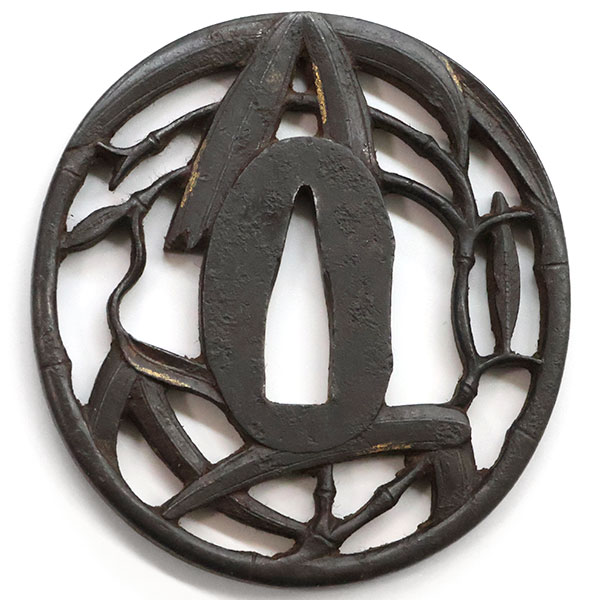
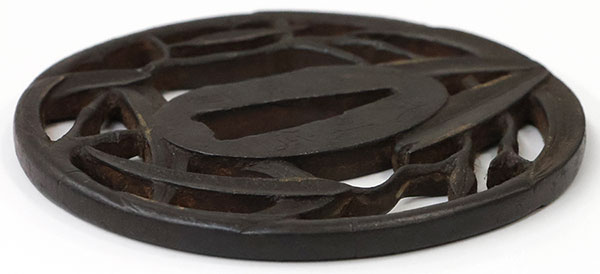
Ito Masakata
Mid-Edo, d. An'ei 3 (1774)
Iron-tsuba · Musashi
2 pieces on the market now
Iron-tsuba · Musashi
57 pieces on the market now
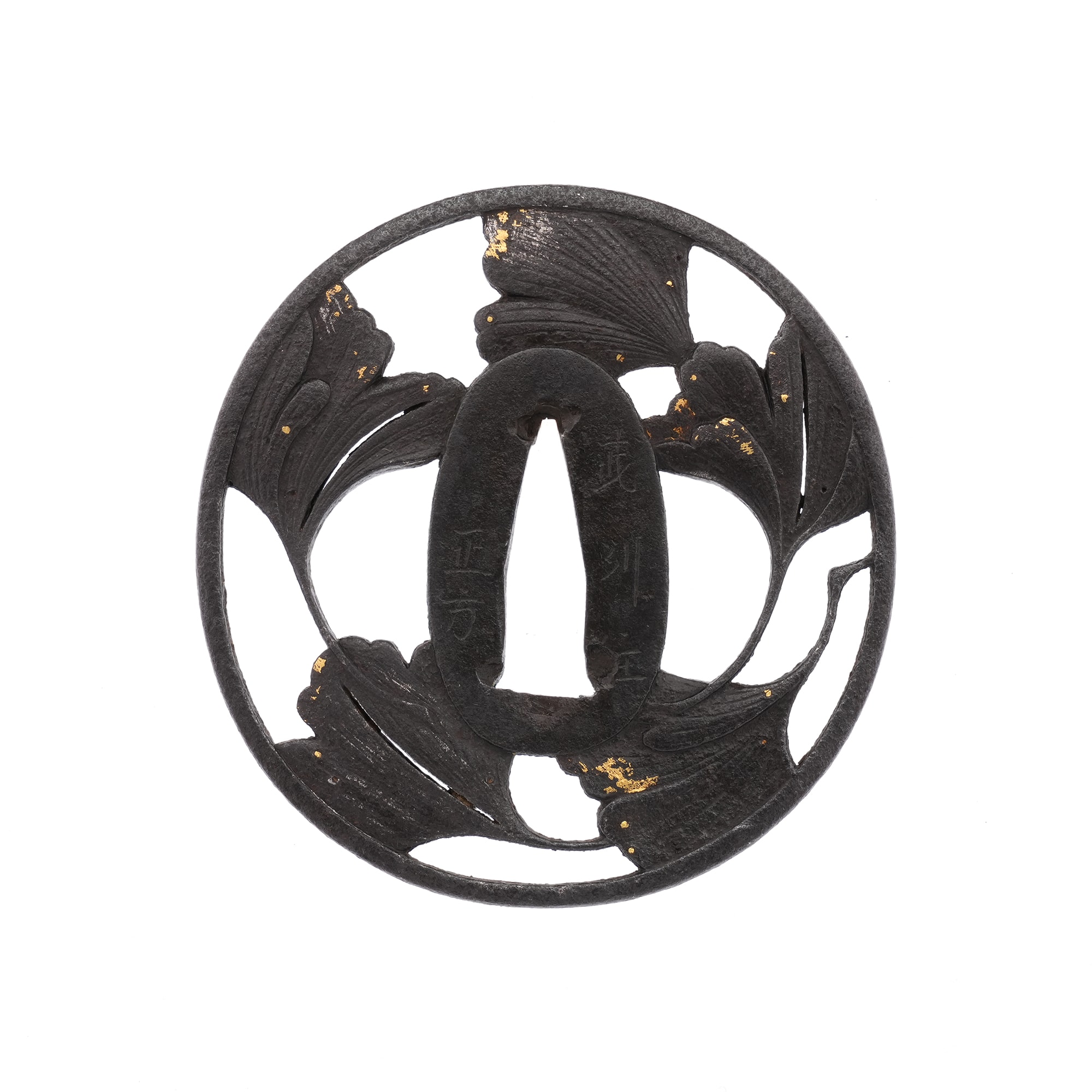
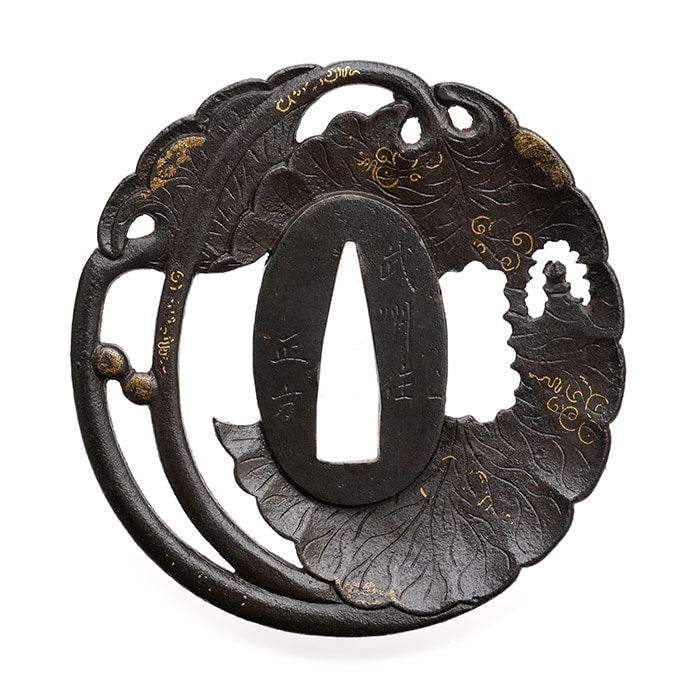
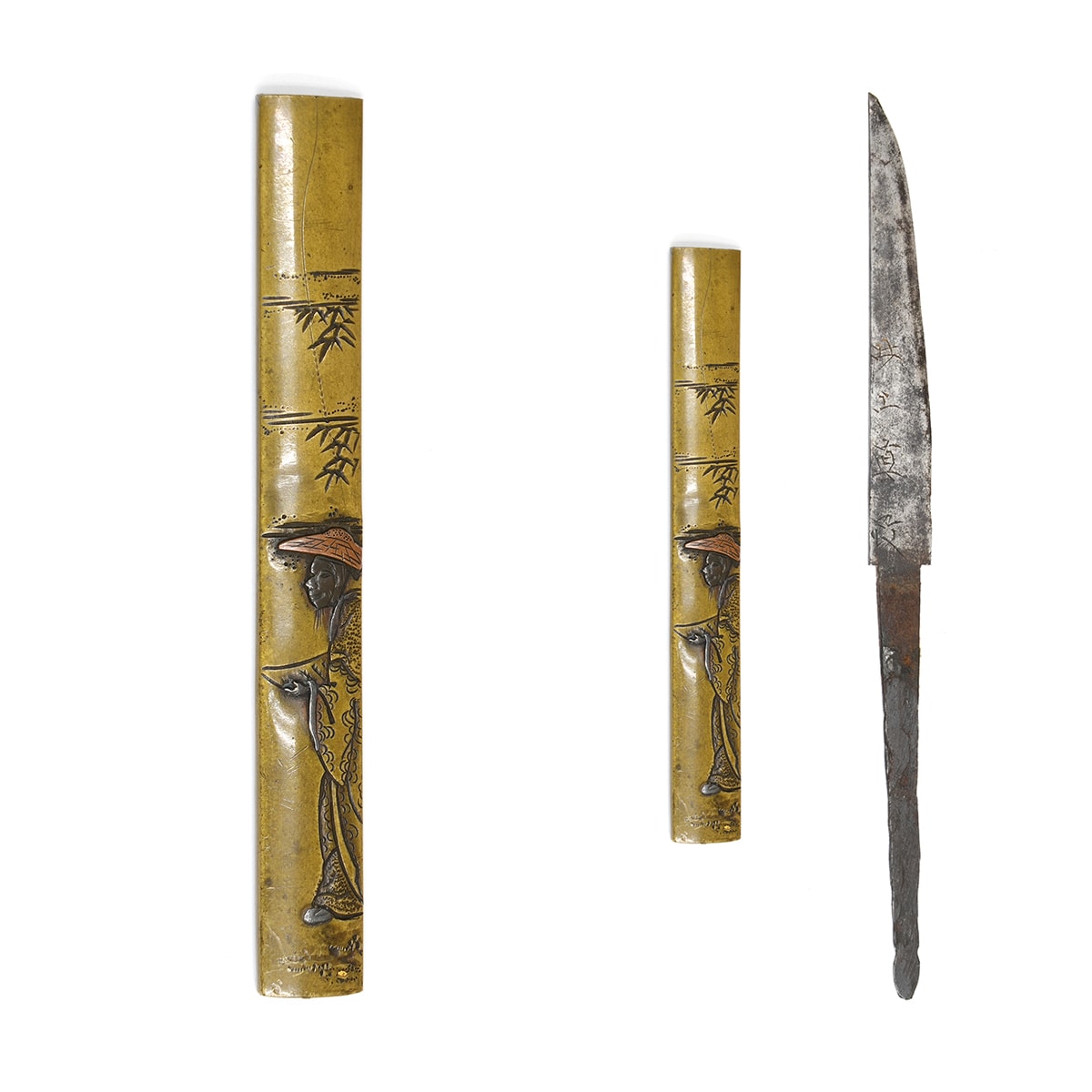
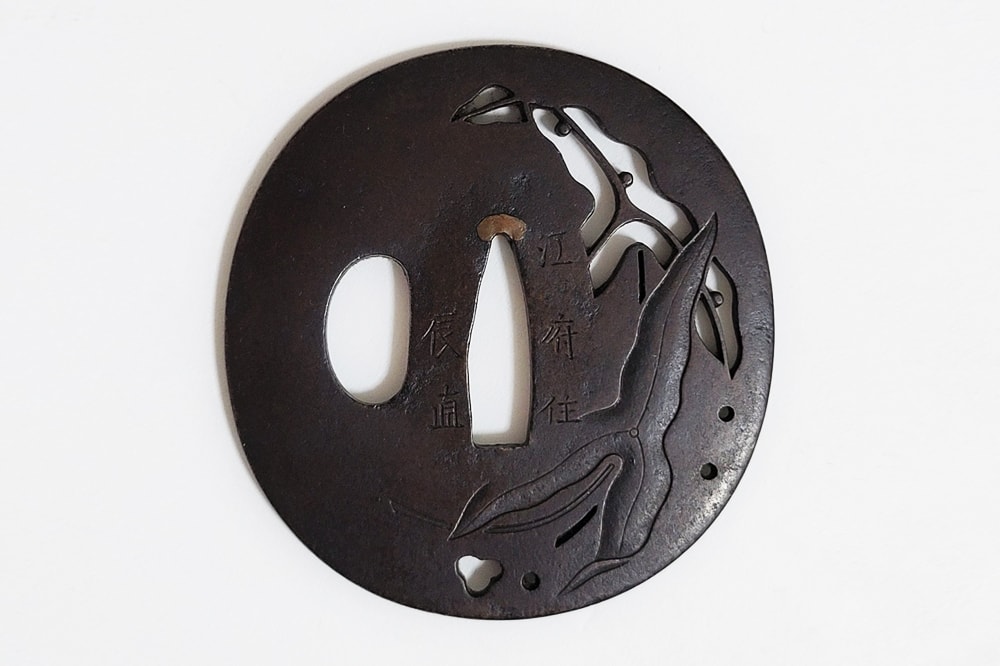
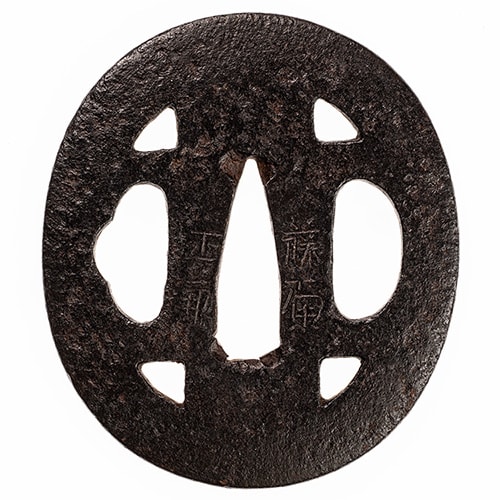
The Ito school (伊藤派) was a prolific kinkō lineage based in Kanda, Edo, in Musashi province. The line was established by Masanaga (正長, d. 1727), who received appointment as official tsuba maker (kōgi o-kakae tsubashi) to the Tokugawa Shogunate following an audience with Shogun Ienobu in 1710. Successive heads bore the character 正 (Masa-) in their art names, producing ten recorded generations from the Genroku era through the Meiji period. The second-generation master Masatsune (正恒) developed ito-sukashi (糸透かし), the school's signature technique of extremely fine saw-cut openwork. The tenth and final head, Itō Katsumi (伊藤勝見, 1829--1910), originally named Masataka (正隆), entered the school of Tanaka Seiju (田中清寿) at twelve, was adopted into his master's household at seventeen, and received the rank of Hōkyō (法橋) while still young, together with the art name Tōryūsai (東竜斎). After parting ways with Seiju, Katsumi studied maki-e under Shibata Zeshin (柴田是真), and in Man'en 1 (1860) was adopted into the Itō Masahiro family, becoming the tenth-generation head. This dual formation -- kinkō discipline under the Tanaka lineage and lacquer refinement under Zeshin -- profoundly shaped the school's late output.
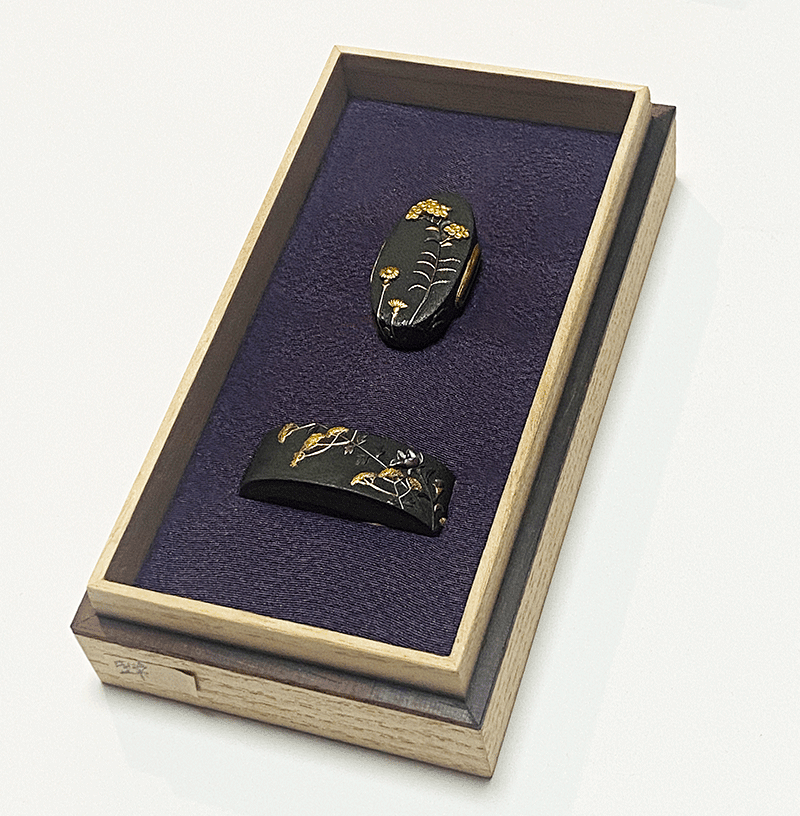
The Ito school's collective style is characterised by mastery of zōgan (象嵌, inlay) and iroe (色絵, polychrome metalwork) deployed with what the setsumei repeatedly describe as precision and accuracy. Works are executed on plates of iron, shibuichi (四分一), oboro-gin (朧銀), or shakudō (赤銅), frequently with nanako-ji (魚子地) grounds. The technical repertoire encompasses takabori (高彫, high relief), sukidashi takabori (鋤出高彫), katakiribori (片切彫), fine kebori (毛彫, hairline engraving), suemon-zōgan (据文象嵌), and nunome-zōgan (布目象嵌), often combined within a single composition. Masatsune's work employs shippō (七宝, cloisonné enamel) on iron plate, as seen in a unified uchigatana koshirae signed "Bushū-jū Masatsune" whose tsuba, fuchi-kashira, kurikata, and kaerizuno are coordinated as a single aesthetic programme[[c:1]] with raden (螺鈿, mother-of-pearl) and gold uchikomi (打込) work. Katsumi's mature output favours figural and narrative subjects: the Frog Battle after the celebrated Chōjū-giga scrolls attributed to Toba Sōjō, Gama Sennin with his toad beneath a willow, and Daisē Fudō Myōō realised with emphatic devotional presence. "[[c:6]] The Ito school occupies a distinctive place in the tsuba canon as a Musashi-based lineage that sustained high-level production across the entire Edo period. Its works were widely disseminated through the sankin-kōtai system, as samurai from all provinces acquired Ito tsuba during their attendance in Edo. "[[c:7]] That his tsuba depicting the Chōjū-giga Frog Battle is described as a "forceful work from his later years"[[c:5]] whose "composition, which successfully preserves the spirit of the original painting, is outstanding" confirms the school's enduring capacity to unite pictorial invention with metalworking virtuosity. Learn more →
| Smith | Era | Designated |
|---|---|---|
| Katsumi勝見 | — | 4 |
| Sadatsune貞恒 | — | 0 |
| Masayoshi正備 | — | 0 |
| Masatsune正常 | — | 0 |
| Masakane正金 | — | 0 |
We could not find an authenticity certificate on the seller’s listing. Japanese swords and fittings are normally papered by the NBTHK (or the NTHK). Without one, the attribution is the seller’s own assessment and has not been independently verified — treat it with caution and ask the dealer about certification before buying.
For returns due to customer circumstances, the cost is the customer's responsibility. For returns due to our mis-shipment or a defective item, we bear the cost.
Business Name: Meirin Sangyo Co., Ltd. Operations Manager: Takashi Tomano Location: 1-32 Rokumantai-cho, Tennoji-ku, Osaka-shi, Osaka 543-0074 Phone Number: TEL 06-6772-3026 FAX 06-6772-3028 Business License: Art Dealer / Antique Dealer, Osaka Prefectural Public Safety Commission License No. 621102002025 Additional Charges Beyond Product Price: Shipping fees, bank transfer fees (for payments other than Yucho transfer). Cash on Delivery (COD) fees apply when purchasing items other than token. Consumption tax is included in the product price. Payment Methods: Yucho transfer, advance payment via bank transfer, various credit cards, loan financing, Cash on Delivery (COD), etc., are available. For Yucho transfer customers, we will send a transfer form after the order is placed (fees covered by our company). Please note that it takes approximately 5 days to confirm payment. Shipping will occur as soon as confirmation is received. For bank transfers, please transfer to the following account (fees to be paid by the customer): MUFG Bank, Ueroku Branch (Ordinary Account 0000531) Loan Examples (Effective interest rate 8.96% for 55,000 yen): 36 installments | 36 installments | 24 installments 1st payment: 3,420 yen | 1,420 yen | 2,780 yen 2nd payment onwards: 1,700 yen | 900 yen | 2,500 yen Bonus payments: None | 5,000 yen x 6 times | None Please note that cancellations after a loan contract is finalized will incur a cancellation fee of 10% of the loan amount. Shipping Fees, etc.: 【Token, Yoroi, Ju, etc.】 Flat rate of 1,800 yen nationwide per order; COD fees are free. For orders exceeding 100,000 yen, shipping is complimentary. 【Items other than Token】 Standard shipping: 880 yen Hokkaido, Okinawa (including some remote islands): 2,200 yen *Separate quotes will be provided if purchased together with token or if the order requires multiple packages. If the payment method is Cash on Delivery (COD), the following COD fees are required (when purchasing items other than token): Purchase amount up to 10,000 yen: 330 yen Purchase amount up to 30,000 yen: 440 yen Purchase amount up to 100,000 yen: 660 yen Purchase amount up to 300,000 yen: 1,100 yen Purchase amount up to 500,000 yen: 2,200 yen Return Deadline: Within one week after arrival of the product. Return Shipping Costs: For returns due to customer convenience, shipping costs are to be borne by the customer. Thank you for your understanding. In the event of a shipping error by our company or product defects, our company will bear the cost. Ordering Method: Please inquire via the form on this page, or by phone/FAX. Accepted Credit Cards: VISA / JCB / American Express (AMEX) / China UnionPay Accepted Loans: Orient Corporation (Orico)
NihontoWatchIto Masakata
Mid-Edo, d. An'ei 3 (1774)
Iron-tsuba · Musashi
2 pieces on the market now
Iron-tsuba · Musashi
57 pieces on the market now
The Ito school (伊藤派) was a prolific kinkō lineage based in Kanda, Edo, in Musashi province. The line was established by Masanaga (正長, d. 1727), who received appointment as official tsuba maker (kōgi o-kakae tsubashi) to the Tokugawa Shogunate following an audience with Shogun Ienobu in 1710. Successive heads bore the character 正 (Masa-) in their art names, producing ten recorded generations from the Genroku era through the Meiji period. The second-generation master Masatsune (正恒) developed ito-sukashi (糸透かし), the school's signature technique of extremely fine saw-cut openwork. The tenth and final head, Itō Katsumi (伊藤勝見, 1829--1910), originally named Masataka (正隆), entered the school of Tanaka Seiju (田中清寿) at twelve, was adopted into his master's household at seventeen, and received the rank of Hōkyō (法橋) while still young, together with the art name Tōryūsai (東竜斎). After parting ways with Seiju, Katsumi studied maki-e under Shibata Zeshin (柴田是真), and in Man'en 1 (1860) was adopted into the Itō Masahiro family, becoming the tenth-generation head. This dual formation -- kinkō discipline under the Tanaka lineage and lacquer refinement under Zeshin -- profoundly shaped the school's late output.
The Ito school's collective style is characterised by mastery of zōgan (象嵌, inlay) and iroe (色絵, polychrome metalwork) deployed with what the setsumei repeatedly describe as precision and accuracy. Works are executed on plates of iron, shibuichi (四分一), oboro-gin (朧銀), or shakudō (赤銅), frequently with nanako-ji (魚子地) grounds. The technical repertoire encompasses takabori (高彫, high relief), sukidashi takabori (鋤出高彫), katakiribori (片切彫), fine kebori (毛彫, hairline engraving), suemon-zōgan (据文象嵌), and nunome-zōgan (布目象嵌), often combined within a single composition. Masatsune's work employs shippō (七宝, cloisonné enamel) on iron plate, as seen in a unified uchigatana koshirae signed "Bushū-jū Masatsune" whose tsuba, fuchi-kashira, kurikata, and kaerizuno are coordinated as a single aesthetic programme[[c:1]] with raden (螺鈿, mother-of-pearl) and gold uchikomi (打込) work. Katsumi's mature output favours figural and narrative subjects: the Frog Battle after the celebrated Chōjū-giga scrolls attributed to Toba Sōjō, Gama Sennin with his toad beneath a willow, and Daisē Fudō Myōō realised with emphatic devotional presence. "[[c:6]] The Ito school occupies a distinctive place in the tsuba canon as a Musashi-based lineage that sustained high-level production across the entire Edo period. Its works were widely disseminated through the sankin-kōtai system, as samurai from all provinces acquired Ito tsuba during their attendance in Edo. "[[c:7]] That his tsuba depicting the Chōjū-giga Frog Battle is described as a "forceful work from his later years"[[c:5]] whose "composition, which successfully preserves the spirit of the original painting, is outstanding" confirms the school's enduring capacity to unite pictorial invention with metalworking virtuosity. Learn more →
| Smith | Era | Designated |
|---|---|---|
| Katsumi勝見 | — | 4 |
| Sadatsune貞恒 | — | 0 |
| Masayoshi正備 | — | 0 |
| Masatsune正常 | — | 0 |
| Masakane正金 | — | 0 |
We could not find an authenticity certificate on the seller’s listing. Japanese swords and fittings are normally papered by the NBTHK (or the NTHK). Without one, the attribution is the seller’s own assessment and has not been independently verified — treat it with caution and ask the dealer about certification before buying.
For returns due to customer circumstances, the cost is the customer's responsibility. For returns due to our mis-shipment or a defective item, we bear the cost.