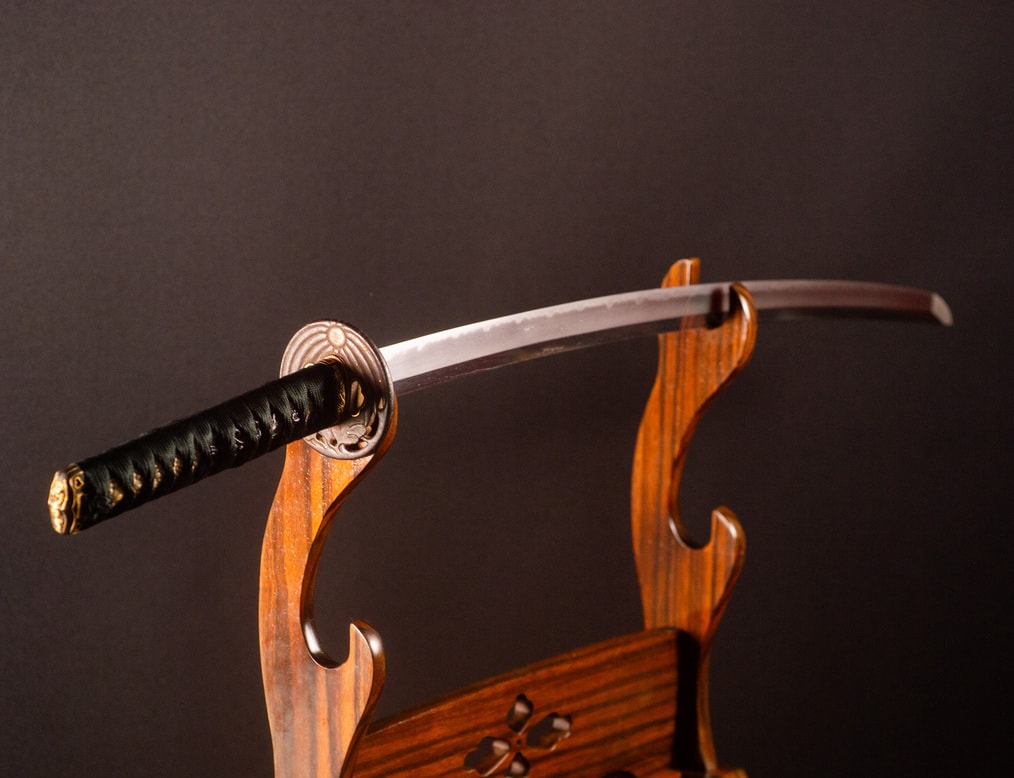
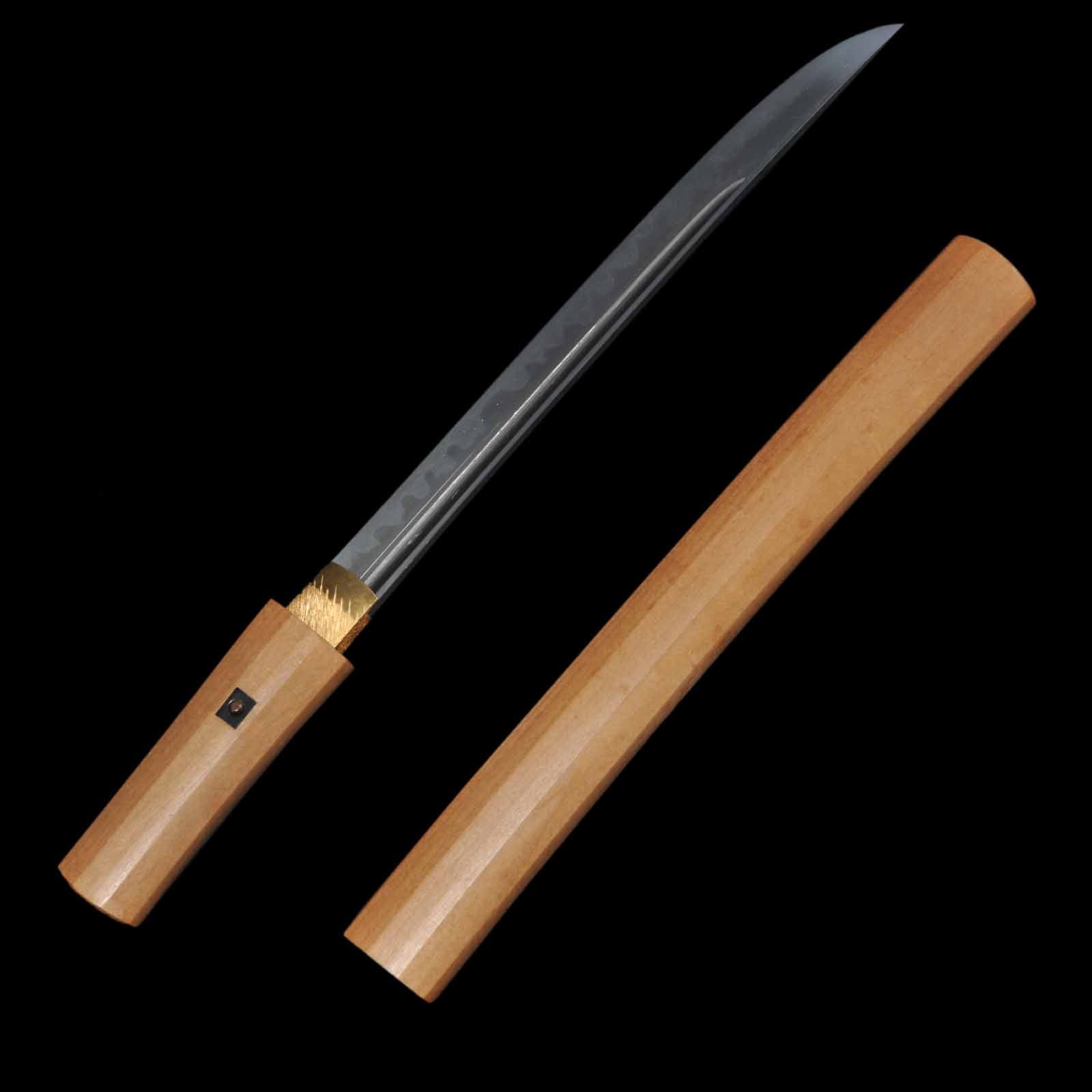
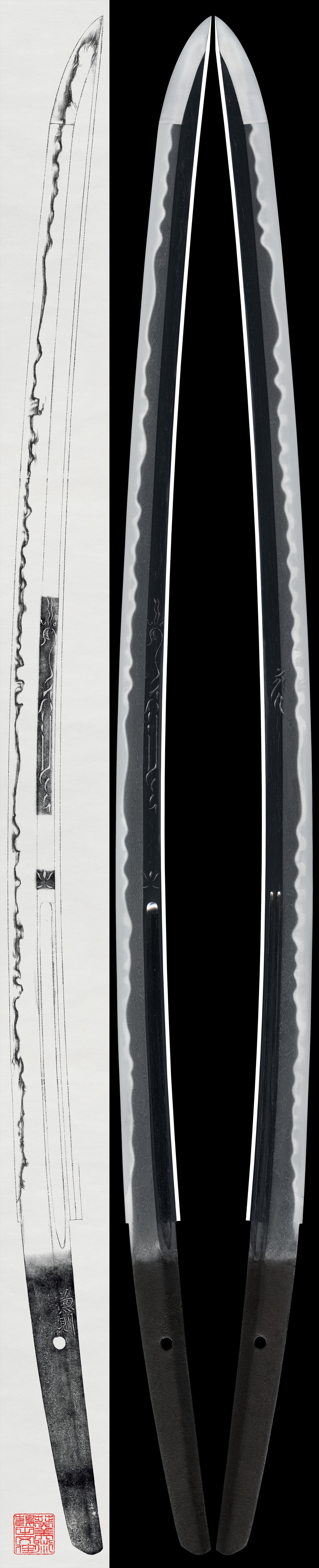
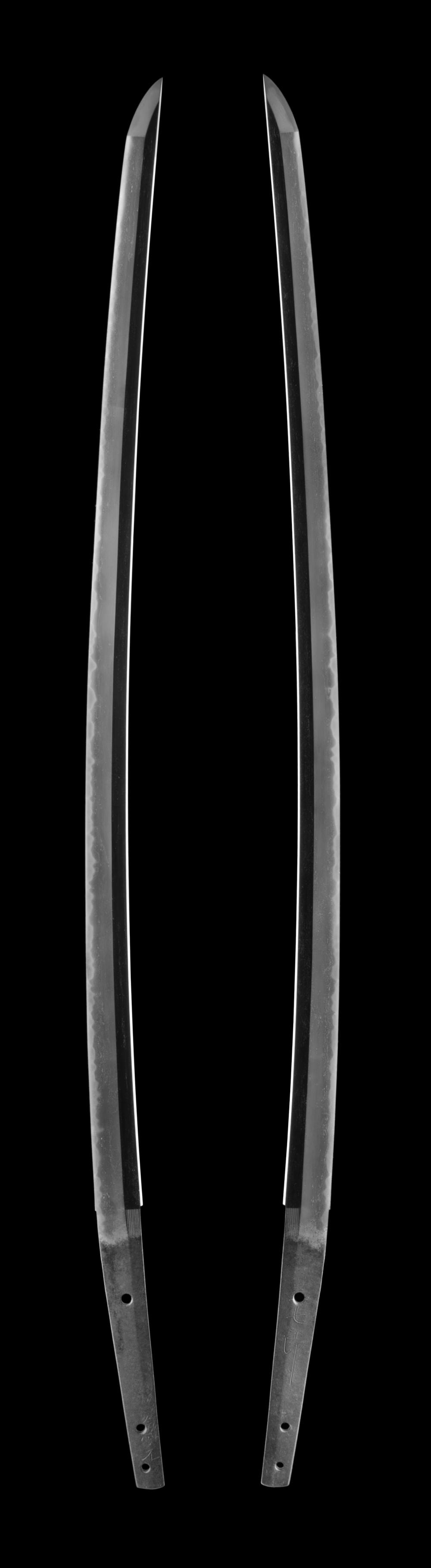
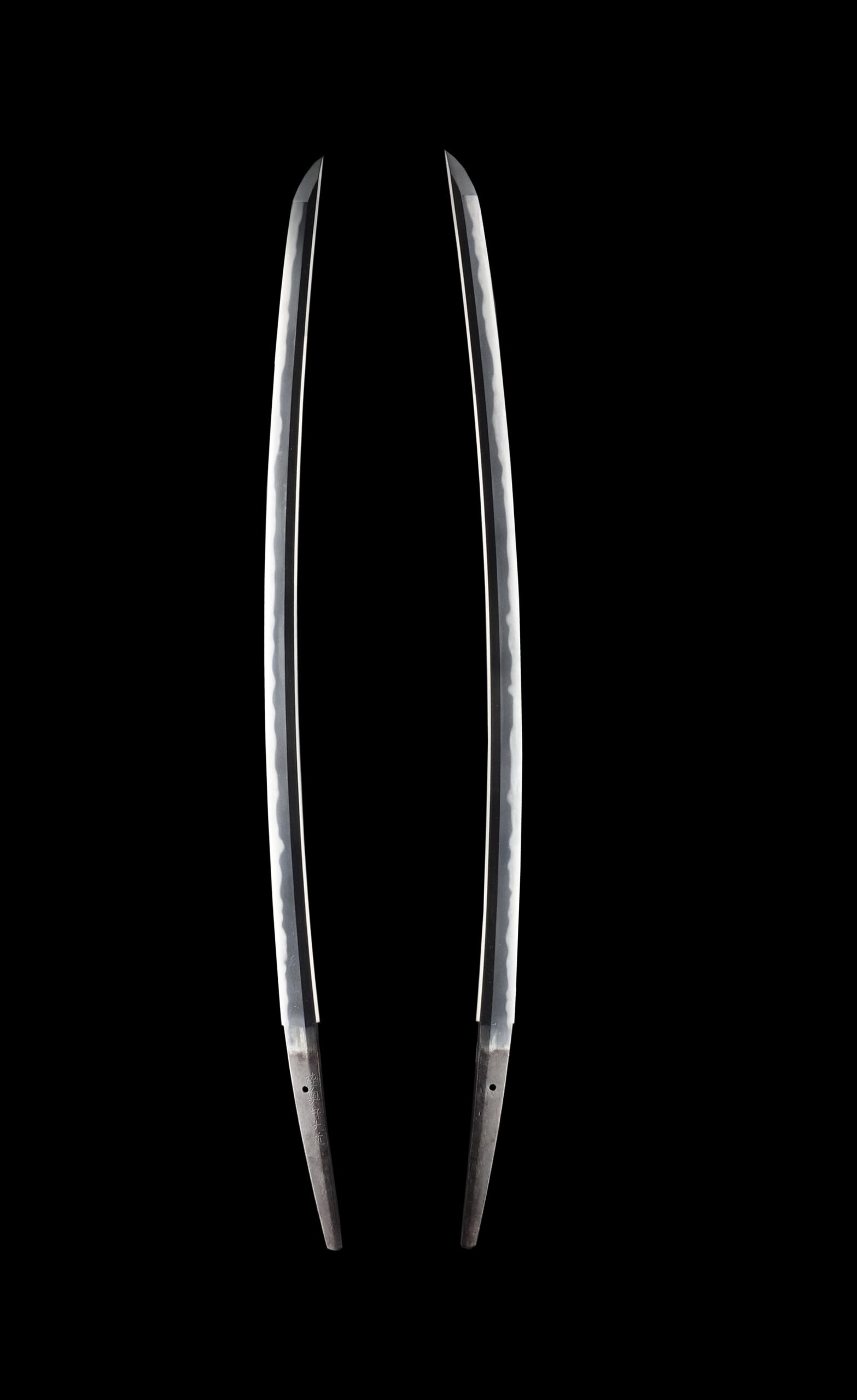
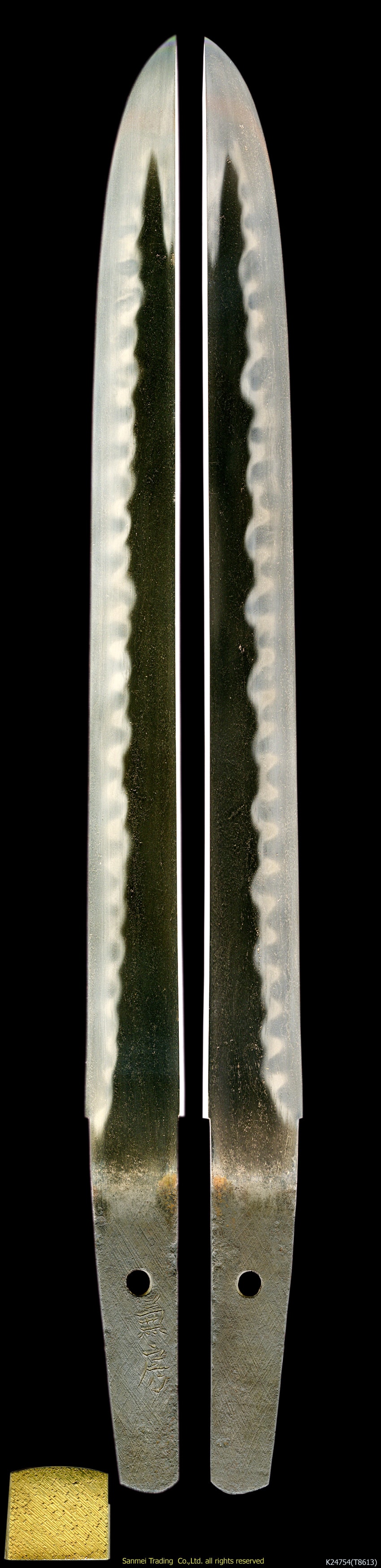
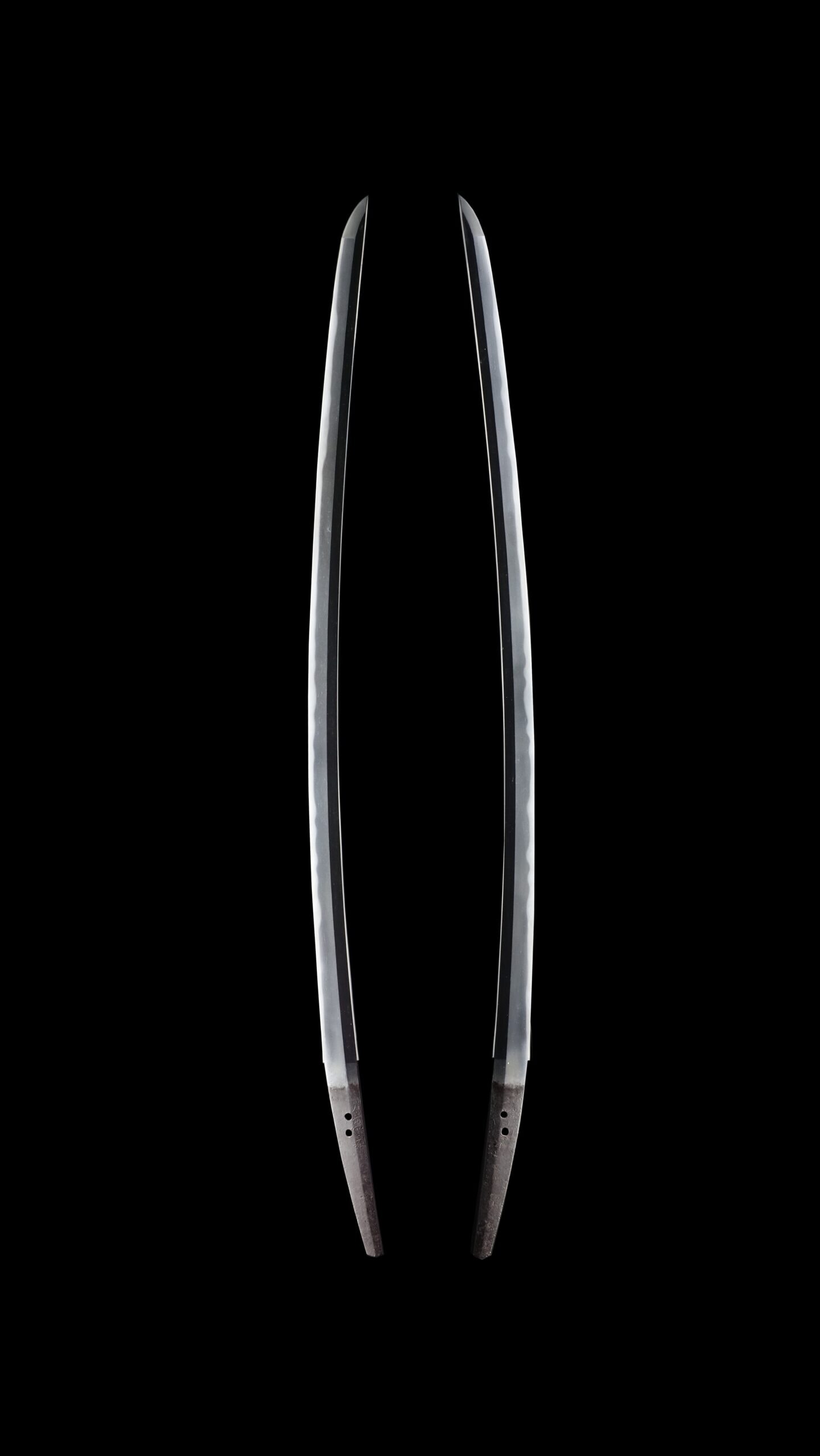
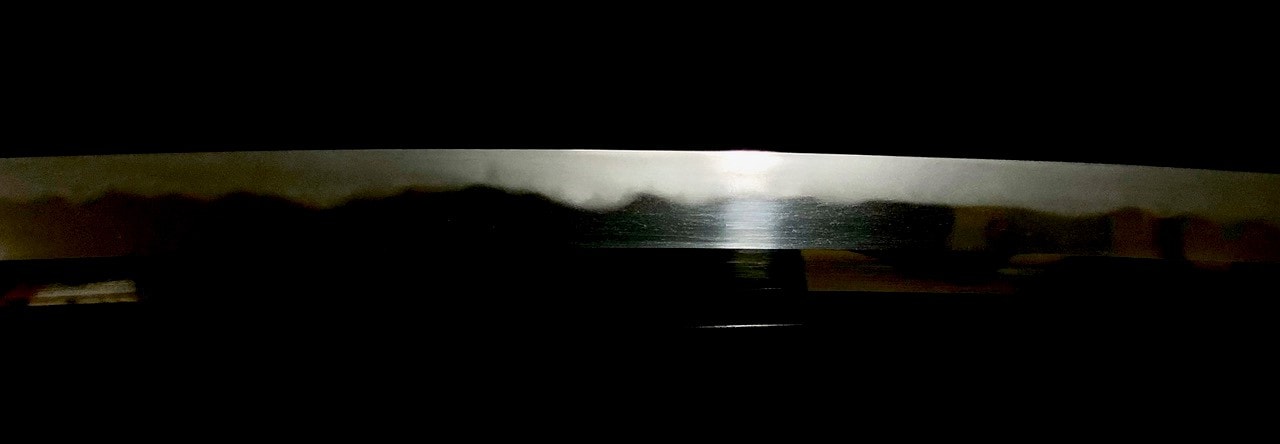
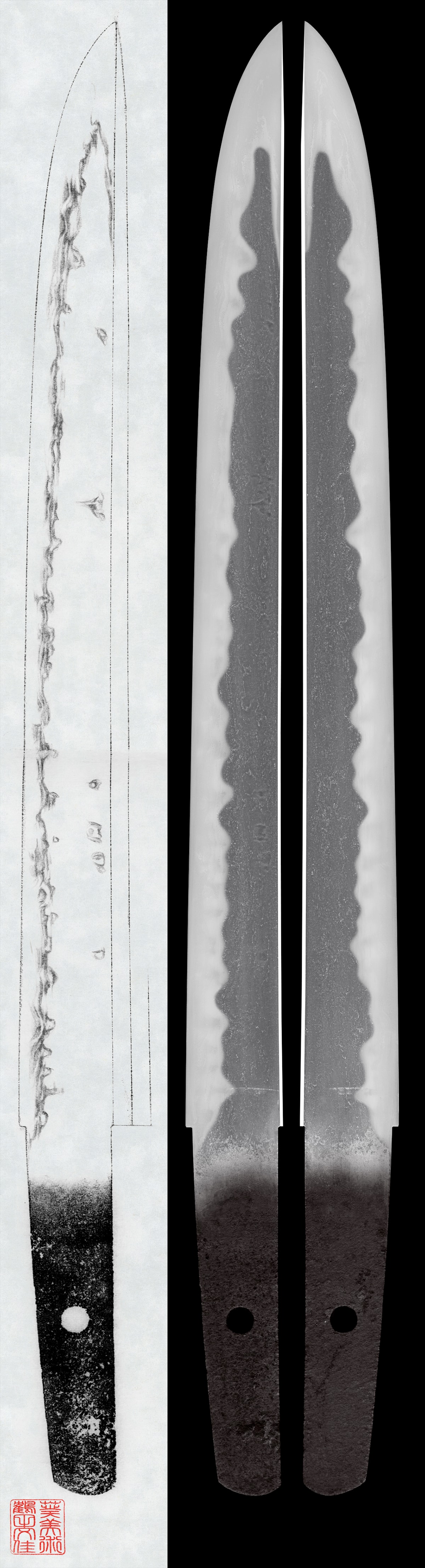
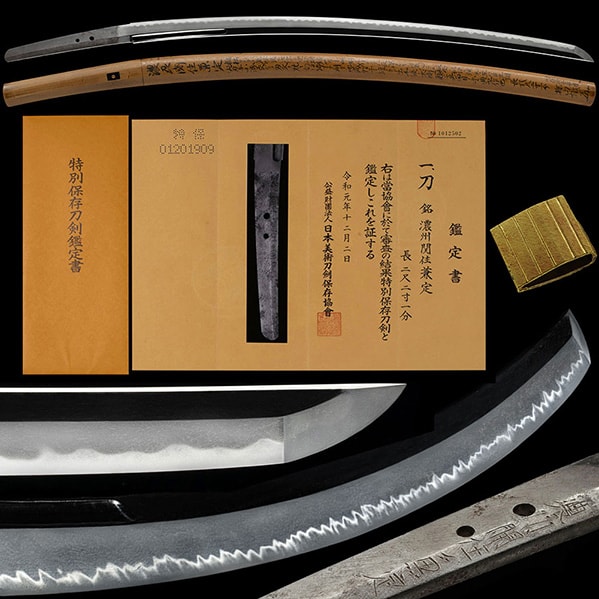
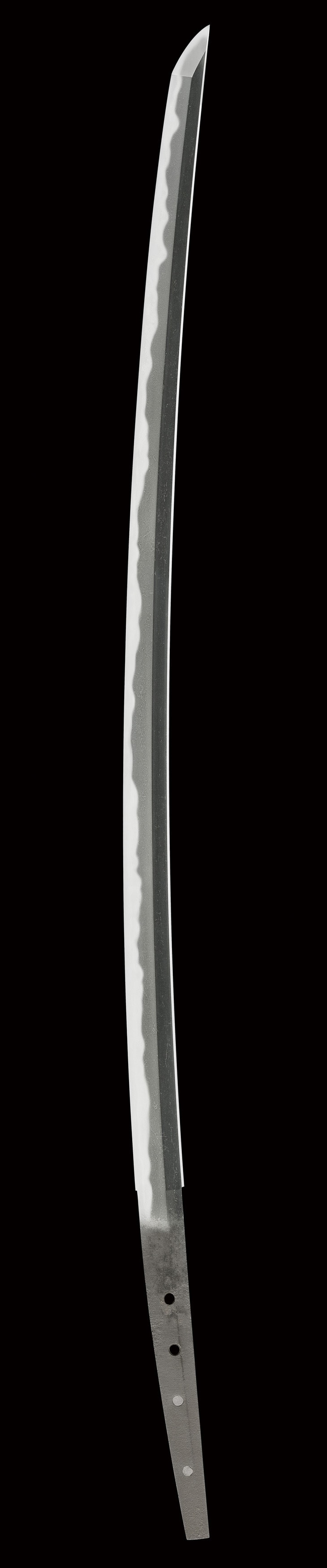
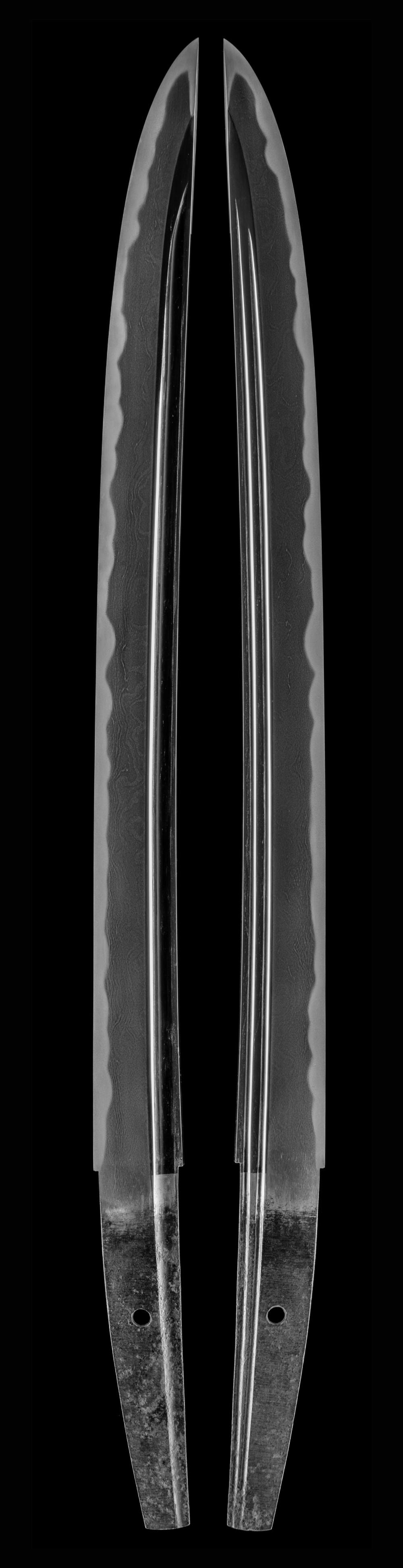
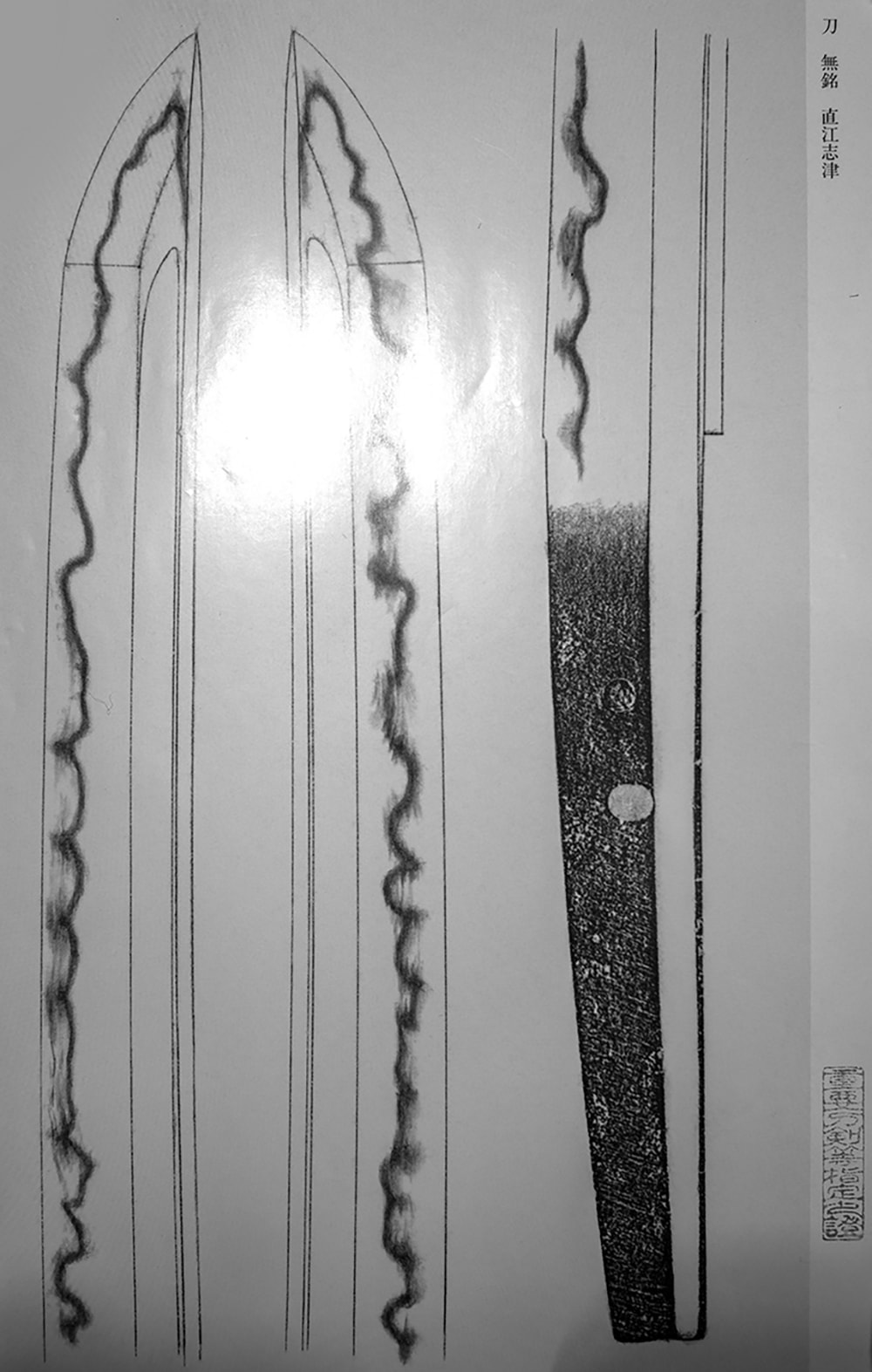
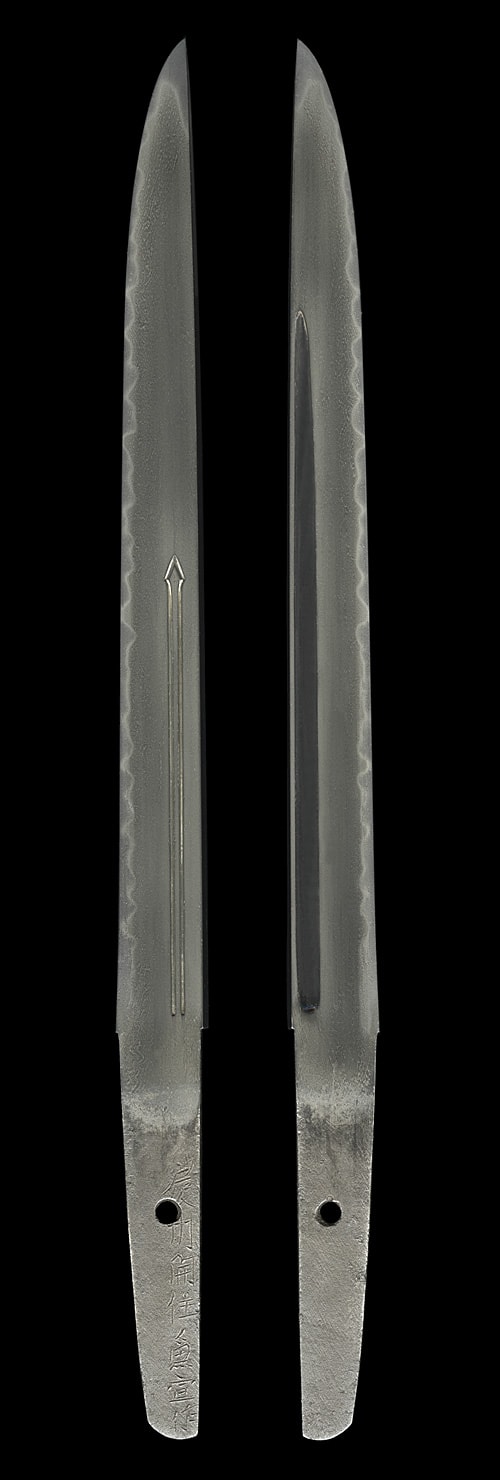
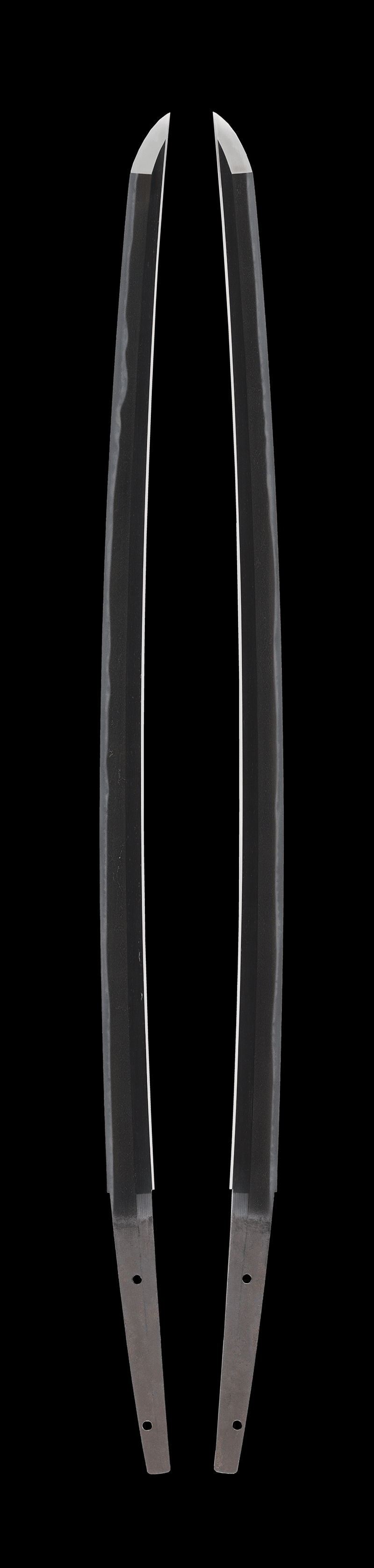
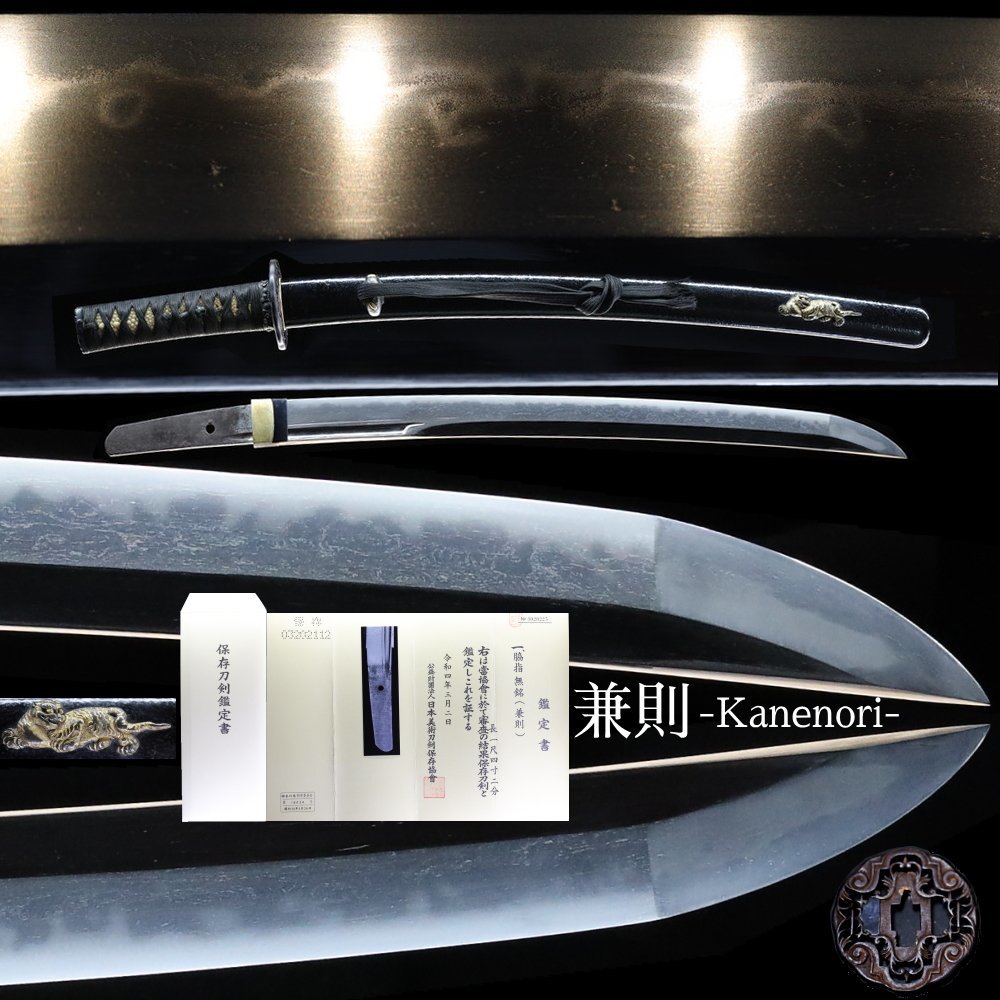
This is a mumei wakizashi attributed to Kanenori, featuring an impressive Unokubi-zukuri shape and a wide motohaba exceeding 31mm. It comes with a koshirae and a distinctive gold and shakudo double habaki. The blade exhibits a bold hamon with tamayaki, and it is certified as Hozon Token by the NBTHK.
 NihontoWatch
mumei · Muromachi · nagasa 43cm · sori 0.9cm



Mino-den · Mino · around 1394-1428
Tōken Taikan top 21%
1 piece on the market now
Where Kanenori stands among comparable artisans: across all of nihontō, and within tradition, era, and period. The tiers (Foremost · Leading · Major · Notable) weigh official designations from the NBTHK and Japan's Agency for Cultural Affairs, together with historical honors of lasting repute such as the Sansaku and Meibutsu-chō.
Select a lens to see how it's measured.
Mino-den · Mino
150 pieces on the market now
Seki (関), in Mino Province, grew from two roots set down in the Nanbokuchō period and rose to become the great center of mass sword production in the late medieval age. Learn more →
| Smith | Era | Designated |
|---|---|---|
| Kinju金重 | 1340-1346 | 45 |
| Ujifusa氏房 | 1596-1615 | 16 |
| Kaneyuki金行 | 1350-1352 | 10 |
| Ujifusa氏房 | 1571-1592 | 9 |
| Kanekore兼之 | 1504-1555 | 7 |
Certifies a genuine blade worth preserving: a signature confirmed correct, or, if unsigned, an era, province, and school that the NBTHK can reliably identify.
The NBTHK (Nihon Bijutsu Tōken Hozon Kyōkai, the Society for the Preservation of Japanese Art Swords) is a public-interest incorporated foundation founded in 1948 and supervised by Japan’s Agency for Cultural Affairs (Bunkachō); it is based at the Japanese Sword Museum in Tokyo. Its expert panels physically examine each submitted work (shinsa) and issue a certificate (kanteishō) ranking it by artistic and historical merit. NBTHK papers are the most widely recognized standard of authentication for Japanese swords and fittings.
NBTHK official siteThis is a mumei wakizashi attributed to Kanenori, featuring an impressive Unokubi-zukuri shape and a wide motohaba exceeding 31mm. It comes with a koshirae and a distinctive gold and shakudo double habaki. The blade exhibits a bold hamon with tamayaki, and it is certified as Hozon Token by the NBTHK.
NihontoWatchmumei · Muromachi · nagasa 43cm · sori 0.9cm
Mino-den · Mino · around 1394-1428
Tōken Taikan top 21%
1 piece on the market now
Where Kanenori stands among comparable artisans: across all of nihontō, and within tradition, era, and period. The tiers (Foremost · Leading · Major · Notable) weigh official designations from the NBTHK and Japan's Agency for Cultural Affairs, together with historical honors of lasting repute such as the Sansaku and Meibutsu-chō.
Select a lens to see how it's measured.
Mino-den · Mino
150 pieces on the market now
Seki (関), in Mino Province, grew from two roots set down in the Nanbokuchō period and rose to become the great center of mass sword production in the late medieval age. Learn more →
| Smith | Era | Designated |
|---|---|---|
| Kinju金重 | 1340-1346 | 45 |
| Ujifusa氏房 | 1596-1615 | 16 |
| Kaneyuki金行 | 1350-1352 | 10 |
| Ujifusa氏房 | 1571-1592 | 9 |
| Kanekore兼之 | 1504-1555 | 7 |
Certifies a genuine blade worth preserving: a signature confirmed correct, or, if unsigned, an era, province, and school that the NBTHK can reliably identify.
The NBTHK (Nihon Bijutsu Tōken Hozon Kyōkai, the Society for the Preservation of Japanese Art Swords) is a public-interest incorporated foundation founded in 1948 and supervised by Japan’s Agency for Cultural Affairs (Bunkachō); it is based at the Japanese Sword Museum in Tokyo. Its expert panels physically examine each submitted work (shinsa) and issue a certificate (kanteishō) ranking it by artistic and historical merit. NBTHK papers are the most widely recognized standard of authentication for Japanese swords and fittings.
NBTHK official site