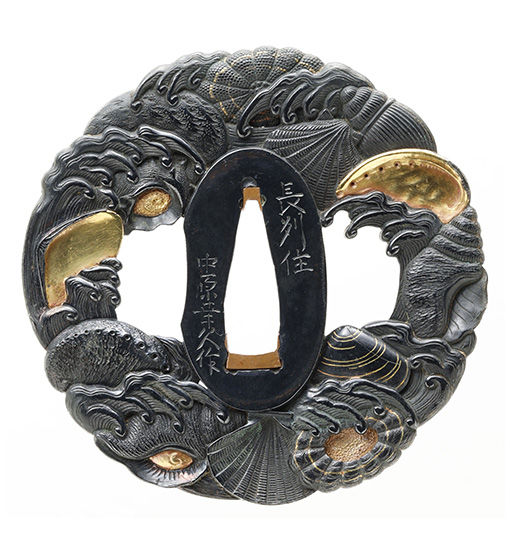
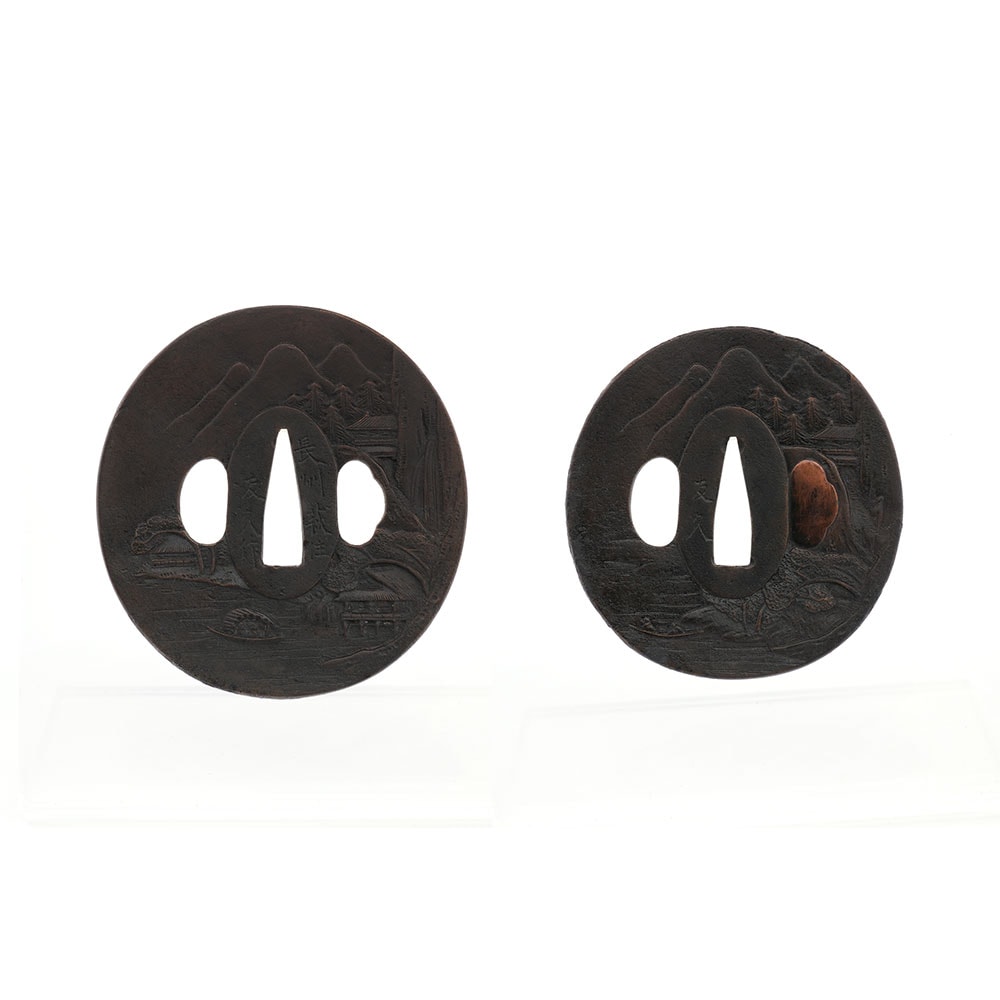
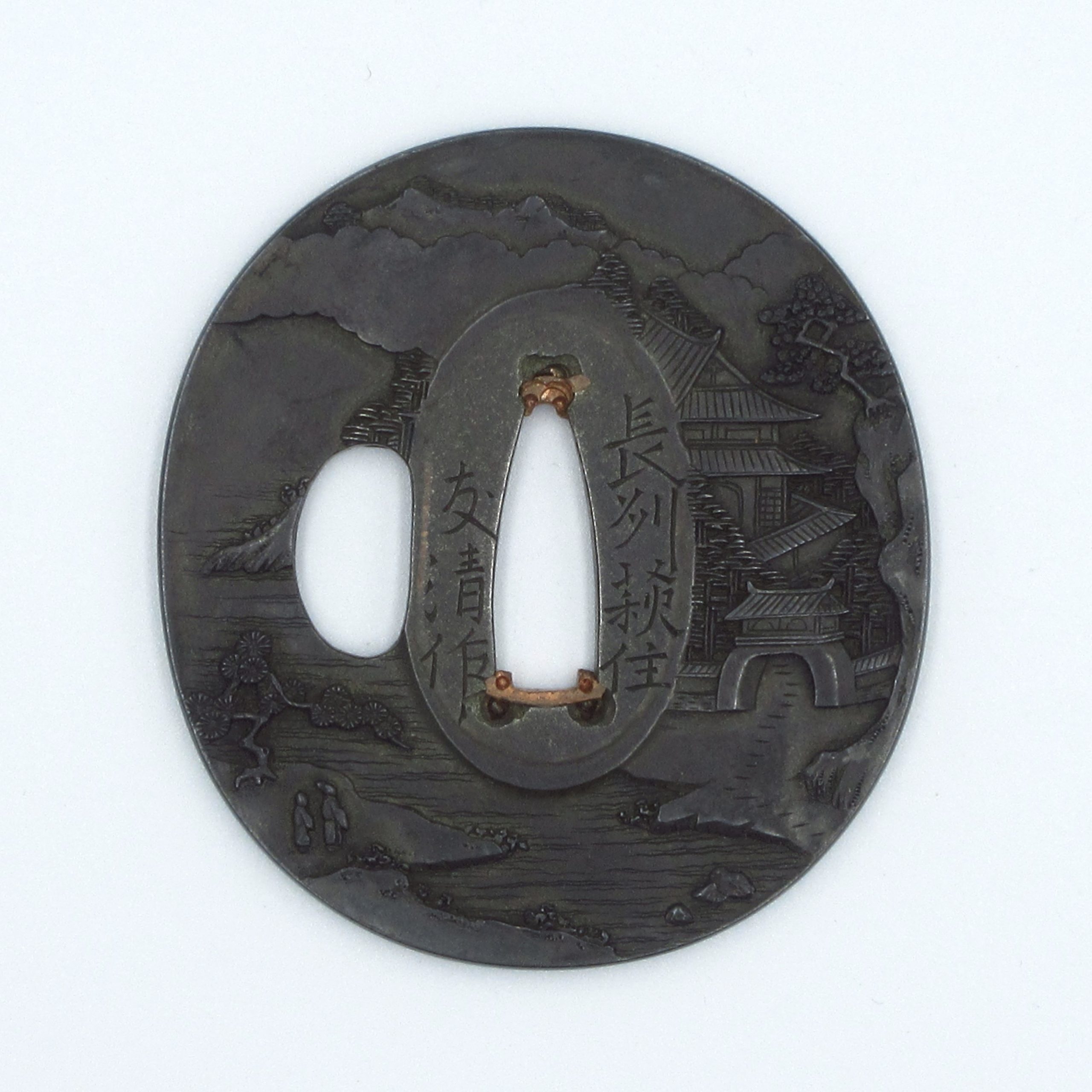
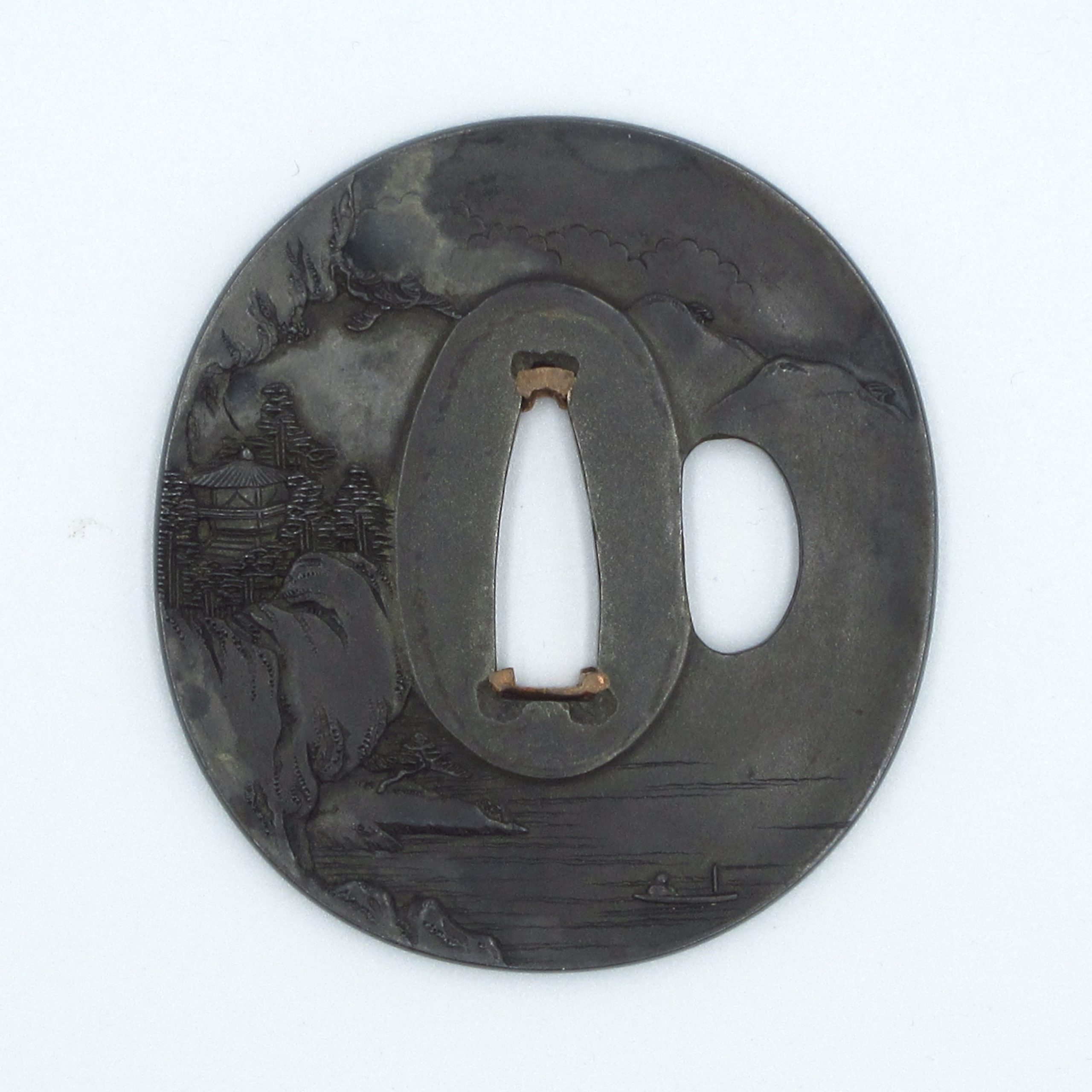
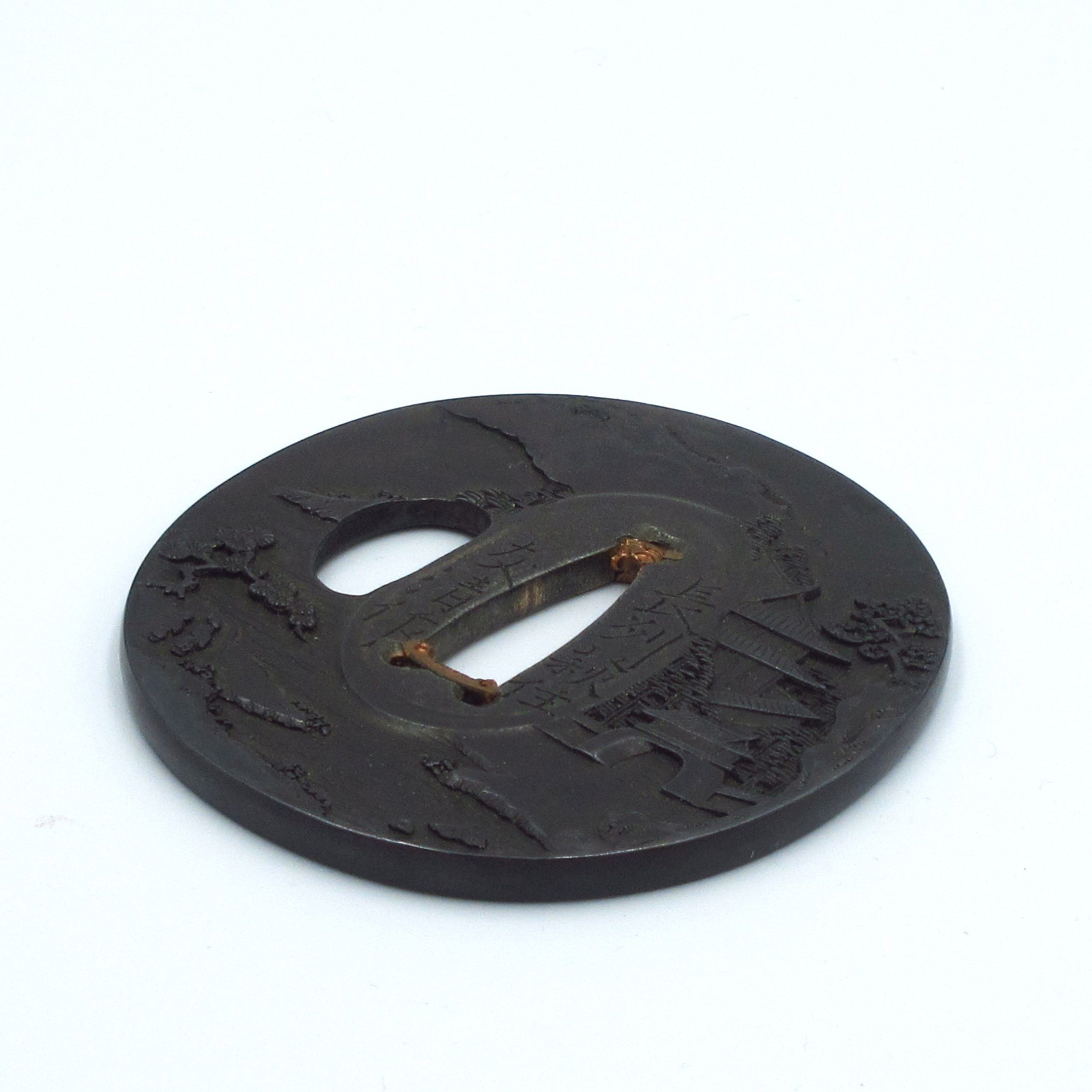
This is a slightly small tsuba, made for a wakizashi, featuring a landscape reminiscent of a sumi-e painting. It is signed "Choshu Hagi ju Tomokiyo saku" and is believed to be by Tomokiyo of the Hachido family, a tsuba maker from Nagato Province (present-day Yamaguchi Prefecture) who was active around the Genroku era (c. 1700) in the mid-Edo period, inheriting the family headship in 1722. The intricate craftsmanship is superb, and its size and weight make it easy to handle, though it might feel rough for martial arts use. It is recommended for appreciation.
 NihontoWatch
mei · Choshu · Edo
Tomokiyo
Edo
Nagato
Signed
Nagato
1 piece on the market now
We could not find an authenticity certificate on the seller’s listing. Japanese swords and fittings are normally papered by the NBTHK (or the NTHK). Without one, the attribution is the seller’s own assessment and has not been independently verified — treat it with caution and ask the dealer about certification before buying.
This is a slightly small tsuba, made for a wakizashi, featuring a landscape reminiscent of a sumi-e painting. It is signed "Choshu Hagi ju Tomokiyo saku" and is believed to be by Tomokiyo of the Hachido family, a tsuba maker from Nagato Province (present-day Yamaguchi Prefecture) who was active around the Genroku era (c. 1700) in the mid-Edo period, inheriting the family headship in 1722. The intricate craftsmanship is superb, and its size and weight make it easy to handle, though it might feel rough for martial arts use. It is recommended for appreciation.
NihontoWatchmei · Choshu · Edo
Tomokiyo
Edo
Nagato
Signed
Nagato
1 piece on the market now
We could not find an authenticity certificate on the seller’s listing. Japanese swords and fittings are normally papered by the NBTHK (or the NTHK). Without one, the attribution is the seller’s own assessment and has not been independently verified — treat it with caution and ask the dealer about certification before buying.