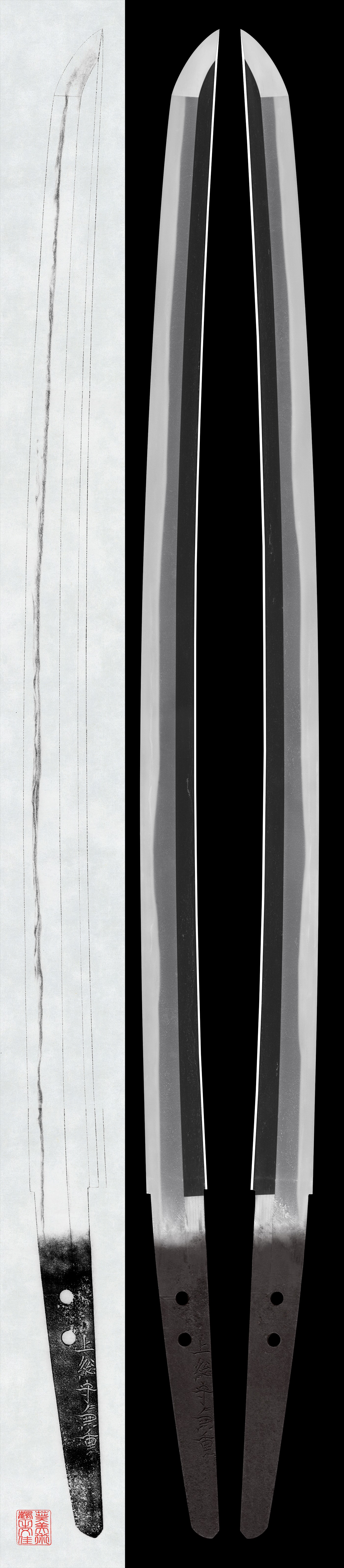
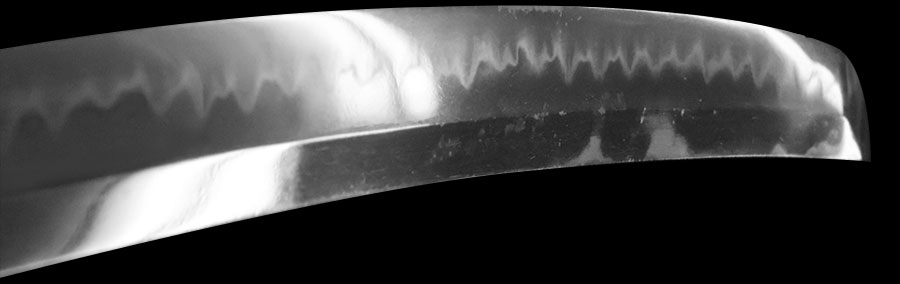
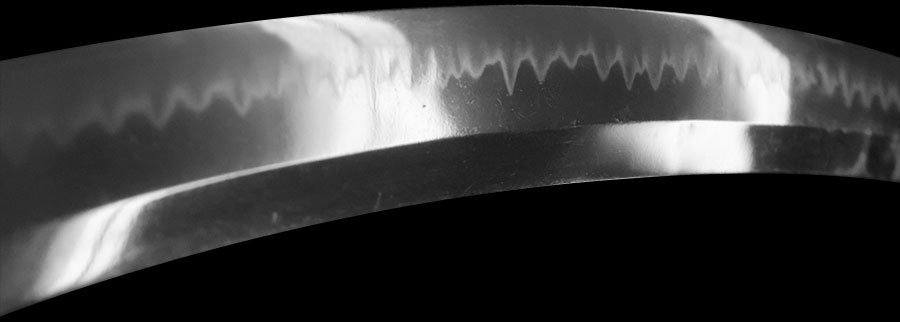
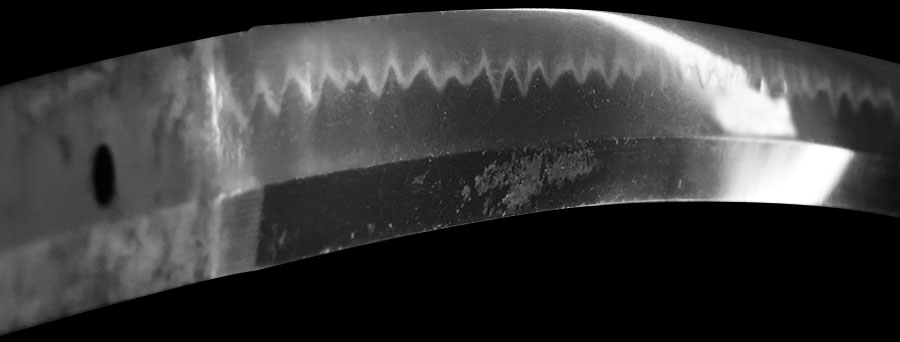
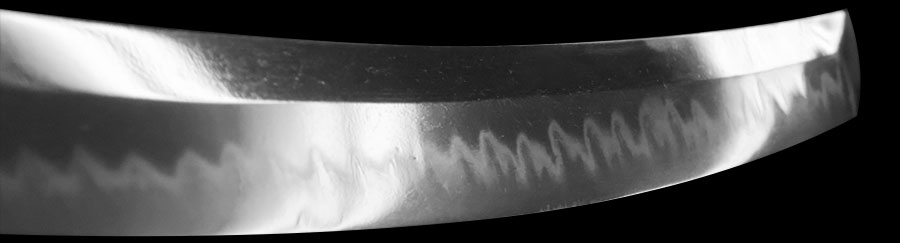
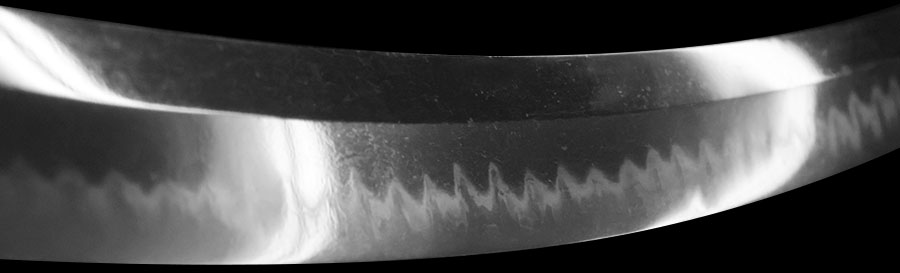
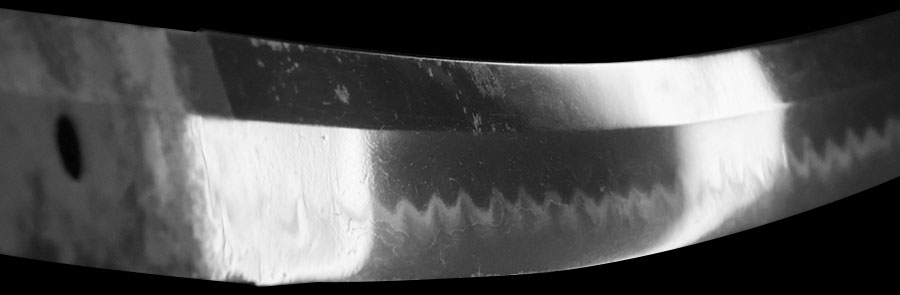
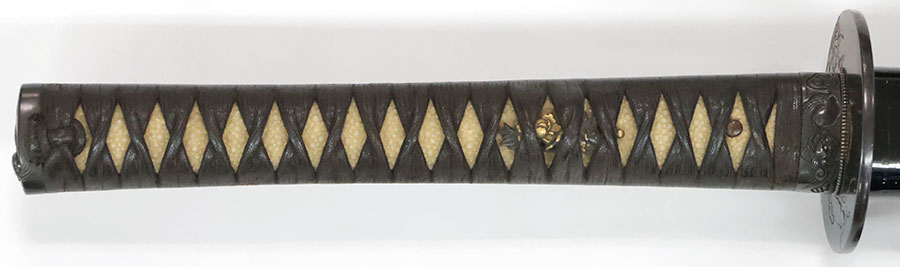
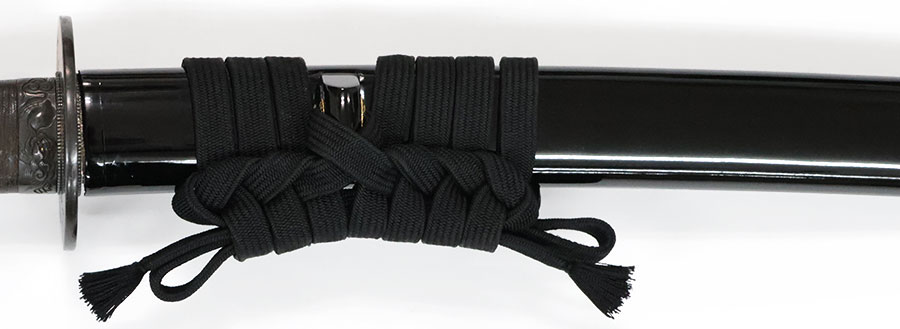
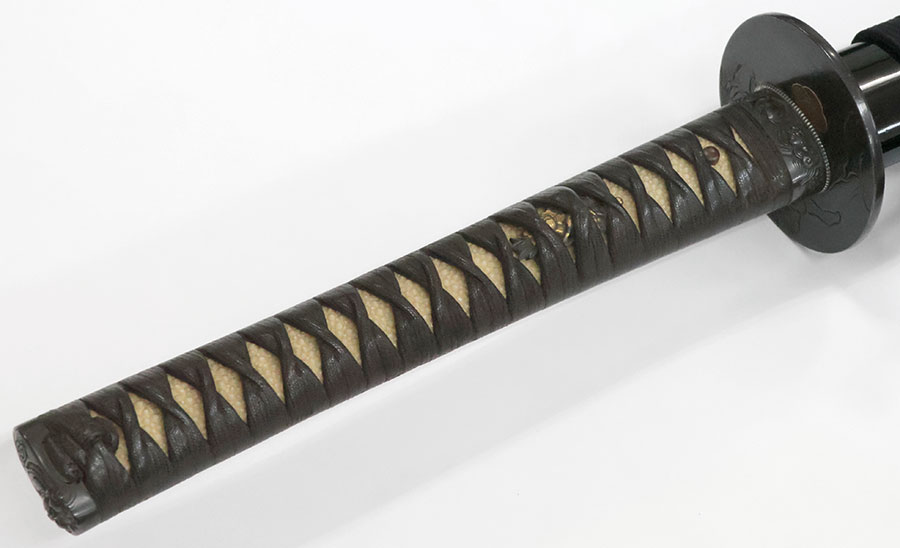
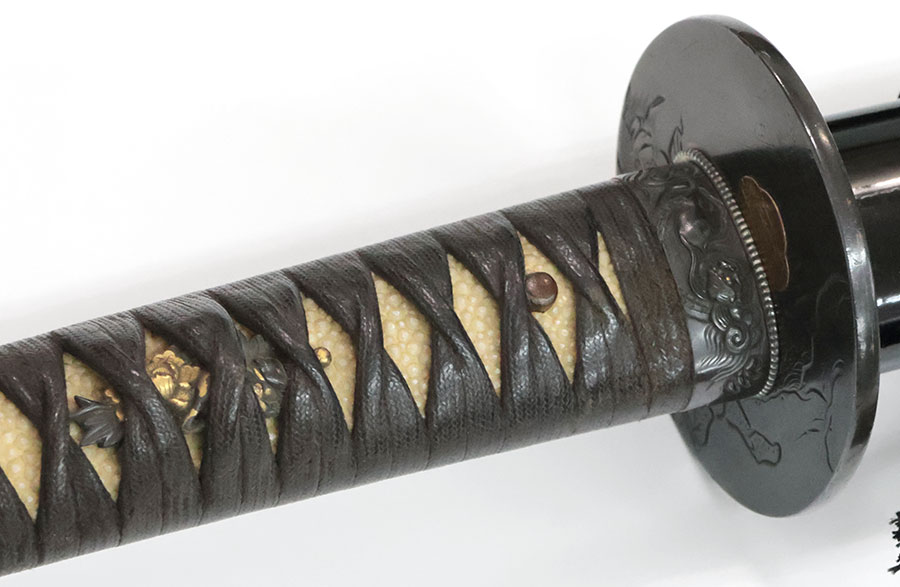
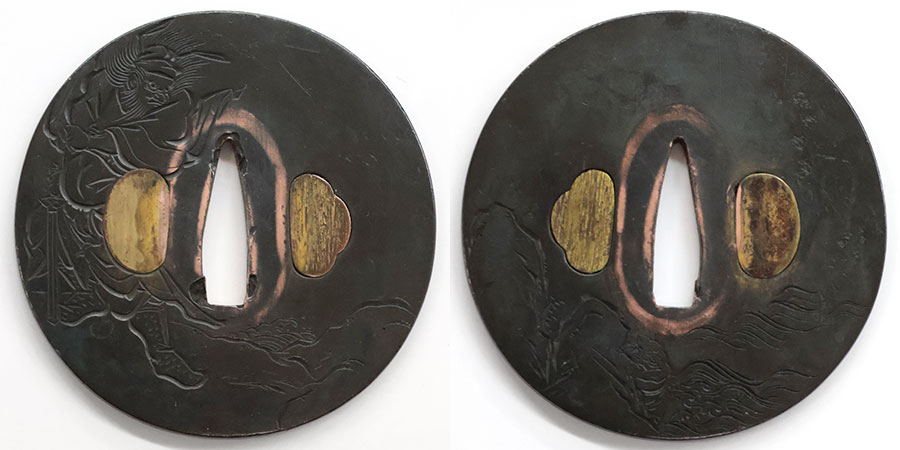
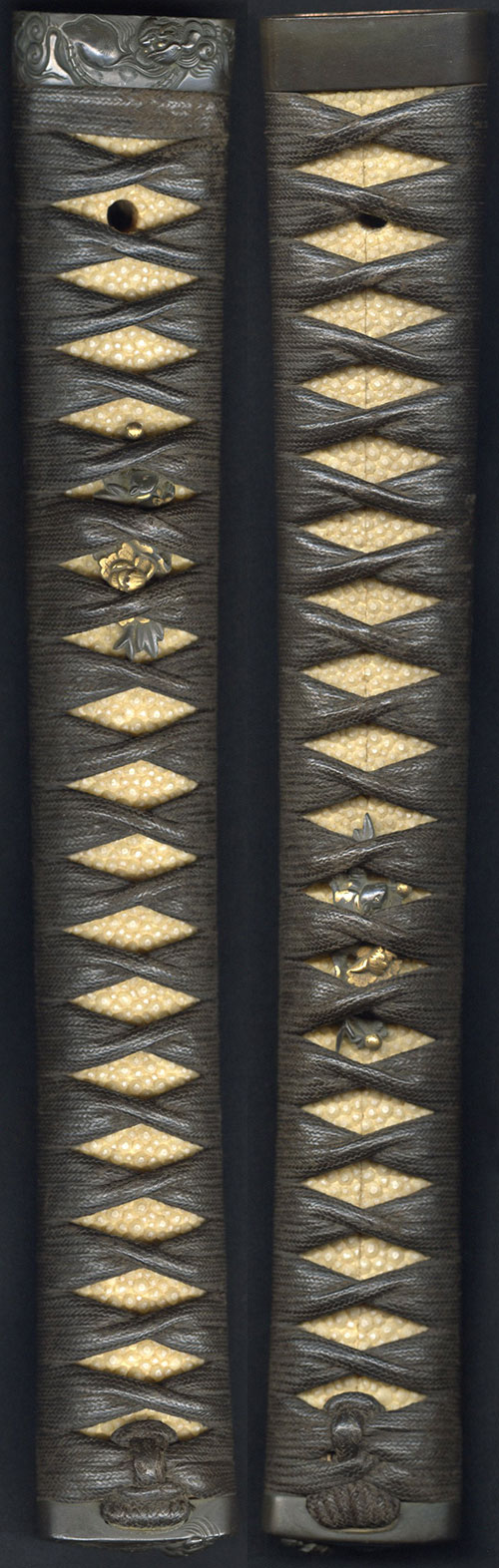
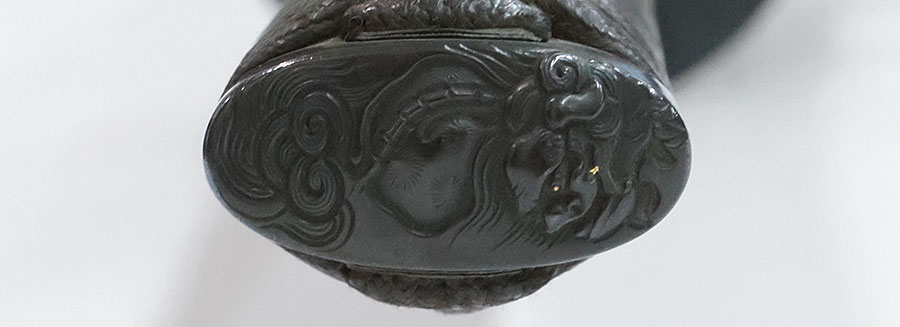
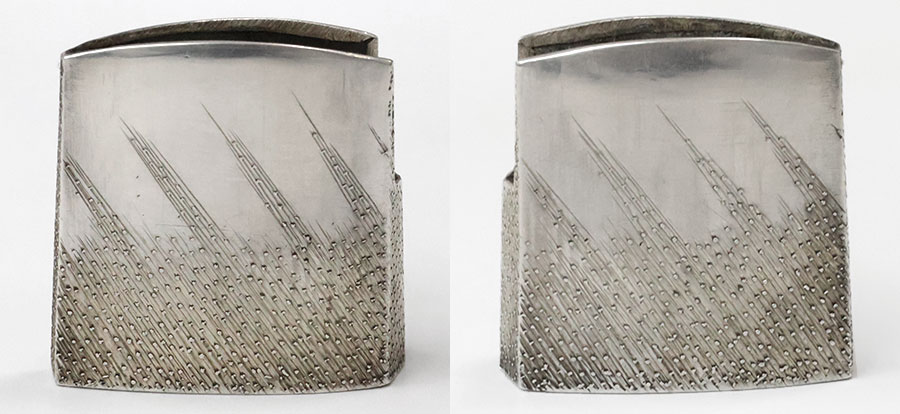
Weight (excluding saya): 1080g It has appeared—emerged from an old estate—a sword that a samurai of later generations desired so greatly as his own sashiryo that he shortened it to suit his own swordsmanship, leaving only the "Echizen no Kuni" portion of the mei. Because of this, it has been carefully passed down through generations in this old family as a katana by Echizen no Kuni Kanenori. Echizen no Kuni Kanenori, like Magoroku Kanemoto, was a smith of the Mino (Gifu Prefecture) Akasaka Senjuin lineage. Please consider that this sword may well be the work of the Keicho era (circa 1600, 426 years ago), the period when Echizen no Kuni Kanenori was considered most skilled. From Goshu (Shiga Prefecture) Shimosaka, he moved to the 620,000-koku Echizen (Fukui Prefecture) domain when Tokugawa Ieyasu's second son, Yuki Hideyasu, became the daimyo. He became a disciple of the second generation Kanenori of the late Muromachi period, and was later adopted after his skill was recognized. He received the title of Higo Daijo. This sword was originally a long blade of 2 shaku 7 sun, now shortened. It displays a gokai (magnificent) sugata with a wide motohaba, a distinct difference between the motohaba and sakihaba, and a shallow sori. The jigane is ko-itame hada mixed with mokume hada, with jinie appearing on the ji. There is some light rust due to age, but please regard this as a charming sign of its history. The hamon is nioi-deki with ko-nie, consisting of gunome-midare mixed with togari-gunome, forged with great spirit and excellent workmanship. The koshirae is also magnificent. The shakudo tsuba alone weighs 168g; since shakudo contains about 4% gold, the gold content is approximately 7g. With current gold prices soaring, the gold value alone is worth about 160,000 yen. The fuchi-kashira are also shakudo with a karashishi (lion-dog) motif. The menuki are shakudo with a peony motif. This luxurious koshirae adds even more splendor to this Kanenori sword. We have received this sword from a daughter of an old family, who requested that we pass it on at a low price to someone who will cherish it, as it was a treasured heirloom of her father passed down as Echizen no Kuni Kanenori. Because there is some light rust due to a lack of recent maintenance, we are offering it at an ultra-low price—essentially the value of the koshirae alone. Please take this opportunity to enjoy it.
 NihontoWatch
signed · Kanbun (1661-1673) · nagasa 73.8cm · sori 1.7cm

















Echizen · around 1661-1673
4 pieces on the market now
We could not find an authenticity certificate on the seller’s listing. Japanese swords and fittings are normally papered by the NBTHK (or the NTHK). Without one, the attribution is the seller’s own assessment and has not been independently verified — treat it with caution and ask the dealer about certification before buying.
For returns due to customer circumstances, the cost is the customer's responsibility. For returns due to our mis-shipment or a defective item, we bear the cost.
Weight (excluding saya): 1080g It has appeared—emerged from an old estate—a sword that a samurai of later generations desired so greatly as his own sashiryo that he shortened it to suit his own swordsmanship, leaving only the "Echizen no Kuni" portion of the mei. Because of this, it has been carefully passed down through generations in this old family as a katana by Echizen no Kuni Kanenori. Echizen no Kuni Kanenori, like Magoroku Kanemoto, was a smith of the Mino (Gifu Prefecture) Akasaka Senjuin lineage. Please consider that this sword may well be the work of the Keicho era (circa 1600, 426 years ago), the period when Echizen no Kuni Kanenori was considered most skilled. From Goshu (Shiga Prefecture) Shimosaka, he moved to the 620,000-koku Echizen (Fukui Prefecture) domain when Tokugawa Ieyasu's second son, Yuki Hideyasu, became the daimyo. He became a disciple of the second generation Kanenori of the late Muromachi period, and was later adopted after his skill was recognized. He received the title of Higo Daijo. This sword was originally a long blade of 2 shaku 7 sun, now shortened. It displays a gokai (magnificent) sugata with a wide motohaba, a distinct difference between the motohaba and sakihaba, and a shallow sori. The jigane is ko-itame hada mixed with mokume hada, with jinie appearing on the ji. There is some light rust due to age, but please regard this as a charming sign of its history. The hamon is nioi-deki with ko-nie, consisting of gunome-midare mixed with togari-gunome, forged with great spirit and excellent workmanship. The koshirae is also magnificent. The shakudo tsuba alone weighs 168g; since shakudo contains about 4% gold, the gold content is approximately 7g. With current gold prices soaring, the gold value alone is worth about 160,000 yen. The fuchi-kashira are also shakudo with a karashishi (lion-dog) motif. The menuki are shakudo with a peony motif. This luxurious koshirae adds even more splendor to this Kanenori sword. We have received this sword from a daughter of an old family, who requested that we pass it on at a low price to someone who will cherish it, as it was a treasured heirloom of her father passed down as Echizen no Kuni Kanenori. Because there is some light rust due to a lack of recent maintenance, we are offering it at an ultra-low price—essentially the value of the koshirae alone. Please take this opportunity to enjoy it.
NihontoWatchsigned · Kanbun (1661-1673) · nagasa 73.8cm · sori 1.7cm
Echizen · around 1661-1673
4 pieces on the market now
We could not find an authenticity certificate on the seller’s listing. Japanese swords and fittings are normally papered by the NBTHK (or the NTHK). Without one, the attribution is the seller’s own assessment and has not been independently verified — treat it with caution and ask the dealer about certification before buying.
For returns due to customer circumstances, the cost is the customer's responsibility. For returns due to our mis-shipment or a defective item, we bear the cost.