Edo was the sword’s age of connoisseurship: the Hon’ami appraisers, the shogunal register of famous blades of 1719, and a thriving literature turned the sword into an object of study even as it ceased to be drawn in war.
 NihontoWatchNihontoWatch
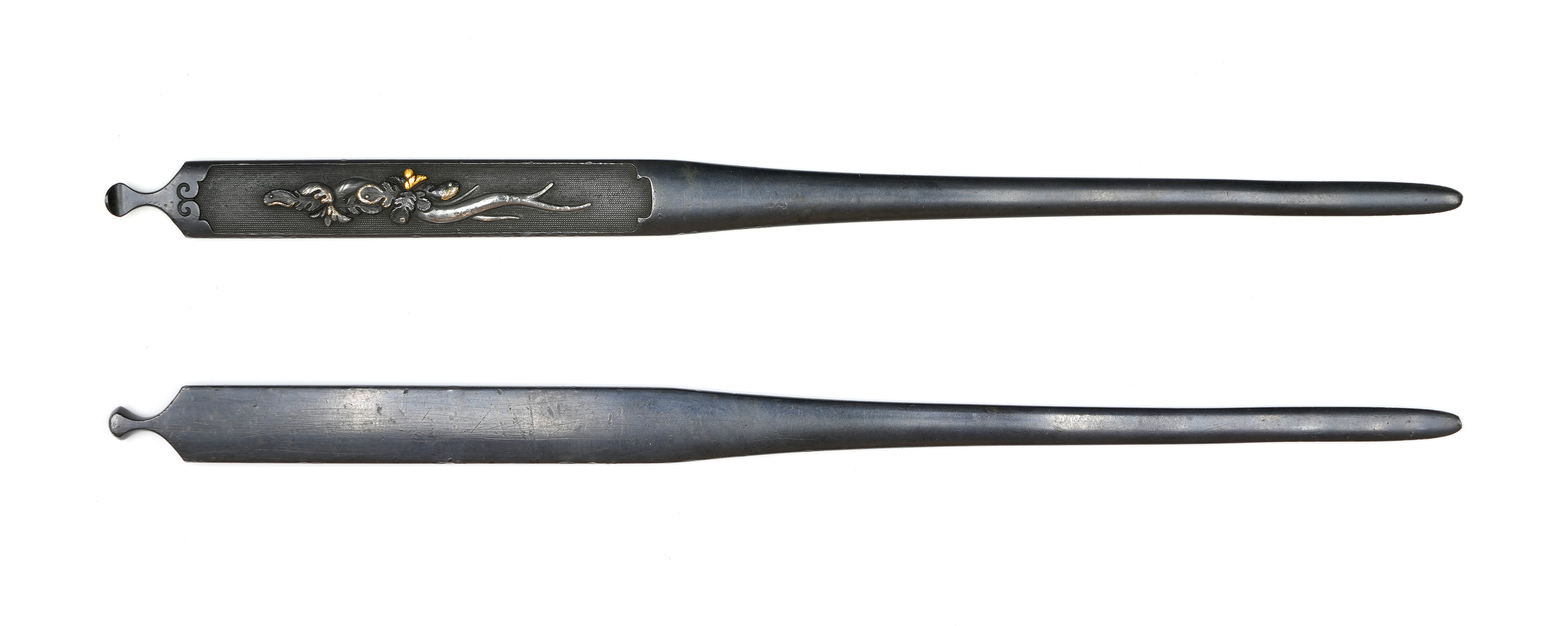
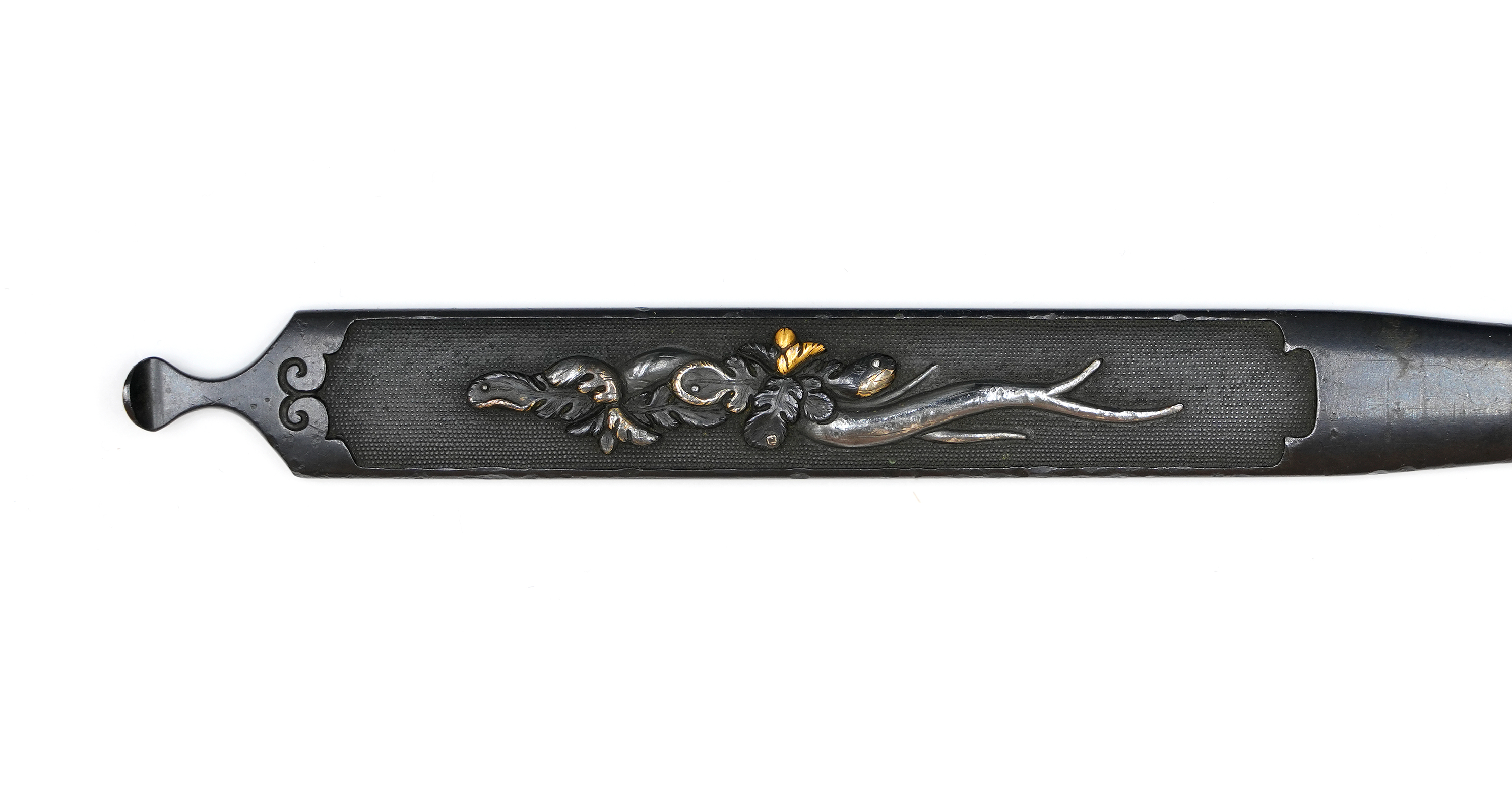
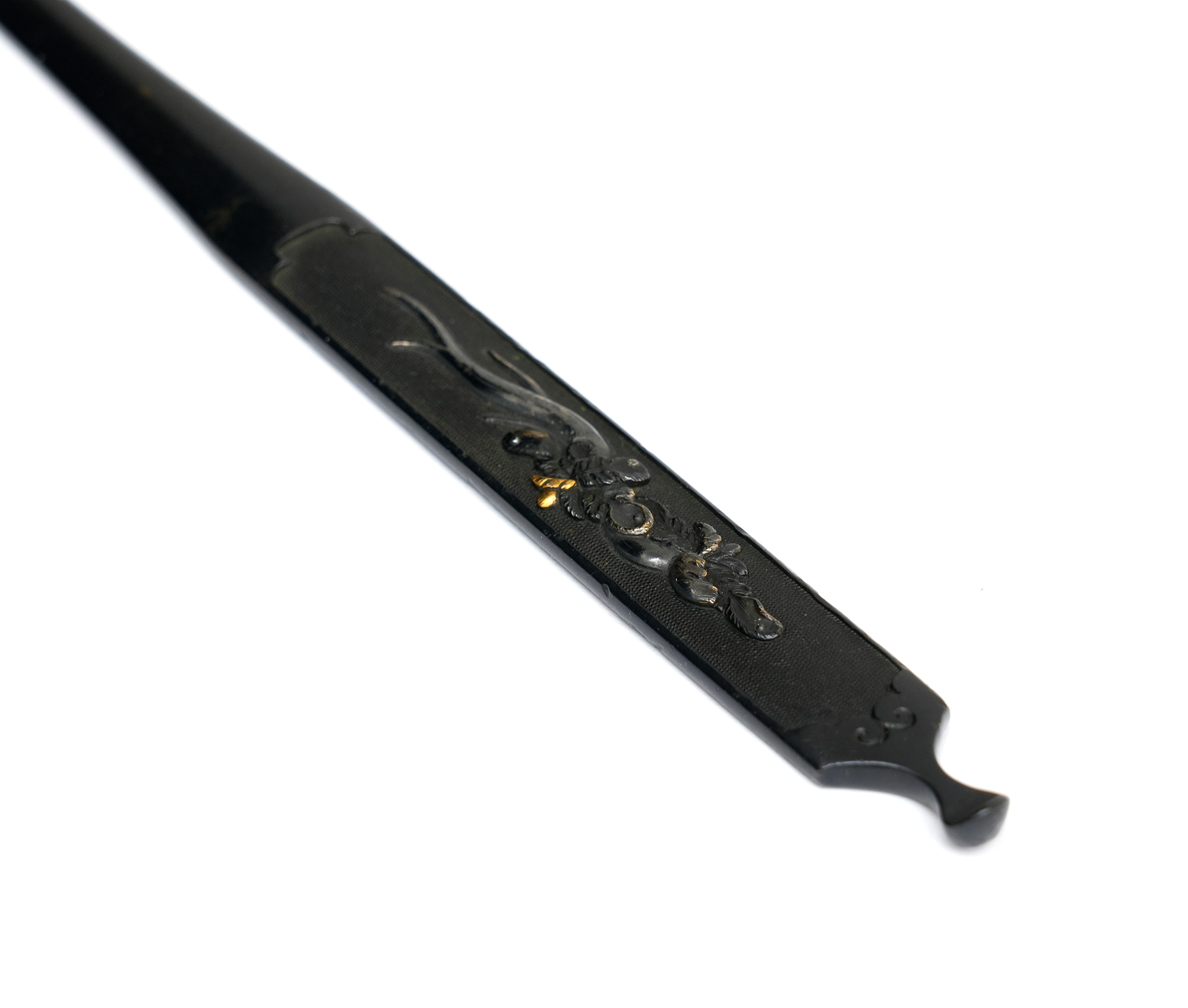
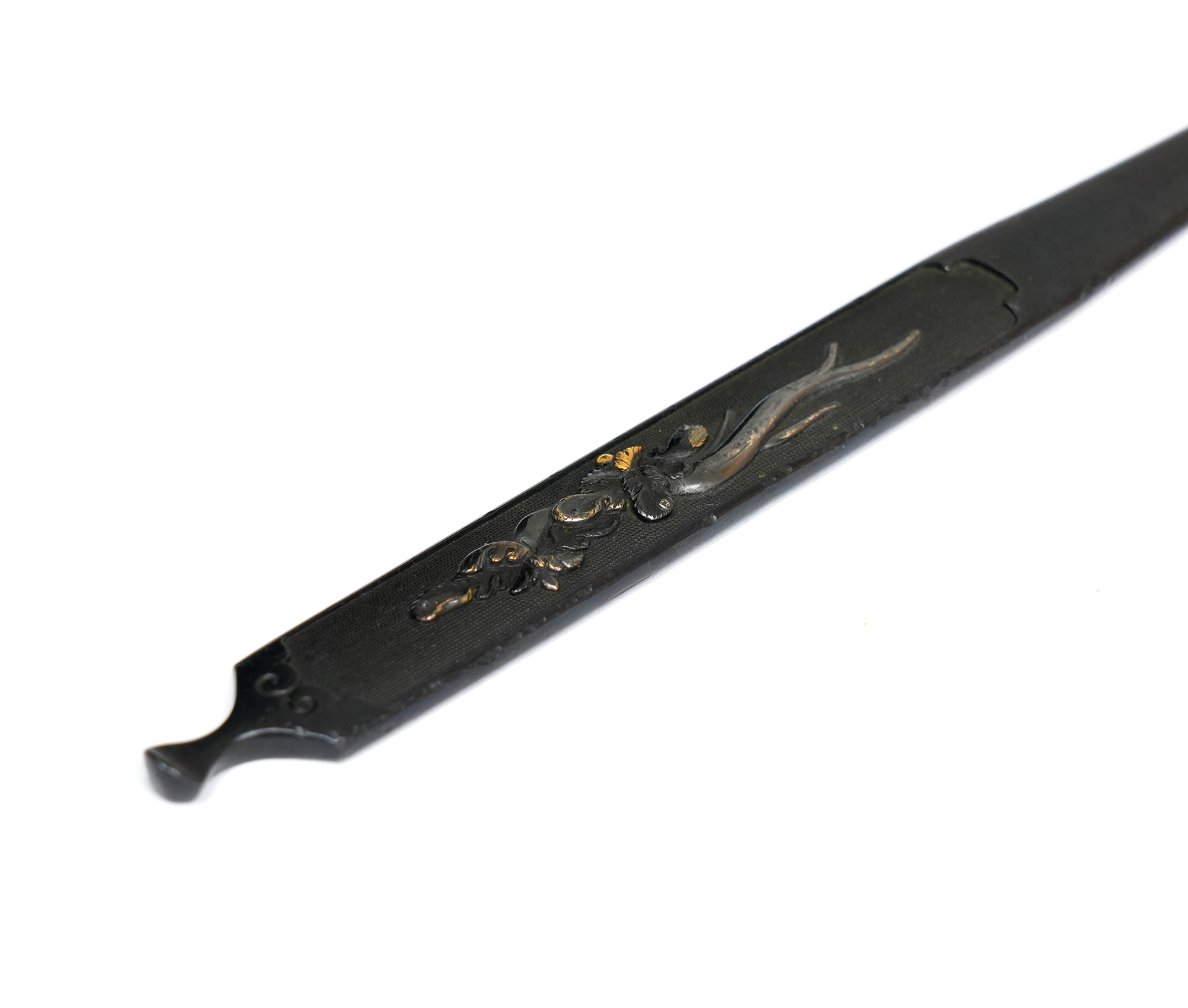
Although mumei, this is a kogai that has been given a kiwame as the work of Goto Kenjo. Using shakudo of good color for the ground, this is a work where a fresh daikon has been carved with skillful use of the tagane. Contrary to the simplicity of the subject matter, the carving technique is extremely delicate, and the brilliance of a master craftsman can be felt in everything from the texture of the leaves and roots to the soft expression of the cut surfaces. It is a masterpiece in which the traditional dignity of the Goto family and a sense of playfulness are beautifully fused, and a certain level of skill shines even within its wabi atmosphere.
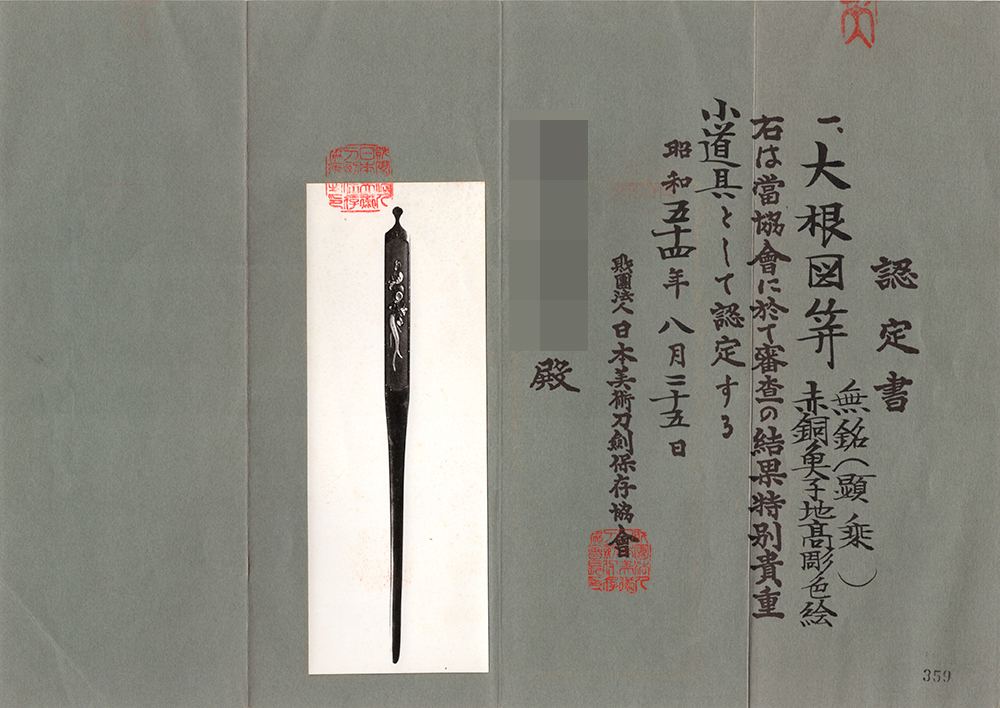
Certificate reading — 無銘(顕乗)
NihontoWatchOffered by Toushin

Its only papers are older green Kichō papers, which the NBTHK largely disavows today. Ask the dealer whether it has passed current shinsa. — Hoshi

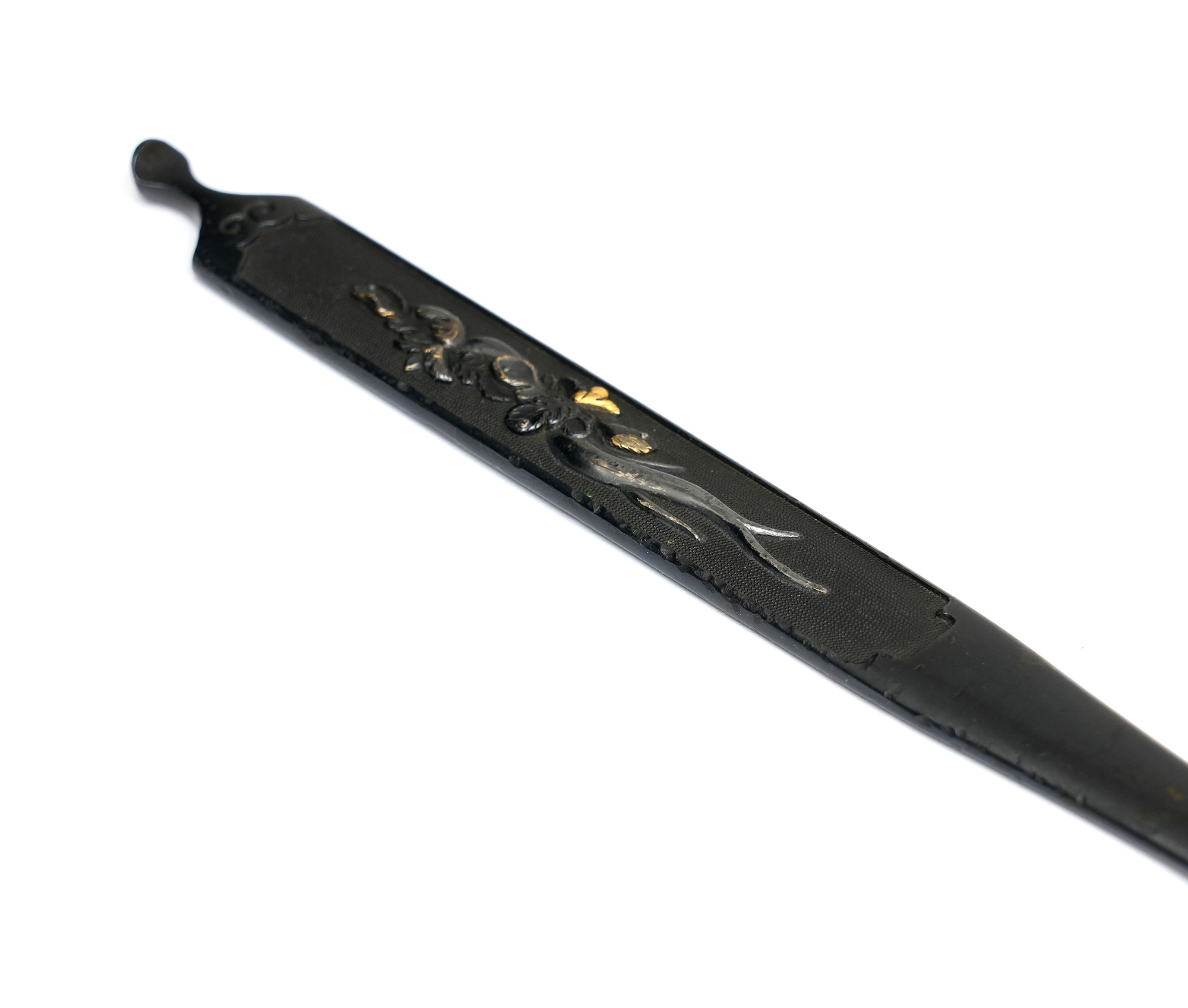
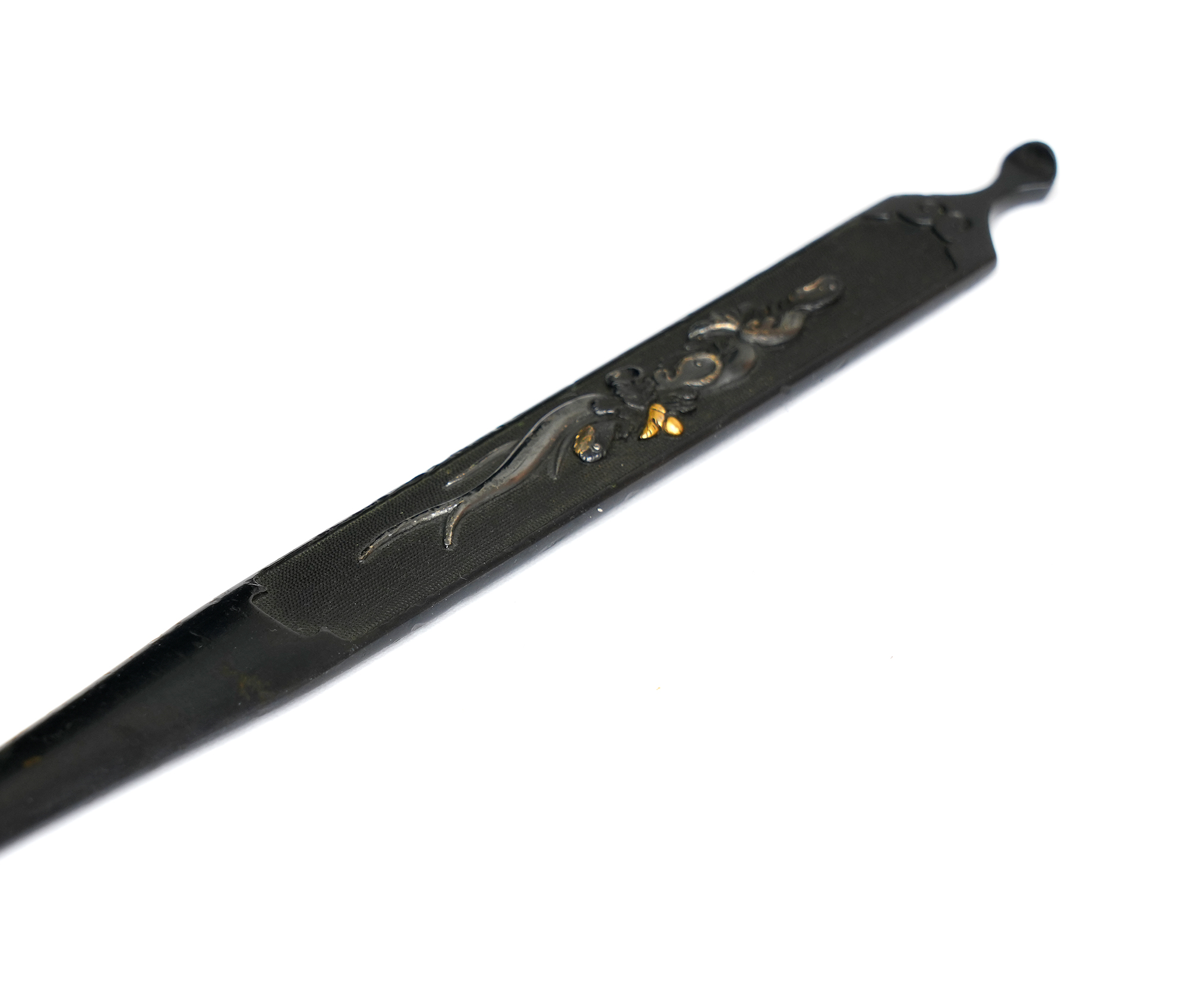
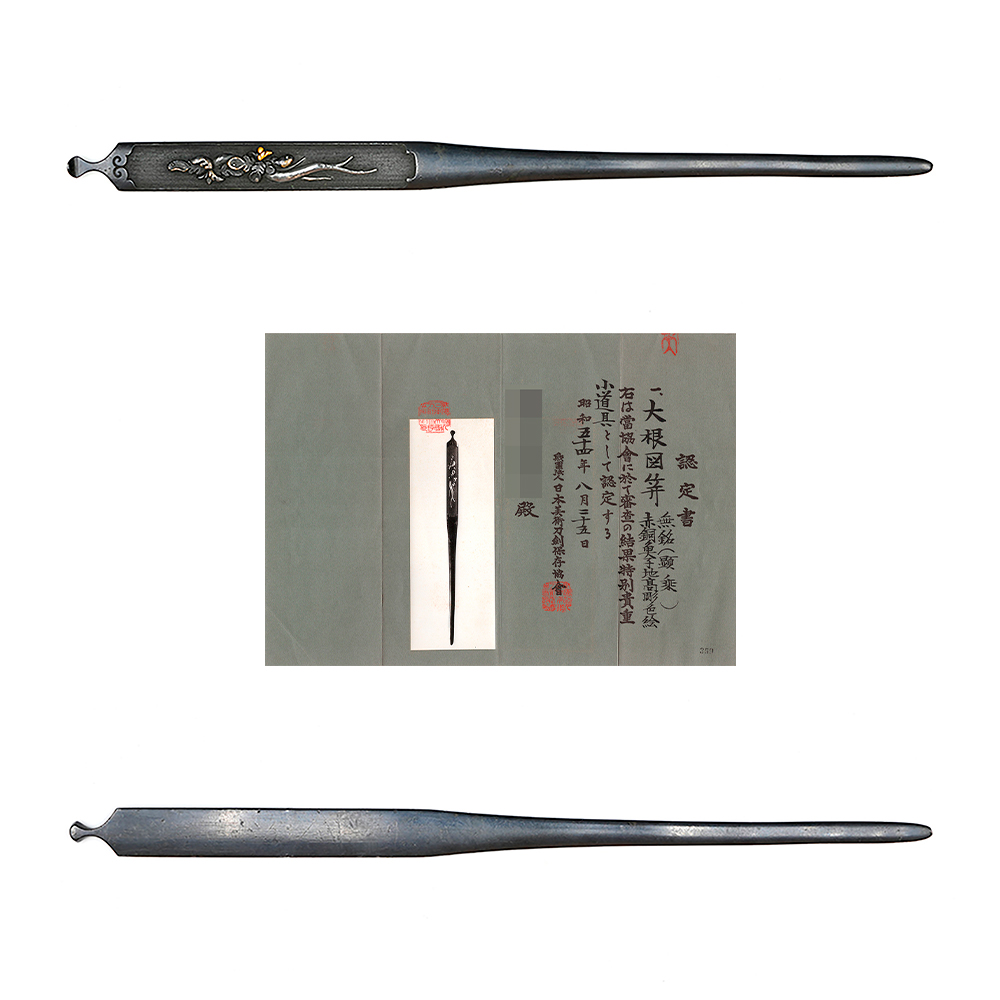
As written by the shop
Machine translation from the shop's Japanese · may contain errors ·
The Edo period (1615 to 1868)
Edo was the sword’s age of connoisseurship: the Hon’ami appraisers, the shogunal register of famous blades of 1719, and a thriving literature turned the sword into an object of study even as it ceased to be drawn in war.
This work carries older NBTHK “Kichō”-era papers, which the NBTHK no longer issues and largely disavows today. To confirm the attribution, submission to an official Japanese examination body (such as the NBTHK or NTHK) for modern certification could be considered.
As a rule we do not accept returns, except when we have sent a different item from the one ordered or when there is a significant discrepancy between the description and the item. If you wish to return an item, please contact us within 3 days of its arrival and then send it back.
¥220,000