Edo was the sword’s age of connoisseurship: the Hon’ami appraisers, the shogunal register of famous blades of 1719, and a thriving literature turned the sword into an object of study even as it ceased to be drawn in war.
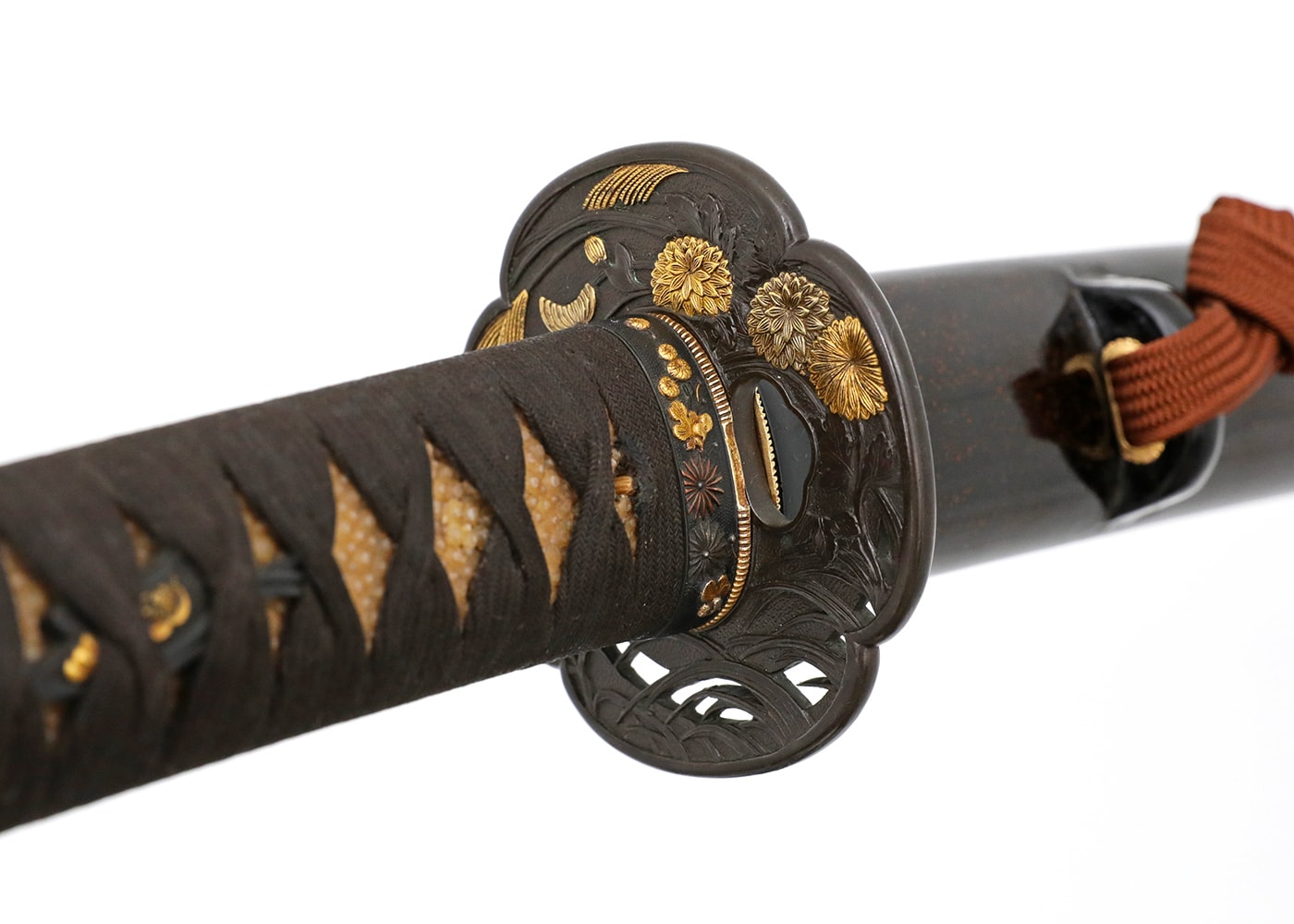
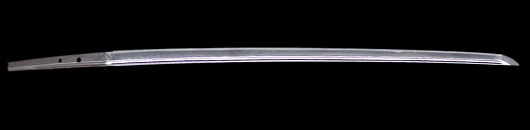
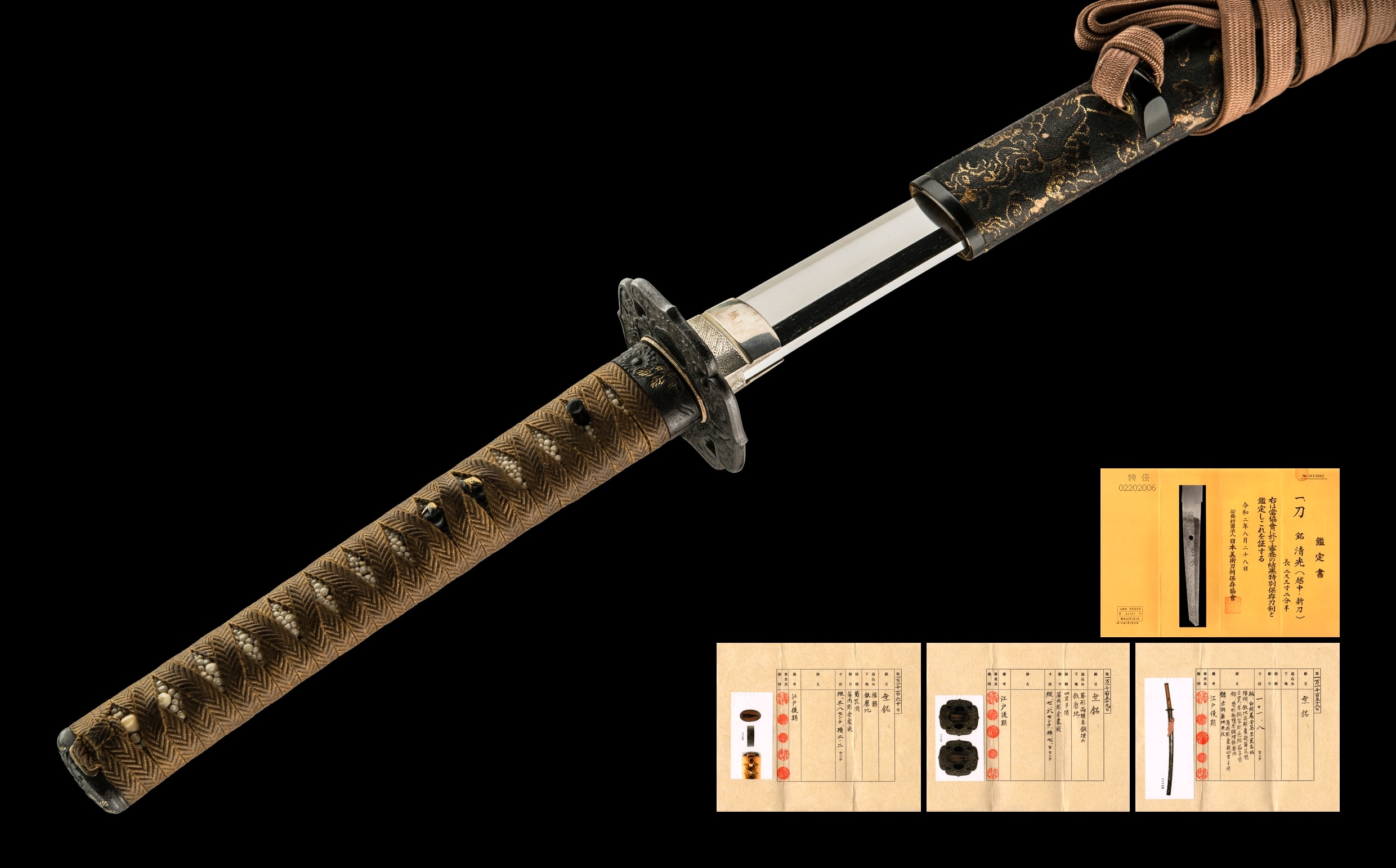
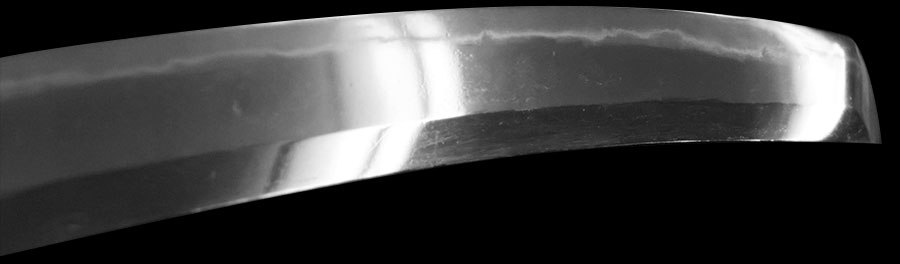
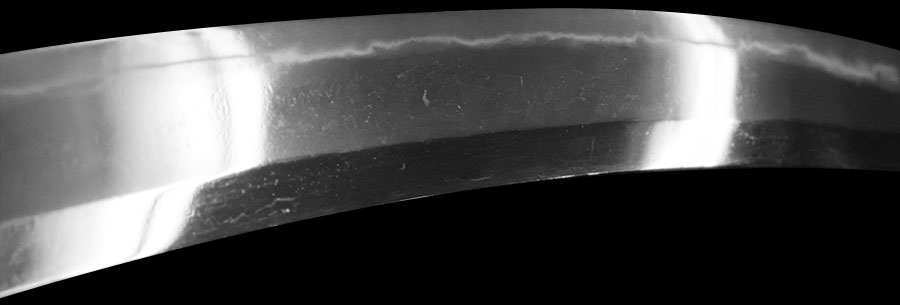
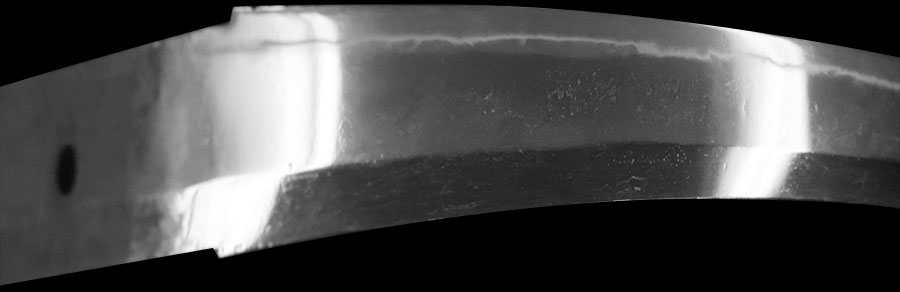
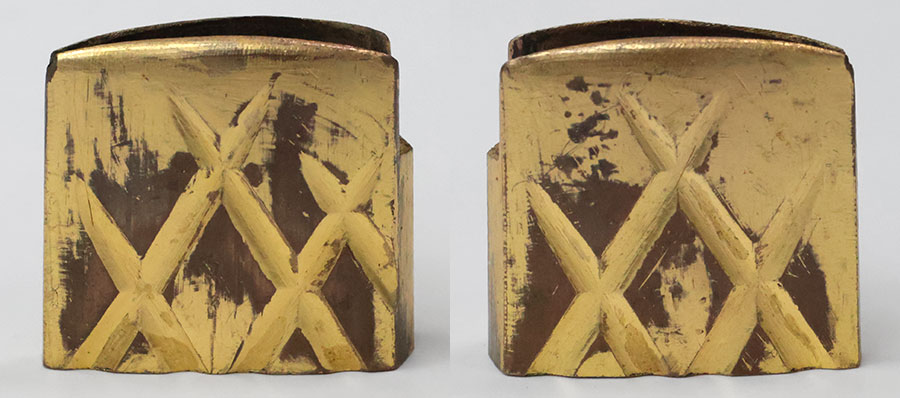
(Highly popular as the beloved sword of Okita Soji and in Touken Ranbu) Weight (toushin only): 635g It has appeared, it has appeared—from an old family estate, passed down through generations as a mumei blade, yet traditionally handed down as a katana by Kashu Kiyomitsu, complete with a Kashu habaki. The works of Kashu Kiyomitsu are highly popular not only today but were also renowned during the Edo period as wazamono for being exceptionally sharp. Furthermore, as the beloved sword of Okita Soji, the captain of the Shinsengumi's first unit—who remains immensely popular as the strongest and most handsome member of the Shinsengumi despite his youth—his sword, Kashu Kiyomitsu, has seen a massive surge in popularity through Touken Ranbu. This sword is the very one passed down as that Kashu Kiyomitsu. This blade is traditionally attributed to the ancient and famous Kaga Chobei Kiyomitsu. He is known nationwide as a representative tosho of the Kaga Domain around the Enpo era of the Edo period (1673, 353 years ago). The sugata of this blade shows a wide motohaba and a wide sakihaba with a slightly large kissaki and shallow sori, presenting an excellent shape. The jigane is an itame-hada mixed with masame-hada, forged powerfully, with the shinogi exhibiting masame-hada. The hamon is in nioi-deki with ko-nie, featuring a suguha-style temper line where the upper half has a wide yakihaba with condensed nie and sunagashi, tempered brightly and beautifully. This time, we received this sword from an old family who has cherished it for generations as a Kashu Kiyomitsu with a Kashu habaki. As they have grown old, they entrusted it to us, asking to pass it on at a low price to someone who will treasure it. Because there are some slight flaws (itami), we are offering this Kashu Kiyomitsu at a special, ultra-low price for someone willing to care for it. Please enjoy this mumei blade passed down as a Kashu Kiyomitsu, which is currently at the peak of popularity due to Touken Ranbu.
 NihontoWatch
mumei · Edo · nagasa 64.4cm · sori 1.3cm












Kaga · around 1661-1673
2 pieces on the market now
The Edo period (1615 to 1868)
Edo was the sword’s age of connoisseurship: the Hon’ami appraisers, the shogunal register of famous blades of 1719, and a thriving literature turned the sword into an object of study even as it ceased to be drawn in war.
We could not find an authenticity certificate on the seller’s listing. Japanese swords and fittings are normally papered by the NBTHK (or the NTHK). Without one, the attribution is the seller’s own assessment and has not been independently verified — treat it with caution and ask the dealer about certification before buying.
For returns due to customer circumstances, the cost is the customer's responsibility. For returns due to our mis-shipment or a defective item, we bear the cost.
¥280,000