Owazamono of the Heisei-era
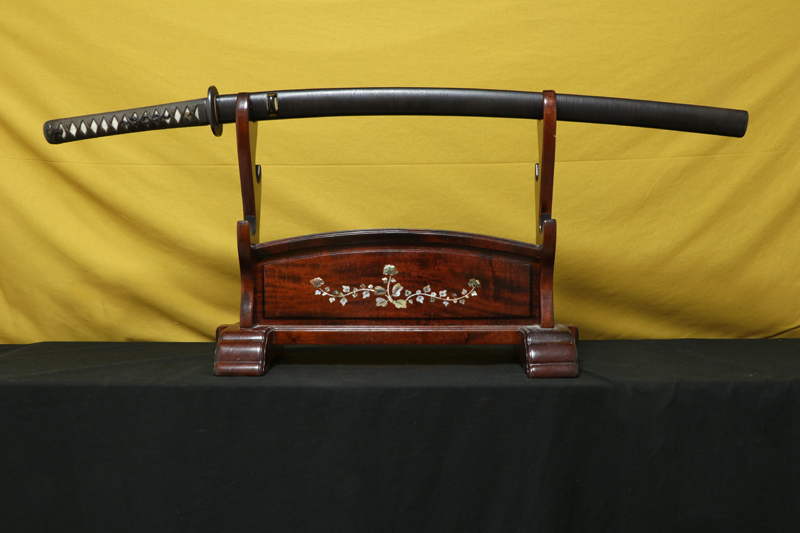
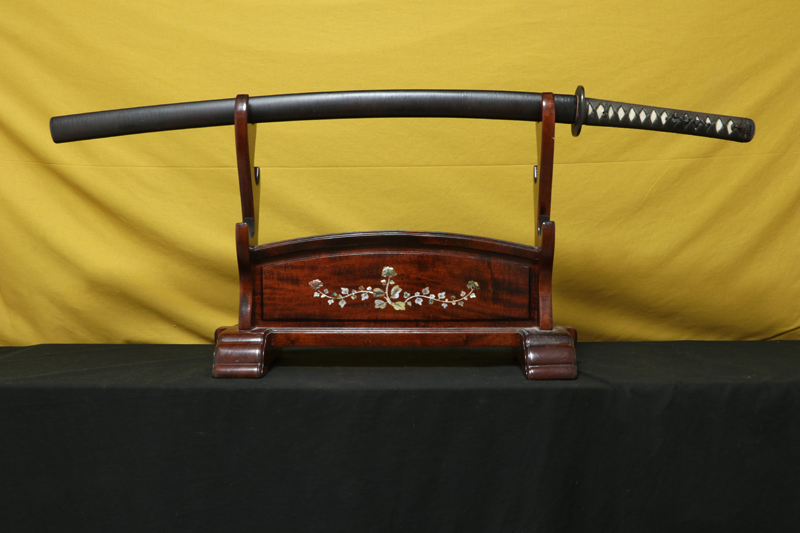
Modern sword Hakusyu ju Nobuhide with Koshirae.
伯耆國住延秀による刀です。延秀は「平成の大業物」として知られ、千本斬りのギネス記録に使用された刀の作者としても有名な刀匠です。
刀身・拵ともにコンディションは良好です。
ご購入後、すぐに居合・試斬にお使いいただけます。
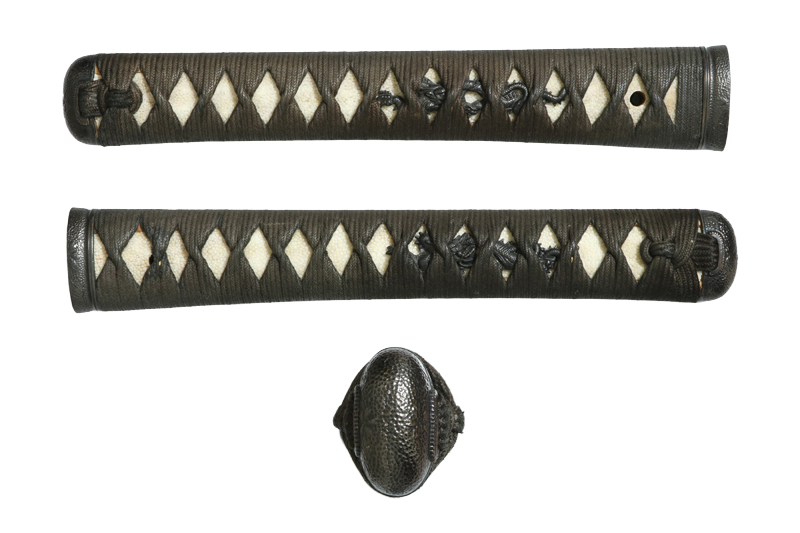
なお、柄巻は無料で巻き替えいたします。
This is a sword by Hōki no Kuni-ju Nobuhide, a swordsmith renowned as the “O-wazamono of the Heisei era” and best known as the maker of the blade used to set the Guinness World Record for the 1,000 consecutive test cuts.
Both the blade and the koshirae remain in excellent condition.
The sword is ready for immediate use in iaidō or tameshigiri upon purchase.
Also, the tsuka-maki (handle wrapping) will be replaced free of charge before delivery.
「刀姿 sword figure」
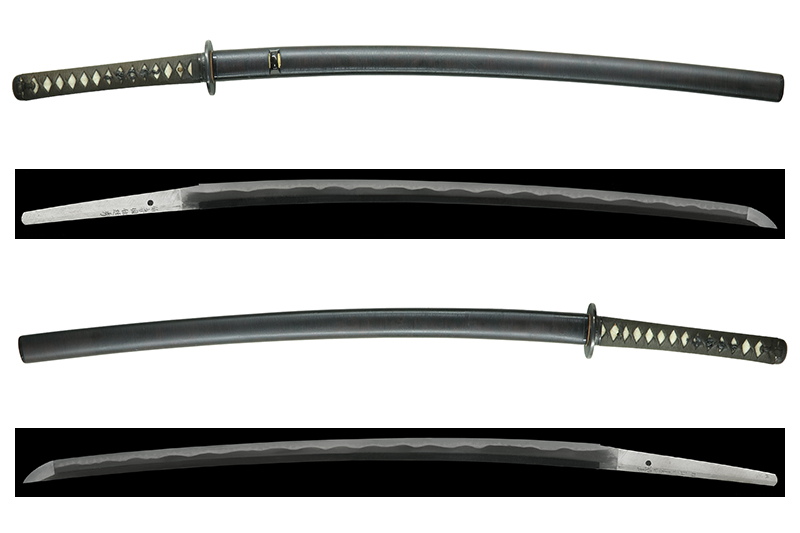
鎬造り庵棟、身幅やや太く重やや厚く、鳥居反りで中峰。茎は生で化粧鑢がかかり、茎尻は刃上がりの栗尻。
Shinogi-zukuri construction with an iori-mune. The blade has a slightly wide mihaba (blade width) and is slightly thick, with graceful torii-zori curvature and a medium-sized kissaki. The nakago is ubu (unaltered) and finished with kesho-yasurime (decorative file marks), while the nakago-jiri is shaped in an ha-agari kurijiri style.
「地鉄 jigane」
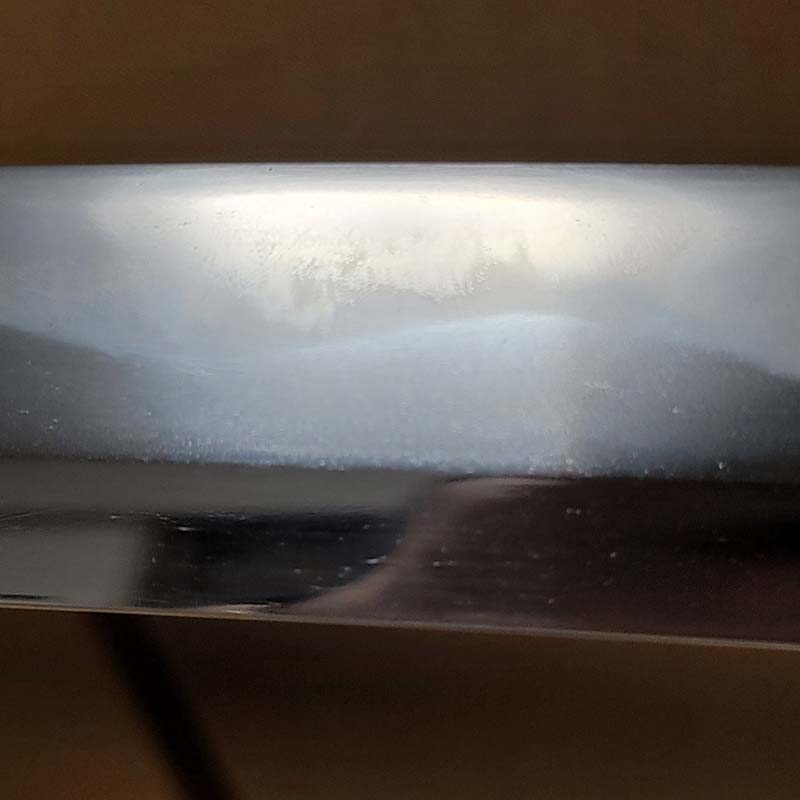
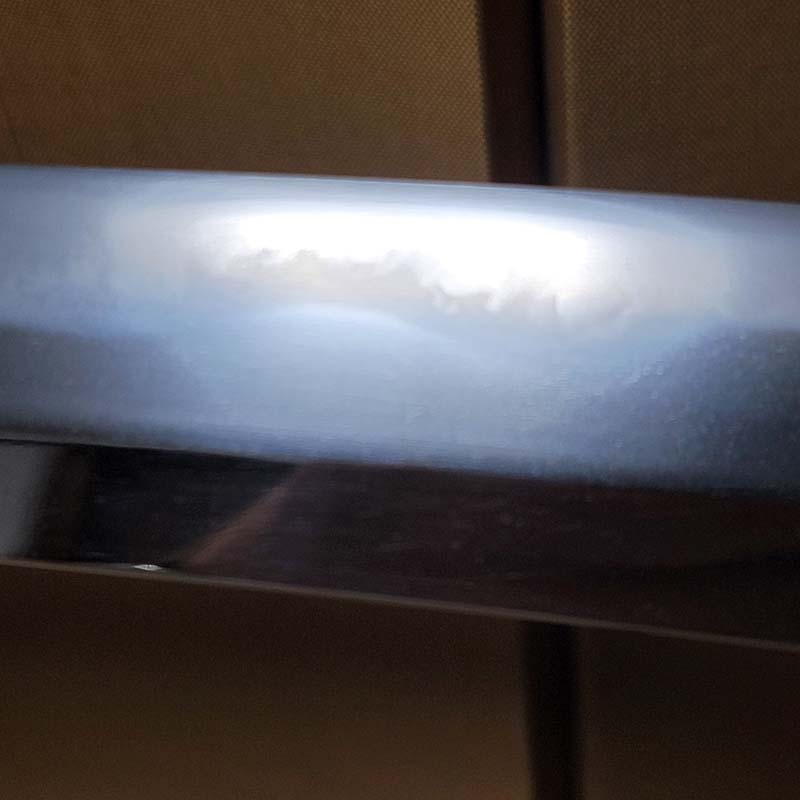
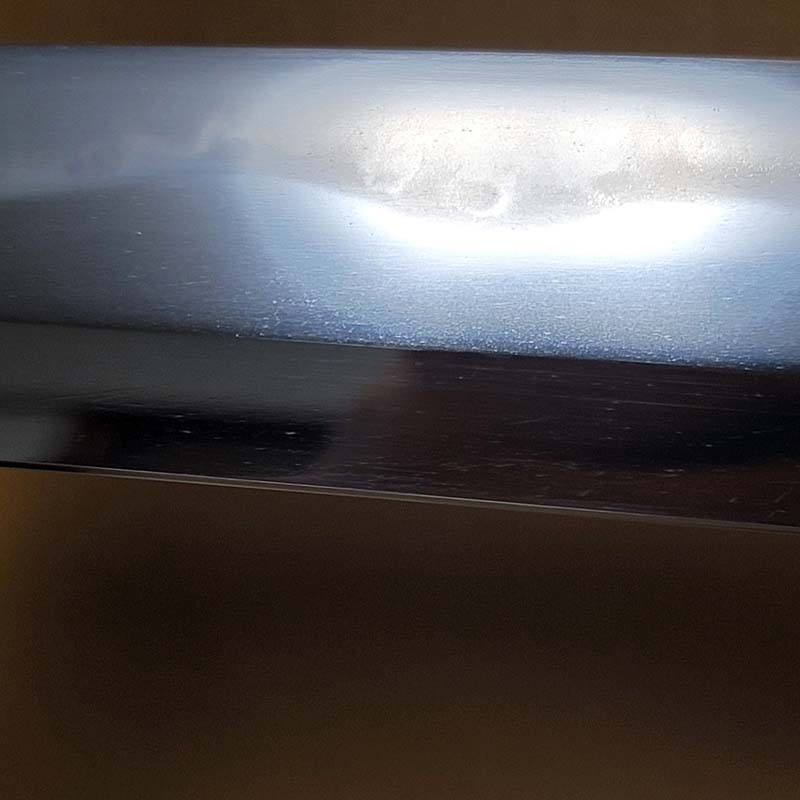
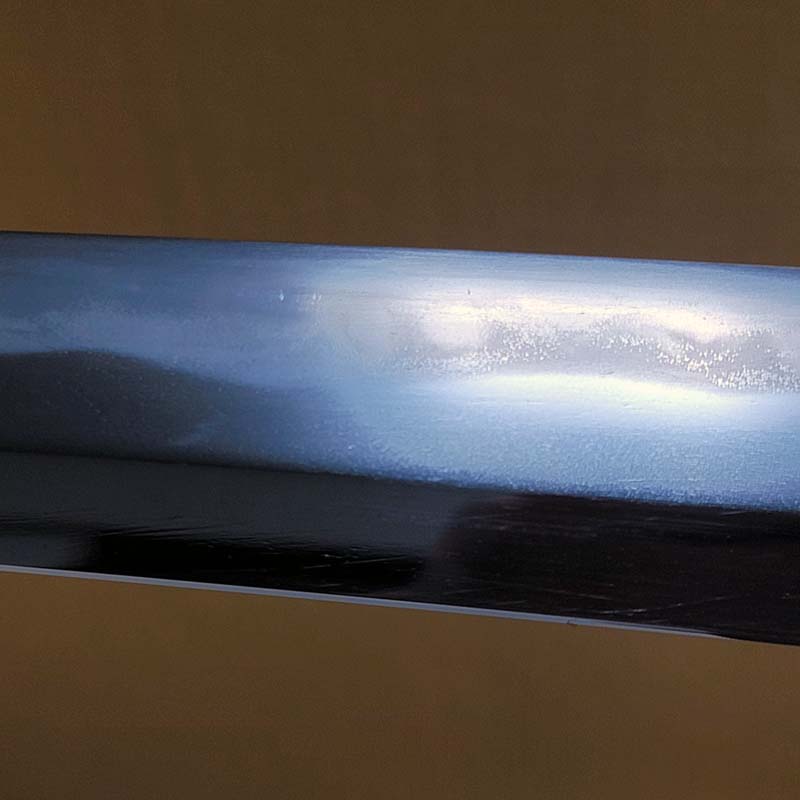
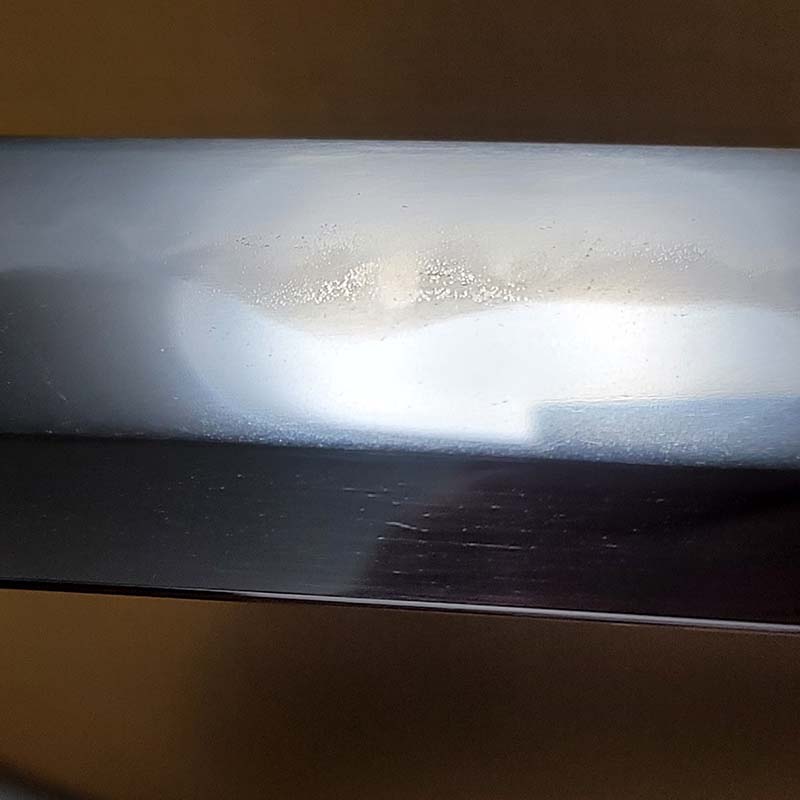
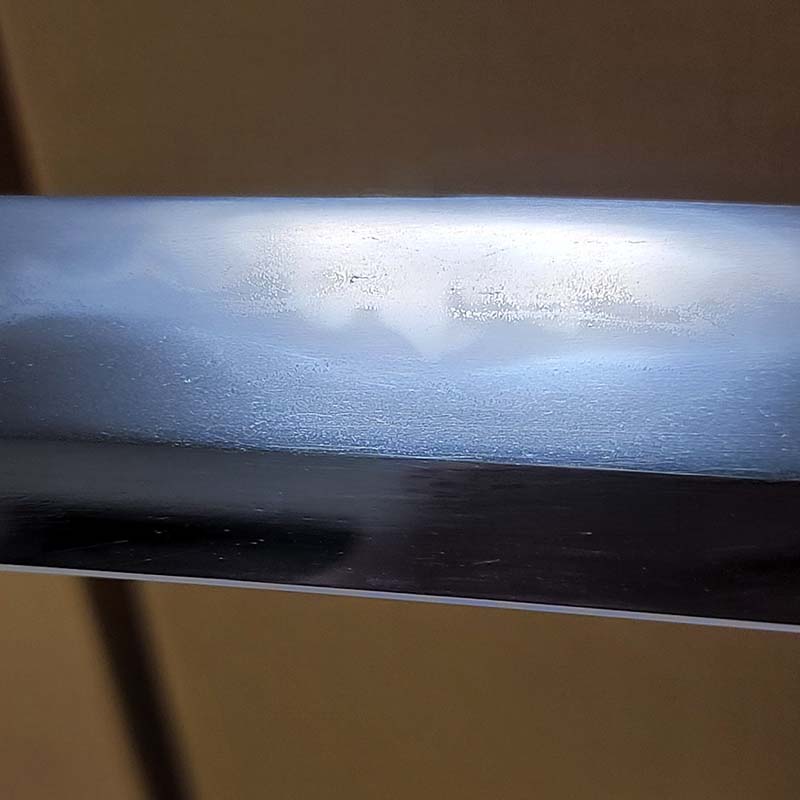
地鉄は板目肌が流れ柾と成り、地沸厚く付き、所々に地景が現れる。
The jigane consists of a flowing itame-hada that transitions into masame, densely covered with ji-nie, with chikei appearing in places throughout the steel.
「刃紋 hamon」
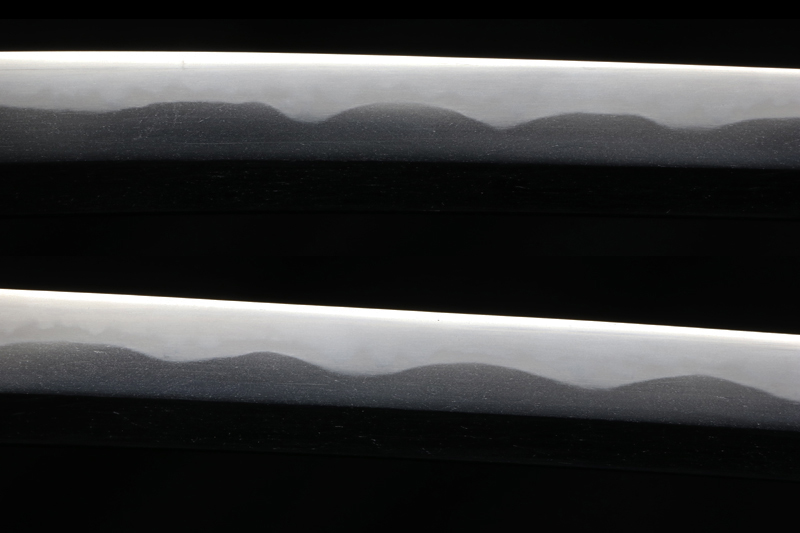
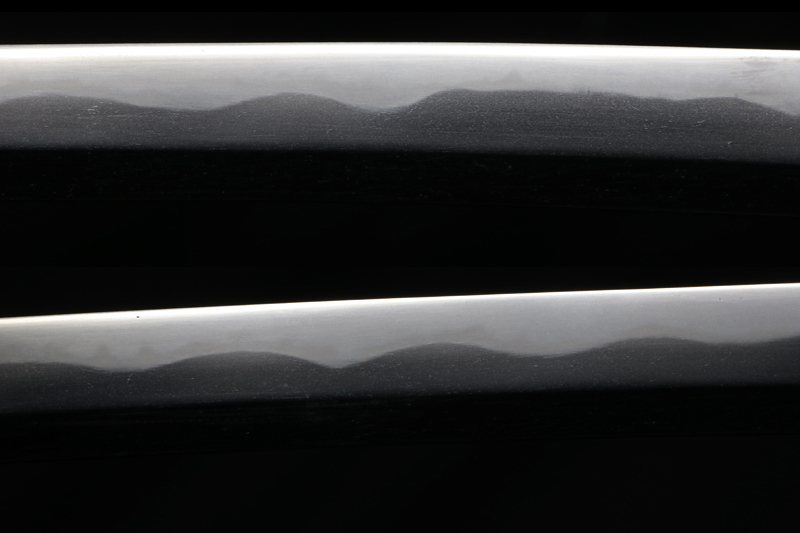
刃紋は互の目乱れ刃で、刃縁荒沸が付き砂流しかかる。刃中は金筋が良く働き、葉が入る。鋩子は湾れ込んで先掃き掻け小丸へと返る。
The hamon is a gunome-midare pattern, with a nie-laden habuchi displaying coarse ara-nie and abundant sunagashi. The interior of the temper line is richly animated with prominent kinsuji and yō. The bōshi continues in a gentle notare, then becomes hakikake toward the tip before turning back in a komaru.
「特徴 detailed」
伯耆国住延秀(本名:前田秀志)は、昭和3年8月18日に鳥取県日野郡江府町佐川で生まれました。師は、川島忠善の弟子であった父・前田喜太郎刀匠(銘:義輝)です。
大山の麓・佐川で鍛えられた延秀の刀は、その卓越した切れ味で世界的に知られ、とりわけ抜刀の世界では「神がかり的な性能」を持つ名刀として高く評価されています。
事実、抜刀道龍星剣宗家・猿田光廣先生(「試し斬りしてちゃんと斬れるものが名刀です」で知られる)も延秀の刀を愛刀としていました。猿田先生は1998年9月20日、名古屋・東海テレビテレピアホールにて、竹に畳表を一巻きした標的1000本を、刀を替えることなく、1本の斬り損じもなく、1時間36分36秒で連続斬りを達成しました。
この偉業は2000年11月、正式にギネスブックに掲載されています。
また、『ラストサムライ』に出演した俳優で武道家のリー村山氏も延秀を愛刀としており、殺陣と試斬を融合させた素晴らしい演武を国内外で披露しています。
本作は、やや身幅が太くやや重ねが厚く、豪壮な造りの一振りです。状態から見るに使用感は少なく、試斬には未使用、居合でわずかに使われた程度と思われます。
刀身には鍛え割れなどの欠点はなく、非常に良好な状態です。拵も良い状態を保っており、ご購入後すぐに試斬や居合でお使いいただけます。
柄巻は無料で巻替えます。
Hōki no Kuni-jū Nobuhide (real name: Maeda Hideshi) was born on August 18, 1928, in Sagawa, Kōfu Town, Hino District, Tottori Prefecture.
His teacher was his father, the swordsmith Maeda Kitarō (art name: Yoshiteru), who had studied under Kawashima Tadayoshi.
Blades forged by Nobuhide in Sagawa, at the foot of Mount Daisen, are known worldwide for their outstanding cutting ability. In particular, within the world of battō practice, they are highly regarded as masterpieces possessing almost “divine” performance.
In fact, Saruta Mitsuhiro Sensei, headmaster of Battōdō Ryūseiken—known for the saying, “A true masterpiece is one that cuts properly in test cutting”—also treasured a Nobuhide blade as his favorite sword.
On September 20, 1998, at the Tokai TV Telepia Hall in Nagoya, Saruta Sensei achieved the feat of continuously cutting 1,000 targets—each consisting of bamboo wrapped with one layer of tatami-omote—without changing swords and without a single failed cut, completing the challenge in 1 hour, 36 minutes, and 36 seconds.
This remarkable achievement was officially recorded in the Guinness Book of Records in November 2000.
Additionally, Lee Murayama, an actor and martial artist who appeared in The Last Samurai, also uses Nobuhide as his favored sword, and has performed impressive demonstrations both in Japan and overseas that combine stage combat with test cutting.
This sword is a robustly constructed piece, with a slightly broad mihaba and a somewhat thick kasane. Judging from its condition, it shows little sign of use; it appears to have been unused for test cutting and used only slightly for iaidō.
The blade has no flaws such as forging cracks and remains in very fine condition.
The koshirae is also well preserved, and the sword can be used immediately after purchase for test cutting or iaidō.
The tsuka-maki will be rewrapped free of charge.
「拵 Koshirae」
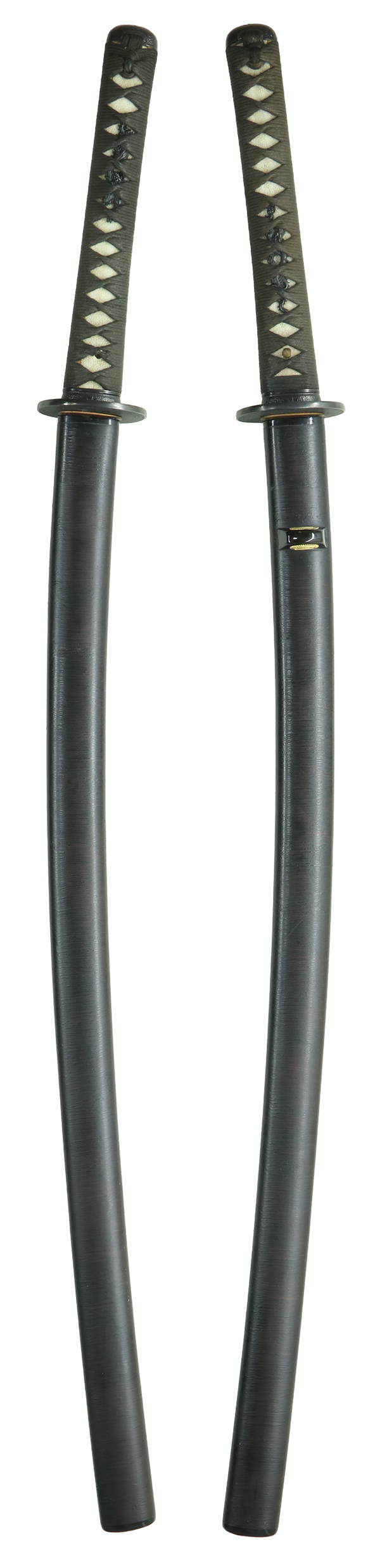
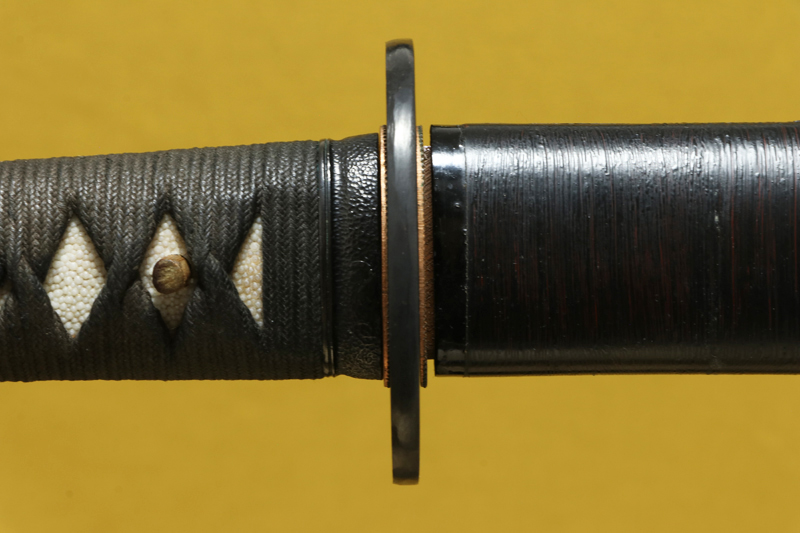
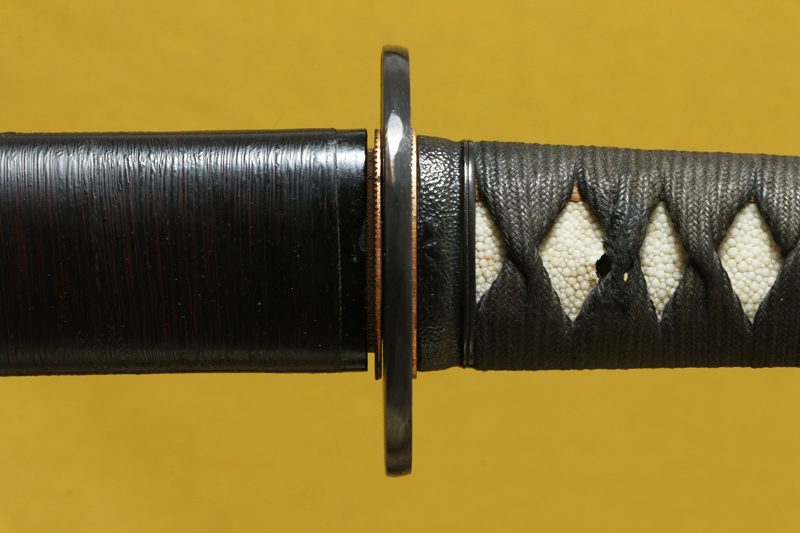
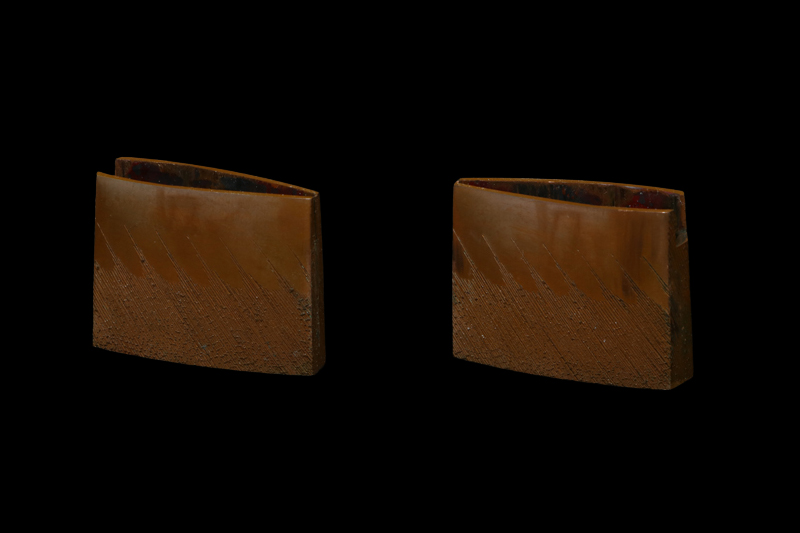
鎺(habaki) :素銅地一重の腰祐乗。
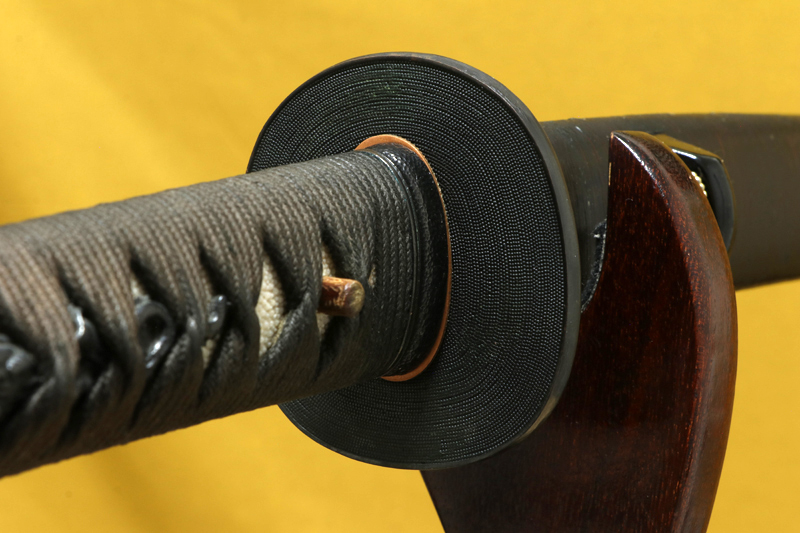
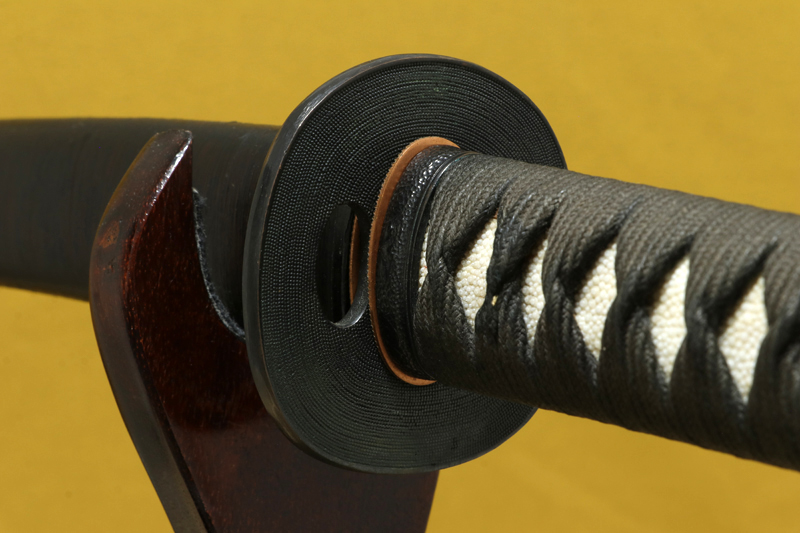
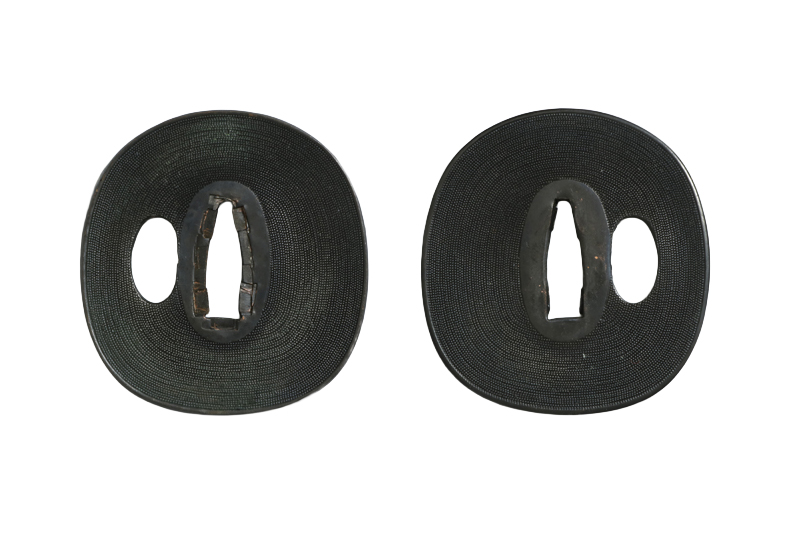
鍔(tsuba) :鉄地魚子図。
縁頭(fhchikashira):素銅地肥後石目桜。
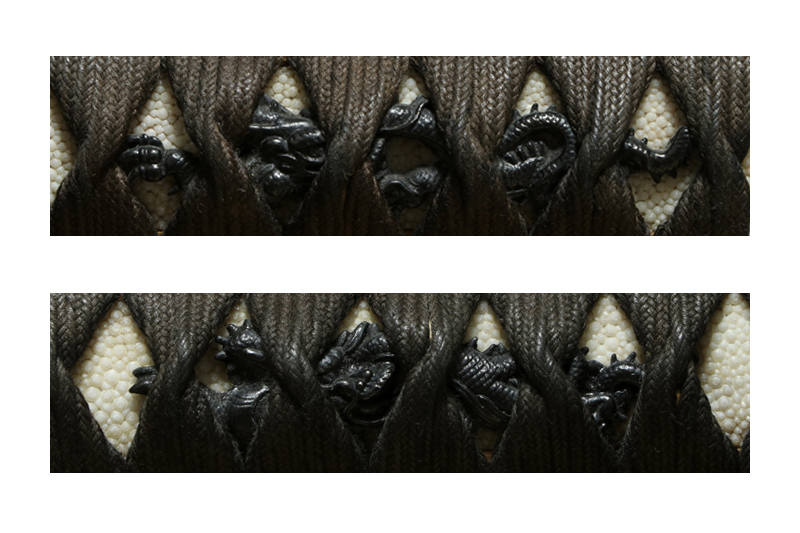
目貫(menuki) :龍の図。
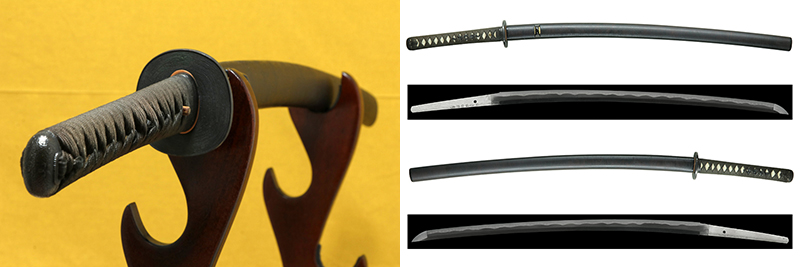
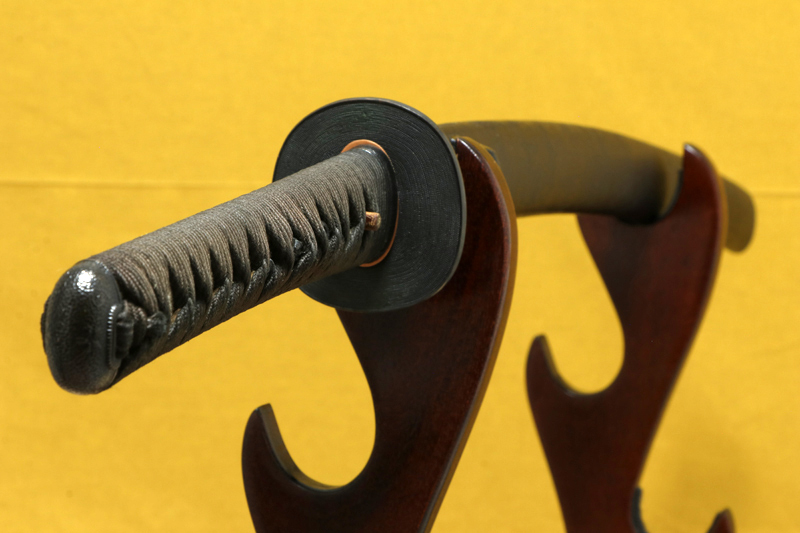
柄(tsuka) :柄巻は正絹焦茶色の諸捻り巻。(柄巻は無料で巻替えます)
鞘(saya) :朱色に黒の縦刷毛目。
「刀剣の状態 condition of blade」
研:概ね良好です。
傷:欠点に成るような傷は有りません。


 NihontoWatch