Owazamono of the Heisei-era
Modern sword Hokinokuni ju Nobuhide with Koshirae.
Hoki no Kuni Ju Nobuhide was a swordsmith who worked at the foot of Mt. Daisen in Tottori Prefecture and was highly evaluated in the world of battodo for his exceptional cutting performance.
This work is a sword with a superb gunome-midare hamon tempered into an itame hada with a flowing character. There is almost no sign of use, and both the blade and koshirae are in good condition, so it can be used for iai or shizane immediately.
Hoki no Kuni Ju Nobuhide was a swordsmith who worked at the foot of Mt. Daisen in Tottori Prefecture. His swords are highly regarded in the world of battodo for their exceptional cutting performance.
This sword features a flowing itame hada with a superb gunome-midare hamon. It shows no signs of use, and both the blade and koshirae are in excellent condition, ready for immediate use in iaido or test cutting.
「刀姿 sword figure」
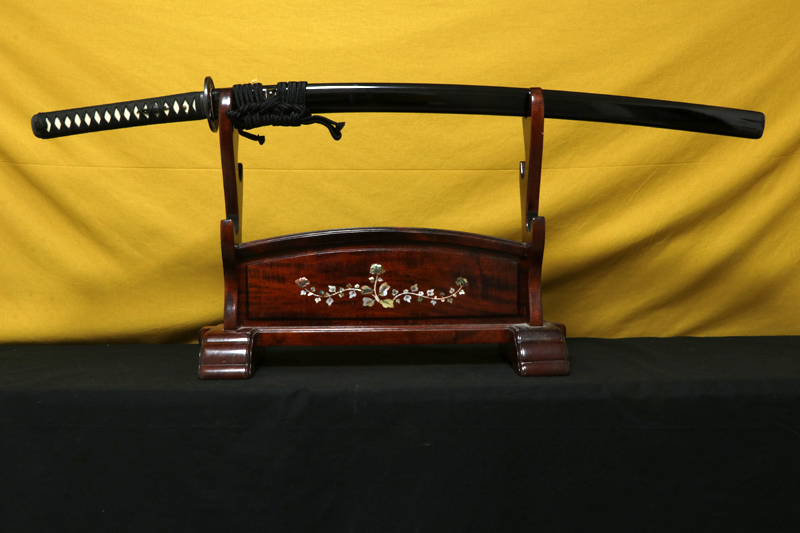
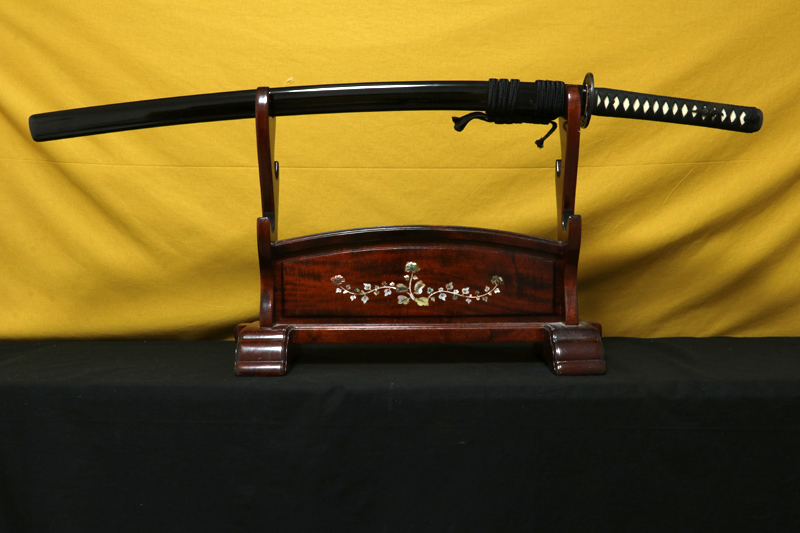
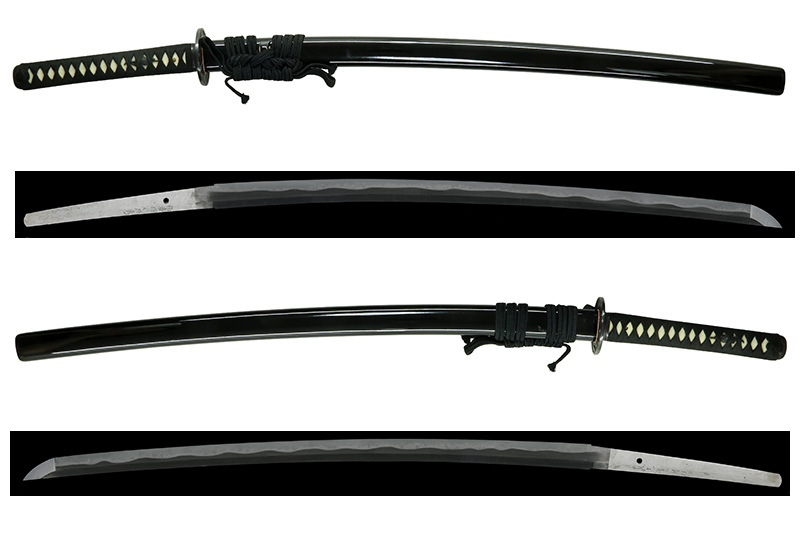
Shinogi-zukuri, iori-mune, mihaba and kasane are jinjo, torii-zori with a chu-kissaki. The nakago is ubu with kesho-yasurime, and the nakago-jiri is ha-agari kurijiri.
「地鉄 jigane」
The jigane is itame hada that flows and becomes masame, with thick ji-nie and chikei appearing in places.
「刃紋 hamon」
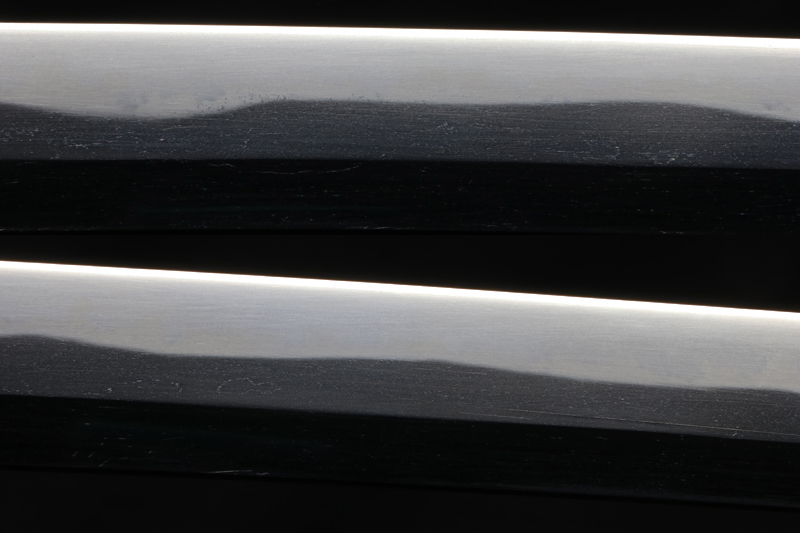
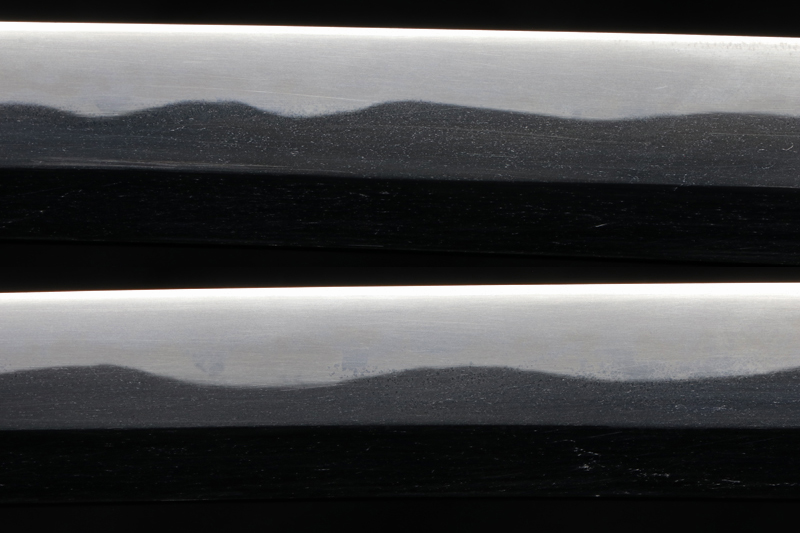
The hamon is a gunome-midare blade, with ara-nie on the habuchi and sunagashi. Inside the ha, kinsuji works well and yo enters. The boshi is notare-komi, with the tip becoming hakikake and returning to komaru.
「特徴 detailed」
Hoki no Kuni Ju Nobuhide (real name: Maeda Hideshi) was born on August 18, Showa 3 (1928), in Sagawa, Kofu-cho, Hino-gun, Tottori Prefecture. His teacher was his father, the swordsmith Maeda Kitaro (mei: Yoshiteru), who was a disciple of Kawashima Tadayoshi.
Nobuhide's swords, forged in Sagawa at the foot of Mt. Daisen, are known worldwide for their exceptional cutting performance, and are highly evaluated particularly in the world of battodo as meito possessing "divine performance."
Saruta Mitsuhiro Sensei, the soke of Battodo Ryuseiken (known for the saying "A meito is something that can be cut properly when test-cutting"), also used a Nobuhide sword as his favorite blade. On September 20, 1998, at the Nagoya Tokai TV Telepia Hall, Saruta Sensei achieved the great feat of continuously cutting 1,000 targets consisting of bamboo wrapped in one layer of tatami omote in 1 hour 36 minutes 36 seconds, without changing the sword and without a single failed cut. This record was officially published in the Guinness Book in November 2000.
Also, the actor and martial artist Mr. Lee Murayama, who appeared in "The Last Samurai," uses a Nobuhide as his favorite sword and performs wonderful demonstrations combining tate and shizane both domestically and abroad.
This work is a superb piece with a well-tightened itame hada with a flowing character and a magnificent gunome-midare tempered into it.
Looking at the condition, there is no sign of use, and it is thought that it was not used for iai or shizane but was carefully possessed for appreciation.
There are no conspicuous defects such as kitae-ware in the blade, and it is in very good condition. The koshirae also maintains a nearly new condition, and it can be used for iai or shizane immediately after purchase.
★ We will rewrap the tsuka-maki for free. Cowhide leather, suede, pigskin leather. Pure silk, colors are black and dark brown.
「拵 Koshirae」
Habaki: Single su-akagane-ji with tate-yasurime.
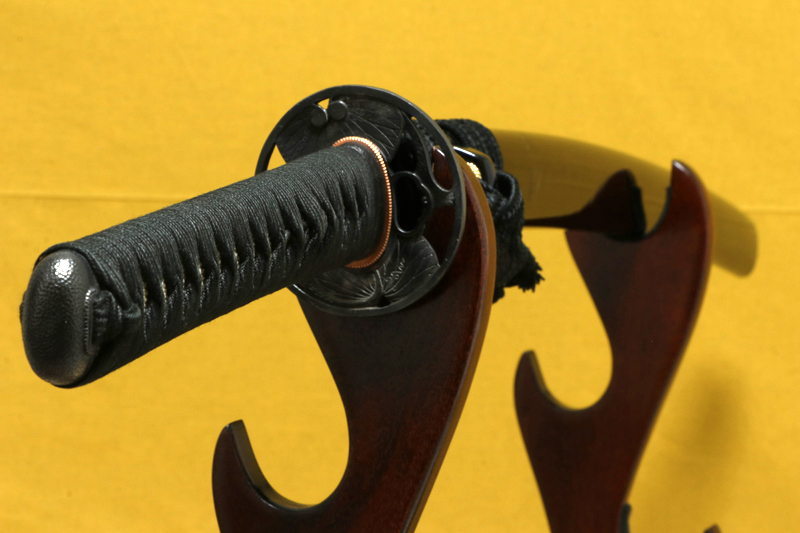
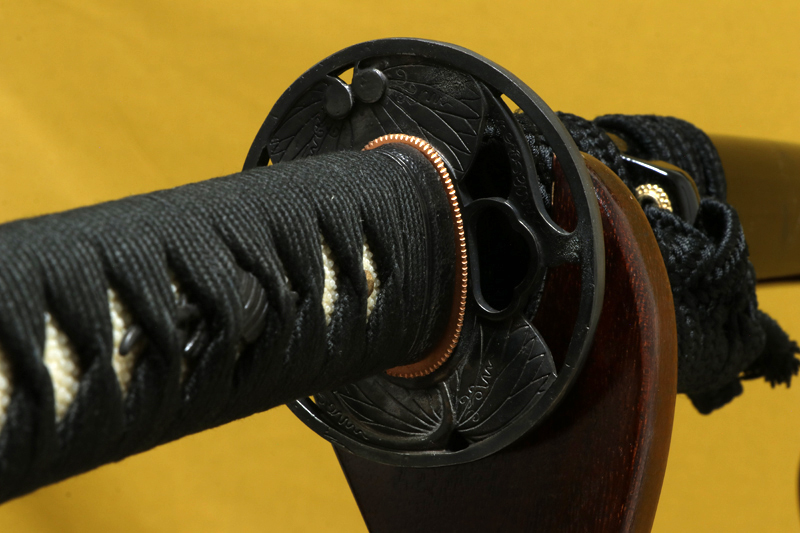
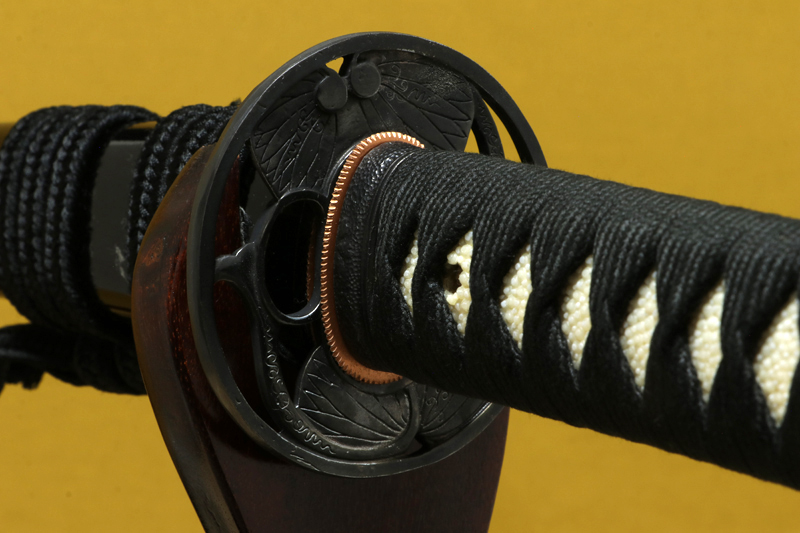
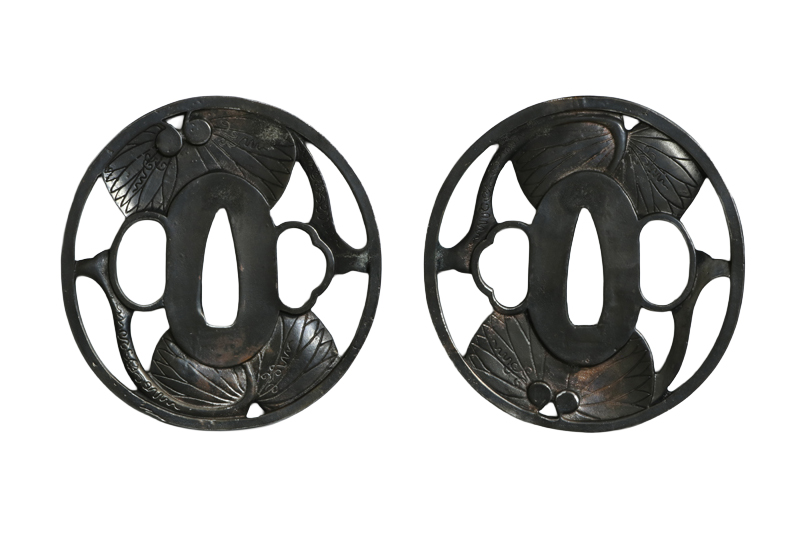
Tsuba: Su-akagane-ji with a design of aoi.
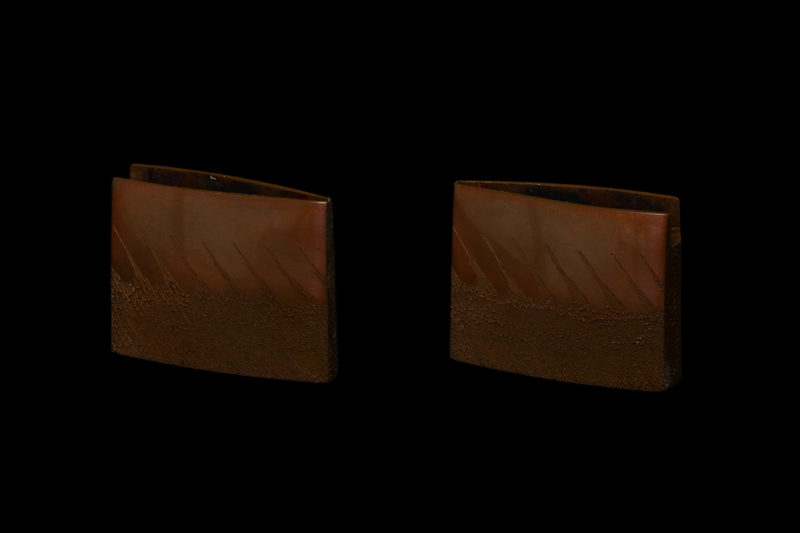
Fuchikashira: Su-akagane-ji, ishimome with a design of sakura.
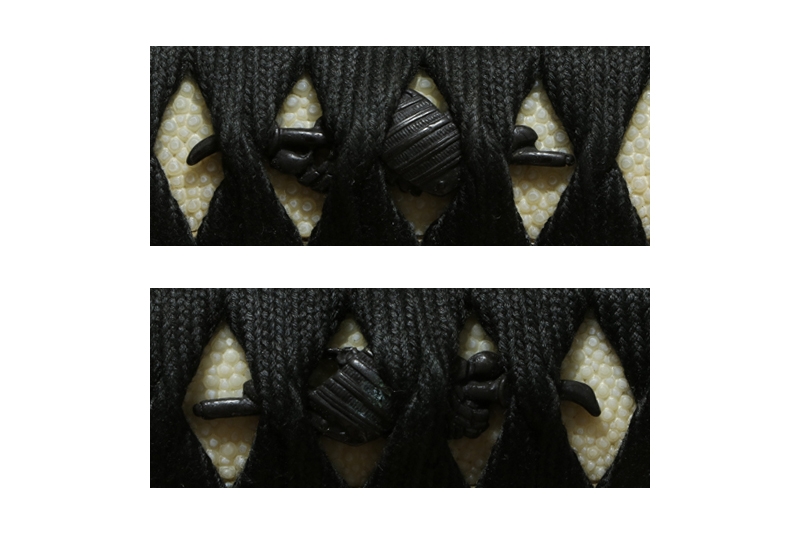
Menuki: Design of bugu.
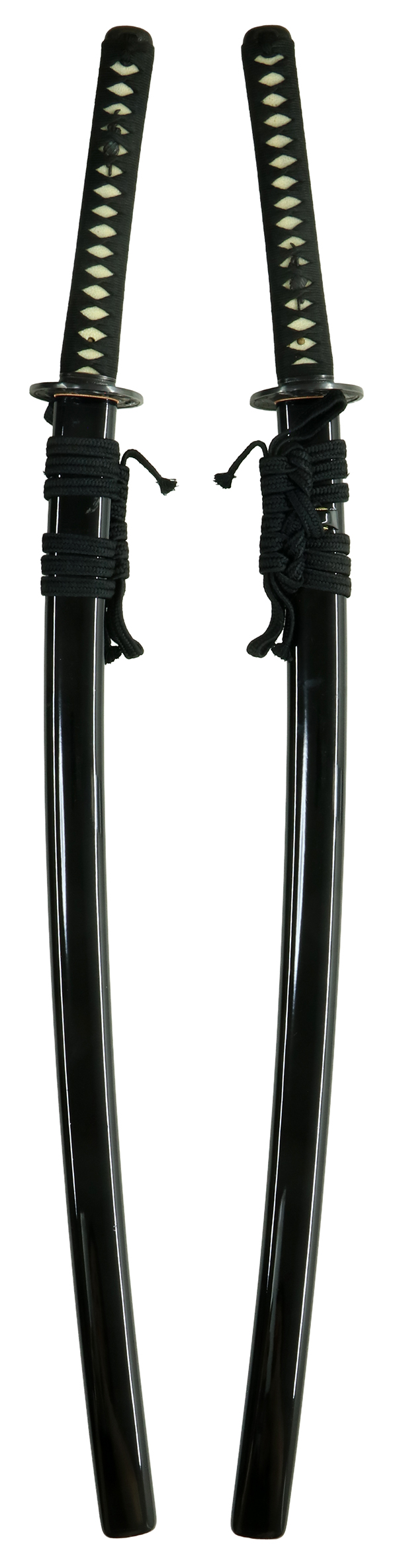
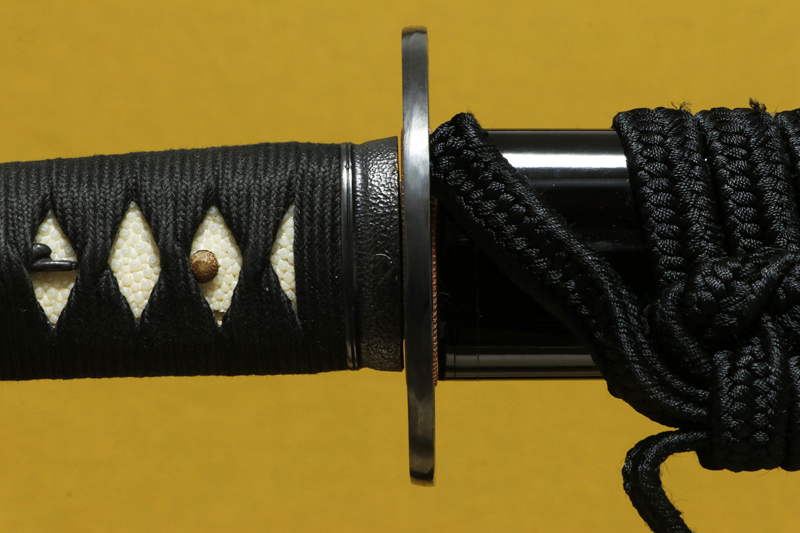
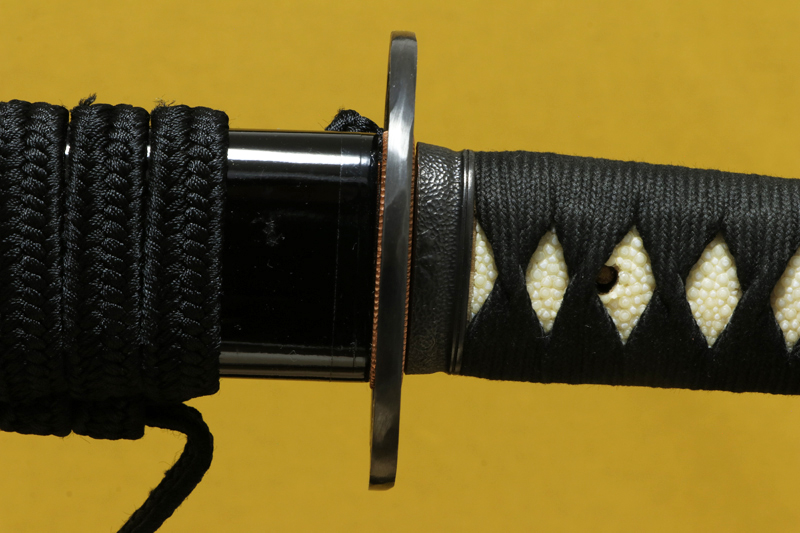
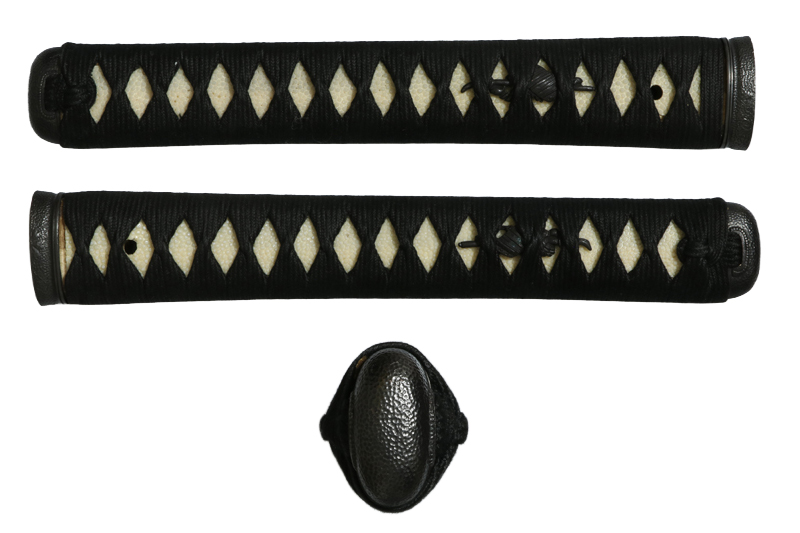
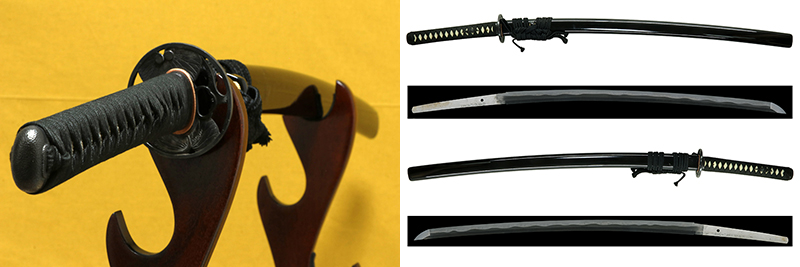
Tsuka: Tsuka-maki is pure silk black moro-tsumami-maki.
Saya: Kuro-ro.
「刀剣の状態 condition of blade」
Togi: Good.
Kizu: There are no kizu that would become a defect.
Machine translation from the shop's Japanese · may contain errors ·
Owazamono of the Heisei-era
Modern sword Hokinokuni ju Nobuhide with Koshirae.
Hoki no Kuni Ju Nobuhide was a swordsmith who worked at the foot of Mt. Daisen in Tottori Prefecture and was highly evaluated in the world of battodo for his exceptional cutting performance.
This work is a sword with a superb gunome-midare hamon tempered into an itame hada with a flowing character. There is almost no sign of use, and both the blade and koshirae are in good condition, so it can be used for iai or shizane immediately.
Hoki no Kuni Ju Nobuhide was a swordsmith who worked at the foot of Mt. Daisen in Tottori Prefecture. His swords are highly regarded in the world of battodo for their exceptional cutting performance.
This sword features a flowing itame hada with a superb gunome-midare hamon. It shows no signs of use, and both the blade and koshirae are in excellent condition, ready for immediate use in iaido or test cutting.
「刀姿 sword figure」
Shinogi-zukuri, iori-mune, mihaba and kasane are jinjo, torii-zori with a chu-kissaki. The nakago is ubu with kesho-yasurime, and the nakago-jiri is ha-agari kurijiri.
「地鉄 jigane」
The jigane is itame hada that flows and becomes masame, with thick ji-nie and chikei appearing in places.
「刃紋 hamon」
The hamon is a gunome-midare blade, with ara-nie on the habuchi and sunagashi. Inside the ha, kinsuji works well and yo enters. The boshi is notare-komi, with the tip becoming hakikake and returning to komaru.
「特徴 detailed」
Hoki no Kuni Ju Nobuhide (real name: Maeda Hideshi) was born on August 18, Showa 3 (1928), in Sagawa, Kofu-cho, Hino-gun, Tottori Prefecture. His teacher was his father, the swordsmith Maeda Kitaro (mei: Yoshiteru), who was a disciple of Kawashima Tadayoshi.
Nobuhide's swords, forged in Sagawa at the foot of Mt. Daisen, are known worldwide for their exceptional cutting performance, and are highly evaluated particularly in the world of battodo as meito possessing "divine performance."
Saruta Mitsuhiro Sensei, the soke of Battodo Ryuseiken (known for the saying "A meito is something that can be cut properly when test-cutting"), also used a Nobuhide sword as his favorite blade. On September 20, 1998, at the Nagoya Tokai TV Telepia Hall, Saruta Sensei achieved the great feat of continuously cutting 1,000 targets consisting of bamboo wrapped in one layer of tatami omote in 1 hour 36 minutes 36 seconds, without changing the sword and without a single failed cut. This record was officially published in the Guinness Book in November 2000.
Also, the actor and martial artist Mr. Lee Murayama, who appeared in "The Last Samurai," uses a Nobuhide as his favorite sword and performs wonderful demonstrations combining tate and shizane both domestically and abroad.
This work is a superb piece with a well-tightened itame hada with a flowing character and a magnificent gunome-midare tempered into it.
Looking at the condition, there is no sign of use, and it is thought that it was not used for iai or shizane but was carefully possessed for appreciation.
There are no conspicuous defects such as kitae-ware in the blade, and it is in very good condition. The koshirae also maintains a nearly new condition, and it can be used for iai or shizane immediately after purchase.
★ We will rewrap the tsuka-maki for free. Cowhide leather, suede, pigskin leather. Pure silk, colors are black and dark brown.
「拵 Koshirae」
Habaki: Single su-akagane-ji with tate-yasurime.
Tsuba: Su-akagane-ji with a design of aoi.
Fuchikashira: Su-akagane-ji, ishimome with a design of sakura.
Menuki: Design of bugu.
Tsuka: Tsuka-maki is pure silk black moro-tsumami-maki.
Saya: Kuro-ro.
「刀剣の状態 condition of blade」
Togi: Good.
Kizu: There are no kizu that would become a defect.
The twentieth century nearly killed the craft twice: wartime distortion, then the occupation ban. The NBTHK’s founding in 1948 and licensed forging from 1953 rebuilt the sword as an art, crowned by Living National Treasures and the mukansa rank.
We could not find an authenticity certificate on the seller’s listing. Japanese swords and fittings are normally papered by the NBTHK (or the NTHK). Without one, the attribution is the seller’s own assessment and has not been independently verified — treat it with caution and ask the dealer about certification before buying.
Within 3 days of the item's arrival, we offer a refund or an exchange. Return shipping and the bank transfer fee for the refund are at the customer's expense.


 NihontoWatch