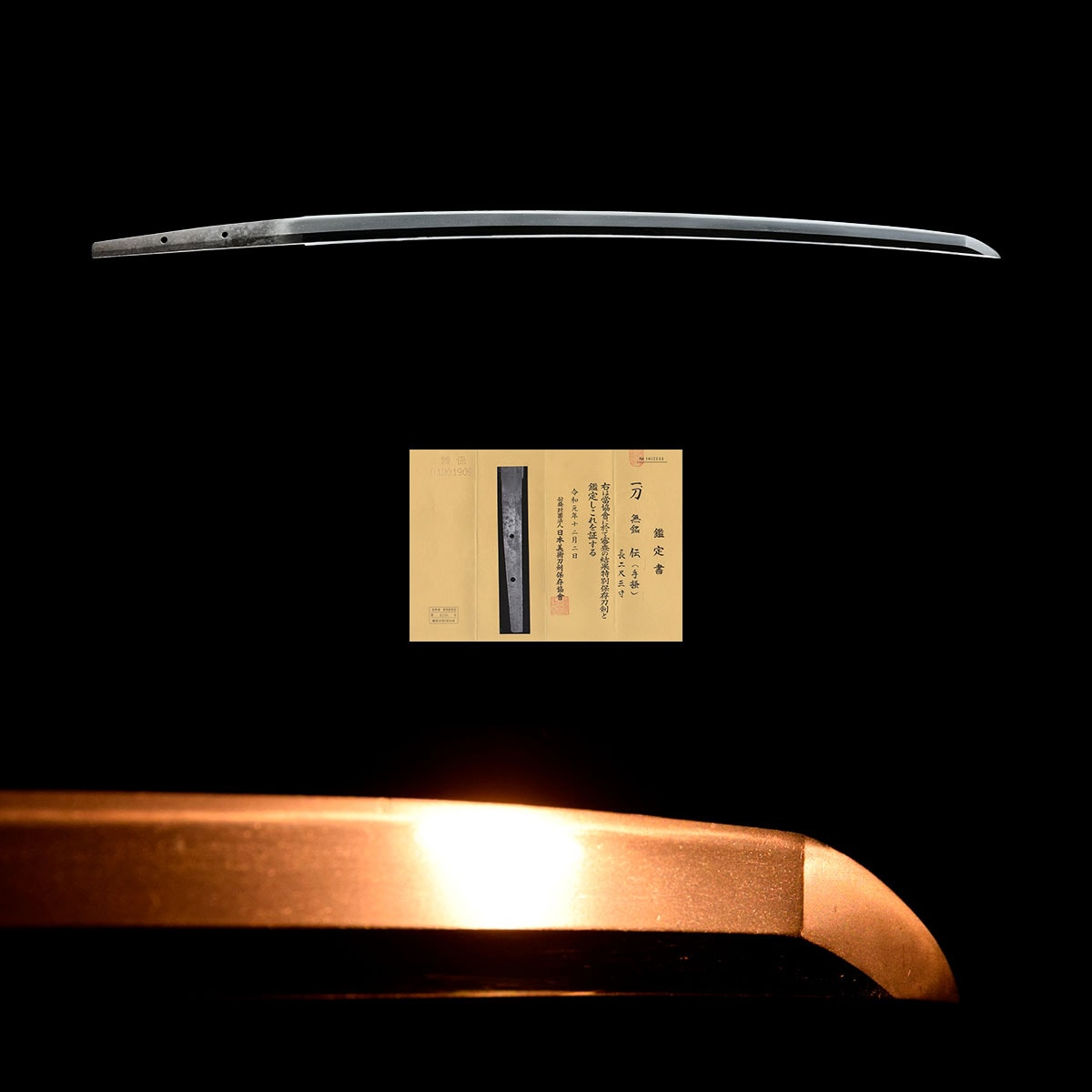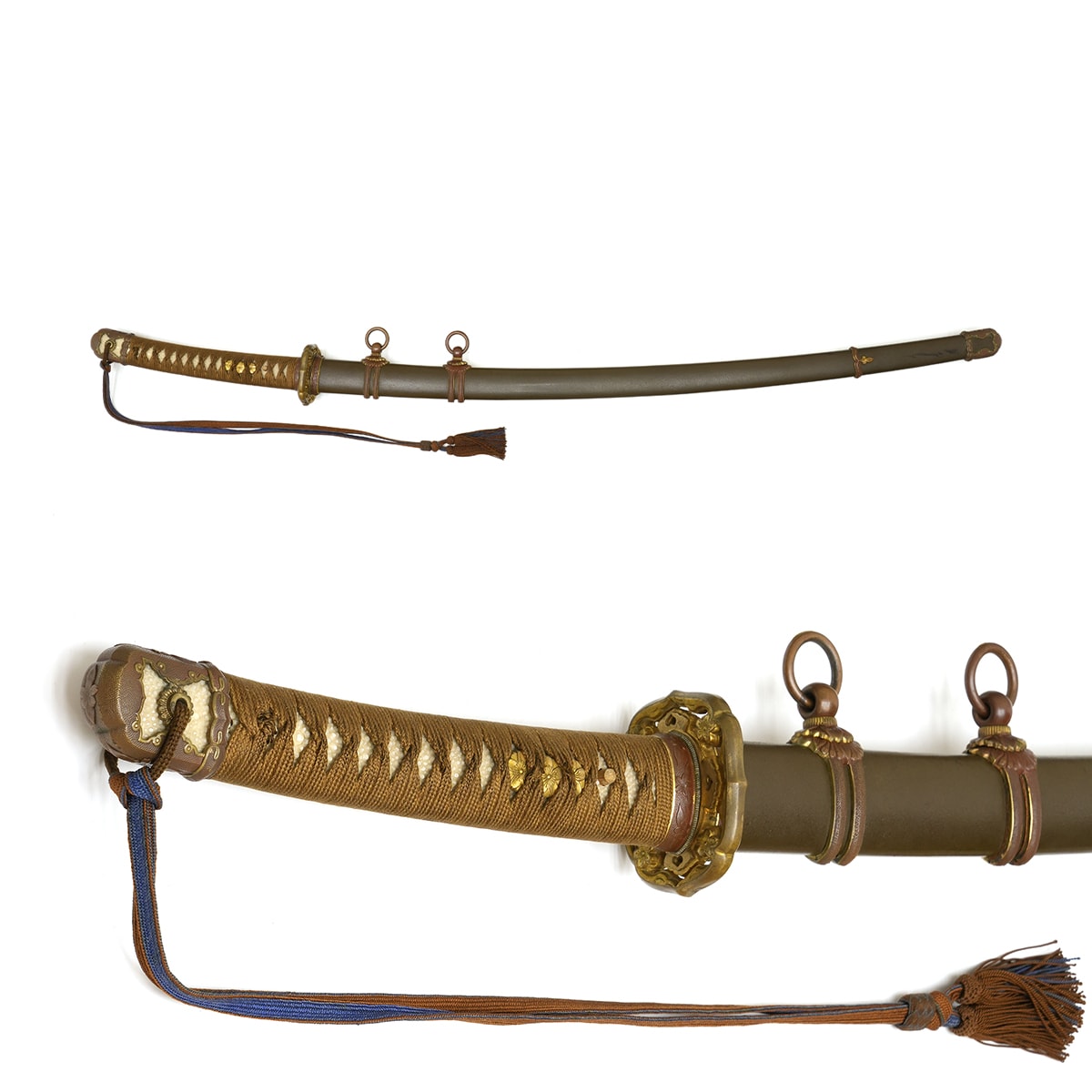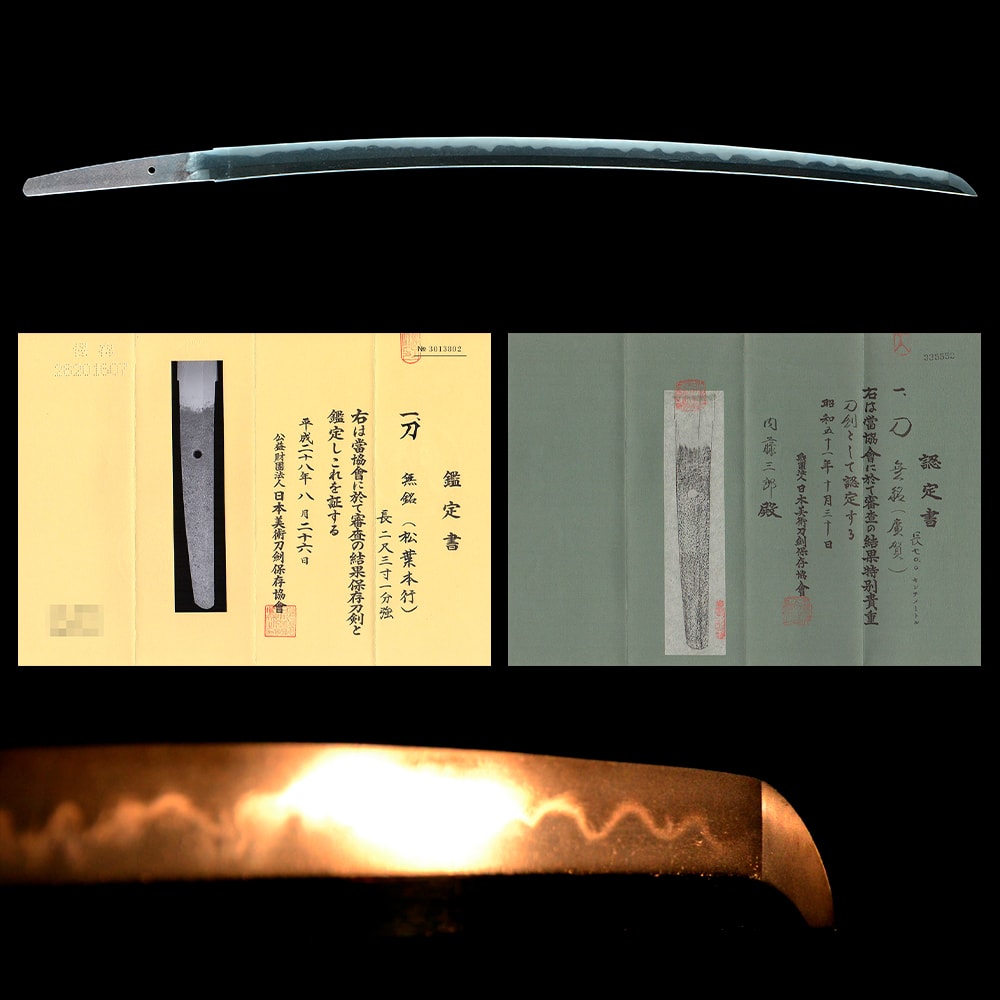
無銘(松葉本行 / 廣賀)- Mumei(Matsuba Motoyuki / Hiroga - 2-708
¥616,000
Tracked across 76 dealers worldwide · price history · sold archive
Edo
Specifications
70.03 cm
1.9 cm
3.12 cm
2.36 cm
About the maker
Motoshige Motoyuki本行
Kawachi no Kami Minamoto Motoyuki (本行), commonly known as Matsuba Motoyuki, was a swordsmith of Karatsu in Hizen Province active during the mid-Edo period. His era of activity is recorded as Tenna (1681--1684), and reference works list him as the first generation bearing this name. Motoyuki worked within the broader tradition of Hizen swordsmithing, a lineage celebrated for its refined forging and disciplined temperlines. He received the court title Kawachi no Kami and signed with the full *mei* "Hizen no Kuni Karatsu-jū Kawachi no Kami Minamoto Motoyuki saku." He is rated *chū-jō saku* (above average) by Fujishiro and carries a Hawley rating of 55. Motoyuki's workmanship is characterized by a tightly forged *ko-itame-hada* with fine *ji-nie*, producing a steel of notably clear *kana-iro* tone. His *hamon* typically begins with a *suguha*-based *yakidashi* before developing into a wide, gentle *ō-notare* mixed with *gunome*, exhibiting deep *nioi* with *ko-nie* and a bright, clear *nioiguchi*. His blades tend toward wide *mihaba* with shallow *sori* and an elongated *chū-kissaki*, reflecting the robust proportions favored in the Genroku era. The *bōshi* is rendered *sugu* with a rounded turnback, and the *nakago* is characteristically finished with *kiri* filemarks and a long signature placed near the *mune* side. Motoyuki's finest surviving work -- a katana dated Genroku 11 (1698) -- is described in the designation records as his greatest masterwork, with both *ji* and *ha* praised as bright and clear and the overall state of preservation deemed exceptionally *kenzen*. This blade was mounted with fittings by Tsuchiya Yasuchika, one of the celebrated Nara sansaku, in a commission for the daimyo Matsudaira Daigaku no Kami Yoritsada. The pairing of Motoyuki's blade with Yasuchika's metalwork in a unified *uchigatana* mounting testifies to the esteem in which his work was held among discerning patrons of the period.