The twentieth century nearly killed the craft twice: wartime distortion, then the occupation ban. The NBTHK’s founding in 1948 and licensed forging from 1953 rebuilt the sword as an art, crowned by Living National Treasures and the mukansa rank.
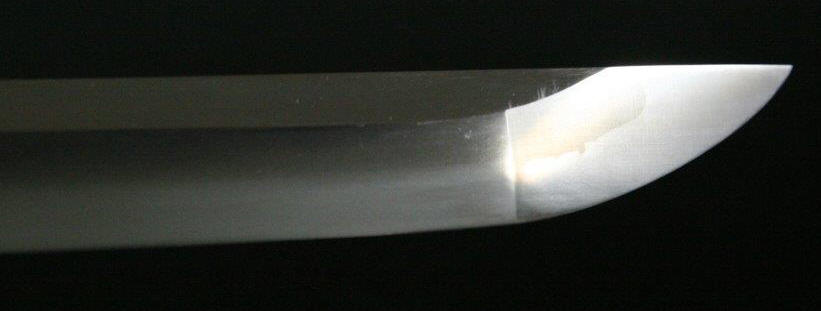
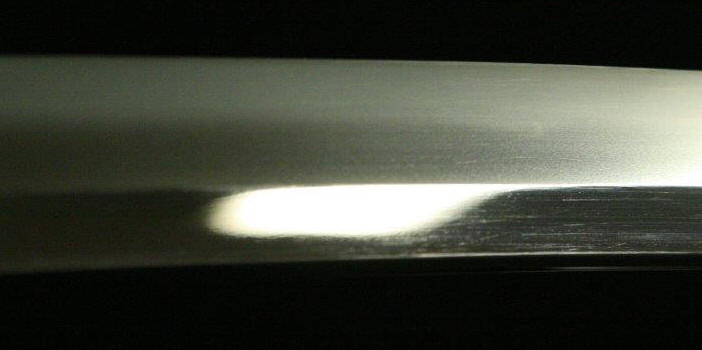
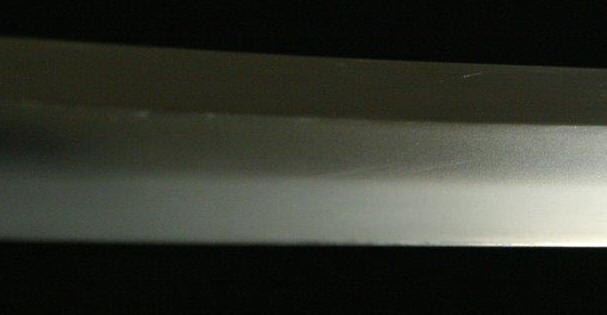
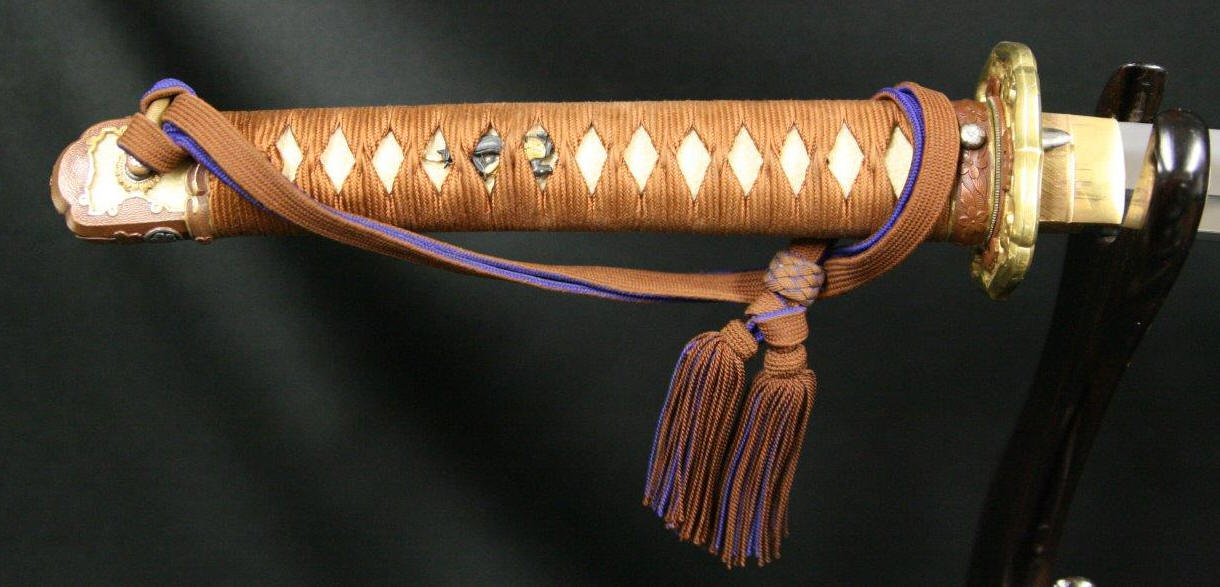
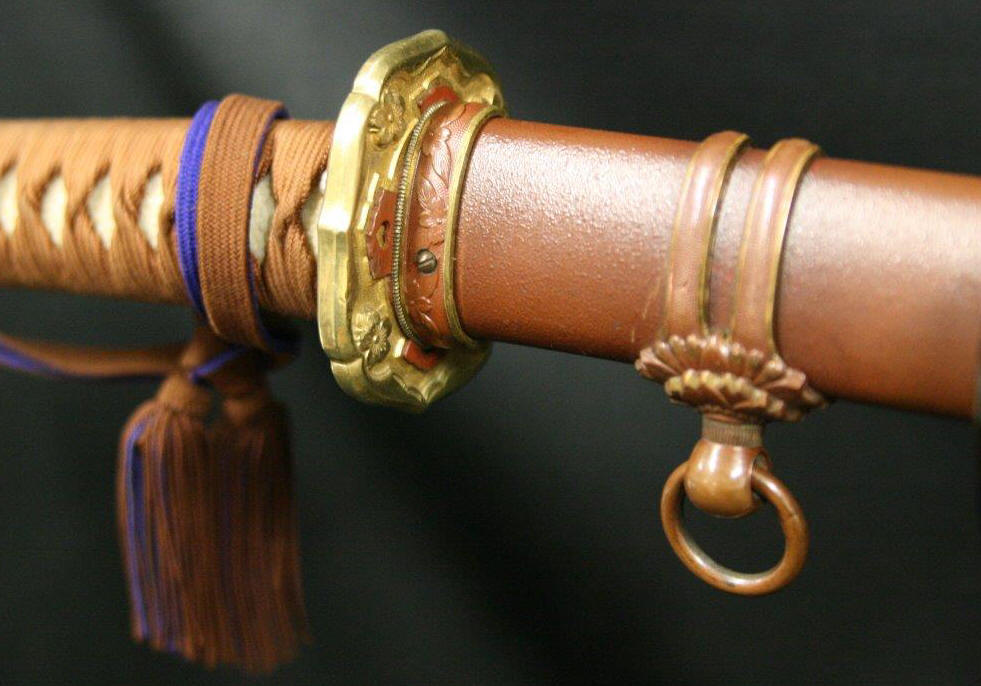
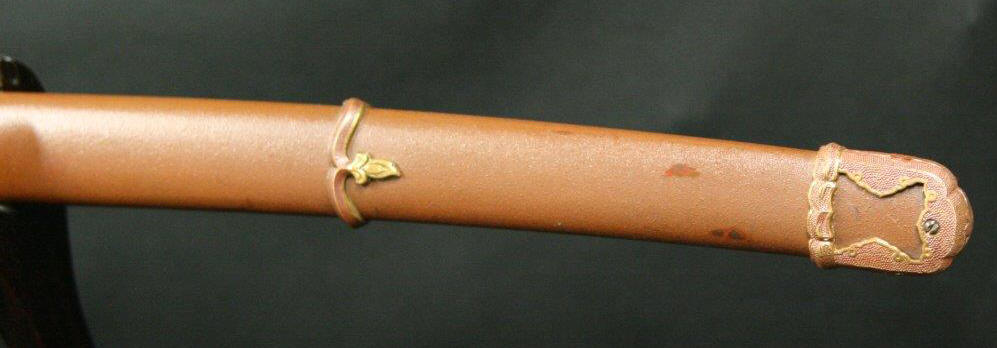
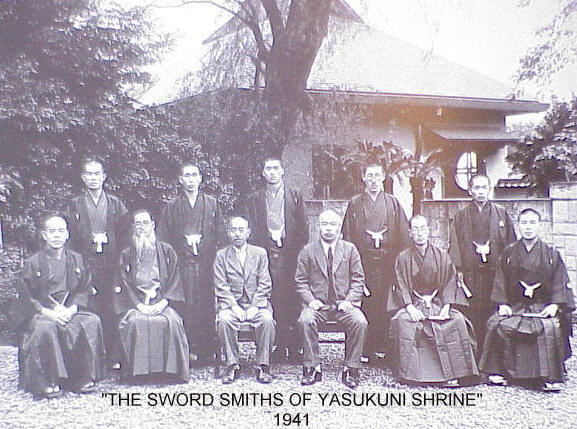
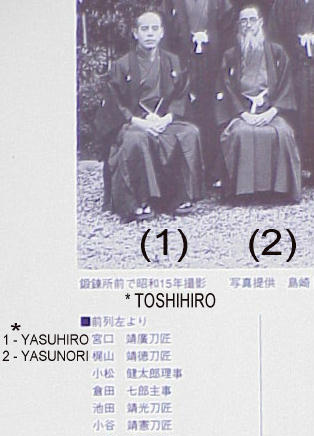
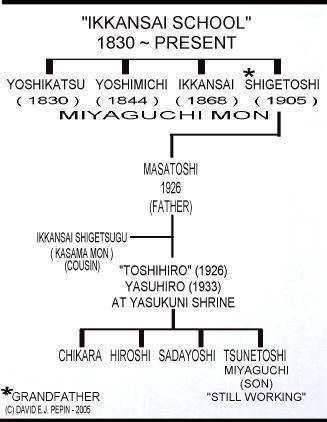
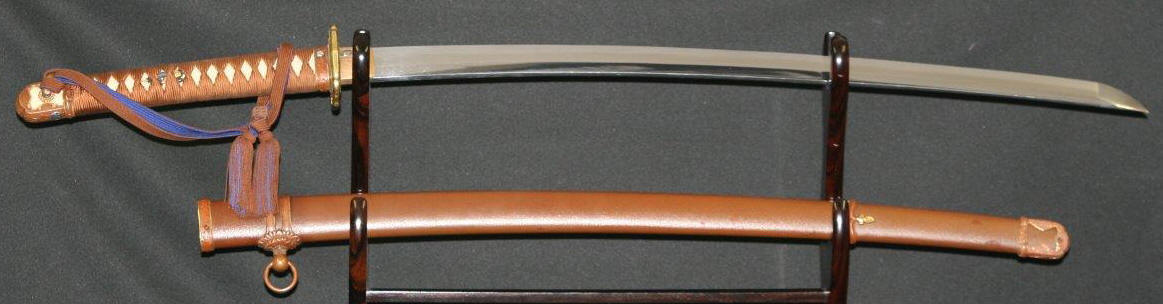
High End Gendaito by Miyaguchi Yasuhiro nicknamed “Dragon God” A Yasukuni Shrine Smith With Mint Gunto mounts With NTHK-npo certificate, Chicago sword show April 2023 (score of 75/100) This is a fine high end gendaito by Miyaguchi Yasuhiro, also known as Toshihiro (real name: Miyaguchi Shigeru), A Yasukuni shrine smith. The approx measurements are nagasa (length): 25 1/2′′ ~ 64.7 cm, Sori (curvature): 5.5 bu & Motohaba (width) 1 3/16′′ ~ 3 cm. The hamon is a wide hiro suguha. The nakago is signed “Ryūjin Miyaguchi Yasuhiro”. It is very unusual for a gendaito to be named “Ryujin”* which translates as “Dragon God”. It is dated “Showa ni-ju-nen go-gatsu kitsu-jitsu” which translates as “A lucky day in May 1945” The kabuto-gane bears a silver mon of a kikyo (Chinese bellflower) which, among others, is the mon of the Matsudaira family. With mint gunto mounts including tassel One side of the tsuka is bound with the usual triple kiku menuki whilst the other bears a shakudo and gold menuki of a minogane (turtle). Miyaguchi Yasuhiro is listed in: An Oshigata Book of Modern Japanese Swordsmiths 1868-1945 by John Scott Slough, Japanese sword smiths revised by Hawley, Nihon Toko Jiten – Shinto-Hen by Fujishiro, Toko Taikan by Tokuno Kazuo, & Yasukuni Tosho – Japanese Version by Kishida. New photos will be added soon. Read on below for more details... Miyaguchi Toshihiro / Yasuhiro, (1897-1956) also signed Kunimori, was the 3rd generation of Miyaguchi Ikkansai, grandson of Miyaguchi Shigetoshi (see Genealogy chart). He is of the Ikkansai Mon (school), “MINAMOTO KIYOMARO”, was the greatest master of the Shinshinto period and was also of this school. On December 23, 1932 the board of directors of the Yasukuni Shrine (Yasukuni shrine is devoted to the protection, and Memory of “SAMURAI, AND MILITARY WARRIORS”) approved the establishment of the “Nihon To Tanren Kaji”. Toshihiro was summoned and given the smith name Yasuhiro July 8th, 1933 by the war minister “Araki Sadao”! He was then appointed in charge of the Yasukuni Tanren Kai Foundation, he is also listed as one of the Founders. In 1933 he began producing swords at this well known, and prolific school of sword smiths. He worked at the Yasukuni shrine until 1936, where he produced approximately 500 swords. He was also given the the War Minister award at the Nihonto Tanren Kai held by the Dai Nippon Tosho Kyokai. Yasuhiro was skilled at horimono, which he learned from his cousin Kasama Ikkansai Shigetsugu. He also used the mei of “Miyaguchi Toshihiro” and “Miyaguchi Ikkansai Toshihiro”. In 1936 he was transferred to become the chief instructor, and Sensei of sword making at the Okura Tanrensho Dojo, founder by Baron Okura Kihachiro (where fine Military blades were produced). He remained there through out the WW II period. When the art of sword making was allowed to re-commence in 1954, Toshihiro obtained a license to produce art swords. His skill of sword making, along with his skill in horimono (blade engravings)
Offered by SamuraiSword
This piece has sold
Get an email when a new Yasuhiro piece hits the market.


Tokyo · around 1926-1989
Tōken Taikan top 91%
Shōwa to the present: destruction and revival
The twentieth century nearly killed the craft twice: wartime distortion, then the occupation ban. The NBTHK’s founding in 1948 and licensed forging from 1953 rebuilt the sword as an art, crowned by Living National Treasures and the mukansa rank.
The NTHK’s principal certificate, issued for a blade of considerable quality. It confirms a genuine signature, or, for an unsigned (mumei) work, records the judges’ attribution to a smith or school. The paper carries a detailed worksheet with a numerical point score.
The NTHK (Nihon Tōken Hozon Kai, the Society for the Preservation of the Japanese Sword) is the oldest of Japan’s sword-appraisal bodies, founded in 1910, decades before the NBTHK. After the death of its long-serving head it divided into two successor societies, the NTHK and the NTHK-NPO, both of which continue to hold shinsa. NTHK certificates are known for a detailed worksheet that records a numerical point score alongside the judges’ written opinion, and the society is especially respected for its attribution of unsigned (mumei) work.
24 hour inspection period for all Antique items (USA only); all sales final on International orders.