The twentieth century nearly killed the craft twice: wartime distortion, then the occupation ban. The NBTHK’s founding in 1948 and licensed forging from 1953 rebuilt the sword as an art, crowned by Living National Treasures and the mukansa rank.
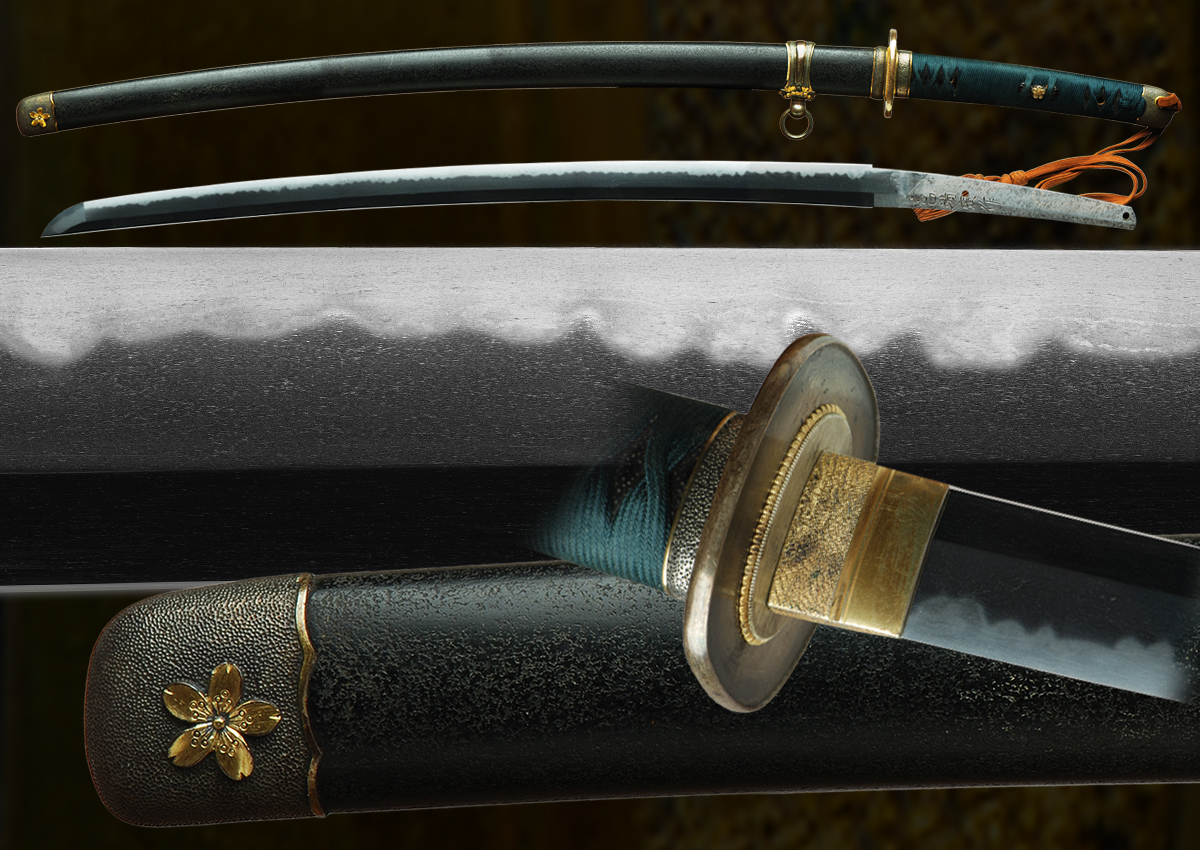
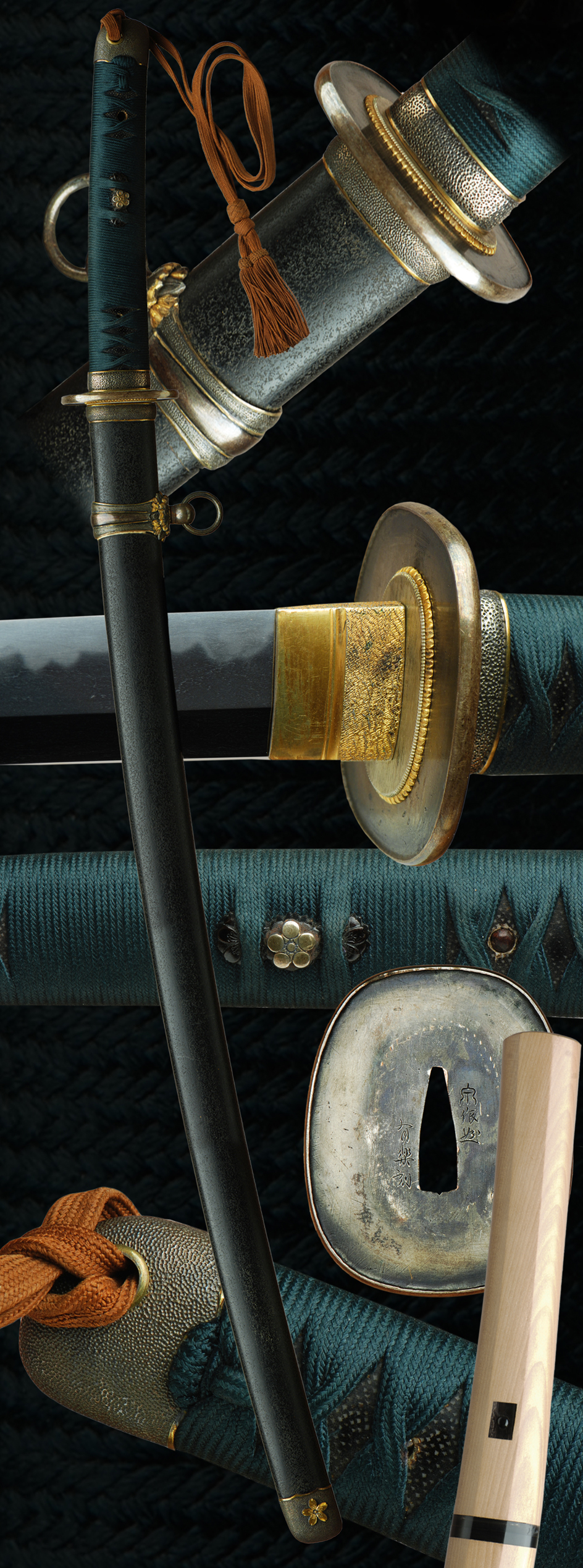
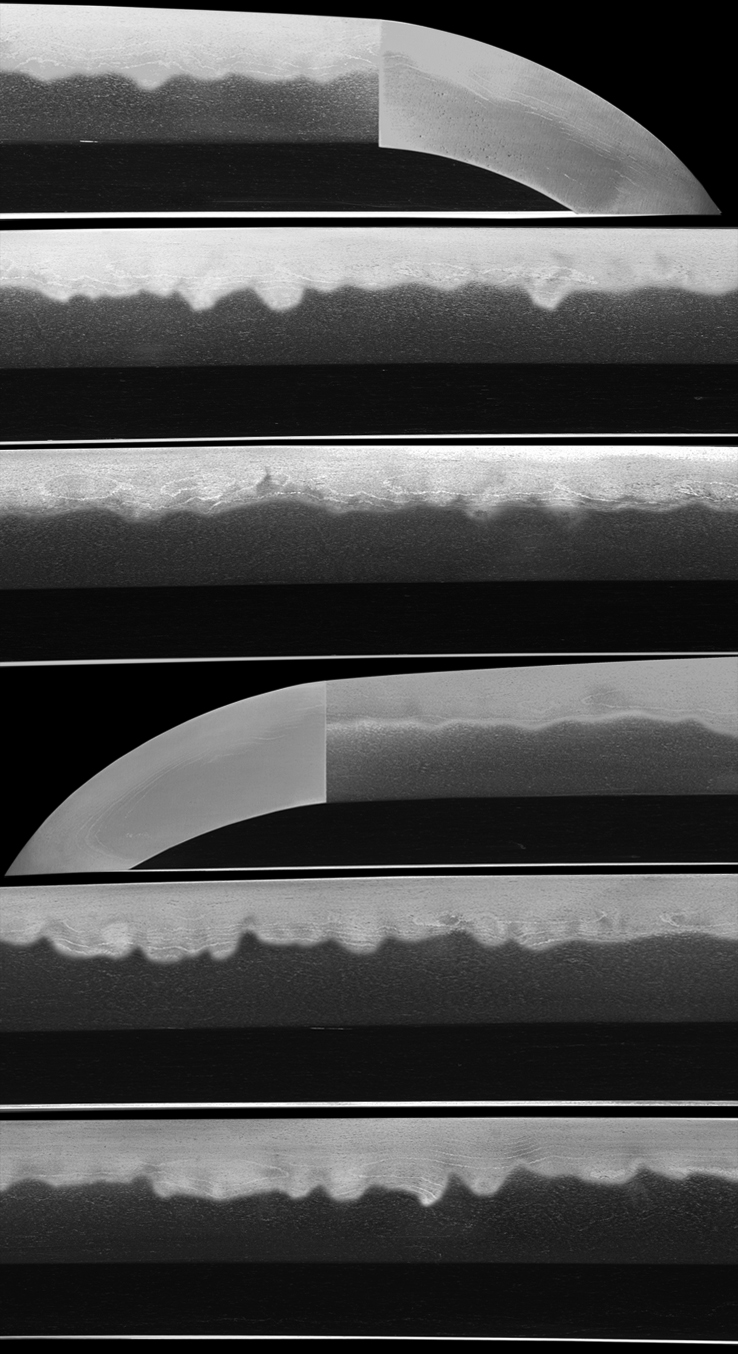
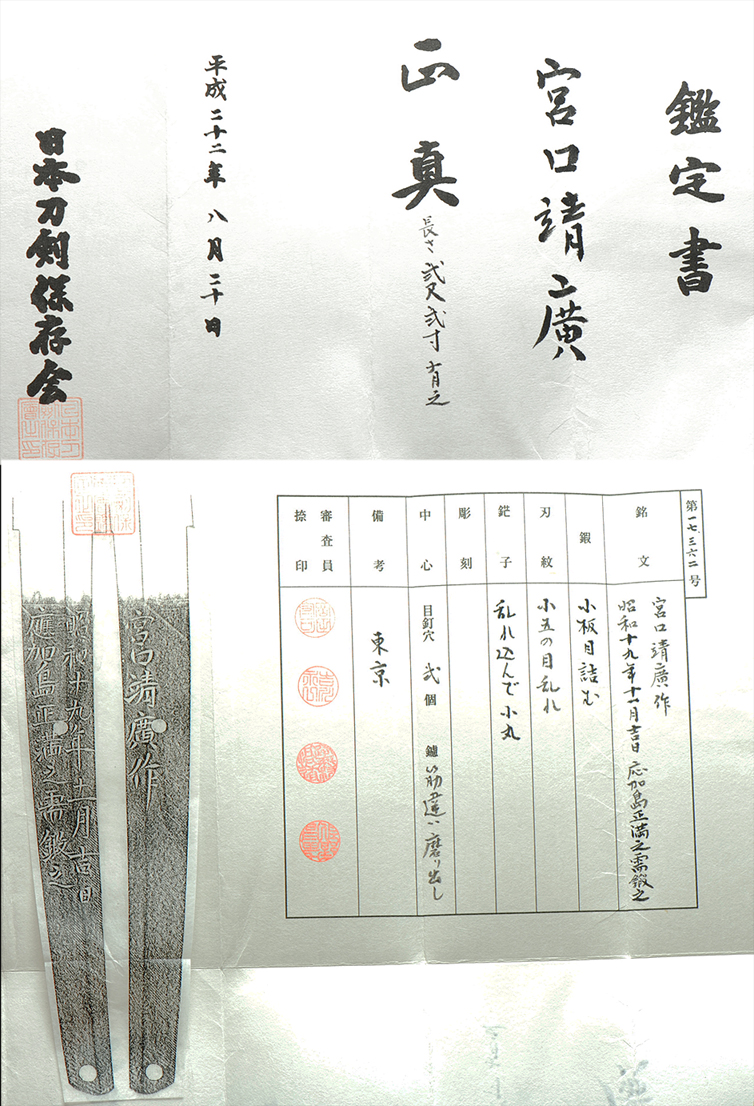
An Impressive sword by the swordsmith Miyaguchi Yasuhiro . Yasuhiro was also a Yasukuni Shrine smith. Though this blade is not a Yasukuni shrine blade it was made at the Okura Tanrenjo specially forged by order of Kashima Masamitsu He became a member of the NTKF ( Nihonto Tenren Kai Foundation ) and the Yasukuni Shrine in 1934 and was a master sword smith there.He received Special Honor Seat at the 6th Shinsaku Nihontō Denrankai (新作日本刀展覧会, 1941) This impressive blade is in beautiful condition. The polish is outstanding and truly shows off the magnificence of this Yasukuni smiths workmanship. Unlike most Yasukuni blades this blade which was made after he left the Yasukuni is a brilliant erratic ko-gunome midare with a very tight dense Ko-Itame with undulating ashi. The boshi is in Ko-Maru . The shape is majestic and has a wonderful sori for its length. The Habaki is gold washed. And not to understate this package it is completed in a beautiful special order custom type 3 mountings with tsunagi (with no wooden habaki). The blade is mounted in a wonderful Japanese Shirasaya. A complete package for the Japanese sword enthusiast as well as the high end military collector. Anyone interested in owning a truly wonderful example of a noted Smith that was with the Yasukuni Shrine with special order mounts should own this sword and add it to their collection. Yasuhiro won many awards at the sword making competitions both before and after the war. These custom type 3 mounts are fantastic and very rare all custom made and ordered. Most likely for a high ranking military official. Extra smith info: TOSHIHIRO (寿広・壽廣), Shōwa (昭和, 1926-1989), Tōkyō – “Miyaguchi Ikkansai Toshihiro” (宮口一貫斎寿広), “Toshihiro saku” (寿広作), “Miyaguchi Toshihiro” (宮口寿広), real name Miyaguchi Shigeru (宮口繁), he was born in April 1897 as son of Yonezawa Kanjirō Masatoshi (米沢勘治郎正寿) in Tōkyō, he and his father were both adopted into the Miyaguchi family, after the death of his father he continued his studies under Kasama Shigetsugu (笠間繁継), he used the gō Ikkansai (一貫斎) from August 1916 onwards, in 1934 he entered the Yasukuni forge, special-order blades were signed by him with the name Toshihiro, the larger numbers of blades he made for the Yasukuni forge were signed with his Yasukuni-name Yasuhiro (靖広), blades made with western steel and some made by his students were signed by him with the pseudonym Kunimori (国護), in December 1936 he entered the Ōkura Forge (大倉鍛錬所) and died on March 21st 1956 at the age of 59, his posthumous Buddhist name is “Kantoku ́in Han ́a Shinshō” (貫徳院繁阿真照), records say that he made about 500 blades for the Yasukuni forge, shinpin no retsu (Akihide), Special Honor Seat at the 6th Shinsaku Nihontō Denrankai (新作日本刀展覧会, 1941) This sword is on consignment. kantei-sho (鑑定書) – Certificate Miyaguchi Yasuhiro (宮口靖廣) shôshin (正真) – Authentic nagasa 2 shaku 2 sun kore ari (長さ弐尺弐寸有之) – Blade length ~ 66.6 cm Heisei 22 nen 8 gatsu 20 nichi (平成二十二年八月二十日) – August 20th 2010 Nihon Tôken Hozon Kai (日本刀剣保存会) – NTHK No 17,362 meibun (銘文) – Signature: Miyaguchi Yasuhiro saku (宮口靖廣作) Shôwa jûkyûnen jûichigatsu kichijitsu (昭和十九年十一月吉日, “on a day in November 1944”) Kashima Masamitsu no motome ni kotae kore o kitau (応加島正満之需鍛之, “forged by order of Kashima Masamitsu”) kitae (鍛) – Forging: dense ko-itame hamon (刃紋) – Hardening: ko-gunome-midare bôshi (鋩子) – Hardening in tip: midare-komi with a ko-maru-kaeri chôkoku (彫刻) – Engravings: nakago(中心)–Tang:mekugi-ana(目釘穴)2,yasurime(鑢): sujikai with prominent deliberate start of file marks bikô (備考) – Remarks: Tôkyô shinsa’in natsu’in (審査員捺印) – Seals of Judges: 4 seals
Offered by Nihonto Antiques
This piece has sold
Get an email when a new Yasuhiro piece hits the market.


As written by the shop
Tokyo · around 1926-1989
Tōken Taikan top 91%
Shōwa to the present: destruction and revival
The twentieth century nearly killed the craft twice: wartime distortion, then the occupation ban. The NBTHK’s founding in 1948 and licensed forging from 1953 rebuilt the sword as an art, crowned by Living National Treasures and the mukansa rank.
The NTHK’s principal certificate, issued for a blade of considerable quality. It confirms a genuine signature, or, for an unsigned (mumei) work, records the judges’ attribution to a smith or school. The paper carries a detailed worksheet with a numerical point score.
The NTHK (Nihon Tōken Hozon Kai, the Society for the Preservation of the Japanese Sword) is the oldest of Japan’s sword-appraisal bodies, founded in 1910, decades before the NBTHK. After the death of its long-serving head it divided into two successor societies, the NTHK and the NTHK-NPO, both of which continue to hold shinsa. NTHK certificates are known for a detailed worksheet that records a numerical point score alongside the judges’ written opinion, and the society is especially respected for its attribution of unsigned (mumei) work.
We offer a 48 hour inspection period for all Antique items shipped within the United States only. If the item is not to your satisfaction, we will gladly refund your money less any shipping and handling fees. All sales are final after the 48 hour inspection period. Please note that all discounted items are a final sale and not returnable.