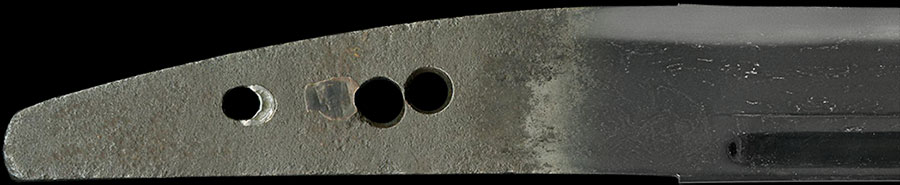
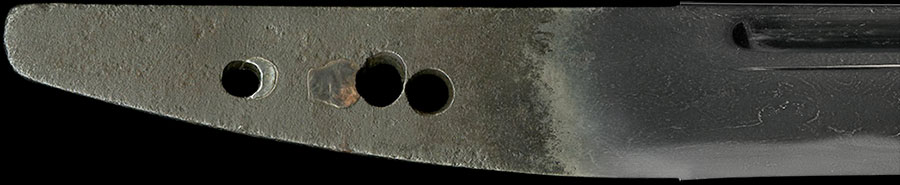
A wakizashi by Yoshisada dated Shōhei 13 (1358), cut on the reverse "ninth month, day" and on the face with the orderer's name "Shu Nagamasa," is the documentary anchor of his career: from it the published sources accept that he was a direct disciple of Ō-Sa, and fix his working years in the middle of the fourteenth century. Yoshisada is a smith of the Sa, or Samonji, school of Chikuzen, one of the Sa-ichirui who carried the school's manner forward in the Nanbokuchō period beside Yasuyoshi, Yukihiro, Yoshihiro, Kunihiro and Hiroyasu. He is traditionally held to be "a son of Ō-Sa"[[c:1]], or at least a member of his immediate circle, and he signs simply "Yoshisada" or "Yoshisada saku," a piece additionally cut "Chikushū jū" not being encountered.
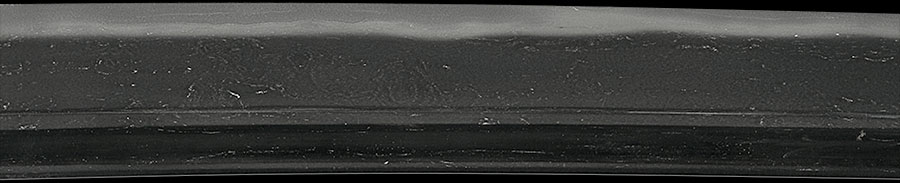
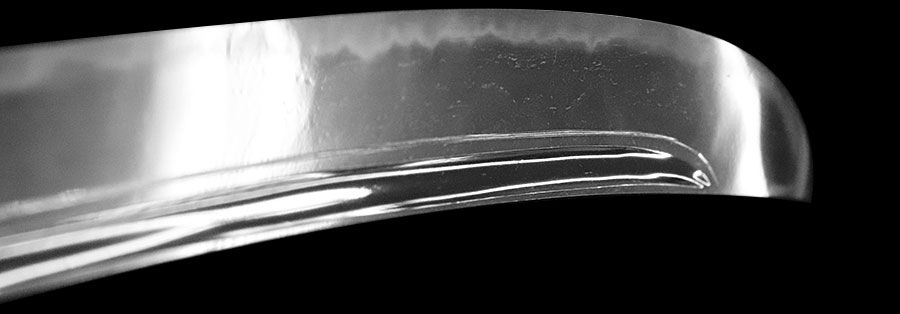
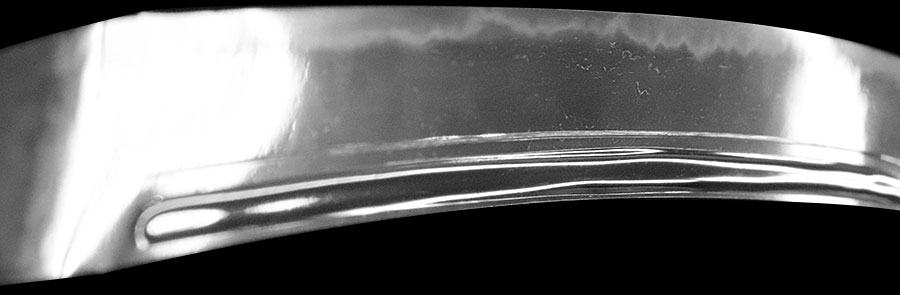
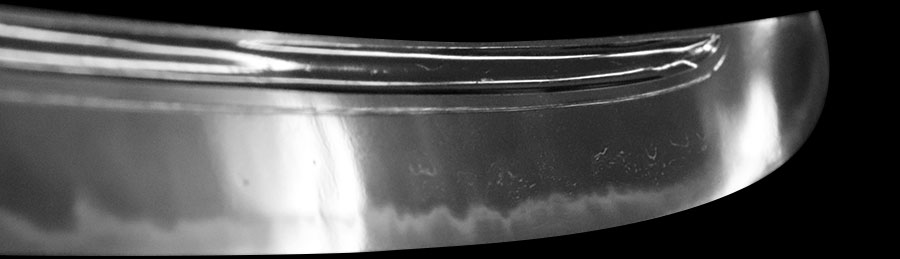
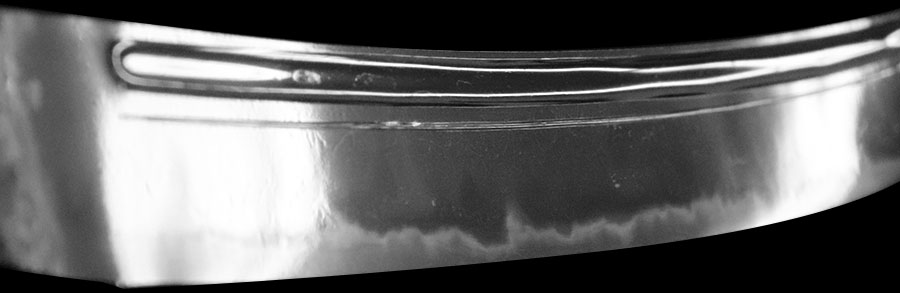
His hand is read first through what the published sources allow him as his one personal characteristic. They observe that the smiths of the Sa group show comparatively few individual tells, and then single Yoshisada out: "even within the Sa group his hamon becomes a small-patterned design, and in this lies his stylistic individuality"[[c:2]]. That small-scale midare is the through-line of his work. Among signed pieces two manners are drawn. One is a calm, shallowly undulating notare on a suguha base; the other is a gunome temper that resembles his schoolmate Yasuyoshi but is worked, in the judges' words, "a little smaller and more compactly than his"[[c:3]]. In both the nie adheres well, with fine kinsuji and sunagashi running through, the activity carried in ko-ashi and yō rather than in tall clusters, and the bōshi rising with a thrusting tendency to a pointed return.
The jigane is the Sōshū-derived steel the whole Sa line shares, and it is the constant beneath both his manners. Over a standing itame mixed with mokume and a flowing nagare-hada, the grain a little open, he lays thick ji-nie and well-entered chikei, the steel at times taking a darkish cast; on several blades a whitish shirake-style utsuri drifts in the ji. Against that jigane the temper stays comparatively small in scale. Where his quieter pieces run a gentle notare, deep in nioi and bright, his more active pieces gather the gunome into the compact pattern the sources name, with occasional coarser nie and, near the monouchi, nie-suji and yubashiri-like tobiyaki lending a varied scenery.
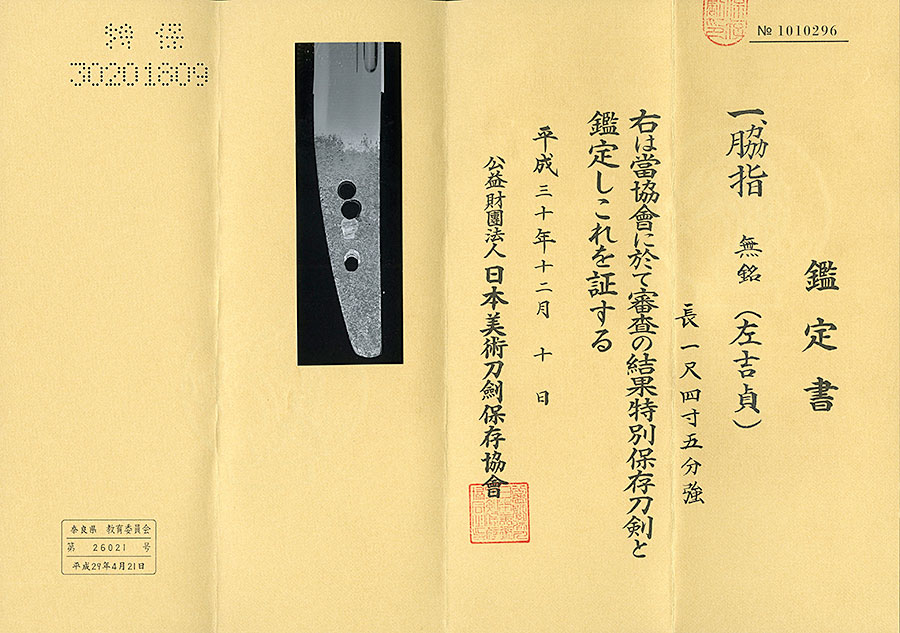
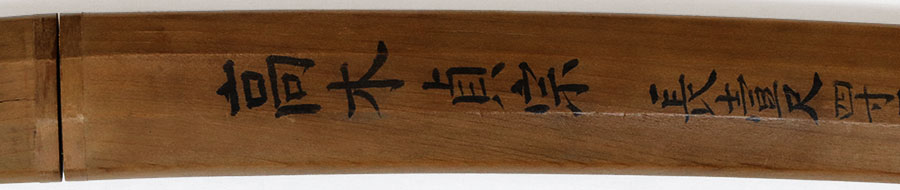
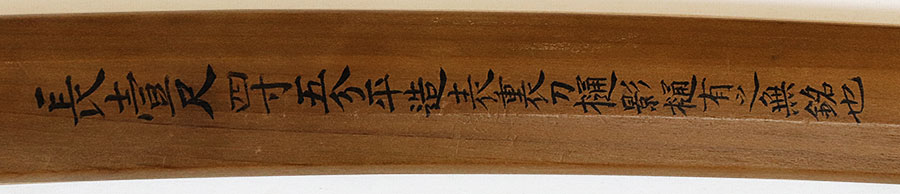
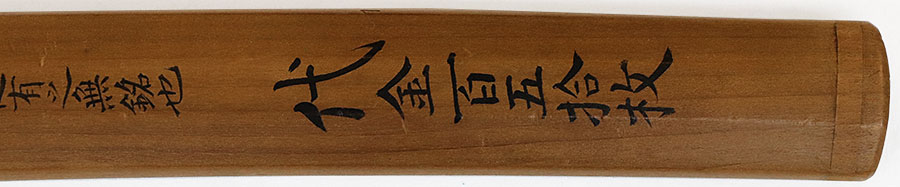
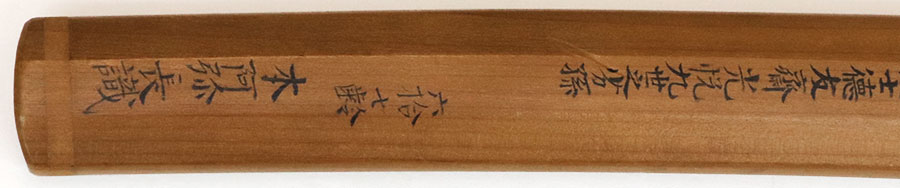
The two faces of his record sit side by side. The signed work is chiefly wakizashi and tantō: the Tokubetsu Jūyō tantō transmitted in the Mito Tokugawa house, hira-zukuri and wide, with strong nie in both ji and ha and a bright, clear nioiguchi, which the published sources call "an especially outstanding piece by this smith"[[c:4]]; the dated Shōhei 13 wakizashi bearing the orderer's name; and the Mononobe Yoshisada tachi, which tempers the koshimoto high into a brighter, livelier midare and shows how far the same hand could open. The other face is the ō-suriage mumei katana appraised as his, wide and powerful, several with an extended or large kissaki, a ko-nie gunome-midare with some chōji feeling over the standing itame, a bō-hi carved through; the judges note that even these unsigned attributions tend to the same small-patterned hamon, so the body of his oeuvre is read through that small midare rather than through any single signed tell. One such katana carries a gold-inlay attribution to Yoshisada by Hon'ami Mitsunori.
What sets Yoshisada apart within the Sa group is precisely that small-patterned temper. Where Yasuyoshi's gunome stands fuller, Yoshisada's is drawn smaller and more compact; where the line as a whole is read as showing few individual features, his compact midare, bright nioiguchi and pointed, thrusting bōshi recur from blade to blade as his own. He belongs to the generation that held the Sa school together after Ō-Sa, neither the founder's brilliance nor a late epigone, but a sound and recognizable hand whose individuality the NBTHK locates in scale rather than in flamboyance.
For the collector he is a documented but uncommon Nanbokuchō name. Fujishiro grades him Jō-jō saku. He has no National Treasures and no Important Cultural Properties; his record runs instead through four Tokubetsu Jūyō and forty-three Jūyō blades, with two ō-suriage katana holding the prewar Jūyō Bijutsuhin, one of them the Hon'ami Mitsunori gold-inlay piece now in the Seikadō Bunko. His blades carry distinguished provenance: the Mito Tokugawa house, with pieces traced to Tokugawa Ieyasu and Yorifusa, the Mōri family, the Bizen Ikeda family, and the Shimazu and Satake houses, with examples on deposit at the Kyoto National Museum and held in the Seikadō Bunko. The signed work is genuinely scarce, and "surviving examples in tachi form are exceedingly rare"[[c:5]]; most of what survives is held rather than traded, but a Jūyō-tier mumei attribution or, less often, a signed wakizashi or tantō comes to light from time to time, and a privately held Yoshisada is a rewarding thing for a collector to encounter, a clear document of how the Sa school read in the hands that carried it after its master.










 NihontoWatch