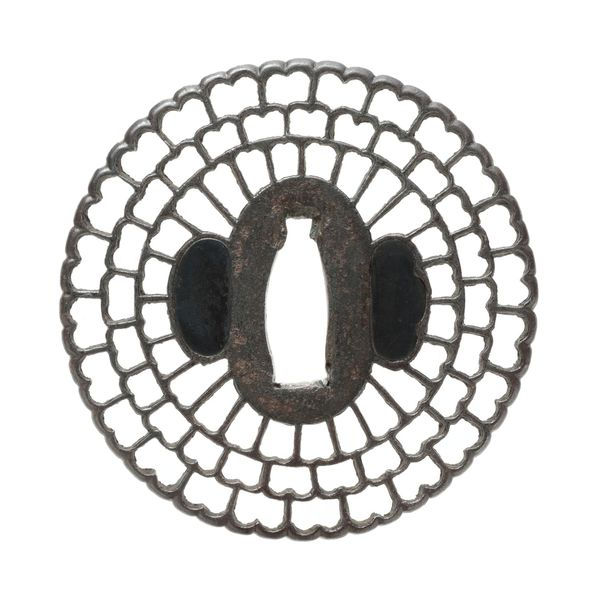
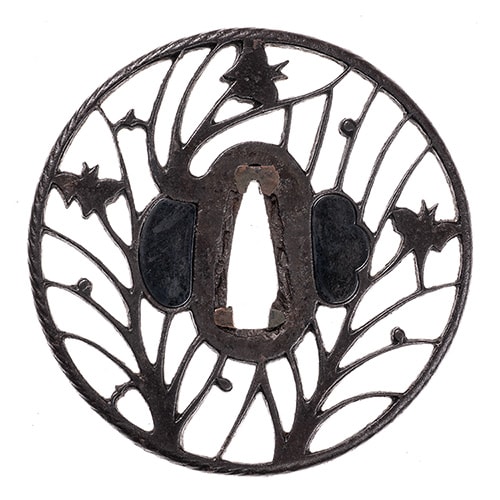
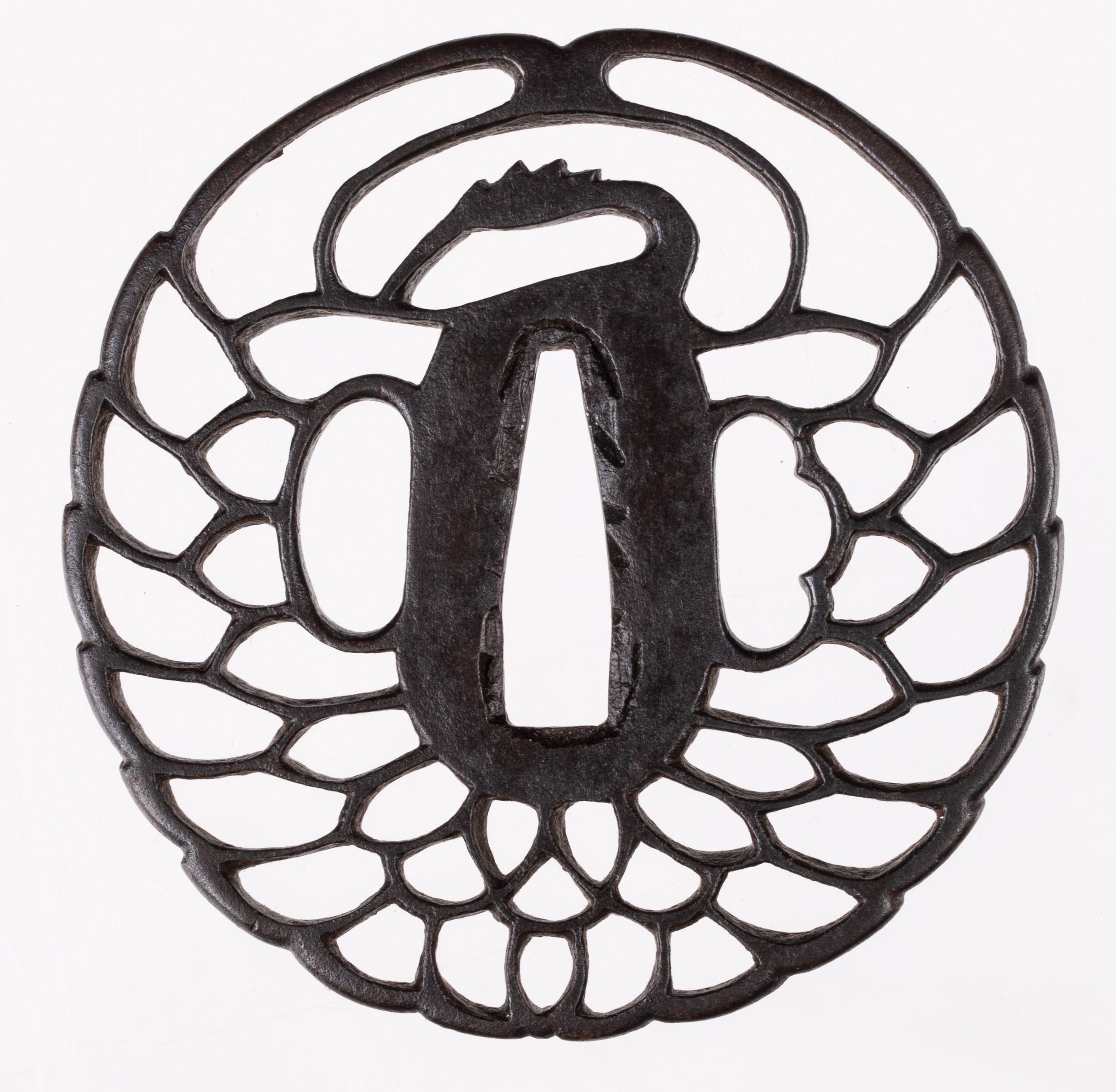
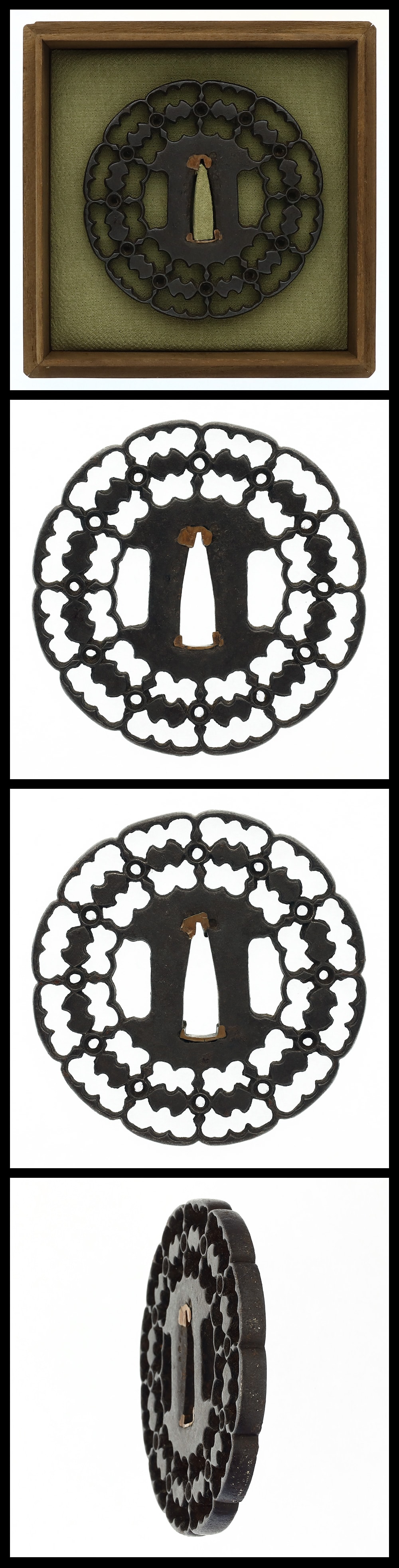
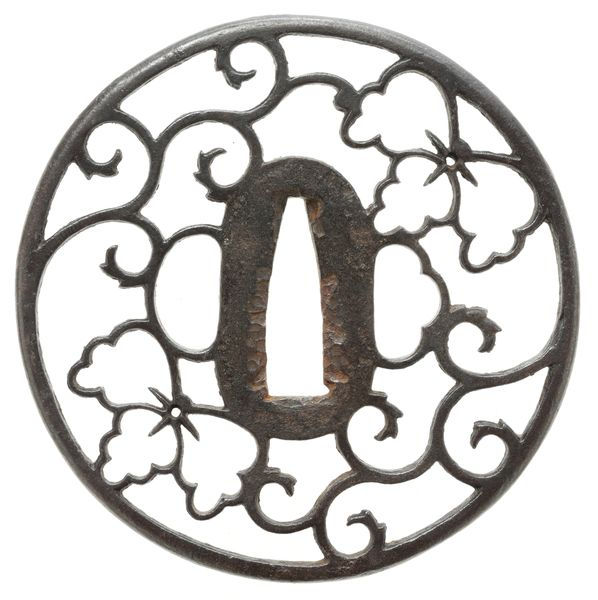
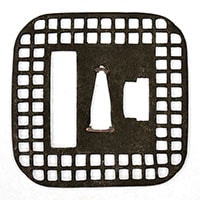
This is an unsigned tsuba from the Mid-Edo period, made of iron with an openwork design of ivy and arabesque. It features a strong, dark iron ground and is classified as Kyo-Sukashi. The tsuba is large and almost perfectly round, with a unique hard impression despite its curved composition.
 NihontoWatch
mumei · Kyo-Sukashi · Edo
Iron-tsuba · Yamashiro
We could not find an authenticity certificate on the seller’s listing. Japanese swords and fittings are normally papered by the NBTHK (or the NTHK). Without one, the attribution is the seller’s own assessment and has not been independently verified — treat it with caution and ask the dealer about certification before buying.
If, due to our fault, the item differs significantly from its proper condition, the item may be returned. Cooling-off is within one week of the item's arrival.
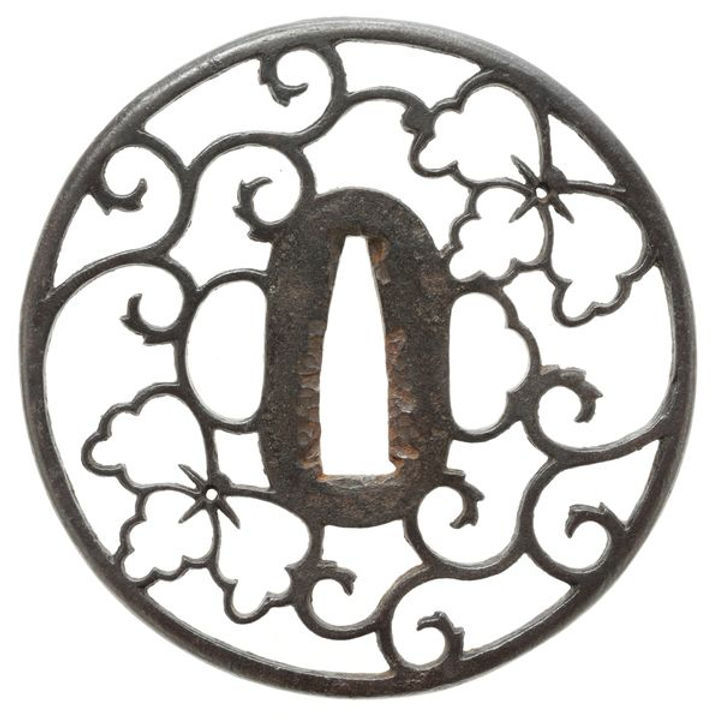
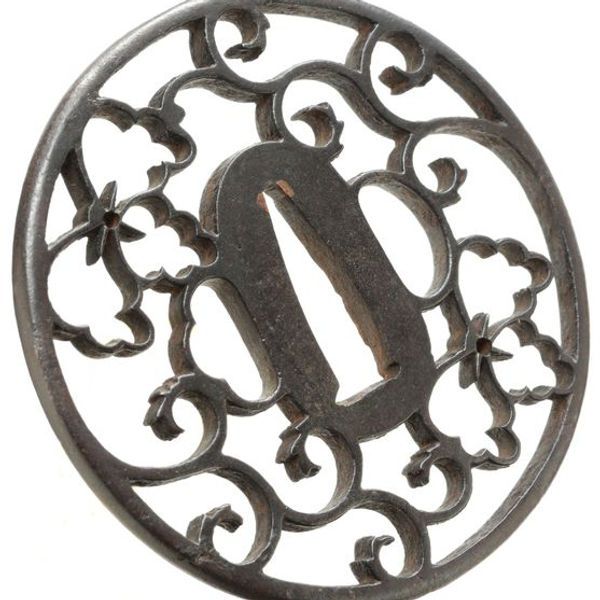
This is an unsigned tsuba from the Mid-Edo period, made of iron with an openwork design of ivy and arabesque. It features a strong, dark iron ground and is classified as Kyo-Sukashi. The tsuba is large and almost perfectly round, with a unique hard impression despite its curved composition.
NihontoWatchmumei · Kyo-Sukashi · Edo
Iron-tsuba · Yamashiro
We could not find an authenticity certificate on the seller’s listing. Japanese swords and fittings are normally papered by the NBTHK (or the NTHK). Without one, the attribution is the seller’s own assessment and has not been independently verified — treat it with caution and ask the dealer about certification before buying.
If, due to our fault, the item differs significantly from its proper condition, the item may be returned. Cooling-off is within one week of the item's arrival.