Around 1800 Suishinshi Masahide argued in his writings that the craft must return to the old masters’ methods: the fukkotō revival. His greatest successor Naotane worked convincingly in Bizen and Sōshū manners that had been dead for centuries.
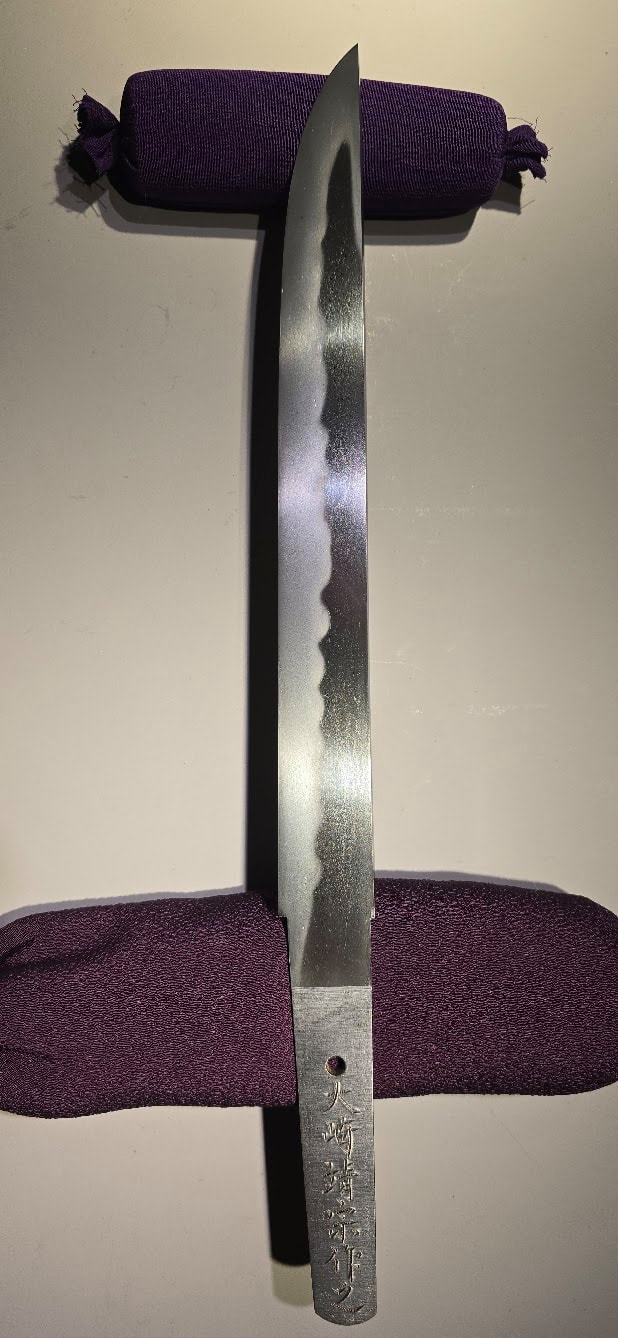
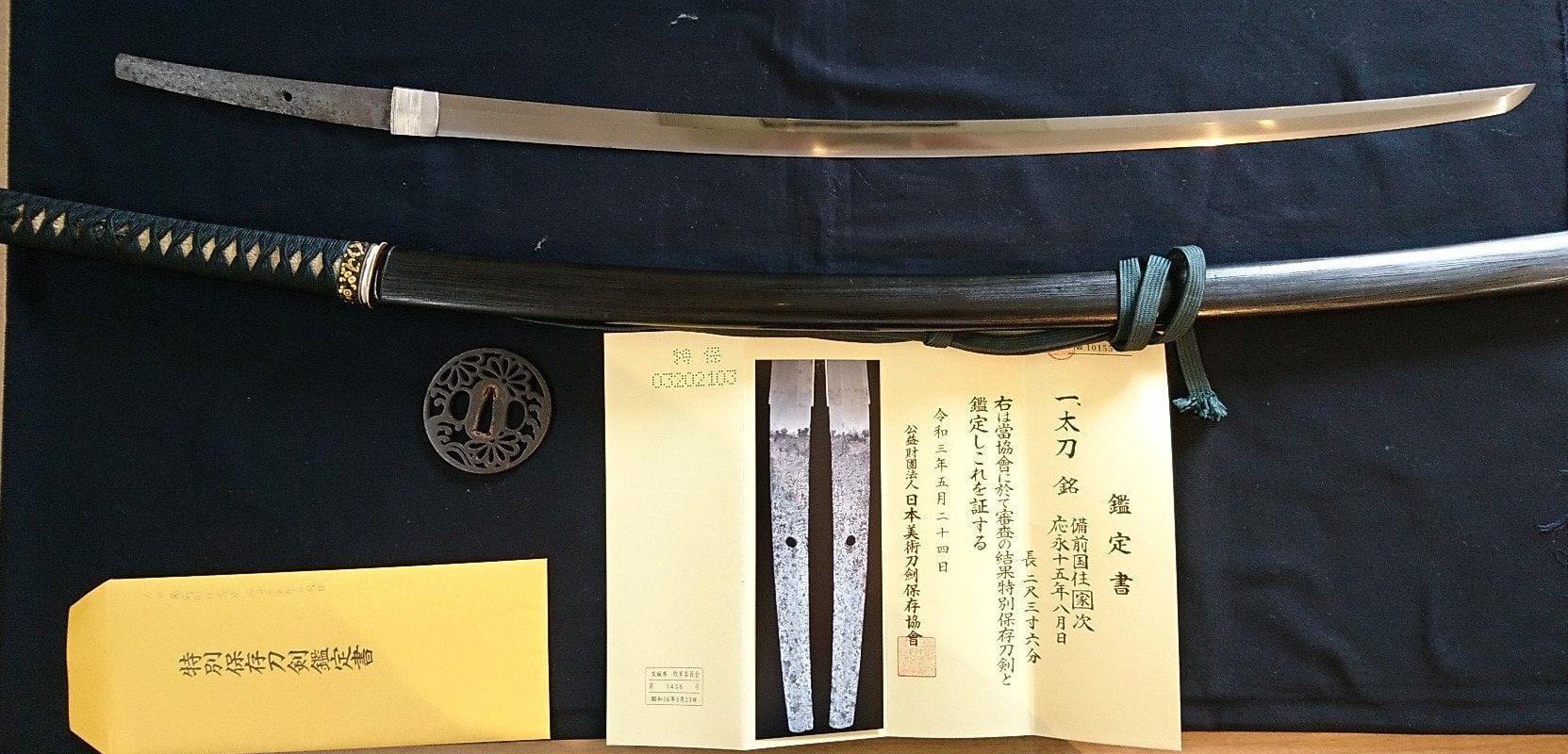
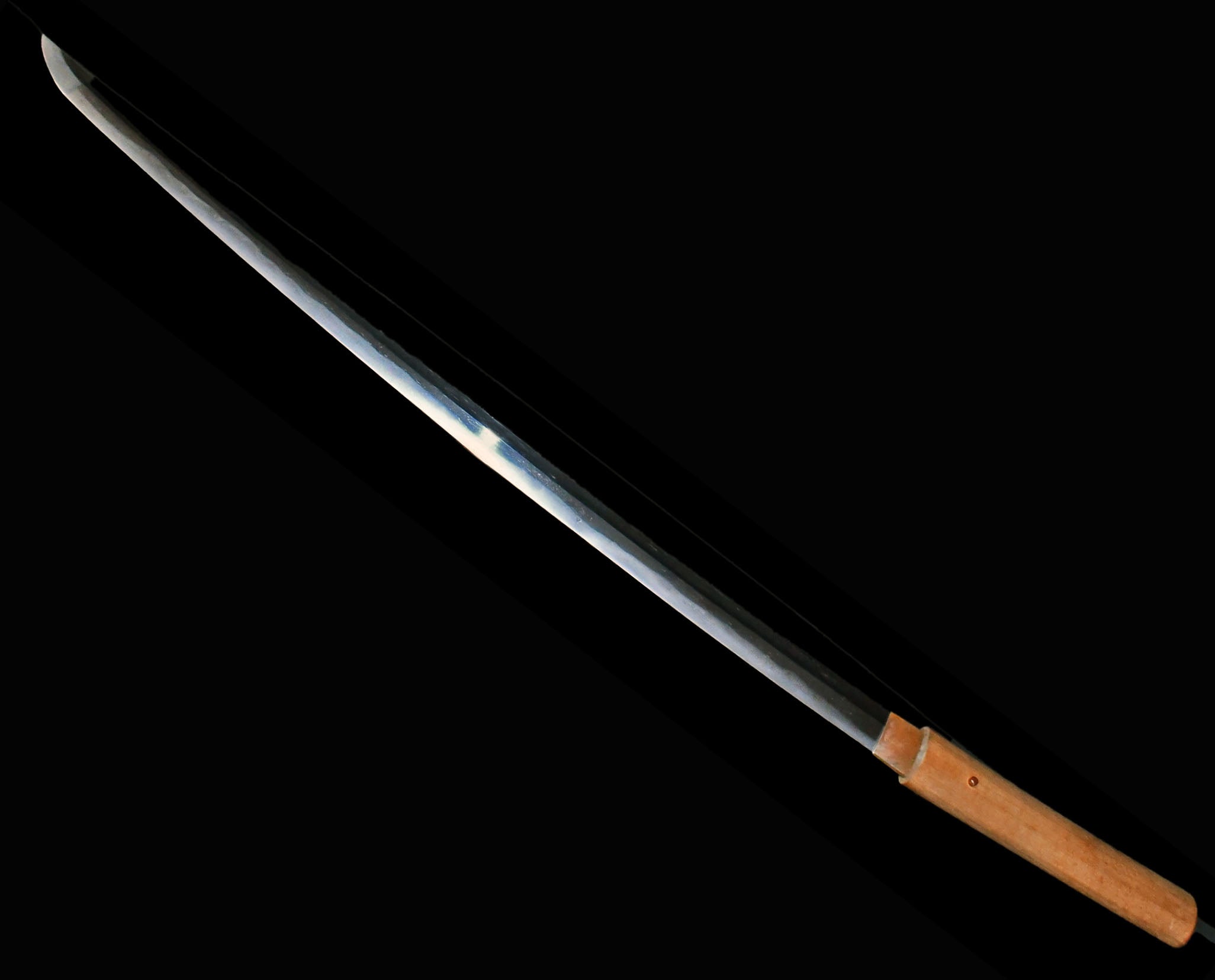
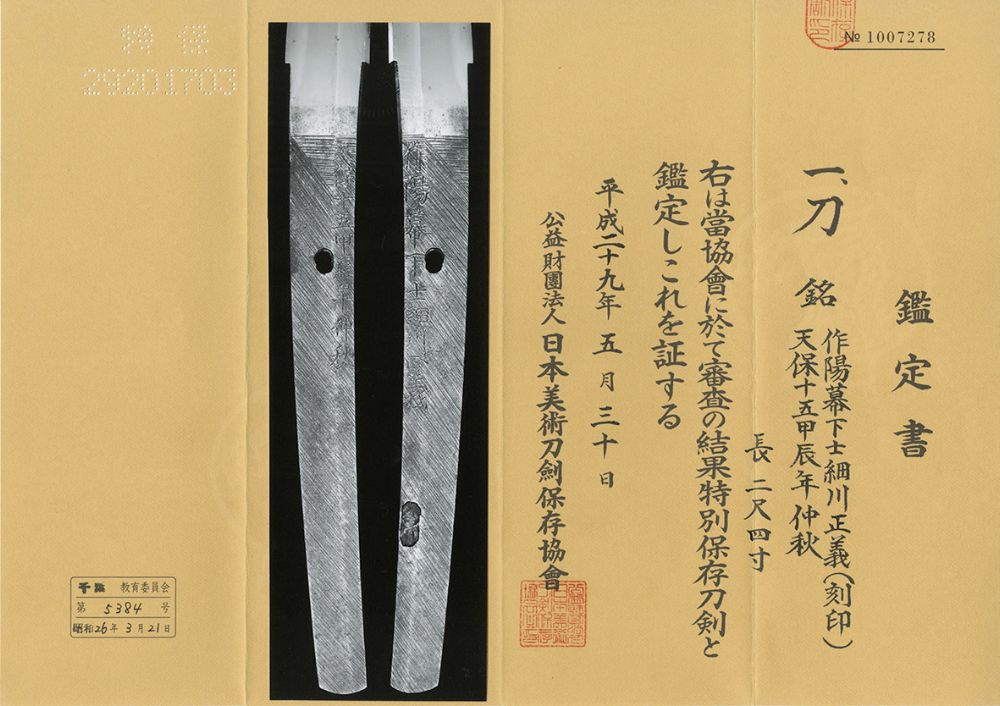
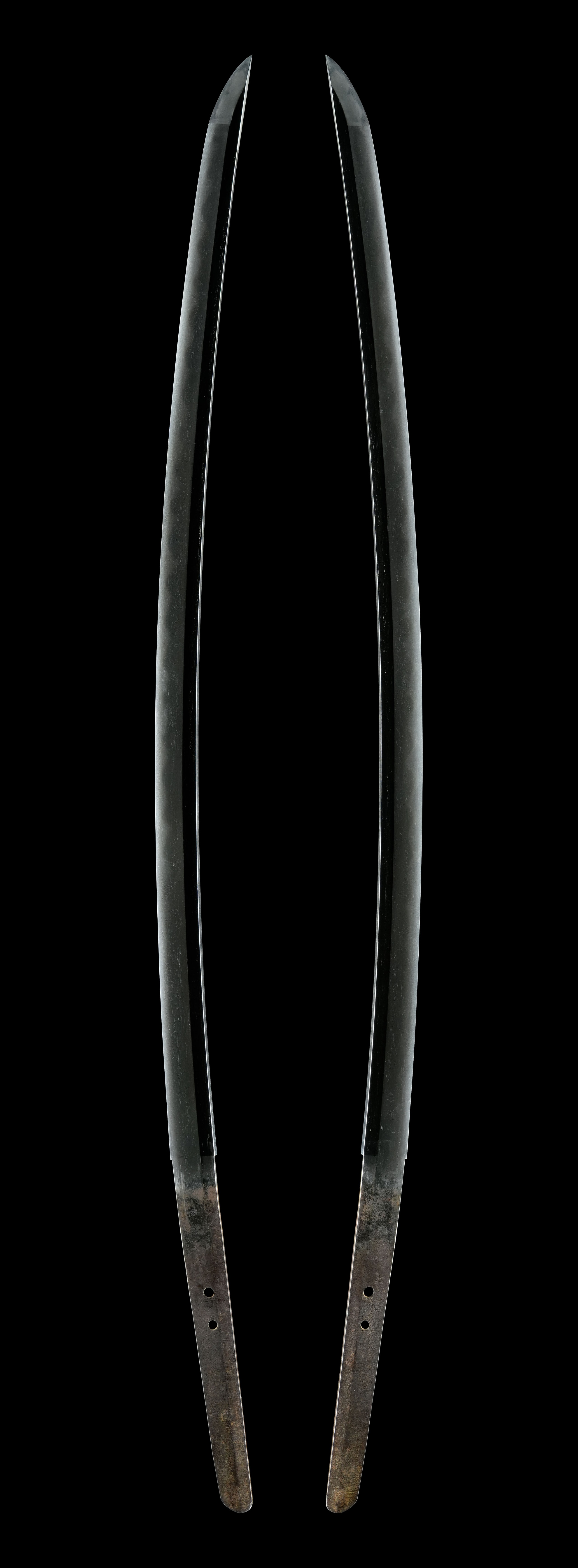
Tokubetsu Hozon Touken "Sakuyou Bakkashi Hosokawa Masayoshi Zo (Kokuin) Tempo Juugo Kinoetatsu-nen Chushu" Kuro-roiro-nuri Komainu Makie-saya Uchigatana Koshirae / Suaka Botan Shishi Iroe Shakudo Nanako Fuchigashira / Shakudo Migaki-ji Kenjo Tsuba Touken Shumbetsu: "Katana" Mei: "Sakuyou Bakkashi Hosokawa Masayoshi Zo (Kokuin) Tempo Juugo Kinoetatsu-nen Chushu" (Sakuyou Bakkashi Hosokawa Masayoshi Tempo 15th year, Year of the Wood Dragon, Mid-Autumn) Nihonto Kanteisho: "Nippon Bijutsu Token Hozon Kyokai Tokubetsu Hozon Touken" NBTHK "Tokubetsu Hozon Paper" Jidai: "Tempo 15nen" Production age: "AD1845" Hosokawa Masayoshi, known as Chikaranosuke, entered the school of Suishinshi Masahide. He first used the mei Masakata, then Morihide, and later changed it to Masayoshi. He became a hired swordsmith for the Matsudaira family, lords of the Tsuyama Domain in Sakushu. He lived and forged swords primarily in Edo and passed away in the 5th year of Ansei. He was a swordsmith who put his master Masahide's research theories into practice, serving as the de facto successor of the school and standing as a peer to Taikei Naotane. His style is broadly divided into Bizen-den and Soshu-den, with many excellent works found in Bizen-den. This katana features a kitae of tightly packed ko-itame mixed with o-hada. The hamon is a mix of ko-choji midare with juka-choji style and ko-gunome, showing an elegant yet flamboyant midare with long ashi entering actively, mixed with yo. The nioiguchi is somewhat deep, well-covered in ko-nie, with sunagashira appearing. This is a representative Bizen-den work of his, skillfully firing his specialty choji midare. Although the patterns are small, the flamboyant appearance mixed with juka-choji is exactly as described in the "Shinto Mei Shuroku" as "choji midare overlapping like double-layered cherry blossoms," fully demonstrating the smith's true ability. Furthermore, his personal habits can be seen in the slightly angular heads of the choji and the way the yaki-gashira press closely together. The healthy, long sugata is desirable, and with no flaws seen in the ji-ba, it is a masterpiece of Masayoshi's satisfaction. "Keijo": Shinogi-zukuri, iori-mune, long nagasa, high shinogi, thick kasane, with fumbari-gokoro and deep sori. "Kitae": Ko-itame hada packed with o-itame hada mixed, jinie attached thickly and minutely, fine chikei enters. "Hamon": Ko-choji midare mixed with juka-choji and ko-gunome, flamboyant, long ashi enters actively, mixed with yo, nioiguchi somewhat deep, well-covered in ko-nie, sunagashira appears. "Boshi": Yaki-taka midare-komi, deep nie, returning in ko-maru with a jizo-style. "Nakago": Ubu, tip is kurijiri with a slight ha-agari-gokoro, yasurime is o-sujikai with kesho, one mekugi-ana. "Tsuke": Shirasaya "Size" Nagasa: 72.7 cm, Sori: 1.7 cm, Moto-haba: 3 cm, Saki-haba: 1.9 cm, Moto-kasane: 0.8 cm, Saki-kasane: 0.55 cm
 NihontoWatch
signed · Bizen · Shin-Shinto · nagasa 72.7cm · sori 1.7cm








The Shinshintō revival
Around 1800 Suishinshi Masahide argued in his writings that the craft must return to the old masters’ methods: the fukkotō revival. His greatest successor Naotane worked convincingly in Bizen and Sōshū manners that had been dead for centuries.
A Hozon-certified blade judged to show notably superior workmanship and a better state of preservation. The bar is higher: re-tempered blades and most unsigned Muromachi/Edo works are excluded.
The NBTHK (Nihon Bijutsu Tōken Hozon Kyōkai, the Society for the Preservation of Japanese Art Swords) is a public-interest incorporated foundation founded in 1948 and supervised by Japan’s Agency for Cultural Affairs (Bunkachō); it is based at the Japanese Sword Museum in Tokyo. Its expert panels physically examine each submitted work (shinsa) and issue a certificate (kanteishō) ranking it by artistic and historical merit. NBTHK papers are the most widely recognized standard of authentication for Japanese swords and fittings.
NBTHK official siteWhen the item reaches you, please check immediately for damage and that it matches your order. We bear the shipping cost for a return; please send it freight-collect. Costs other than the item price cannot be refunded.
 Koshirae