
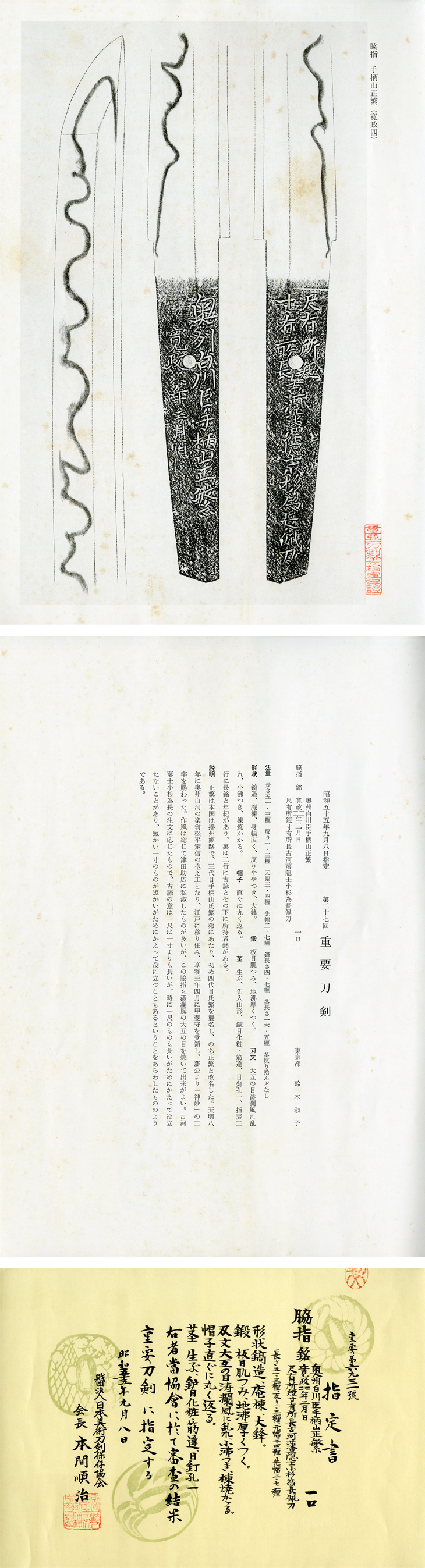
-, 27th Session — Designated September 8, 1980
, : Tegarayama Masashige (正繁)
Measurements 51.3 cm, 1.3 cm, 3.4 cm, 2.7 cm, 4.7 cm, 16.5 cm, almost none
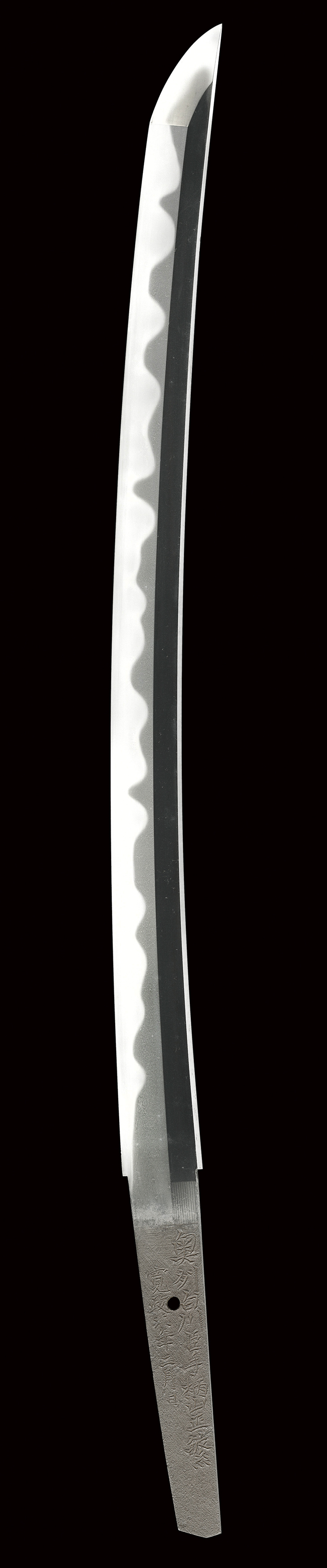
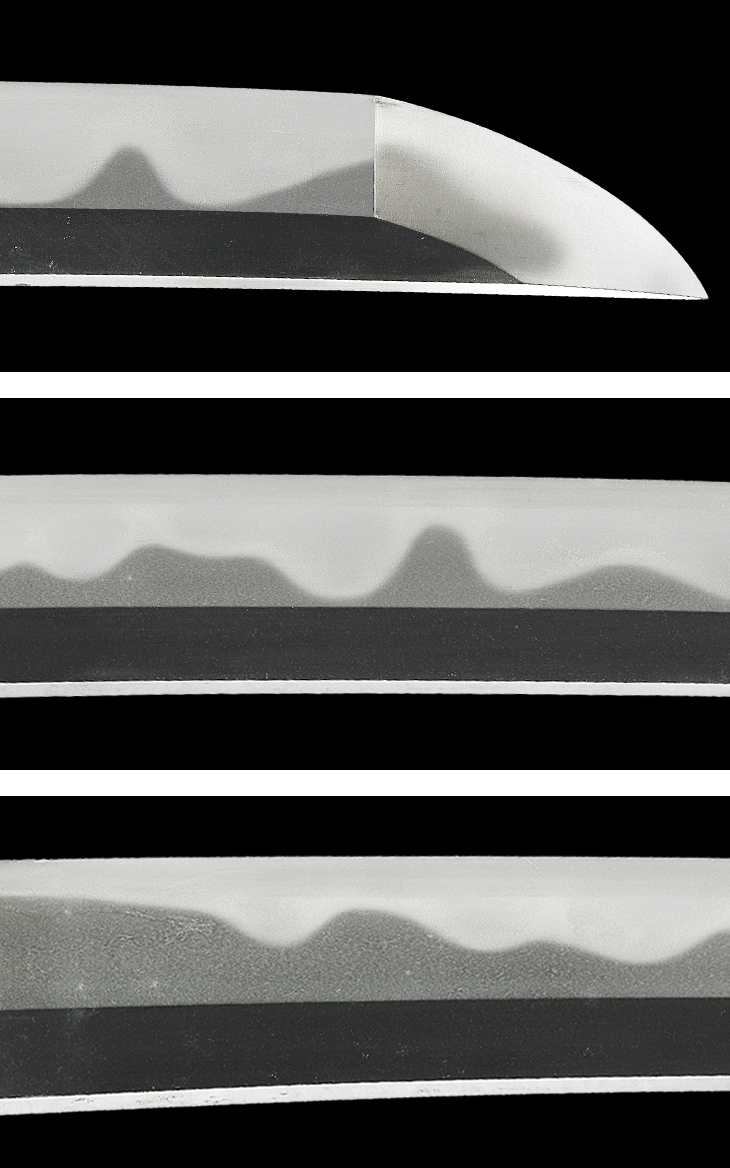
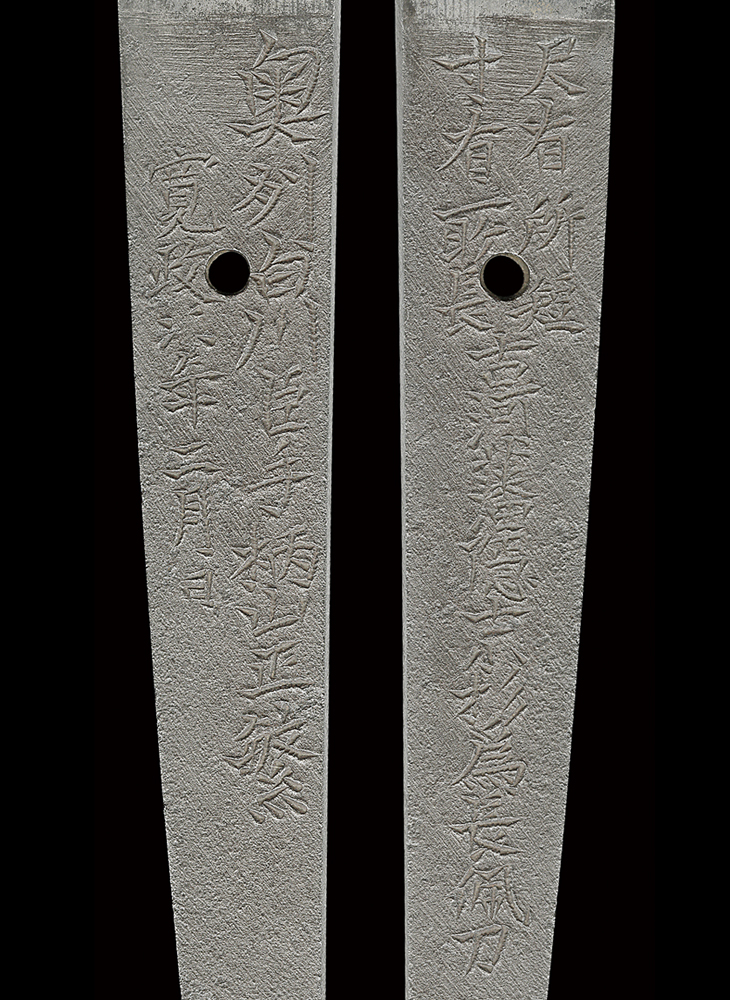
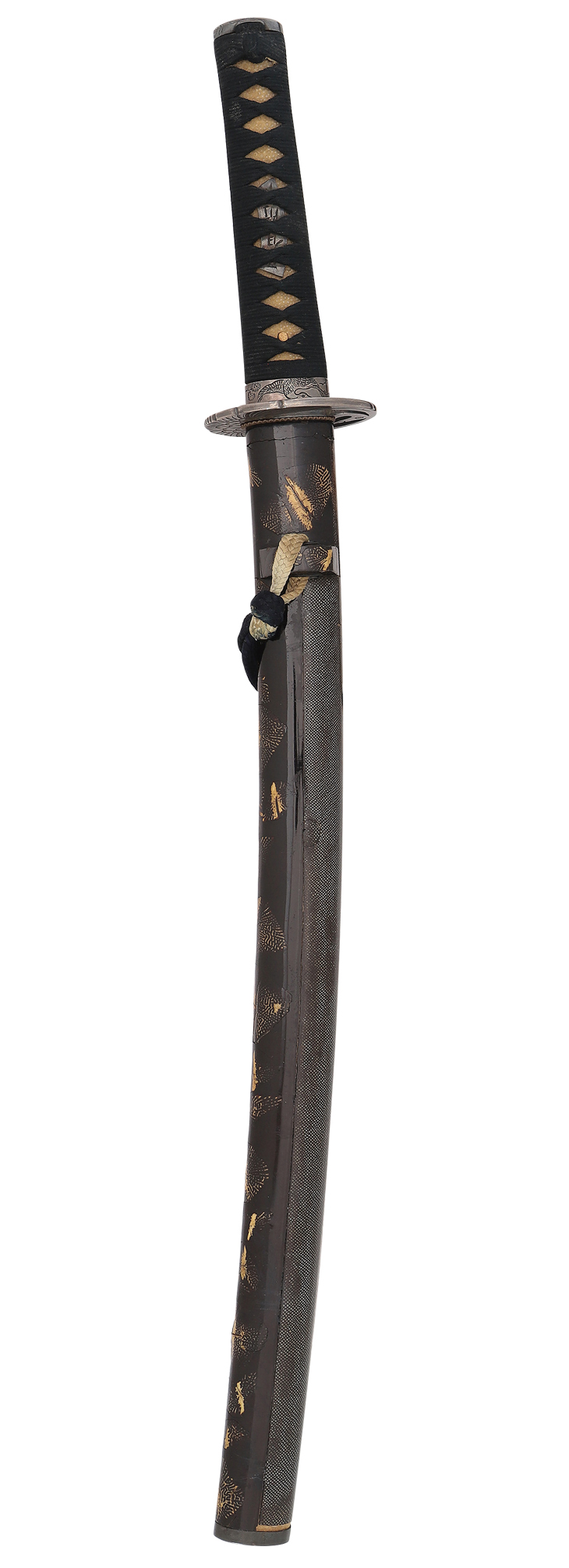
Description Keijō: , ; wide , somewhat curved, with an . : Dense ; abundant adheres thickly. : Large in a tōran-like (“surging-waves”) pattern; ; with appearing. : Straight, turning back in a rounded manner. : None. : ; tip; filemarks are and ; one . On the , a long two-line signature and date inscription; on the reverse, a two-line old proverb, and beneath it an ownership inscription.
Artisan Tegarayama Masashige (正繁)
Era , Kansei era (late period)
Explanation Masashige’s native province was Harima (Himeji). He was the younger brother of the third-generation Tegarayama Ujishige, and at first he succeeded to the name of the fourth-generation Ujishige; later he changed his name to Masashige. In Tenmei 8 (1788), he became a retained smith (kakae-kō) of Rakūō Matsudaira Sadanobu in Shirakawa, Ōshū, and thereafter moved to . In the fourth month of Kyōwa 3 (1803) he received the title no Kami, and was granted by his lord the two characters “Shinmyō” (“devout/faithful”).
In terms of workmanship, his style on the whole often shows a personal admiration for Tsuda Sukehiro; this likewise forges a tōran-like pattern of large , and its overall workmanship is good. It was made in response to an order from Kosugi Tamenaga, a retainer of the domain. The sense of the old proverb seems to be as follows: although a may be longer than a , there are times when something of a —precisely because it is long—proves instead to be of no use, whereas something of only a —precisely because it is short—may prove useful.