The divided-courts war impoverished the court society that had sustained Kyōto’s most refined work. With the last Rai masters the classic line effectively closed, while Hasebe and Nobukuni carried the new Sōshū manner into the capital.
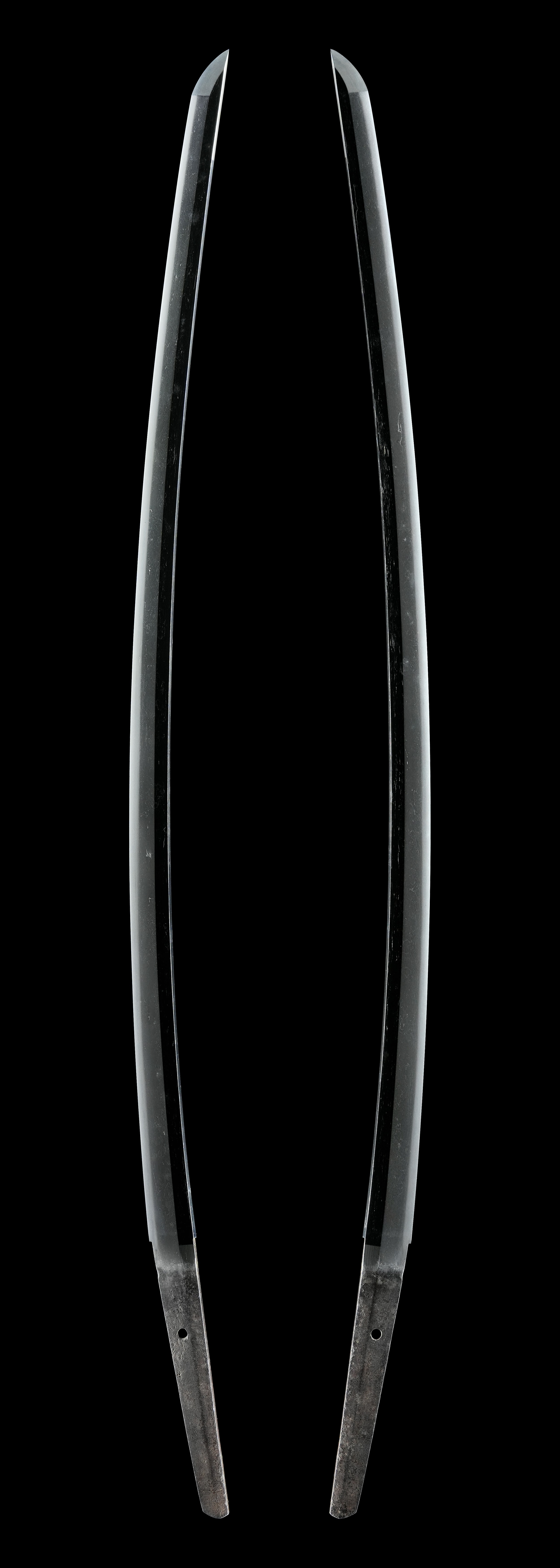
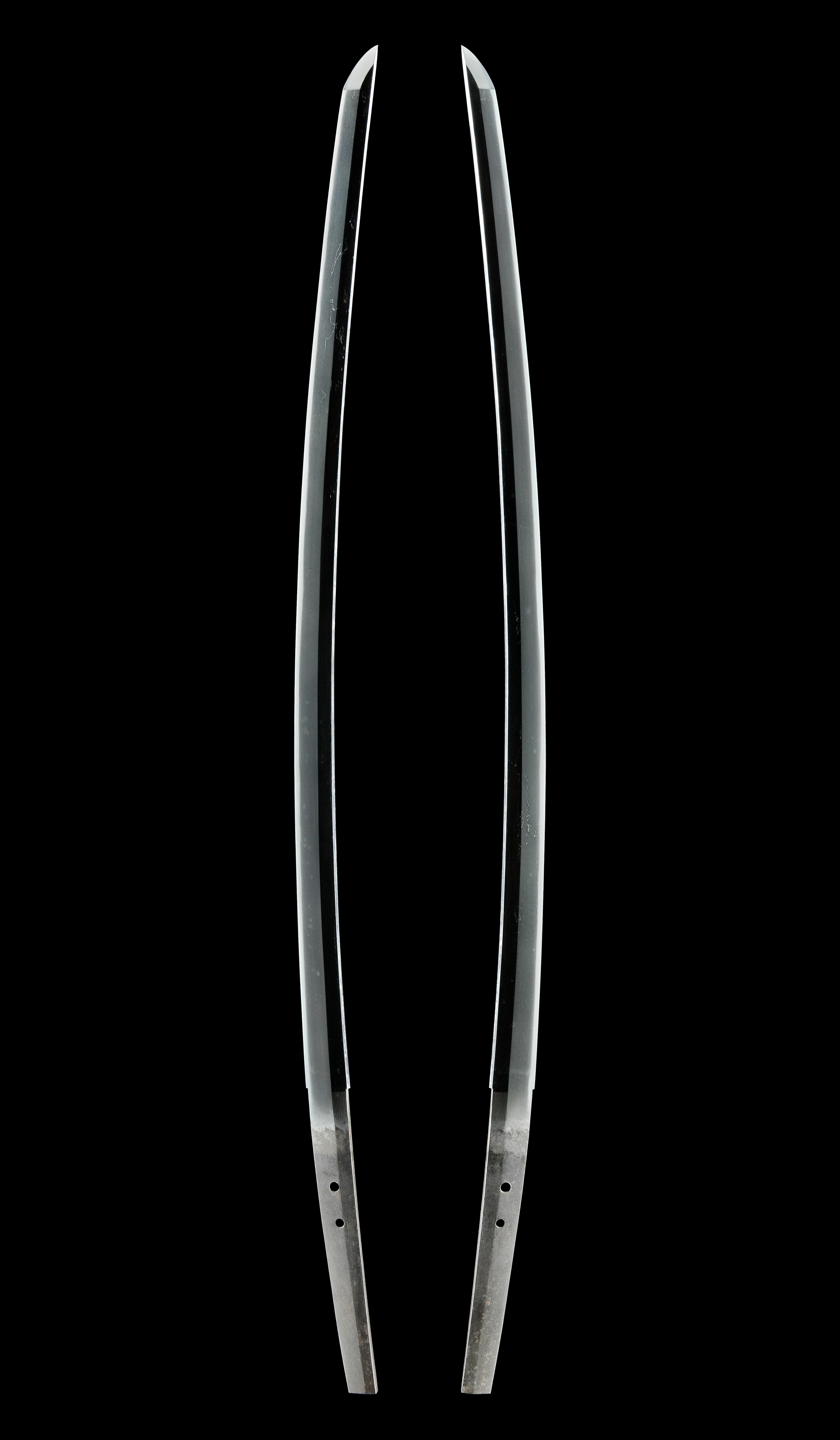
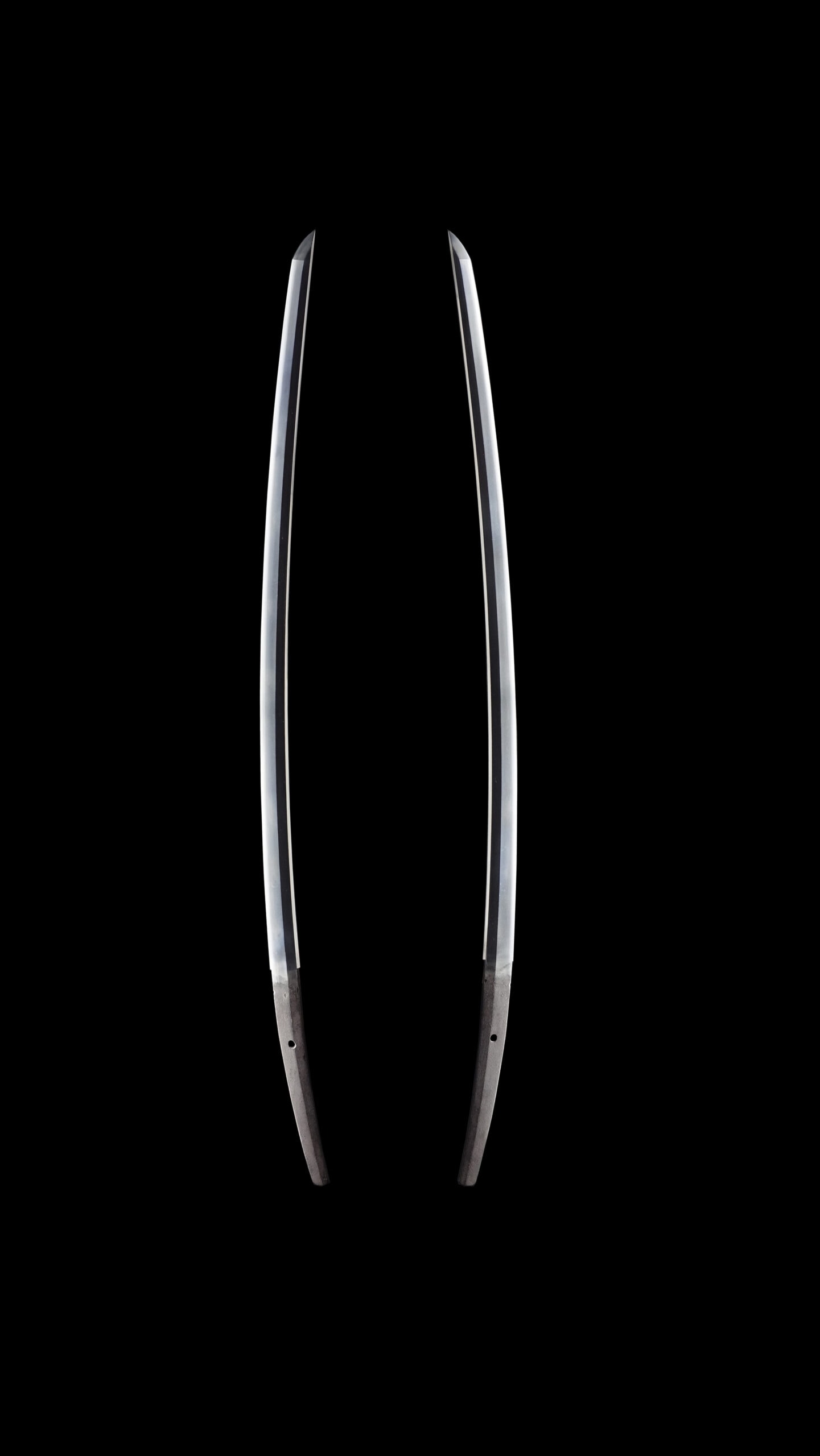
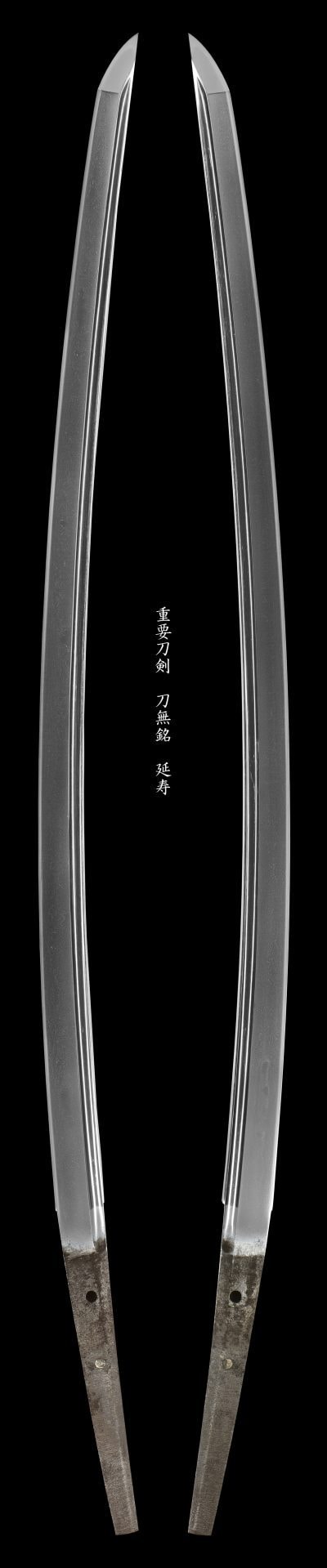
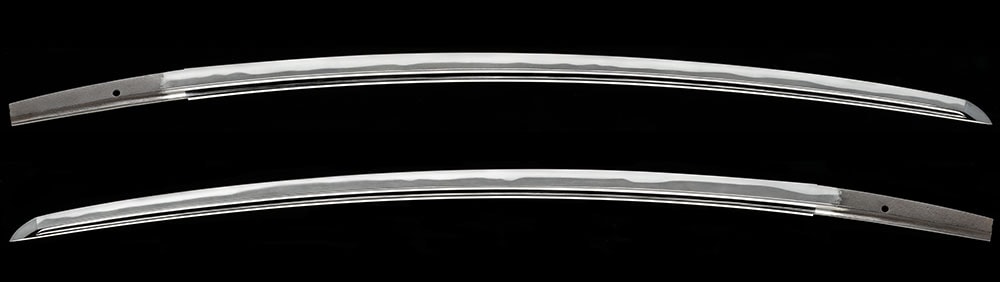
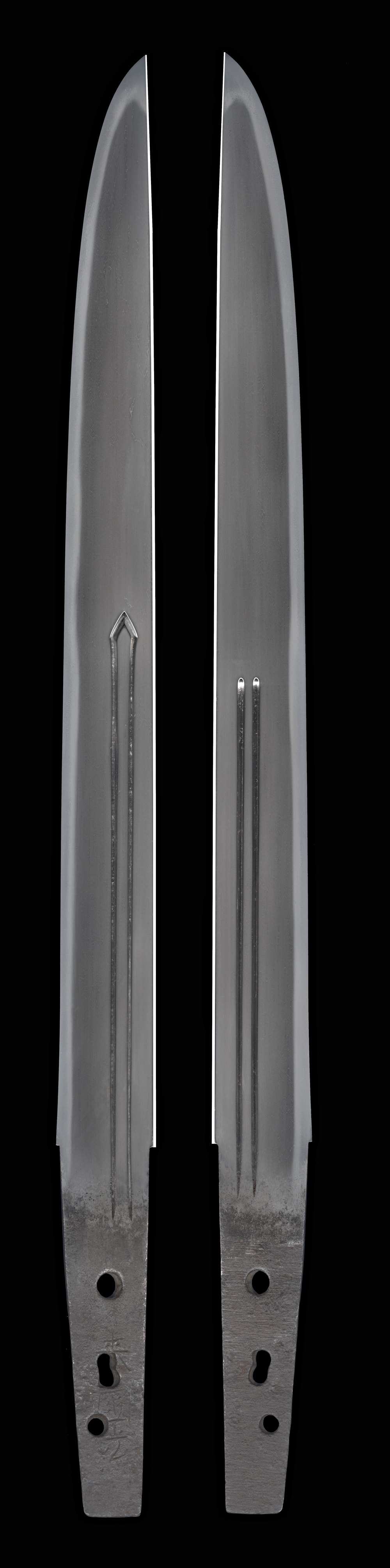
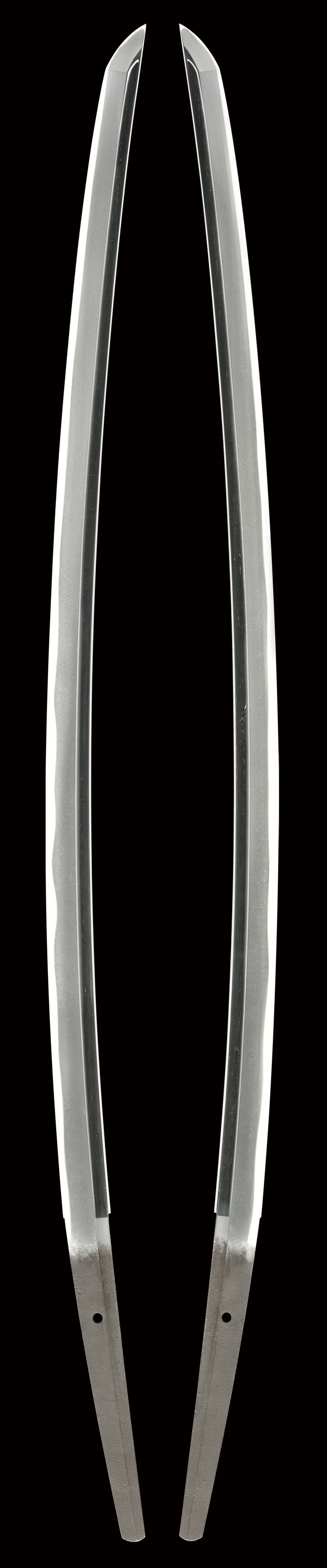
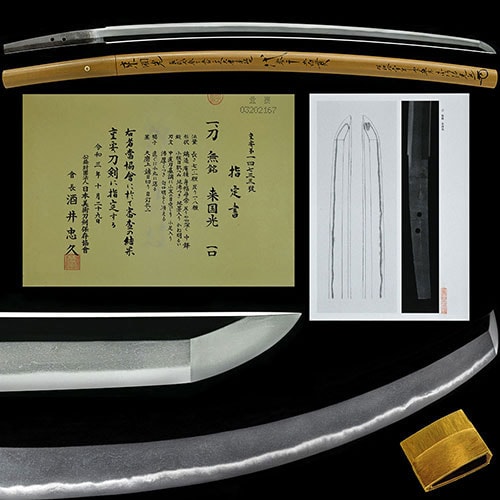
This katana is attributed to Enjyu Kuniyoshi, a smith from the prestigious Enjyu school that flourished in Higo province during the late Kamakura to Nanbokucho periods. The blade features a Shumei (red inscription) by Hon-Ami Tenrai, a renowned appraiser. It comes with a full koshirae mounting and an NBTHK Tokubetsu Hozon certificate.
Certificate reading — 無銘(延寿国吉)
 NihontoWatch
mumei · Enjyu · Bunna (1352-1356) ND · nagasa 69.7cm · sori 1.9cm
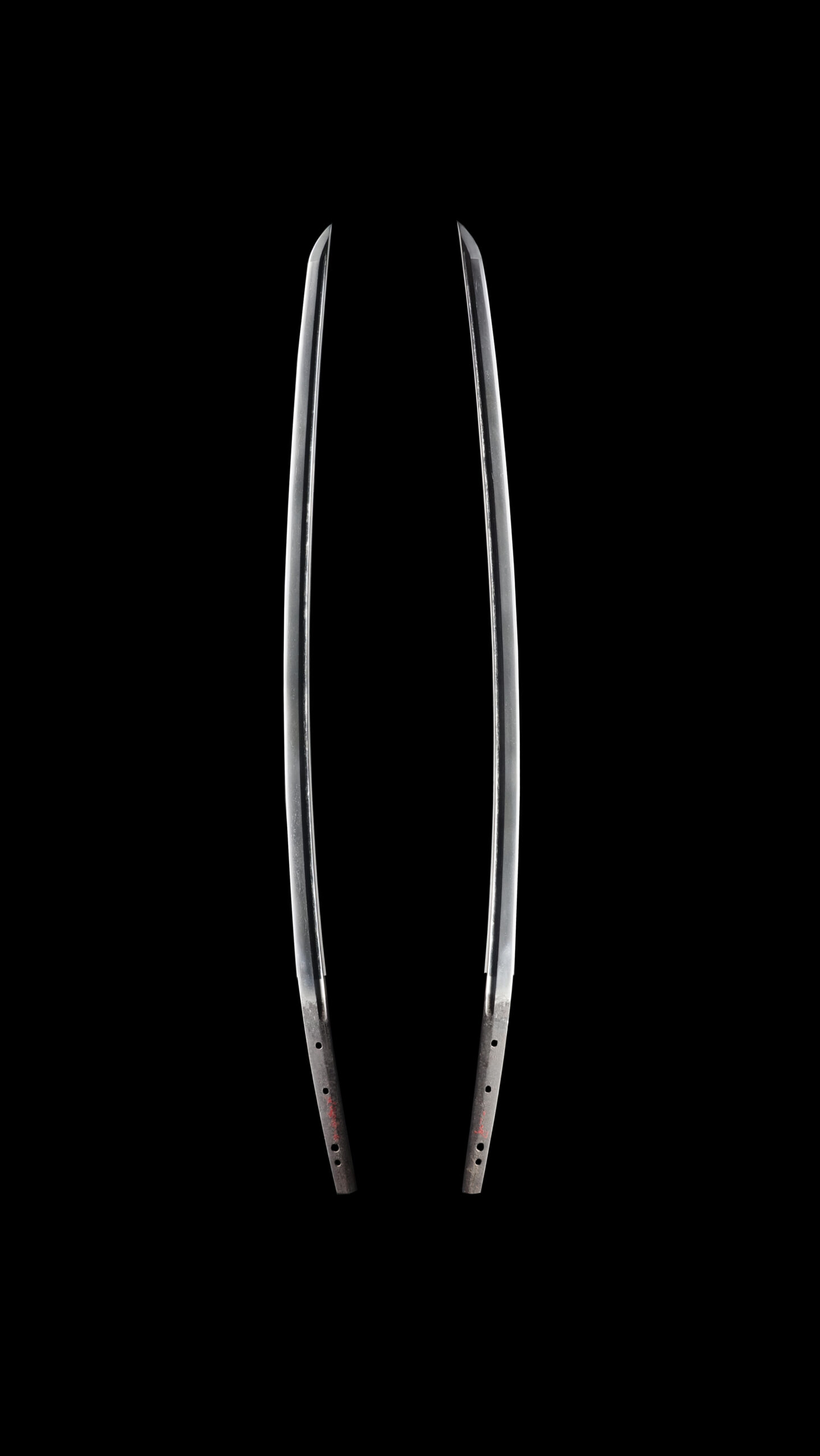
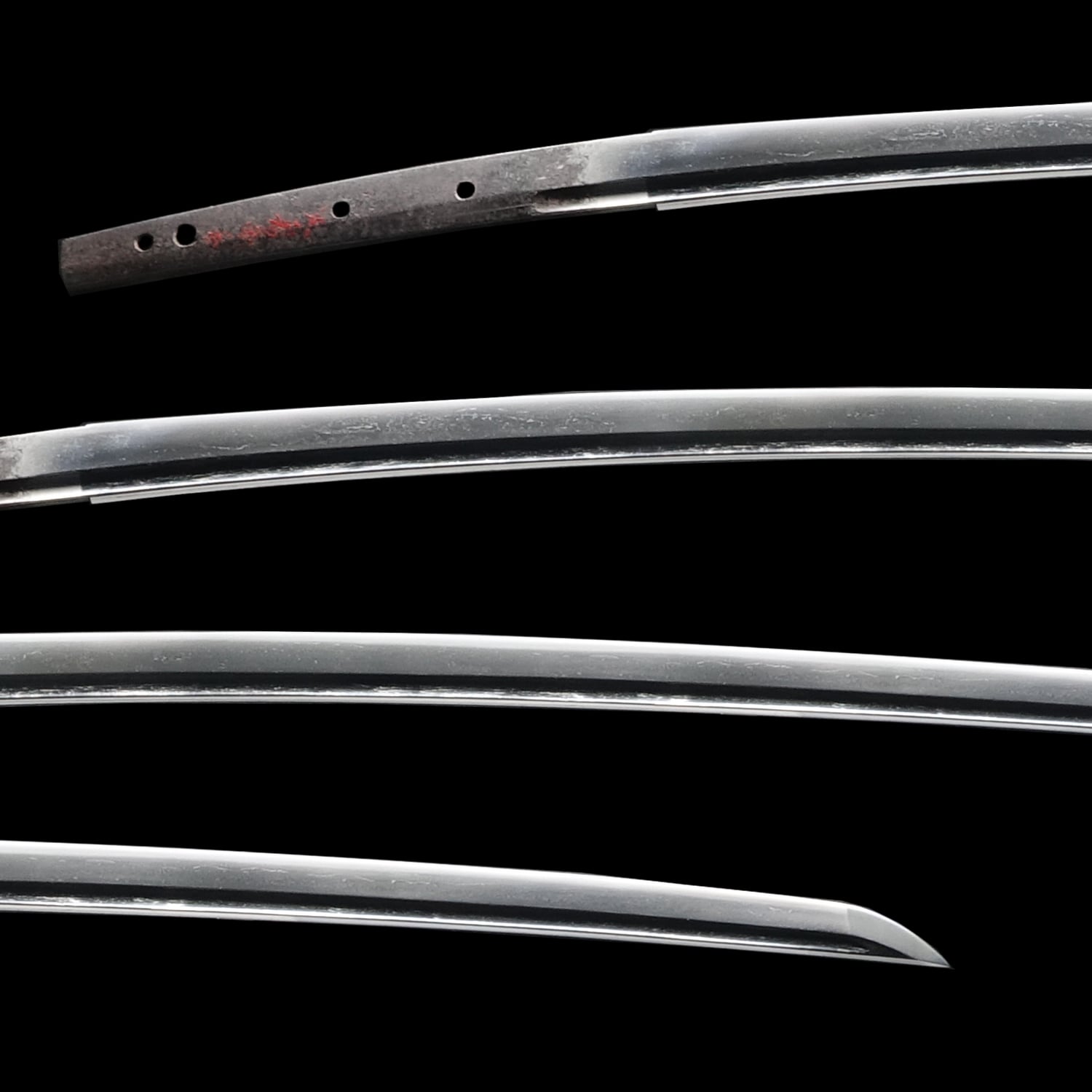
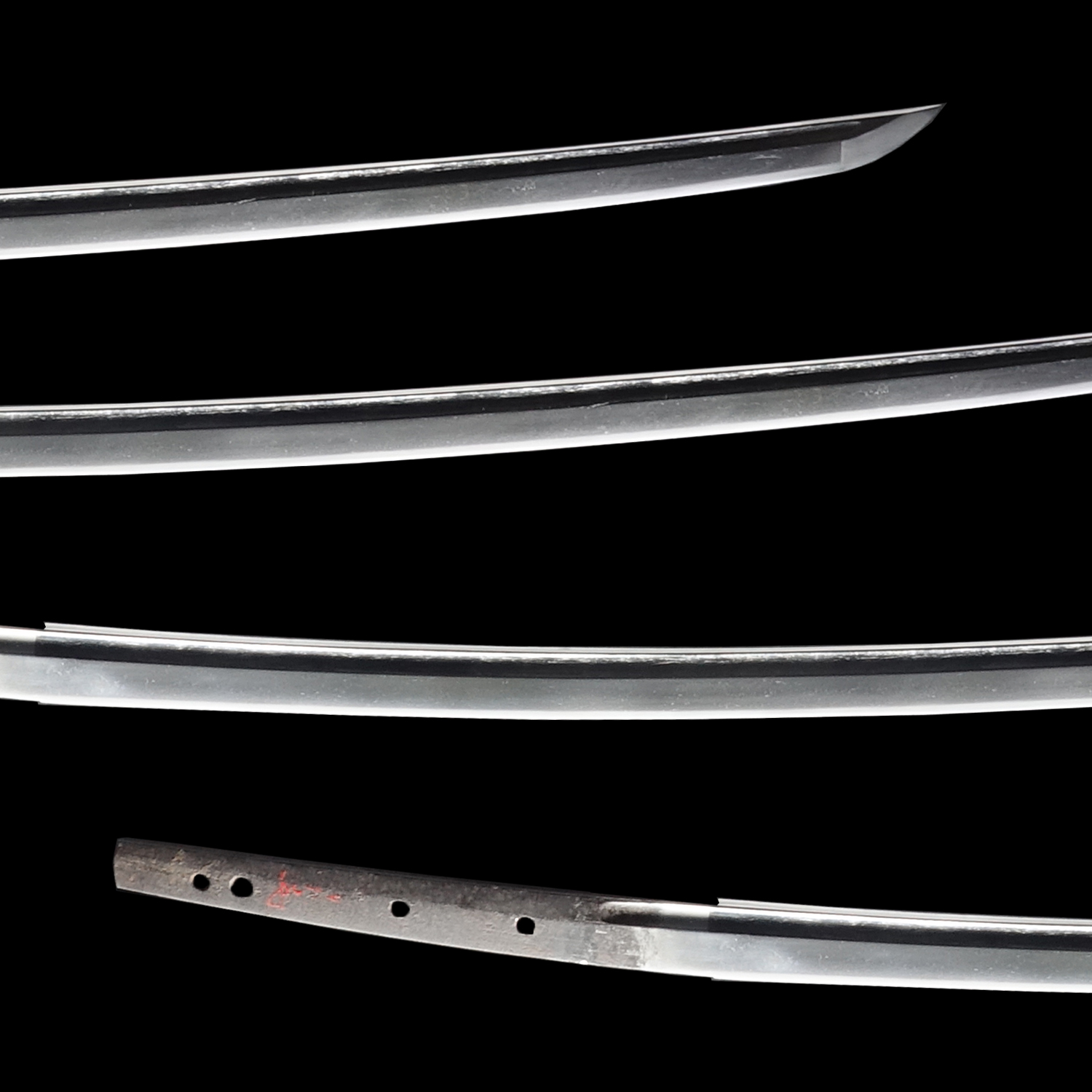
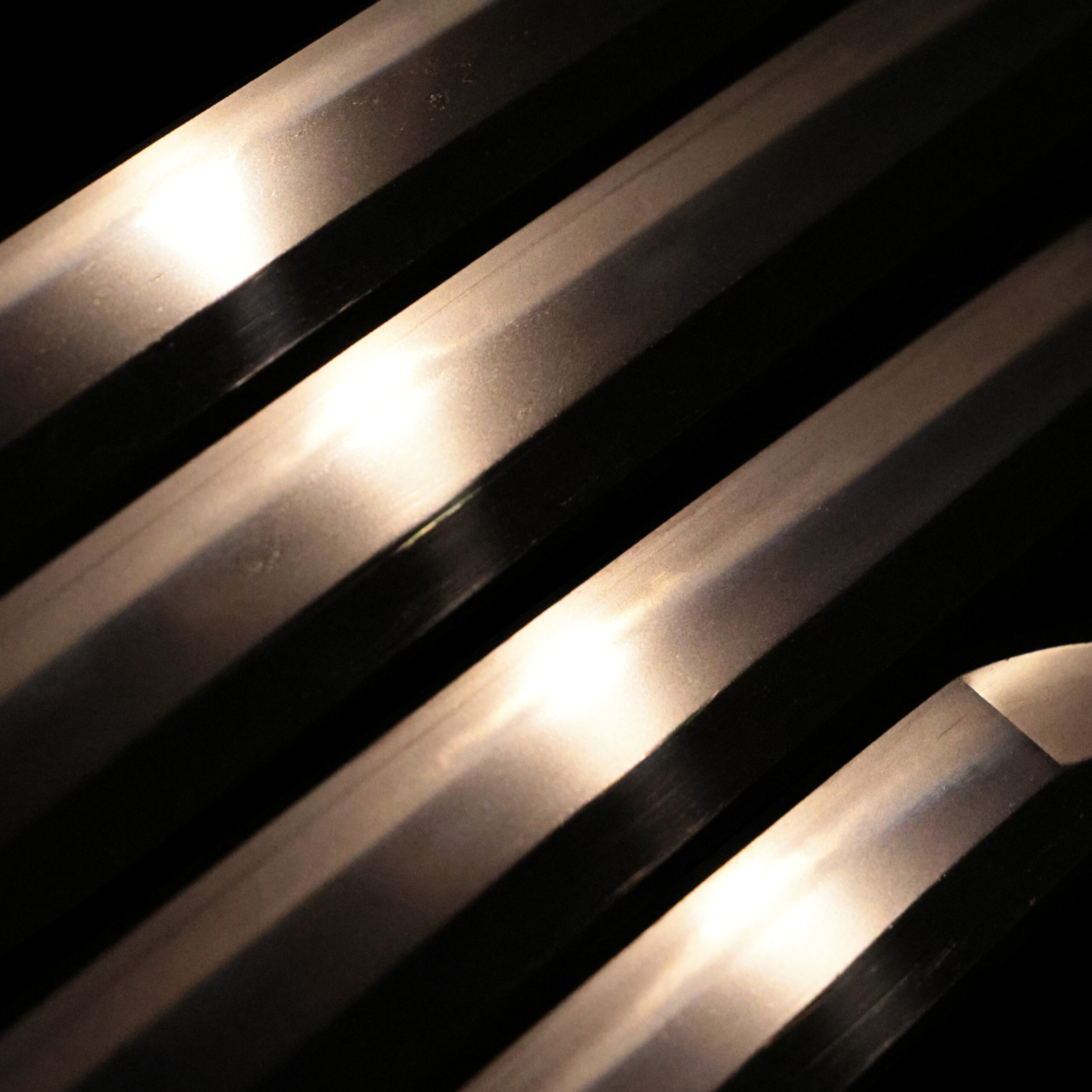
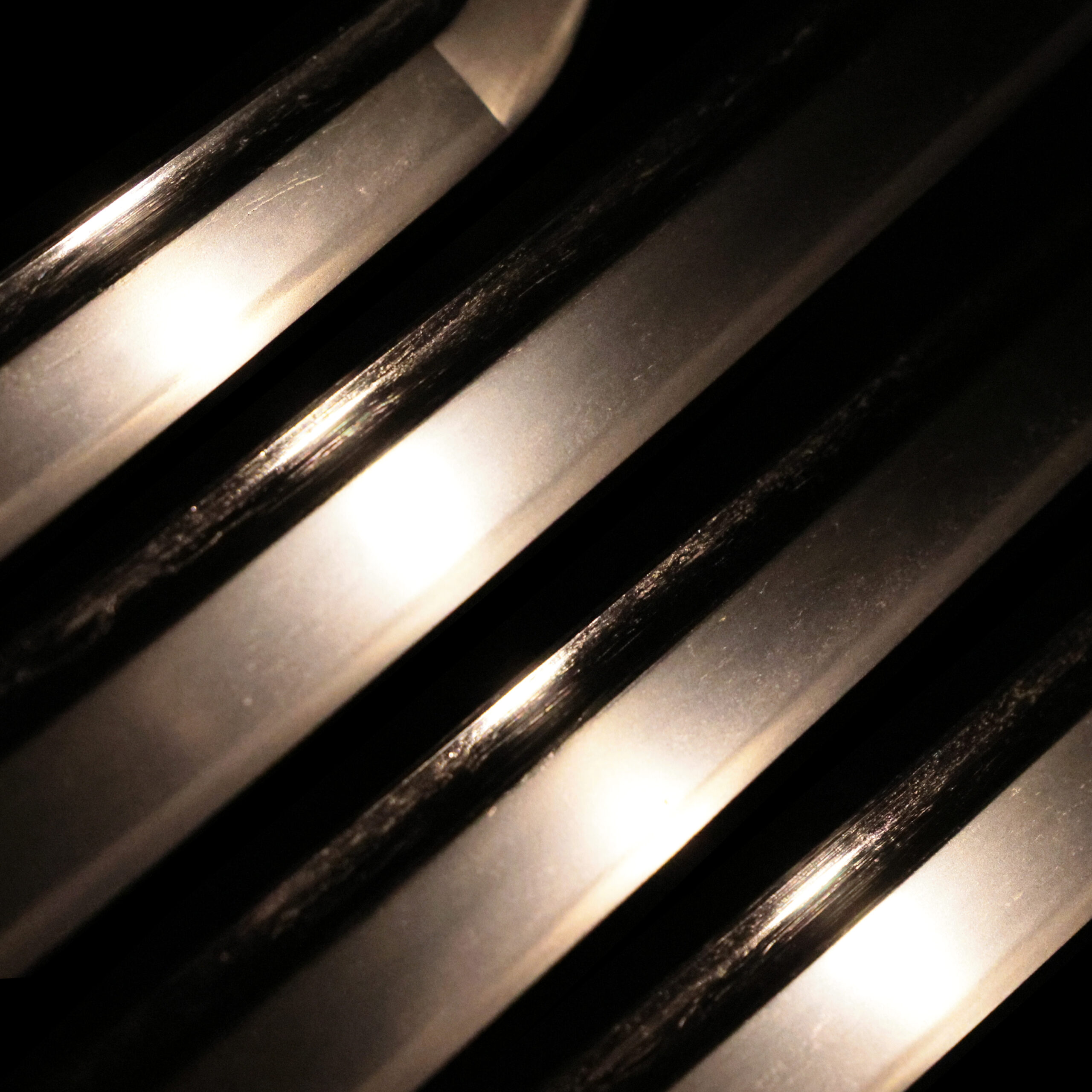
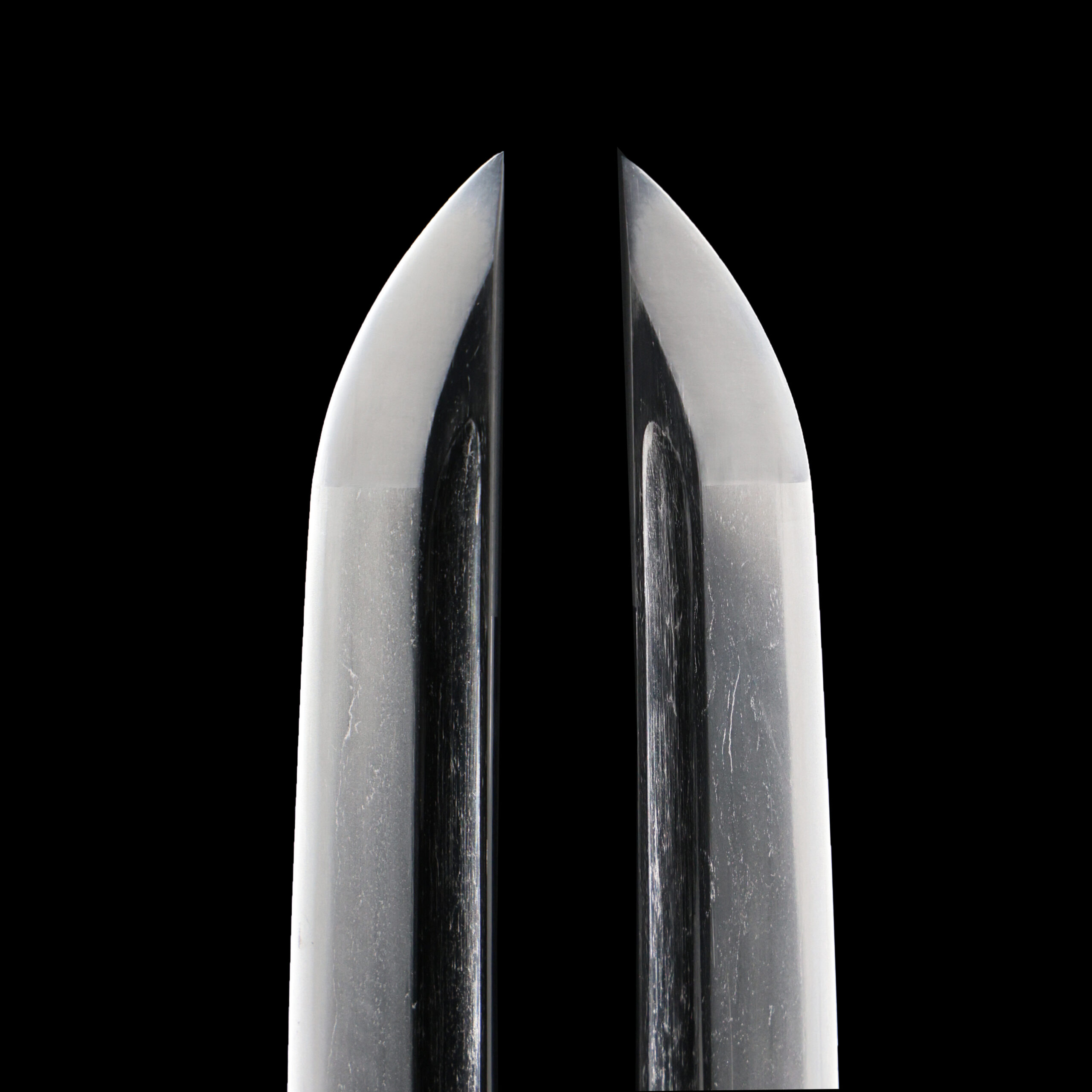
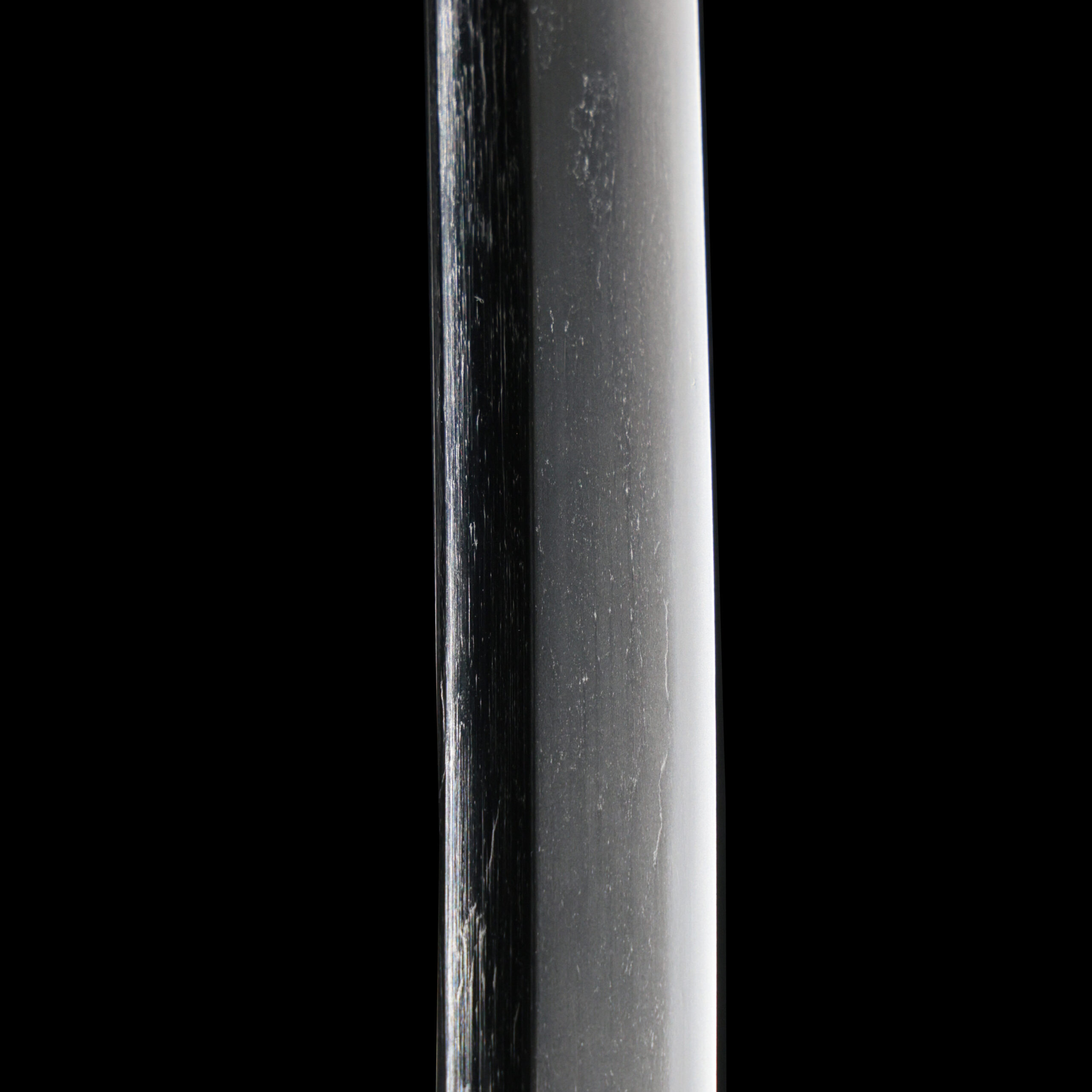
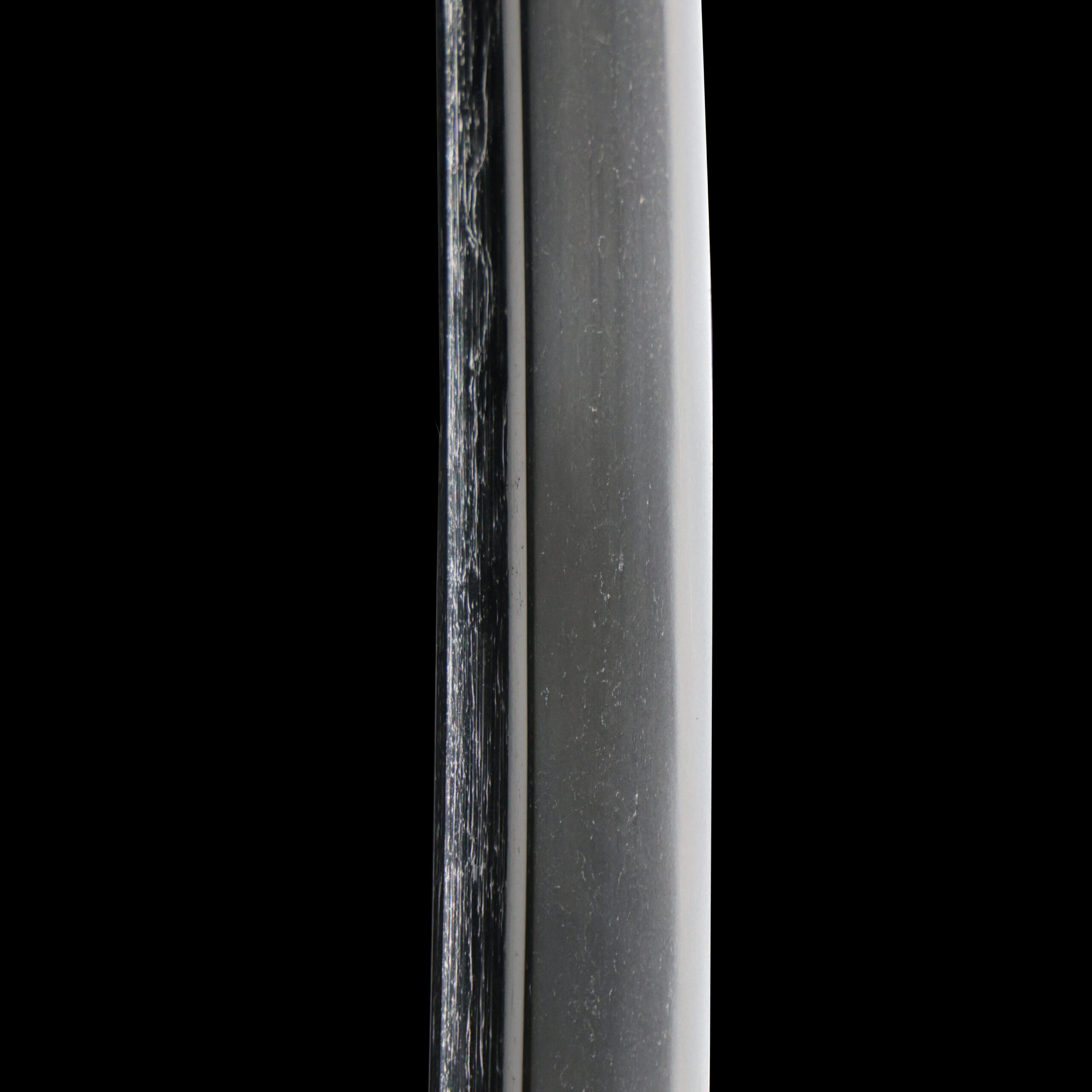
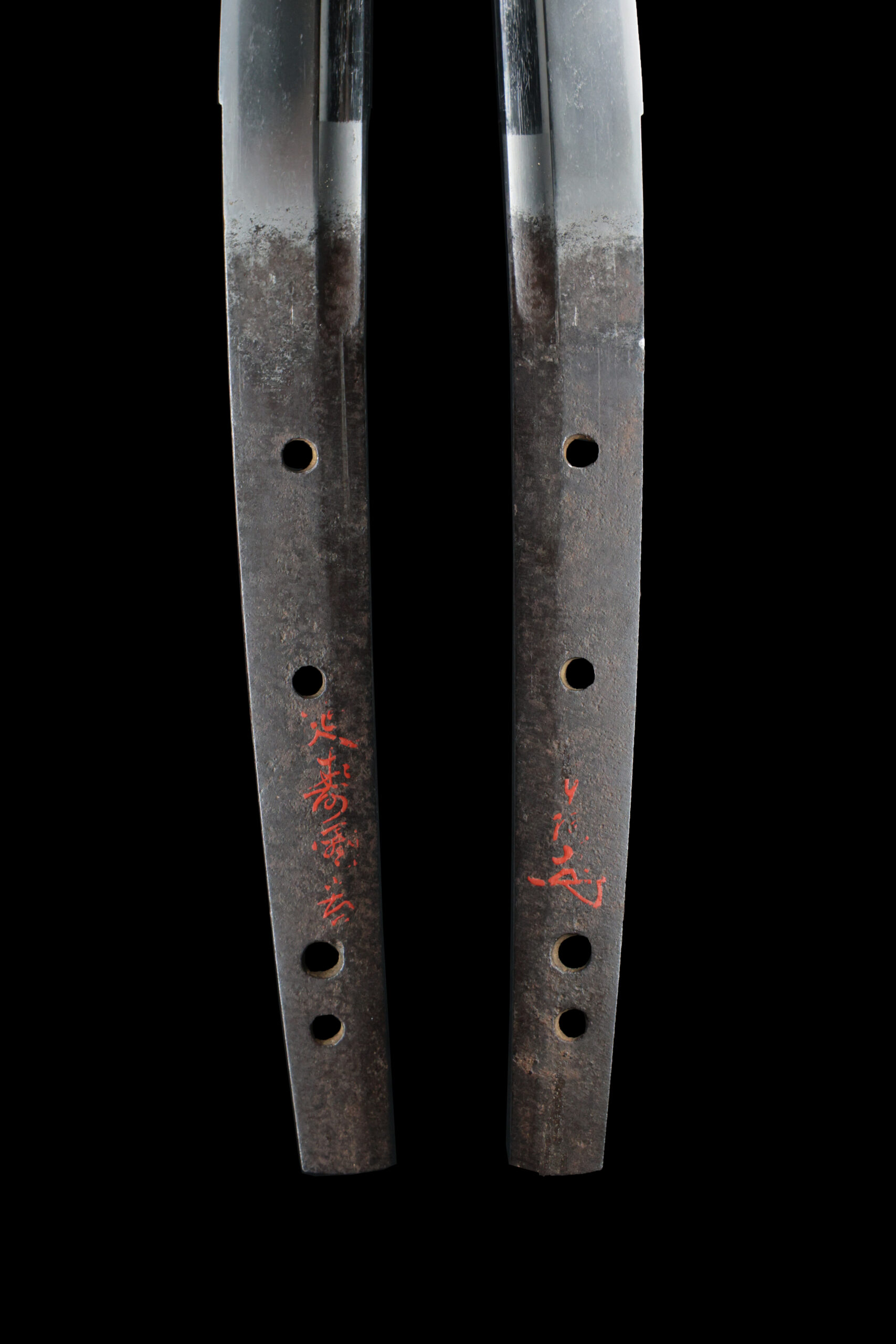
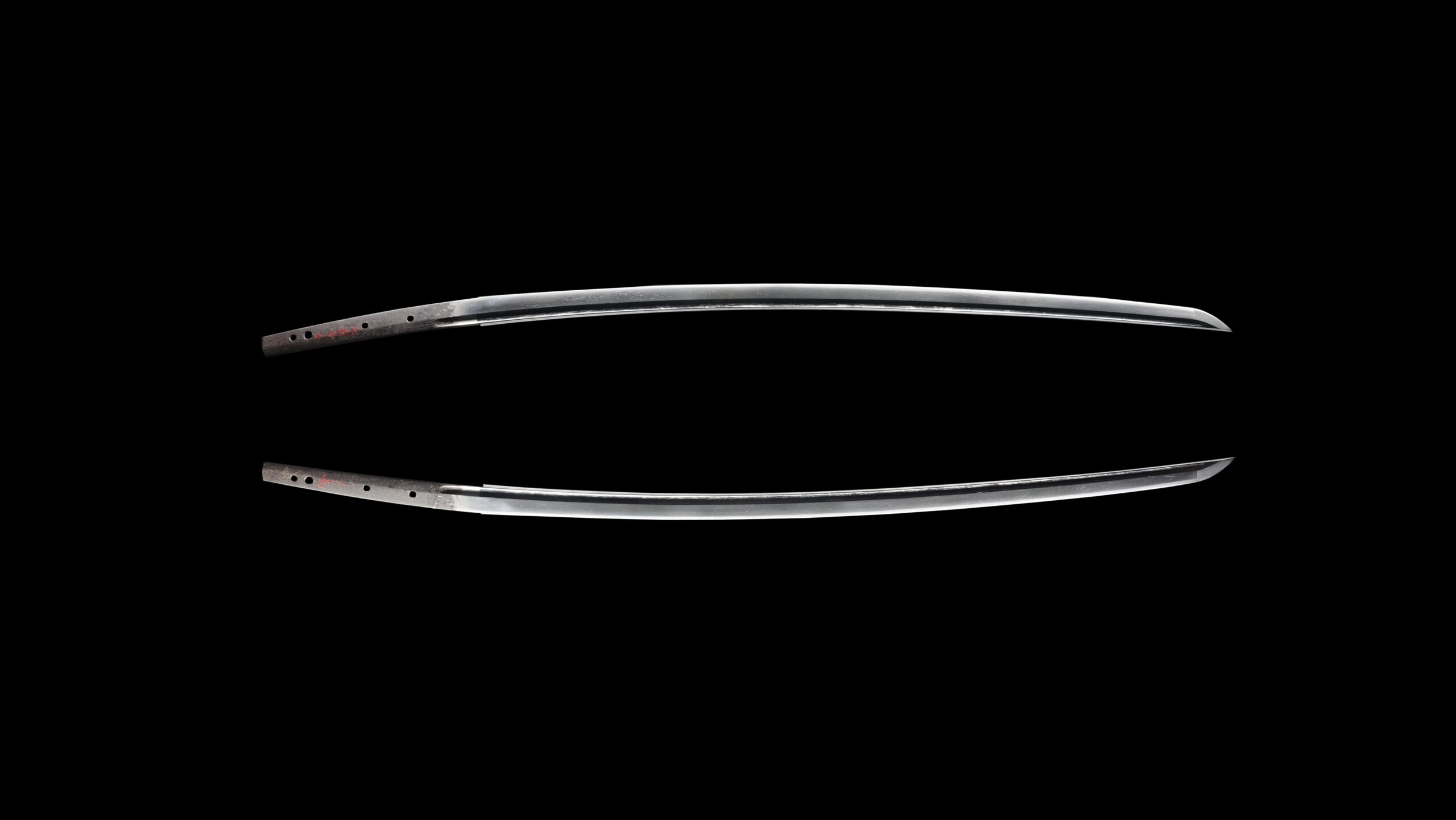
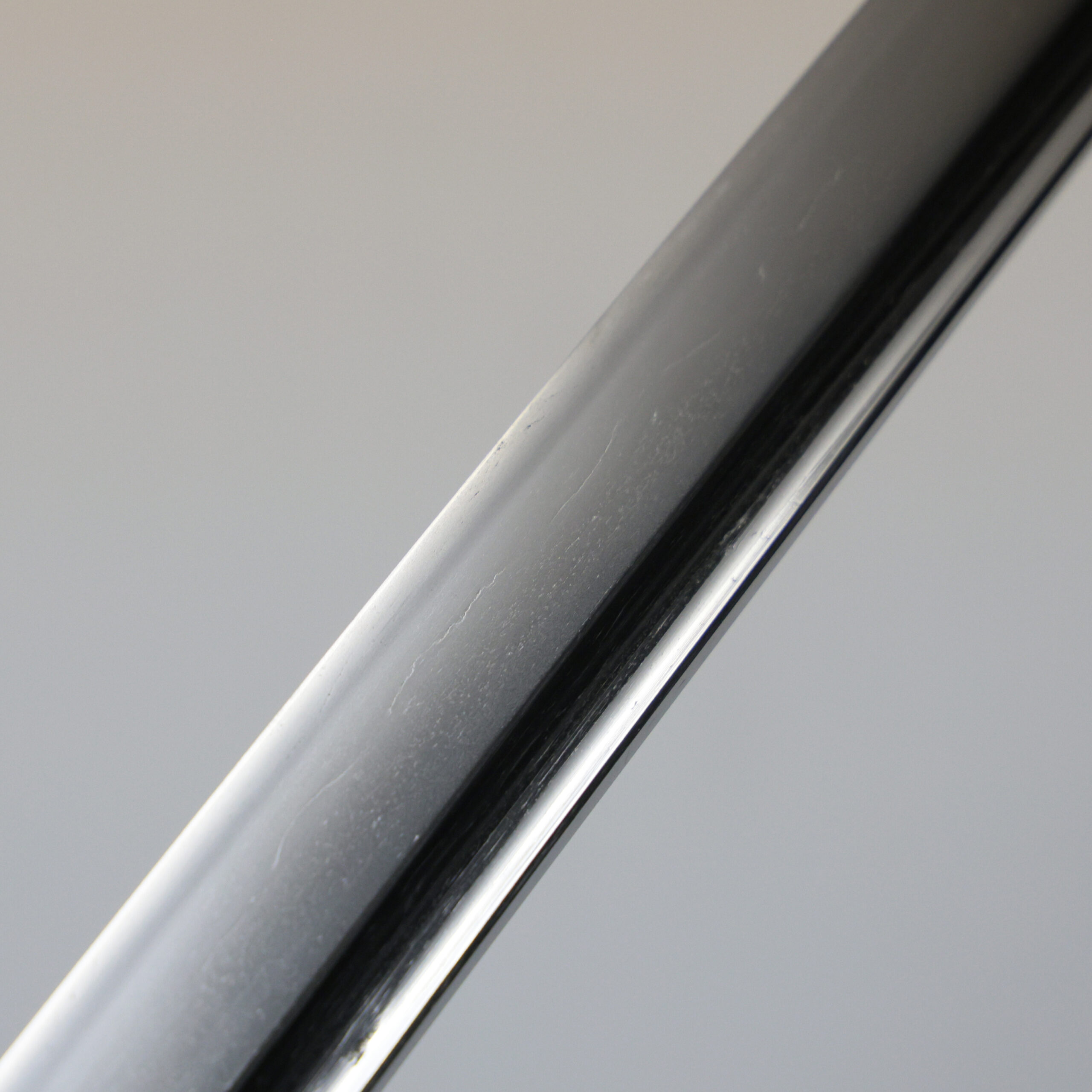
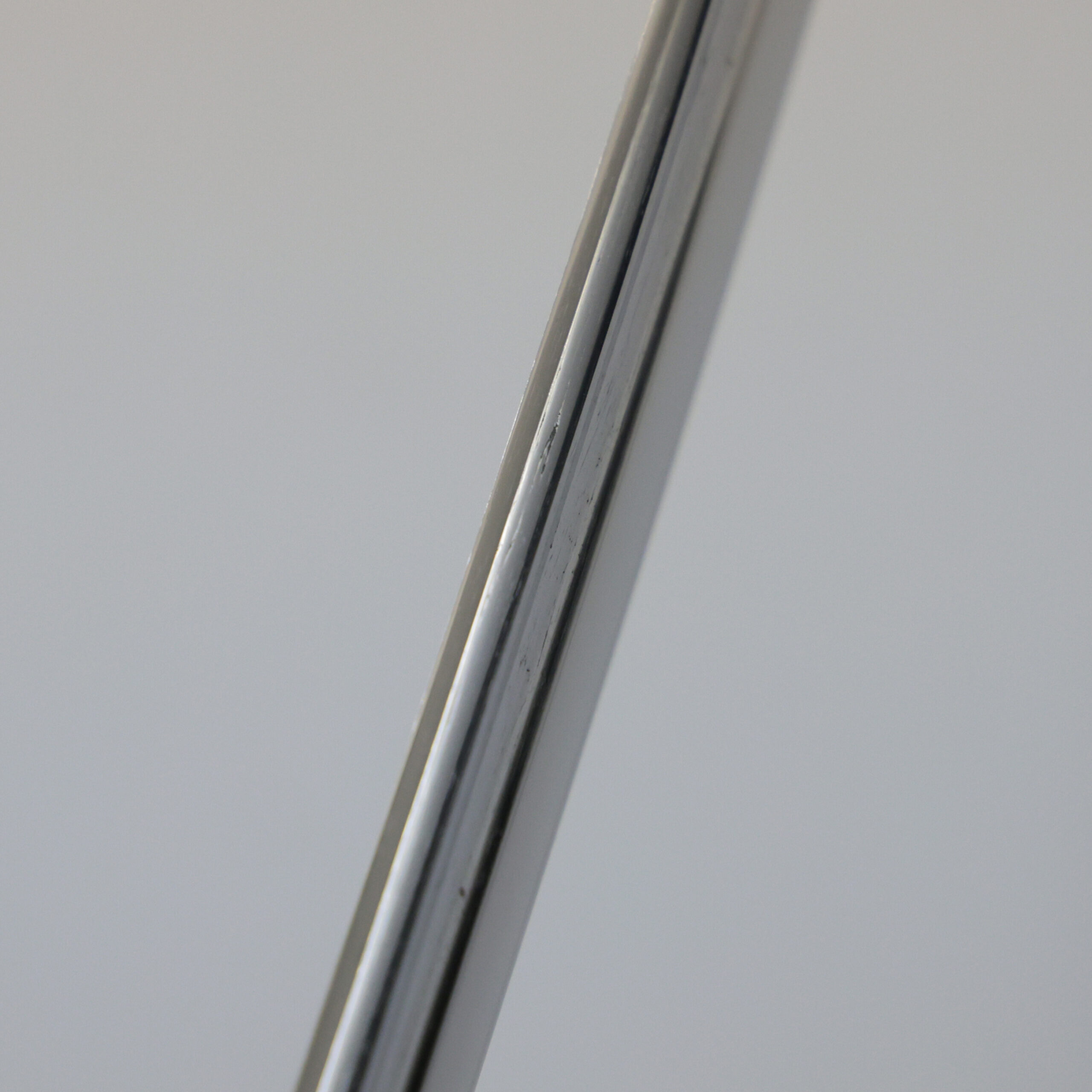
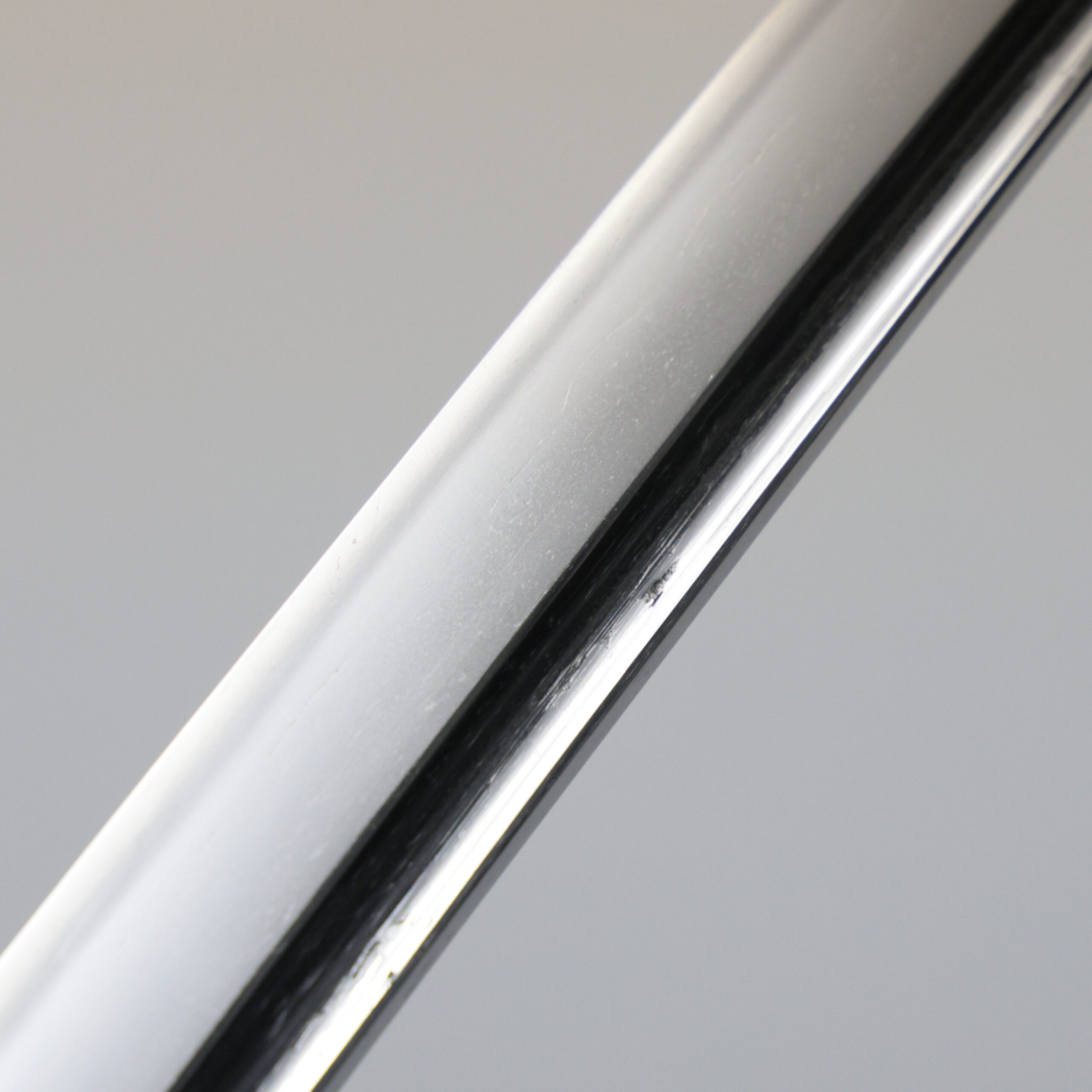
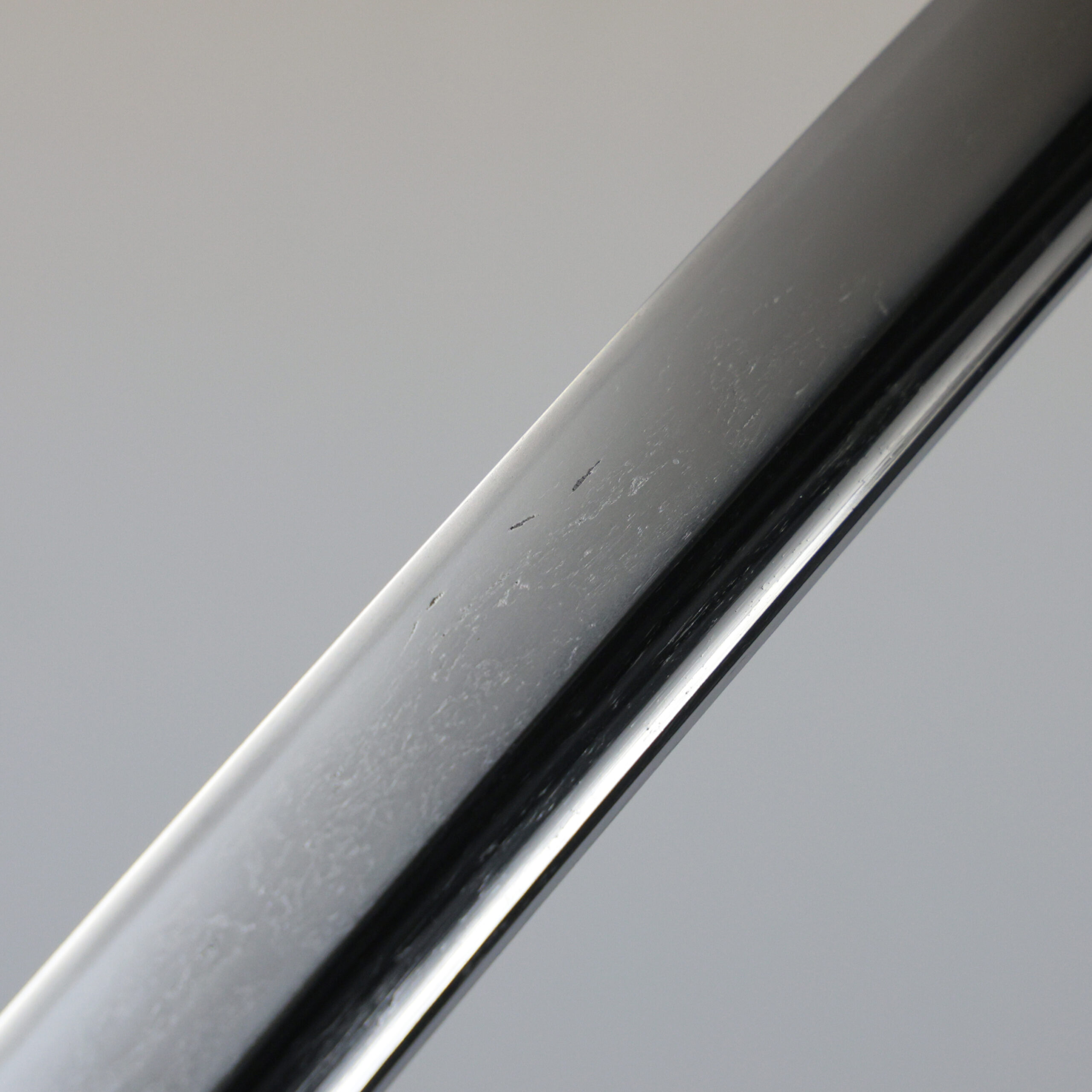
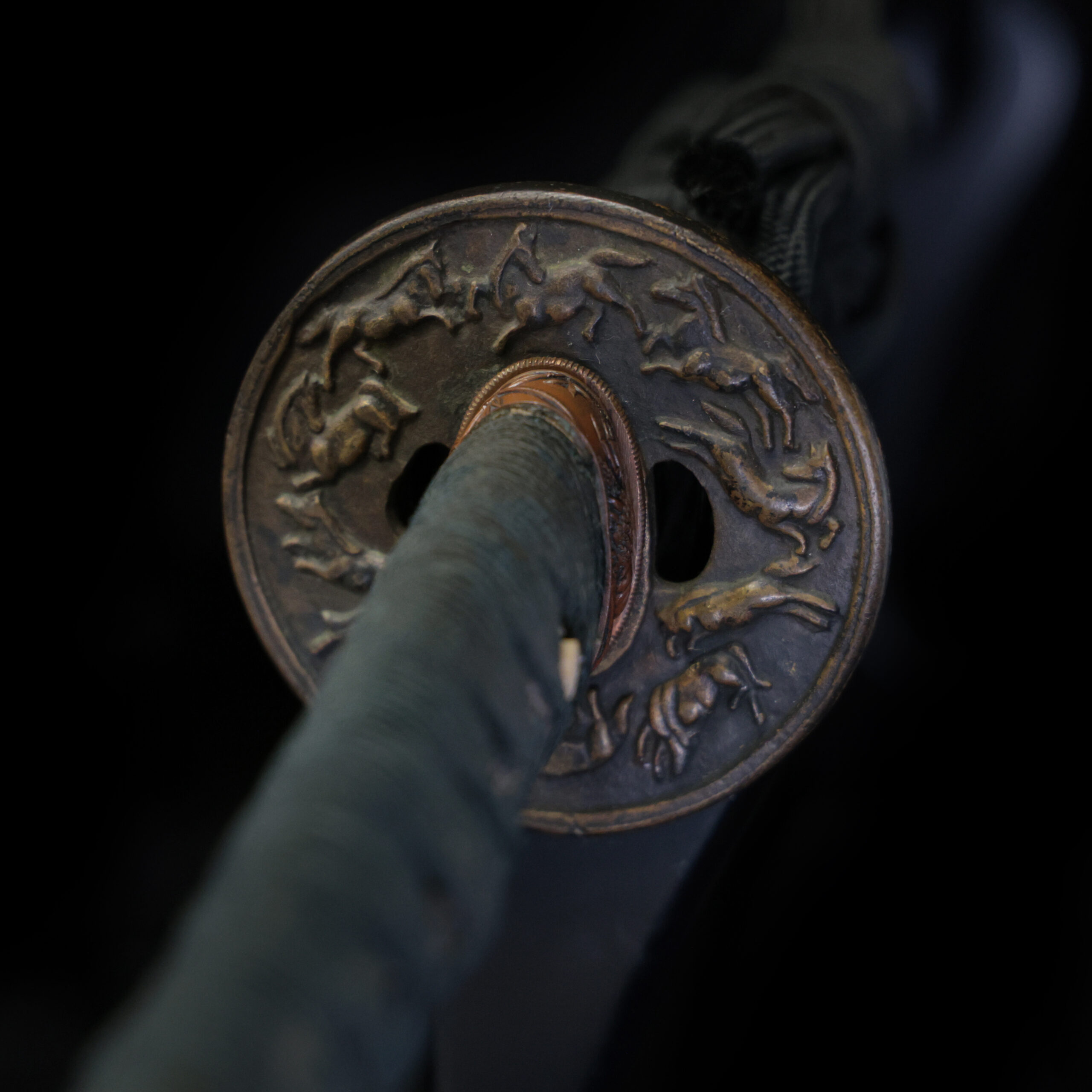
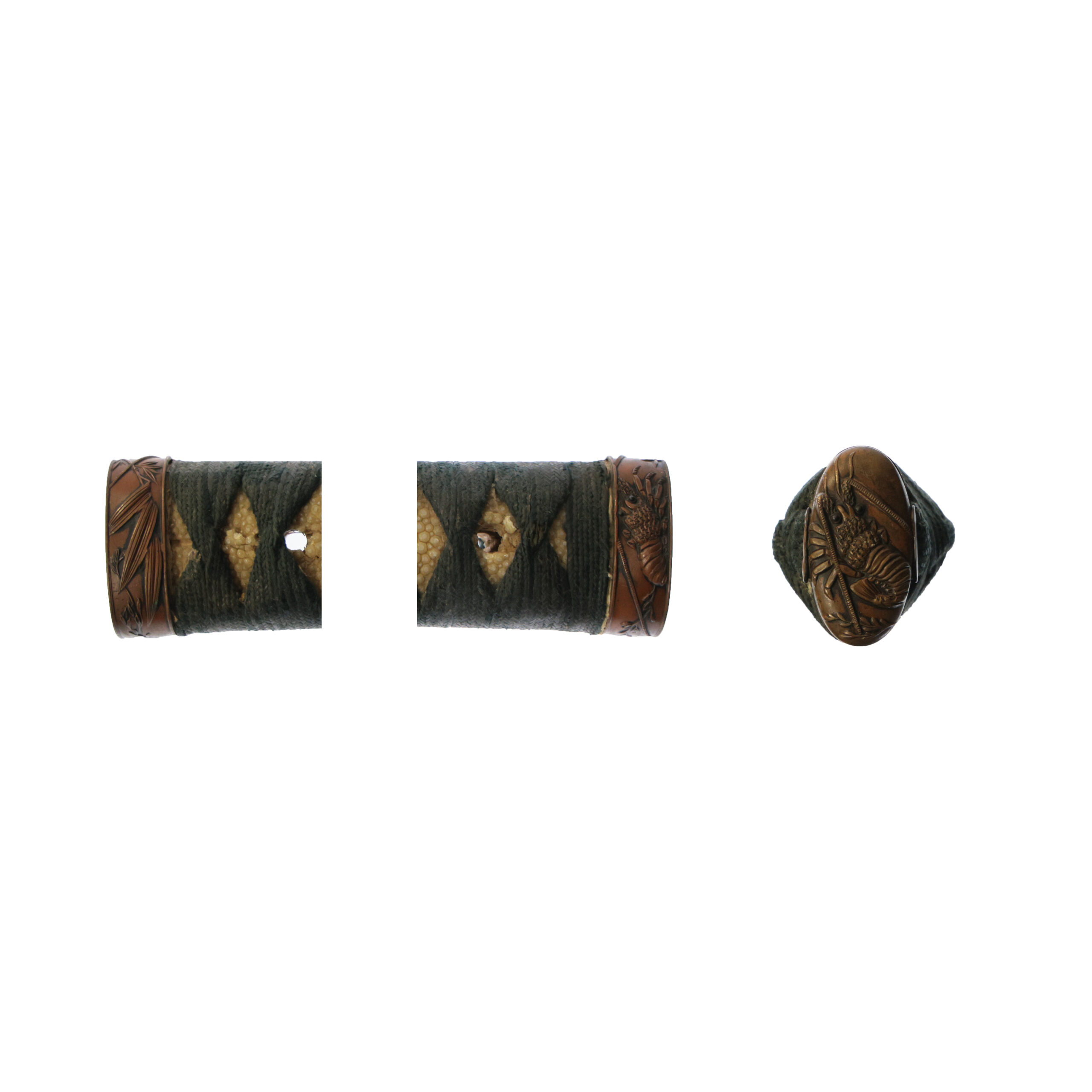
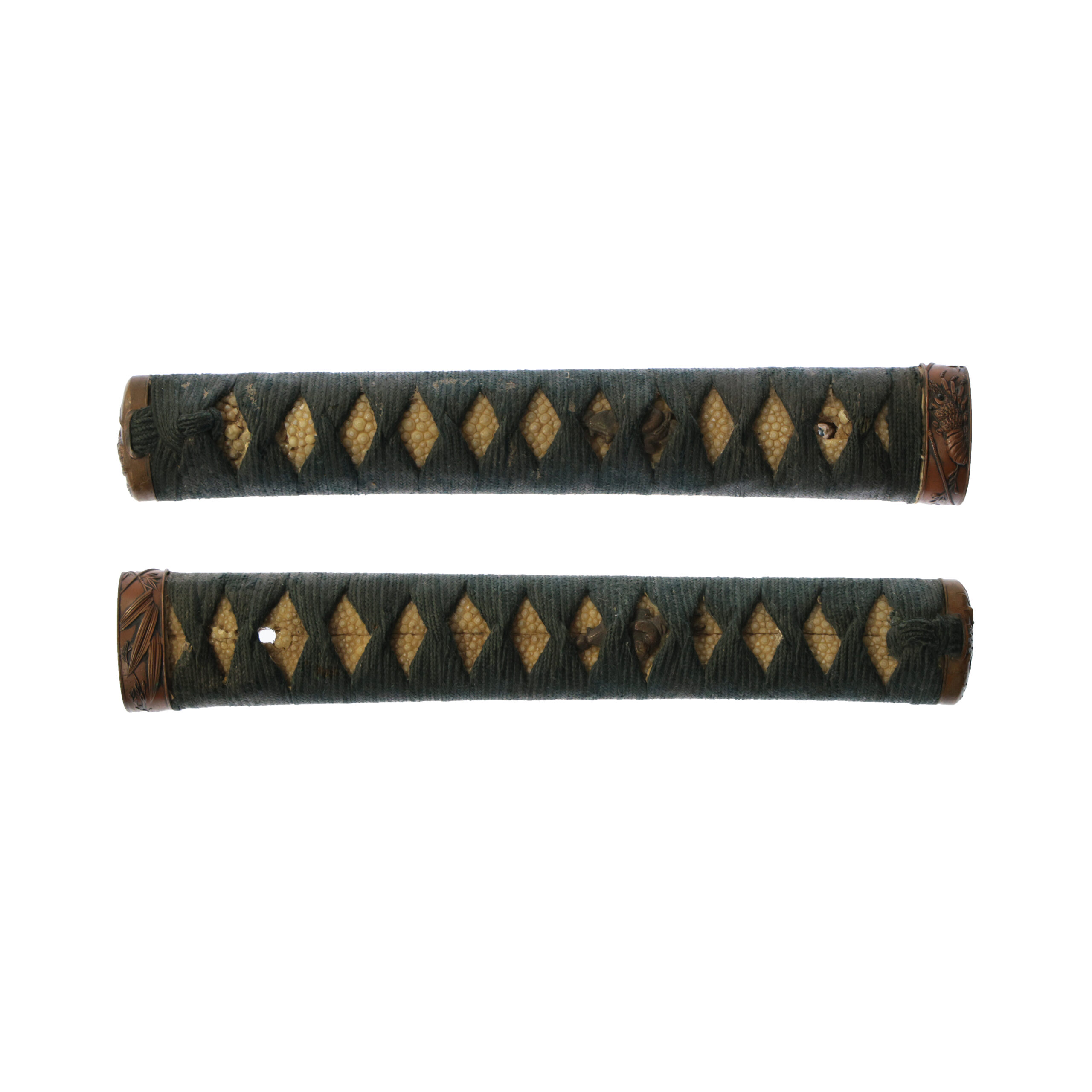
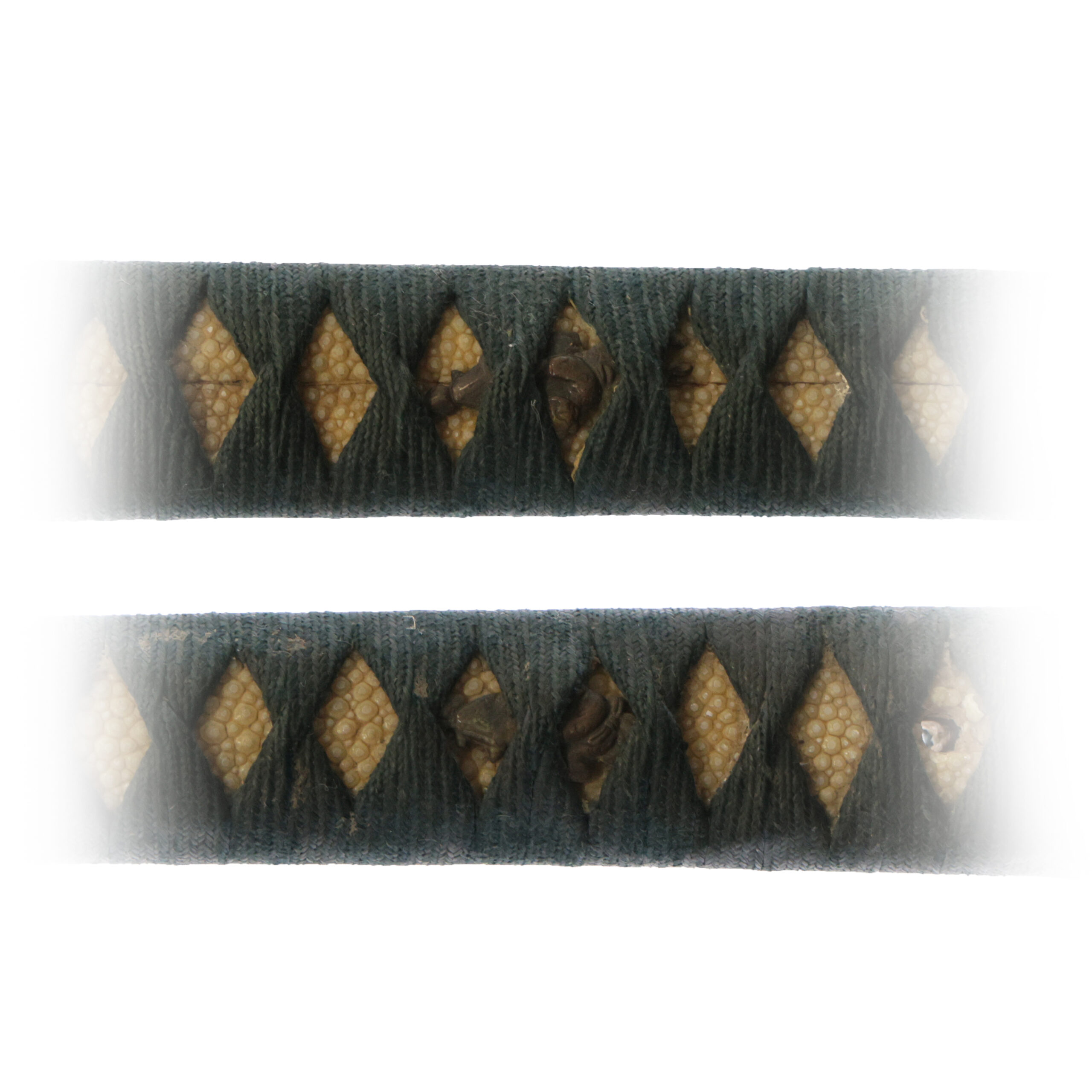
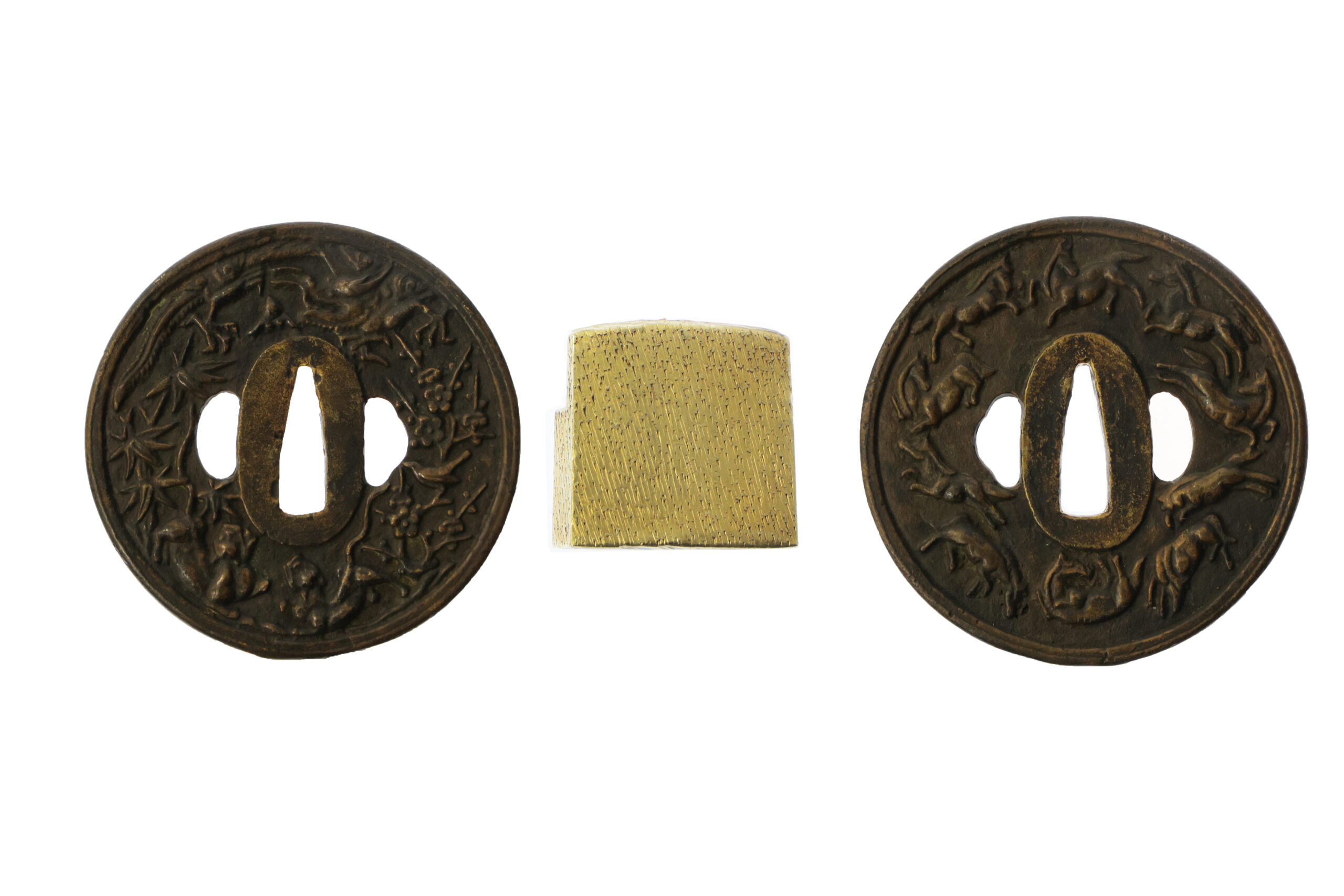
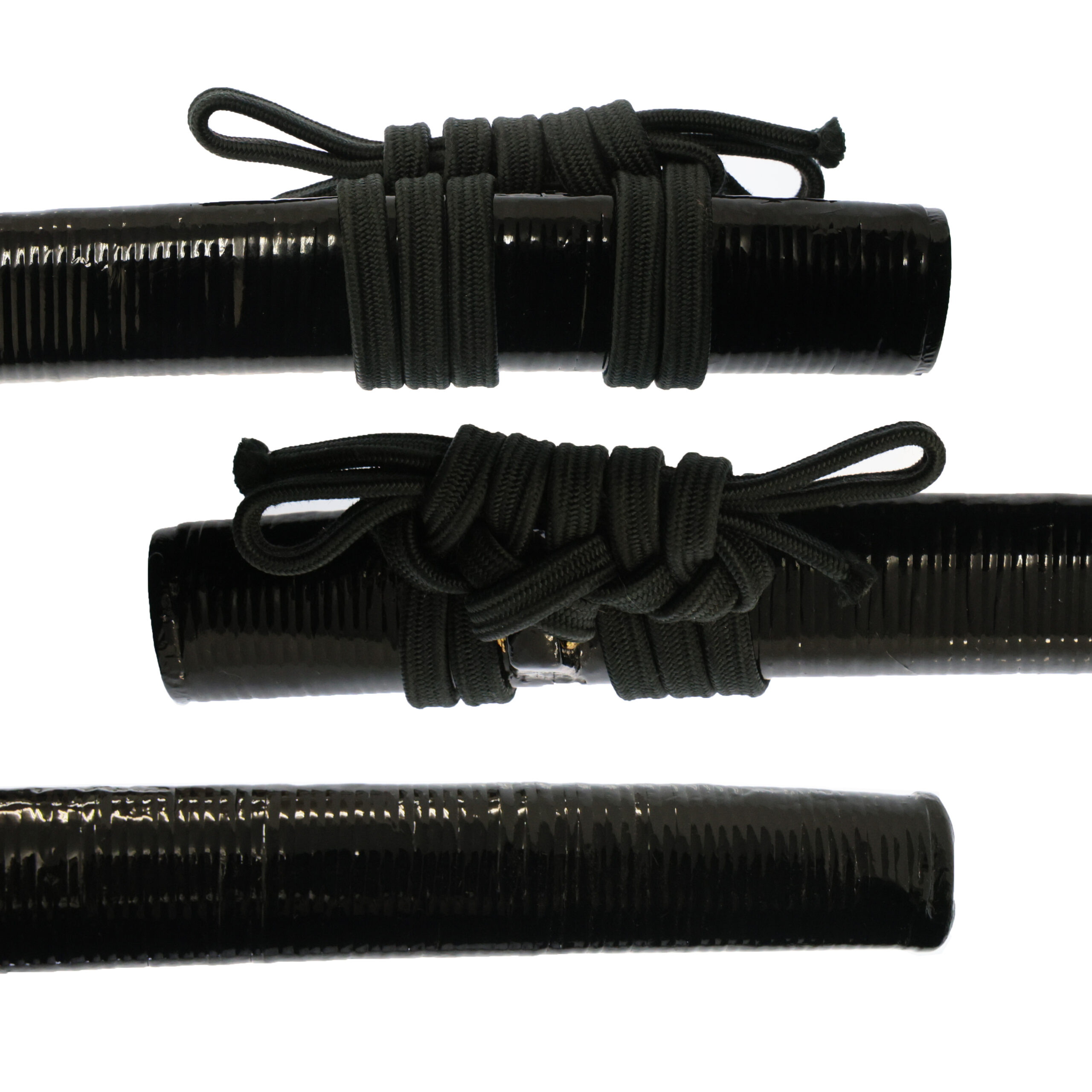
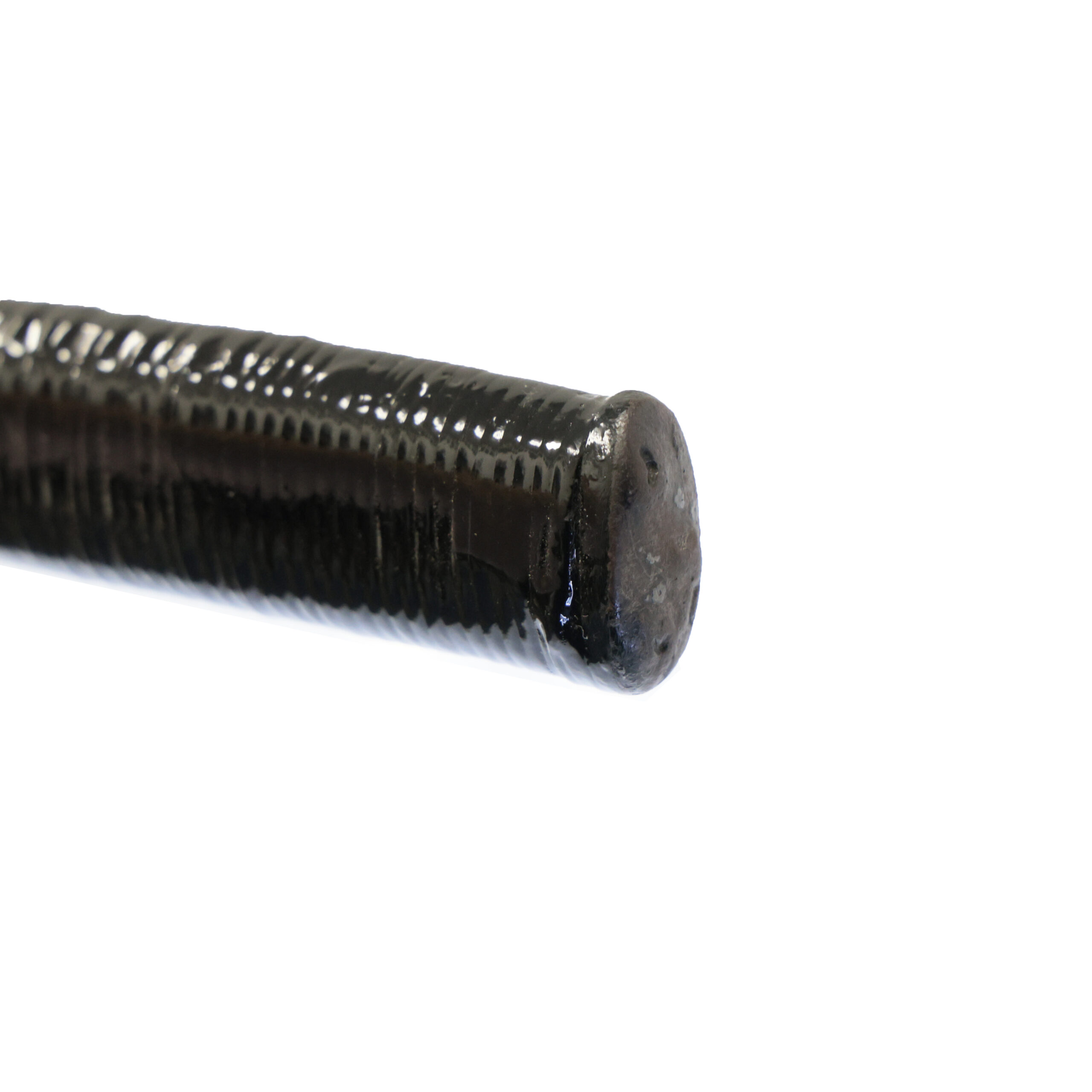
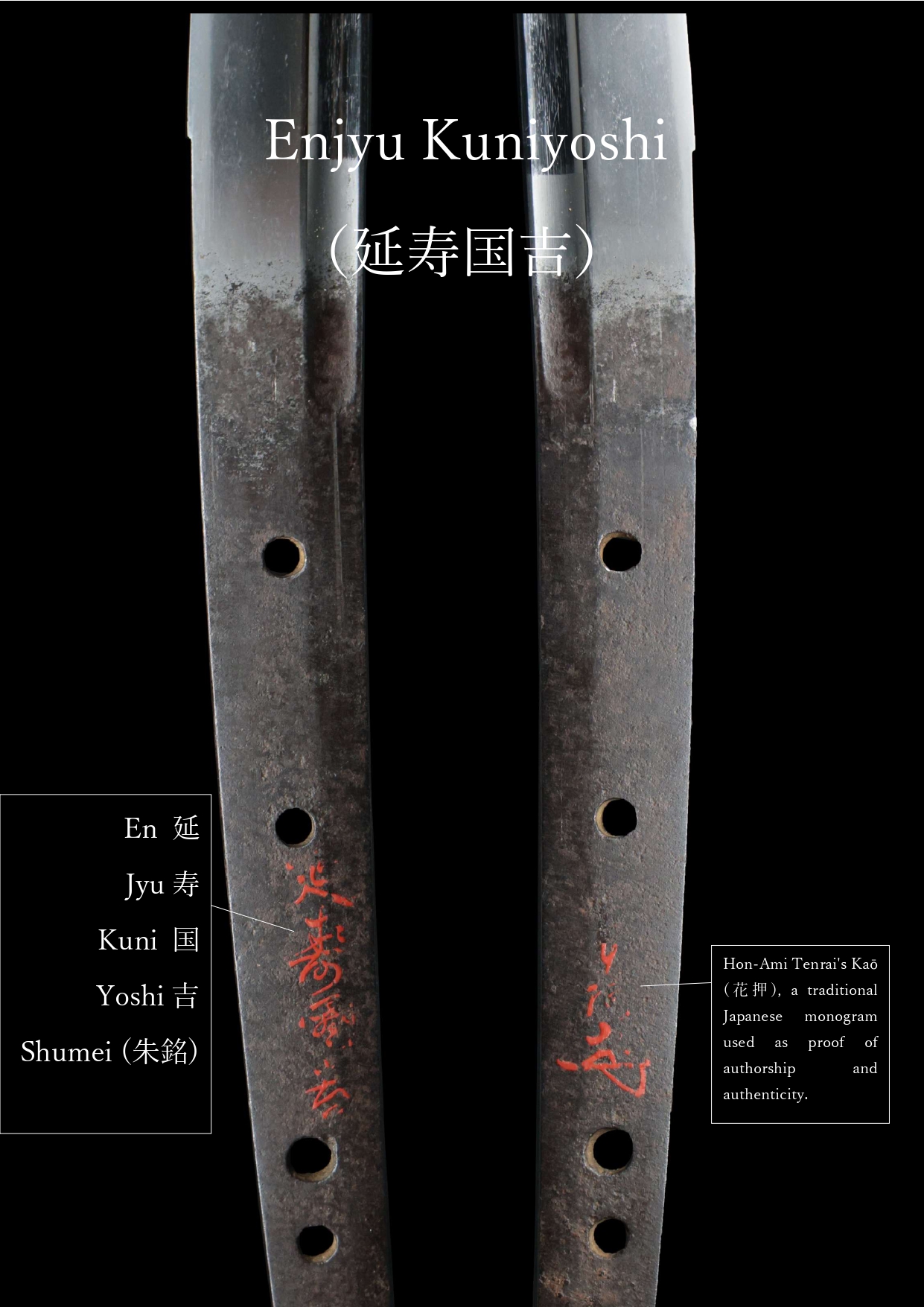
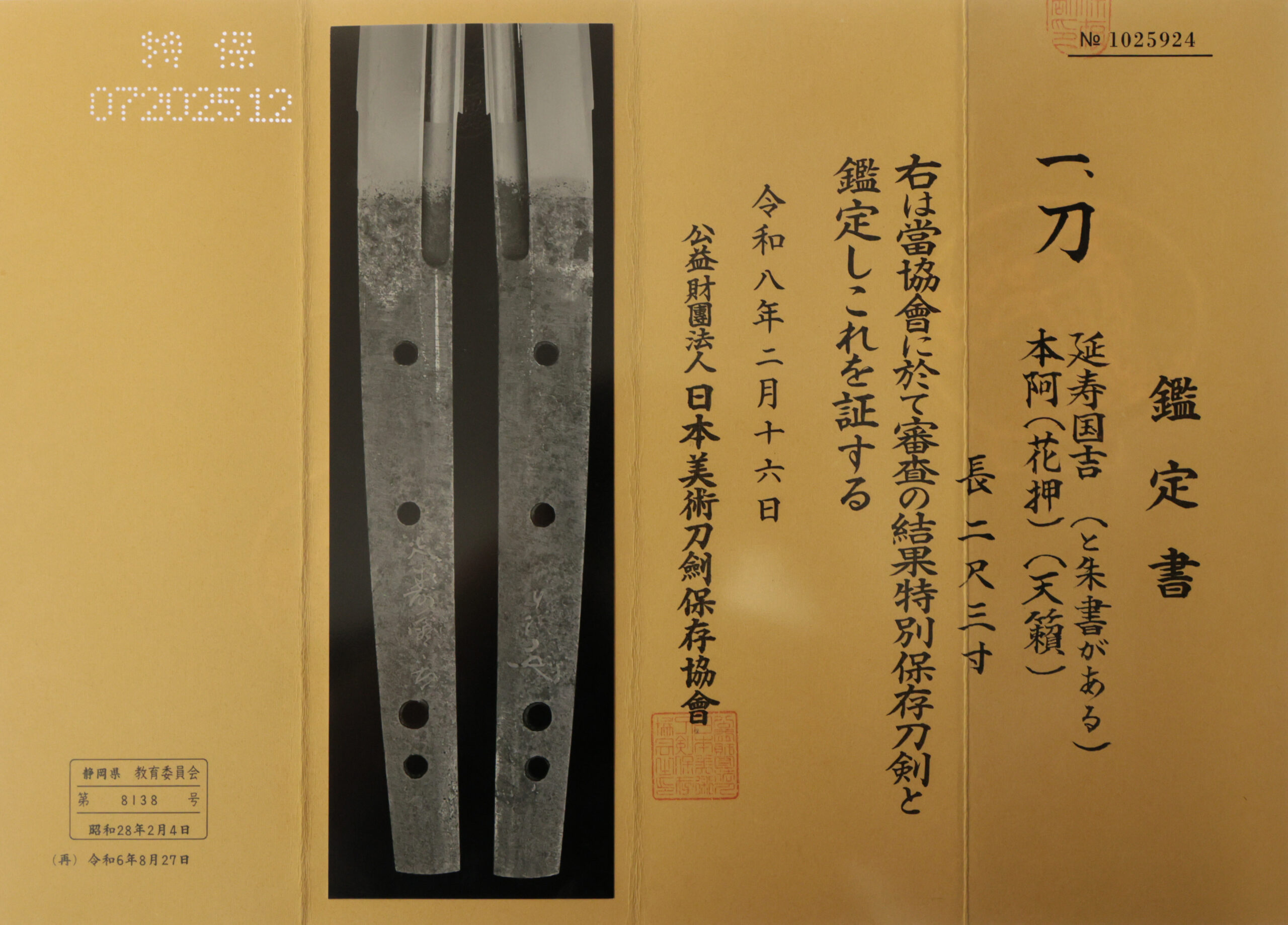
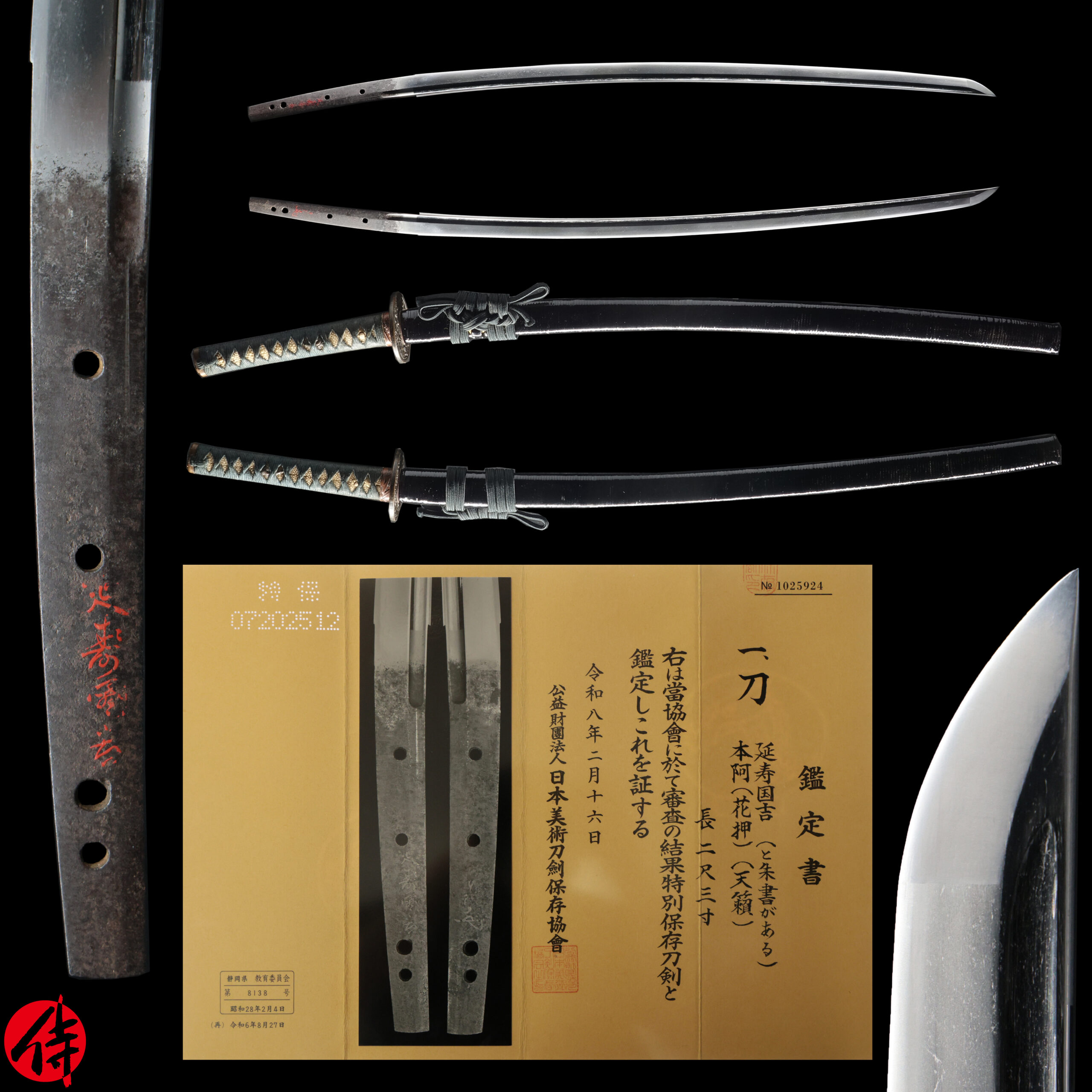
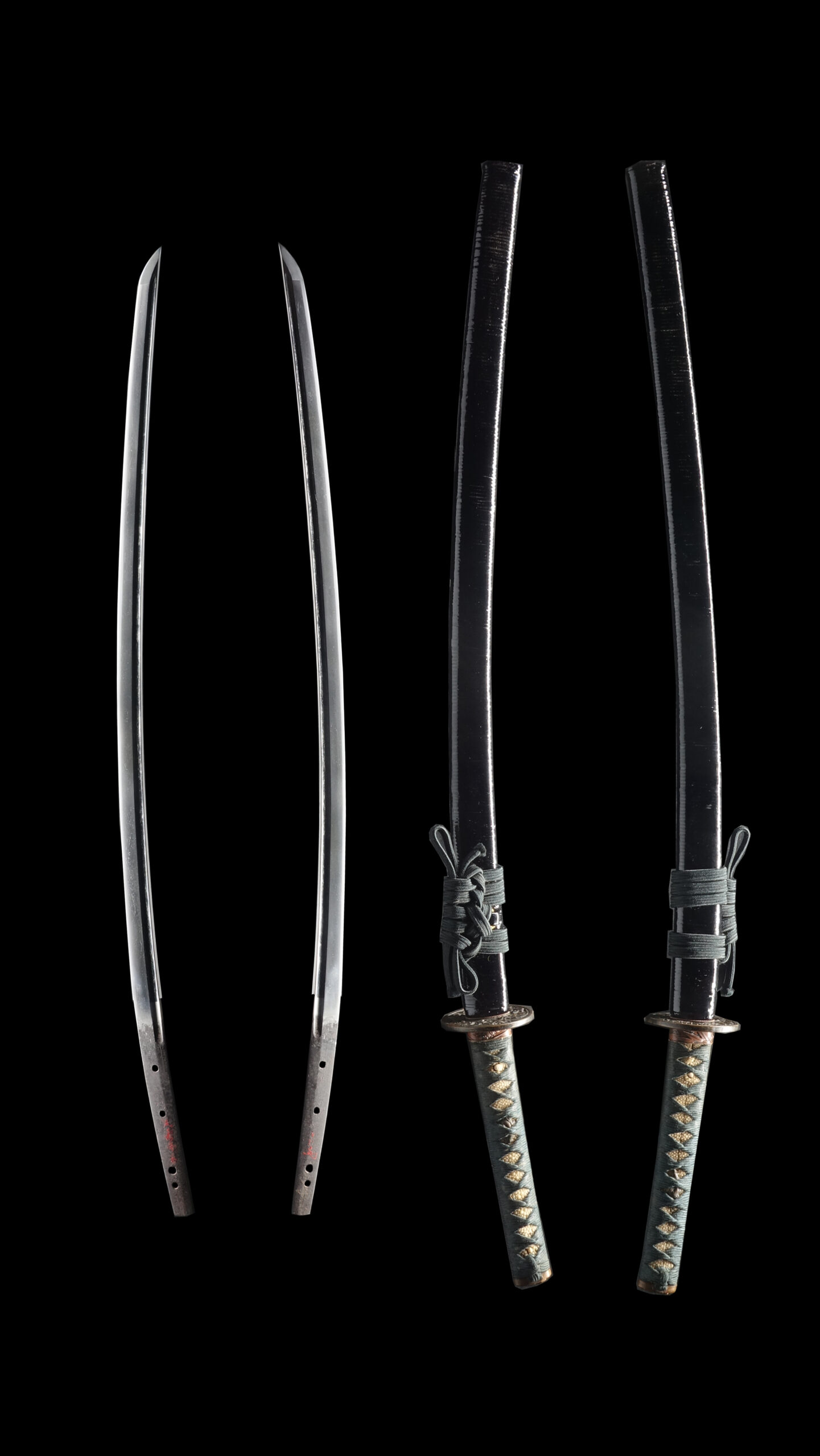
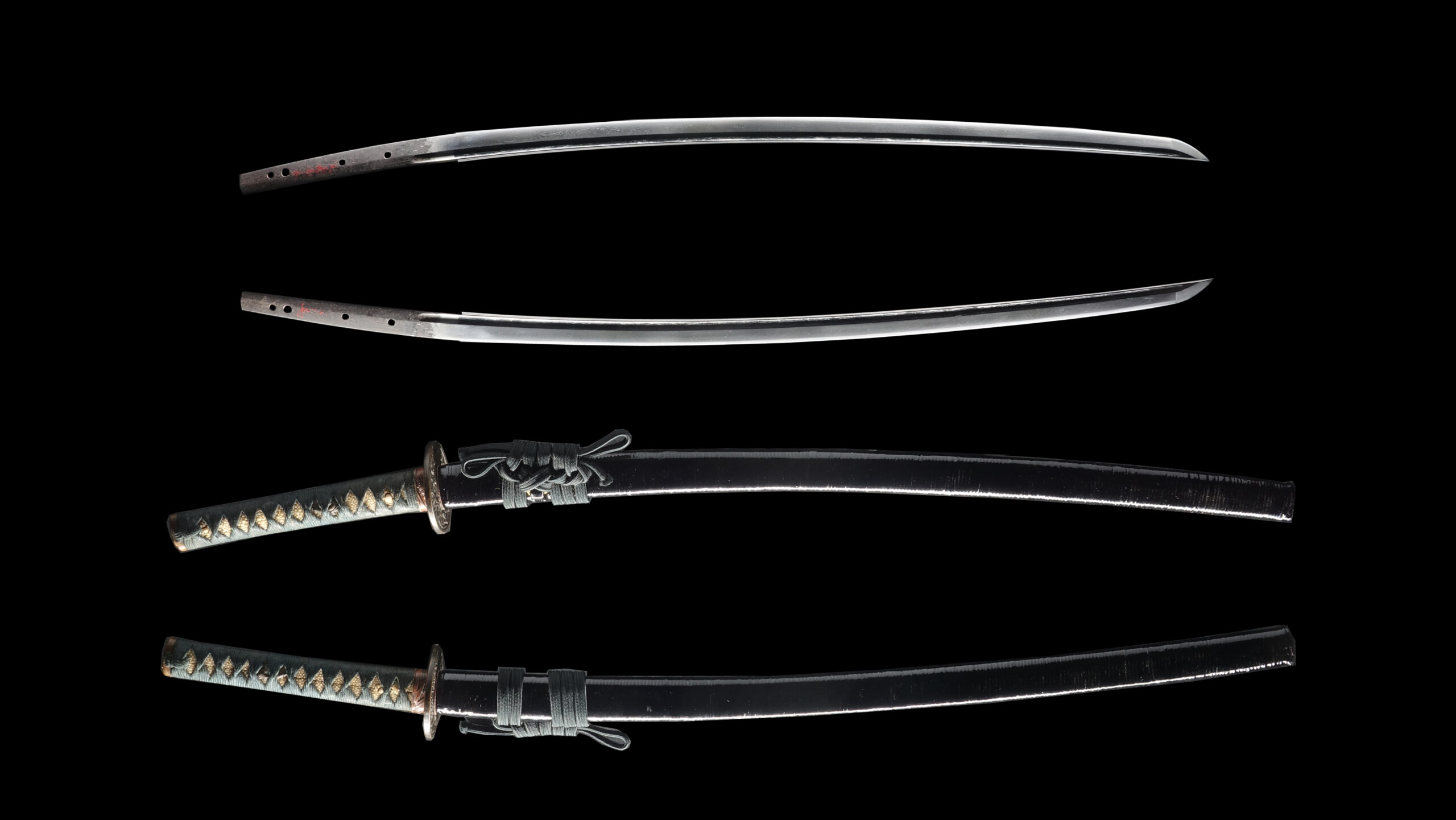
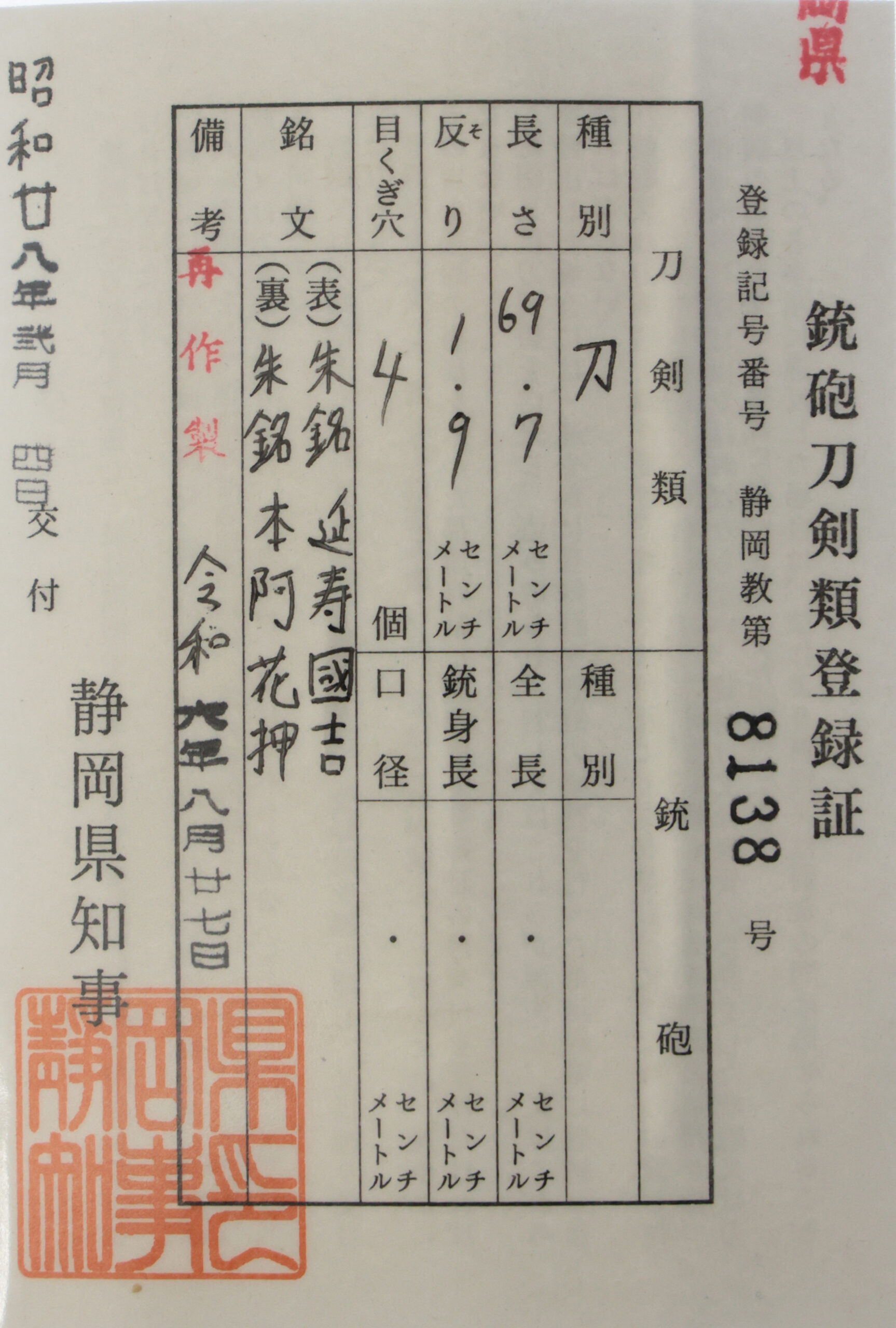
Enju (Higo) · Higo · around 1352-1356
Tōken Taikan top 31%
2 pieces on the market now
Kuniyoshi worked at Kumafu in the Kikuchi district of Higo Province from the very end of the Kamakura period into the Nanbokuchō, the leading hand named first among the smiths of the Enju school. The published sources trace the line to Enju Tarō Kunimura, recorded as a son of Senjūin Hiromura of Yamato and as a maternal grandson of Rai Kuniyuki of Kyōto, and they place Kuniyoshi beside Kunitoki, Kuniyasu, Kunitomo, Kunisuke, Kuninobu and Kunitsuna as one of the representative makers of the group, transmitted as either a son or a younger brother of the founder. From that double descent the school took its character, and the judges describe its work as one that generally resembles the Rai school of Yamashiro[[c:1]], refined in suguha yet carrying a Yamato cast inherited through the Senjūin side. Because the individual differences among Enju smiths are slight, his many shortened and unsigned blades are affirmed from era and school as much as from any personal mannerism.
His characteristic hand is a quiet straight temper laid over a flowing steel. The temper is a hoso- or chū-suguha into which small gunome and ko-ashi enter, the habuchi fraying into hotsure, with fine sunagashi and kinsuji and ko-nie adhering, the nioiguchi most often tight. Within that calm line two activities are the tells the judges return to: kuichigai-ba, the broken-edge effect, and above all a doubled nijūba running along the edge and into the bōshi. Of one signed and shortened tachi the published sources write that the way the nijūba in particular stands out clearly manifests the school's characteristic traits[[c:2]]. The bōshi runs straight to a small round, at times to a larger ō-maru with a shallow turnback, occasionally finishing yakizume or with hakikake.
The jigane is where the school is read first. Over an itame, often a closely packed ko-itame, the grain flows toward the edge into masame, with ji-nie, chikei entering, areas of jifu, and a whitish shirake-utsuri standing clearly across the surface. This cooler, mistier reflection, paired with the conspicuous masame, is what the published sources name as the principal point separating Enju from the tighter Rai jigane from which it descends. The same record is candid about the cost of that descent: compared with true Rai the ji and ha run somewhat weaker, the steel can look whitish and thin, the suguha quiet and the nioiguchi subdued. Kuniyoshi is the smith in whom that baseline is most often surpassed rather than merely met.
His record divides cleanly by form. The body of it is the slender tachi, usually shortened and several reduced to katana, on which the suguha and shirake-utsuri appear in their representative state. Against these stand the sun-nobi hira-zukuri tantō, somewhat wide and thick in the kasane, their ko-itame mixing mokume and flowing masame, the suguha here taking on a shallow notare with a deeper nioi, and carrying the school's Buddhist carving, a bonji above a suken on the omote and a katana-bi with accompanying groove on the reverse. The signatures are bold two-character mei, and the judges read them by a single calligraphic tell: within the enclosure of the character kuni the right-hand element is cut in an ear-shaped form, so that the cutting of the right half inside the kuni enclosure in an ear shape is the inscriptional point of this school[[c:3]], a manner they say does not become confused with other schools and which separates him from the Awataguchi Kuniyoshi who shares his name.
What distinguishes Kuniyoshi within his own school is brightness. The published sources single out his signed Tokubetsu Jūyō katana for escaping the Enju weaknesses entirely, lacking the whitish thinness of the jigane and the subdued nioiguchi, and presenting instead a ji and ha that are bright and clear in both, the most refined example among works of the school[[c:4]]. Where the school is read for masame, shirake-utsuri and a quiet line, his finest work keeps those marks while raising their clarity, the nijūba sharp and the steel well refined. The name continued through several generations into the Muromachi period, a Hishū Kikuchi-signed wakizashi read as a later Eitoku-era hand, so the shodai is set apart from his namesakes by date and by the quality of his make.
Fujishiro records no grade for him, and the Tōkō Taikan values his work at four hundred and fifty. He has no National Treasures and no Important Cultural Properties; his record runs instead through two blades at Tokubetsu Jūyō and eighteen at Jūyō, with an Important Art Object and works appraised in gold inlay, gold powder and red lacquer as well as signed and unsigned. The provenance roll is unusually grand for a Higo provincial: two tantō were transmitted in the Owari Tokugawa family with Hon'ami Kōon origami, one selected into that house's highest "jin" rank; one shortened tachi passed through the Tokugawa shogunal house; a court mounting with its blade descended in the Ichijō regent family; and a blade is recorded at the Ise Shrine. Of one unsigned tantō the published sources say it is a rare piece, sound in both ji and ha, firmly attributable to Kuniyoshi[[c:5]]. With twenty blades across the Tokubetsu Jūyō and Jūyō tiers and almost none held outside private and institutional collections, a signed Enju Kuniyoshi comes to market only seldom; when one does, it is the rare chance to hold the leading hand of the Higo school, the Rai manner carried south and made bright.
Where Kuniyoshi stands among comparable artisans: across all of nihontō, and within tradition, era, and period. The tiers (Foremost · Leading · Major · Notable) weigh official designations from the NBTHK and Japan's Agency for Cultural Affairs, together with historical honors of lasting repute such as the Sansaku and Meibutsu-chō.
Select a lens to see how it's measured.
Yamashiro-den · Higo
22 pieces on the market now
Among the provincial lines that carried the Kyoto manner beyond Yamashiro, the Enju (延寿) school of Higo province grew up at Kumafu in the Kikuchi District, working from the close of the Kamakura period through the Nanbokuchō era. Its founder, Tarō Kunimura, is transmitted in the prevailing account as the son of Hiromura of the Yamato Senjuin line, who married a daughter of Rai Kuniyuki of Yamashiro; by that marriage Kunimura is held to be Kuniyuki's grandson in the female line and a pupil of the Rai workshop (one early text instead places him in the gate of Rai Kunitoshi). The school name reads on the same characters as the Rai line itself, and from that double descent, Yamashiro through the Rai marriage and Yamato through the Senjuin side, the family took its character. Around the founder a cluster of named smiths arose almost at once, Kuniyoshi, Kunitoki, Kuniyasu, Kunitomo, Kunisuke, Kuninobu and Kunitsuna among them, the Enju line attached to the Kikuchi clan and loyal to the Southern Court, so that the dated blades carry that history in their Southern-Court eras. The published sources describe Enju work as one that broadly resembles the Rai school[[c:1]], refined in suguha yet cooler and whiter than its Kyoto parent, and they name the provincial accents by which the two are separated. The forging is an itame or closely packed ko-itame that flows toward the edge into masame, the grain standing a little, with fine ji-nie laid on and delicate chikei entering; over it rises a whitish shirake-utsuri, the surest single Enju tell, the cool reflection of a Kyushu steel that is not quite the bright Rai jigane. The temper is a chū-suguha or narrower hoso-suguha, the nioiguchi carried somewhat shizumi (sunken and quiet), often breaking into nijūba, the doubled line that recurs across the line; ko-ashi, yō, ko-nie, fine sunagashi and kinsuji play within it, the activity gentler than the brighter Rai suguha. The bōshi turns back on a larger radius than Rai's tight ko-maru, a shallow ō-maru with a short kaeri.
The signature is a tool of attribution: across the line the right half within the kuni (国) enclosure is cut in an ear-shaped form, a calligraphic habit the sources say cannot be confused with another school. Against true Rai, the school is read by its masame-lean, its whitish utsuri, its sinking nioiguchi and its quieter internal work, the ji and ha running a degree softer than the Yamashiro line. To kantei an Enju blade is to weigh those provincial accents against the Rai air it carries: a wheel-like wa-zori and Kyoto refinement may recall the parent at a glance, but the nagare in the ji, the shirake-utsuri, the subdued nioiguchi and the ear-shaped kuni settle the attribution, and the level of the work then narrows it to a hand. The founder Kunimura sets the quiet register and signs the slender, sharply tapering tachi the sources call distinctive even within the school; among the later smiths, Kunitoki survives in relative number and runs his suguha the busiest with ko-gunome and kinsuji, Kuniyasu is the most nie-laden and brightest, Kunisuke cuts the boldest chisel and hardens a unique flaming bōshi on his wide pieces, while Kuniyoshi, Kuninobu and the various other Kuni- smiths work the same vocabulary, the best of them refining the steel to a clarity that escapes the school's whitish thinness. The corpus runs mostly to slender signed tachi and to ō-suriage mumei katana attributed on appraisal, with broad sunobi tantō in the Nanbokuchō phase, the work confined to long blades in the founder's case. Provenance is unusually grand for a provincial line: blades pass through Toyotomi Hideyoshi and Tokugawa Ieyasu and rest in the Hosokawa, Date, Uesugi, Owari and Mito Tokugawa houses, with examples held today by the Sano, Tokugawa, Seikadō and other institutions. A signed ubu Enju tachi is among the rarer encounters in Higo work; most survive as the mumei attribution, held as heritage rather than offered. Learn more →
| Smith | Era | Designated |
|---|---|---|
| Kunimura國村 | 1275-1278 | 15 |
| Kunitoki國時 | 1317-1353 | 32 |
| Kuniyasu國泰 | 1329-1331 | 17 |
| Kunisuke國資 | 1346-1370 | 22 |
| Kunitoki國時 | 1275-1278 | 7 |
Yamashiro in the Nanbokuchō period
The divided-courts war impoverished the court society that had sustained Kyōto’s most refined work. With the last Rai masters the classic line effectively closed, while Hasebe and Nobukuni carried the new Sōshū manner into the capital.
A Hozon-certified blade judged to show notably superior workmanship and a better state of preservation. The bar is higher: re-tempered blades and most unsigned Muromachi/Edo works are excluded.
The NBTHK (Nihon Bijutsu Tōken Hozon Kyōkai, the Society for the Preservation of Japanese Art Swords) is a public-interest incorporated foundation founded in 1948 and supervised by Japan’s Agency for Cultural Affairs (Bunkachō); it is based at the Japanese Sword Museum in Tokyo. Its expert panels physically examine each submitted work (shinsa) and issue a certificate (kanteishō) ranking it by artistic and historical merit. NBTHK papers are the most widely recognized standard of authentication for Japanese swords and fittings.
NBTHK official siteReturns/exchanges limited to defects caused by shipping (except willful misconduct or gross negligence by the company); customers must contact within 72 hours of receiving the product.
¥1,370,000