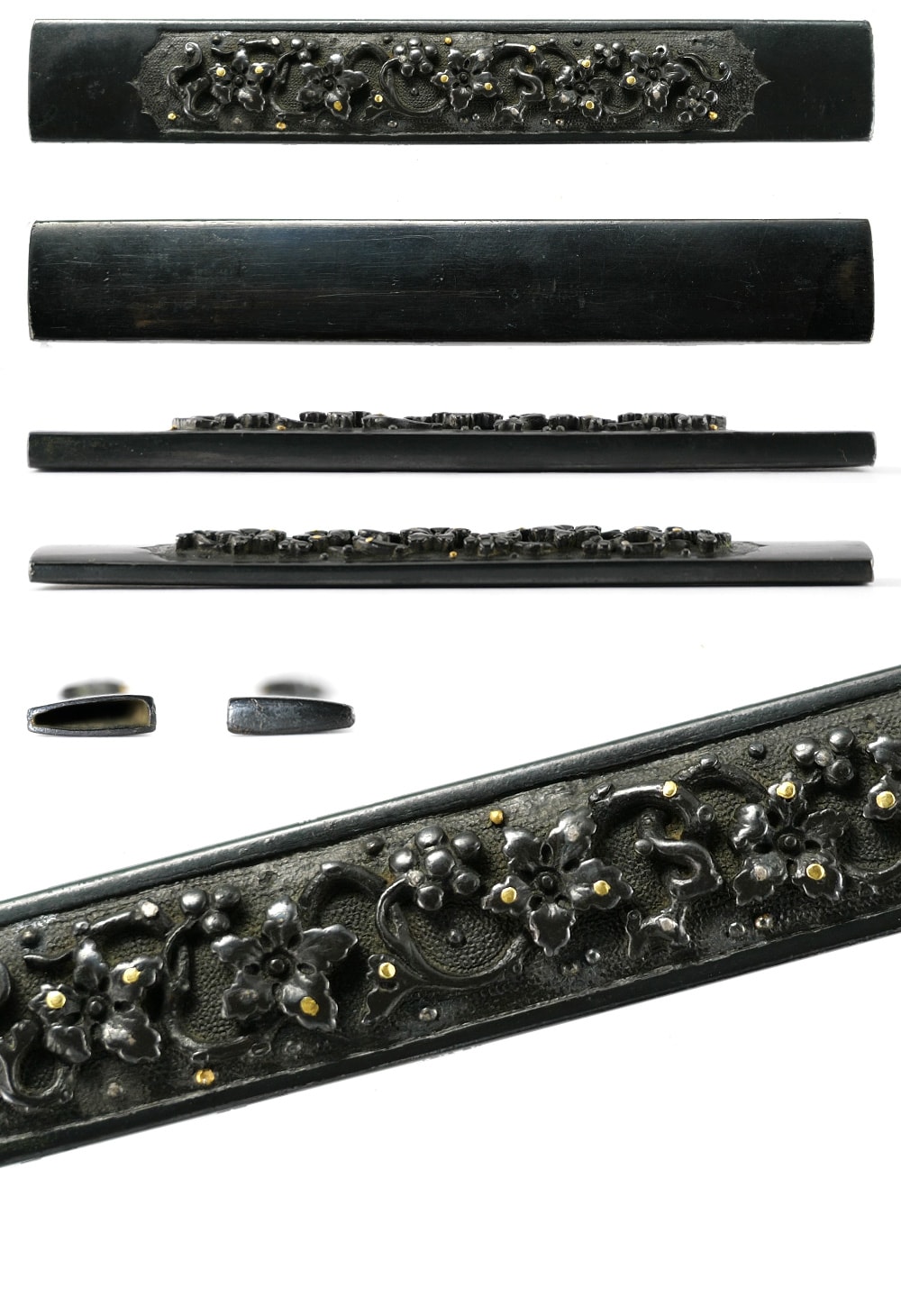
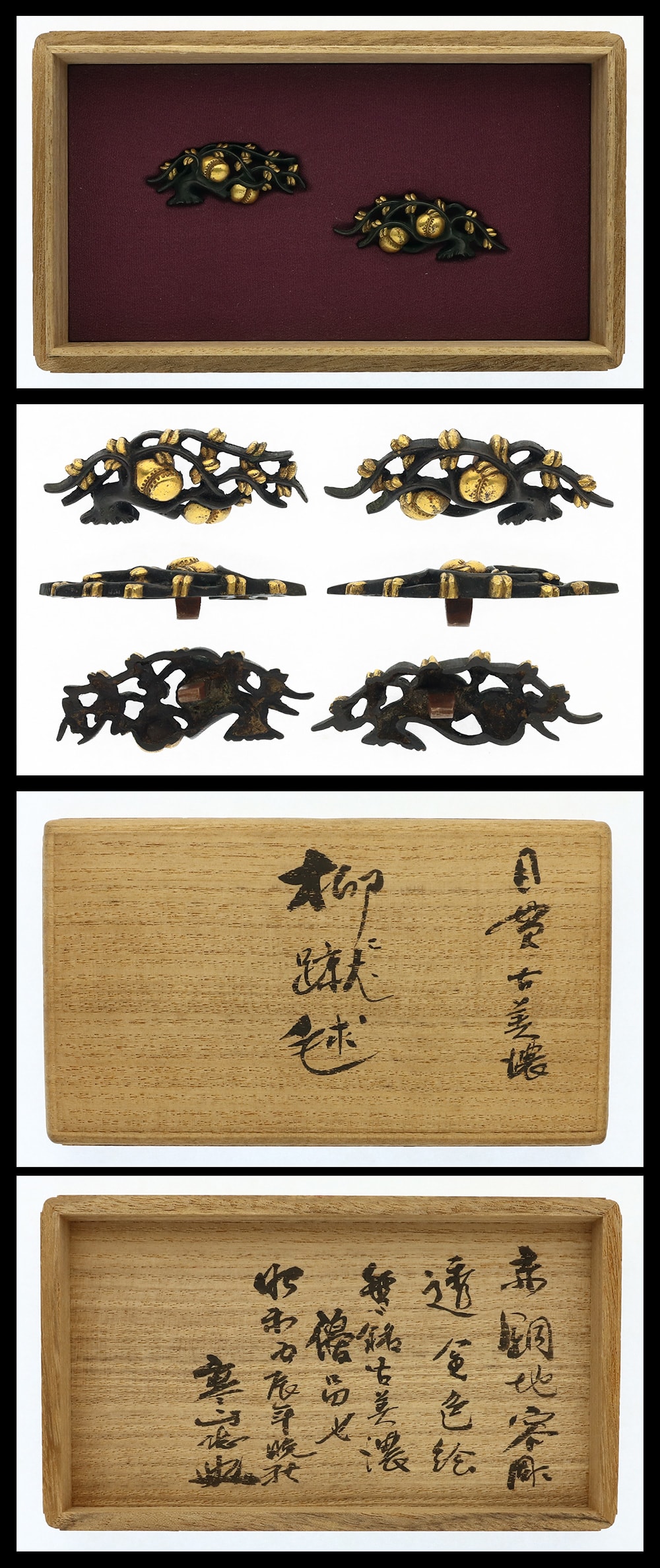
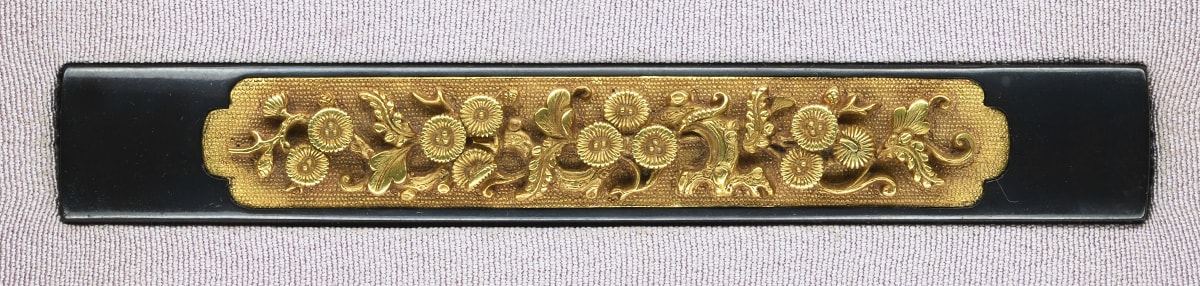
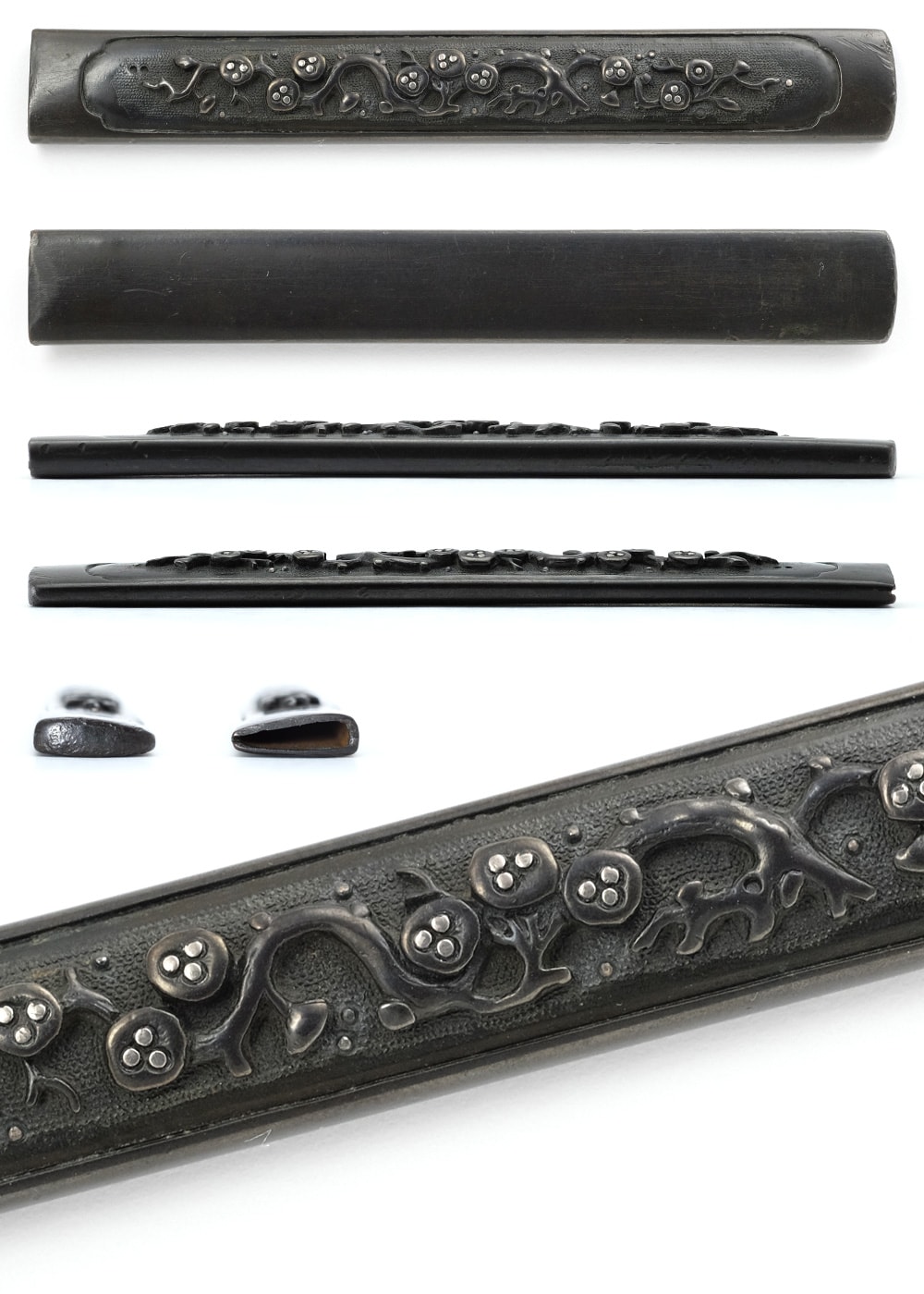
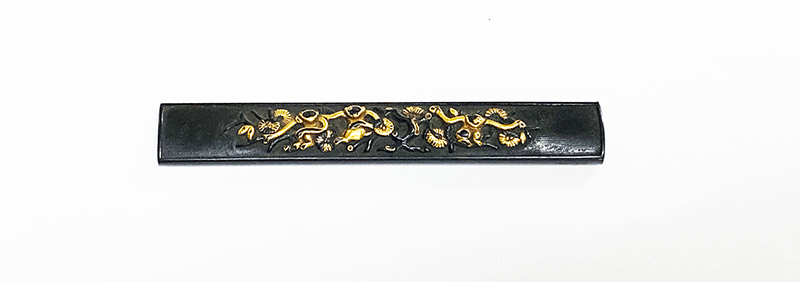
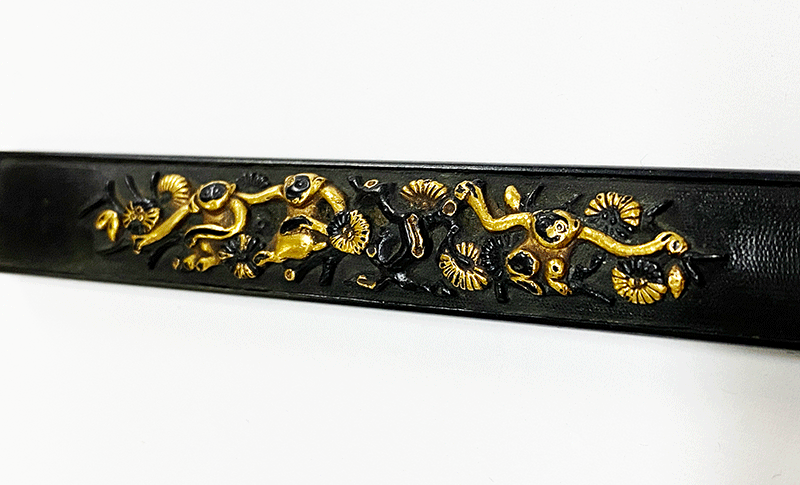
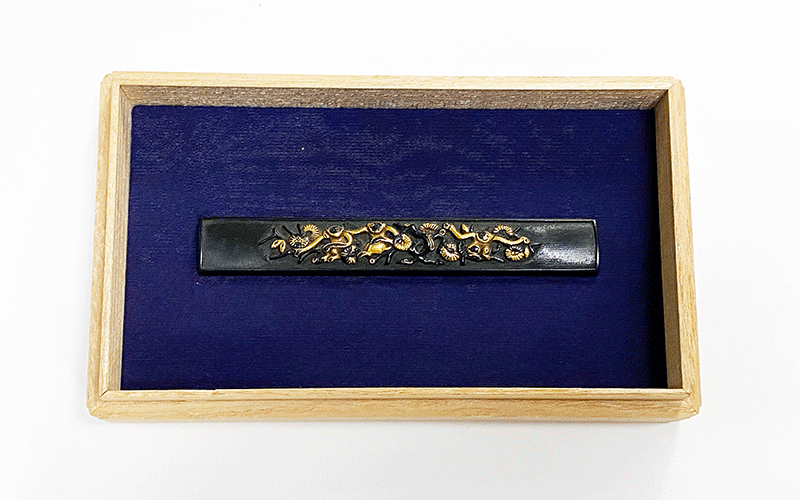
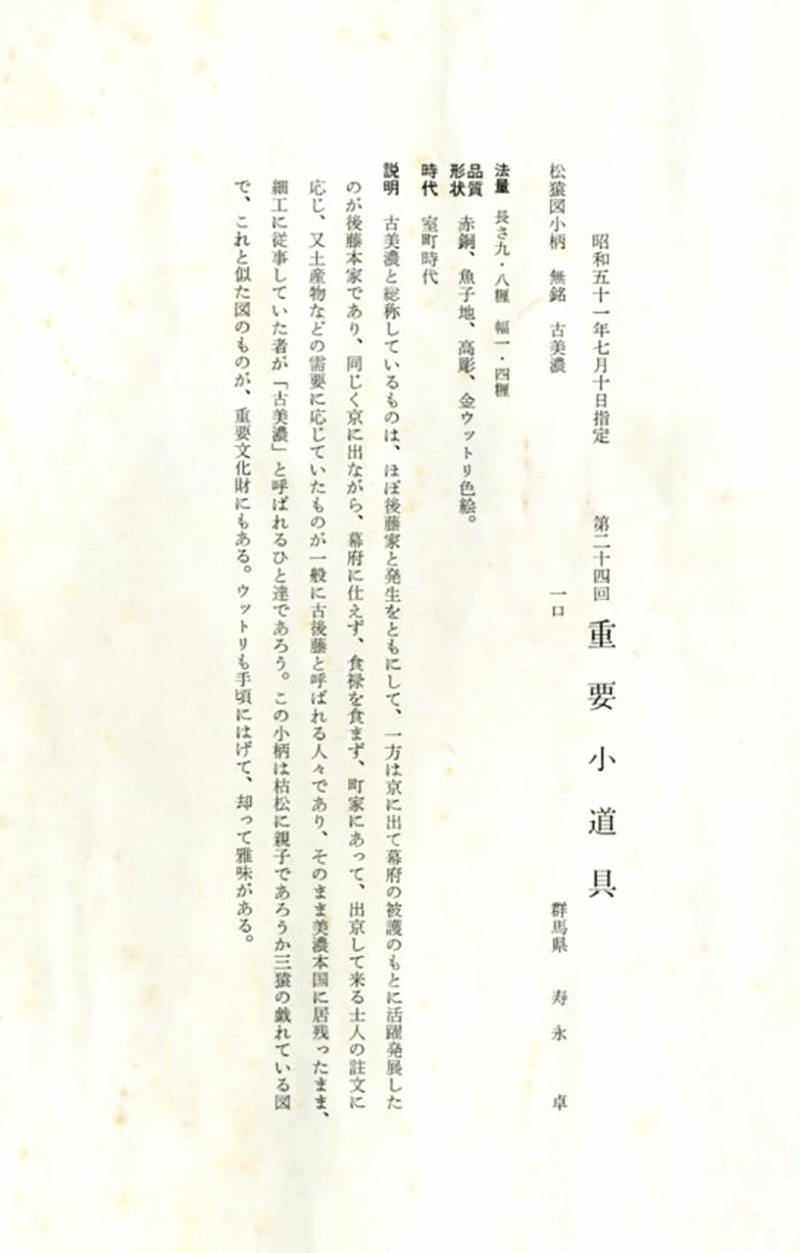
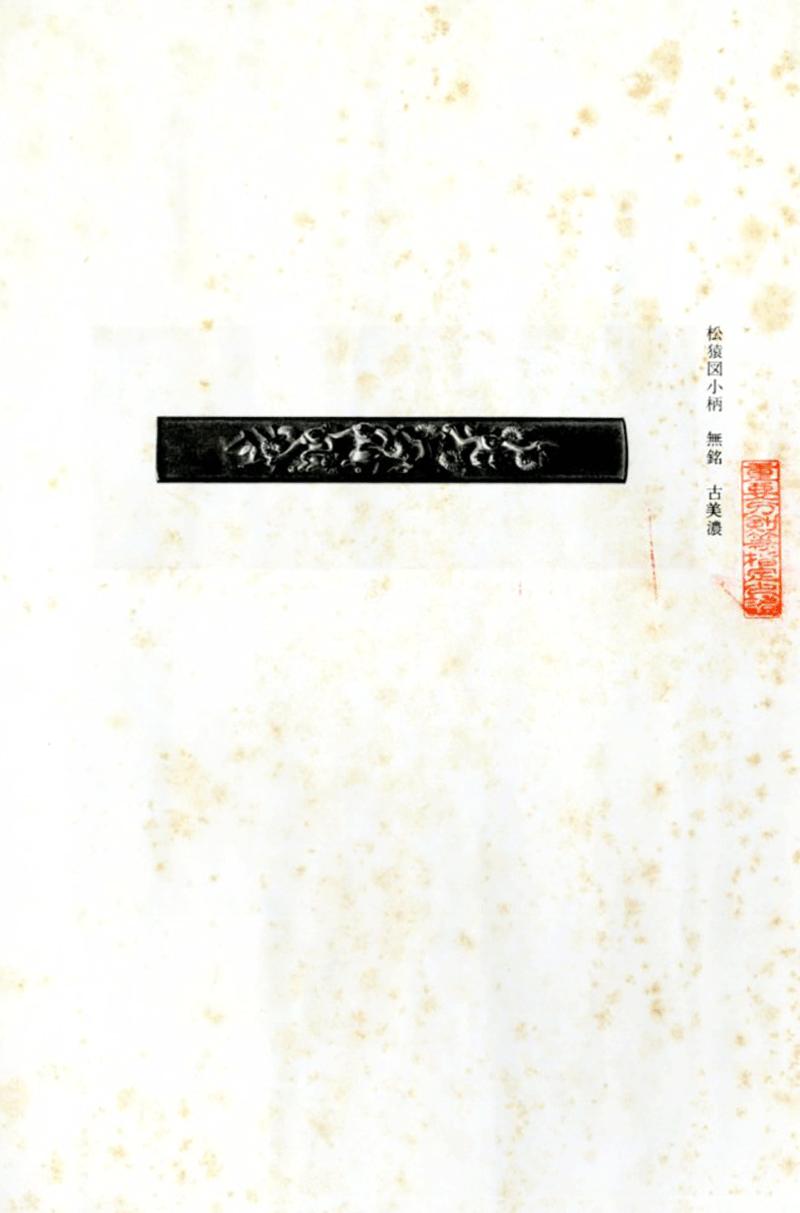
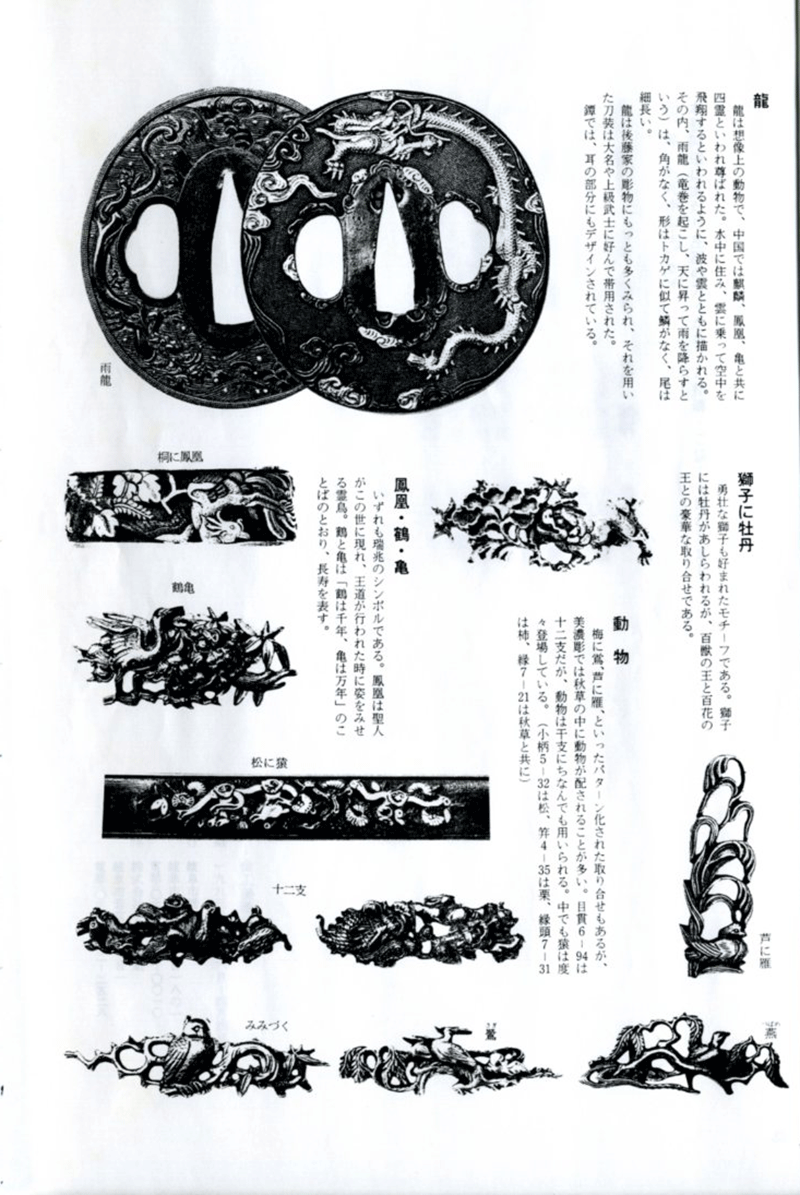
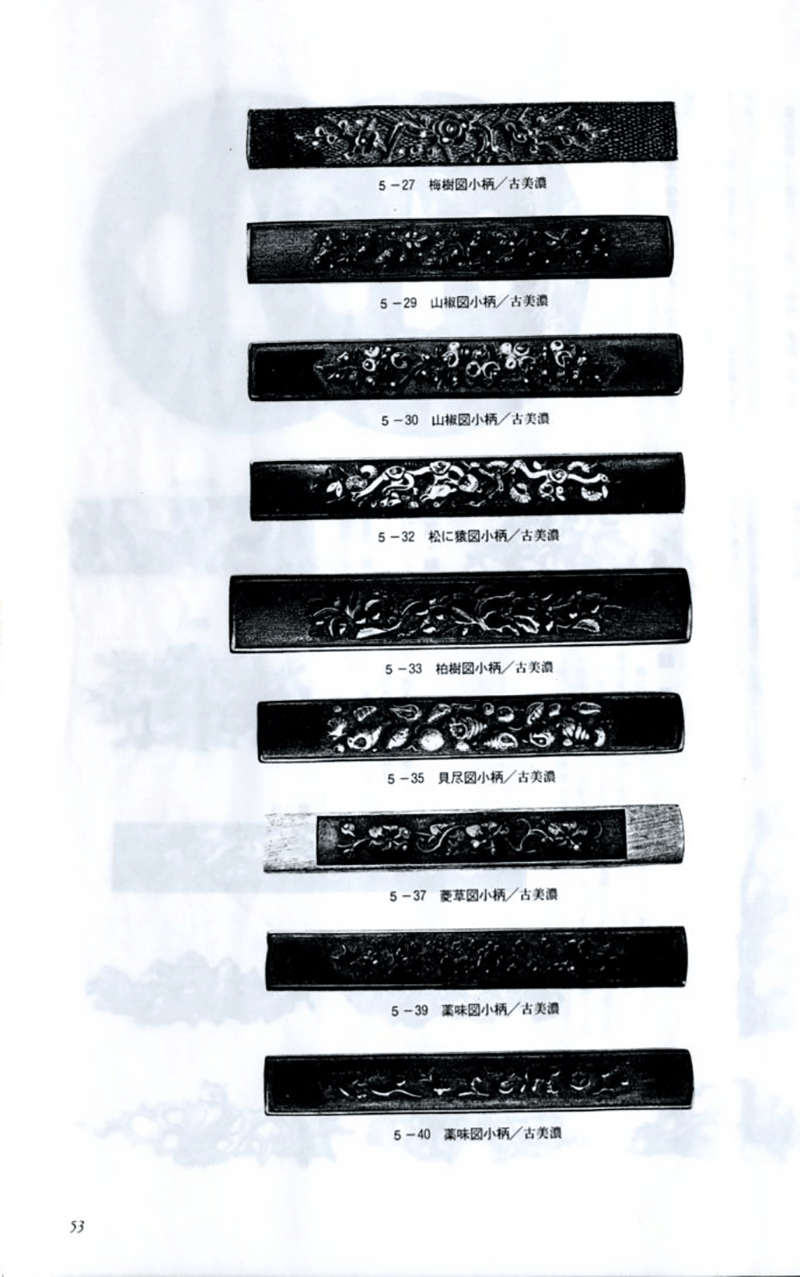
This is a Juyo Tosogu designated kozuka attributed to Ko-Mino, dating from the Muromachi period (16th century). It features a design of three monkeys playing among withered pine trees, executed with thick, vibrant enamel and three-dimensional sukisage takabori carving, characteristic of the Ko-Mino school. This piece is considered an especially old example within the school's works.
 NihontoWatch
mumei · Ko-Mino · Koto

Kotō
Mino
Unsigned
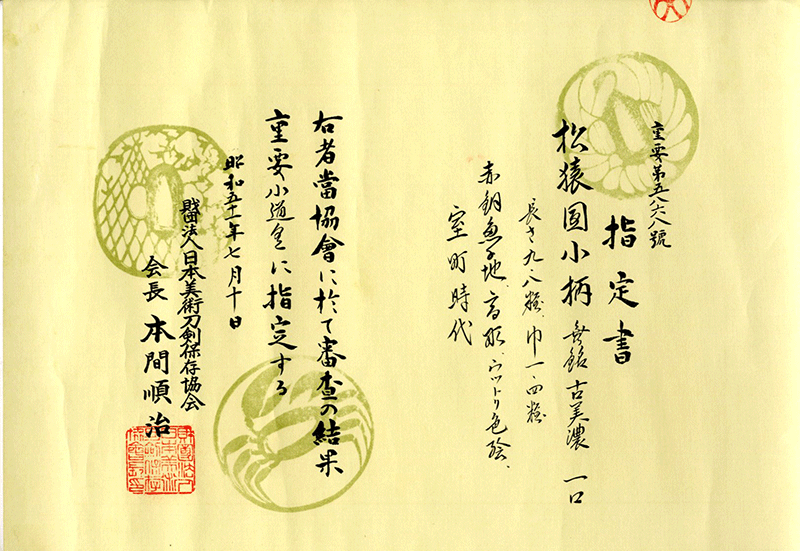
Jūyō #24 (NBTHK)
Exceptional craft of very high artistic value, judged to rank with a nationally recognized Important Art Object (Jūyō Bijutsuhin).
The NBTHK (Nihon Bijutsu Tōken Hozon Kyōkai, the Society for the Preservation of Japanese Art Swords) is a public-interest incorporated foundation founded in 1948 and supervised by Japan’s Agency for Cultural Affairs (Bunkachō); it is based at the Japanese Sword Museum in Tokyo. Its expert panels physically examine each submitted work (shinsa) and issue a certificate (kanteishō) ranking it by artistic and historical merit. NBTHK papers are the most widely recognized standard of authentication for Japanese swords and fittings.
NBTHK official siteCustomer-initiated returns accepted within two days of arrival; return shipping paid by customer and fees non-refundable. Returns/refunds unavailable for overseas deliveries.
This is a Juyo Tosogu designated kozuka attributed to Ko-Mino, dating from the Muromachi period (16th century). It features a design of three monkeys playing among withered pine trees, executed with thick, vibrant enamel and three-dimensional sukisage takabori carving, characteristic of the Ko-Mino school. This piece is considered an especially old example within the school's works.
NihontoWatchmumei · Ko-Mino · Koto
Kotō
Mino
Unsigned
Jūyō #24 (NBTHK)
Exceptional craft of very high artistic value, judged to rank with a nationally recognized Important Art Object (Jūyō Bijutsuhin).
The NBTHK (Nihon Bijutsu Tōken Hozon Kyōkai, the Society for the Preservation of Japanese Art Swords) is a public-interest incorporated foundation founded in 1948 and supervised by Japan’s Agency for Cultural Affairs (Bunkachō); it is based at the Japanese Sword Museum in Tokyo. Its expert panels physically examine each submitted work (shinsa) and issue a certificate (kanteishō) ranking it by artistic and historical merit. NBTHK papers are the most widely recognized standard of authentication for Japanese swords and fittings.
NBTHK official siteCustomer-initiated returns accepted within two days of arrival; return shipping paid by customer and fees non-refundable. Returns/refunds unavailable for overseas deliveries.