 NihontoWatchNihontoWatch
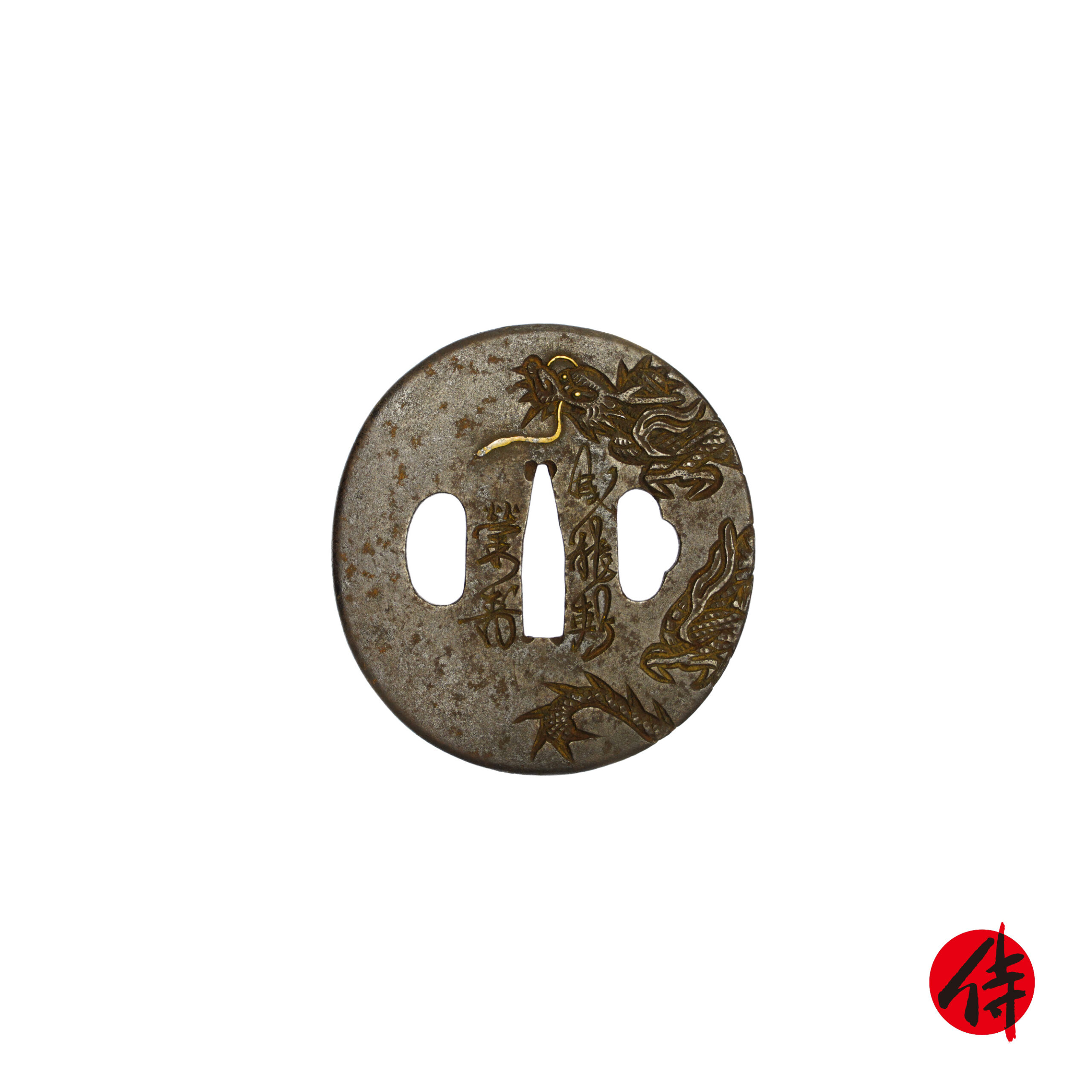
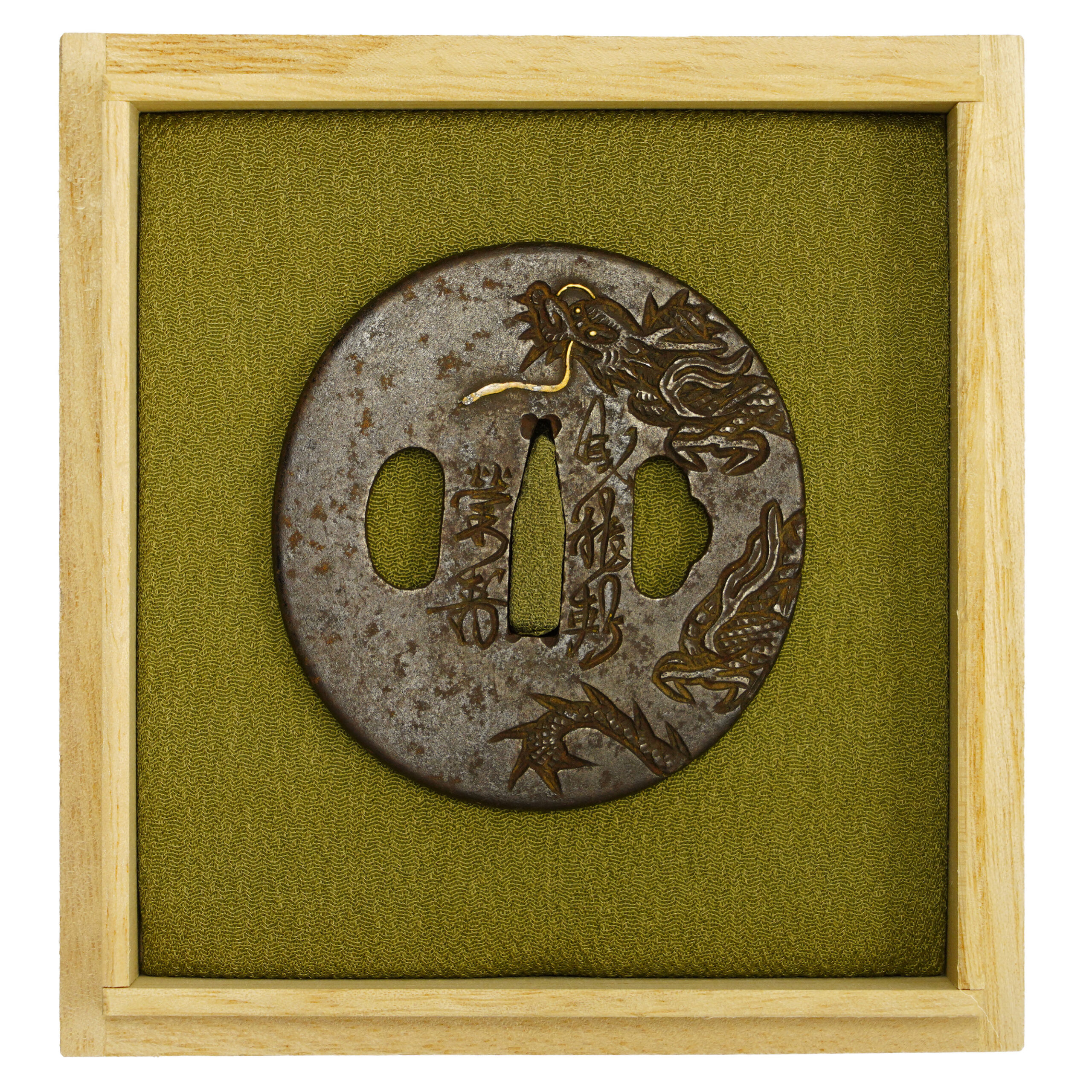
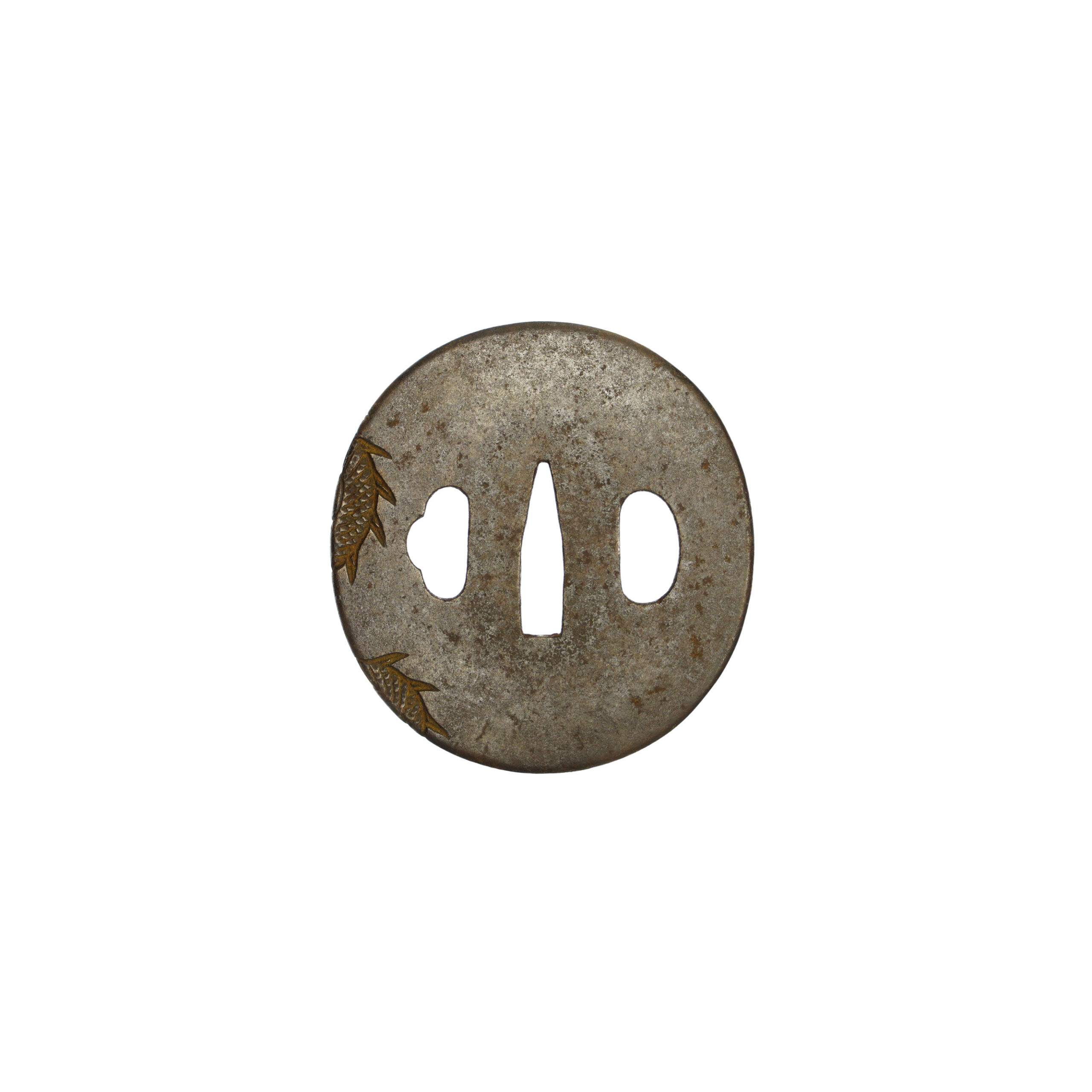
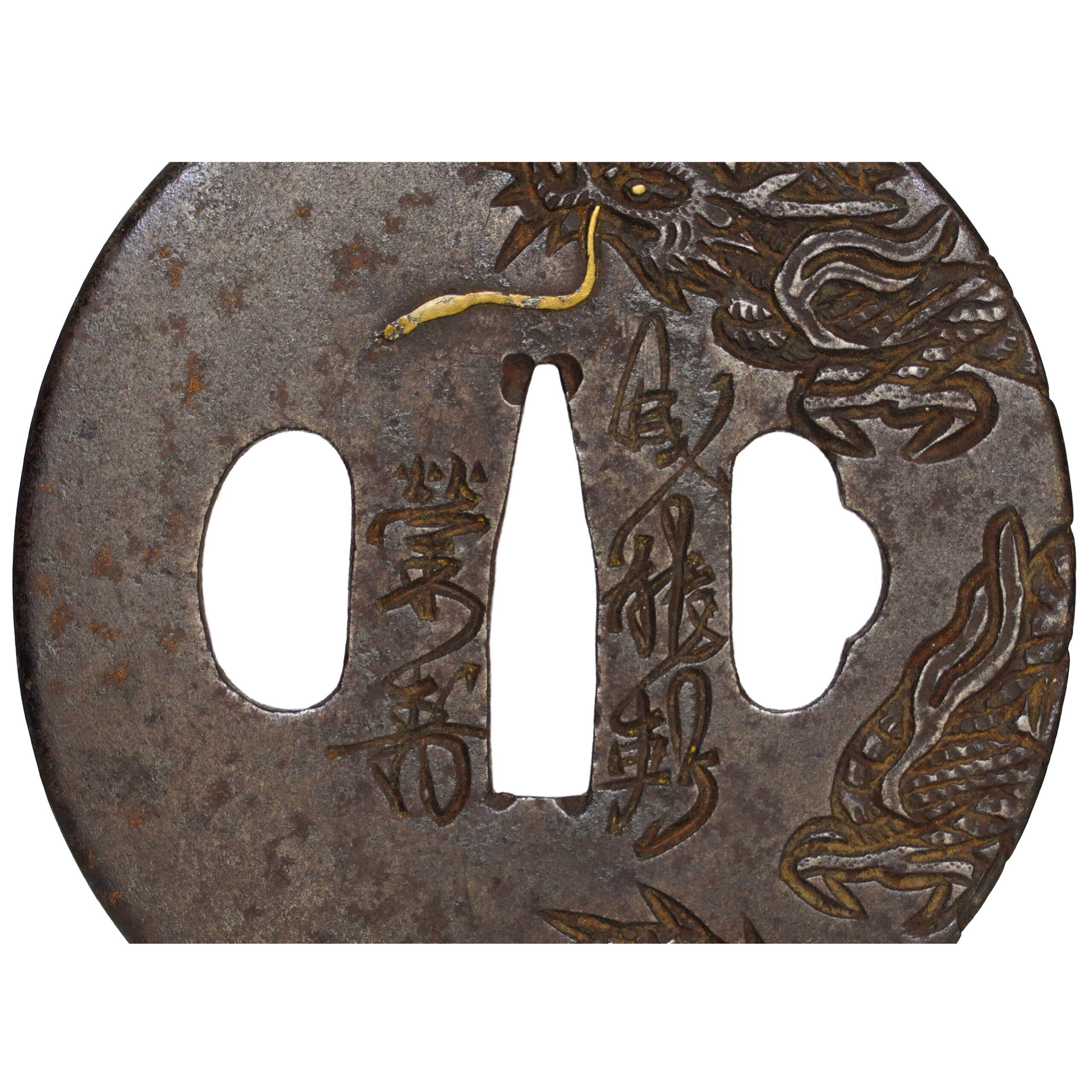
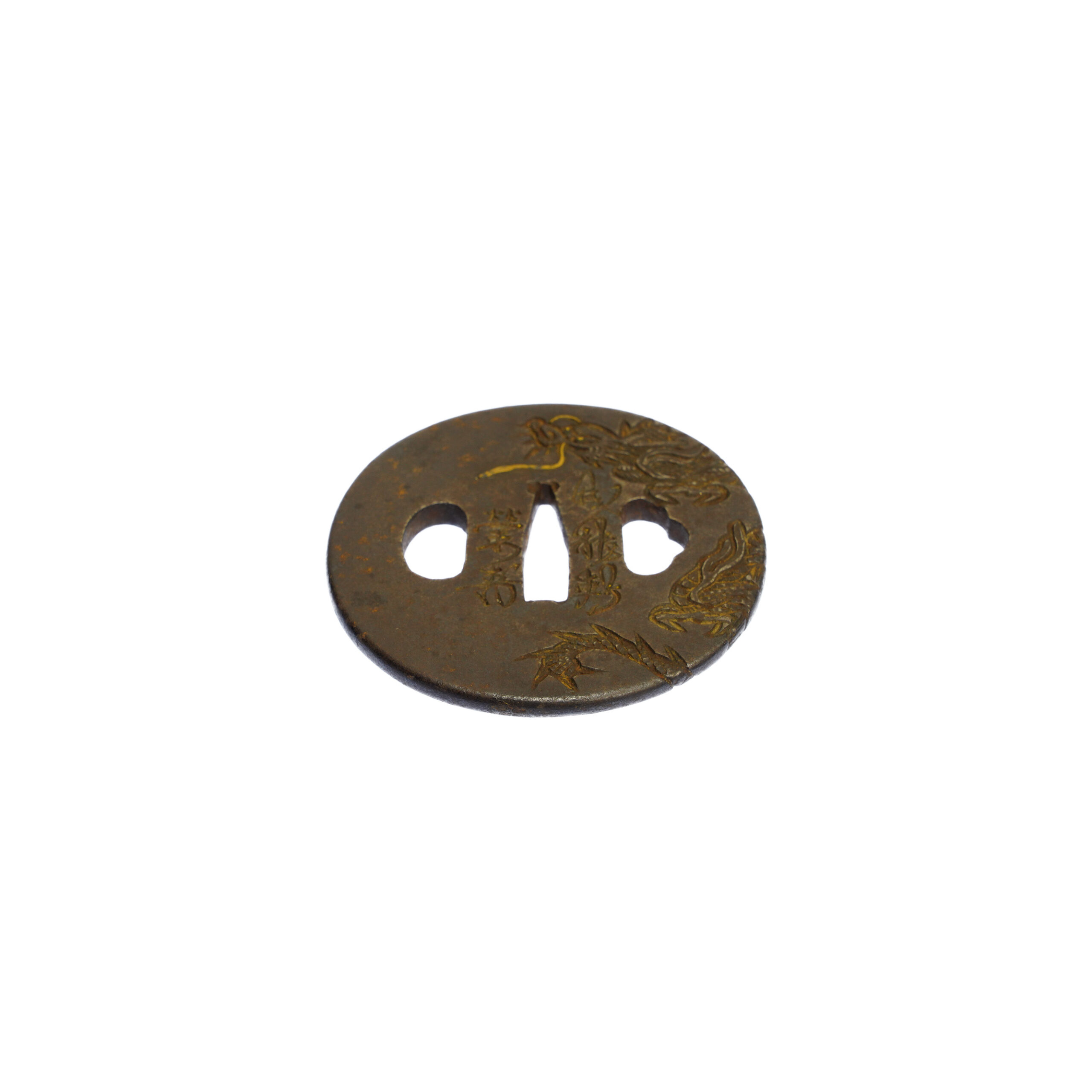
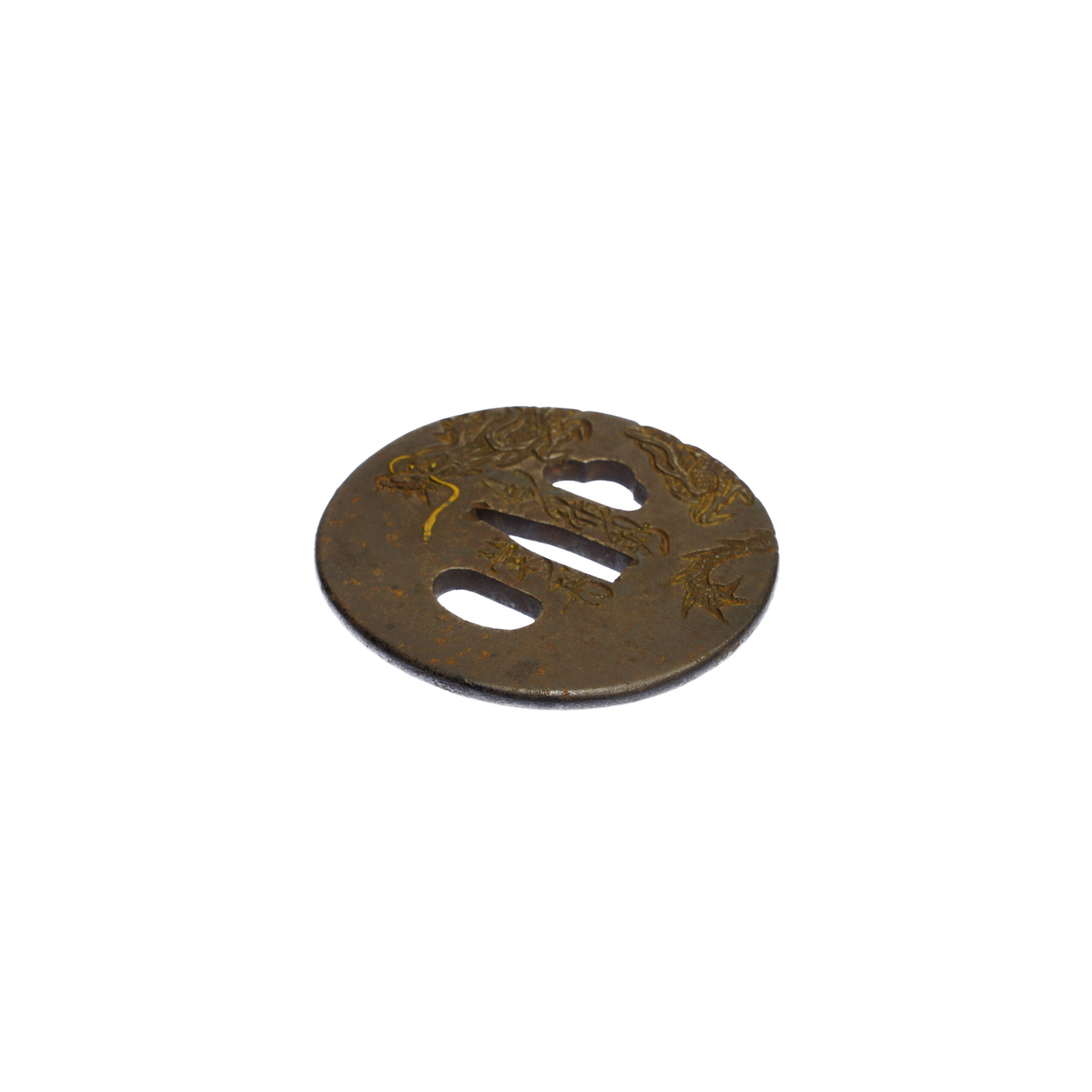
The figure of a dignified dragon is engraved on this Tsuba. Golden paint is applied to its eyes and mustache. The gigantic body of this dragon does not fit on the front screen and continues to the backside. You would even feel the power of this dragon as if it would jump out of the screen. Initially, the dragon is an imaginary creature found in ancient foreign traditions or myths. Furthermore, it is regarded as a symbolic beast of auspicious signs. Its body is likened to nine animals: antlers are deer, the head is a camel, eyes are demons, the neck is a snake, the belly is the Mizuchi (蛟, a mythical animal in Japan that looks like a snake and has a horn and four legs), scales are fish, claws are falcons, palms are tigers, and ears are cows. It was thought that the dragon would reign at the top of all animals because of its odd-looking appearance. The dragon design is often seen in sword mountings. It means lots of Samurai favored this beast motif. If you focus on the center of this Tsuba, you will find an engraved inscription. It is written as follows: 成龍軒 榮寿 (Seiryuken Eiju). The character 龍 means dragon in Japanese. He was active in the Edo period and lived in Settsu-no Kuni (摂津国, part of today’s Osaka and Hyogo prefecture). It is said he was good at carving dragons, as his name suggests. We hope you would enjoy this tasteful work.
NihontoWatchOffered by Samurai Museum

Seiryuken Eiju
Tenmei-Kansei (1781-1801)
Settsu
Signed
Machibori · Settsu
3 pieces on the market now
Machibori · Yamashiro
17 pieces on the market now
The Tetsugendo (鉄元堂) lineage emerged in Kyoto during the mid-Edo period, founded by Okamoto Genbei Toshiyuki, who trained under Tetsuya Denbei Kuniharu[[c:1]]. Known by his working name Naoshige (尚茂), the founder later adopted the art name Shoraku (正楽) after taking Buddhist tonsure, and died in An'ei 9 (1780). The lineage passed to a second generation, Naofusa (尚房), whose works also survive. Together with Ichinomiya Nagatsune and Otsuki Mitsuoki, the first-generation Shoraku was celebrated as one of the "Three Outstanding Metalworkers of Kyoto" (Kyoto kinko no sanketsu). The broader circle of Kyoto kinko working in related idioms includes Hosono Sozaemon Masamori, a metalworker resident at Nijo whose dated works span from Genroku 3 (1690) to Kyoho 3 (1718), and Yamazaki Ichiga (also called Nizaemon), whose first generation studied under Goto Shujo and whose line continued through several generations. The hallmark of the Tetsugendo school is its commanding mastery of iron. Shoraku worked chiefly in iron and earned a reputation as an artist who "handled iron with exceptional freedom" and "tolerated no rival" in that material. His characteristic method builds compositions upon a polished iron ground (tetsu migaki-ji) or a finely struck ishime-ji surface, developing figures through sukidashi-bori that transitions seamlessly into fully developed takabori (high relief), imparting depth and a heightened sense of volume.
At key points across the iron plate, inlays of gold, silver, shakudo, shibuichi, suaka, and brass are applied with meticulous zogan iroe -- a combination "often regarded as a difficult undertaking" on iron, and one that the NBTHK repeatedly describes as achievable only by Tetsugendo. Subjects are overwhelmingly figural and grounded in direct observation: scenes of figures caught in a sudden evening shower (yudachi) rank among his greatest specialties and "many examples of this same subject are known"; exotic depictions of Tatar (Dattan) figures with Western dogs recur across tsuba and other fittings; and literary themes such as Kisho (Returning Woodcutter), Genjouraku (a gagaku court dance), Fujin and the Great Buddha, and Nanbanjin (Southern Barbarians) are rendered with rich naturalistic observation and a muscular vigor the setsumei call his "true mettle" (shinkotcho). Hosono Masamori, working on shibuichi and shakudo grounds rather than iron, developed a parallel pictorial world through exhaustive kebori and katakiribori combined with hira-zogan of various colored metals, producing panoramic townscape and agrarian scenes of extraordinary descriptive density. " The Tetsugendo lineage occupies a distinctive place in the tosogu canon as the foremost Kyoto school specializing in iron. The first-generation Shoraku's tsuba consistently demonstrate what the NBTHK describes as "a level of finish achievable only by Tetsugendo," from the subdued, moist richness of his iron plates through to the polychrome inlay work executed down to the smallest details. His yudachi compositions -- capturing the clamor and confusion of an evening squall across matched daisho sets of tsuba, fuchi-kashira, and other fittings -- are "very much his own domain," while his Tatar-figure tsuba, including a dated example from Tenmei 2 (1782), are valued both artistically and as documentary evidence for research into the first- and second-generation question. The menuki depicting Kusazuri-hiki on an imo-tsugi-ji ground of gold and shakudo reveal Shoraku's capacity to work outside iron with deliberate archaism, evoking the manner of Goto Yujo. Learn more →
| Smith | Era | Designated |
|---|---|---|
| Shoraku正楽 | — | 15 |
| Naofusa直房 | — | 0 |
| Bokusen牧川 | — | 0 |
| Shigekuni重国 | — | 0 |
| Buzen武禅 | — | 0 |
Returns/exchanges limited to defects caused by shipping (except willful misconduct or gross negligence by the company); customers must contact within 72 hours of receiving the product.