 NihontoWatchNihontoWatch
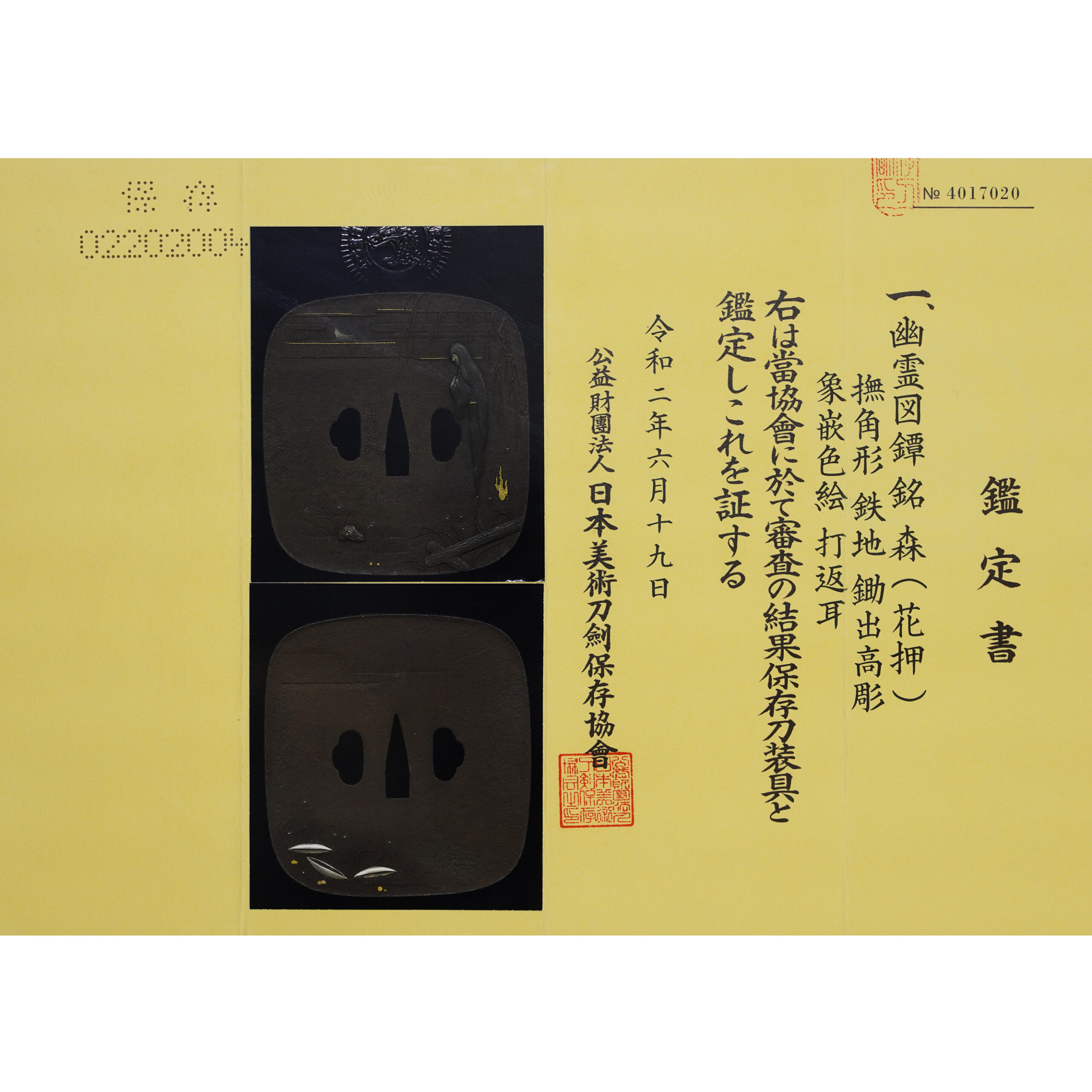
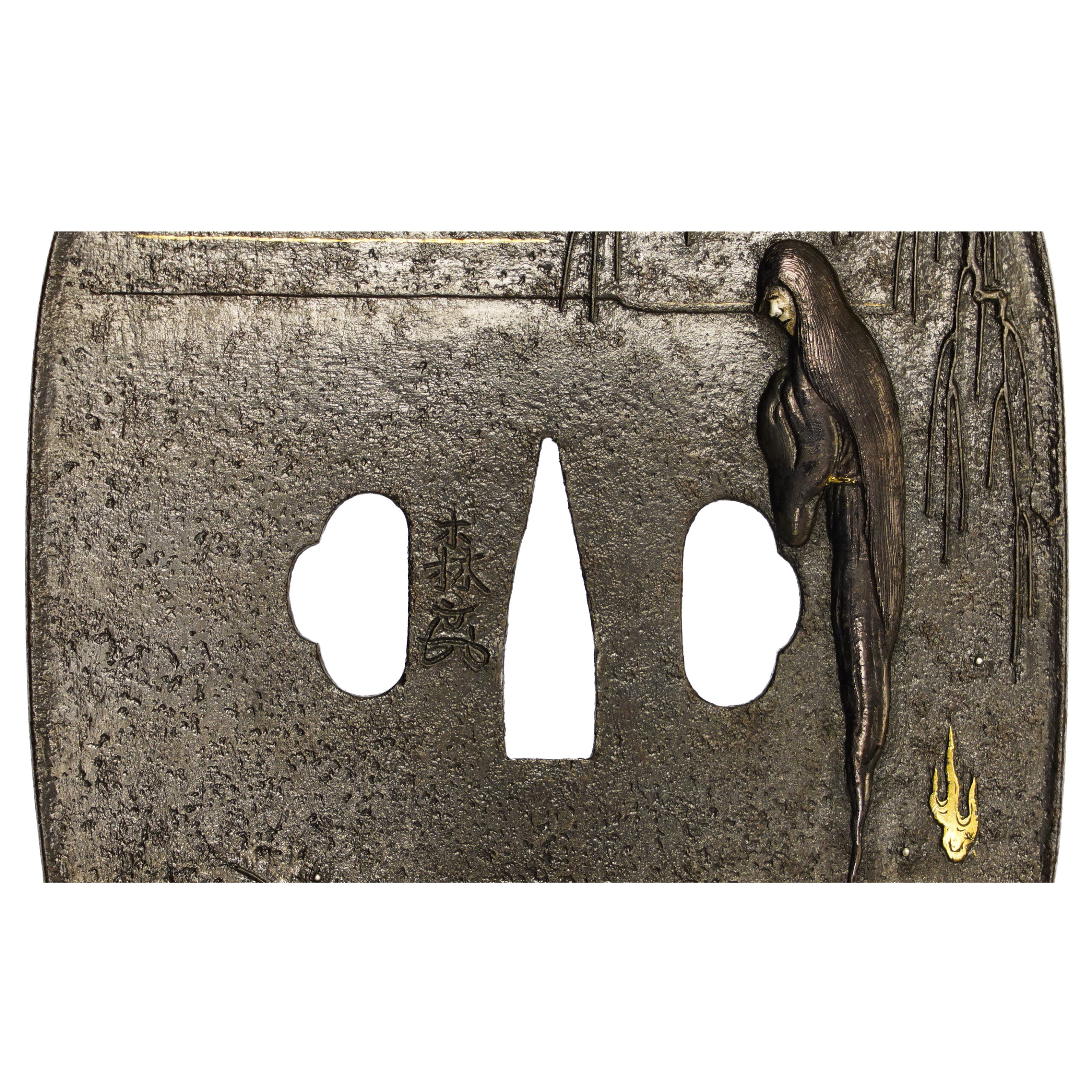
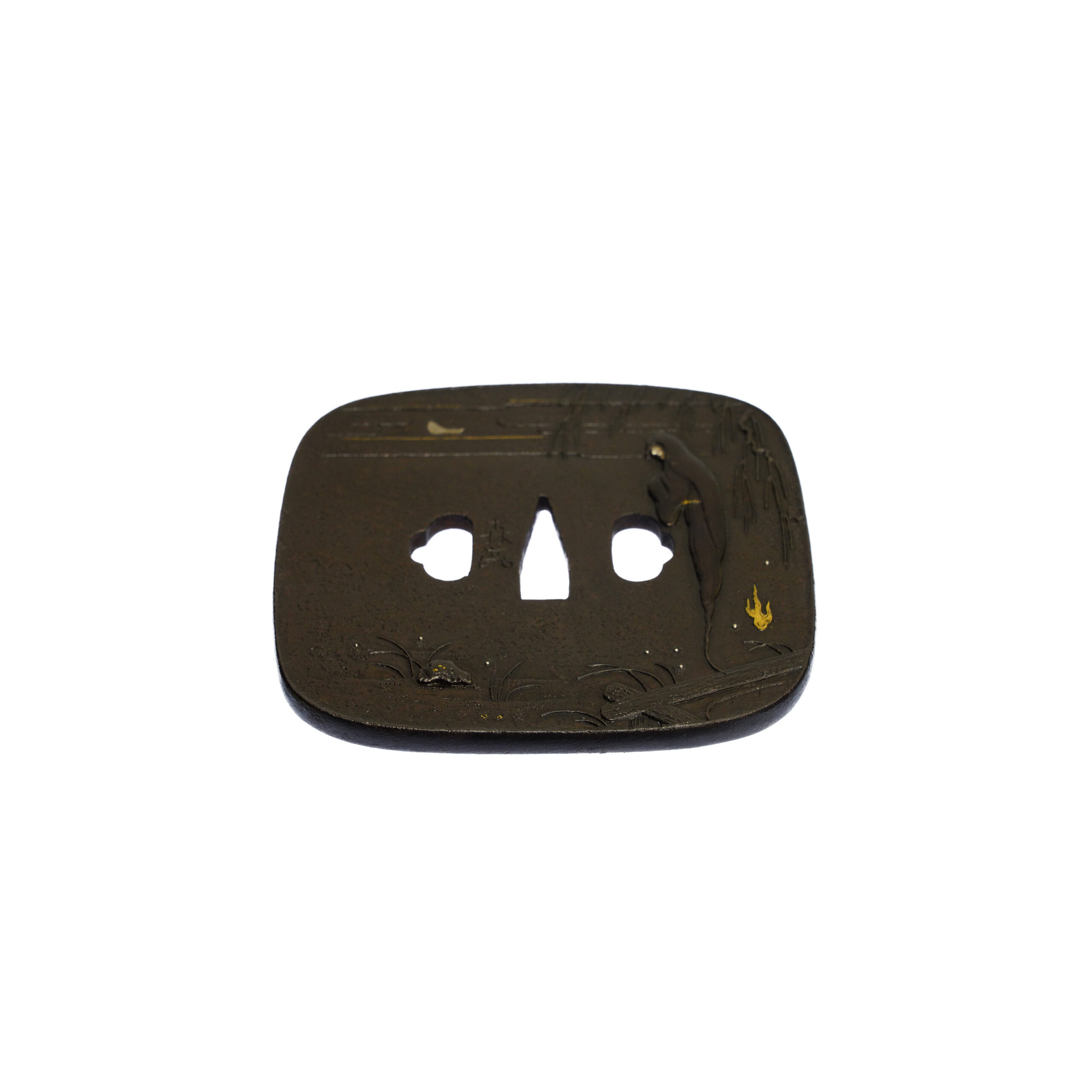
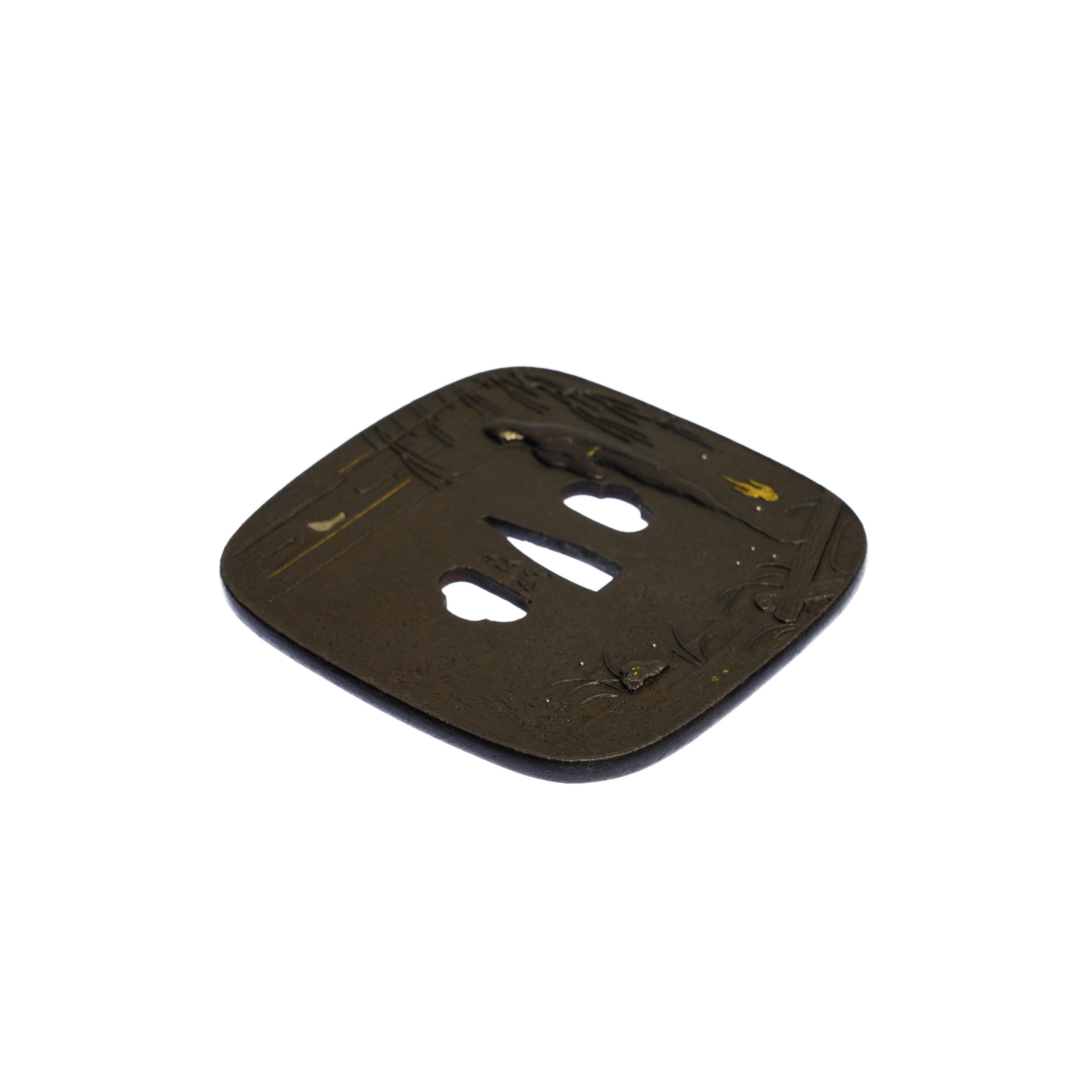
Title: Yūrei Zu Tsuba Description This Tsuba is recognized by The Society for Preservation of Japanese Art Swords, which is known as NBTHK. Its engraved inscription is written as follows: Mori (森, maker’s name) and the Kaou (花押, his stylized signature). About the design, its theme is the Yūrei Zu (幽霊図). Yūrei means ghost in Japanese, and the Yūrei Ga (幽霊画) is a kind of Japanese-style painting and Ukiyo-e (浮世絵, a picture of the floating world). This painting style was widespread from the Edo period to the Meiji period. It is said that the Yūrei Ga requires complicated techniques among all paintings. The Yūrei Ga depicts ghosts and other objects in the world of the dead. Various Yūrei Gas were drawn, such as those with scary horror or humorous designs. It has been established as a genre of painting subject from a variety of styles and a large number of works. The Yūrei Ga tends to have a negative impression when conveyed in this way. However, it could also be perceived as an auspicious motif. For example, many ghosts in Yūrei Gas do not have legs. There is also the idea that it is promising because it is associated with the word “Asi ga Nai (足が無い, no legs)”, that is, “Shuppi ga Nai (出費が無い, no expenses)” in Japanese. Another view says that Yūrei Gas were drawn for memorial service or amulet against thieves and evil spirits. In addition, in some areas, people displayed it to pray for rain. A long-haired ghost whose gender is unclear is depicted on this Tsuba. We feel the sad emotion from its downcast eyes. There is never an aggressive and violent atmosphere, just quietly, quietly standing there and looking miserable. On a moonlit night when the crescent moon shines, the appearance of the ghost standing quietly under a willow tree tells us a strong sense of loneliness. You would find a Hitodama (人魂, a spirit of a dead person returning as a small ball of fire) at the feet of the ghost. The screen composition and careful sculptural expression create an elegant atmosphere, and this Tsuba seems to be a single painting. We think the backside of this Tsuba depicts the same scenery as the front. The three objects lying on the roadside are probably hats. We imagine these were hats worn by Samurai who lost their lives on this battlefield. If so, this ghost might be mourning the fallen warriors on the battlefield, or perhaps this ghost is himself a Samurai who passed away in battle, lamenting the impermanence of this world. We hope you will add this delicate and beautiful piece to your great collection and cherish it. *As this item is an antique, please check each photo and ensure its condition. What is Tsuba? Tsuba is the hand-guard of the Japanese sword. High-class Samurai wore his Katana sword with its beautiful sword mountings such as Tsuba. Tsuba’s front design tends to be more decorative as this part was often seen by other Samurais when he was walking on the streets. Why is it that the sword mounting was important for Samurai? The sword mountings of the Japanese sword have many kinds of decorations such as handguards (Tsuba), sword hilt (Menuki), pommel (Fuchi Kashira). The Japanese sword worked as a weapon and as an object to show who he was. For example, it shows their personalities and beliefs. You could say that it is like decorations for smartphones today. We recommend you zoom in on the pictures of the sword fittings. When you do so, you can see the skill of Japanese metal engraving techniques. They are mainly made of iron and copper with inlays of gold, silver, and bronze. When it comes to handguard (Tsuba), each one has a different outline and weight. These sword fittings that have lived with Japanese swords of the same age might be worth as much as the Japanese swords. They are inconspicuous parts of the Japanese sword. Nevertheless, if you are knowledgeable or particular about it, you will become a connoisseur of the Samurai. Authentication Paper : NBTHK Hozon Certificate NBTHK, also known as Nihon Bijutsu Touken Hozon Kyoka
NihontoWatchOffered by Samurai Museum

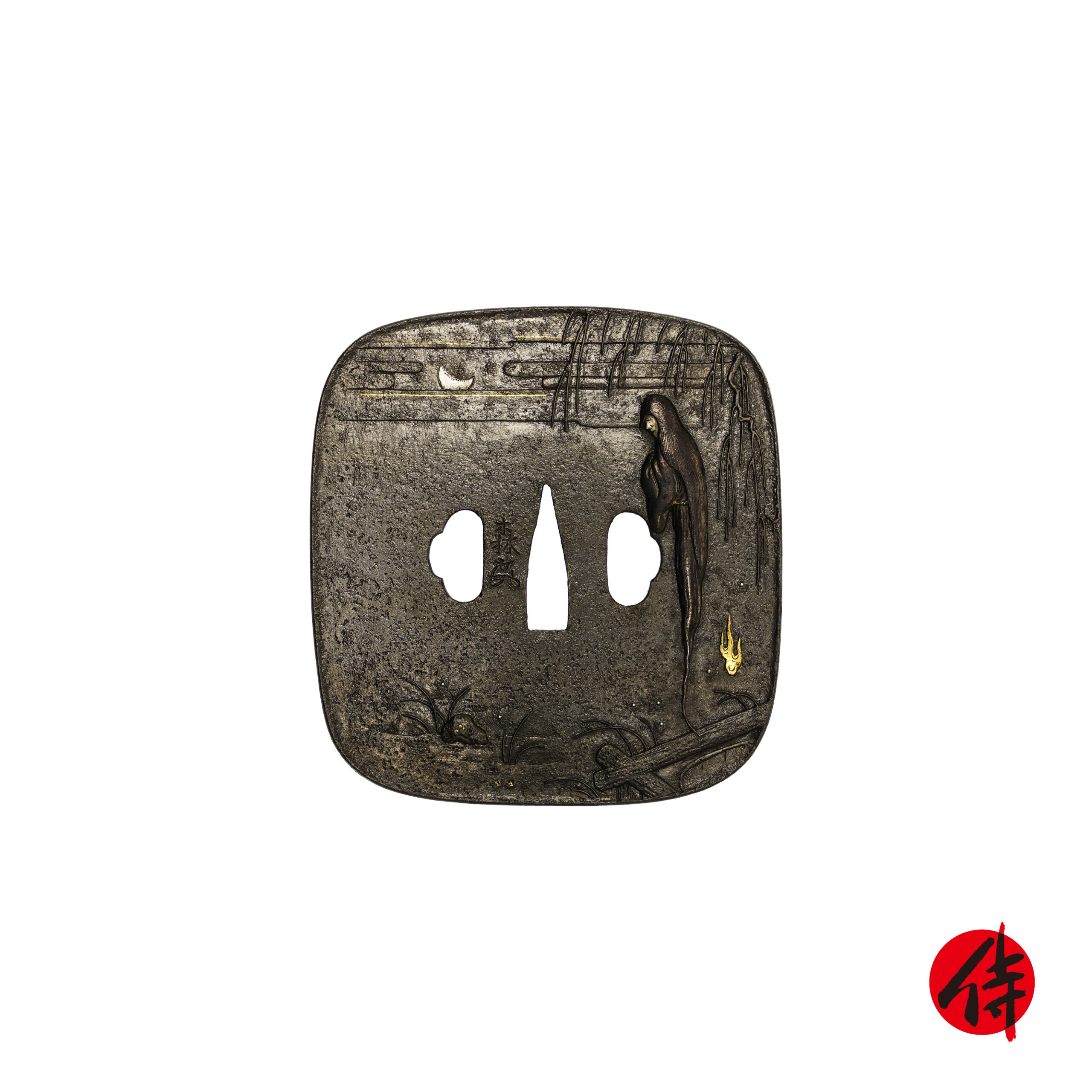
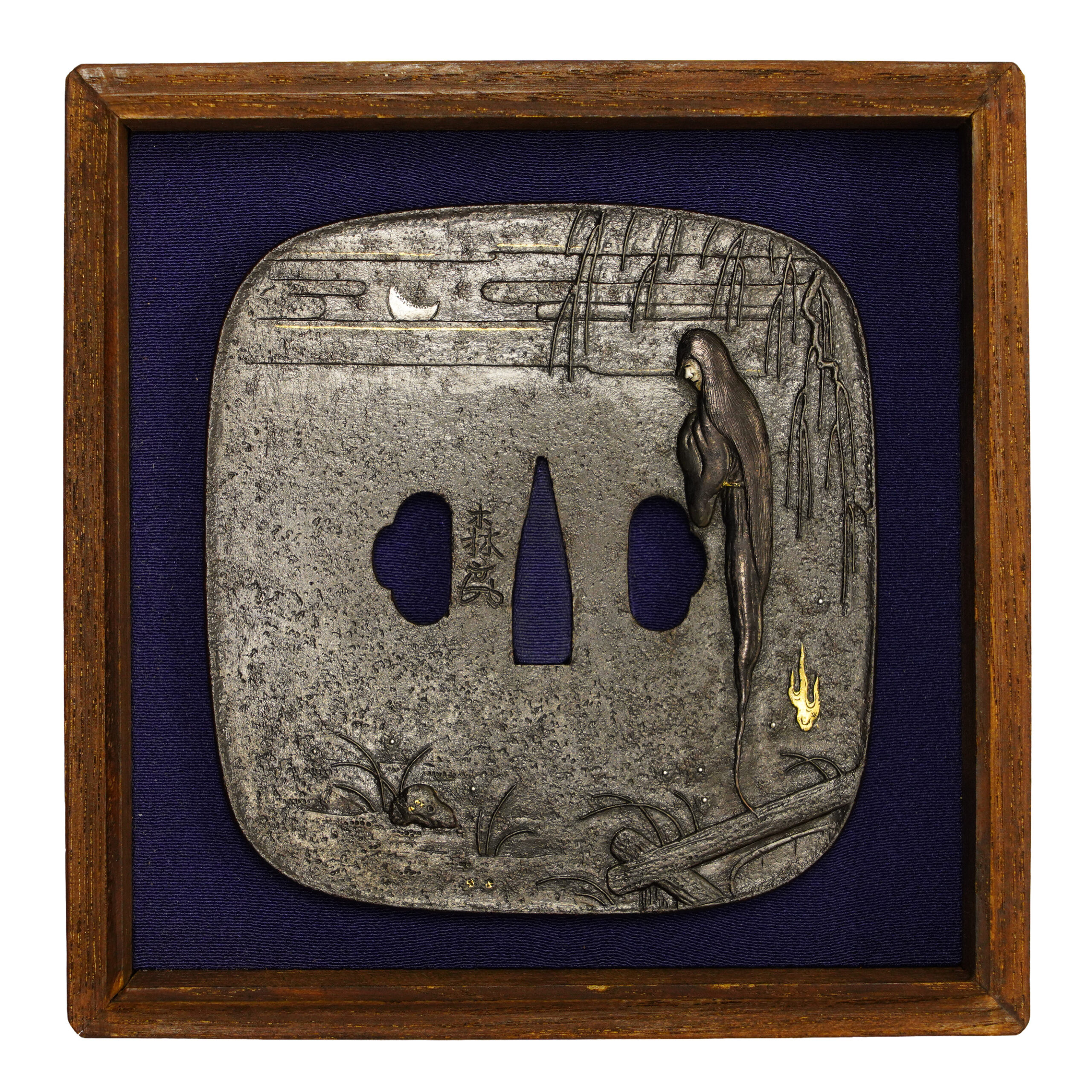
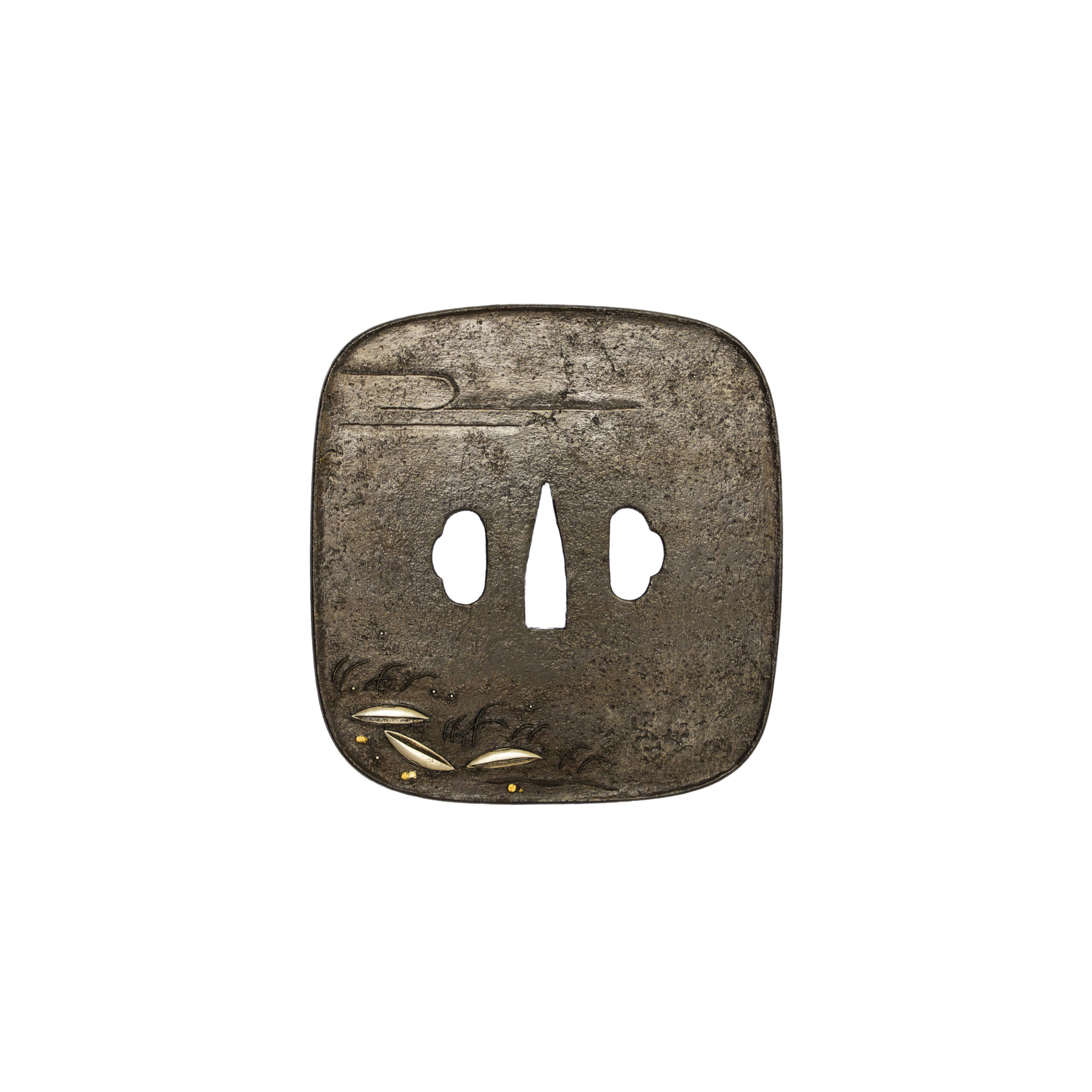
Iron-tsuba · Echizen
Iron-tsuba · Echizen
18 pieces on the market now
| Smith | Era | Designated |
|---|---|---|
| Yasuyuki安之 | — | 0 |
| Kunihiro国広 | — | 0 |
| Yoshihide宜秀 | — | 0 |
| Yasuie安家 | — | 0 |
| Akao Jinsuke赤尾甚助 | — | 0 |
Certifies a genuine fitting worth preserving: a correct signature, or, if unsigned, an identifiable era and school, with recognized artistic and craft value.
The NBTHK (Nihon Bijutsu Tōken Hozon Kyōkai, the Society for the Preservation of Japanese Art Swords) is a public-interest incorporated foundation founded in 1948 and supervised by Japan’s Agency for Cultural Affairs (Bunkachō); it is based at the Japanese Sword Museum in Tokyo. Its expert panels physically examine each submitted work (shinsa) and issue a certificate (kanteishō) ranking it by artistic and historical merit. NBTHK papers are the most widely recognized standard of authentication for Japanese swords and fittings.
NBTHK official siteReturns/exchanges limited to defects caused by shipping (except willful misconduct or gross negligence by the company); customers must contact within 72 hours of receiving the product.