 NihontoWatchNihontoWatch
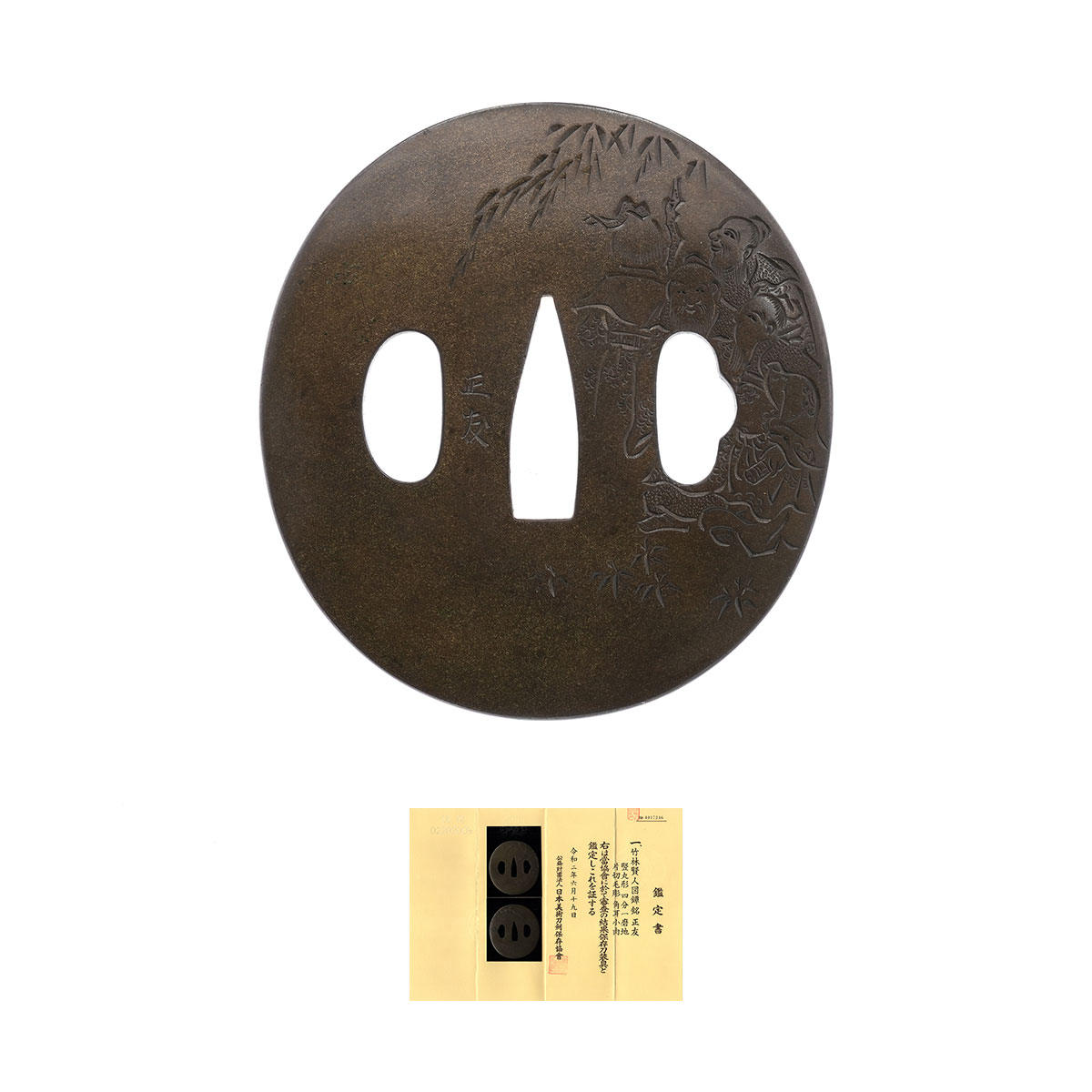
Masatomo was a tsuba smith who left his name as a metalworker of the Akao school in the mid-Edo period; the Akao school originated in Echizen and later branched out to Edo, handling irogane such as shakudo and shibuichi in addition to nikubori sukashi on tetsu-ji, organizing diverse subjects such as vessels, plants, and figures into neat compositions. Although details of Masatomo's personal history remain unknown, his style—which utilizes the calm ground color of shibuichi and freely manipulates fine tagane to depict pictorial scenes—reveals the reliable handling of jigane cultivated by the Akao school and the refined aesthetic sense typical of Edo metalwork. The Chikurin Kenjin-zu (Sages in a Bamboo Grove) is a motif derived from Chinese anecdotes depicting high-ranking scholars who distanced themselves from the fame, profit, and power of the secular world to gather in bamboo groves and enjoy poetry, wine, music, and pure conversation, generally evoking the "Seven Sages of the Bamboo Grove" of the Wei and Jin dynasties. Because bamboo maintains green leaves even in severe cold and possesses nodes while growing straight, it symbolizes integrity, nobility, and an indomitable spirit; the sages playing in such bamboo groves have been repeatedly featured in Japanese paintings, crafts, and tosogu as ideal literati figures who do not cater to worldly trends and protect their own beliefs and spiritual freedom. This work uses a spacious tatemaru-gata shibuichi migaki-ji, depicting four sages gathered in a bamboo grove on the right side of the omote using katakiribori and kebori, and by intentionally leaving a large yohaku on the left side, it impressively expresses the quiet conversation of the figures and the clear air surrounding the bamboo grove. The facial features, beards, clothing folds, and belongings of each sage are skillfully distinguished using only the depth of the tagane and the strength of the lines, and by connecting the bamboo leaves hanging from above with the group of figures diagonally, a natural flow of sight and depth is created in the composition rich in yohaku; on the ura, a single bamboo stalk is drawn freely on the left side with only the ground added simply below, leaving a stillness in contrast to the figures on the omote and a lingering feeling as if the bamboo grove continues beyond the frame. The calm brownish-gray unique to shibuichi, the smooth migaki-ji, and the neat contours of the kaku-mimi koniku complement the delicate carved lines; from a distance, it presents a dignified appearance utilizing yohaku, and at hand, one can appreciate the expressions of the sages, the patterns of their robes, and every single bamboo leaf, making this a work of tranquility and certain status that allows for long-term appreciation of the pictorial carving techniques and literati taste of Akao Masatomo.
Offered by Toushin
18 on the market

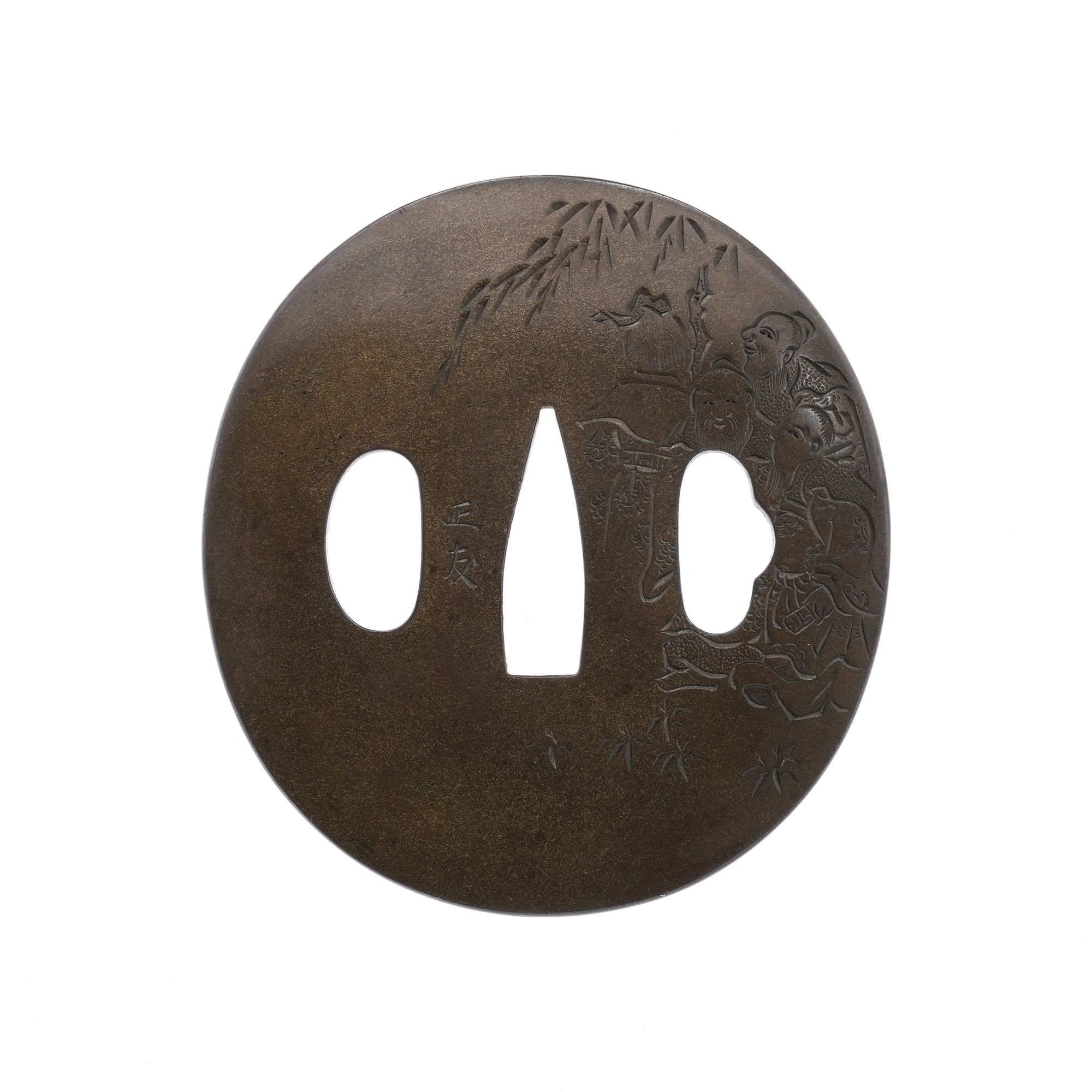
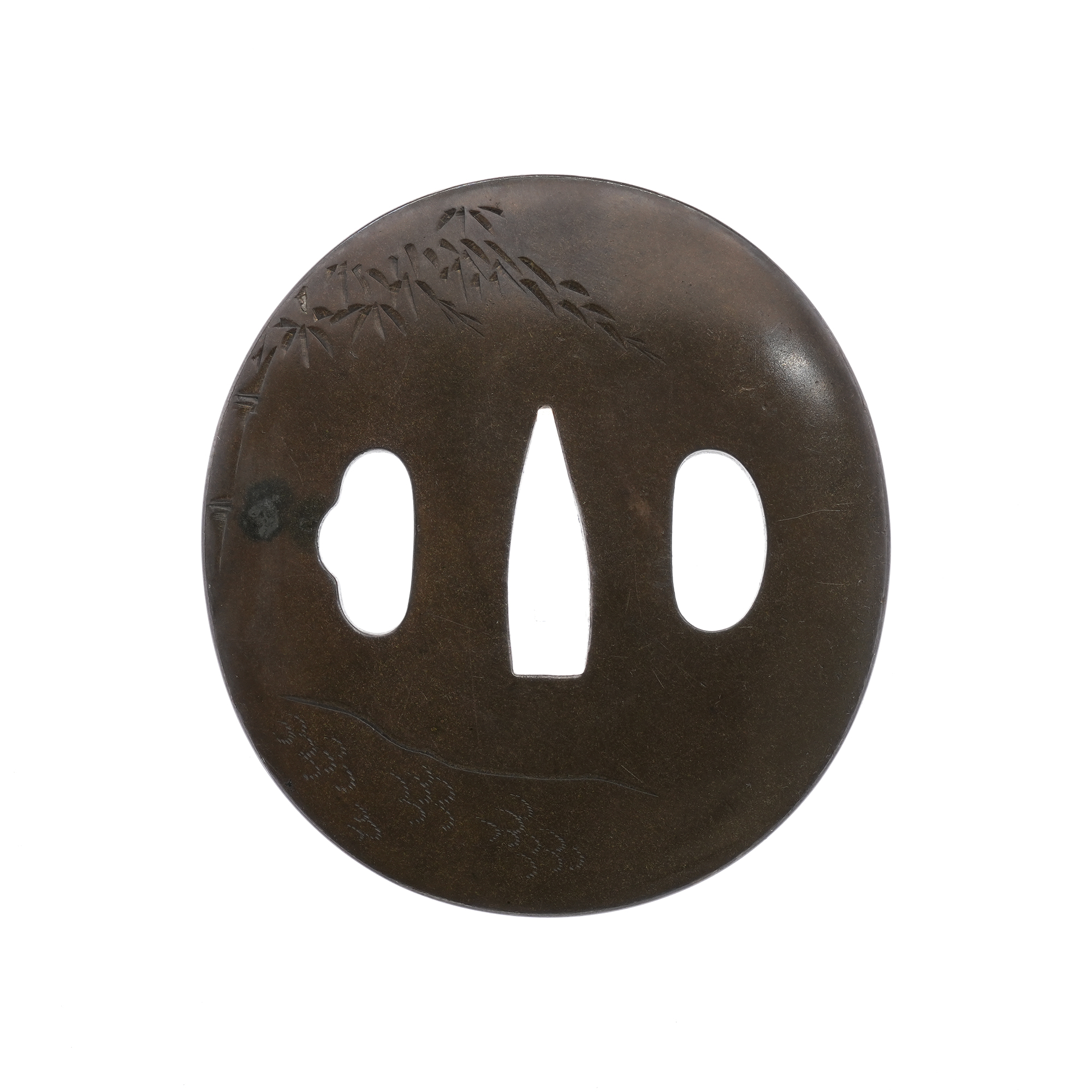
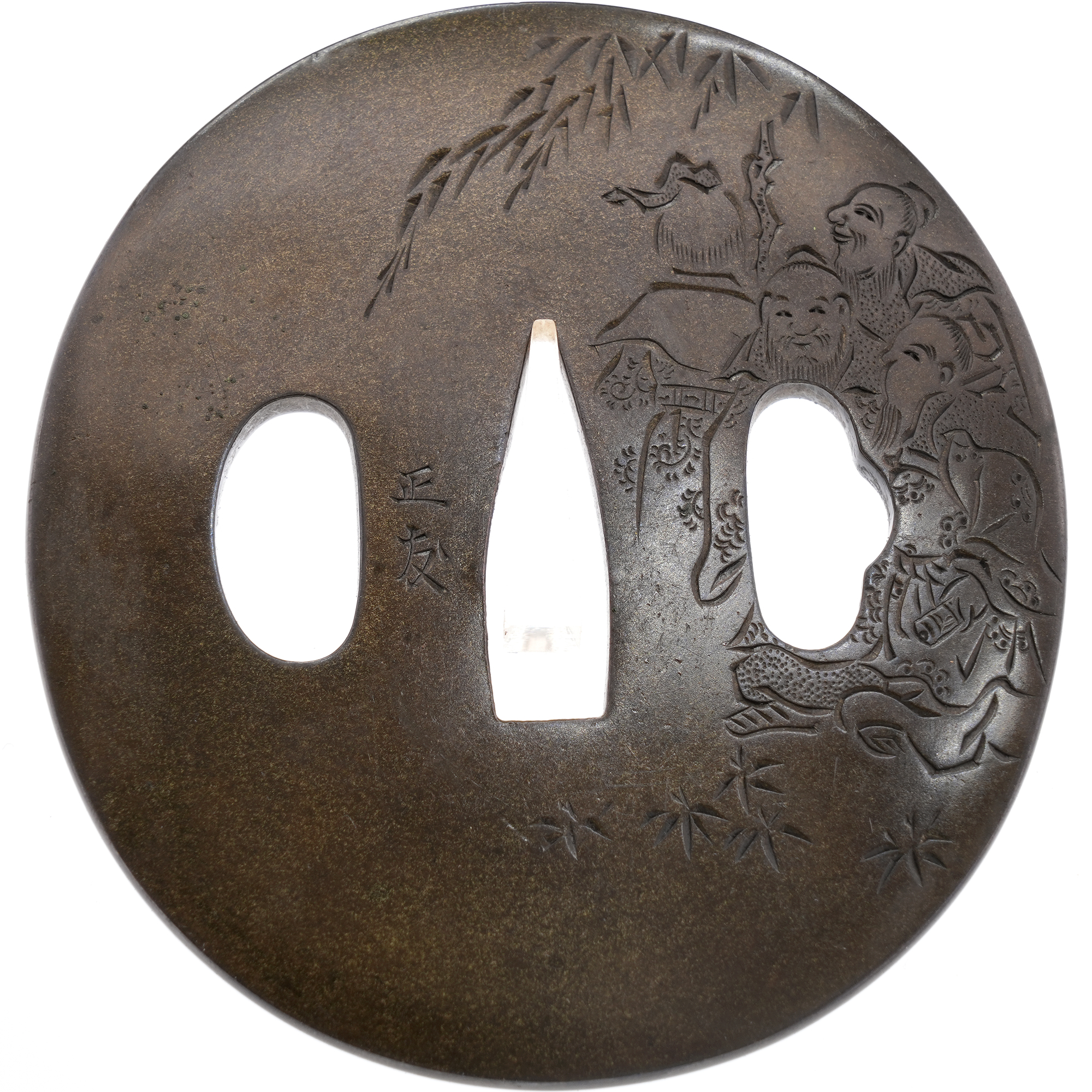
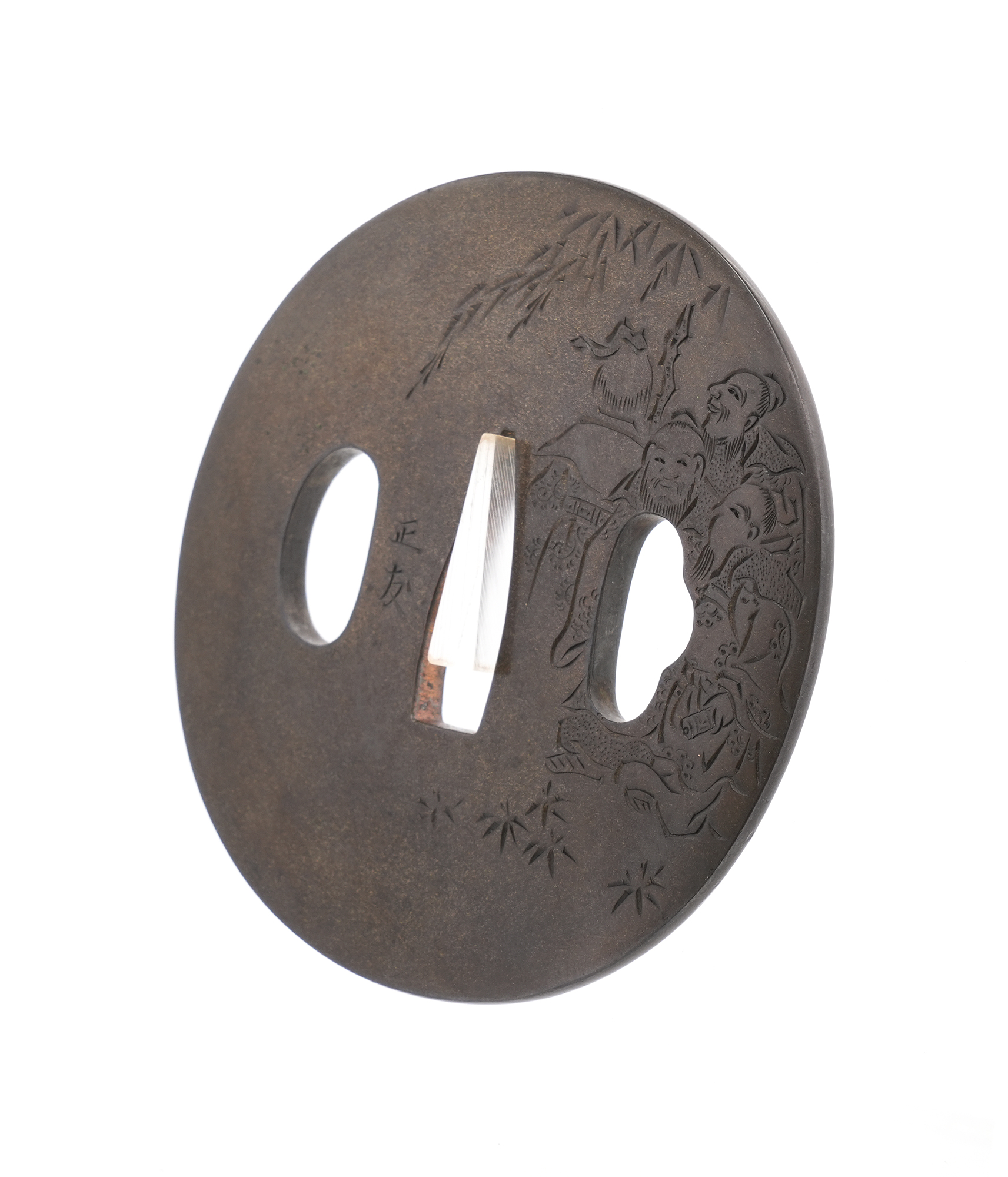
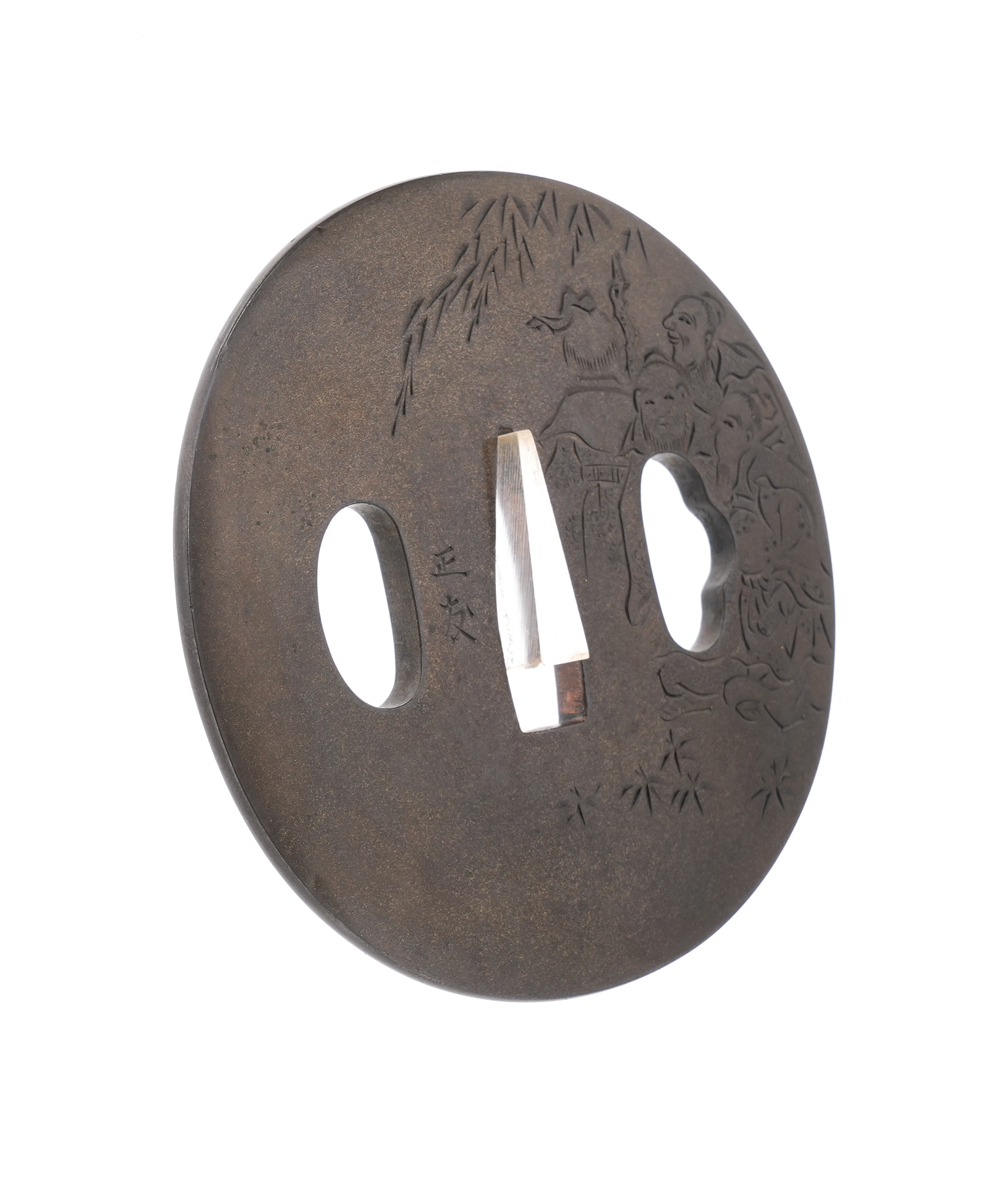
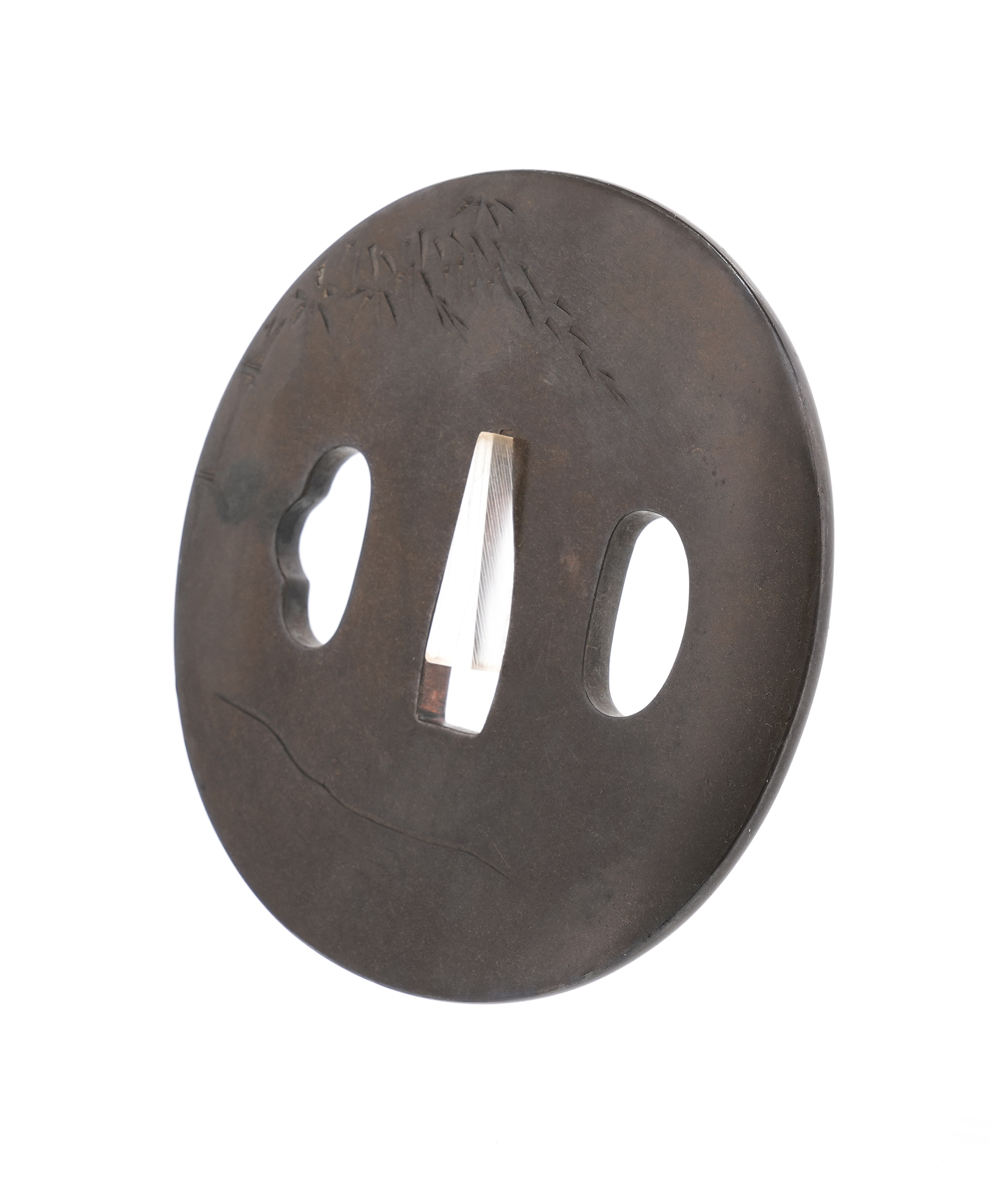
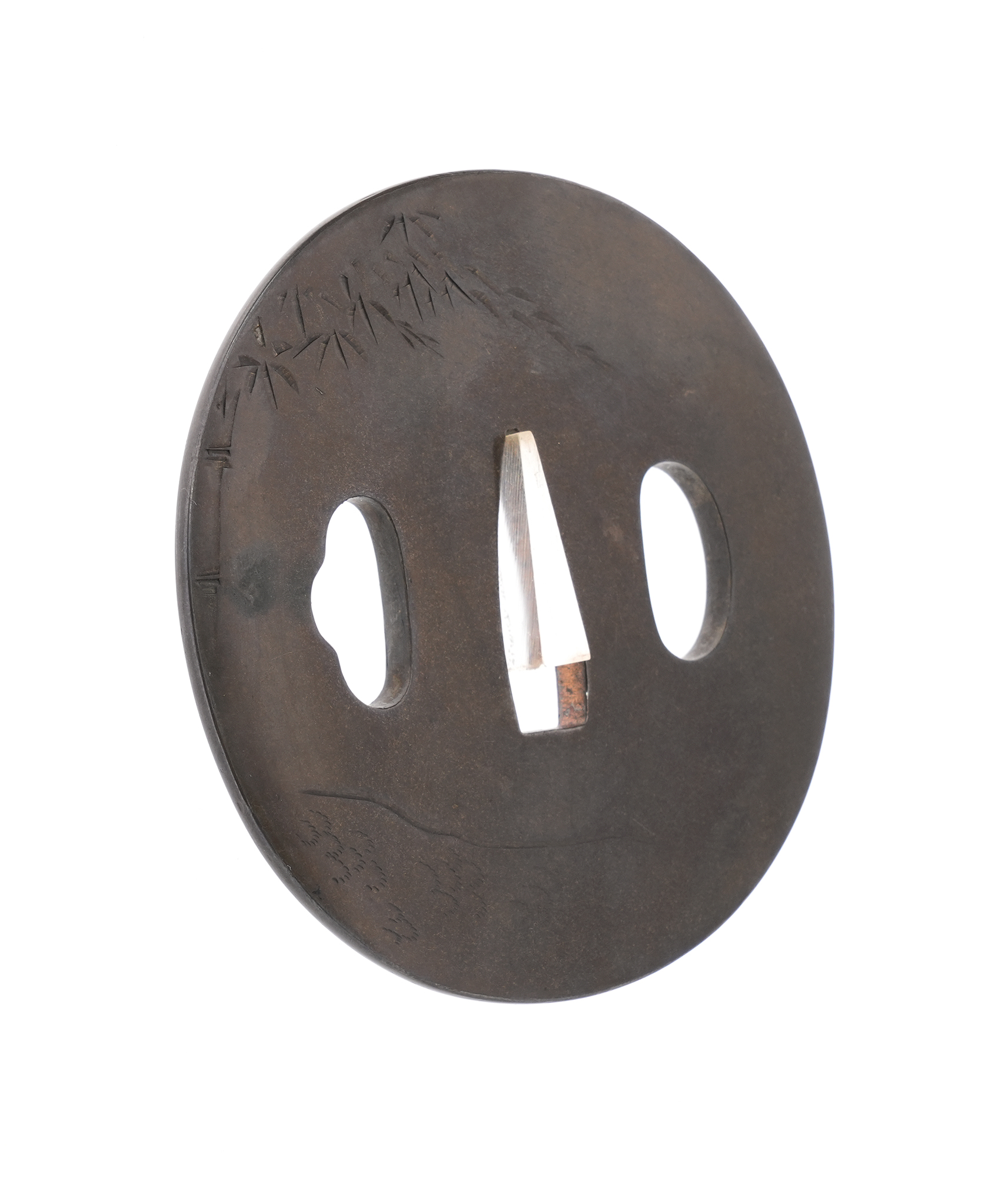
As written by the shop
Machine translation from the shop's Japanese · may contain errors ·
Iron-tsuba · Echizen
18 pieces on the market now
| Smith | Era | Designated |
|---|---|---|
| Yasuyuki安之 | — | 0 |
| Kunihiro国広 | — | 0 |
| Yoshihide宜秀 | — | 0 |
| Yasuie安家 | — | 0 |
| Akao Jinsuke赤尾甚助 | — | 0 |
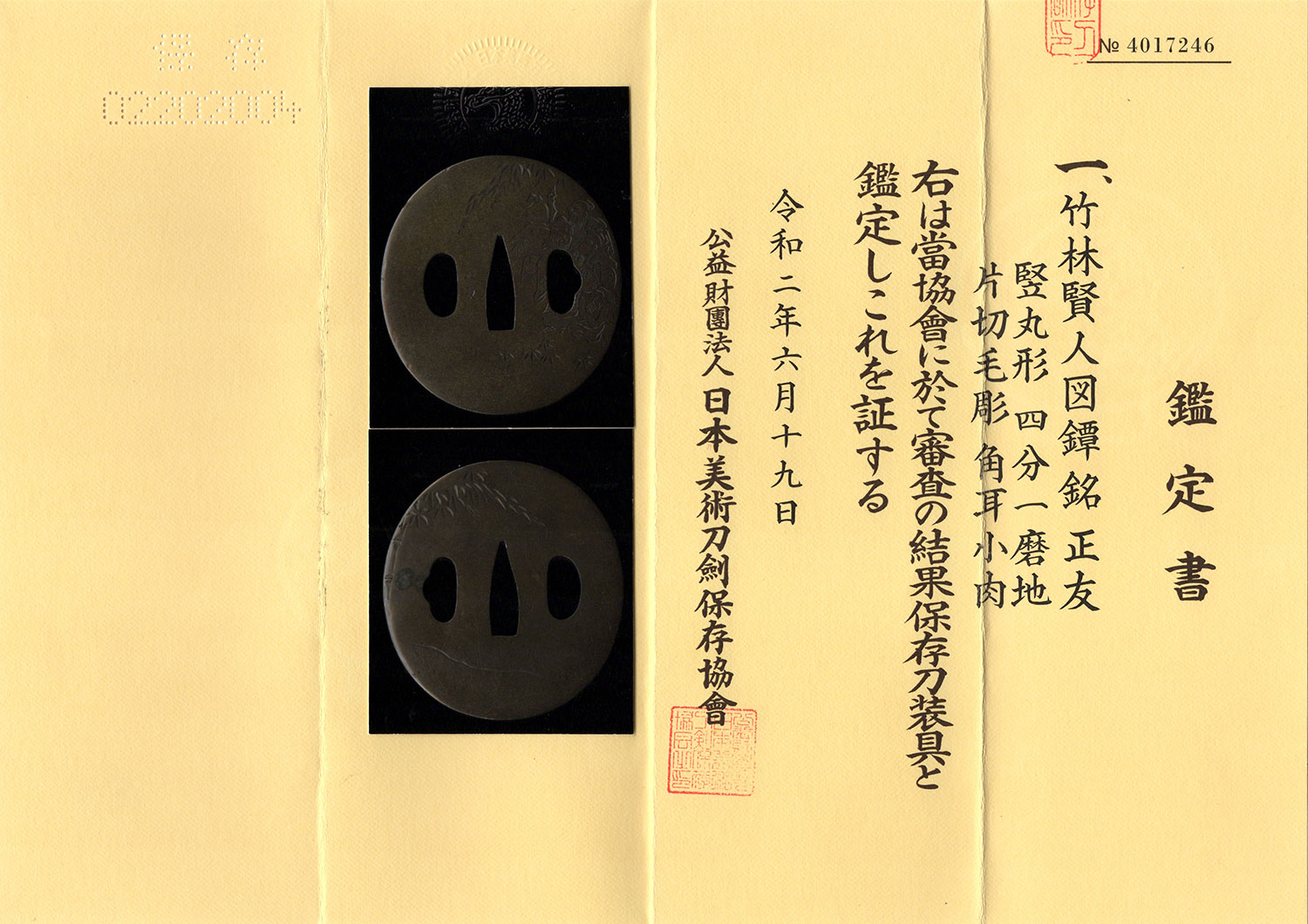
Certifies a genuine fitting worth preserving: a correct signature, or, if unsigned, an identifiable era and school, with recognized artistic and craft value.
The NBTHK (Nihon Bijutsu Tōken Hozon Kyōkai, the Society for the Preservation of Japanese Art Swords) is a public-interest incorporated foundation founded in 1948 and supervised by Japan’s Agency for Cultural Affairs (Bunkachō); it is based at the Japanese Sword Museum in Tokyo. Its expert panels physically examine each submitted work (shinsa) and issue a certificate (kanteishō) ranking it by artistic and historical merit. NBTHK papers are the most widely recognized standard of authentication for Japanese swords and fittings.
NBTHK official siteAs a rule we do not accept returns, except when we have sent a different item from the one ordered or when there is a significant discrepancy between the description and the item. If you wish to return an item, please contact us within 3 days of its arrival and then send it back.
¥220,000