Summary
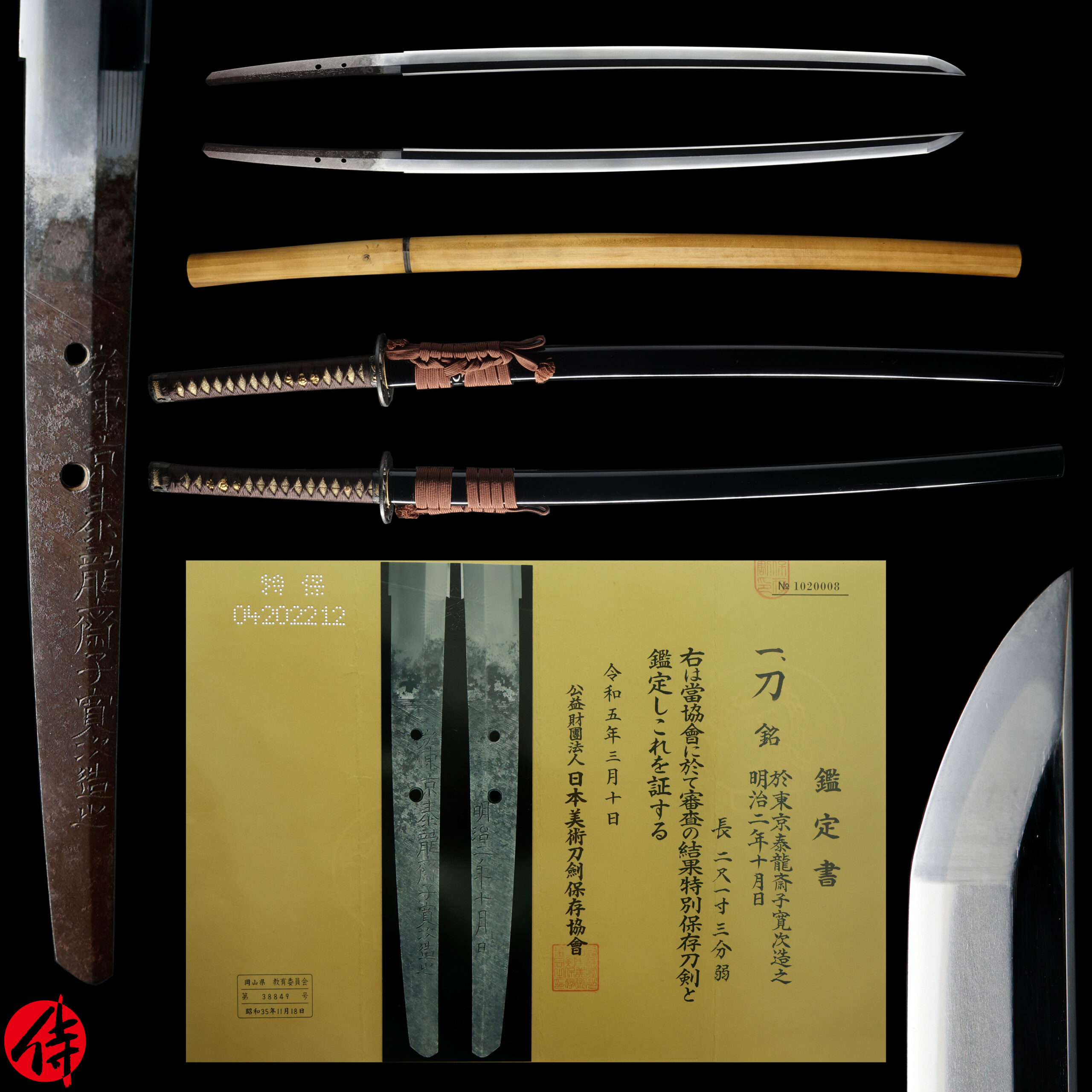
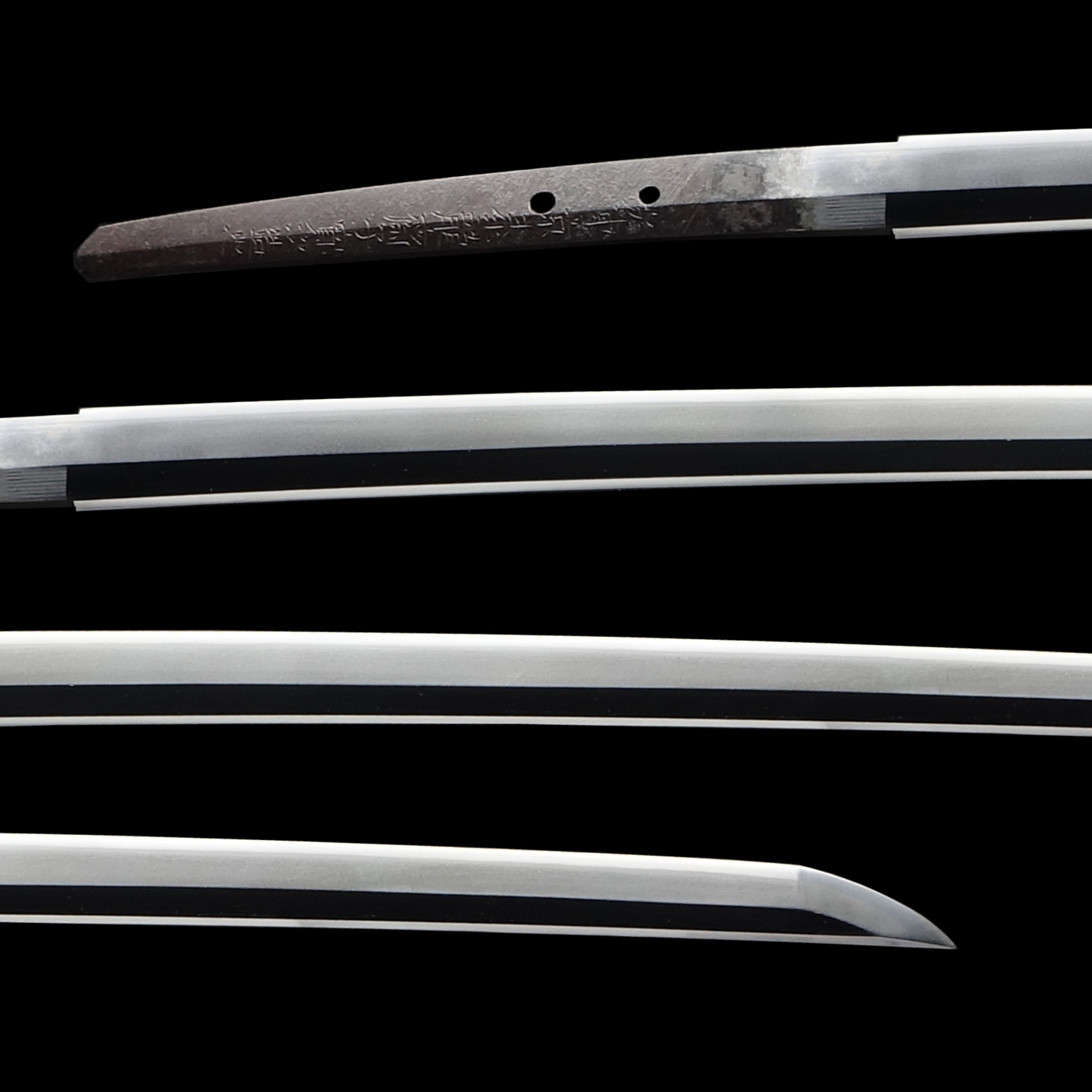
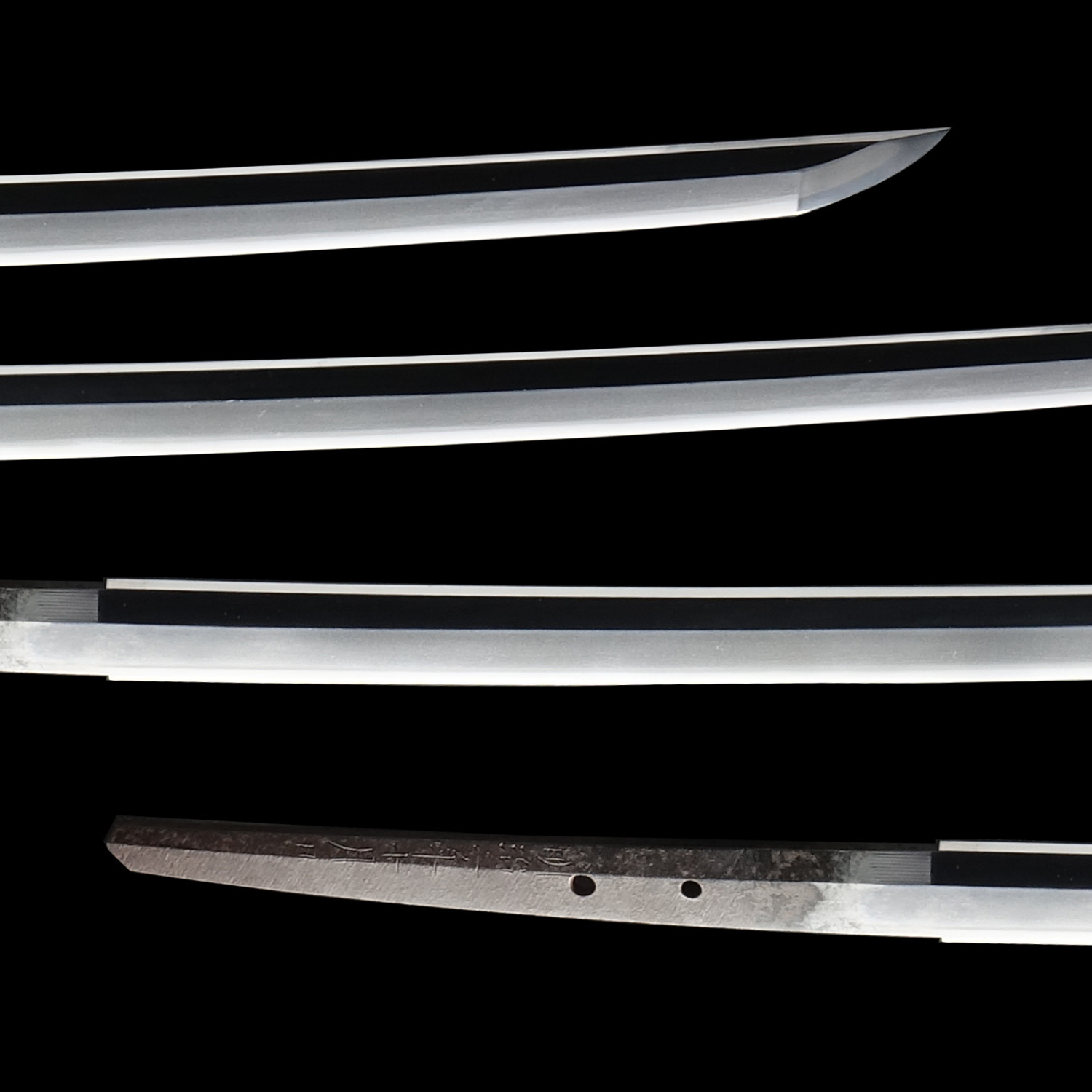
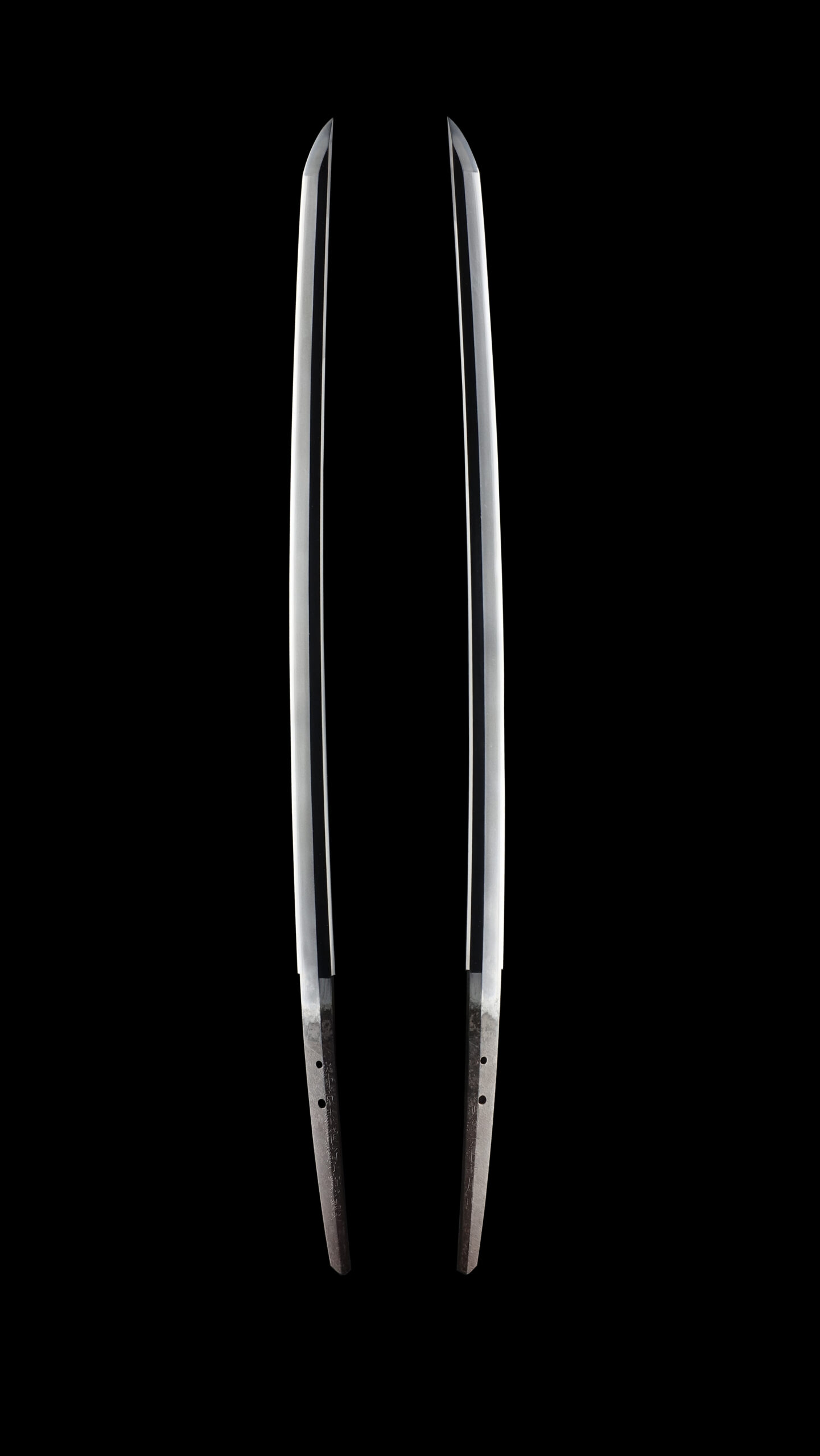
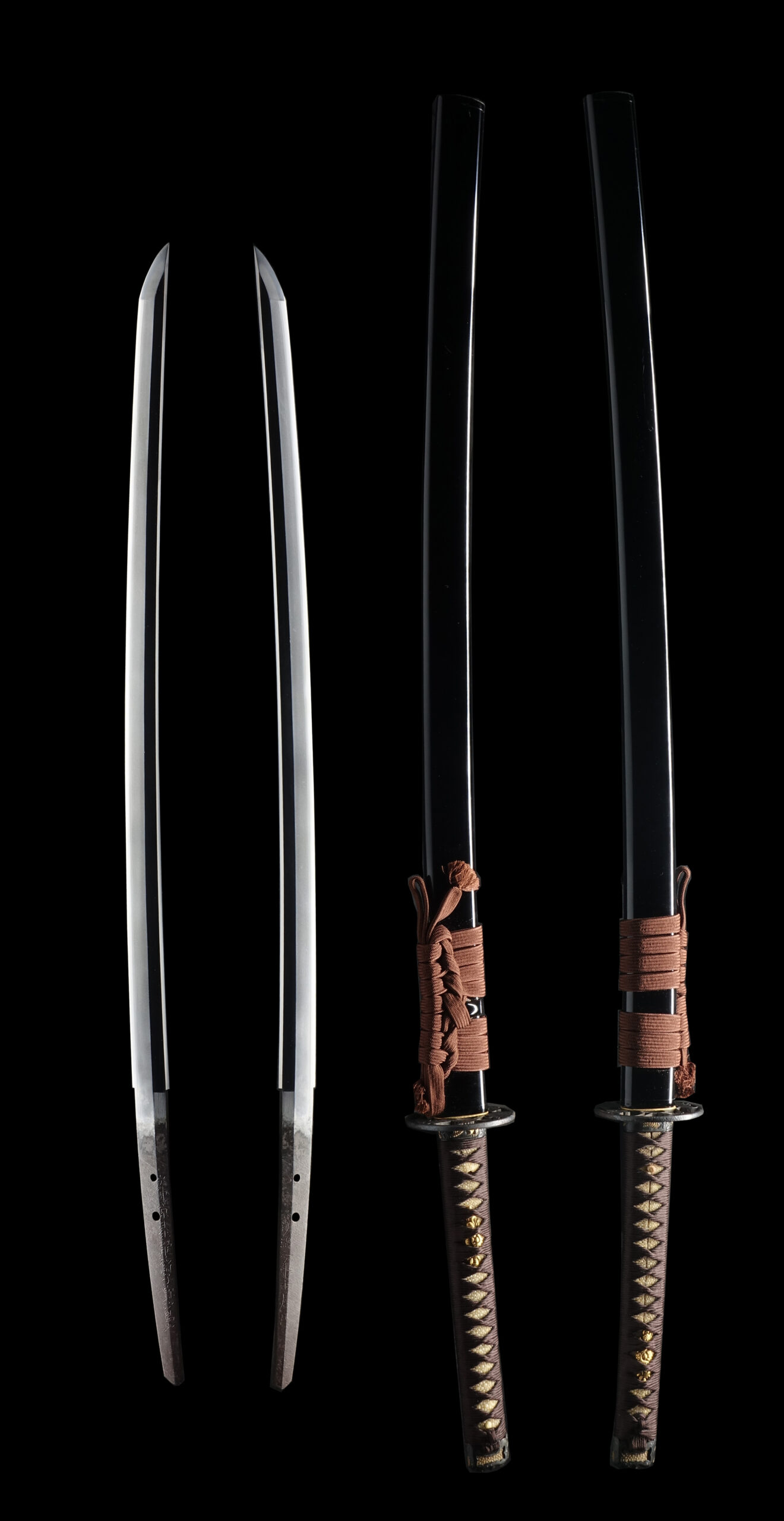
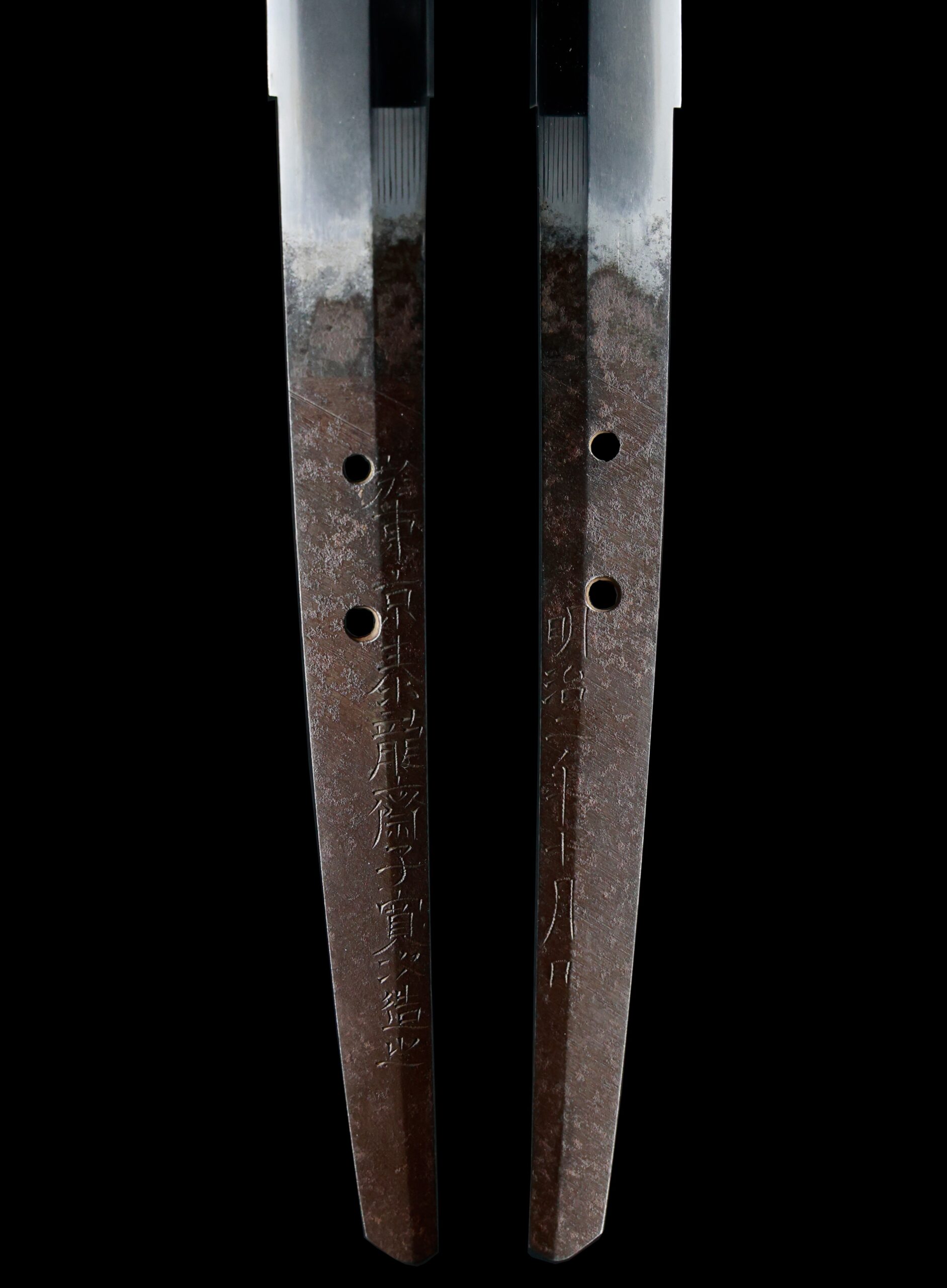
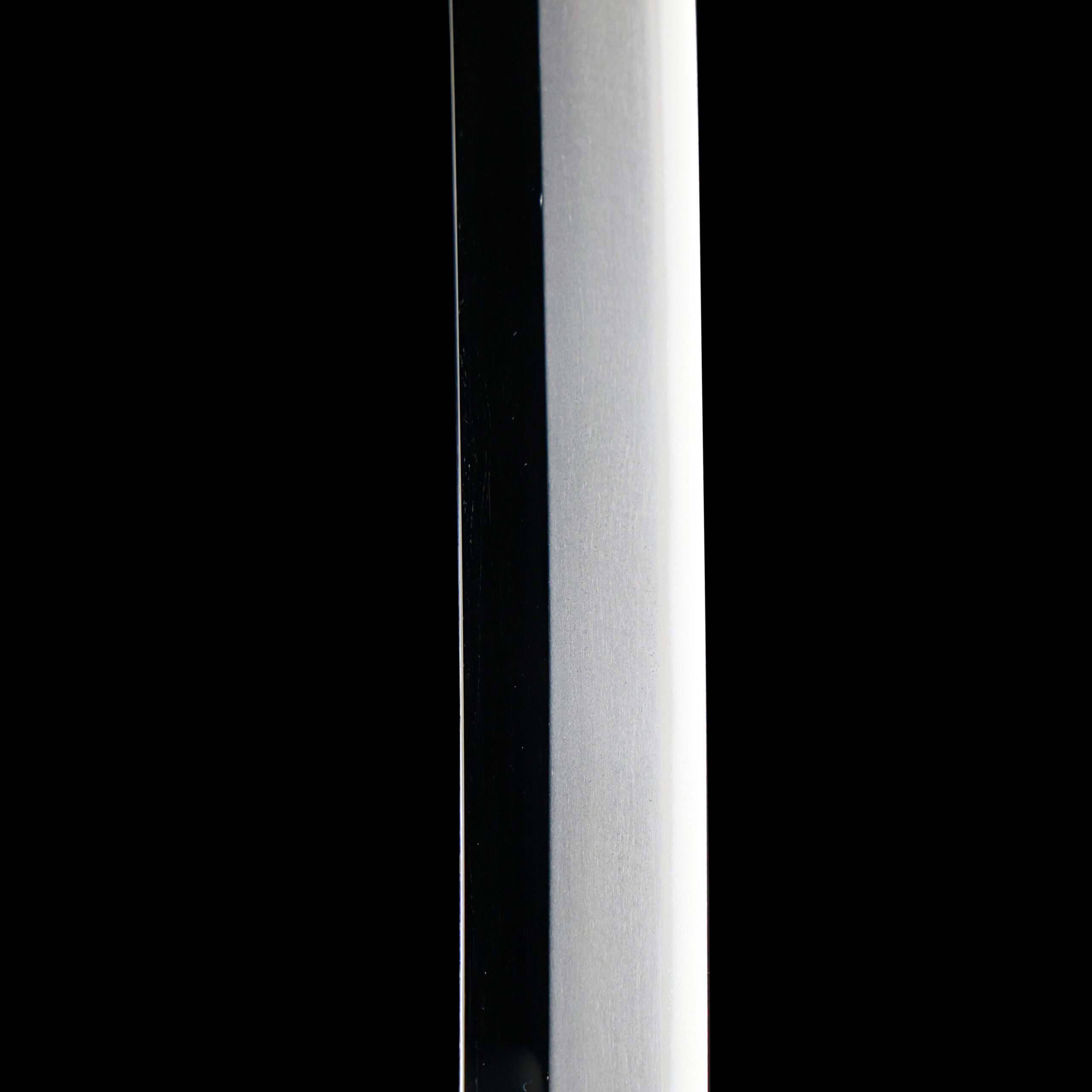
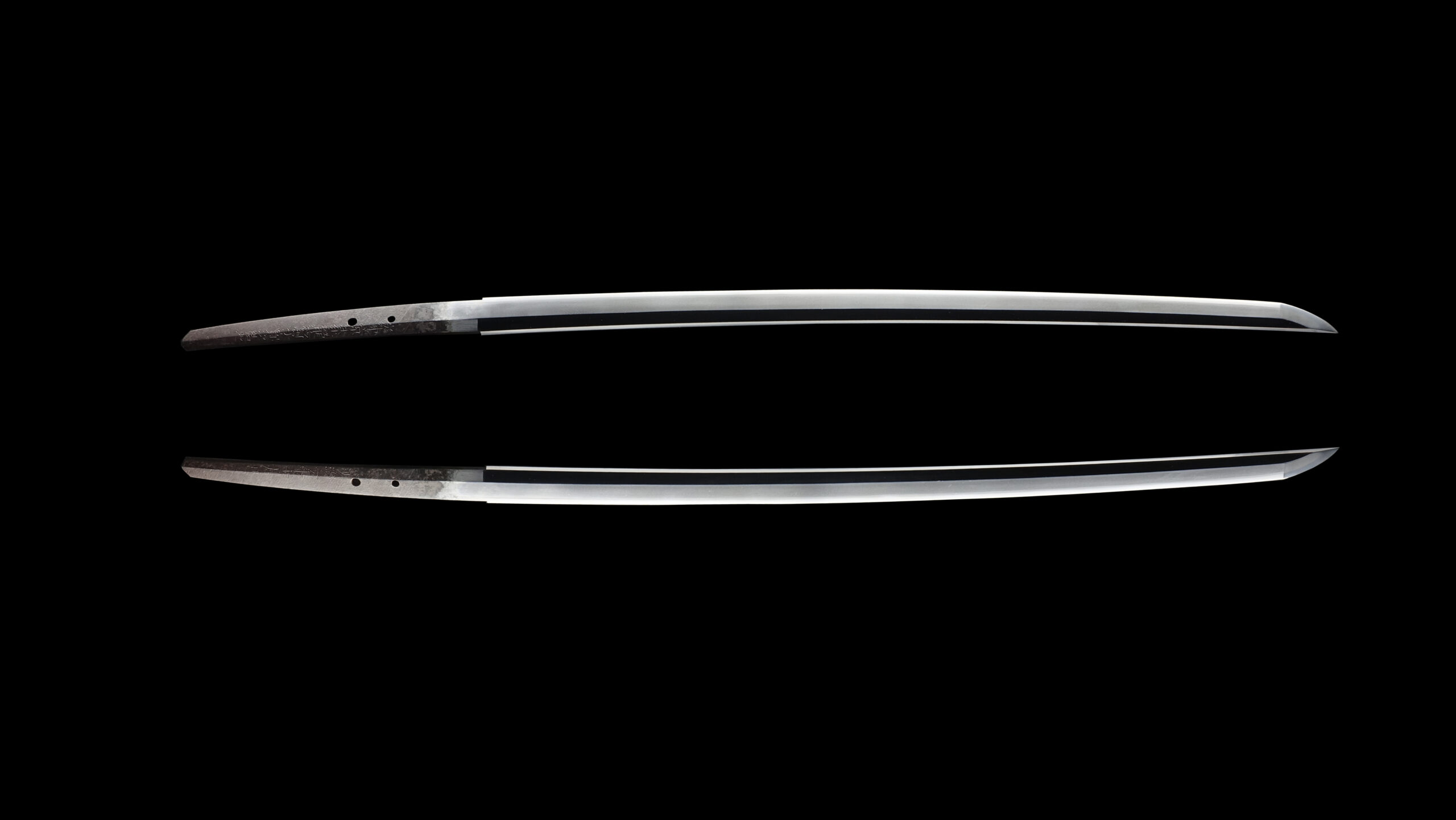
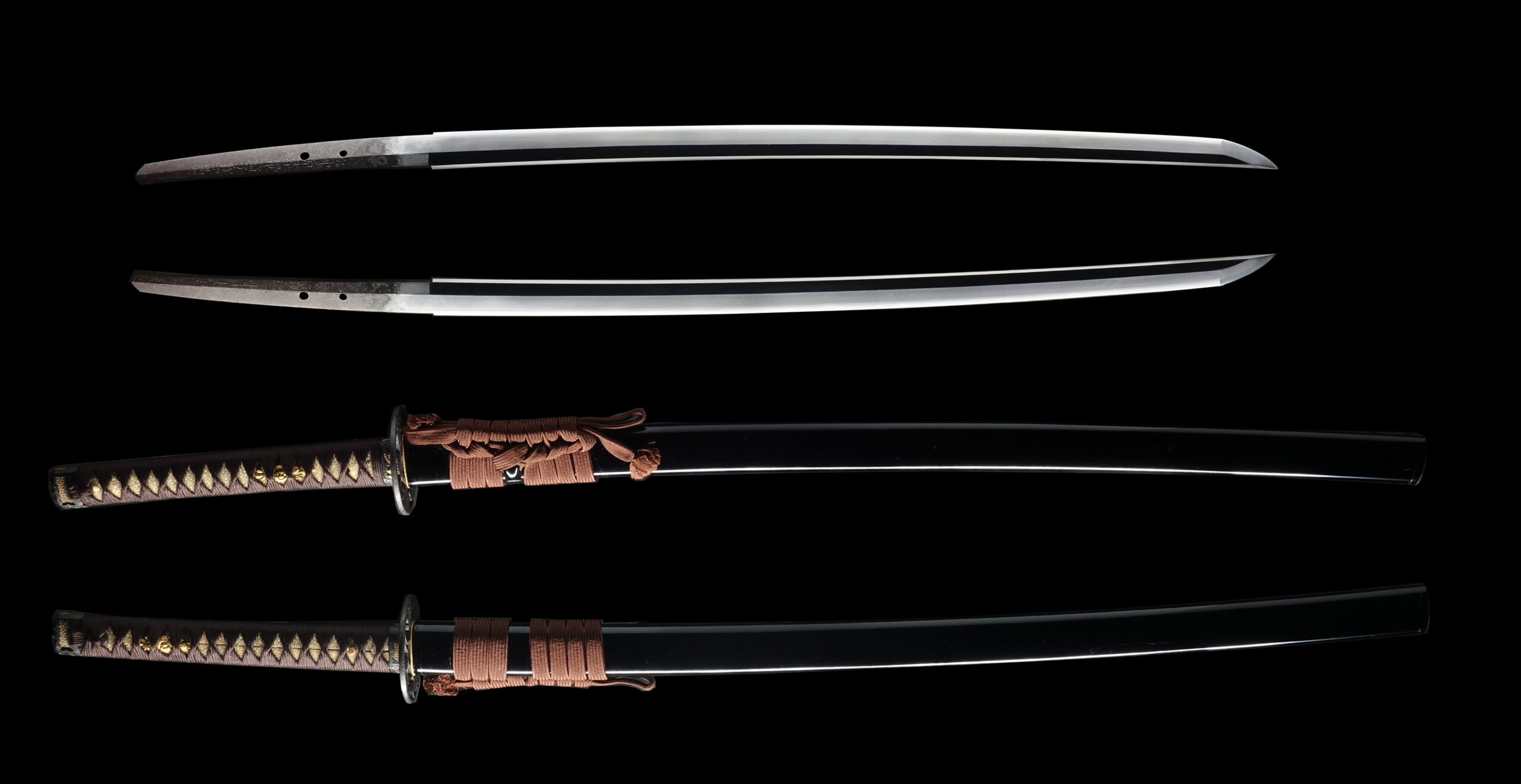
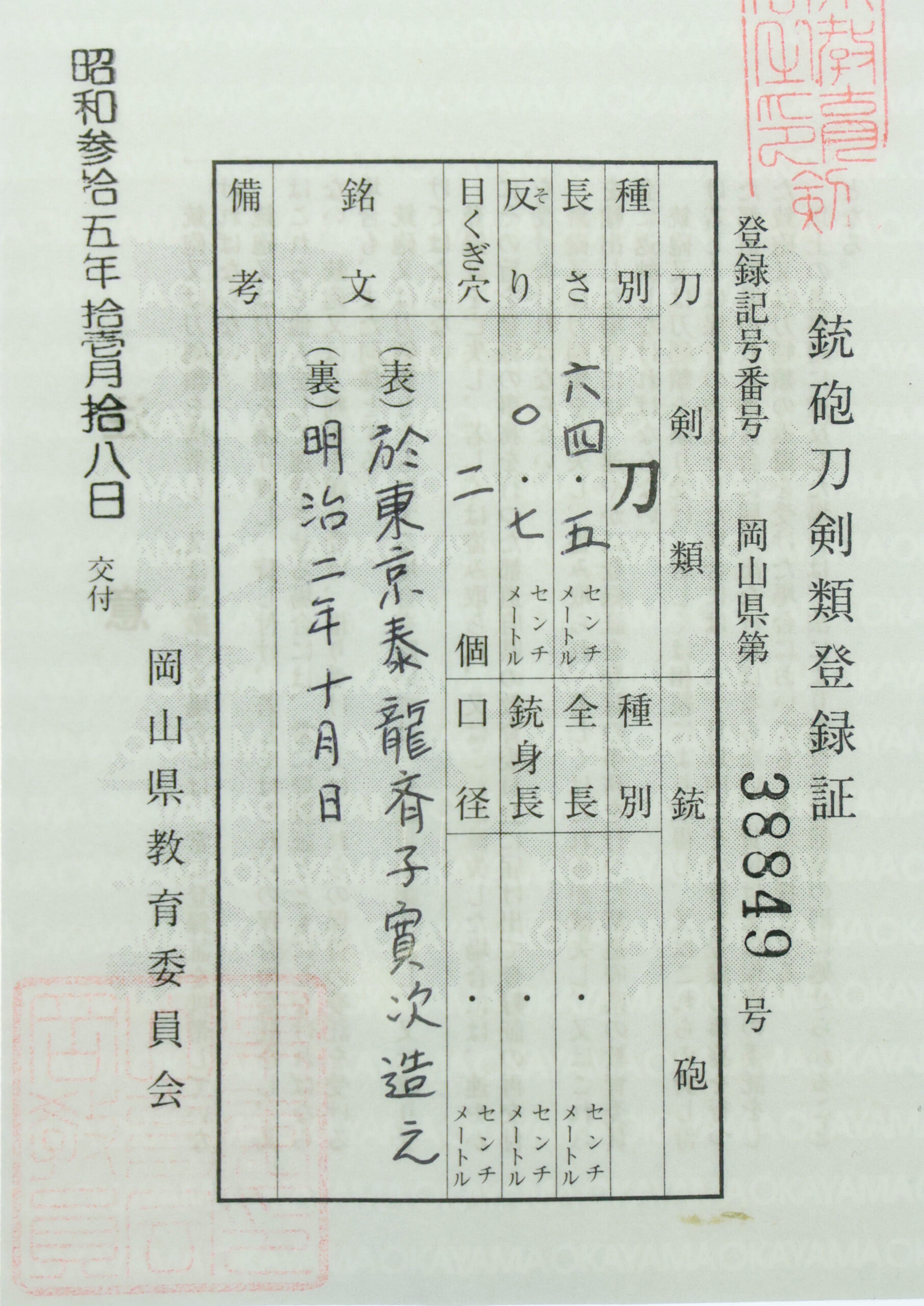
This blade was made by Tairyusai Ko Munetsugu(泰龍斎子寛次) in the 2nd year of the Meiji era (1869) in Musashi (Today’s Tokyo). Munetsugu was the son of Tairyusai Munehiro, who was born in 1818 as a son of Ono Heizo, a clansman/ Samurai of Oshu Shirakawa domain, and Munehiro’s childhood name was Takanoshin. He studied swordsmithing under the guidance of the renowned swordsmith Koyama Munetsugu (固山宗次), learning the Bizen tradition (備前伝), a prestigious school of Japanese sword-making. Munehiro began crafting swords toward the end of the Tenpō era (1830s–1840s), and at the young age of 18, he was appointed as a swordsmith for the Koga Domain (古河藩) thanks to Koyama Munetsugu’s recommendation. His son, Munetsugu also mastered excellent craftsmanship, being active at the end of the Edo period through the begining of the Meiji era.
His Father Life (Munehiro)
His craftsmanship was known for its attention to detail, with every part of the blade, from the body to the tang (nakago), meticulously forged. The lord of the Koga Domain, the Doi family, greatly admired his skill and character, often keeping him close to personally oversee his swordmaking. When the Doi family traveled from Edo to Koga, Sōkan was ordered to accompany them.
In his later years, he signed his works as “Abukumagawa Sōkan” (阿武隈川宗寛), using the Abukuma River, near his birthplace, as part of his signature. Around the start of the Ansei period (1854), he adopted the title Tairyūsai. During this time, he lived in the Fukagawa district of Edo (modern Tokyo) and, by the early years of the Kaei period (early 1850s), had become a retained swordsmith for the Koga Domain in Shimosa Province (modern-day Chiba Prefecture).
Who is Koyama Munetsugu ?
Munehiro’s teacher , Koyama Munetsugu (固山宗次), was born in 1803 and is generally called Soubei. He worked for the Hisamatsu-Matsudaira family of the Shirakawa domain, and Matsudaira Sadanobu, whom he served, is widely known in Japan as one of the most famous politicians of the Edo period.
Munetsugu’s birthname name was Koyama Sobei (固山宗兵衛). He was born as the third son of Koyama Munehira(固山宗平) in Shirakawa domain in Mutsu province (today’s Fukushima prefecture) in 1802. It is said that he learned the sword-forging technique from Kato Tsunahide (加藤綱英) first and was also an apprentice of Chounsai Tsunatoshi (長運斎綱俊), a younger brother of Tsunahide to improve his craftsmanship.
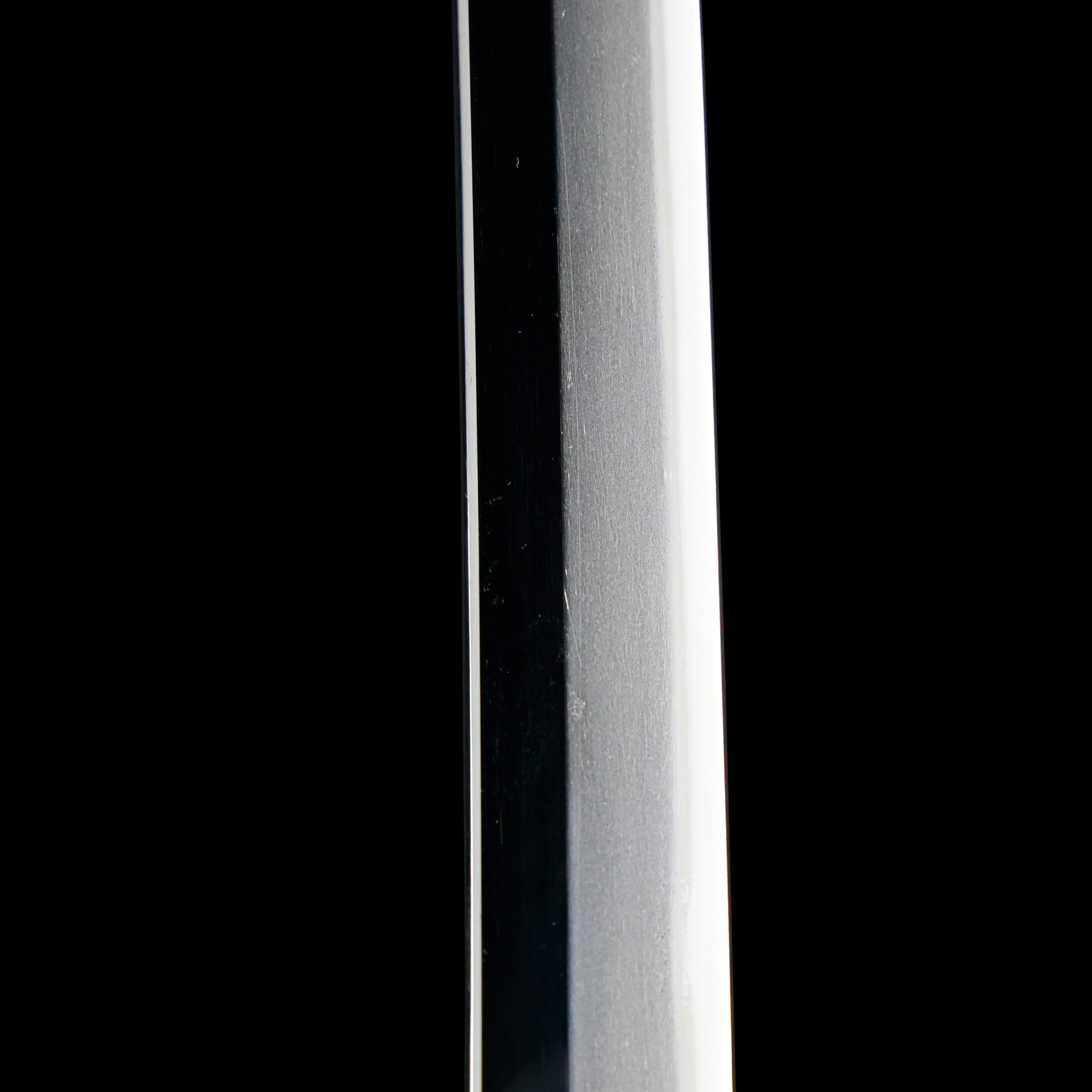
His work reflects Bizen Den, one of the five most traditional Japanese sword-forging techniques (五箇伝). He was excellent at forging blades with Choji Gunome Midare tempering line, one of the most noticeable characteristics of Bizen Tradition. He was active in sword-forging during 1830-1870. He is arguably the finest smith working in the Bizen tradition at the end of the Edo period.
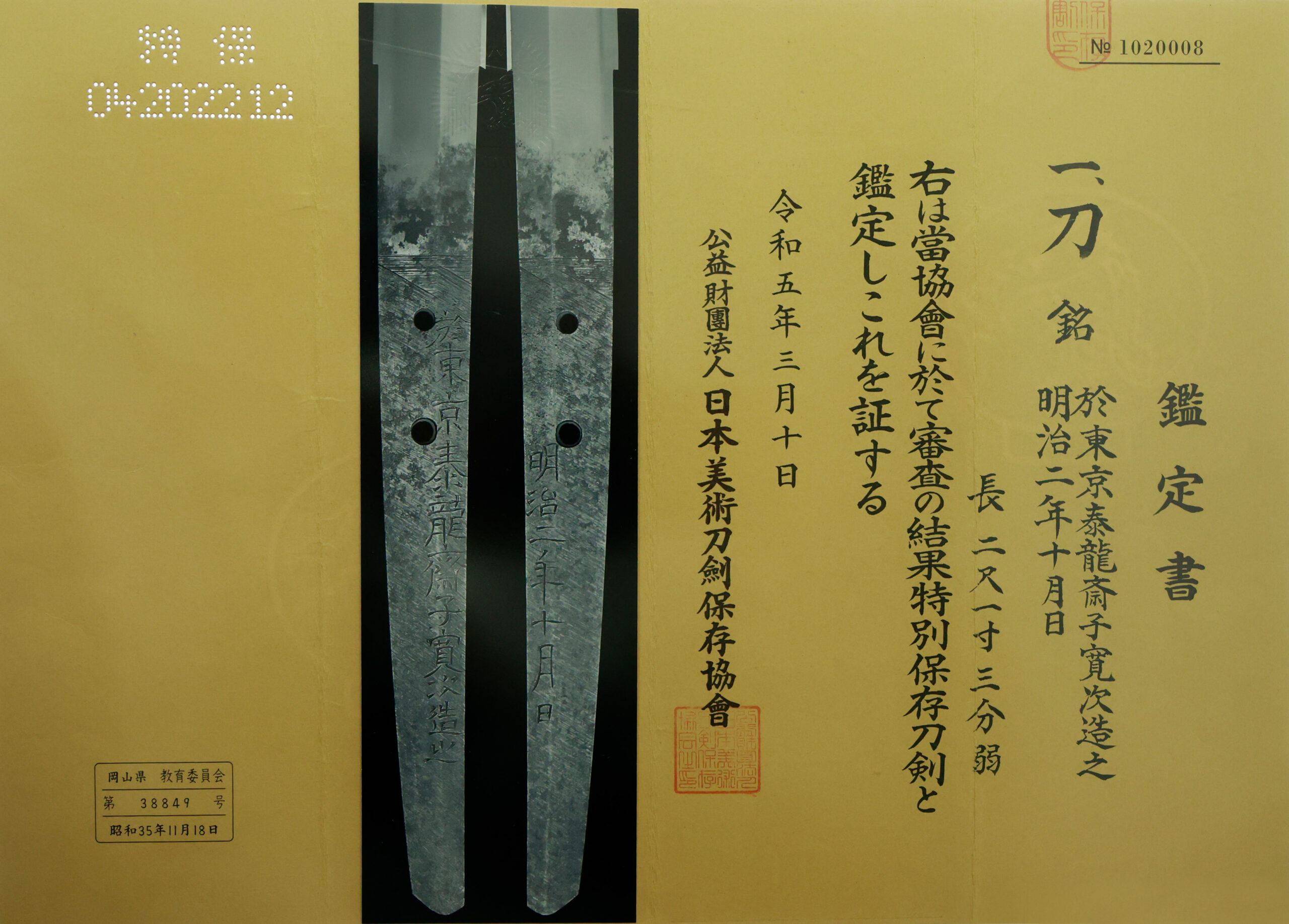
It is appraised as a Tokubetsu Hozon Token (保存刀剣) issued by NBTHK (Nihon Bijutsu Touken Hozon Kyokai:日本美術刀剣保存協会).
Fuchi-Kashira
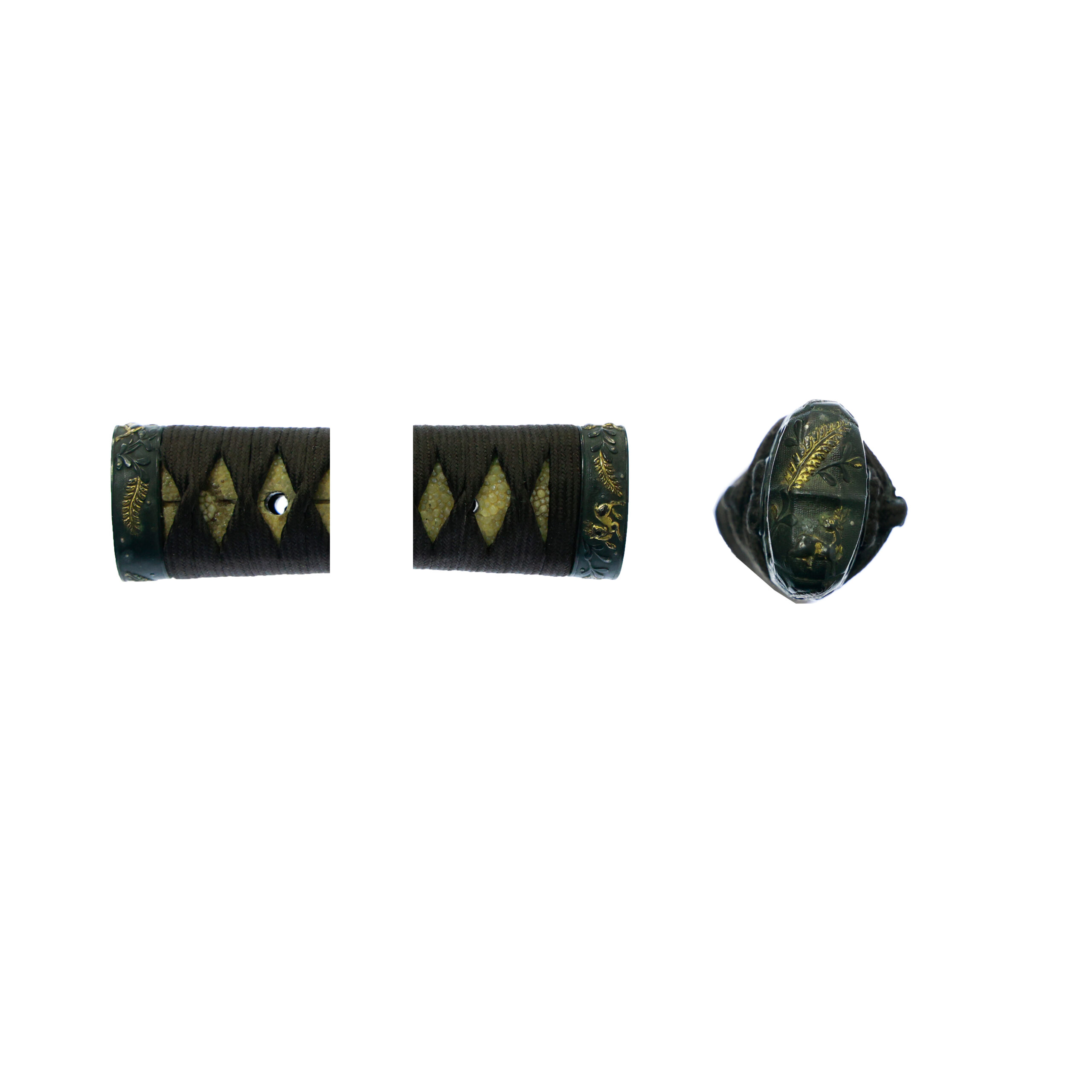
This Fuchi-Kashira features elegant motifs of bush clover (萩, hagi) and deer (鹿, shika), a pairing that reflects the rich poetic tradition of Japan. In the Manyoshu, Japan’s oldest collection of poems, bush clover is one of the most frequently celebrated plants, loved for its delicate blooms and the gentle way its petals scatter in the autumn breeze. While cherry blossoms became the star of court poetry in later eras, bush clover remained a symbol of understated beauty and seasonal charm.
The connection between deer and bush clover has held special meaning since ancient times. A famous poem in Manyoshu Volume 8 depicts a stag calling out as if proposing to the bush clover, likening their relationship to a harmonious union. Deer were often imagined to emerge from the mountains at dusk to rest in grassy thickets, sometimes among blooming bush clover, before returning to the mountains at dawn. This imagery is especially fitting in autumn, when both the bush clover is in bloom and the stag’s call echoes through the season.
This graceful combination of motifs evokes a sense of harmony between nature and the cycles of life, as the blooming of bush clover also coincides with the season of the rice harvest. Together, they represent abundance, beauty, and a timeless connection to Japan’s traditions.
Tsuka and Menuki
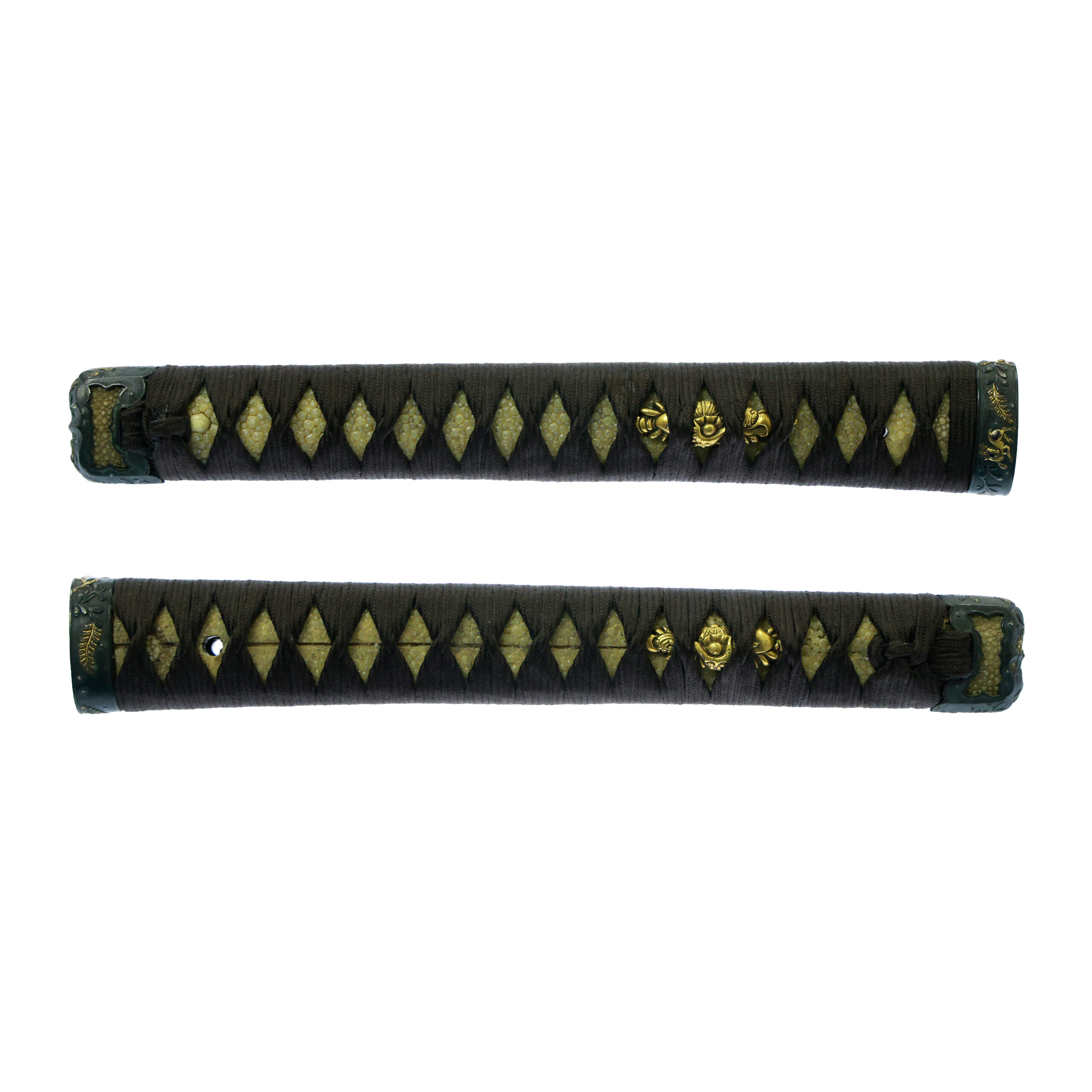
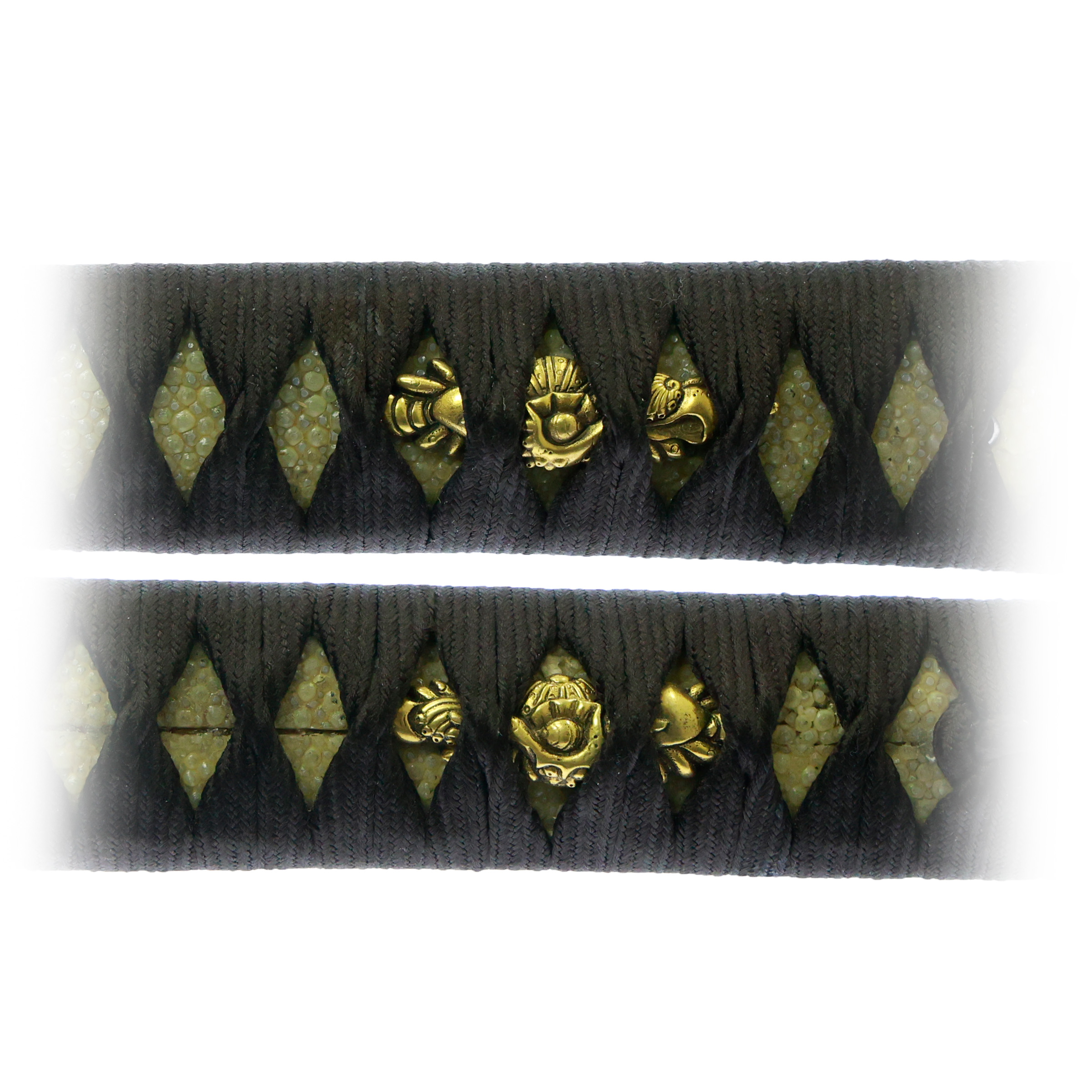
The menuki is beautifully adorned with motifs of seaweed, conch shells, scallop shells, and abalone, intricately inlaid with gold. This piece, with its design showcasing various shells, is referred to as Kaizukushi-zu (Shell Collection Motif).
In Japan, a country surrounded by the sea, shells have historically been used not only as food but also as currency and materials. The famous shell mounds from the Jomon period are evidence of this history. By the Heian period (794–1185), motifs combining seaweed and shells were already established as part of kaifubun (sea elements pattern), a category of landscape designs. During this time, the kaiawase (shell matching game) using clams was a popular pastime among nobles.
In the Edo period (1603–1868), the appreciation of shells evolved further, with practices such as composing poetry inspired by shells and collecting beautiful shells gaining popularity. This cultural trend culminated in the creation of Kaizukushi-mon (Shell Collection Motif), a decorative pattern featuring a variety of shells, which became a beloved theme in Japanese art and design.
Tsuba and Habaki
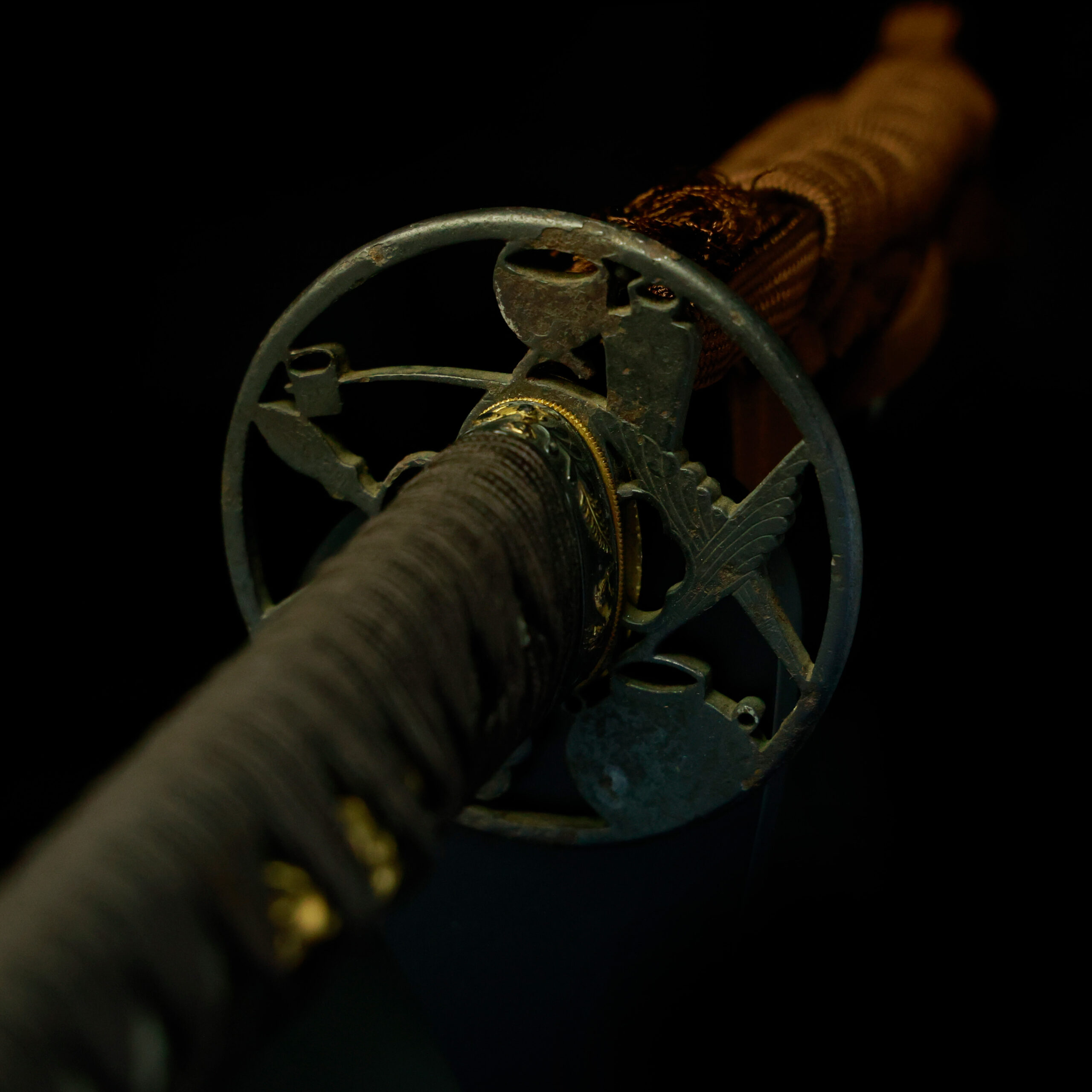
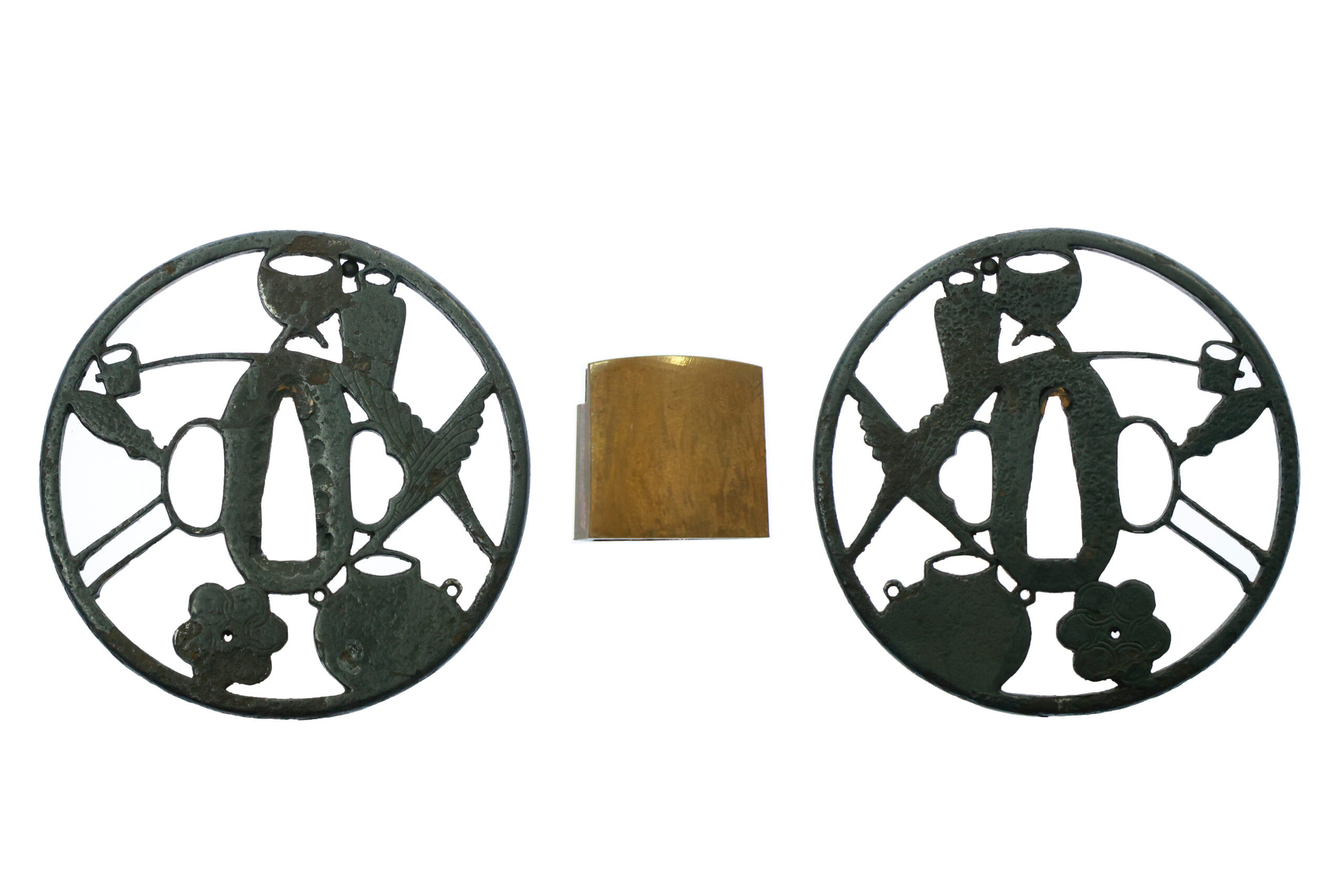
This Tsuba features an openworkdesign (透かし彫り, sukashi-bori), where parts of the matal are skillfully cut away to create a pattern or motif. The motif here appears to incorporate natural elements like leaves and flowers, reflecting traditional Japanese themes of nature and harmony.
Authentication Paper
They authenticated the blade on March 10th in the 5th year of Reiwa (2023). They appraised it as Tokubetsu Hozon Touken, the blade especially worth preserving for Japanese society.



 NihontoWatch