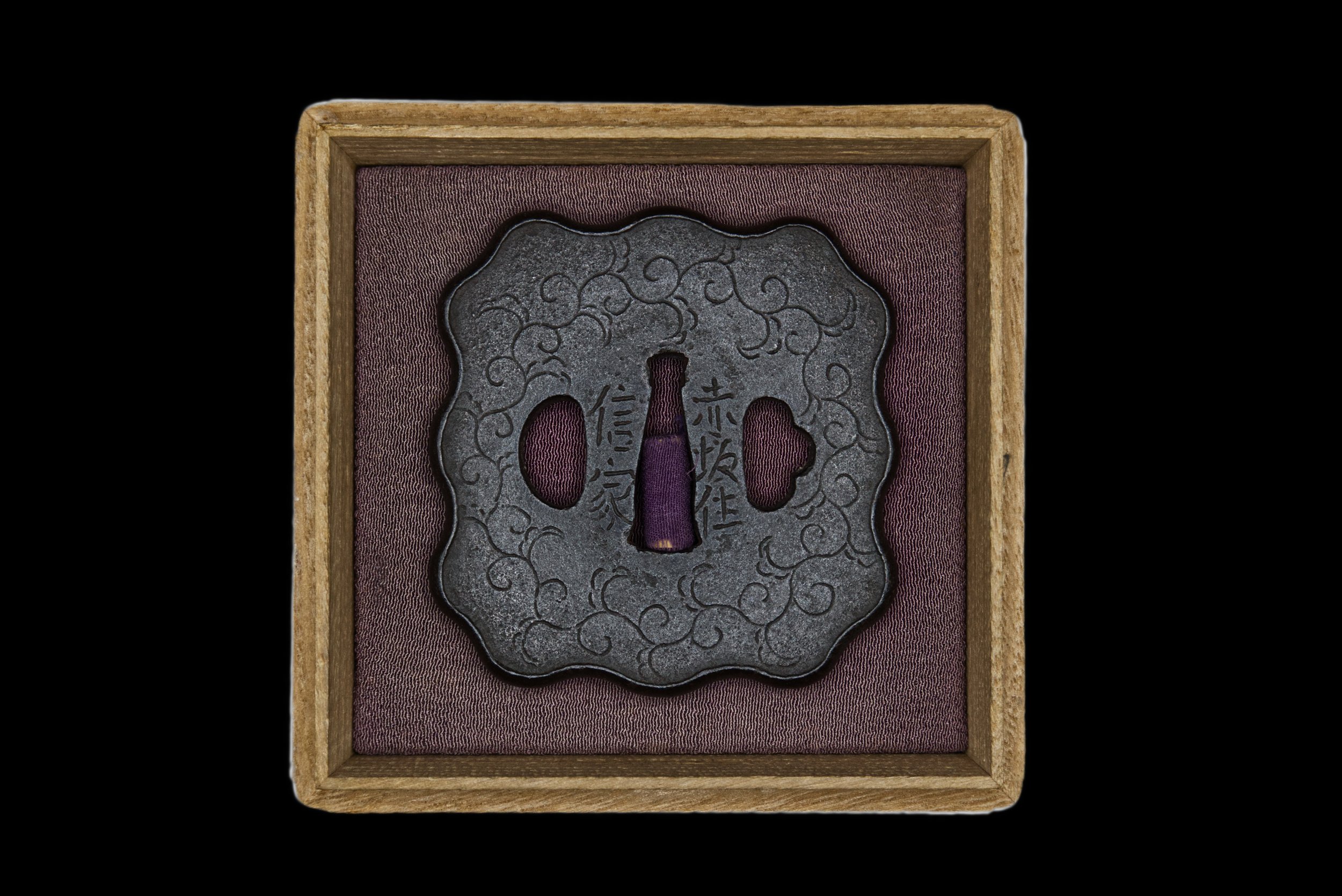
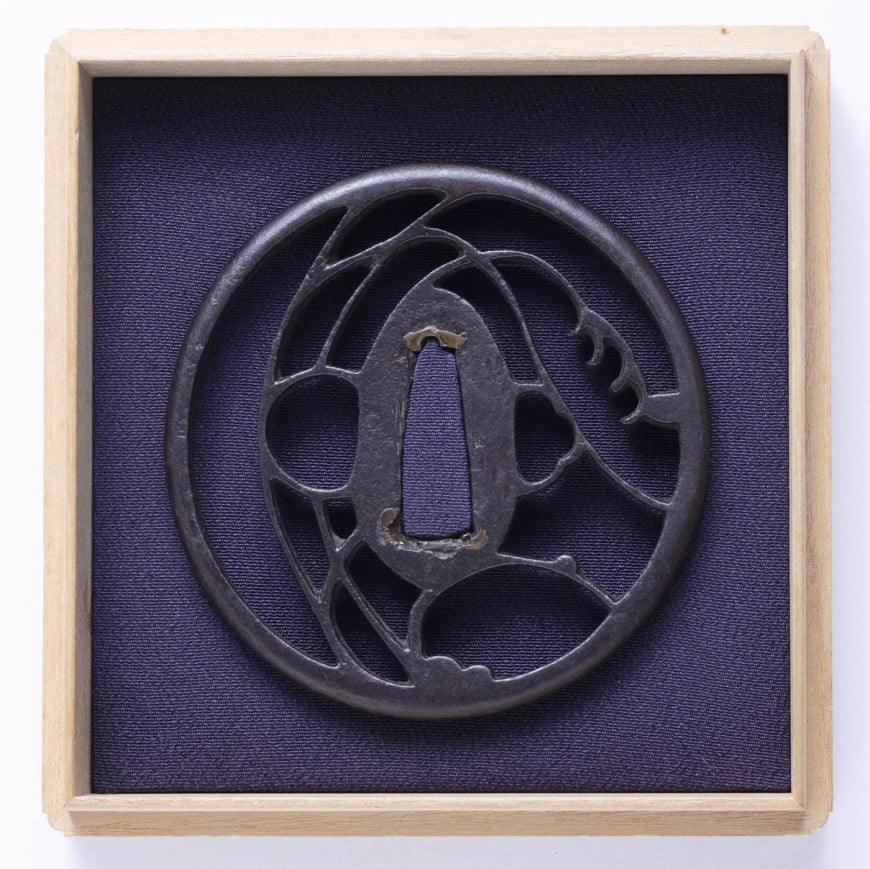
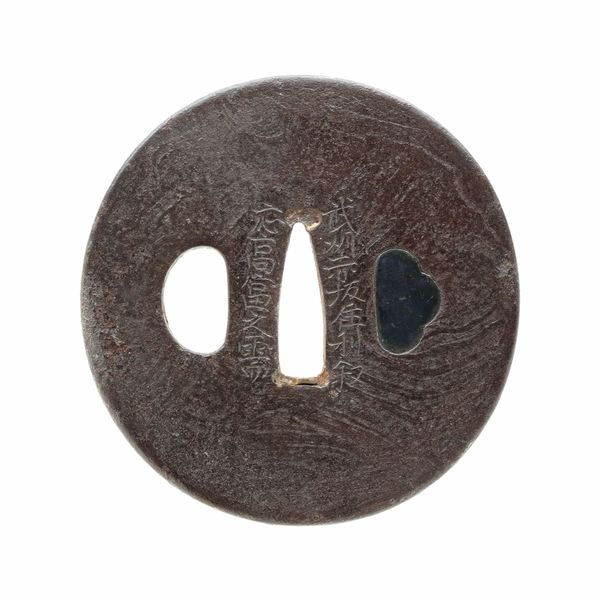
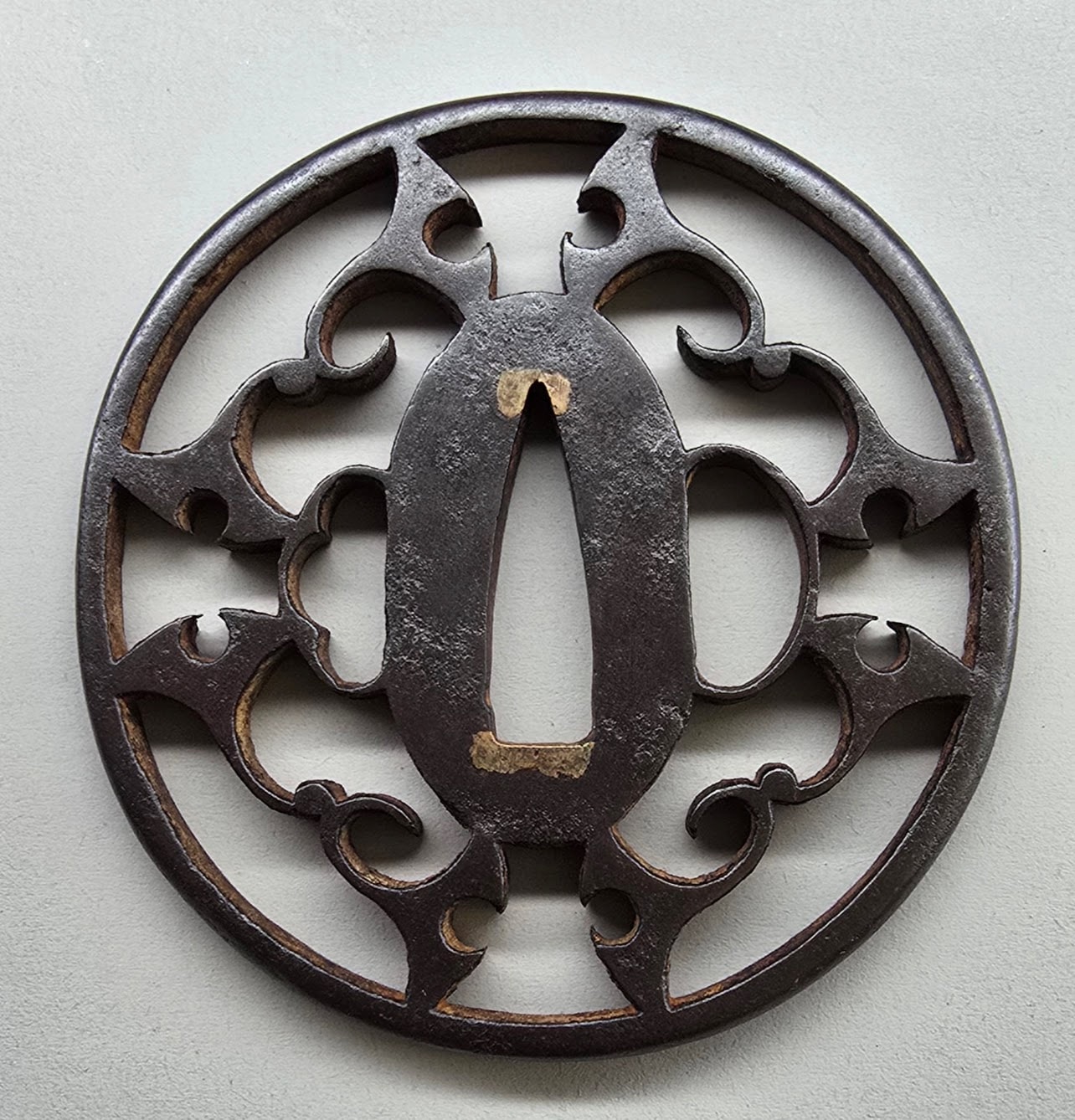
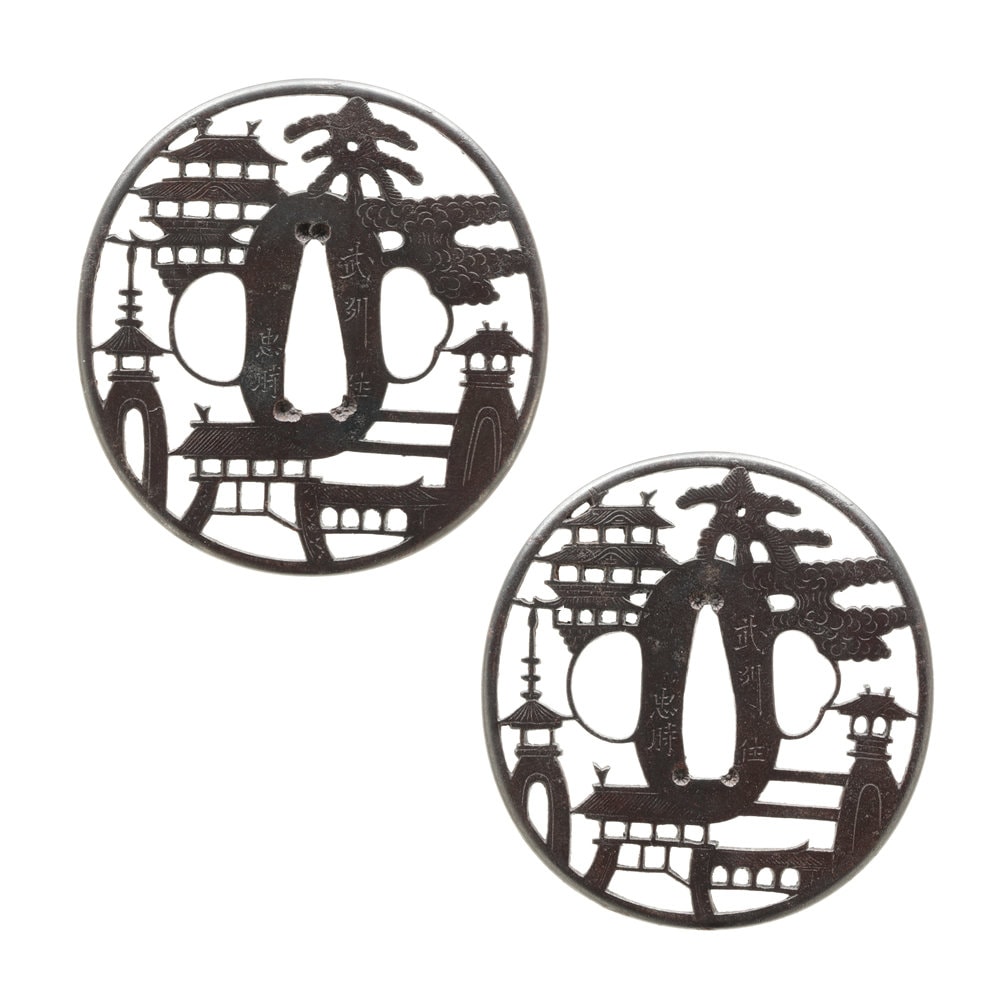
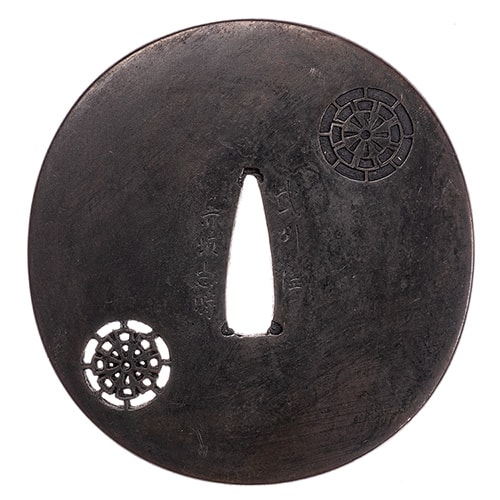
This is a round iron tsuba with openwork (jisukashi) and a round rim (marumimi) from the Akasaka school. The Akasaka school, founded by the first and second generations Tadamasa, moved to Edo around the Kan'ei era and flourished until the end of the Edo period, incorporating techniques from Owari and Kyoto sukashi. This piece is certified Hozon by the NBTHK.
 NihontoWatch
Edo
Musashi
Hozon (NBTHK)
Certifies a genuine fitting worth preserving: a correct signature, or, if unsigned, an identifiable era and school, with recognized artistic and craft value.
The NBTHK (Nihon Bijutsu Tōken Hozon Kyōkai, the Society for the Preservation of Japanese Art Swords) is a public-interest incorporated foundation founded in 1948 and supervised by Japan’s Agency for Cultural Affairs (Bunkachō); it is based at the Japanese Sword Museum in Tokyo. Its expert panels physically examine each submitted work (shinsa) and issue a certificate (kanteishō) ranking it by artistic and historical merit. NBTHK papers are the most widely recognized standard of authentication for Japanese swords and fittings.
NBTHK official siteReturns/exchanges/cancellations not accepted after shipment except for significant defects; if defective, return/exchange possible within 3 days of arrival (return shipping paid by customer).


This is a round iron tsuba with openwork (jisukashi) and a round rim (marumimi) from the Akasaka school. The Akasaka school, founded by the first and second generations Tadamasa, moved to Edo around the Kan'ei era and flourished until the end of the Edo period, incorporating techniques from Owari and Kyoto sukashi. This piece is certified Hozon by the NBTHK.
NihontoWatchEdo
Musashi
Hozon (NBTHK)
Certifies a genuine fitting worth preserving: a correct signature, or, if unsigned, an identifiable era and school, with recognized artistic and craft value.
The NBTHK (Nihon Bijutsu Tōken Hozon Kyōkai, the Society for the Preservation of Japanese Art Swords) is a public-interest incorporated foundation founded in 1948 and supervised by Japan’s Agency for Cultural Affairs (Bunkachō); it is based at the Japanese Sword Museum in Tokyo. Its expert panels physically examine each submitted work (shinsa) and issue a certificate (kanteishō) ranking it by artistic and historical merit. NBTHK papers are the most widely recognized standard of authentication for Japanese swords and fittings.
NBTHK official siteReturns/exchanges/cancellations not accepted after shipment except for significant defects; if defective, return/exchange possible within 3 days of arrival (return shipping paid by customer).