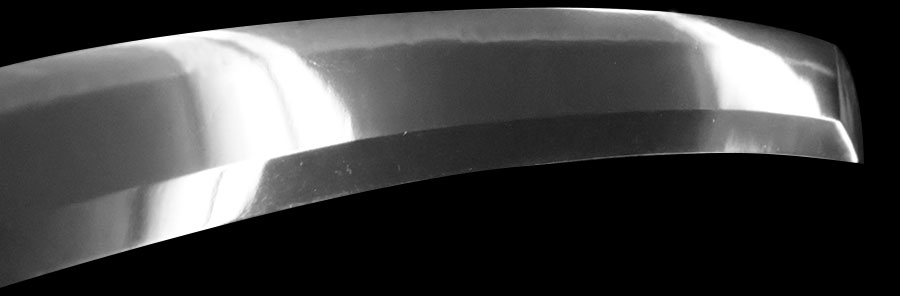
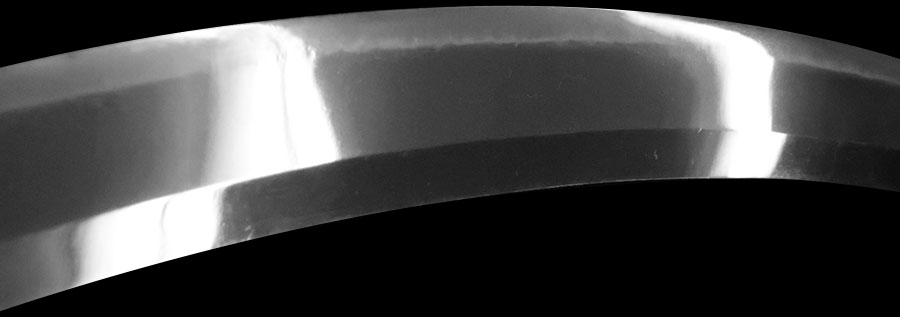
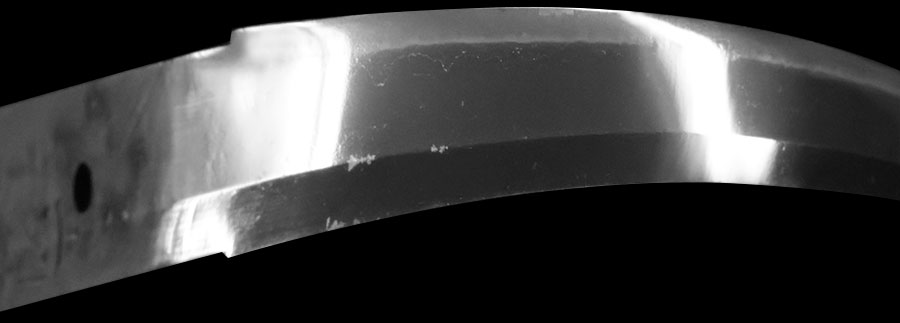
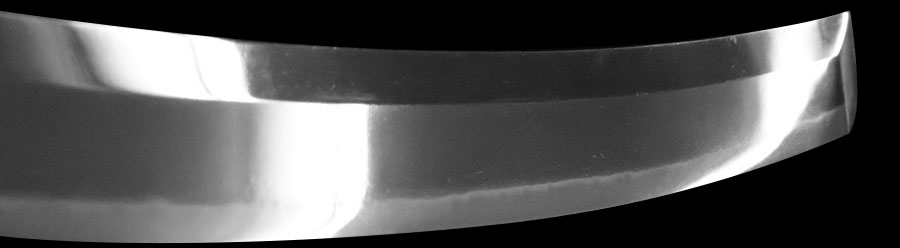
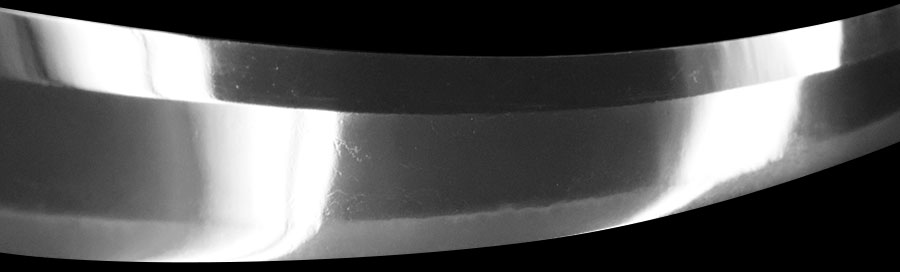
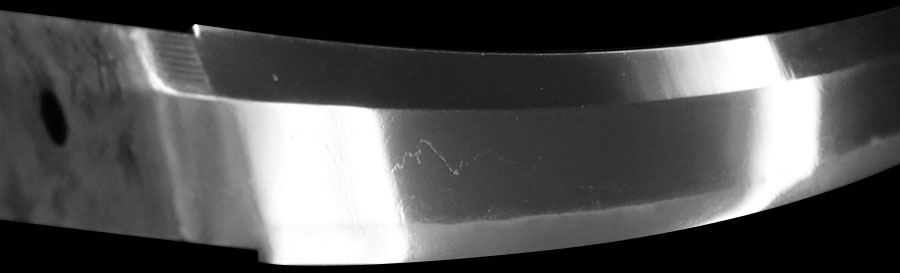
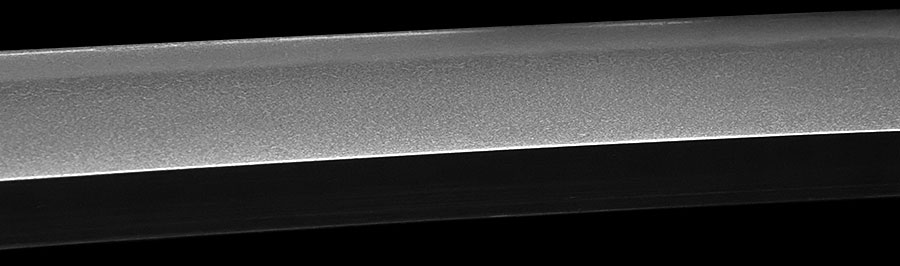
It has appeared, it has appeared, a work by the famous Tosa master smith Toshihide has appeared. Tosa (Kochi Prefecture) smith Kariya Toshihide, real name Kariya Chuji, also used the go Shikoushi. In the late Edo period, Kansei 12 (1800) (226 years ago), he went to Edo and entered the school of the Bakumatsu master Suishinshi Masahide; having mastered the craft, in Bunka 2 (1805) (221 years ago) he attained the skills, was granted permission by his teacher, and returned to Tosa. Considering that staying in Edo for as long as 5 years to be in the school of the Edo smith Suishinshi Masahide would have incurred considerable expenses, it is likely correct that Toshihide was a smith in the employ of the Tosa Domain and entered Suishinshi Masahide's school by domain order. This katana was made in the Bakumatsu period, Bunzeki 6 (1823) (203 years ago), the time when the German physician Siebold arrived in Japan at age 27 as a medical officer attached to the Dutch trading post at Dejima in Nagasaki. Siebold introduced Western medicine and natural history to Japan in Nagasaki, systematically recorded Japanese nature and society, and introduced them to Europe. He opened a private school called Narutaki-juku in Narutaki on the outskirts of Nagasaki, teaching Japanese people the latest Western medicine of the time, such as human anatomy, surgery, and obstetrics; from here, many Ranpo physicians who supported modern Japanese medicine, such as Takano Nagahide and Ninomiya Keisaku, were raised, greatly raising the level of Ranpo medicine in the Bakumatsu period. Siebold was expelled by the Bakufu for attempting to take out a map of Japan, which was a prohibited item at the time, but was later pardoned and returned to Japan again. At the time this katana was produced, peaceful days still continued in Japan and there was no demand for swords for actual combat; this katana was likely made by special order from a high-ranking samurai of the Tosa Domain who had financial leeway. The sugata shows a katana-like katana sugata with a wide moto-mihaba and wide saki-mihaba with an extended kissaki, the jigane is a well-tightened itame hada with chikei appearing in the ji, forging a bright and good jigane, and the hamon is a bright, elegantly tempered suguha-style blade in nioi-deki with konie and small ko-ashi within the ha. This time, we received this katana from an old family who had cherished it for generations, with the request to let it go cheaply to someone who will treasure it as they have grown old themselves; as there is some invisible light rust, we are offering it at a special bargain price. It will immediately become Tokubetsu Hozon Token; please enjoy it.
Machine translation from the shop's Japanese · may contain errors ·
It has appeared, it has appeared, a work by the famous Tosa master smith Toshihide has appeared. Tosa (Kochi Prefecture) smith Kariya Toshihide, real name Kariya Chuji, also used the go Shikoushi. In the late Edo period, Kansei 12 (1800) (226 years ago), he went to Edo and entered the school of the Bakumatsu master Suishinshi Masahide; having mastered the craft, in Bunka 2 (1805) (221 years ago) he attained the skills, was granted permission by his teacher, and returned to Tosa. Considering that staying in Edo for as long as 5 years to be in the school of the Edo smith Suishinshi Masahide would have incurred considerable expenses, it is likely correct that Toshihide was a smith in the employ of the Tosa Domain and entered Suishinshi Masahide's school by domain order. This katana was made in the Bakumatsu period, Bunzeki 6 (1823) (203 years ago), the time when the German physician Siebold arrived in Japan at age 27 as a medical officer attached to the Dutch trading post at Dejima in Nagasaki. Siebold introduced Western medicine and natural history to Japan in Nagasaki, systematically recorded Japanese nature and society, and introduced them to Europe. He opened a private school called Narutaki-juku in Narutaki on the outskirts of Nagasaki, teaching Japanese people the latest Western medicine of the time, such as human anatomy, surgery, and obstetrics; from here, many Ranpo physicians who supported modern Japanese medicine, such as Takano Nagahide and Ninomiya Keisaku, were raised, greatly raising the level of Ranpo medicine in the Bakumatsu period. Siebold was expelled by the Bakufu for attempting to take out a map of Japan, which was a prohibited item at the time, but was later pardoned and returned to Japan again. At the time this katana was produced, peaceful days still continued in Japan and there was no demand for swords for actual combat; this katana was likely made by special order from a high-ranking samurai of the Tosa Domain who had financial leeway. The sugata shows a katana-like katana sugata with a wide moto-mihaba and wide saki-mihaba with an extended kissaki, the jigane is a well-tightened itame hada with chikei appearing in the ji, forging a bright and good jigane, and the hamon is a bright, elegantly tempered suguha-style blade in nioi-deki with konie and small ko-ashi within the ha. This time, we received this katana from an old family who had cherished it for generations, with the request to let it go cheaply to someone who will treasure it as they have grown old themselves; as there is some invisible light rust, we are offering it at a special bargain price. It will immediately become Tokubetsu Hozon Token; please enjoy it.
For two and a half centuries of peace the sword was the warrior’s legal badge rather than his weapon. Each great city developed its own manner, Edo’s tested strength against Ōsaka’s polished brilliance, until demand thinned in the era’s last decades.
A Hozon-certified blade judged to show notably superior workmanship and a better state of preservation. The bar is higher: re-tempered blades and most unsigned Muromachi/Edo works are excluded.
About the NBTHK›
The NBTHK (Nihon Bijutsu Tōken Hozon Kyōkai, the Society for the Preservation of Japanese Art Swords) is a public-interest incorporated foundation founded in 1948 and supervised by Japan’s Agency for Cultural Affairs (Bunkachō); it is based at the Japanese Sword Museum in Tokyo. Its expert panels physically examine each submitted work (shinsa) and issue a certificate (kanteishō) ranking it by artistic and historical merit. NBTHK papers are the most widely recognized standard of authentication for Japanese swords and fittings.
For returns due to customer circumstances, the cost is the customer's responsibility. For returns due to our mis-shipment or a defective item, we bear the cost.
















 NihontoWatch