The twentieth century nearly killed the craft twice: wartime distortion, then the occupation ban. The NBTHK’s founding in 1948 and licensed forging from 1953 rebuilt the sword as an art, crowned by Living National Treasures and the mukansa rank.
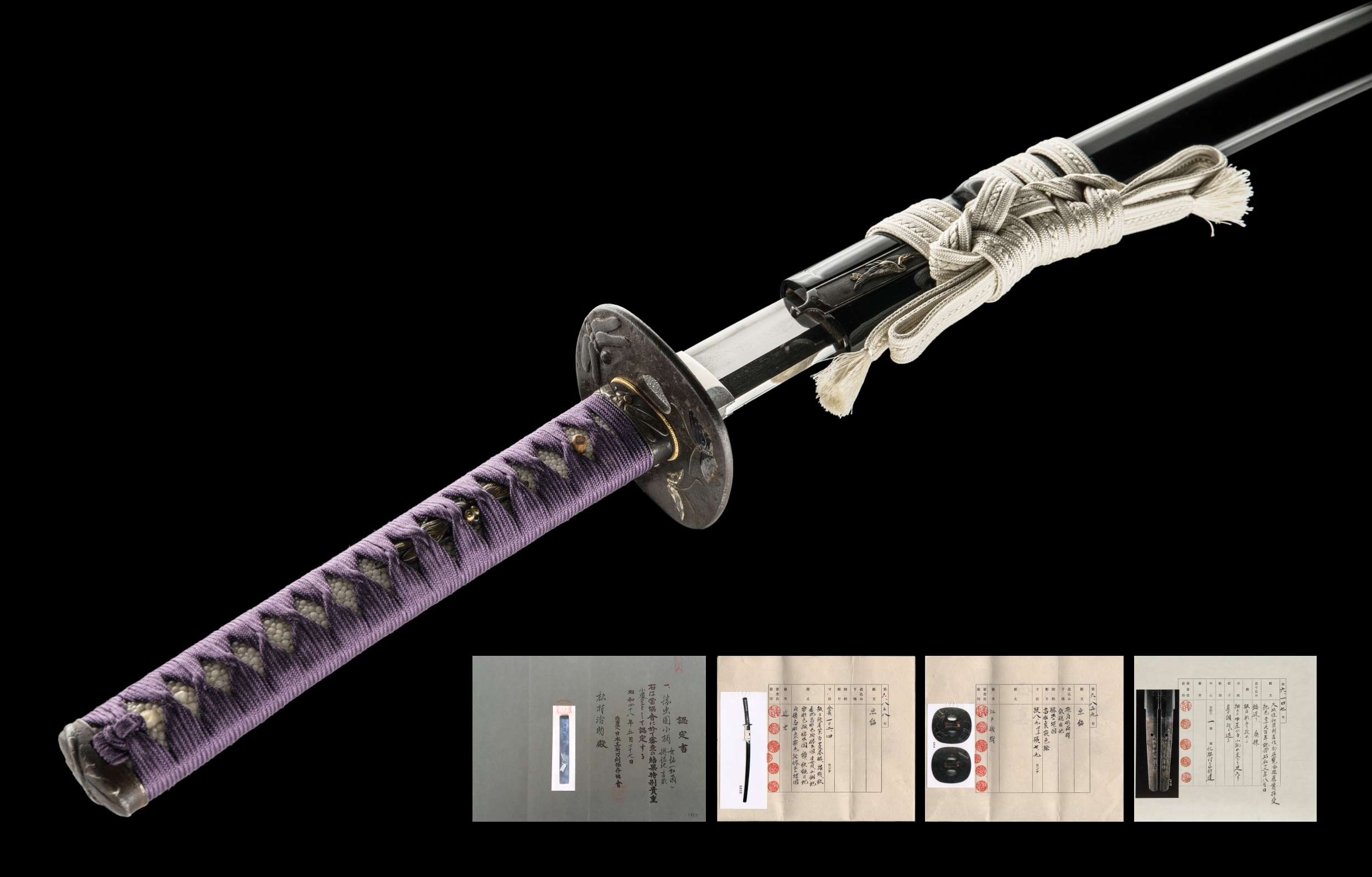
This katana, forged by Tomoyoshi in August 1937, won an 'Endorsement Award' in a 1940 sword-forging competition. The blade exhibits a Yamato tradition style with a nagare-hada jihada and a naka-suguha hamon. It comes with a custom koshirae from 2015 featuring antique dragonfly-themed fittings, and the sword, tsuba, and koshirae are certified authentic by NTHK-NPO, while the kozuka has an NBTHK Tokubetsu Kicho certificate.
Offered by Unique Japan

Shōwa to the present: destruction and revival
The twentieth century nearly killed the craft twice: wartime distortion, then the occupation ban. The NBTHK’s founding in 1948 and licensed forging from 1953 rebuilt the sword as an art, crowned by Living National Treasures and the mukansa rank.
This work carries older NBTHK “Kichō”-era papers, which the NBTHK no longer issues and largely disavows today. To confirm the attribution, submission to an official Japanese examination body (such as the NBTHK or NTHK) for modern certification could be considered.
All swords come with a three-day inspection period beginning from the date of delivery. If not satisfied, the sword may be returned within this period for a full refund of the purchase price. Outside of this period, all sales are final. Swords purchased on a layaway payment plan are not eligible for the three-day inspection period.