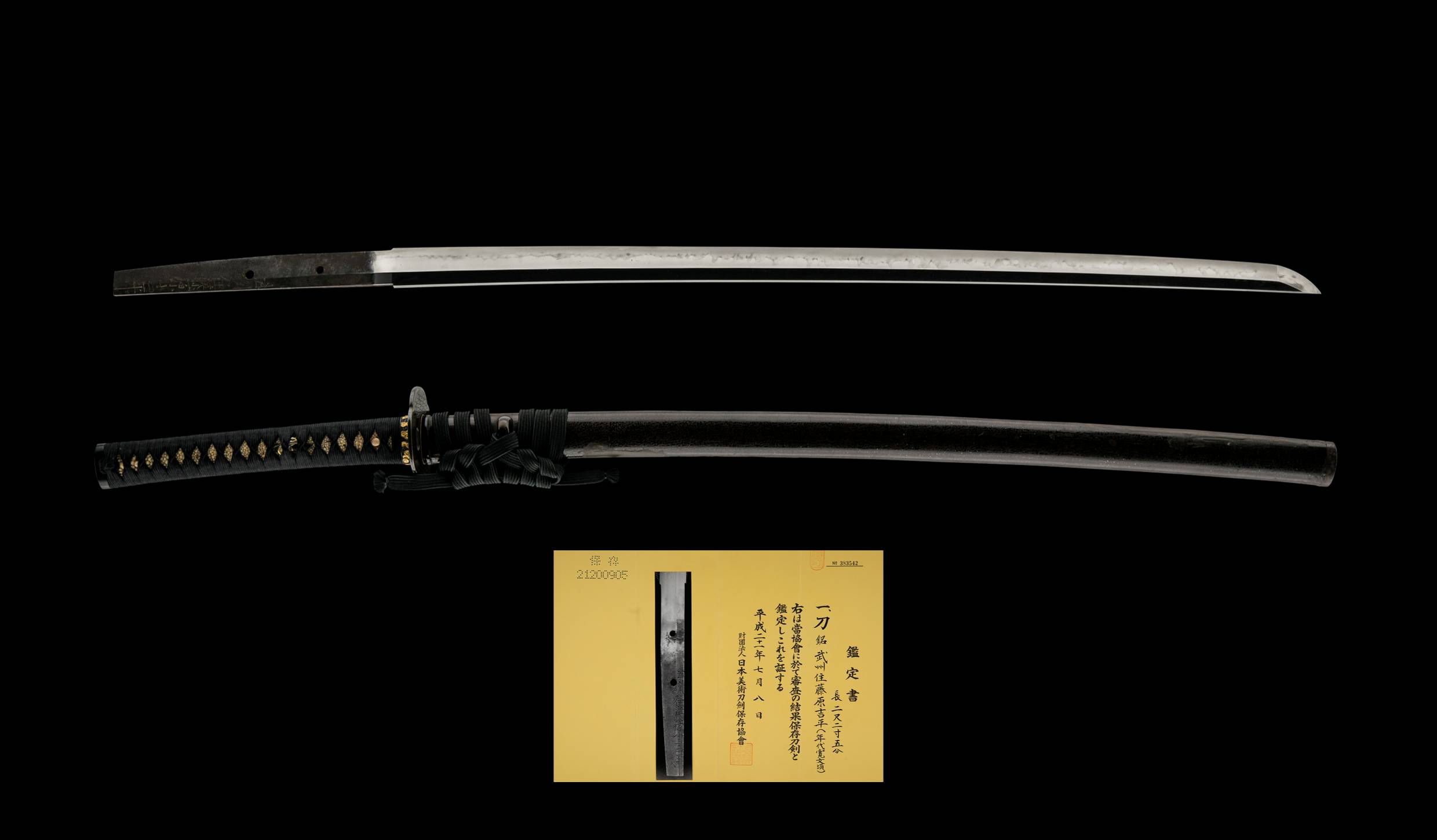
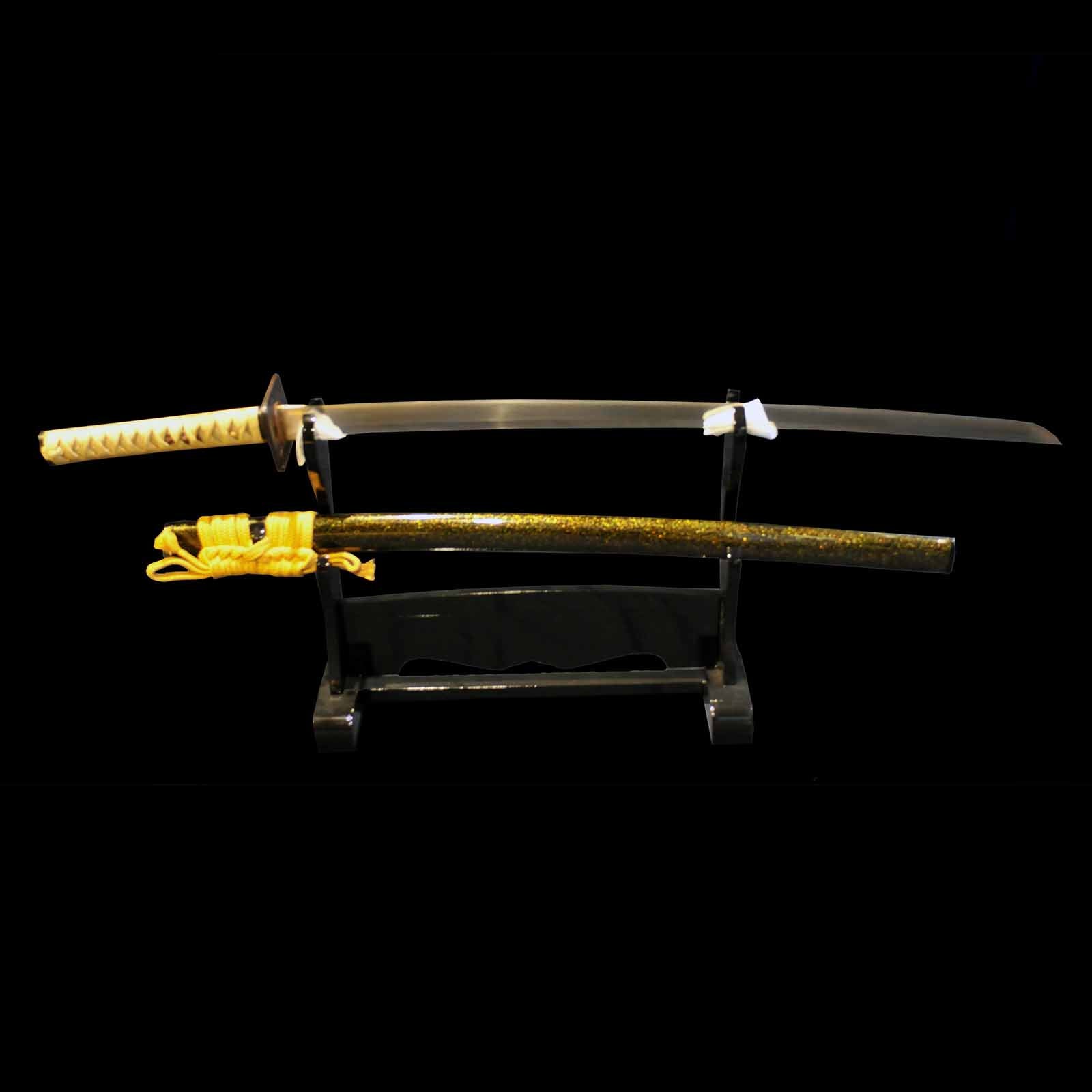
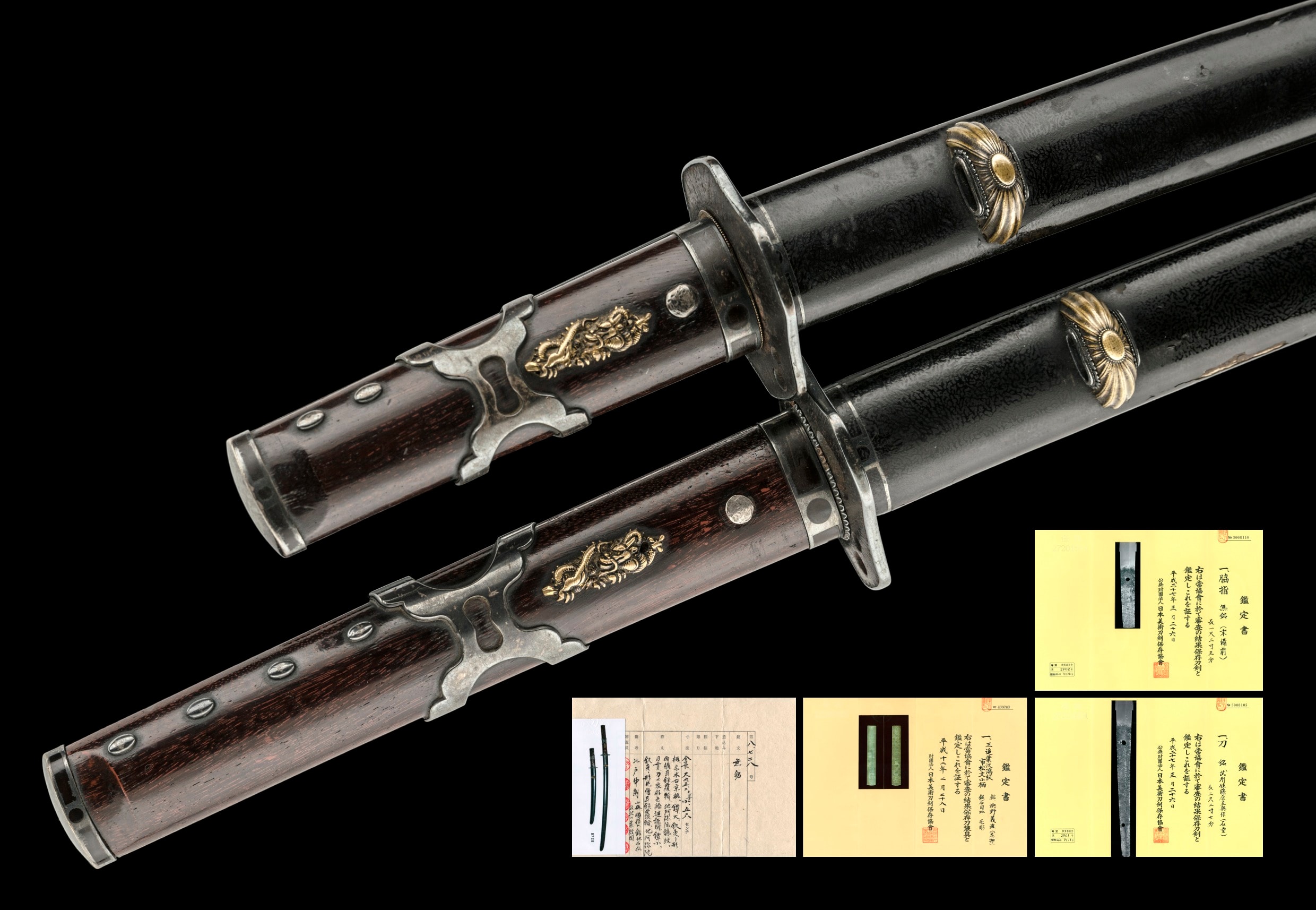
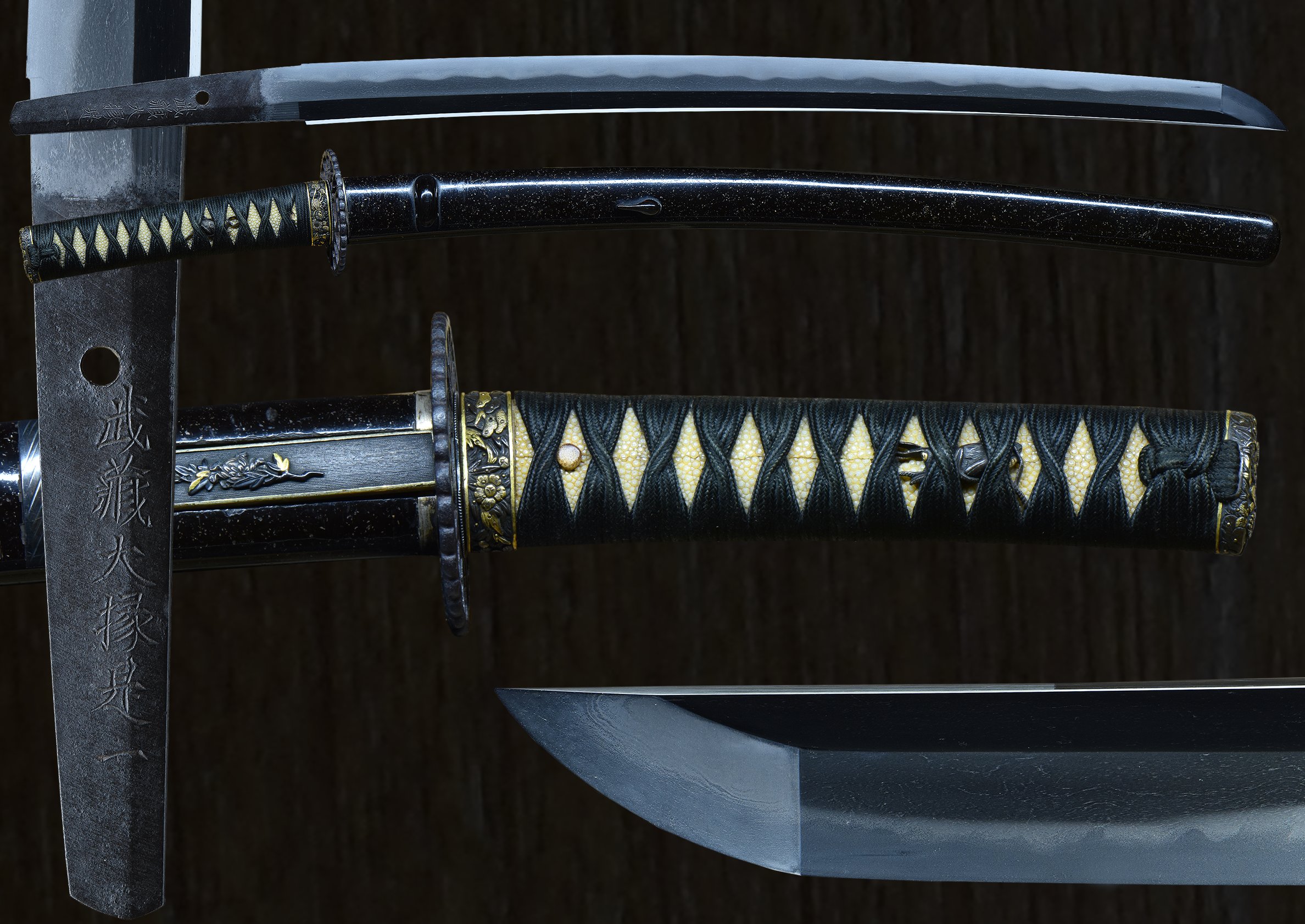
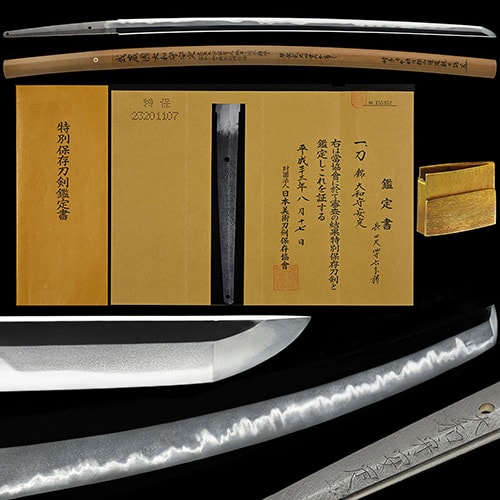
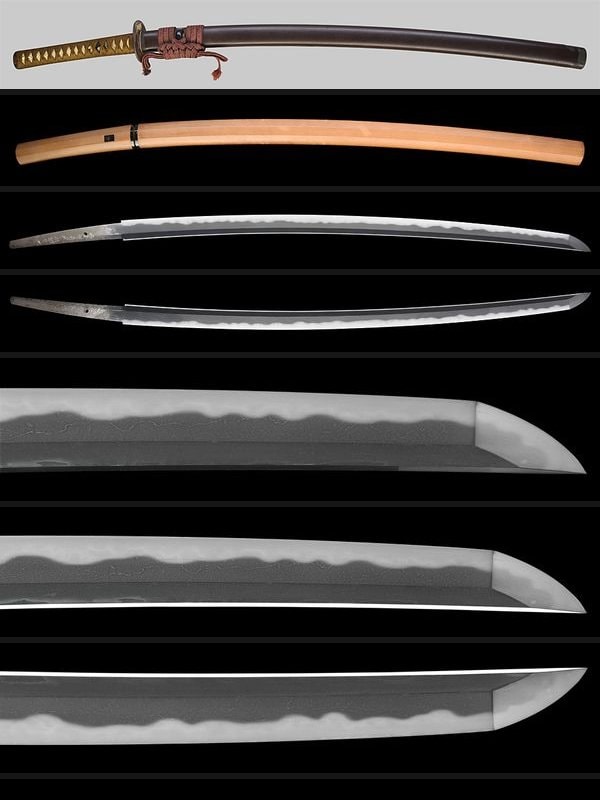
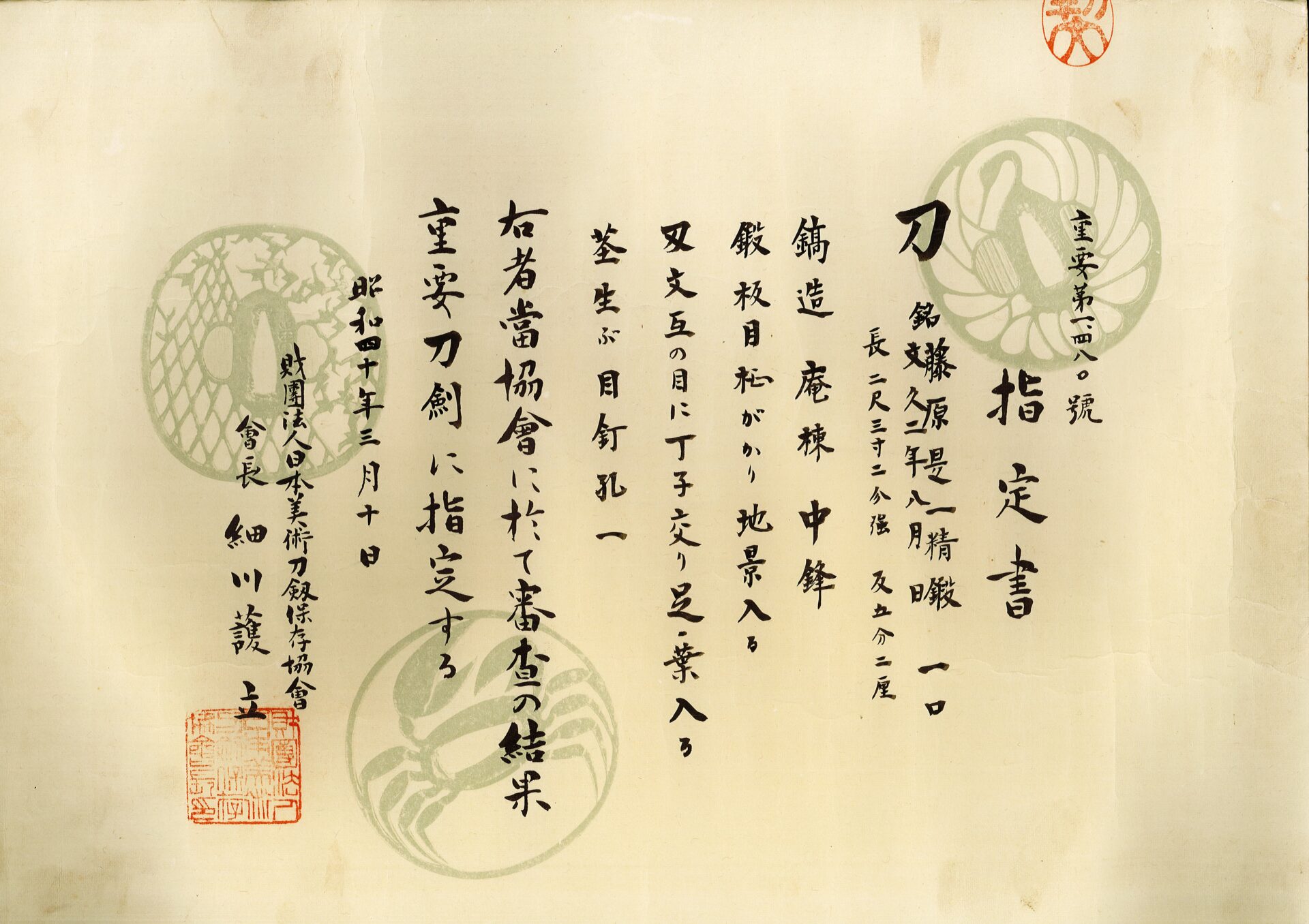
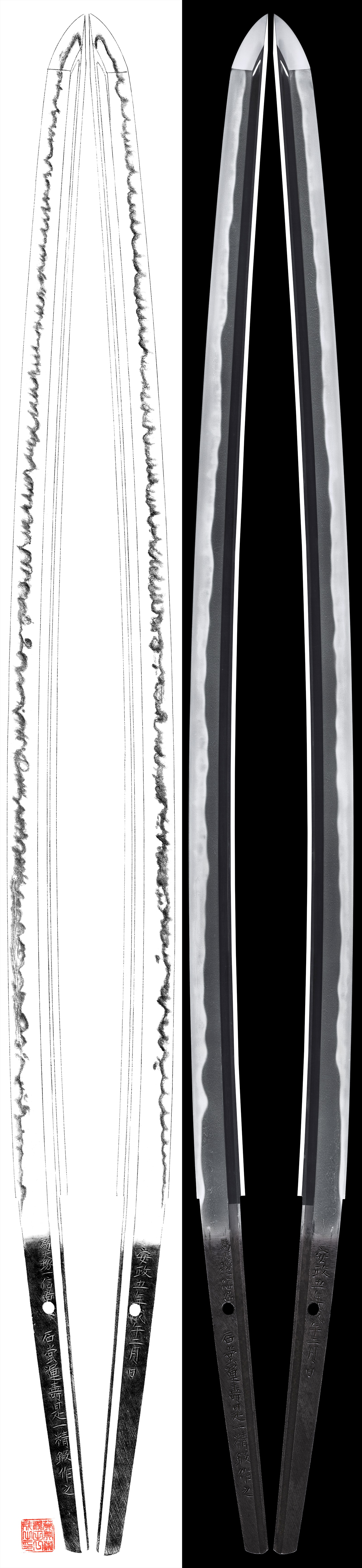
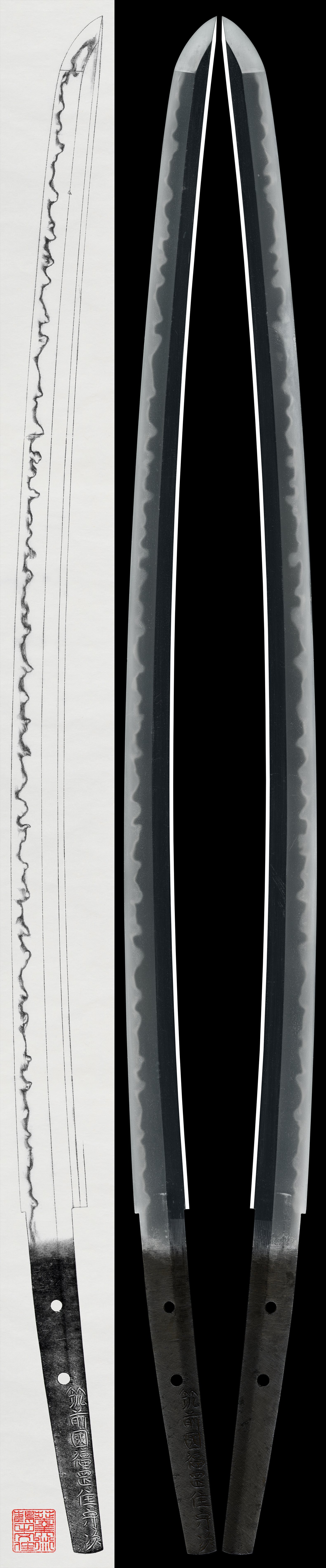
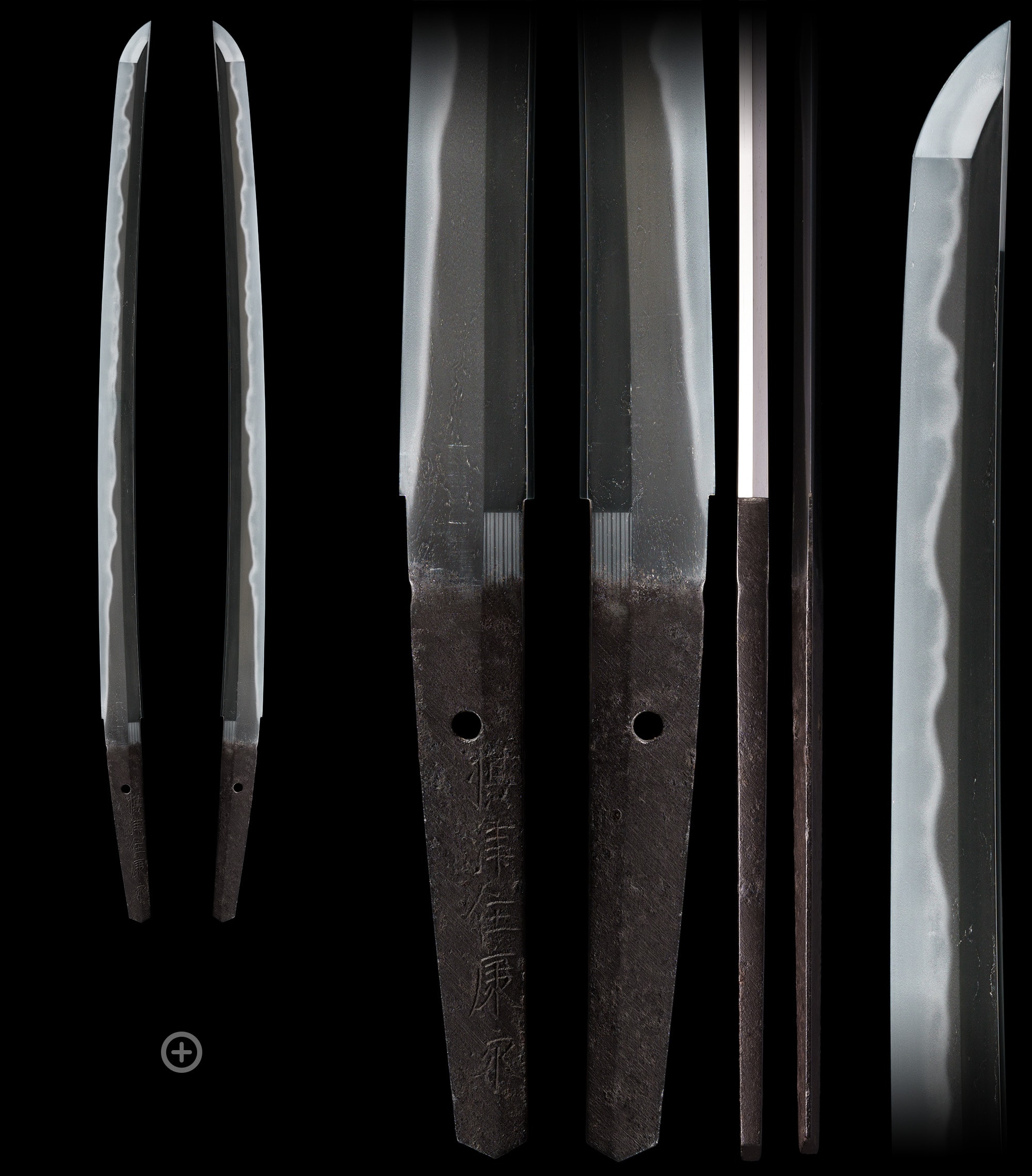
The Edo Ishido school (江戸石堂) is the capital branch of the Ishido lineage, a body of shinto-era smiths who carried the Bizen choji tradition into Edo and there pursued a single deliberate project: the revival, in the brighter steel of the early-Edo forges, of the flamboyant choji-midare worked by the medieval Fukuoka-Ichimonji masters of Bizen. The school's makers came up from Omi by way of Kyoto rather than directly, the Akasaka-signed blades of Mitsuhira fixing that route, and several of its leading hands trace to the Kyo-Ishido line before the move to the capital; Heki Mitsuhira, eldest son of Yamashiro-no-kami Ippo, and Tsushima-no-kami Tsunemitsu stand as the twin pillars of the early school, while the Edo Ishido Korekazu line carried the house specialty forward, the seventh-generation Korekazu keeping it alive through the nineteenth-century shinshinto revival. A separate Edo strand runs through Yamato-no-kami Yasusada, whom recent research and the Shinto Bengi place within the Kishu Ishido group, a Kanbun-era master of the capital whose temper turns toward the angular rather than the choji of his school-fellows. What binds the school is a shared vocabulary rather than a single hand. The defining work is the choji-midare tempered over a bright shinto ko-itame, a crowded line mixing gunome, ko-gunome, round-topped choji and small choji with angular and pointed elements, the yakiba rising and falling in marked height, the ashi and yo entering vigorously, the nioiguchi clear; on the most successful pieces a midare-utsuri stands in the jigane, the koto-Bizen reflection raised again on a shinto blade, the single feature that carries the Ichimonji comparison furthest. Mitsuhira tempers this revival chiefly in nioi, and the NBTHK reads his choji over its utsuri as the fullest realization of the school's program, a splendid choji-midare that recalls the old Ichimonji. Korekazu departs precisely here: where the other Bizen-leaning smiths held their choji in nioi-deki, he forged the house pattern in nie-deki, deep in nioi and thick in nie over a ko-itame approaching a muji-fu tightness, with sunagashi, kinsuji and nie-suji threading the edge, a Bizen pattern carried on a Soshu-leaning base.
Yasusada marks the school's outer divergence, working a notare mixed with gunome that boxes at peak and valley, the nioiguchi inclining to a subdued shizumi and a steeply raised iori-mune among his marks, his Soshu-leaning nie temper inherited through Kaneshige. Across all of them the jigane is the constant that underwrites the edge, a densely forged ko-itame, sometimes mixed with mokume, the ji-nie laid dust-fine and chikei entering well. To kantei an Edo Ishido blade is to read a revived Bizen choji set on an unmistakably shinto ji: the choji-midare draws the eye to old Ichimonji, but the steel beneath is the bright, clean forging of the Kanbun and later forges, frequently on the broad body, thick kasane and contracted chu-kissaki of the era, with Mitsuhira's transitional silhouette retaining a touch of funbari and standing sori. The utsuri when present confirms the school's intent; the choice of nie-deki over nioi-deki separates Korekazu from his fellows; the boxed notare and shizumi nioiguchi mark out Yasusada, whose hand is read against Kotetsu rather than against his school. The NBTHK ranks the best of these makers among the leading smiths of their respective ages, Mitsuhira as one of the most skilled to represent the Edo Ishido and Korekazu beside Jirotaro Naokatsu and Hosokawa Masayoshi among the late-Edo masters. Provenance is generally quiet, held in private and public hands rather than great houses, though the school's blades carry the texture of their moment: the Yamano gold-inlaid cutting-test inscriptions recur on Yasusada and on Mitsuhira's earliest dated work, one Korekazu blade is held by the Imperial Family, and his man'yogana and joi-slogan inscriptions voice the late-Edo current that the school's final flowering of Bizen-den outlived. Learn more →