Edo was the sword’s age of connoisseurship: the Hon’ami appraisers, the shogunal register of famous blades of 1719, and a thriving literature turned the sword into an object of study even as it ceased to be drawn in war.
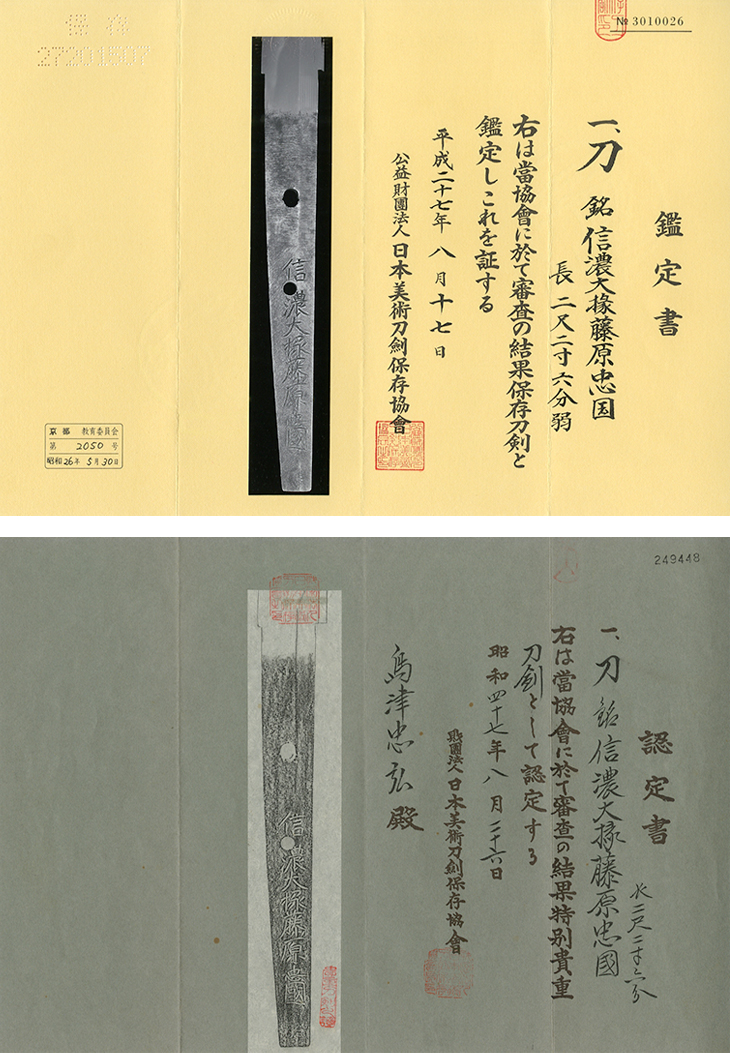
This is a katana by Shinanodaijo Fujiwara Tadakuni, the second generation smith from Inaba province during the early Edo period. It features a rare midare-ba (irregular temper pattern) for this lineage, which typically specialized in suguha (straight temper line). The blade comes with a koshirae (mounting) and is accompanied by Hozon Token and Tokubetsu Kicho Token certificates.
 NihontoWatch
mei · Enpo (1673-1681) · nagasa 68.4cm · sori 1.9cm
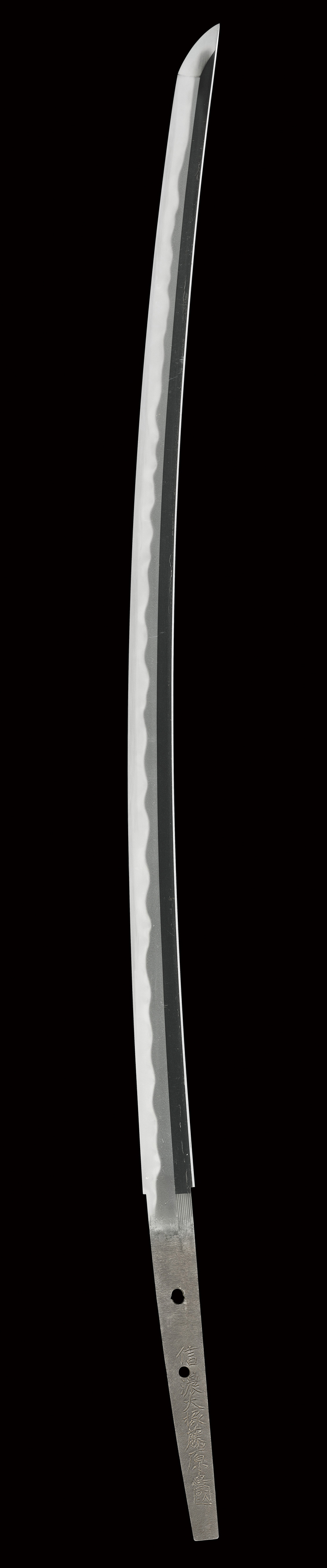
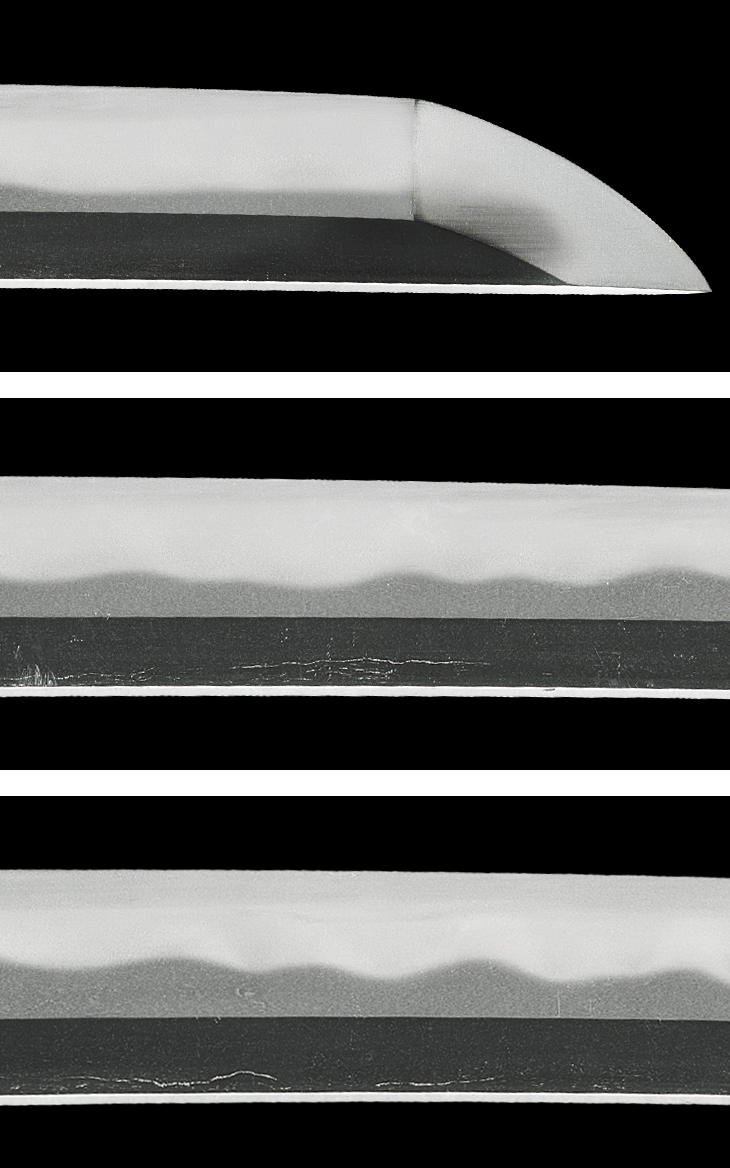
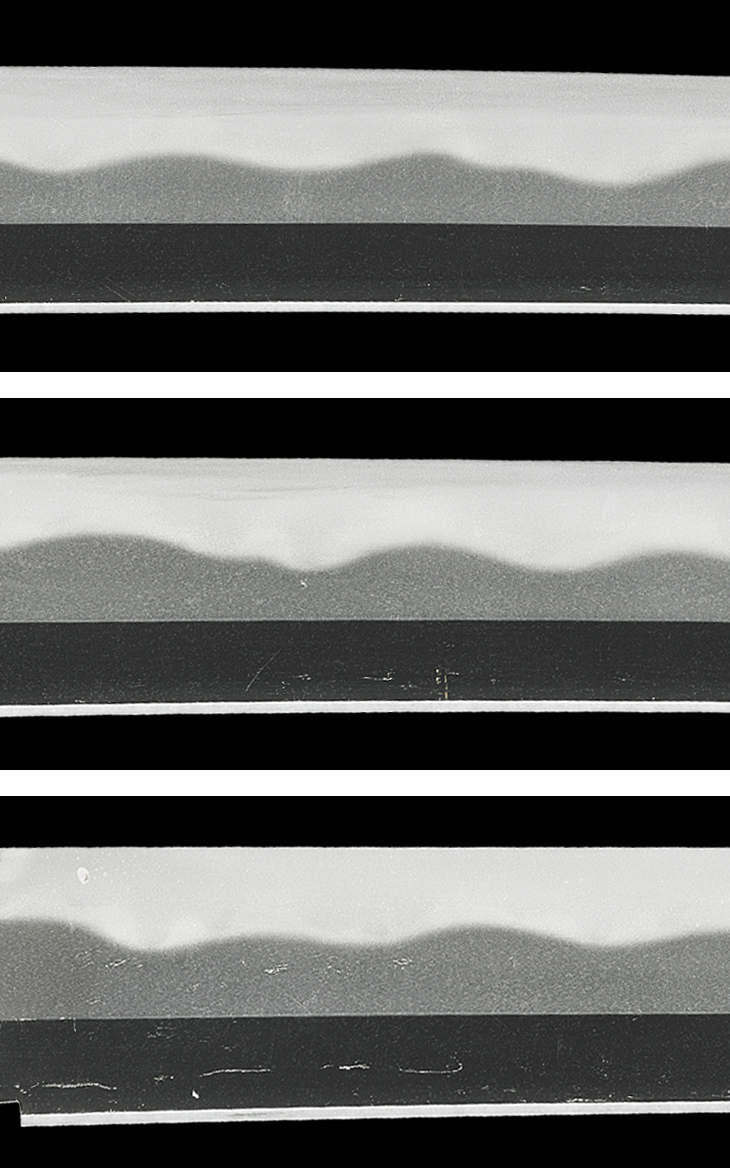
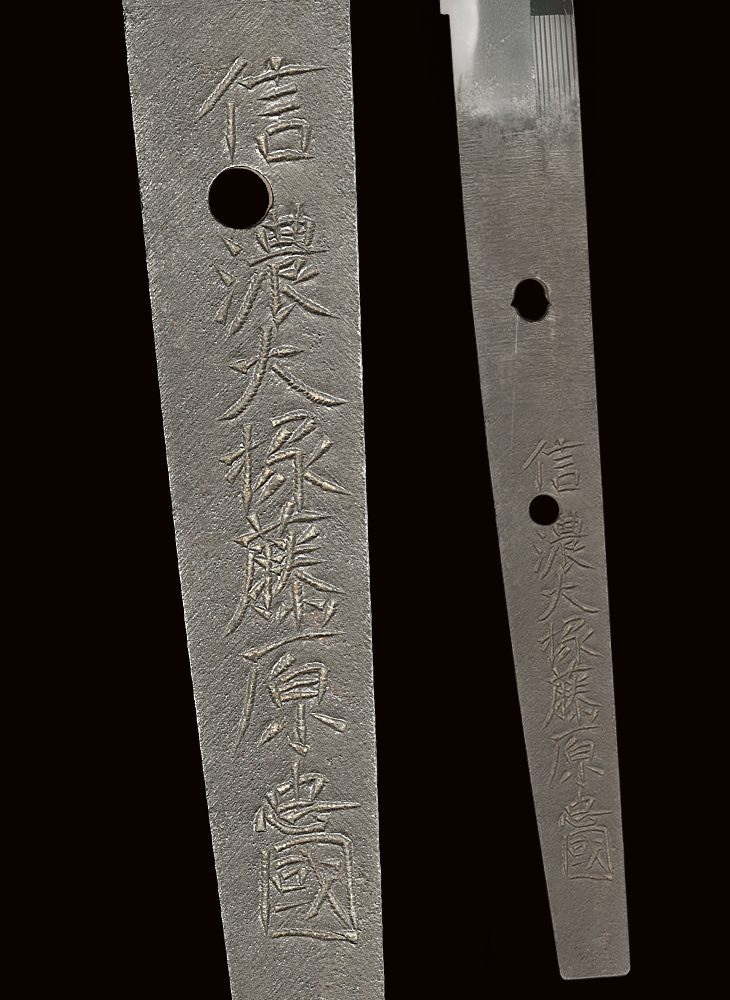
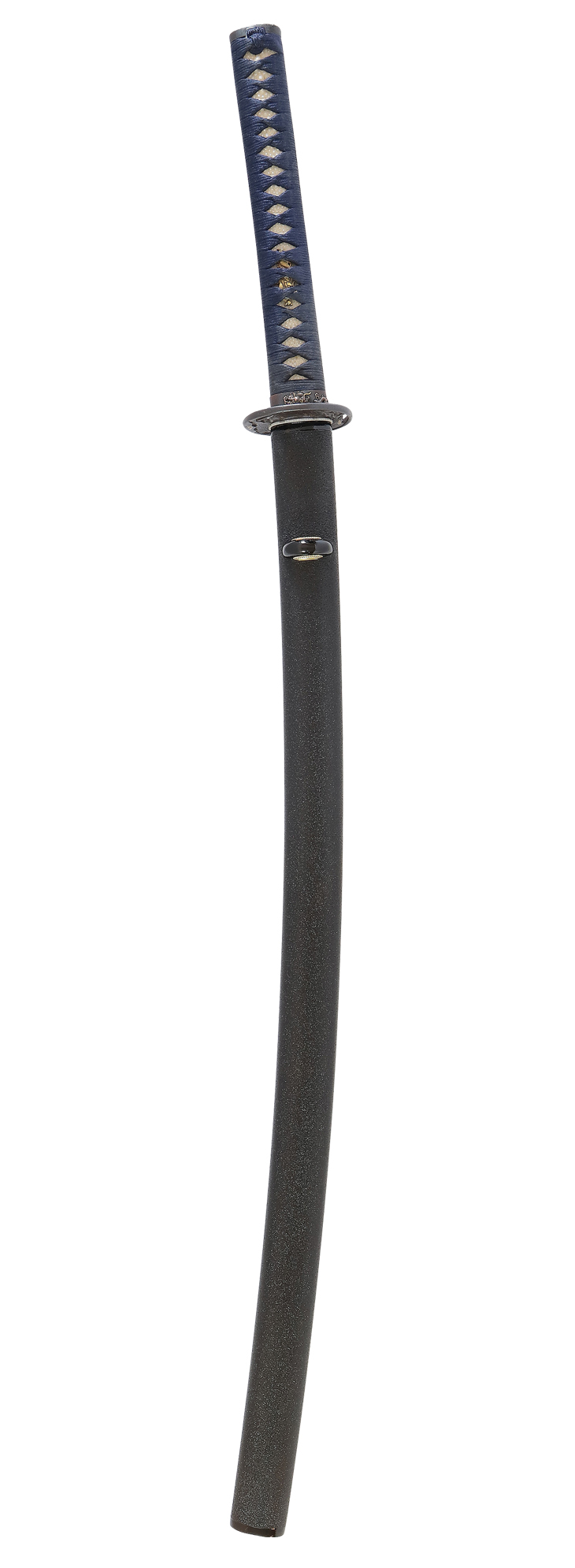
Wakimono · Inaba · around 1673-1681
Fujishiro Jo saku · Tōken Taikan top 60%
1 piece on the market now
Where Tadakuni stands among comparable artisans: across all of nihontō, and within tradition, era, and period. The tiers (Foremost · Leading · Major · Notable) weigh official designations from the NBTHK and Japan's Agency for Cultural Affairs, together with historical honors of lasting repute such as the Sansaku and Meibutsu-chō.
Select a lens to see how it's measured.
Wakimono · Inaba
1 piece on the market now
The Kagenaga smiths worked in Inaba Province (因州, Inshū), and the setsumei place their beginnings at the close of the Kamakura period, carrying the name forward in successive generations into the Muromachi era. The notices record a first generation set in the Kagen era (1303 to 1306) and a second in the Kenmu era (1334 to 1338), with the same signature continuing down to the Ōei era (1394 to 1428), from which the rare dated examples survive. The line's roots are consistently traced to the Yamashiro tradition: the founder is transmitted as a disciple of Awataguchi Yoshimasa (one tachi naming him Yoshimasa's younger brother), with variant accounts citing Kuritaguchi Yoshimasa, Rai Kunitoshi, or Fujishirō Yoshimitsu of the Kuritaguchi group. The smiths were widely called the Inaba kokaji, the "Inaba minor smith," a sobriquet the setsumei note attached from the Muromachi period onward. A later Inaba shintō branch is recorded in the same body, the Shinano Daijō Fujiwara Tadakuni line, whose first generation studied under Dewa Daijō Kunimichi before moving to Inshū. Across the blades the shared hand rests on suguha. The koto Kagenaga work is shinogi-zukuri tachi of slender, koshizori build, alongside hira-zukuri tantō in uchizori, the kitae an itame-hada that flows toward the edge into nagare and masame, with ji-nie and a jigane the setsumei repeatedly describe as somewhat soft and tending toward a whitish (shirake) cast, a trait treated as a point of recognition rather than a fault. The temper is most often a narrow or chū-suguha whose nioiguchi tends toward tightness, carrying ko-nie, ko-ashi, yō, and frequent edge effects of hotsure, nijūba, uchi-noke, and kuichigai-ba.
The bōshi runs sugu, turning in ko-maru or maru, regularly showing hakikake and a pointed tendency. Several notices record utsuri, including jifu-utsuri, one observer remarking that the ji recalls Bizen unrui. Entering the Muromachi period the temper widens into notare and gunome-midare, one tantō hardening a gunome that the setsumei read as drawn from Bizen Kagemitsu, while another tachi is judged at a glance to suggest Yamato Tegai. For kantei the points are the suguha base, the soft whitish jigane, the nagare-laden itame, and the tight nioiguchi with its small midare activity, set against extant dated works being exceedingly few. The signature itself is a recognition point: a large five-character "Inshū-jū Kagenaga" mei, sometimes cut at the center of the tang rather than near the mune as on most tachi, and appearing in rare variant forms reading Sen-niura jū and Senni-hara jū, one such tachi recorded in the Kōzan Oshigata. Named works span tachi, tantō, wakizashi, and an exceptionally rare ōmi-yari, with dated tachi and wakizashi of Ōei 9 (1402) carrying particular documentary weight for the Muromachi manner. Among the provenance the notices give the Jūyō-Bijutsuhin tachi held by Tokugawa Iesato and a Gyobutsu tantō and Tadakuni katana in the Imperial Household Agency, with a further Kagenaga tachi preserved at Yasukuni Shrine. The body of work establishes a provincial Yamashiro-rooted suguha line whose later generations reached toward Bizen and Yamato manners while keeping the inherited straight temper. Learn more →
| Smith | Era | Designated |
|---|---|---|
| Kagenaga景長 | 1362-1368 | 3 |
| Tadakuni忠國 | 1673-1681 | 2 |
| Kagenaga景長 | 1317-1319 | 1 |
| Kagenaga景長 | 1288-1293 | 7 |
| Kagenaga景長 | 1394-1428 | 7 |
The Edo period (1615 to 1868)
Edo was the sword’s age of connoisseurship: the Hon’ami appraisers, the shogunal register of famous blades of 1719, and a thriving literature turned the sword into an object of study even as it ceased to be drawn in war.
Certifies a genuine blade worth preserving: a signature confirmed correct, or, if unsigned, an era, province, and school that the NBTHK can reliably identify.
The NBTHK (Nihon Bijutsu Tōken Hozon Kyōkai, the Society for the Preservation of Japanese Art Swords) is a public-interest incorporated foundation founded in 1948 and supervised by Japan’s Agency for Cultural Affairs (Bunkachō); it is based at the Japanese Sword Museum in Tokyo. Its expert panels physically examine each submitted work (shinsa) and issue a certificate (kanteishō) ranking it by artistic and historical merit. NBTHK papers are the most widely recognized standard of authentication for Japanese swords and fittings.
NBTHK official siteFor one-of-a-kind items such as swords, sword fittings, and antiques, please contact us about a return within 3 days of the item's arrival and ship it back within 8 days. Refunds are issued the same day the returned item arrives.
This is a katana by Shinanodaijo Fujiwara Tadakuni, the second generation smith from Inaba province during the early Edo period. It features a rare midare-ba (irregular temper pattern) for this lineage, which typically specialized in suguha (straight temper line). The blade comes with a koshirae (mounting) and is accompanied by Hozon Token and Tokubetsu Kicho Token certificates.
NihontoWatchmei · Enpo (1673-1681) · nagasa 68.4cm · sori 1.9cm
Wakimono · Inaba · around 1673-1681
Fujishiro Jo saku · Tōken Taikan top 60%
1 piece on the market now
Where Tadakuni stands among comparable artisans: across all of nihontō, and within tradition, era, and period. The tiers (Foremost · Leading · Major · Notable) weigh official designations from the NBTHK and Japan's Agency for Cultural Affairs, together with historical honors of lasting repute such as the Sansaku and Meibutsu-chō.
Select a lens to see how it's measured.
Wakimono · Inaba
1 piece on the market now
The Kagenaga smiths worked in Inaba Province (因州, Inshū), and the setsumei place their beginnings at the close of the Kamakura period, carrying the name forward in successive generations into the Muromachi era. The notices record a first generation set in the Kagen era (1303 to 1306) and a second in the Kenmu era (1334 to 1338), with the same signature continuing down to the Ōei era (1394 to 1428), from which the rare dated examples survive. The line's roots are consistently traced to the Yamashiro tradition: the founder is transmitted as a disciple of Awataguchi Yoshimasa (one tachi naming him Yoshimasa's younger brother), with variant accounts citing Kuritaguchi Yoshimasa, Rai Kunitoshi, or Fujishirō Yoshimitsu of the Kuritaguchi group. The smiths were widely called the Inaba kokaji, the "Inaba minor smith," a sobriquet the setsumei note attached from the Muromachi period onward. A later Inaba shintō branch is recorded in the same body, the Shinano Daijō Fujiwara Tadakuni line, whose first generation studied under Dewa Daijō Kunimichi before moving to Inshū. Across the blades the shared hand rests on suguha. The koto Kagenaga work is shinogi-zukuri tachi of slender, koshizori build, alongside hira-zukuri tantō in uchizori, the kitae an itame-hada that flows toward the edge into nagare and masame, with ji-nie and a jigane the setsumei repeatedly describe as somewhat soft and tending toward a whitish (shirake) cast, a trait treated as a point of recognition rather than a fault. The temper is most often a narrow or chū-suguha whose nioiguchi tends toward tightness, carrying ko-nie, ko-ashi, yō, and frequent edge effects of hotsure, nijūba, uchi-noke, and kuichigai-ba.
The bōshi runs sugu, turning in ko-maru or maru, regularly showing hakikake and a pointed tendency. Several notices record utsuri, including jifu-utsuri, one observer remarking that the ji recalls Bizen unrui. Entering the Muromachi period the temper widens into notare and gunome-midare, one tantō hardening a gunome that the setsumei read as drawn from Bizen Kagemitsu, while another tachi is judged at a glance to suggest Yamato Tegai. For kantei the points are the suguha base, the soft whitish jigane, the nagare-laden itame, and the tight nioiguchi with its small midare activity, set against extant dated works being exceedingly few. The signature itself is a recognition point: a large five-character "Inshū-jū Kagenaga" mei, sometimes cut at the center of the tang rather than near the mune as on most tachi, and appearing in rare variant forms reading Sen-niura jū and Senni-hara jū, one such tachi recorded in the Kōzan Oshigata. Named works span tachi, tantō, wakizashi, and an exceptionally rare ōmi-yari, with dated tachi and wakizashi of Ōei 9 (1402) carrying particular documentary weight for the Muromachi manner. Among the provenance the notices give the Jūyō-Bijutsuhin tachi held by Tokugawa Iesato and a Gyobutsu tantō and Tadakuni katana in the Imperial Household Agency, with a further Kagenaga tachi preserved at Yasukuni Shrine. The body of work establishes a provincial Yamashiro-rooted suguha line whose later generations reached toward Bizen and Yamato manners while keeping the inherited straight temper. Learn more →
| Smith | Era | Designated |
|---|---|---|
| Kagenaga景長 | 1362-1368 | 3 |
| Tadakuni忠國 | 1673-1681 | 2 |
| Kagenaga景長 | 1317-1319 | 1 |
| Kagenaga景長 | 1288-1293 | 7 |
| Kagenaga景長 | 1394-1428 | 7 |
The Edo period (1615 to 1868)
Edo was the sword’s age of connoisseurship: the Hon’ami appraisers, the shogunal register of famous blades of 1719, and a thriving literature turned the sword into an object of study even as it ceased to be drawn in war.
Certifies a genuine blade worth preserving: a signature confirmed correct, or, if unsigned, an era, province, and school that the NBTHK can reliably identify.
The NBTHK (Nihon Bijutsu Tōken Hozon Kyōkai, the Society for the Preservation of Japanese Art Swords) is a public-interest incorporated foundation founded in 1948 and supervised by Japan’s Agency for Cultural Affairs (Bunkachō); it is based at the Japanese Sword Museum in Tokyo. Its expert panels physically examine each submitted work (shinsa) and issue a certificate (kanteishō) ranking it by artistic and historical merit. NBTHK papers are the most widely recognized standard of authentication for Japanese swords and fittings.
NBTHK official siteFor one-of-a-kind items such as swords, sword fittings, and antiques, please contact us about a return within 3 days of the item's arrival and ship it back within 8 days. Refunds are issued the same day the returned item arrives.

