The twentieth century nearly killed the craft twice: wartime distortion, then the occupation ban. The NBTHK’s founding in 1948 and licensed forging from 1953 rebuilt the sword as an art, crowned by Living National Treasures and the mukansa rank.
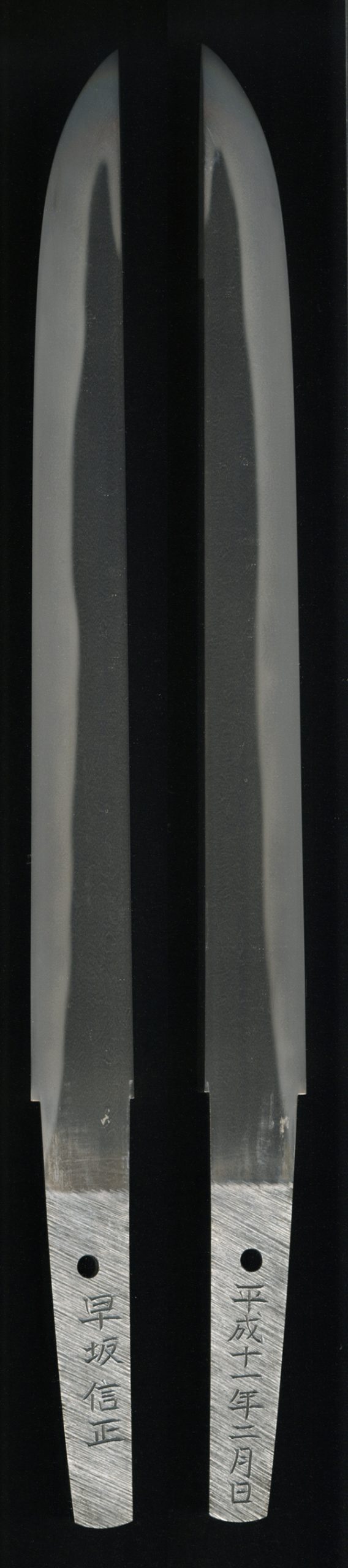
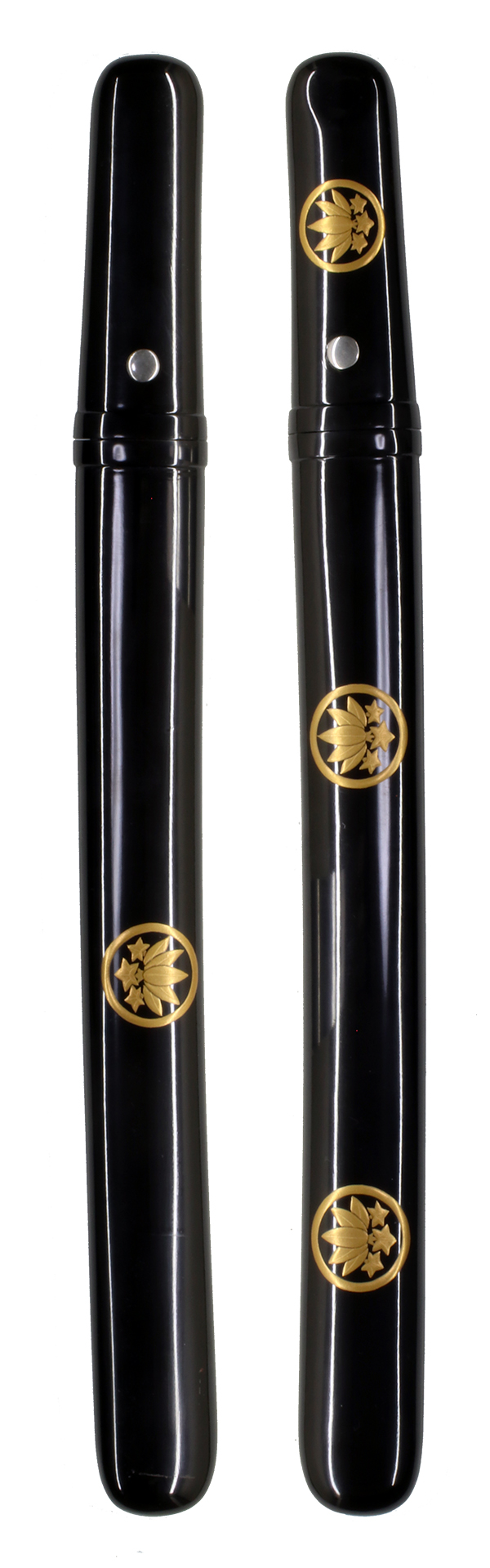
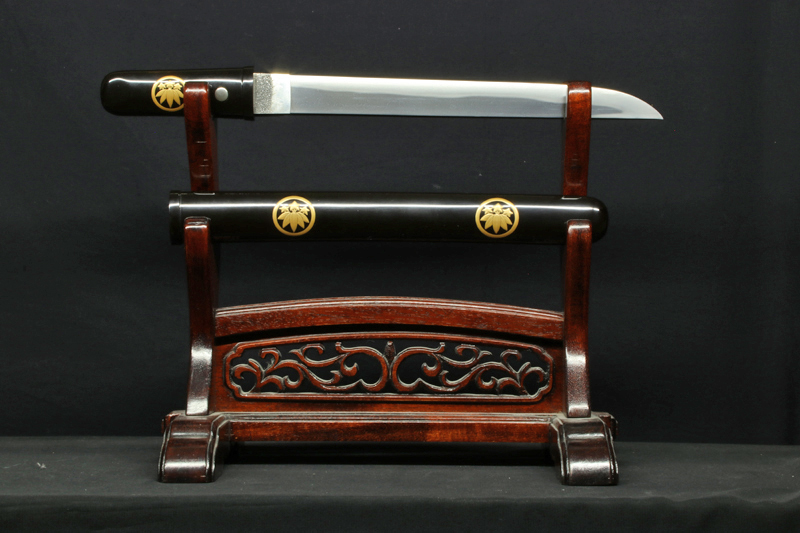
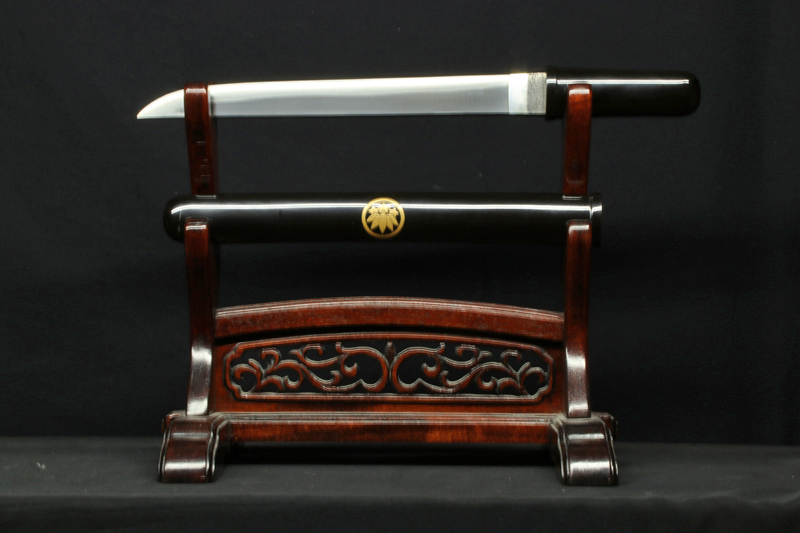
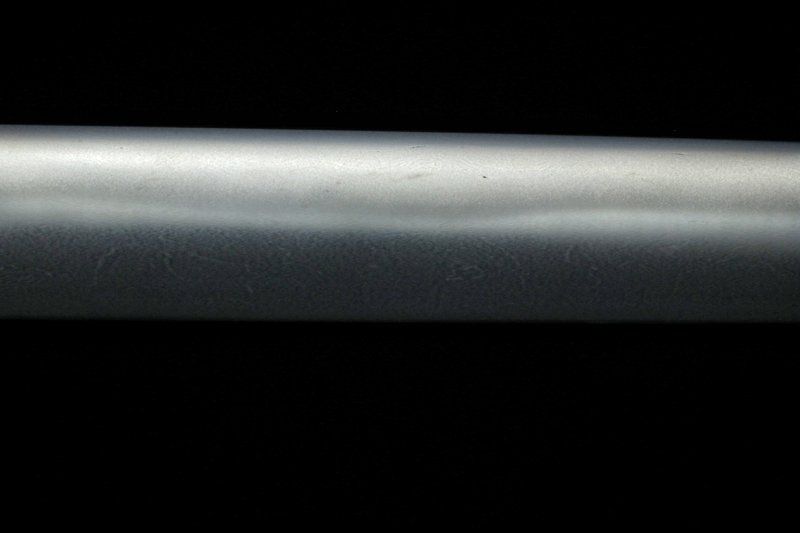
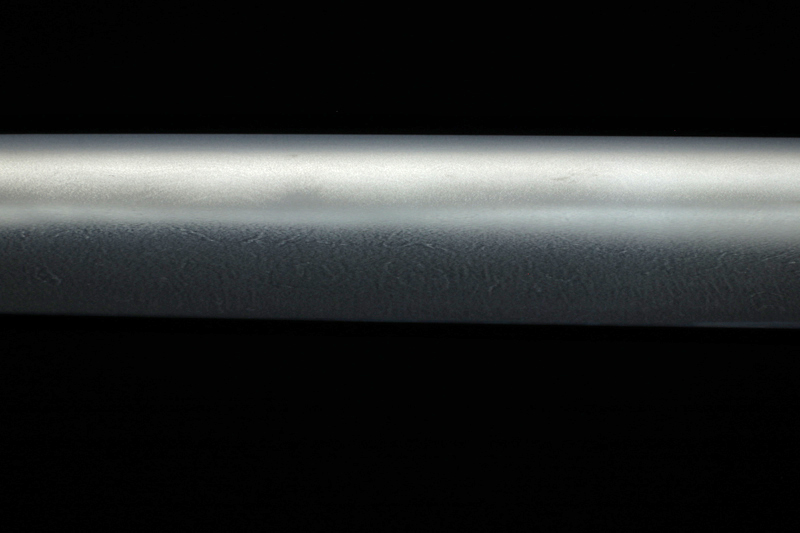
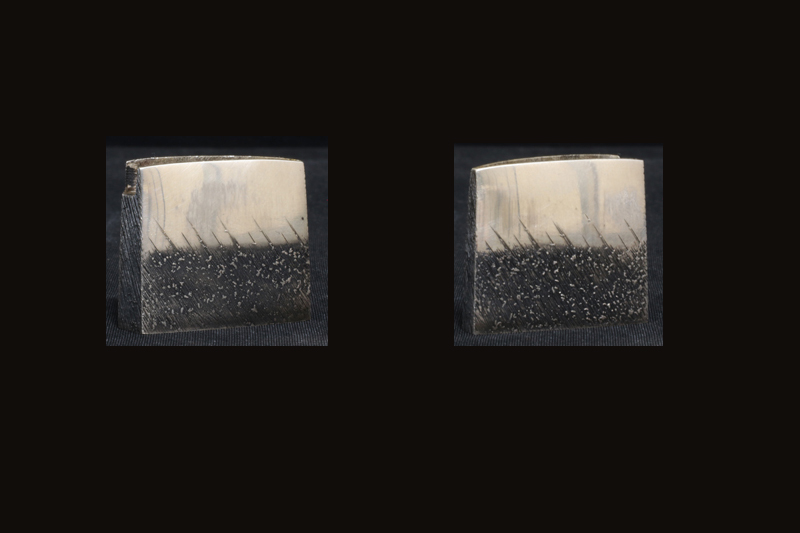
This is a modern tanto by Hayasaka Nobumasa, a contemporary swordsmith born in 1958 and trained by Hokke Saburo Nobufusa. The tanto is mounted in a black lacquer kaikendoshi koshirae with a sasarindo family crest in gold takamakie. The blade and koshirae are in good condition, making it suitable for collection or as an omamori (protective amulet).
 NihontoWatch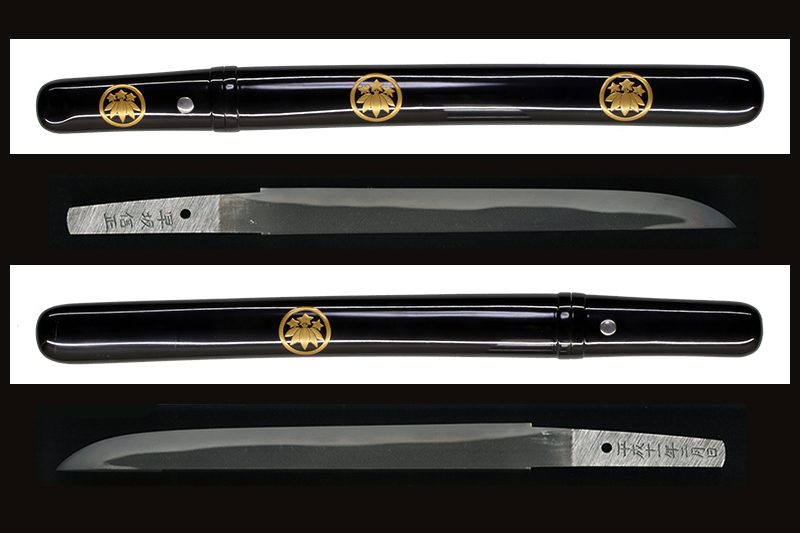
Mutsu · around 1989-2019
3 pieces on the market now
Shōwa to the present: destruction and revival
The twentieth century nearly killed the craft twice: wartime distortion, then the occupation ban. The NBTHK’s founding in 1948 and licensed forging from 1953 rebuilt the sword as an art, crowned by Living National Treasures and the mukansa rank.
We could not find an authenticity certificate on the seller’s listing. Japanese swords and fittings are normally papered by the NBTHK (or the NTHK). Without one, the attribution is the seller’s own assessment and has not been independently verified — treat it with caution and ask the dealer about certification before buying.
Three-day cooling-off period from receipt for refund or exchange. Return shipping and transfer fees are customer responsibility. Items showing use or condition changes are non-returnable.
This is a modern tanto by Hayasaka Nobumasa, a contemporary swordsmith born in 1958 and trained by Hokke Saburo Nobufusa. The tanto is mounted in a black lacquer kaikendoshi koshirae with a sasarindo family crest in gold takamakie. The blade and koshirae are in good condition, making it suitable for collection or as an omamori (protective amulet).
NihontoWatchMutsu · around 1989-2019
3 pieces on the market now
Shōwa to the present: destruction and revival
The twentieth century nearly killed the craft twice: wartime distortion, then the occupation ban. The NBTHK’s founding in 1948 and licensed forging from 1953 rebuilt the sword as an art, crowned by Living National Treasures and the mukansa rank.
We could not find an authenticity certificate on the seller’s listing. Japanese swords and fittings are normally papered by the NBTHK (or the NTHK). Without one, the attribution is the seller’s own assessment and has not been independently verified — treat it with caution and ask the dealer about certification before buying.
Three-day cooling-off period from receipt for refund or exchange. Return shipping and transfer fees are customer responsibility. Items showing use or condition changes are non-returnable.


