NihontoWatch Mon

NihontoWatch

MarketAuctions
Encyclopedia
NihontoWatch Mon

NihontoWatch

MarketAuctions
Encyclopedia

Description

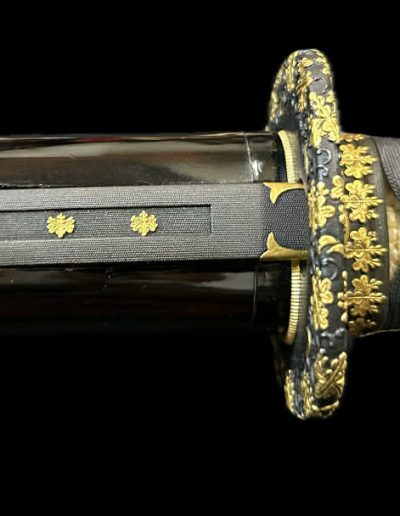
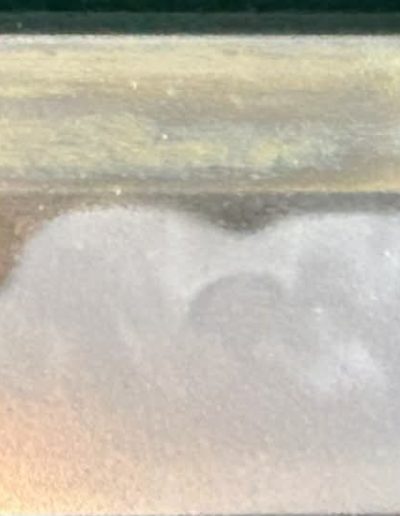
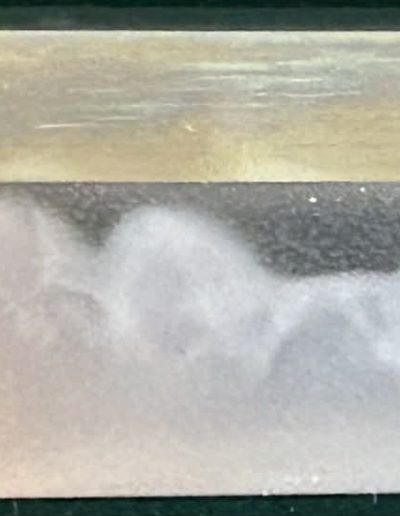
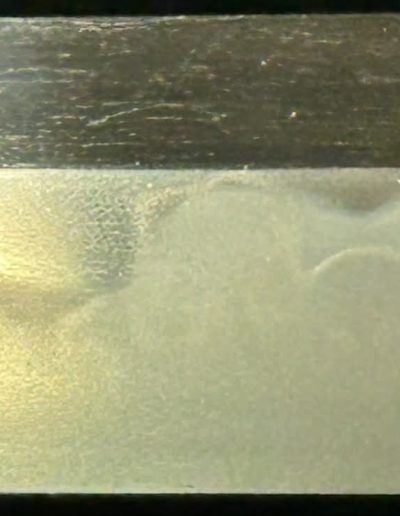
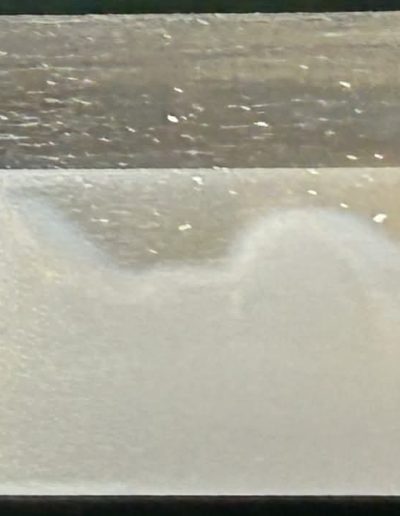
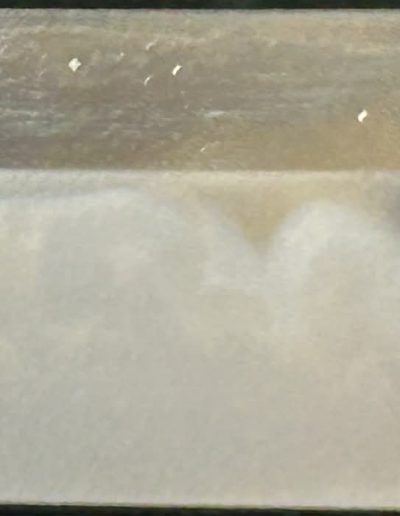
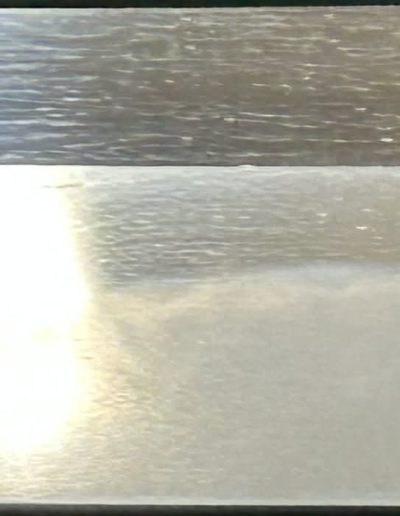
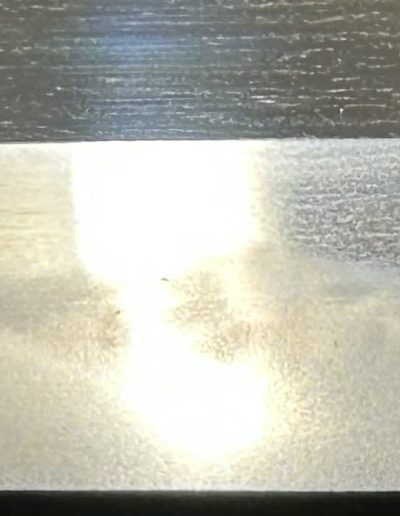
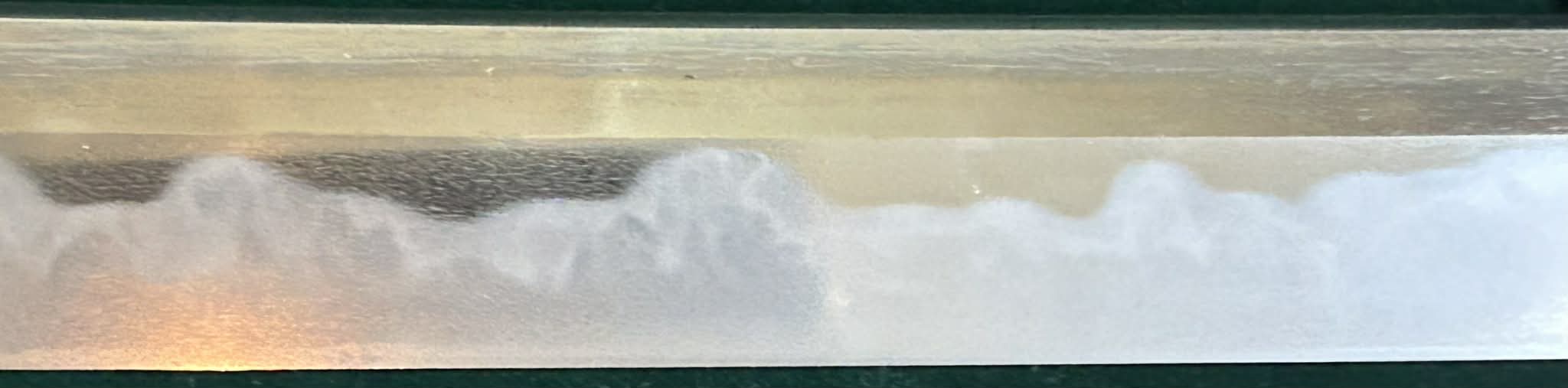
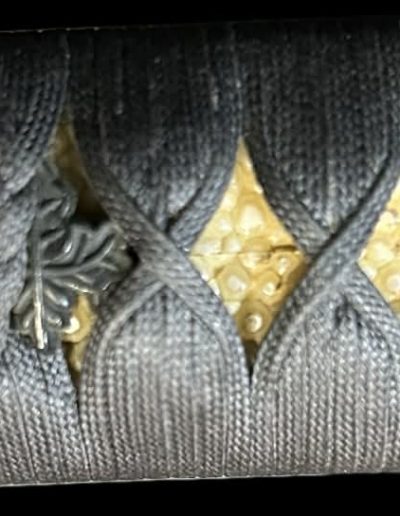
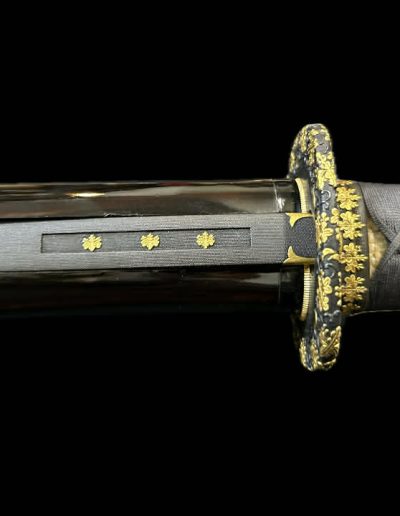
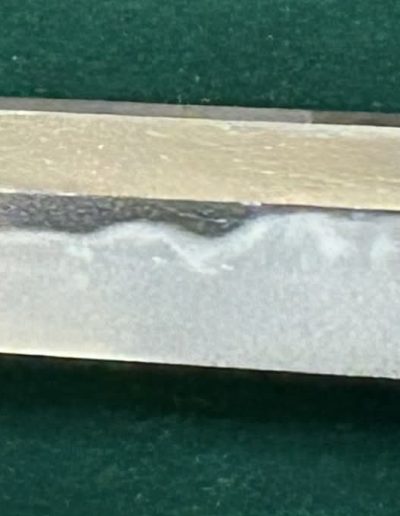
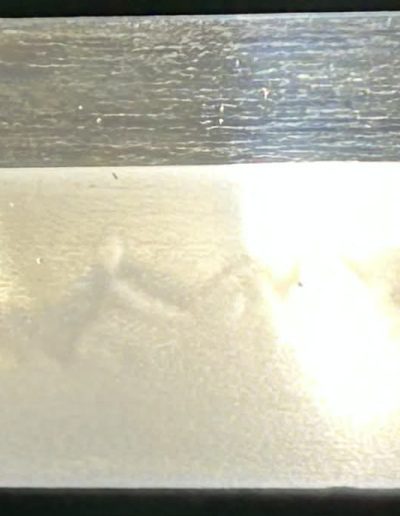
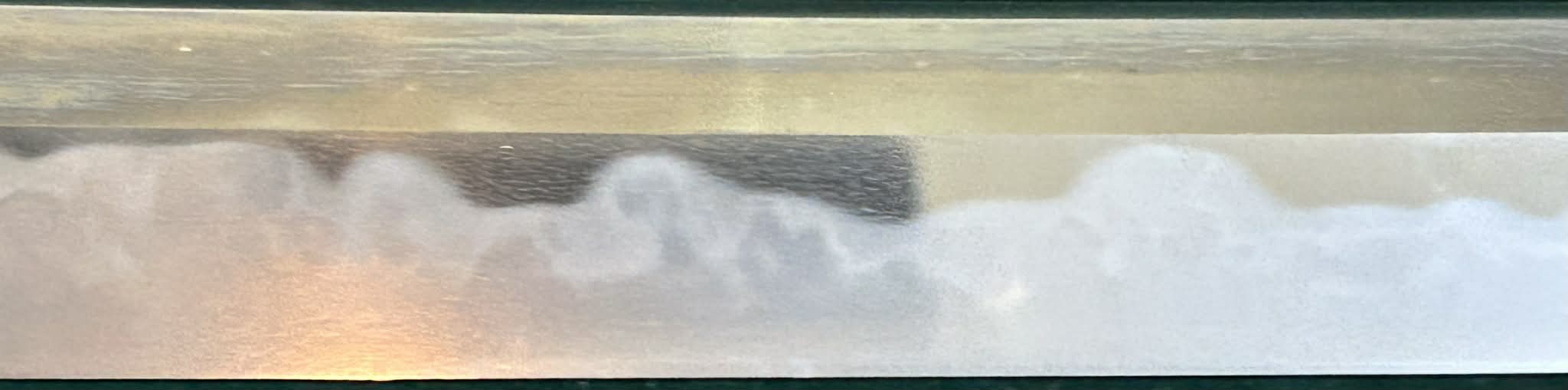
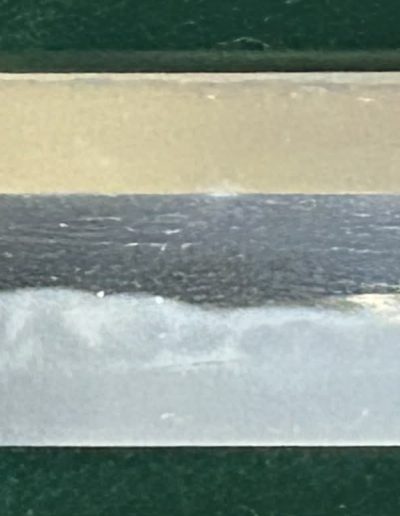
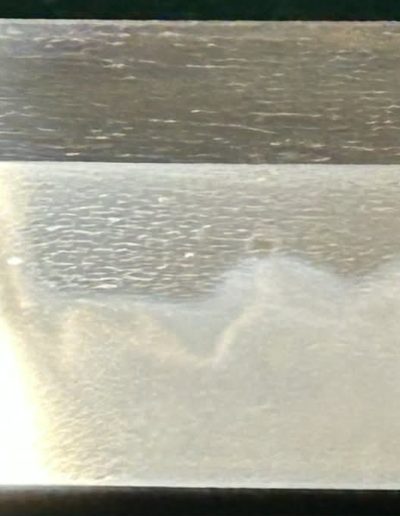
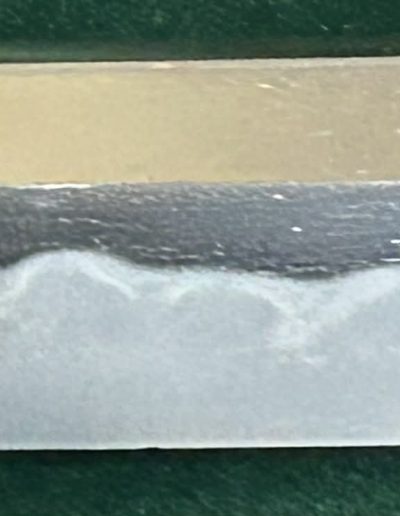
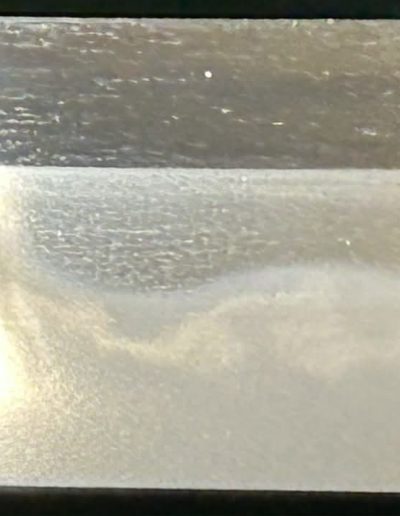
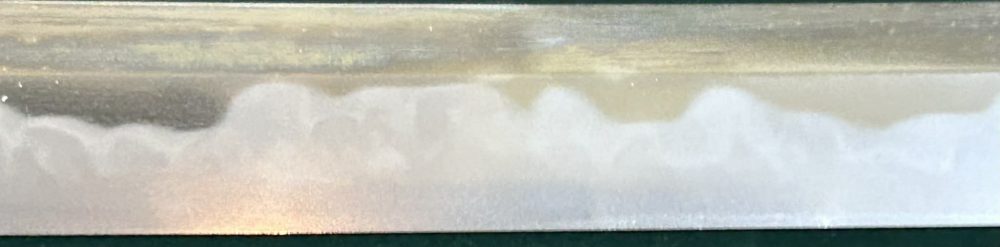
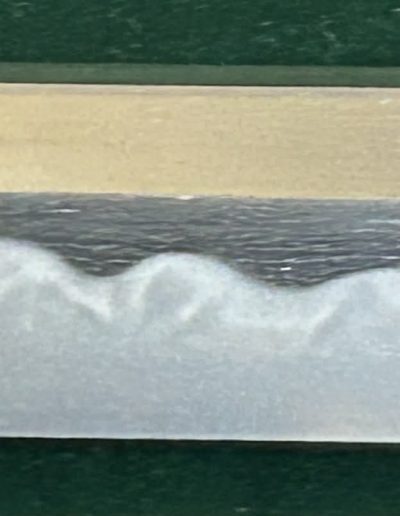
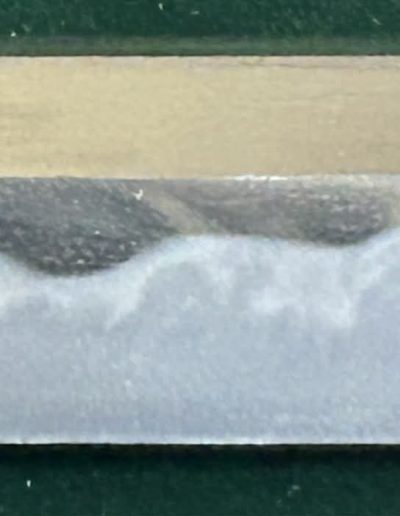
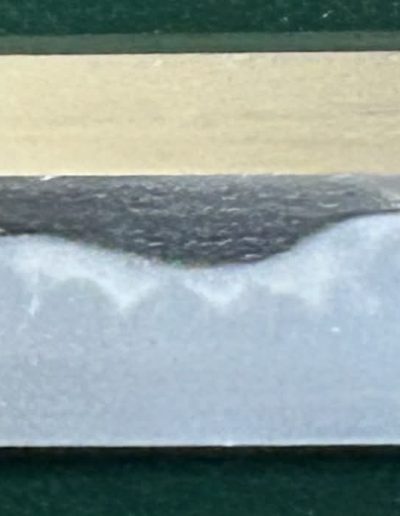
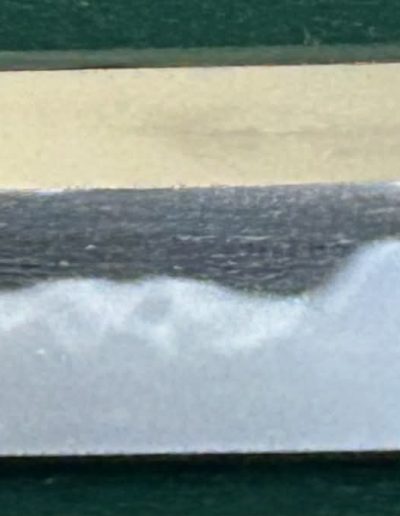
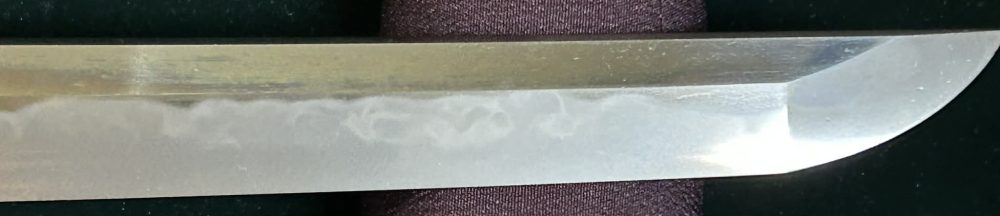
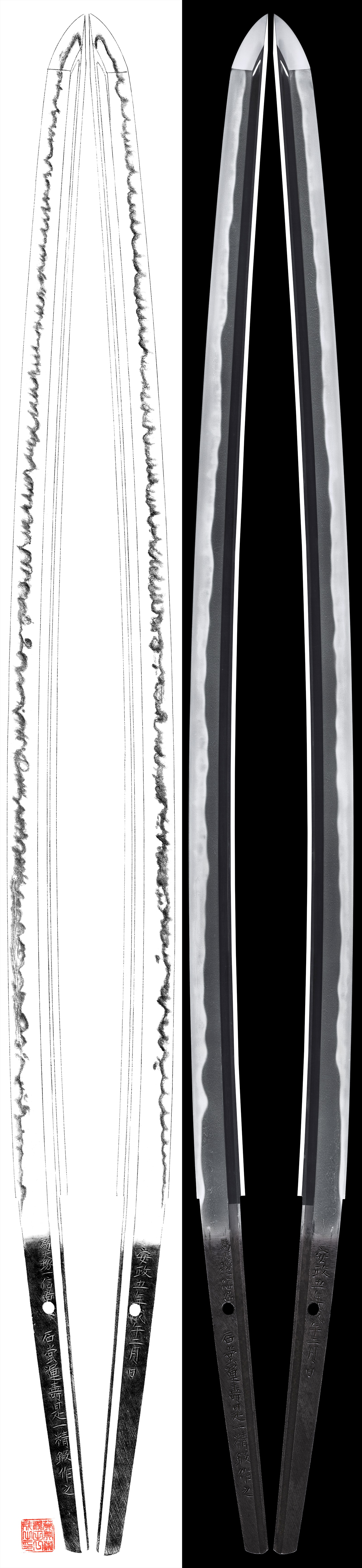
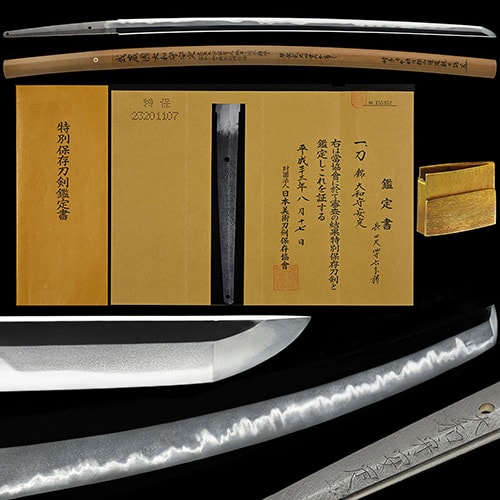
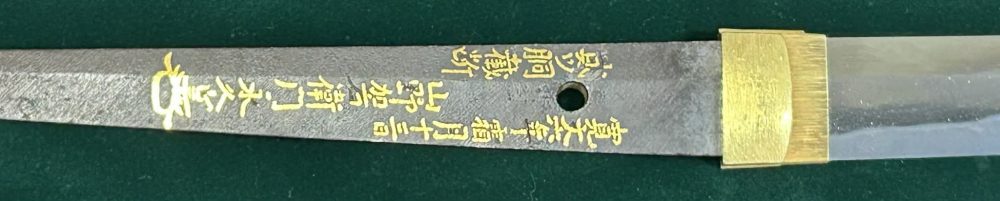
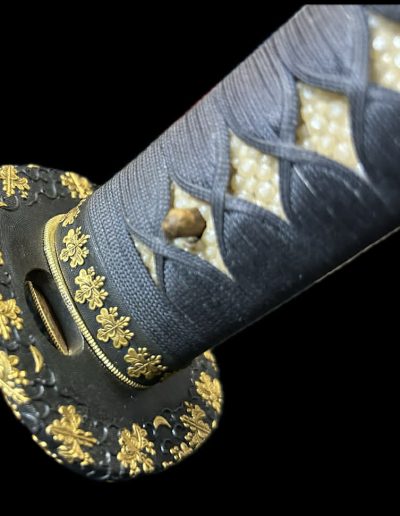
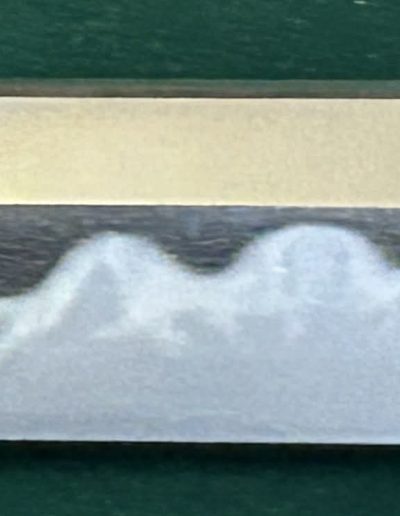
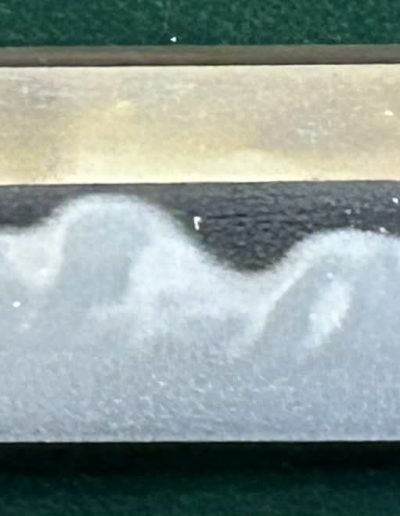
An excellent katana by Koretsugu from Chikuzen province. The blade features a flamboyant hamon and a gold cutting test mei indicating it cut through two bodies in 1666 by Yamano Ka'emon Nagahisa. It comes with a shirasaya and excellent koshirae with matching shakudo and kirimon tosogu fittings.

NihontoWatch MonNihontoWatch
MarketAuctionsEncyclopedia
Swords›Ishido›Fukuoka Ishido›Koretsugu›Katana: Chikuzen Koretsugu with Nagahisa 2 Body Gold Test
katanaTokubetsu Hozon
Fukuoka Ishido Koretsugu

Katana: Chikuzen Koretsugu with Nagahisa 2 Body Gold Test

mei · Meireki (1655-1658) · nagasa 68.8cm

Price on request
Visit seller website →
Fukuoka Ishido Koretsugu — 1 of 40
Fukuoka Ishido Koretsugu — 2 of 40
Fukuoka Ishido Koretsugu — 3 of 40
Fukuoka Ishido Koretsugu — 4 of 40
Fukuoka Ishido Koretsugu — 5 of 40
Fukuoka Ishido Koretsugu — 6 of 40
Fukuoka Ishido Koretsugu — 7 of 40
Fukuoka Ishido Koretsugu — 8 of 40
Fukuoka Ishido Koretsugu — 9 of 40
Fukuoka Ishido Koretsugu — 10 of 40
Fukuoka Ishido Koretsugu — 11 of 40
Fukuoka Ishido Koretsugu — 12 of 40
Fukuoka Ishido Koretsugu — 13 of 40
Fukuoka Ishido Koretsugu — 14 of 40
Fukuoka Ishido Koretsugu — 15 of 40
Fukuoka Ishido Koretsugu — 16 of 40
Fukuoka Ishido Koretsugu — 17 of 40
Fukuoka Ishido Koretsugu — 18 of 40
Fukuoka Ishido Koretsugu — 19 of 40
Fukuoka Ishido Koretsugu — 20 of 40
Fukuoka Ishido Koretsugu — 21 of 40
Fukuoka Ishido Koretsugu — 22 of 40
Fukuoka Ishido Koretsugu — 23 of 40
Fukuoka Ishido Koretsugu — 24 of 40
Fukuoka Ishido Koretsugu — 25 of 40
Fukuoka Ishido Koretsugu — 26 of 40
Fukuoka Ishido Koretsugu — 27 of 40
Fukuoka Ishido Koretsugu — 28 of 40
Fukuoka Ishido Koretsugu — 29 of 40
Fukuoka Ishido Koretsugu — 30 of 40
Fukuoka Ishido Koretsugu — 31 of 40
Fukuoka Ishido Koretsugu — 32 of 40
Fukuoka Ishido Koretsugu — 33 of 40
Fukuoka Ishido Koretsugu — 34 of 40
Fukuoka Ishido Koretsugu — 35 of 40
Fukuoka Ishido Koretsugu — 36 of 40
Fukuoka Ishido Koretsugu — 37 of 40
Fukuoka Ishido Koretsugu — 38 of 40
Fukuoka Ishido Koretsugu — 39 of 40
Fukuoka Ishido Koretsugu — 40 of 40
1 / 40
1 / 40
Fukuoka Ishido Koretsugu — 1 of 40Fukuoka Ishido Koretsugu — 2 of 40Fukuoka Ishido Koretsugu — 3 of 40Fukuoka Ishido Koretsugu — 4 of 40Fukuoka Ishido Koretsugu — 5 of 40Fukuoka Ishido Koretsugu — 6 of 40Fukuoka Ishido Koretsugu — 7 of 40Fukuoka Ishido Koretsugu — 8 of 40Fukuoka Ishido Koretsugu — 9 of 40Fukuoka Ishido Koretsugu — 10 of 40Fukuoka Ishido Koretsugu — 11 of 40Fukuoka Ishido Koretsugu — 12 of 40Fukuoka Ishido Koretsugu — 13 of 40Fukuoka Ishido Koretsugu — 14 of 40Fukuoka Ishido Koretsugu — 15 of 40Fukuoka Ishido Koretsugu — 16 of 40Fukuoka Ishido Koretsugu — 17 of 40Fukuoka Ishido Koretsugu — 18 of 40Fukuoka Ishido Koretsugu — 19 of 40Fukuoka Ishido Koretsugu — 20 of 40Fukuoka Ishido Koretsugu — 21 of 40Fukuoka Ishido Koretsugu — 22 of 40Fukuoka Ishido Koretsugu — 23 of 40Fukuoka Ishido Koretsugu — 24 of 40Fukuoka Ishido Koretsugu — 25 of 40Fukuoka Ishido Koretsugu — 26 of 40Fukuoka Ishido Koretsugu — 27 of 40Fukuoka Ishido Koretsugu — 28 of 40Fukuoka Ishido Koretsugu — 29 of 40Fukuoka Ishido Koretsugu — 30 of 40Fukuoka Ishido Koretsugu — 31 of 40Fukuoka Ishido Koretsugu — 32 of 40Fukuoka Ishido Koretsugu — 33 of 40Fukuoka Ishido Koretsugu — 34 of 40Fukuoka Ishido Koretsugu — 35 of 40Fukuoka Ishido Koretsugu — 36 of 40Fukuoka Ishido Koretsugu — 37 of 40Fukuoka Ishido Koretsugu — 38 of 40Fukuoka Ishido Koretsugu — 39 of 40Fukuoka Ishido Koretsugu — 40 of 40
Measurements & details
Smith
Fukuoka Ishido Koretsugu
Type
Katana
School
Fukuoka Ishido
Period
Around 1628–1681(Kan'ei–Tenna)
Province
Chikuzen
Signature
Signed(100% of this smith's designated works are signed)
Measurements
Nagasa 68.8cm
Description
About the maker

Koretsugu

是次

Fukuoka Ishido (Chikuzen shinto) · Chikuzen · around 1628-1681

Fujishiro Jo saku · Tōken Taikan top 37%

1 piece on the market now

›

Koretsugu was born in Kan'ei 5 (1628) and died in the third month of Tenna 1 (1681) at the age of fifty-three, a domain smith to the Kuroda house of Chikuzen who in Meireki 1 (1655) went up to Edo by his lord's order, studied the Bizen tradition under Musashi Daijo Sakon Korekazu of the Ishido line, and after three years returned to Fukuoka. With his cousin Moritsugu he is named by the published sources as a leading master of the Fukuoka Ishido, the line they set alongside the Chikuzen Nobukuni school as one of the two pillars of Chikuzen shinto. He worked under the common names Hansanbyoe and Ippei, and because his heir Toshitsugu died before him, Moritsugu succeeded to the main line. His is a revival hand: the brilliant choji of the Kamakura Fukuoka Ichimonji, recovered two and a half centuries later in shinto steel, and the published sources call him most skilled at exactly that, a smith who "excelled above all in choji-ba in the manner of the Ichimonji school, and was extremely skillful"[[c:1]].

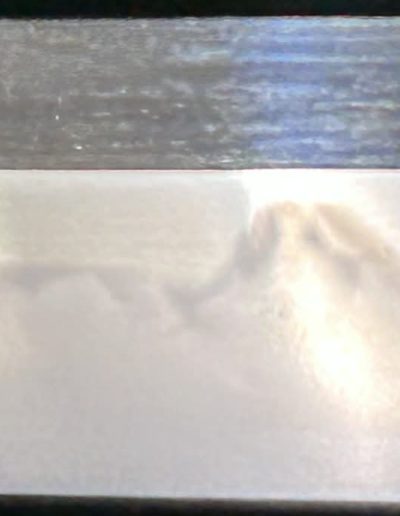
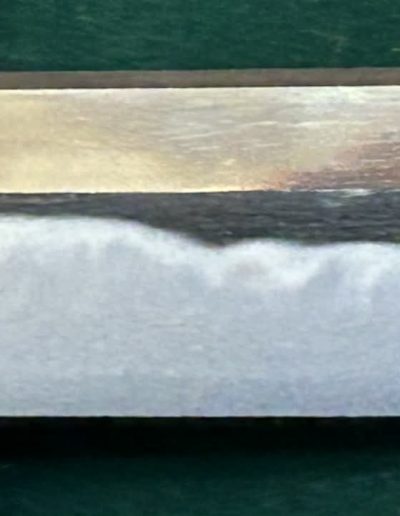
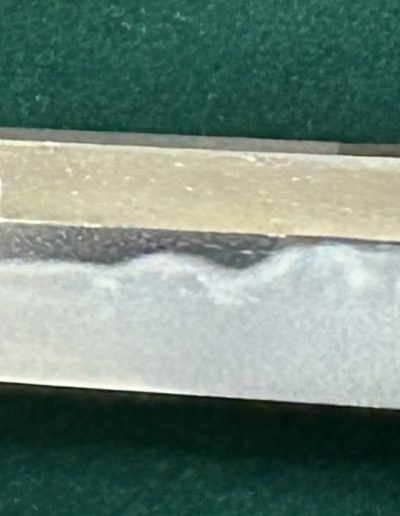
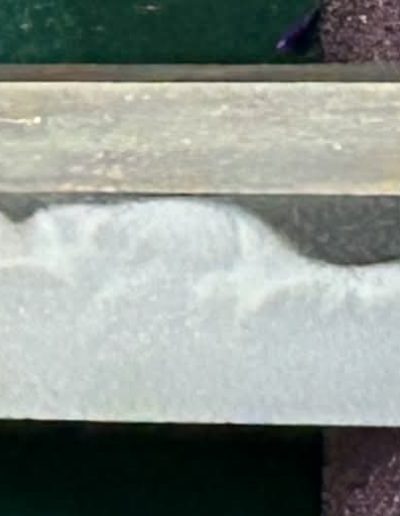
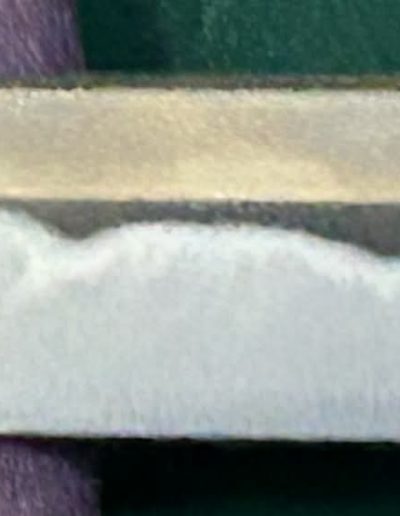
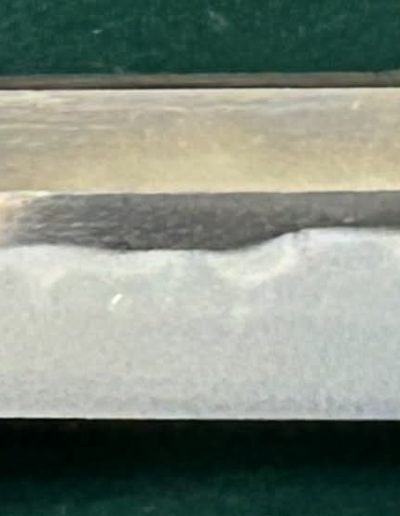
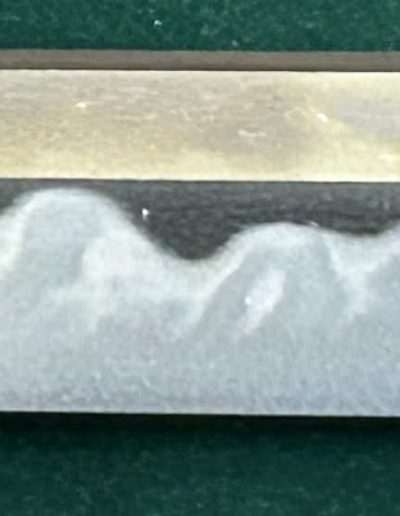
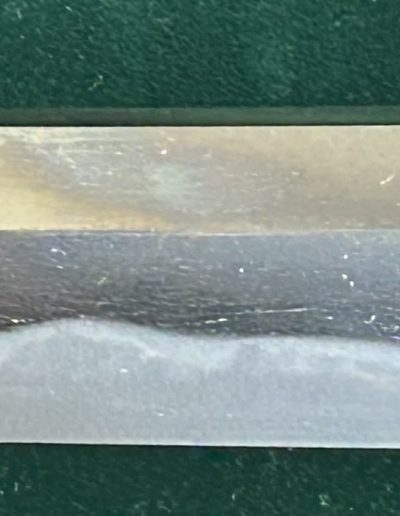
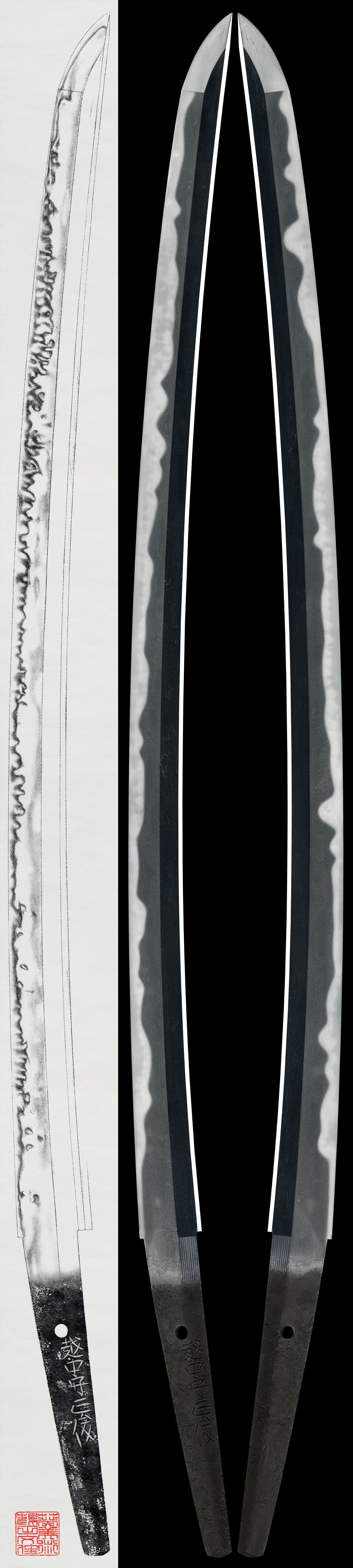
His characteristic temper is a broadly hardened choji-midare set high over the shinogi in places, mixing gunome, ko-gunome and pointed elements within the clove heads, with ashi and yo entering well to produce a florid, varied midare. The temper is nioi-dominant with ko-nie gathered along it, fine sunagashi run through, and the nioiguchi is bright and clear. On the finest work of the two cousins the heads tighten and lean, the choji taking on a saka or reverse-slanting tendency that the published sources name the group's particular feature, forming the distinctive pouch-shaped fukuro-choji, the "unique pouch-shaped fukuro-choji in which their special character lies"[[c:2]]. A second recurring tell sits within the ha: a distinctive edge form the judges call ika no atama (烏賊の頭), a "squid head" that appears precisely where the hardening reaches broadest toward the shinogi, and which they read as a salient mark of the same workshop and lineage.

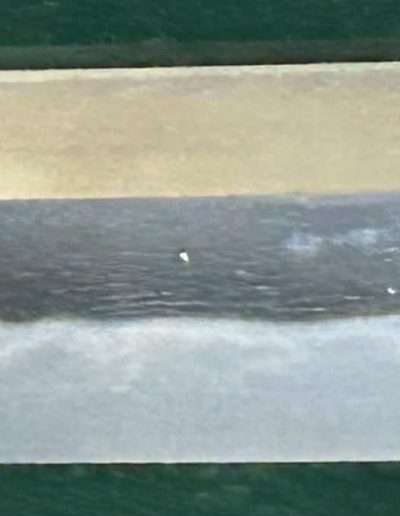
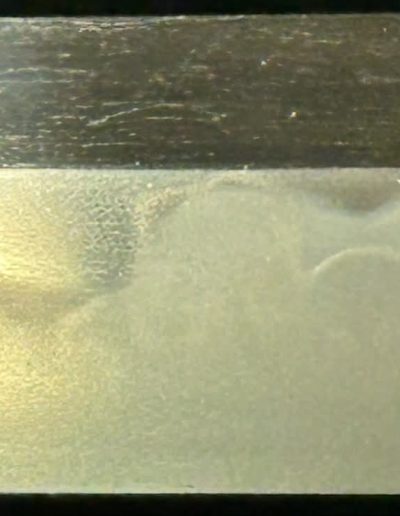
The jigane is where the revival is told apart from its Kamakura model. He forges a packed itame or ko-itame that flows strongly in the lower half and tends almost to masame, carrying fine ji-nie like minute particles, delicate chikei, and a standing utsuri that is sometimes a straight, sugu-like reflection and sometimes a midare-utsuri. This masame-tinged steel is the trait he took directly from Korekazu, and the published sources make it the first point by which his work is separated from true old Bizen, together with the tightened nioiguchi with ko-nie and the sunagashi, while noting that on his blades "the appearance of utsuri is slight"[[c:3]]. The boshi answers the ha: deeply tempered, entering in a midare-komi to a small round, the tip finishing in hakikake. The shape is the Kanbun shinto bearing, shinogi-zukuri with mitsu-mune, a rather wide mihaba with clear taper, a thick kasane and usually a shallow sori.

His surviving record reads as one revival manner held across a spread rather than as separate periods, and the judges draw the variation themselves. Several of his dated blades are noted as departing from the school formula: although Fukuoka Ishido generally shows the saka inclination in its choji, on these pieces that tendency is not conspicuous, and they differ somewhat in character. On just such a blade the school is confirmed not by the reverse choji but by the masame-tinged jigane with standing utsuri, the broad yakihaba reaching toward the shinogi, the deep boshi and the ika no atama, the points the sources call the salient features of the same hand. The work is uniformly signed, all seven recognized blades carrying a long signature cut with a thick chisel in a distinctive hand on the omote; several add a date and one a kinzogan date of Kanbun 11, so that a smith of the shinto age is read off his own inscriptions rather than off attribution. The largest is a votive katana of Kanbun 6, exceptionally wide and long with deep sori, which the judges hold a typical work showing no lack of control despite its scale.

Within the line his place is set by contrast with his cousin rather than by any borrowed comparison. Where Moritsugu, working in the same Kanbun shinto period, often kept the deeper sori, Koretsugu by contrast more often made the shallow Kanbun construction, the difference the published sources single out for attention, observing that he "frequently made constructions with the shallow sori typical of Kanbun-shinto"[[c:4]]. His teacher Korekazu, the Musashi Daijo of the Edo Ishido, gave him the masame-tinged jigane and the saka-leaning choji that distinguish the whole revival from the Kamakura Ichimonji it looks back to. Against true old Bizen his work is told by the fine masame, the tightened nioiguchi with ko-nie and the sunagashi; against the showier Osaka Ishido it keeps the Chikuzen jigane and the deep-tempered boshi. The published sources affirm his finest as a representative work of the school and "a masterpiece among his works"[[c:5]], naming one "a typical work of Chikuzen Ishido"[[c:6]].

For the collector Koretsugu is a Juyo-rank shinto name rather than a designated-treasure one. He has no National Treasures and no Important Cultural Properties; his record runs entirely through the Juyo Token rank, seven signed blades passing the shinsa across sessions from the thirteenth to the fiftieth. Provenance is thin in the surviving record, and no museum or daimyo house can be grounded on his blades, though one Kanbun 9 katana was made on commission for a member of the Kozai clan of Sanuki, retainers of the Hosokawa since the Nanbokucho period, and survives with a black kawari-nuri uchigatana koshirae whose fittings are given to Yanagawa Naoaki. With every recorded example signed and most long held, a Koretsugu reaches the market only from time to time, and chiefly his shallow-sori Kanbun pieces rather than the grand votive blades. When one does appear it is a self-documenting shinto Ichimonji revival in good order, the kind the judges call a blade "in which Koretsugu's true strengths are fully exhibited"[[c:7]], and a clear window onto how the Fukuoka choji was forged again in the Kanbun age.

Historical importance

Where Koretsugu stands among comparable artisans: across all of nihontō, and within tradition, era, and period. The tiers (Foremost · Leading · Major · Notable) weigh official designations from the NBTHK and Japan's Agency for Cultural Affairs, together with historical honors of lasting repute such as the Sansaku and Meibutsu-chō.

随一
Foremost
屈指
Leading
有数
Major
著名
Notable

Select a lens to see how it's measured.

Designation record
7 designated works
Jūyō
7
1 work by Koretsugu on the market→
Koretsugu — full profileFukuoka Ishido (Chikuzen shinto) school
About the school

Fukuoka Ishido

福岡石堂

Shinto · Chikuzen

2 pieces on the market now

›

Within the shintō of Chikuzen, the setsumei place the Fukuoka Ishidō group beside the Chikuzen Nobukuni line as one of the two pillars of the province. The school took root at Fukuoka under the patronage of the Kuroda house, whom its smiths served as domain craftsmen. The lineage's character was set by Koretsugu (是次), born in Kan'ei 5 (1628), commonly called Hansanbyōe and also Ippei. Learn more →

2 recorded smiths17 designated works
Leading smiths
SmithEraDesignated
Moritsugu守次1673-168410
Koretsugu是次1628-16817
Explore the Fukuoka Ishido school →
NBTHK Certificate
Tokubetsu Hozon Tōken特別保存刀剣
Sword Especially Worthy of Preservation
›

A Hozon-certified blade judged to show notably superior workmanship and a better state of preservation. The bar is higher: re-tempered blades and most unsigned Muromachi/Edo works are excluded.

About the NBTHK›

The NBTHK (Nihon Bijutsu Tōken Hozon Kyōkai, the Society for the Preservation of Japanese Art Swords) is a public-interest incorporated foundation founded in 1948 and supervised by Japan’s Agency for Cultural Affairs (Bunkachō); it is based at the Japanese Sword Museum in Tokyo. Its expert panels physically examine each submitted work (shinsa) and issue a certificate (kanteishō) ranking it by artistic and historical merit. NBTHK papers are the most widely recognized standard of authentication for Japanese swords and fittings.

NBTHK official site→
Seller
N
Nihonto Australia
🇦🇺Ships from Australia
›
✓Verified dealernihonto.com.au
Credit card
View all of Nihonto Australia’s listings→View this item on the dealer’s site→

Previously sold by Fukuoka Ishido Koretsugu

Nihonto Antiques
Wakizashi - by Fukuoka Ishido Koretsugu - Shinto Wakizashi (fss-656)Wakizashi - by Fukuoka Ishido Koretsugu - Shinto Wakizashi (fss-656)
Sold

Wakizashi

ByFukuoka Ishido Koretsugu
SOLD
Touken Matsumoto
Tokuho
Wakizashi - Tokuho - by Fukuoka Ishido Koretsugu - Chikuzen Fukuoka KoretsuguWakizashi - Tokuho - by Fukuoka Ishido Koretsugu - Chikuzen Fukuoka Koretsugu
Sold

Wakizashi

ByFukuoka Ishido Koretsugu
SOLD

More from the Fukuoka Ishido school

View all →
Touken Komachi
Tokuho
Katana - Tokuho - by Fukuoka Ishido School - Moritsugu - with Shirasaya and KoshiraeKatana - Tokuho - by Fukuoka Ishido School - Moritsugu - with Shirasaya and Koshirae

Katana

ByFukuoka Ishido School
¥1,250,000

More from the Ishido school

View all →
Aoi Art
Jūyō
Katana - Jūyō - by Ishido Korekazu - Sekido Unju KorekazuKatana - Jūyō - by Ishido Korekazu - Sekido Unju Korekazu

Katana

ByIshido Korekazu
¥4,500,000
Token-Net
Jūyō
Katana - Jūyō - by Ishido Korekazu - Ishido Unju Korekazu, Bunkyu Gannen Hachigatsu HiKatana - Jūyō - by Ishido Korekazu - Ishido Unju Korekazu, Bunkyu Gannen Hachigatsu Hi

Katana

ByIshido Korekazu
¥5,500,000
Hyozaemon
Tokuho
Katana - Tokuho - by Ishido School - Katana by Tatarachōkō, a master of the Shinto Bizen tradition and Saijo Owazamono smithKatana - Tokuho - by Ishido School - Katana by Tatarachōkō, a master of the Shinto Bizen tradition and Saijo Owazamono smith

Katana

ByIshido School
Ask
Token-Net
Jūyō
Katana - Jūyō - by Ishido Korekazu - Fujiwara Koreichi, Bunkyu 2nd Year, 8th MonthKatana - Jūyō - by Ishido Korekazu - Fujiwara Koreichi, Bunkyu 2nd Year, 8th Month

Katana

ByIshido Korekazu
¥5,500,000
Eirakudo
Tokuho
Katana - Tokuho - by Ishido Yasusada - Yamatonokami Yasusada - Tokubetsu Hozon TokenKatana - Tokuho - by Ishido Yasusada - Yamatonokami Yasusada - Tokubetsu Hozon Token

Katana

ByIshido Yasusada
¥3,300,000
Iida Koendo
Jūyō
Katana - Jūyō - by Ishido Tsunemitsu - Tsushima no Kami TsunemitsuKatana - Jūyō - by Ishido Tsunemitsu - Tsushima no Kami Tsunemitsu

Katana

ByIshido Tsunemitsu
¥7,700,000
E-sword
Tokuho
Katana - Tokuho - by Ishido Yasusada - Yamato no Kami YasusadaKatana - Tokuho - by Ishido Yasusada - Yamato no Kami Yasusada

Katana

ByIshido Yasusada
¥1,980,000
Goushuya
Jūyō
Katana - Jūyō - by Ishido Korekazu - Ishido Unju KorekazuKatana - Jūyō - by Ishido Korekazu - Ishido Unju Korekazu

Katana

ByIshido Korekazu
Ask

Swords

  • Katana
  • Wakizashi
  • Tantō
  • Tachi
  • Naginata
  • Yari

Fittings

  • Tsuba
  • Fuchi-Kashira
  • Kozuka
  • Menuki

By Certification

  • Tokujū
  • Jūyō
  • Tokuho
  • Hozon

Resources

  • Dealer Directory
  • Artist Directory
  • Glossary
  • Browse All
Nihontowatch© 2026
TermsPrivacyCookiesAbout

Description

An excellent katana by Koretsugu from Chikuzen province. The blade features a flamboyant hamon and a gold cutting test mei indicating it cut through two bodies in 1666 by Yamano Ka'emon Nagahisa. It comes with a shirasaya and excellent koshirae with matching shakudo and kirimon tosogu fittings.

NihontoWatch MonNihontoWatch
MarketAuctionsEncyclopedia
Swords›Ishido›Fukuoka Ishido›Koretsugu›Katana: Chikuzen Koretsugu with Nagahisa 2 Body Gold Test
katanaTokubetsu Hozon
Fukuoka Ishido Koretsugu

Katana: Chikuzen Koretsugu with Nagahisa 2 Body Gold Test

mei · Meireki (1655-1658) · nagasa 68.8cm

Price on request
Visit seller website →
Fukuoka Ishido Koretsugu — 1 of 40
Fukuoka Ishido Koretsugu — 2 of 40
Fukuoka Ishido Koretsugu — 3 of 40
Fukuoka Ishido Koretsugu — 4 of 40
Fukuoka Ishido Koretsugu — 5 of 40
Fukuoka Ishido Koretsugu — 6 of 40
Fukuoka Ishido Koretsugu — 7 of 40
Fukuoka Ishido Koretsugu — 8 of 40
Fukuoka Ishido Koretsugu — 9 of 40
Fukuoka Ishido Koretsugu — 10 of 40
Fukuoka Ishido Koretsugu — 11 of 40
Fukuoka Ishido Koretsugu — 12 of 40
Fukuoka Ishido Koretsugu — 13 of 40
Fukuoka Ishido Koretsugu — 14 of 40
Fukuoka Ishido Koretsugu — 15 of 40
Fukuoka Ishido Koretsugu — 16 of 40
Fukuoka Ishido Koretsugu — 17 of 40
Fukuoka Ishido Koretsugu — 18 of 40
Fukuoka Ishido Koretsugu — 19 of 40
Fukuoka Ishido Koretsugu — 20 of 40
Fukuoka Ishido Koretsugu — 21 of 40
Fukuoka Ishido Koretsugu — 22 of 40
Fukuoka Ishido Koretsugu — 23 of 40
Fukuoka Ishido Koretsugu — 24 of 40
Fukuoka Ishido Koretsugu — 25 of 40
Fukuoka Ishido Koretsugu — 26 of 40
Fukuoka Ishido Koretsugu — 27 of 40
Fukuoka Ishido Koretsugu — 28 of 40
Fukuoka Ishido Koretsugu — 29 of 40
Fukuoka Ishido Koretsugu — 30 of 40
Fukuoka Ishido Koretsugu — 31 of 40
Fukuoka Ishido Koretsugu — 32 of 40
Fukuoka Ishido Koretsugu — 33 of 40
Fukuoka Ishido Koretsugu — 34 of 40
Fukuoka Ishido Koretsugu — 35 of 40
Fukuoka Ishido Koretsugu — 36 of 40
Fukuoka Ishido Koretsugu — 37 of 40
Fukuoka Ishido Koretsugu — 38 of 40
Fukuoka Ishido Koretsugu — 39 of 40
Fukuoka Ishido Koretsugu — 40 of 40
1 / 40
1 / 40
Fukuoka Ishido Koretsugu — 1 of 40Fukuoka Ishido Koretsugu — 2 of 40Fukuoka Ishido Koretsugu — 3 of 40Fukuoka Ishido Koretsugu — 4 of 40Fukuoka Ishido Koretsugu — 5 of 40Fukuoka Ishido Koretsugu — 6 of 40Fukuoka Ishido Koretsugu — 7 of 40Fukuoka Ishido Koretsugu — 8 of 40Fukuoka Ishido Koretsugu — 9 of 40Fukuoka Ishido Koretsugu — 10 of 40Fukuoka Ishido Koretsugu — 11 of 40Fukuoka Ishido Koretsugu — 12 of 40Fukuoka Ishido Koretsugu — 13 of 40Fukuoka Ishido Koretsugu — 14 of 40Fukuoka Ishido Koretsugu — 15 of 40Fukuoka Ishido Koretsugu — 16 of 40Fukuoka Ishido Koretsugu — 17 of 40Fukuoka Ishido Koretsugu — 18 of 40Fukuoka Ishido Koretsugu — 19 of 40Fukuoka Ishido Koretsugu — 20 of 40Fukuoka Ishido Koretsugu — 21 of 40Fukuoka Ishido Koretsugu — 22 of 40Fukuoka Ishido Koretsugu — 23 of 40Fukuoka Ishido Koretsugu — 24 of 40Fukuoka Ishido Koretsugu — 25 of 40Fukuoka Ishido Koretsugu — 26 of 40Fukuoka Ishido Koretsugu — 27 of 40Fukuoka Ishido Koretsugu — 28 of 40Fukuoka Ishido Koretsugu — 29 of 40Fukuoka Ishido Koretsugu — 30 of 40Fukuoka Ishido Koretsugu — 31 of 40Fukuoka Ishido Koretsugu — 32 of 40Fukuoka Ishido Koretsugu — 33 of 40Fukuoka Ishido Koretsugu — 34 of 40Fukuoka Ishido Koretsugu — 35 of 40Fukuoka Ishido Koretsugu — 36 of 40Fukuoka Ishido Koretsugu — 37 of 40Fukuoka Ishido Koretsugu — 38 of 40Fukuoka Ishido Koretsugu — 39 of 40Fukuoka Ishido Koretsugu — 40 of 40
Measurements & details
Smith
Fukuoka Ishido Koretsugu
Type
Katana
School
Fukuoka Ishido
Period
Around 1628–1681(Kan'ei–Tenna)
Province
Chikuzen
Signature
Signed(100% of this smith's designated works are signed)
Measurements
Nagasa 68.8cm
Description
About the maker

Koretsugu

是次

Fukuoka Ishido (Chikuzen shinto) · Chikuzen · around 1628-1681

Fujishiro Jo saku · Tōken Taikan top 37%

1 piece on the market now

›

Koretsugu was born in Kan'ei 5 (1628) and died in the third month of Tenna 1 (1681) at the age of fifty-three, a domain smith to the Kuroda house of Chikuzen who in Meireki 1 (1655) went up to Edo by his lord's order, studied the Bizen tradition under Musashi Daijo Sakon Korekazu of the Ishido line, and after three years returned to Fukuoka. With his cousin Moritsugu he is named by the published sources as a leading master of the Fukuoka Ishido, the line they set alongside the Chikuzen Nobukuni school as one of the two pillars of Chikuzen shinto. He worked under the common names Hansanbyoe and Ippei, and because his heir Toshitsugu died before him, Moritsugu succeeded to the main line. His is a revival hand: the brilliant choji of the Kamakura Fukuoka Ichimonji, recovered two and a half centuries later in shinto steel, and the published sources call him most skilled at exactly that, a smith who "excelled above all in choji-ba in the manner of the Ichimonji school, and was extremely skillful"[[c:1]].

His characteristic temper is a broadly hardened choji-midare set high over the shinogi in places, mixing gunome, ko-gunome and pointed elements within the clove heads, with ashi and yo entering well to produce a florid, varied midare. The temper is nioi-dominant with ko-nie gathered along it, fine sunagashi run through, and the nioiguchi is bright and clear. On the finest work of the two cousins the heads tighten and lean, the choji taking on a saka or reverse-slanting tendency that the published sources name the group's particular feature, forming the distinctive pouch-shaped fukuro-choji, the "unique pouch-shaped fukuro-choji in which their special character lies"[[c:2]]. A second recurring tell sits within the ha: a distinctive edge form the judges call ika no atama (烏賊の頭), a "squid head" that appears precisely where the hardening reaches broadest toward the shinogi, and which they read as a salient mark of the same workshop and lineage.

The jigane is where the revival is told apart from its Kamakura model. He forges a packed itame or ko-itame that flows strongly in the lower half and tends almost to masame, carrying fine ji-nie like minute particles, delicate chikei, and a standing utsuri that is sometimes a straight, sugu-like reflection and sometimes a midare-utsuri. This masame-tinged steel is the trait he took directly from Korekazu, and the published sources make it the first point by which his work is separated from true old Bizen, together with the tightened nioiguchi with ko-nie and the sunagashi, while noting that on his blades "the appearance of utsuri is slight"[[c:3]]. The boshi answers the ha: deeply tempered, entering in a midare-komi to a small round, the tip finishing in hakikake. The shape is the Kanbun shinto bearing, shinogi-zukuri with mitsu-mune, a rather wide mihaba with clear taper, a thick kasane and usually a shallow sori.

His surviving record reads as one revival manner held across a spread rather than as separate periods, and the judges draw the variation themselves. Several of his dated blades are noted as departing from the school formula: although Fukuoka Ishido generally shows the saka inclination in its choji, on these pieces that tendency is not conspicuous, and they differ somewhat in character. On just such a blade the school is confirmed not by the reverse choji but by the masame-tinged jigane with standing utsuri, the broad yakihaba reaching toward the shinogi, the deep boshi and the ika no atama, the points the sources call the salient features of the same hand. The work is uniformly signed, all seven recognized blades carrying a long signature cut with a thick chisel in a distinctive hand on the omote; several add a date and one a kinzogan date of Kanbun 11, so that a smith of the shinto age is read off his own inscriptions rather than off attribution. The largest is a votive katana of Kanbun 6, exceptionally wide and long with deep sori, which the judges hold a typical work showing no lack of control despite its scale.

Within the line his place is set by contrast with his cousin rather than by any borrowed comparison. Where Moritsugu, working in the same Kanbun shinto period, often kept the deeper sori, Koretsugu by contrast more often made the shallow Kanbun construction, the difference the published sources single out for attention, observing that he "frequently made constructions with the shallow sori typical of Kanbun-shinto"[[c:4]]. His teacher Korekazu, the Musashi Daijo of the Edo Ishido, gave him the masame-tinged jigane and the saka-leaning choji that distinguish the whole revival from the Kamakura Ichimonji it looks back to. Against true old Bizen his work is told by the fine masame, the tightened nioiguchi with ko-nie and the sunagashi; against the showier Osaka Ishido it keeps the Chikuzen jigane and the deep-tempered boshi. The published sources affirm his finest as a representative work of the school and "a masterpiece among his works"[[c:5]], naming one "a typical work of Chikuzen Ishido"[[c:6]].

For the collector Koretsugu is a Juyo-rank shinto name rather than a designated-treasure one. He has no National Treasures and no Important Cultural Properties; his record runs entirely through the Juyo Token rank, seven signed blades passing the shinsa across sessions from the thirteenth to the fiftieth. Provenance is thin in the surviving record, and no museum or daimyo house can be grounded on his blades, though one Kanbun 9 katana was made on commission for a member of the Kozai clan of Sanuki, retainers of the Hosokawa since the Nanbokucho period, and survives with a black kawari-nuri uchigatana koshirae whose fittings are given to Yanagawa Naoaki. With every recorded example signed and most long held, a Koretsugu reaches the market only from time to time, and chiefly his shallow-sori Kanbun pieces rather than the grand votive blades. When one does appear it is a self-documenting shinto Ichimonji revival in good order, the kind the judges call a blade "in which Koretsugu's true strengths are fully exhibited"[[c:7]], and a clear window onto how the Fukuoka choji was forged again in the Kanbun age.
Historical importance

Where Koretsugu stands among comparable artisans: across all of nihontō, and within tradition, era, and period. The tiers (Foremost · Leading · Major · Notable) weigh official designations from the NBTHK and Japan's Agency for Cultural Affairs, together with historical honors of lasting repute such as the Sansaku and Meibutsu-chō.

随一
Foremost
屈指
Leading
有数
Major
著名
Notable

Select a lens to see how it's measured.

Designation record
7 designated works
Jūyō
7
1 work by Koretsugu on the market→
Koretsugu — full profileFukuoka Ishido (Chikuzen shinto) school
About the school

Fukuoka Ishido

福岡石堂

Shinto · Chikuzen

2 pieces on the market now

›

Within the shintō of Chikuzen, the setsumei place the Fukuoka Ishidō group beside the Chikuzen Nobukuni line as one of the two pillars of the province. The school took root at Fukuoka under the patronage of the Kuroda house, whom its smiths served as domain craftsmen. The lineage's character was set by Koretsugu (是次), born in Kan'ei 5 (1628), commonly called Hansanbyōe and also Ippei. Learn more →
2 recorded smiths17 designated works
Leading smiths
SmithEraDesignated
Moritsugu守次1673-168410
Koretsugu是次1628-16817
Explore the Fukuoka Ishido school →
NBTHK Certificate
Tokubetsu Hozon Tōken特別保存刀剣
Sword Especially Worthy of Preservation
›

A Hozon-certified blade judged to show notably superior workmanship and a better state of preservation. The bar is higher: re-tempered blades and most unsigned Muromachi/Edo works are excluded.

About the NBTHK›

The NBTHK (Nihon Bijutsu Tōken Hozon Kyōkai, the Society for the Preservation of Japanese Art Swords) is a public-interest incorporated foundation founded in 1948 and supervised by Japan’s Agency for Cultural Affairs (Bunkachō); it is based at the Japanese Sword Museum in Tokyo. Its expert panels physically examine each submitted work (shinsa) and issue a certificate (kanteishō) ranking it by artistic and historical merit. NBTHK papers are the most widely recognized standard of authentication for Japanese swords and fittings.

NBTHK official site→
Seller
N
Nihonto Australia
🇦🇺Ships from Australia
›
✓Verified dealernihonto.com.au
Credit card
View all of Nihonto Australia’s listings→View this item on the dealer’s site→

Previously sold by Fukuoka Ishido Koretsugu

Nihonto Antiques
Wakizashi - by Fukuoka Ishido Koretsugu - Shinto Wakizashi (fss-656)Wakizashi - by Fukuoka Ishido Koretsugu - Shinto Wakizashi (fss-656)
Sold

Wakizashi

ByFukuoka Ishido Koretsugu
SOLD
Touken Matsumoto
Tokuho
Wakizashi - Tokuho - by Fukuoka Ishido Koretsugu - Chikuzen Fukuoka KoretsuguWakizashi - Tokuho - by Fukuoka Ishido Koretsugu - Chikuzen Fukuoka Koretsugu
Sold

Wakizashi

ByFukuoka Ishido Koretsugu
SOLD

More from the Fukuoka Ishido school

View all →
Touken Komachi
Tokuho
Katana - Tokuho - by Fukuoka Ishido School - Moritsugu - with Shirasaya and KoshiraeKatana - Tokuho - by Fukuoka Ishido School - Moritsugu - with Shirasaya and Koshirae

Katana

ByFukuoka Ishido School
¥1,250,000

More from the Ishido school

View all →
Aoi Art
Jūyō
Katana - Jūyō - by Ishido Korekazu - Sekido Unju KorekazuKatana - Jūyō - by Ishido Korekazu - Sekido Unju Korekazu

Katana

ByIshido Korekazu
¥4,500,000
Token-Net
Jūyō
Katana - Jūyō - by Ishido Korekazu - Ishido Unju Korekazu, Bunkyu Gannen Hachigatsu HiKatana - Jūyō - by Ishido Korekazu - Ishido Unju Korekazu, Bunkyu Gannen Hachigatsu Hi

Katana

ByIshido Korekazu
¥5,500,000
Hyozaemon
Tokuho
Katana - Tokuho - by Ishido School - Katana by Tatarachōkō, a master of the Shinto Bizen tradition and Saijo Owazamono smithKatana - Tokuho - by Ishido School - Katana by Tatarachōkō, a master of the Shinto Bizen tradition and Saijo Owazamono smith

Katana

ByIshido School
Ask
Token-Net
Jūyō
Katana - Jūyō - by Ishido Korekazu - Fujiwara Koreichi, Bunkyu 2nd Year, 8th MonthKatana - Jūyō - by Ishido Korekazu - Fujiwara Koreichi, Bunkyu 2nd Year, 8th Month

Katana

ByIshido Korekazu
¥5,500,000
Eirakudo
Tokuho
Katana - Tokuho - by Ishido Yasusada - Yamatonokami Yasusada - Tokubetsu Hozon TokenKatana - Tokuho - by Ishido Yasusada - Yamatonokami Yasusada - Tokubetsu Hozon Token

Katana

ByIshido Yasusada
¥3,300,000
Iida Koendo
Jūyō
Katana - Jūyō - by Ishido Tsunemitsu - Tsushima no Kami TsunemitsuKatana - Jūyō - by Ishido Tsunemitsu - Tsushima no Kami Tsunemitsu

Katana

ByIshido Tsunemitsu
¥7,700,000
E-sword
Tokuho
Katana - Tokuho - by Ishido Yasusada - Yamato no Kami YasusadaKatana - Tokuho - by Ishido Yasusada - Yamato no Kami Yasusada

Katana

ByIshido Yasusada
¥1,980,000
Goushuya
Jūyō
Katana - Jūyō - by Ishido Korekazu - Ishido Unju KorekazuKatana - Jūyō - by Ishido Korekazu - Ishido Unju Korekazu

Katana

ByIshido Korekazu
Ask

Swords

  • Katana
  • Wakizashi
  • Tantō
  • Tachi
  • Naginata
  • Yari

Fittings

  • Tsuba
  • Fuchi-Kashira
  • Kozuka
  • Menuki

By Certification

  • Tokujū
  • Jūyō
  • Tokuho
  • Hozon

Resources

  • Dealer Directory
  • Artist Directory
  • Glossary
  • Browse All
Nihontowatch© 2026
TermsPrivacyCookiesAbout
NihontoWatch Mon

NihontoWatch

MarketAuctions
Encyclopedia
NihontoWatch Mon

NihontoWatch

MarketAuctions
Encyclopedia