
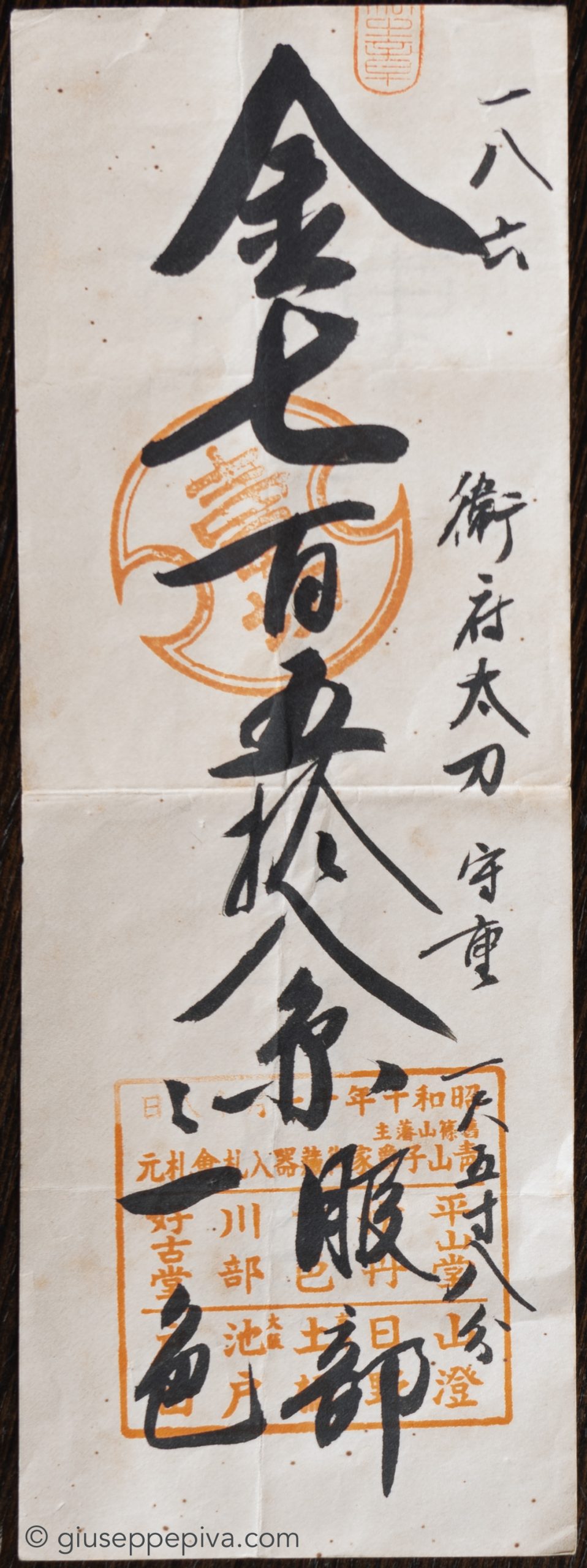
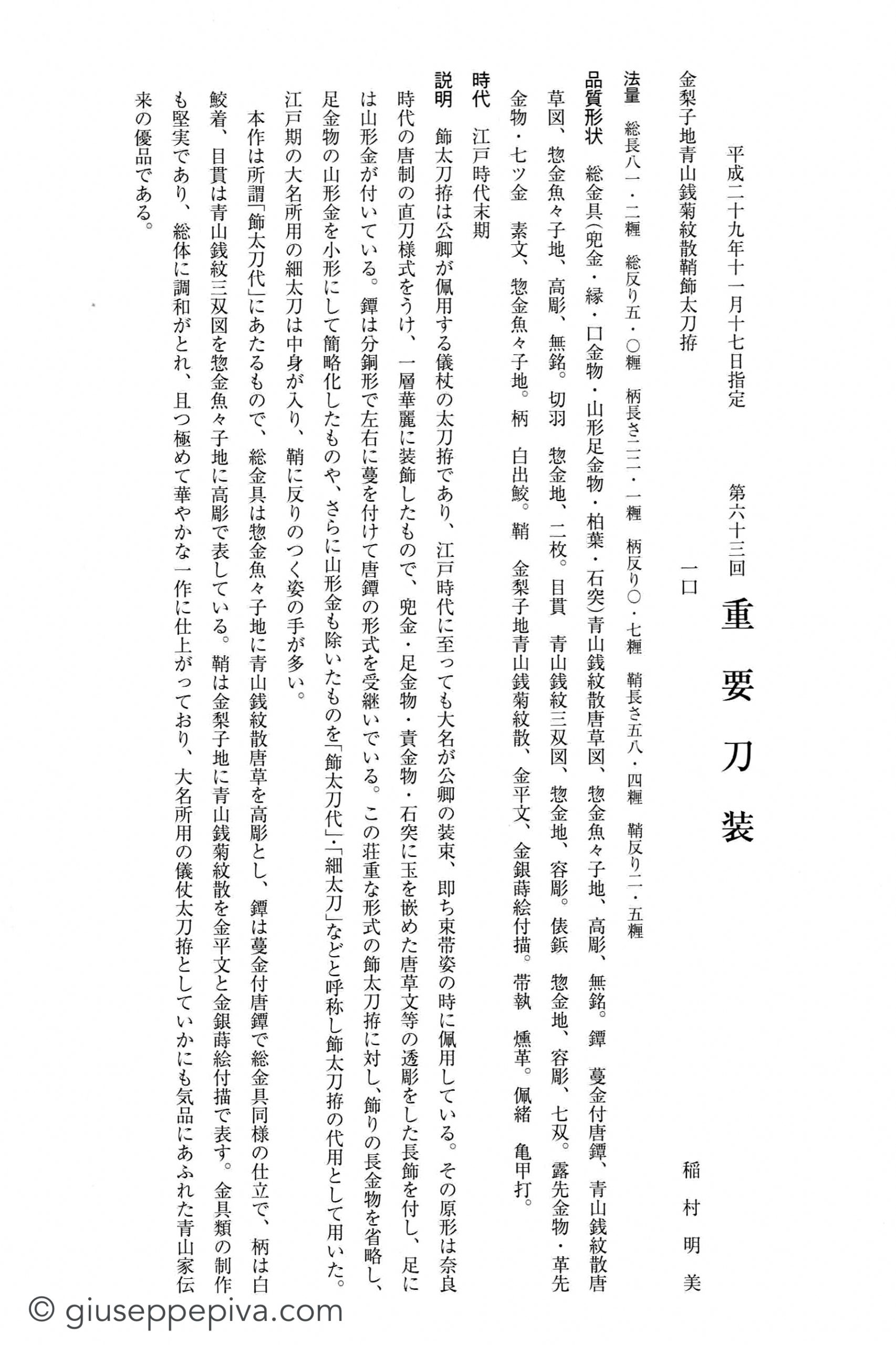
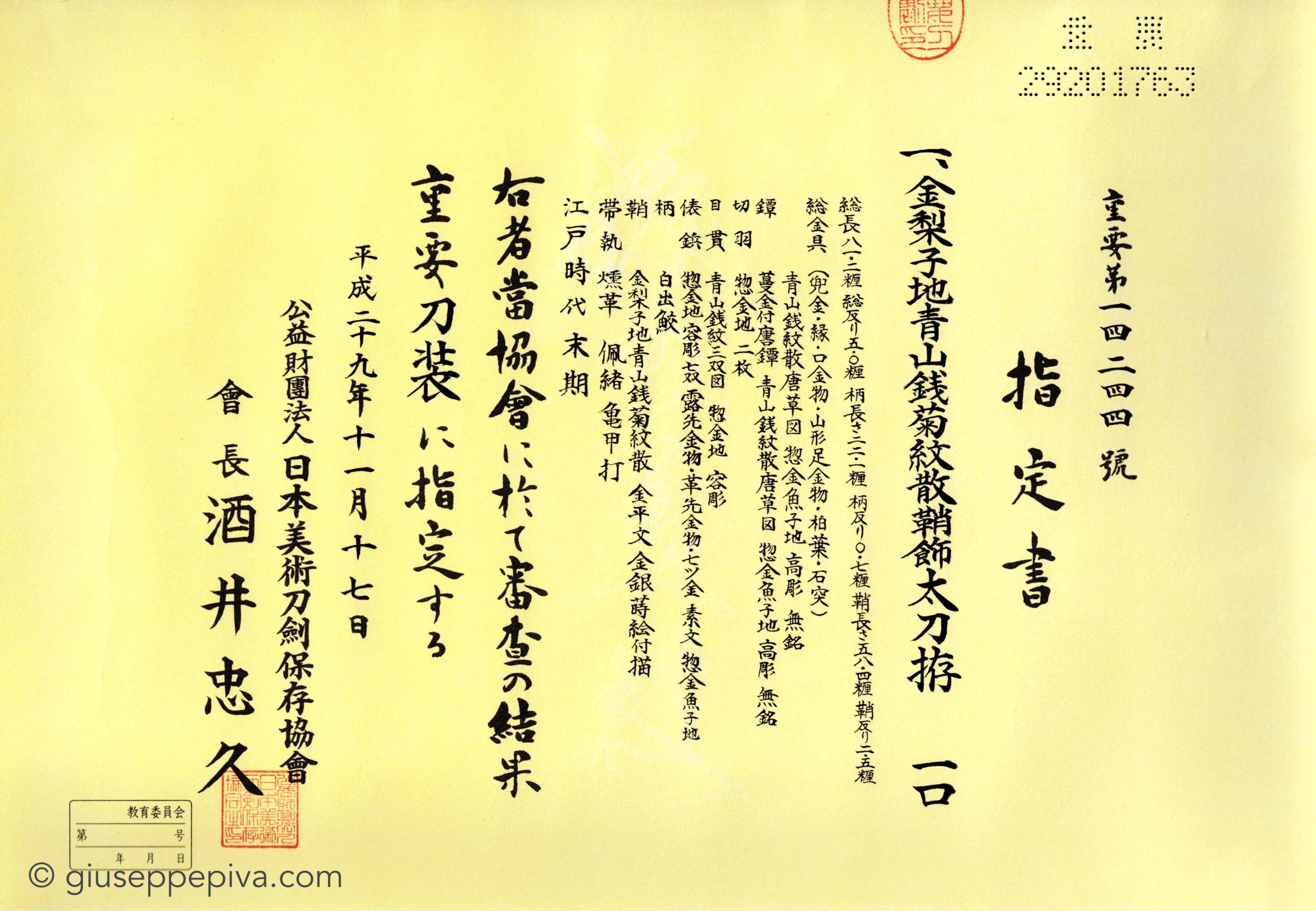
-, 63rd Session — Designated November 17, 2017
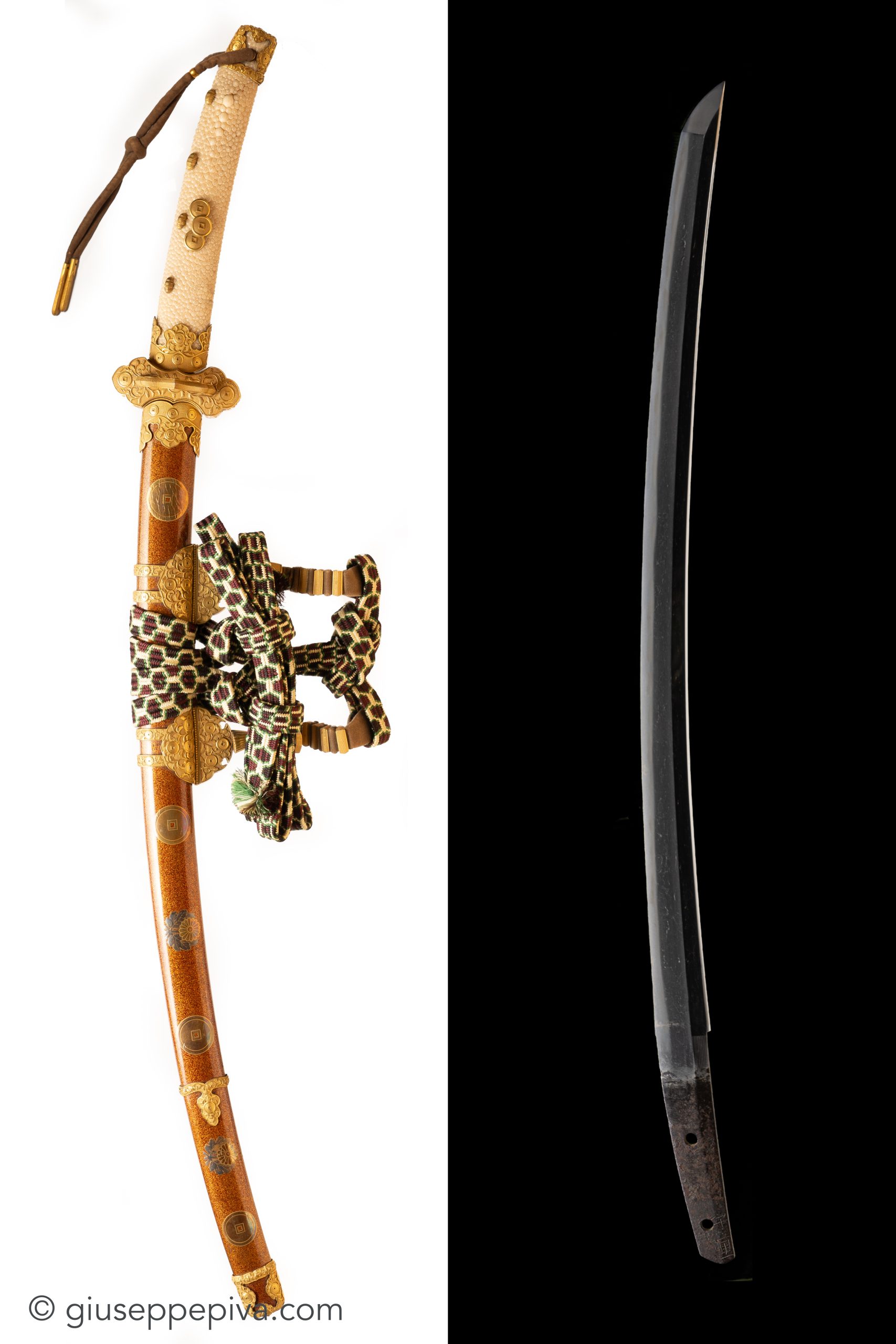
Kazari- (飾太刀拵), - with scattered Aoyama “coin” and chrysanthemum crests
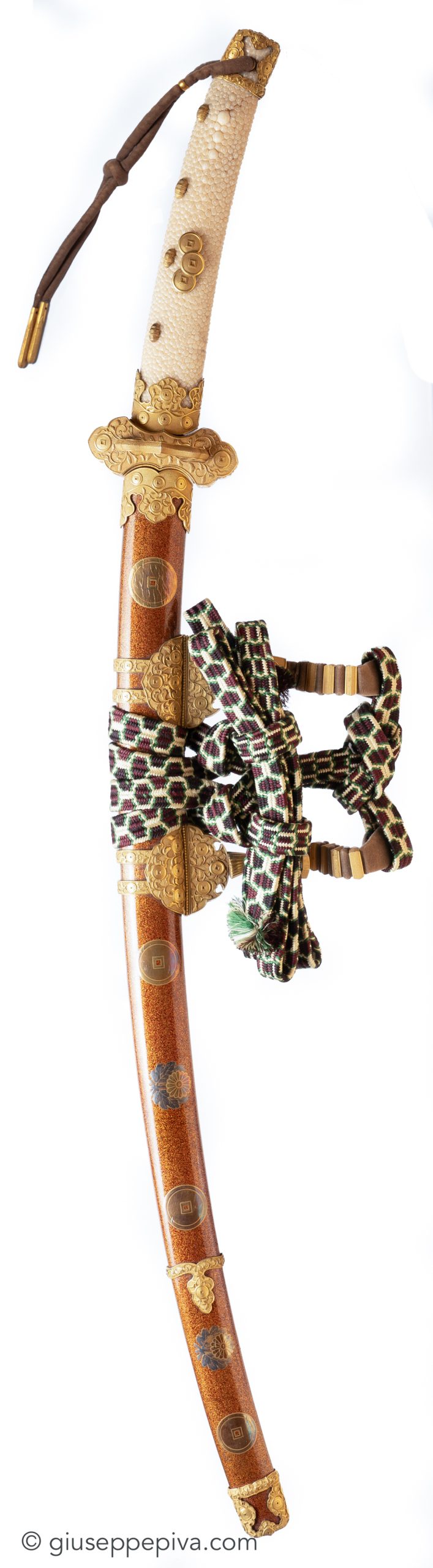
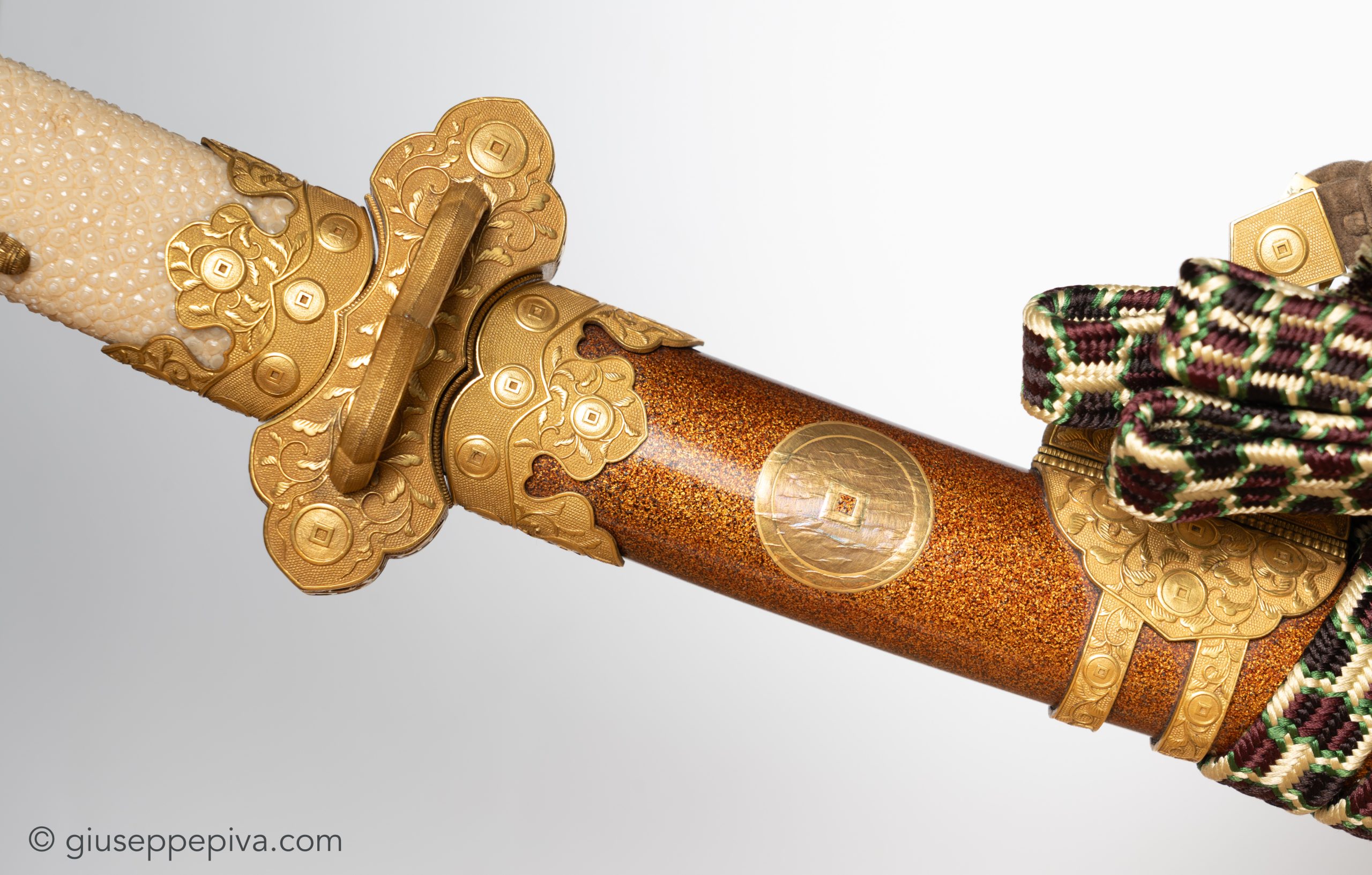
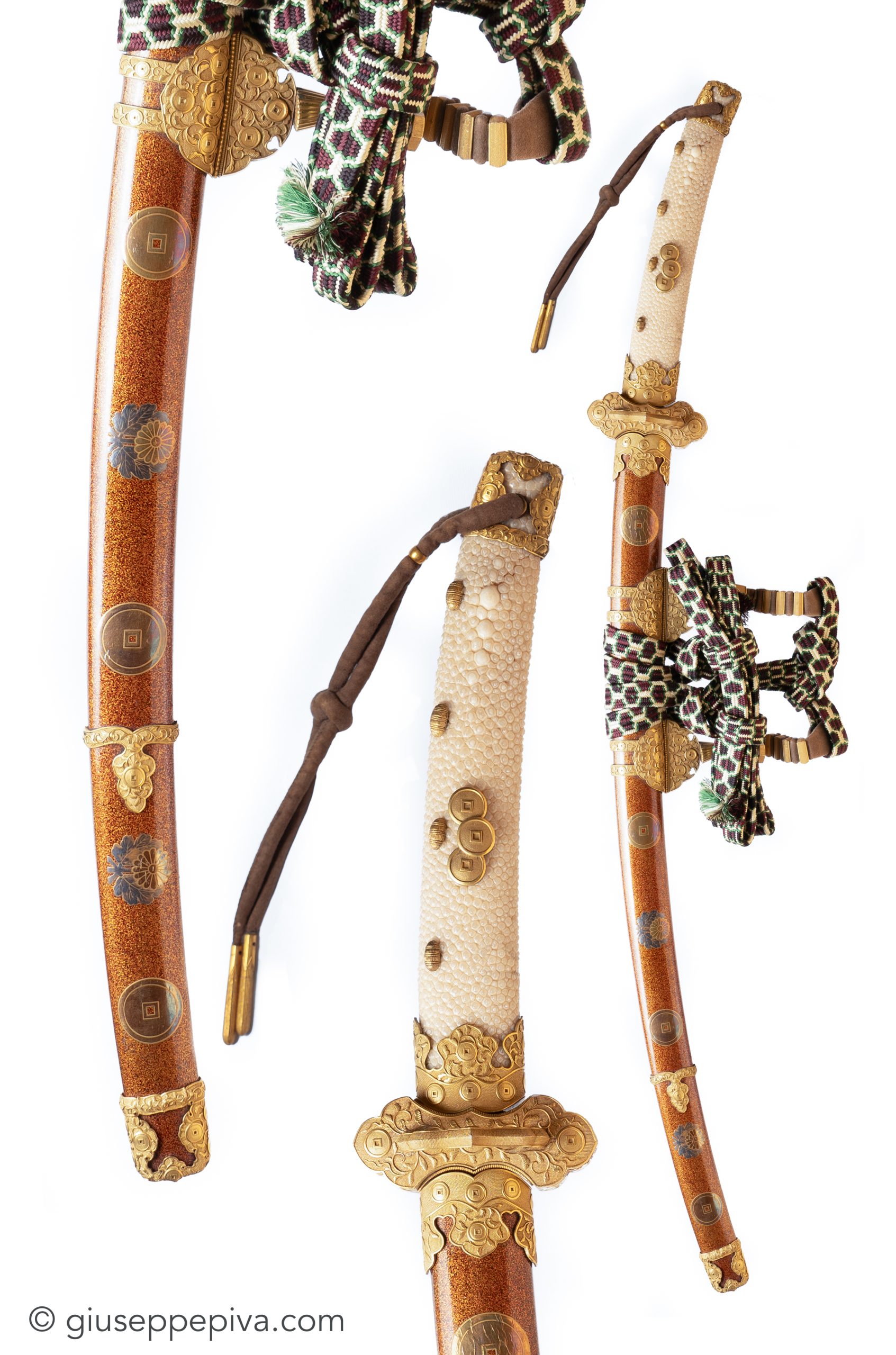
Overall Description A late -period ceremonial mounting of brilliant and formal presence. The entire suite of metal fittings is executed in gold on , with the Aoyama “coin” crest scattered amid scrolling , while the scabbard is a rich - ground further embellished with scattered Aoyama “coin” and chrysanthemum crests in flat gold and gold-and-silver .
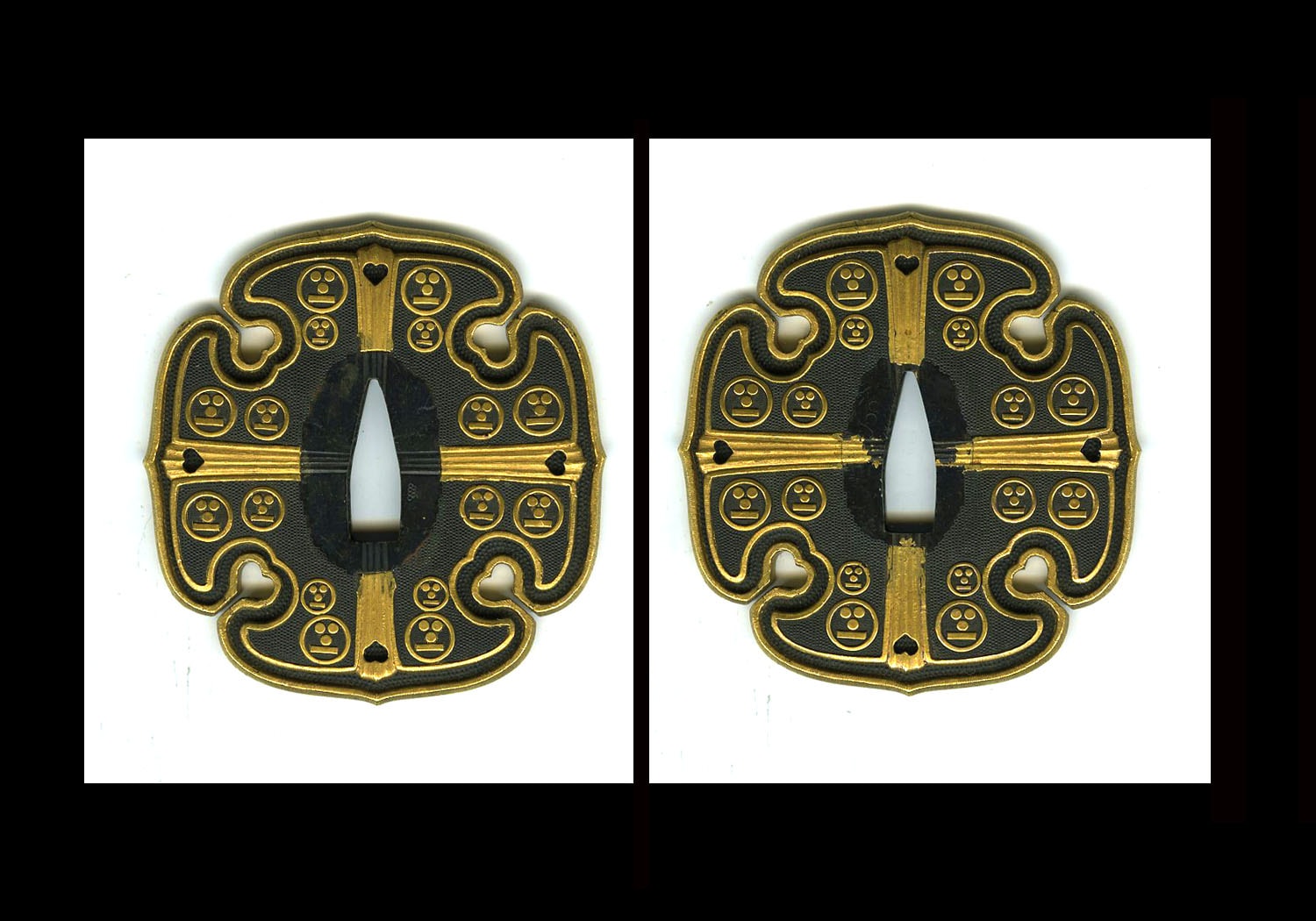
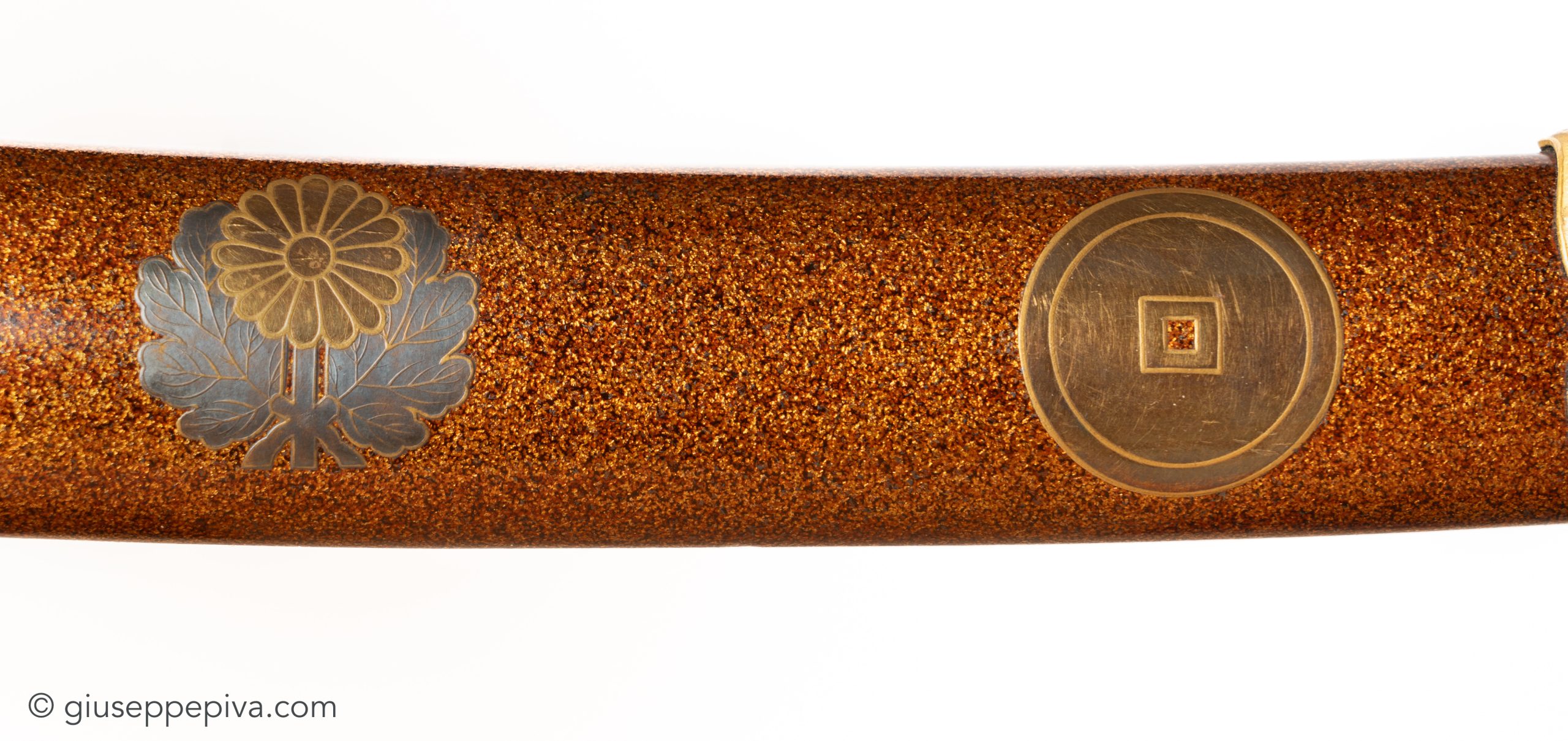
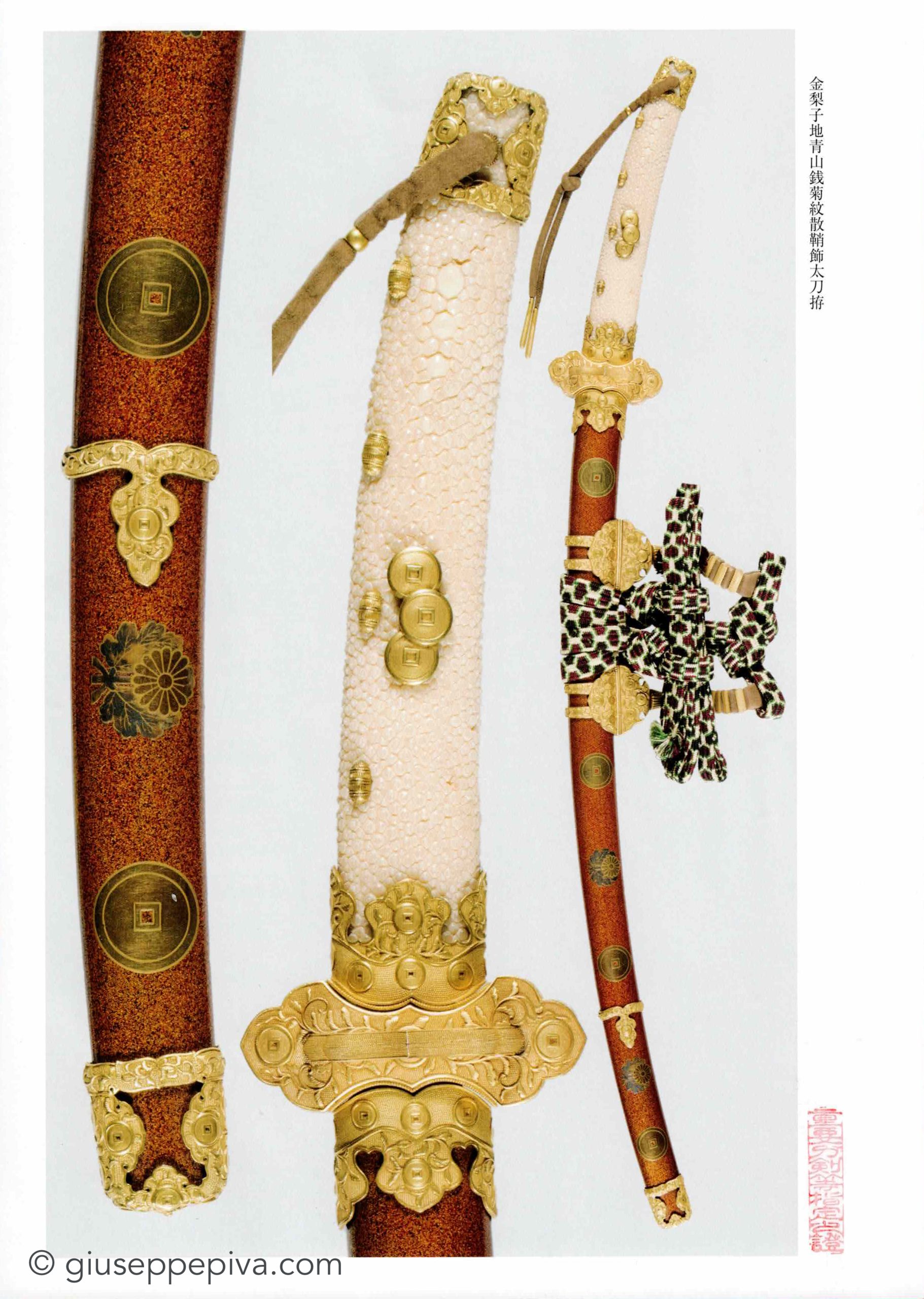
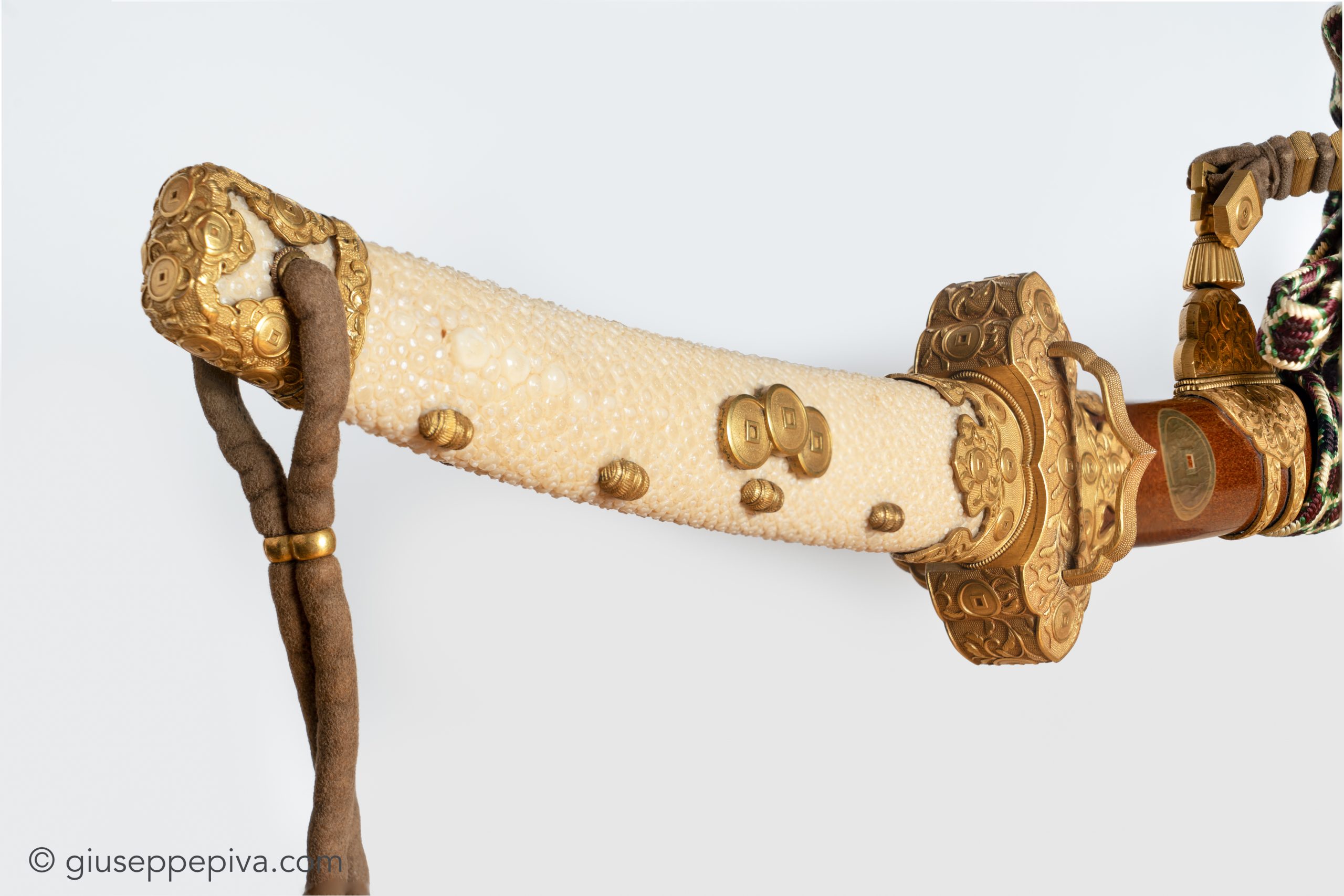
Components : - lacquer ground; scattered Aoyama “coin” and chrysanthemum crests expressed in flat gold crests ( -) and in gold-and-silver with added painting (tsukegaki). : Covered in white (white ray skin). : with vine-rim (tsurukane-tsuki ); Aoyama “coin” crests scattered with ; gold with ; unsigned. : Gold with scattered Aoyama “coin” crests and in ; unsigned. : Gold with scattered Aoyama “coin” crests and in ; unsigned. (mouthpiece) fittings: Gold with scattered Aoyama “coin” crests and in ; unsigned. (suspension mounts): With yama-gata elements; gold with scattered Aoyama “coin” crests and in ; unsigned. / (drag): Gold with scattered Aoyama “coin” crests and in ; unsigned. : Solid gold, two pieces. : Three paired sets (san-sō) of the Aoyama “coin” crest; solid gold; rounded relief carving (yōbori). Tawara-byō (decorative studs): Seven; solid gold; rounded relief carving (yōbori). Sakigane (fittings at cord/leather ends) and nanatsugane: Plain; gold . Obi-tori / belt fastener: Smoked leather. (suspension cord): Kikkō-uchi braid.
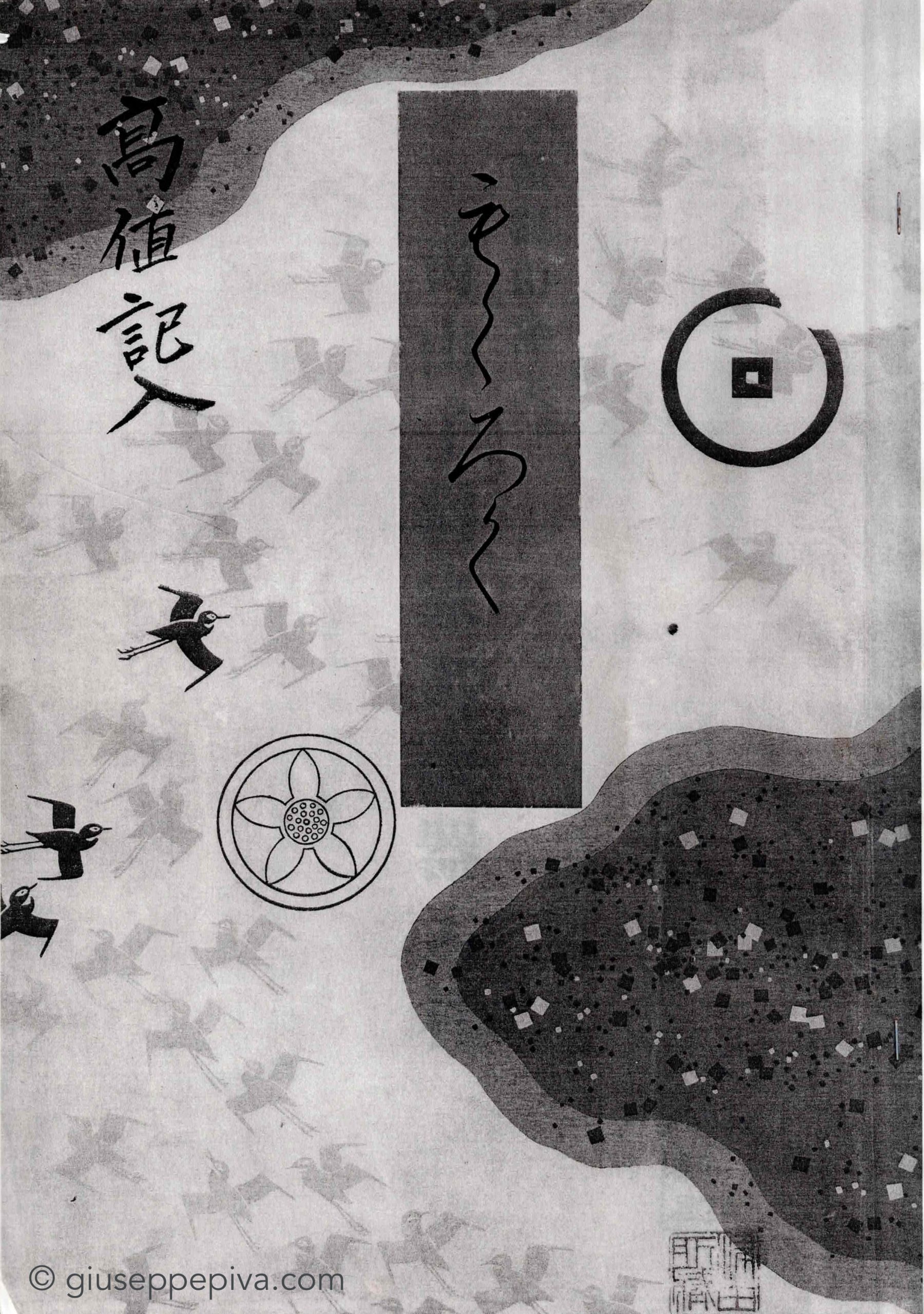
Artisan/Origin Unsigned, unified set of fittings; transmitted in the Aoyama family (Aoyama-ke ).
Era Late period.
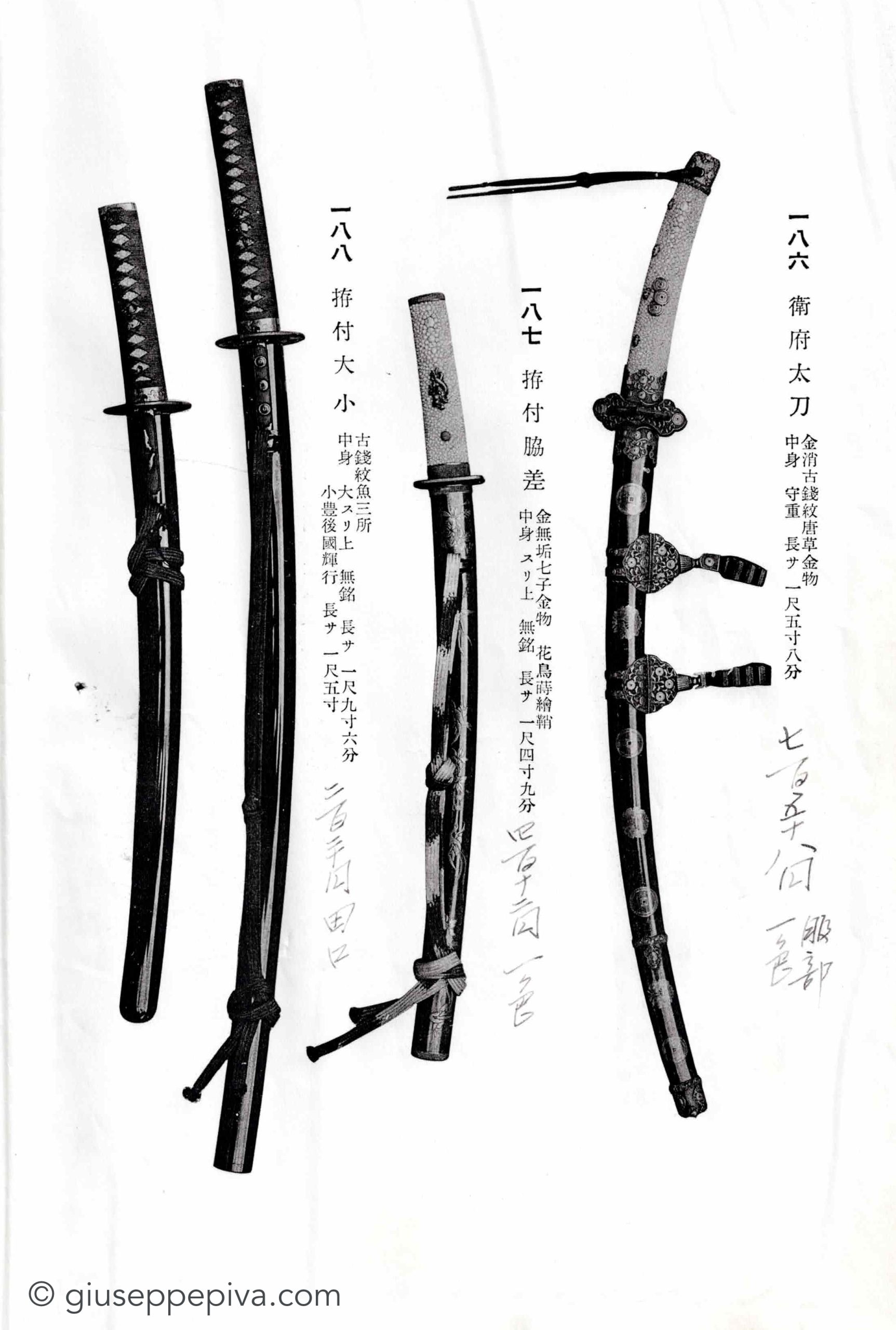
Explanation A kazari- mounting is a ceremonial (gijō sword) worn by court nobles (kuge). Even into the period, continued to wear such mountings when dressed in courtly costume—that is, in sokutai attire. The prototype derives from the straight-sword style (chokutō) of the Nara period, itself reflecting Tang-dynasty systems, and was further developed into an even more lavishly ornamented form. In its fully formal type, long decorative metal elements featuring openwork arabesques—often with jewels set into the fittings—are attached to the , , intermediate bands and fittings, and the ; the suspension mounts also incorporate yama-gata metalwork. The guard is of balance-weight (fundō) shape, with lobed projections to left and right, continuing the established form of the .
In contrast to this stately and solemn kazari- type, simplified variants were produced by omitting the long decorative metal elements, reducing the yama-gata elements of the , or even removing them altogether. Such simplified forms were used as substitutes and were referred to as kazari--dai (“substitute kazari-”) or hosotachi, among other terms. Many -period hosotachi made for were functional mountings containing a blade, and often show curvature in the scabbard.
This example corresponds to the so-called kazari--dai. The complete set of metal fittings is executed in gold with scattered Aoyama “coin” crests amid scrolling rendered in ; the is a vine-rim made to match. The hilt is covered in white ray skin, and the present three paired sets of the Aoyama “coin” crest in high relief. The scabbard is -, bearing scattered Aoyama “coin” and chrysanthemum crests rendered in flat gold crests and in gold-and-silver with added painting. The manufacture of the fittings is steady and reliable; the whole is well harmonized and finished as an exceptionally splendid work. As a ceremonial mounting, it is an elegant superior piece transmitted within the Aoyama family.