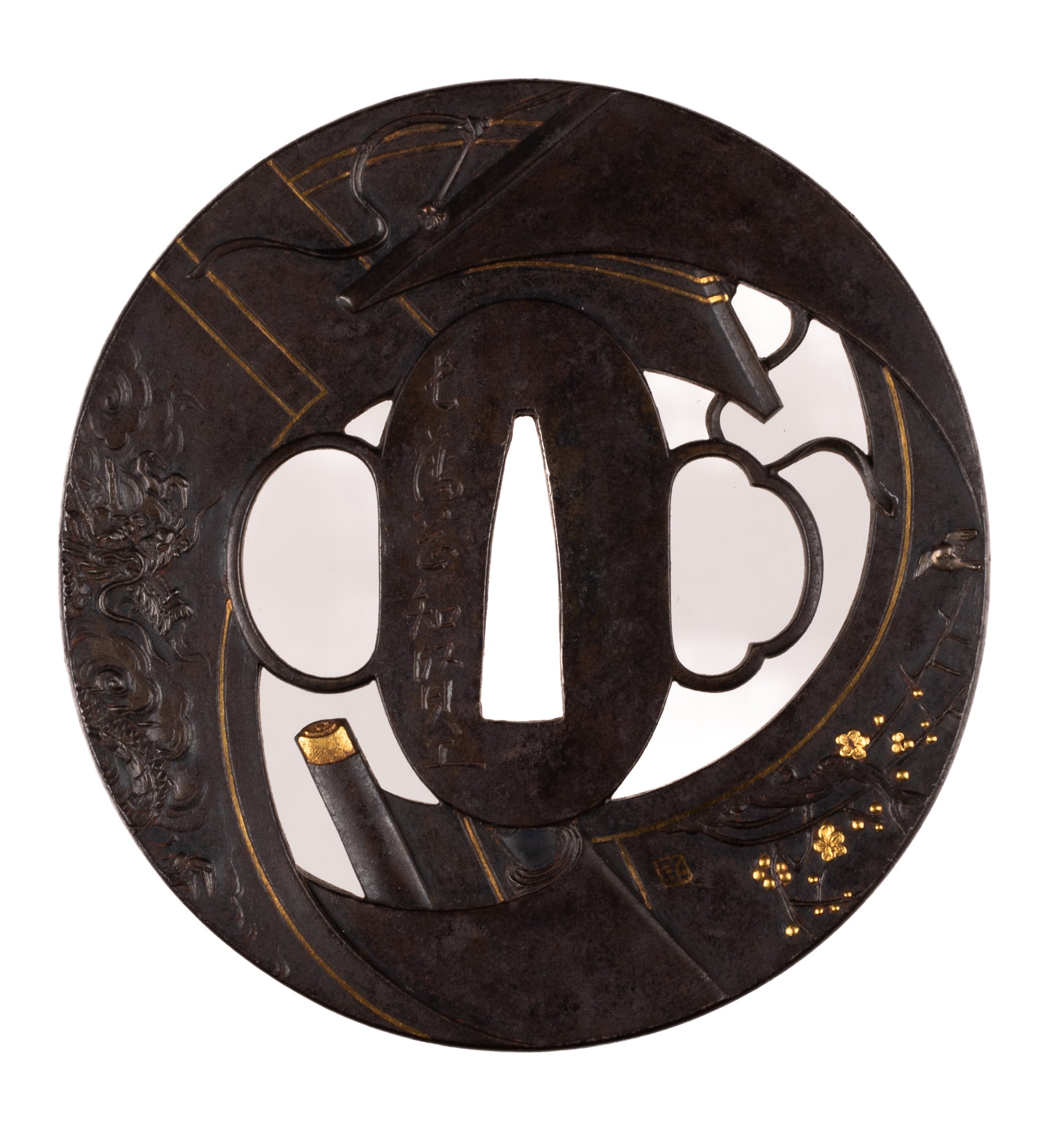
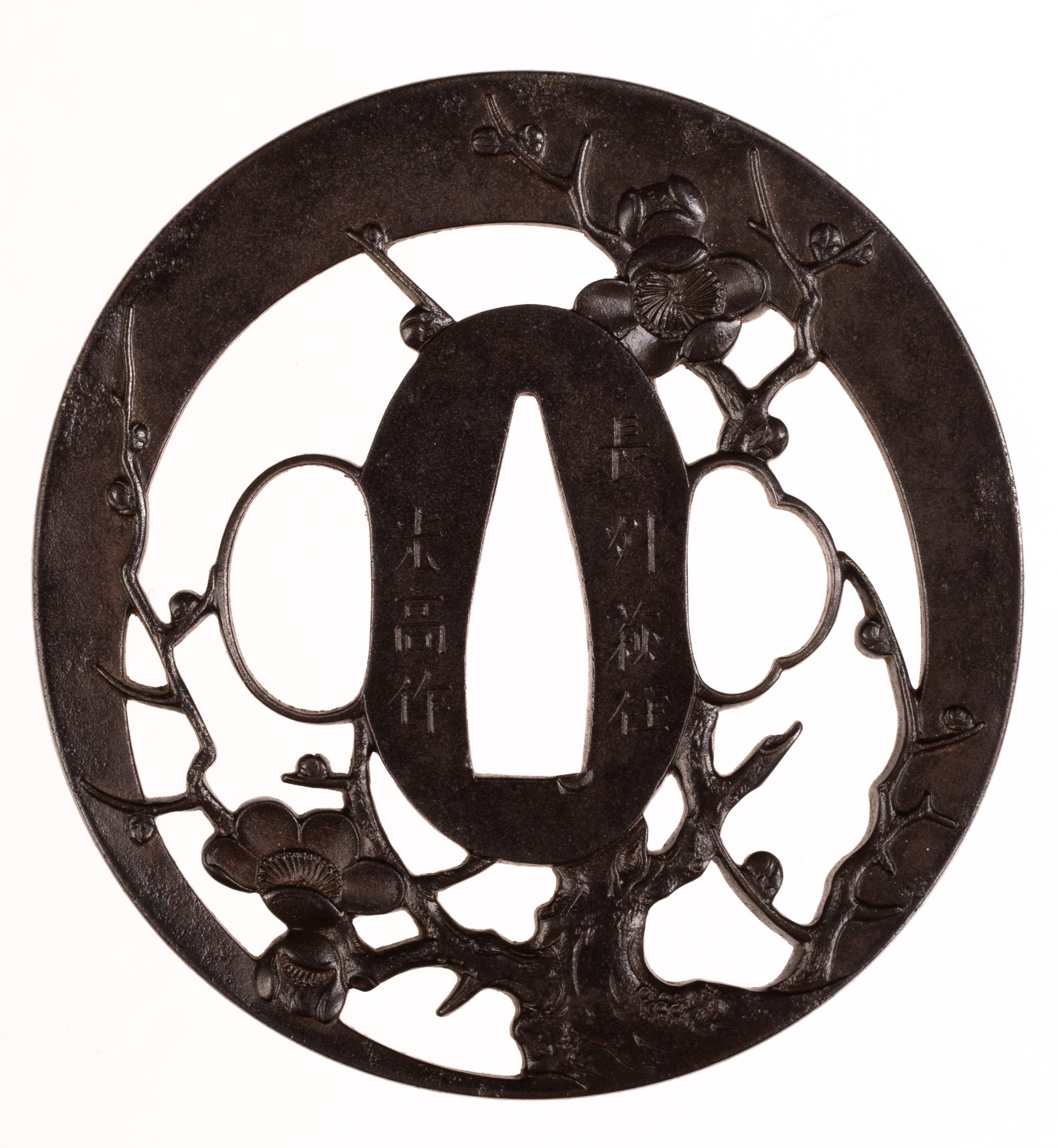
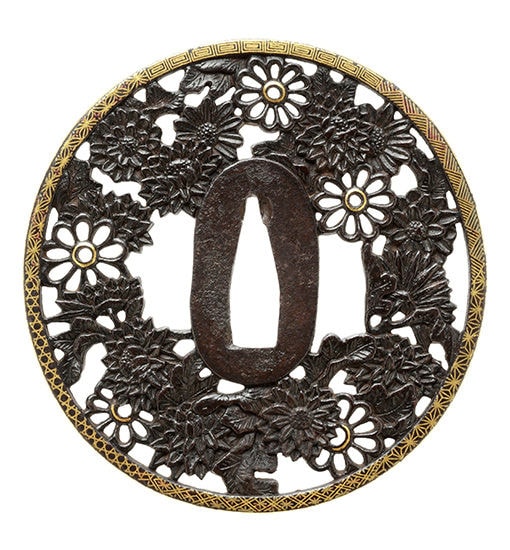
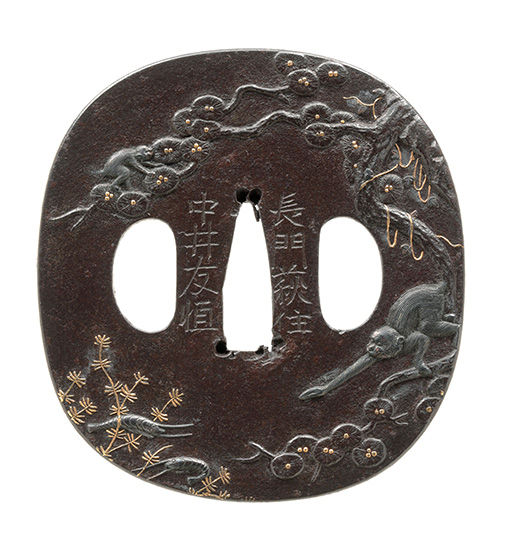
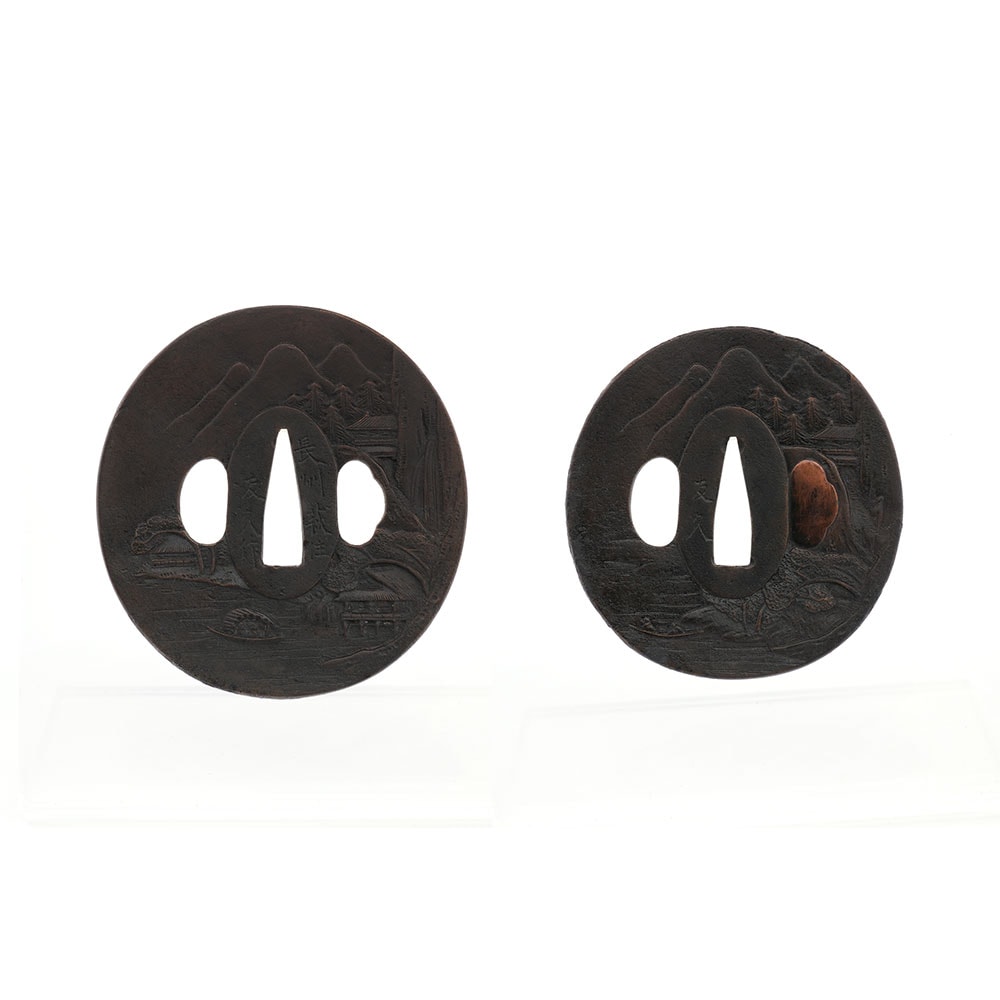
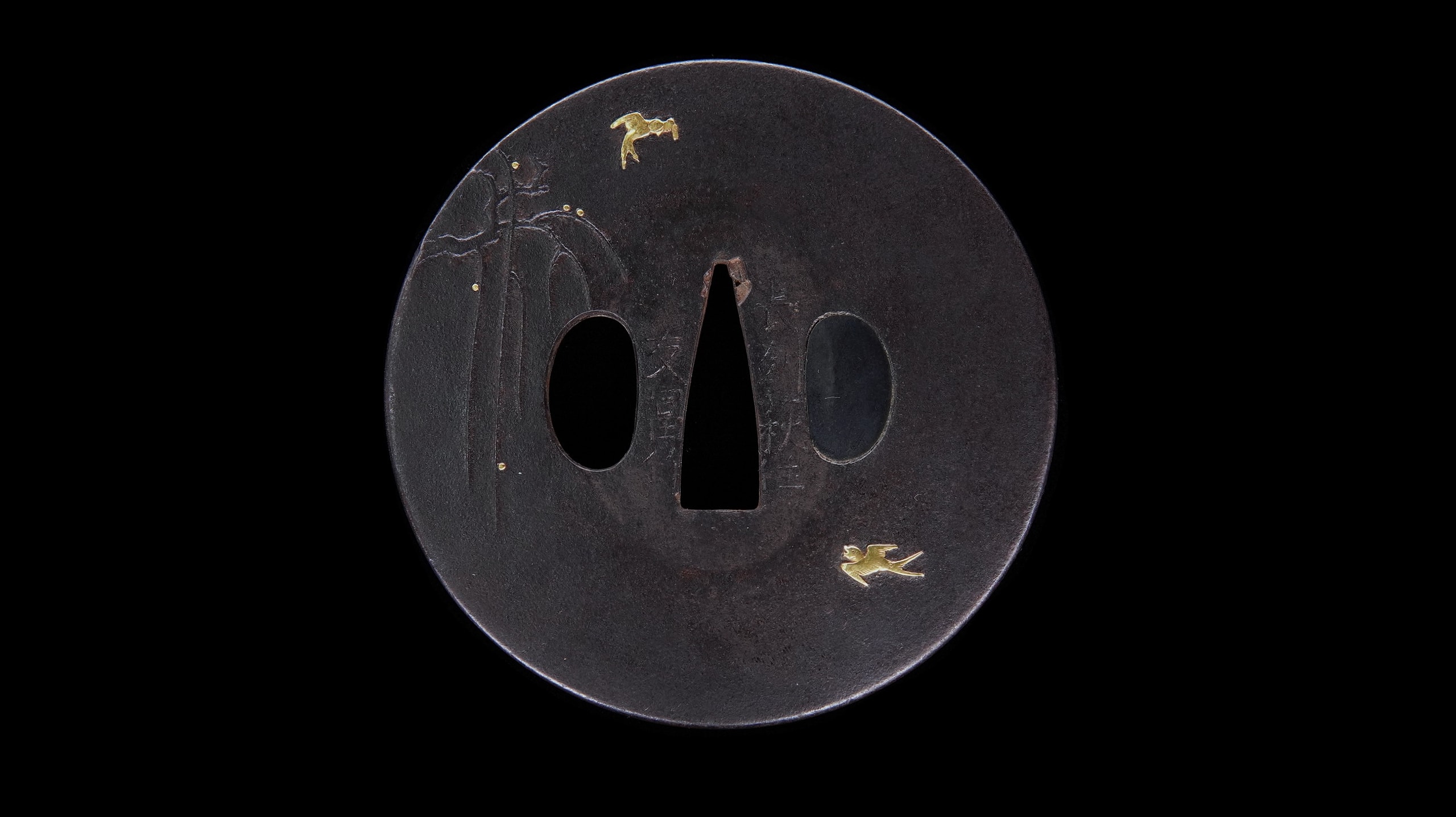
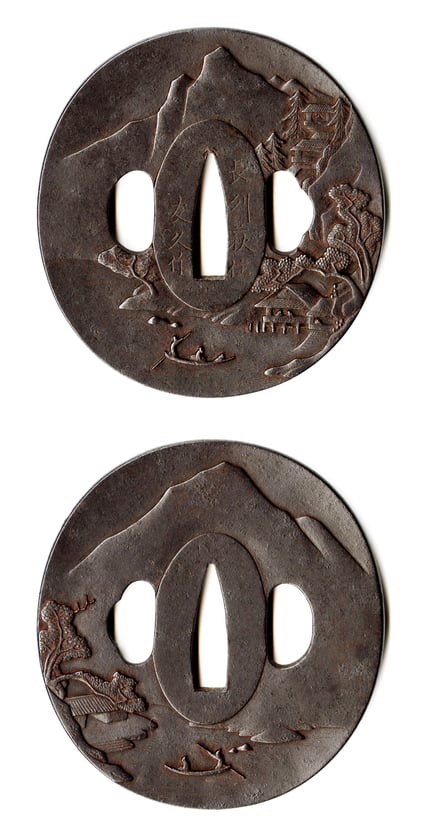
This is an iron tsuba signed by Tomohisa, a craftsman from Choshu Hagi, dating to the mid-Edo period (approx. 300 years ago). It features a landscape design (sansui-zu) executed in sukidashi-bori (raised carving) with sukino-nokoshi-kakumimi-koniku (raised rim with slight meat). The tsuba is accompanied by an NBTHK Hozon Tosogu certificate.
 NihontoWatch
mei · Edo
Choshu School
Edo
Nagato
Signed
Hozon (NBTHK)
Iron-tsuba · Nagato
20 pieces on the market now
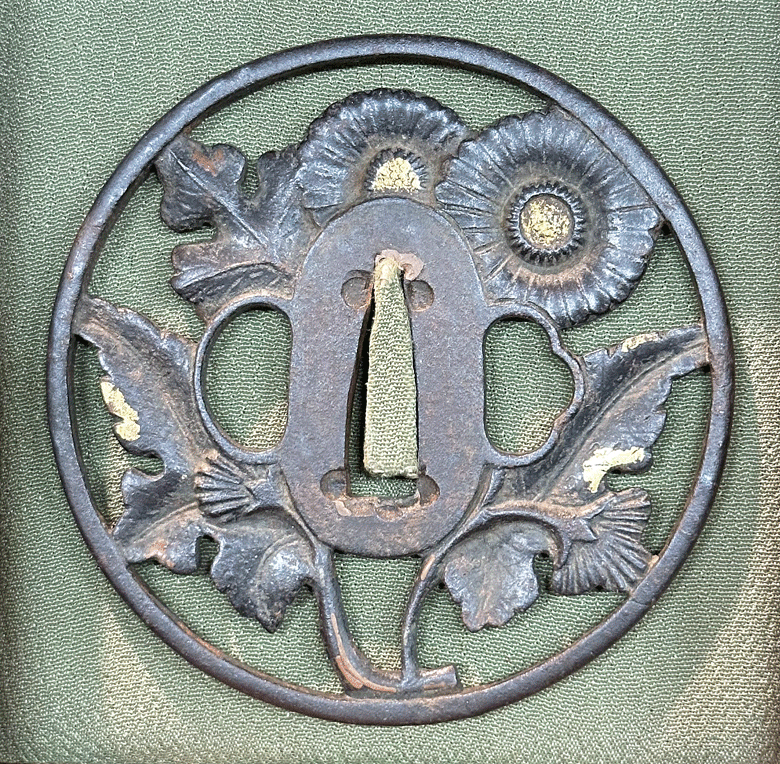
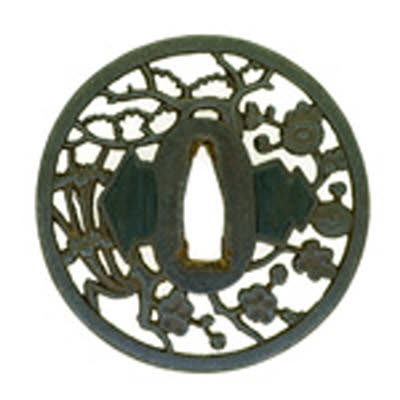
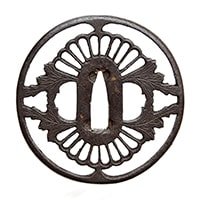
The tsuba-making traditions of Choshu domain (Nagato Province) trace their origins to the migration of Heianjo-sukashi openwork craftsmen from Kyoto, invited by the Ouchi family of Suo and Nagato during the Muromachi period. This transplanted lineage gave rise to the Ko-Hagi group, which flourished from the late Muromachi into the early Edo period and established a distinctive regional idiom in iron openwork. Learn more →
| Smith | Era | Designated |
|---|---|---|
| Tomonori友矩 | 1770-1800 | 0 |
| Tomohiro友広 | — | 0 |
| Tomotsune友恒 | 1670 | 1 |
| Nakai仲井 | 1670 | 1 |
| Nobushige信重 | 1781-1867 | 0 |
Certifies a genuine fitting worth preserving: a correct signature, or, if unsigned, an identifiable era and school, with recognized artistic and craft value.
The NBTHK (Nihon Bijutsu Tōken Hozon Kyōkai, the Society for the Preservation of Japanese Art Swords) is a public-interest incorporated foundation founded in 1948 and supervised by Japan’s Agency for Cultural Affairs (Bunkachō); it is based at the Japanese Sword Museum in Tokyo. Its expert panels physically examine each submitted work (shinsa) and issue a certificate (kanteishō) ranking it by artistic and historical merit. NBTHK papers are the most widely recognized standard of authentication for Japanese swords and fittings.
NBTHK official siteWe accept returns within 3 days including the day of arrival. Return shipping, the original outbound shipping, and refund transfer fees are the customer's responsibility. If there is a trade-in item, or the destination is overseas, returns and refunds cannot be accepted.
This is an iron tsuba signed by Tomohisa, a craftsman from Choshu Hagi, dating to the mid-Edo period (approx. 300 years ago). It features a landscape design (sansui-zu) executed in sukidashi-bori (raised carving) with sukino-nokoshi-kakumimi-koniku (raised rim with slight meat). The tsuba is accompanied by an NBTHK Hozon Tosogu certificate.
NihontoWatchmei · Edo
Choshu School
Edo
Nagato
Signed
Hozon (NBTHK)
Iron-tsuba · Nagato
20 pieces on the market now
The tsuba-making traditions of Choshu domain (Nagato Province) trace their origins to the migration of Heianjo-sukashi openwork craftsmen from Kyoto, invited by the Ouchi family of Suo and Nagato during the Muromachi period. This transplanted lineage gave rise to the Ko-Hagi group, which flourished from the late Muromachi into the early Edo period and established a distinctive regional idiom in iron openwork. Learn more →
| Smith | Era | Designated |
|---|---|---|
| Tomonori友矩 | 1770-1800 | 0 |
| Tomohiro友広 | — | 0 |
| Tomotsune友恒 | 1670 | 1 |
| Nakai仲井 | 1670 | 1 |
| Nobushige信重 | 1781-1867 | 0 |
Certifies a genuine fitting worth preserving: a correct signature, or, if unsigned, an identifiable era and school, with recognized artistic and craft value.
The NBTHK (Nihon Bijutsu Tōken Hozon Kyōkai, the Society for the Preservation of Japanese Art Swords) is a public-interest incorporated foundation founded in 1948 and supervised by Japan’s Agency for Cultural Affairs (Bunkachō); it is based at the Japanese Sword Museum in Tokyo. Its expert panels physically examine each submitted work (shinsa) and issue a certificate (kanteishō) ranking it by artistic and historical merit. NBTHK papers are the most widely recognized standard of authentication for Japanese swords and fittings.
NBTHK official siteWe accept returns within 3 days including the day of arrival. Return shipping, the original outbound shipping, and refund transfer fees are the customer's responsibility. If there is a trade-in item, or the destination is overseas, returns and refunds cannot be accepted.