 NihontoWatchNihontoWatch
The somewhat coarse ishimeji seems to grant this tsuba a sense of elegance and high quality. Although called coarse, the uniform and dense workmanship feels smooth to the touch, as if it might slip from one's hand. Light hitting the surface is suppressed by diffuse reflection against the fine irregularities, appearing with a soft and chic texture. Had this been migakiji, I feel one's eyes would have only been drawn to the carved chiryu, making it a mediocre tsuba. In a sense, it can be said that the subject matter is supported by a supporting-role effect possessing both sobriety and skill. And the protagonist chiryu has its elongated body carved down in a kosukibori style, creating an impression diametrically opposed to the smooth hirachi, resulting in a carved chiryu without scales. It is certain that this contrast is one of the highlights of this tsuba. The body hair rendered via kebori also flutters softly, brilliantly expressing movement as if floating in mid-air within its delicacy. Turning one's eyes to the ura side, only clouds are carved in a random scattering, but these clouds actually show a katakiribori style of carving... one can catch a glimpse of workmanship that captures the characteristics of each motif by using different tagane for each design. I have introduced various highlights of this tsuba from this shop's perspective, but there is one thing that remains unfulfilled... that is the composition of the subject matter, as almost the same composition is depicted on both the dai and sho. Taken as a single piece, there is no dissatisfaction. However, this work is a daisho set. If possible, I wish the composition had been taken using the space of the two pieces as a pair for a canvas, rather than the space of a single piece... my honest impression is that I wanted to see a composition where the dai and sho were linked. (Eh... I am aware this is nothing more than selfishness on the part of this shop.) The maker is the third generation of the Sunagawa family in the late Edo period, Masayoshi. He is a tsubako with many sukashibori works, but this tsuba is a work that challenged the medium using only carved lines on a goishi-gata itatsuba. The previously mentioned ishimeji, kosukibori, kebori, and katakiribori... he may have wanted to enchant through the workmanship of the tagane rather than through the form and shape of sukashi. And it seems that was a brilliant success.
Offered by Asahi Token

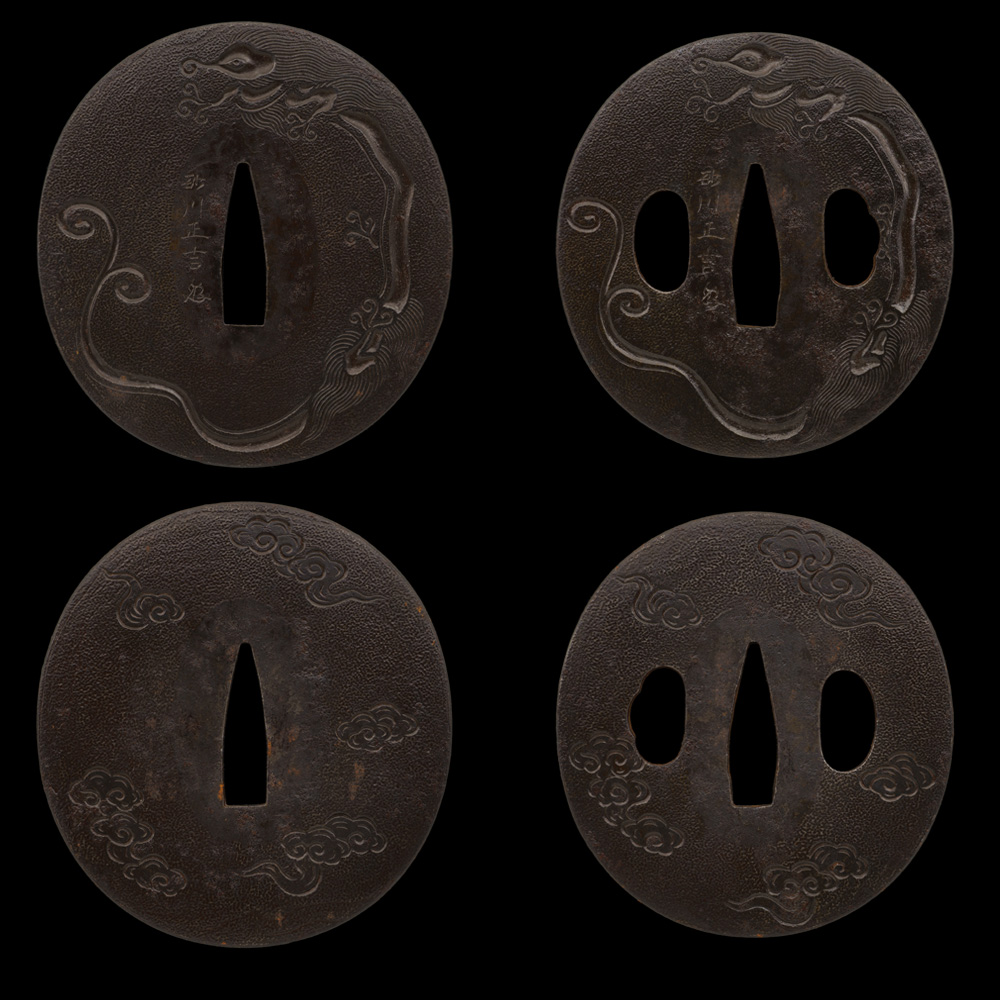
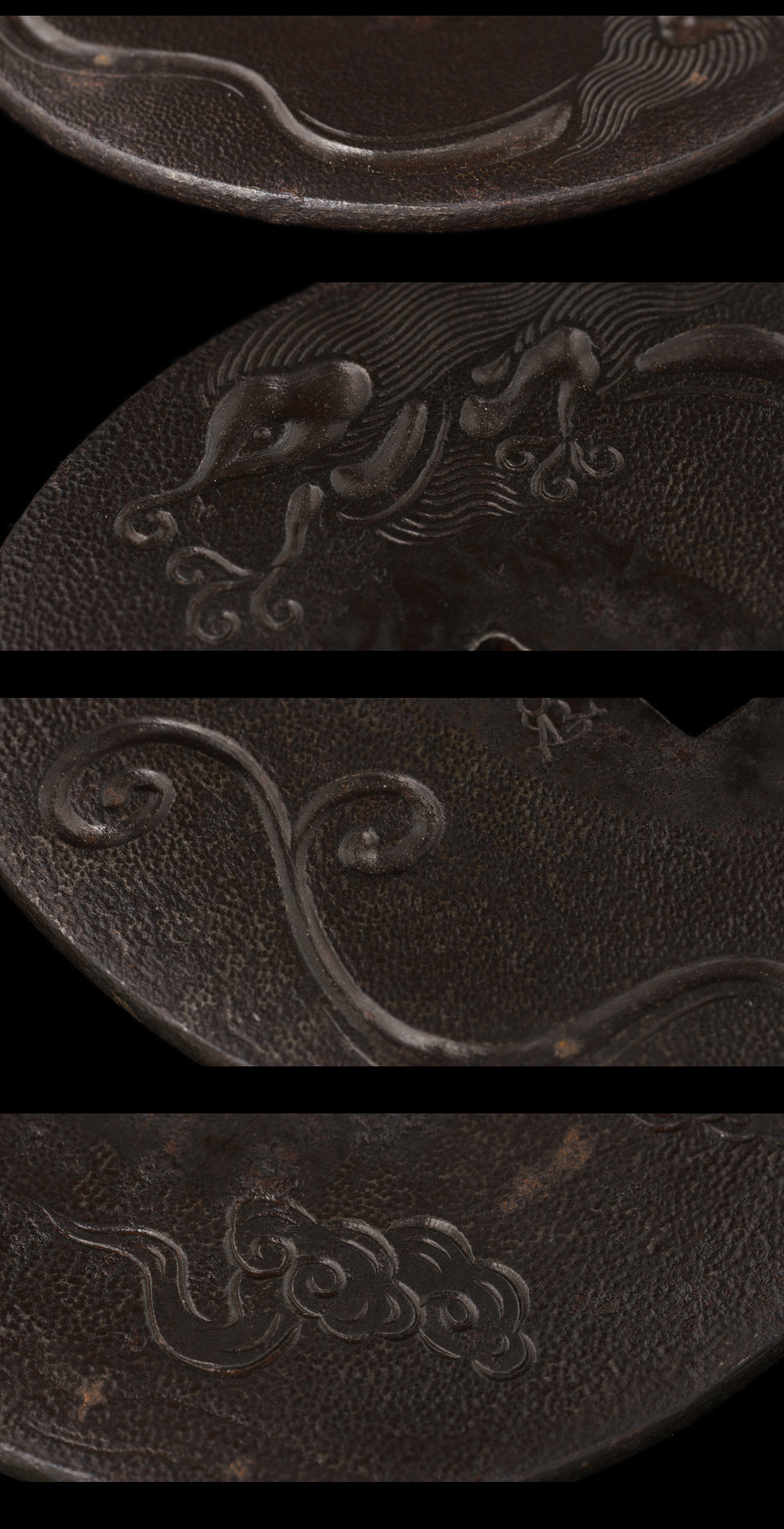
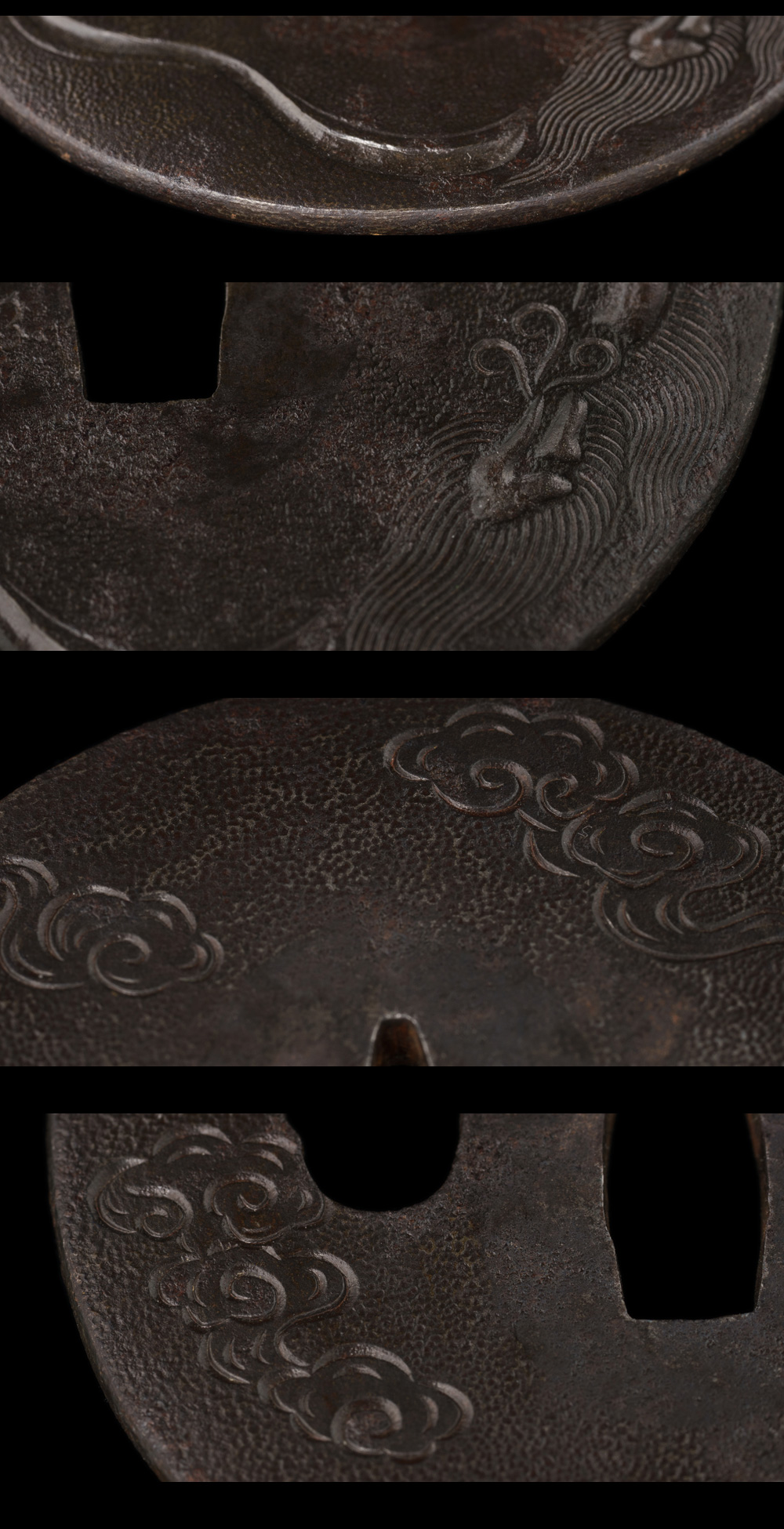
As written by the shop
Machine translation from the shop's Japanese · may contain errors ·
3 pieces on the market now
Certifies a genuine fitting worth preserving: a correct signature, or, if unsigned, an identifiable era and school, with recognized artistic and craft value.
The NBTHK (Nihon Bijutsu Tōken Hozon Kyōkai, the Society for the Preservation of Japanese Art Swords) is a public-interest incorporated foundation founded in 1948 and supervised by Japan’s Agency for Cultural Affairs (Bunkachō); it is based at the Japanese Sword Museum in Tokyo. Its expert panels physically examine each submitted work (shinsa) and issue a certificate (kanteishō) ranking it by artistic and historical merit. NBTHK papers are the most widely recognized standard of authentication for Japanese swords and fittings.
NBTHK official siteReturns are accepted within 7 days of the item's arrival, provided its condition has not changed since the time of sale. Once the return is confirmed, the payment is promptly refunded to your designated account.
¥330,000