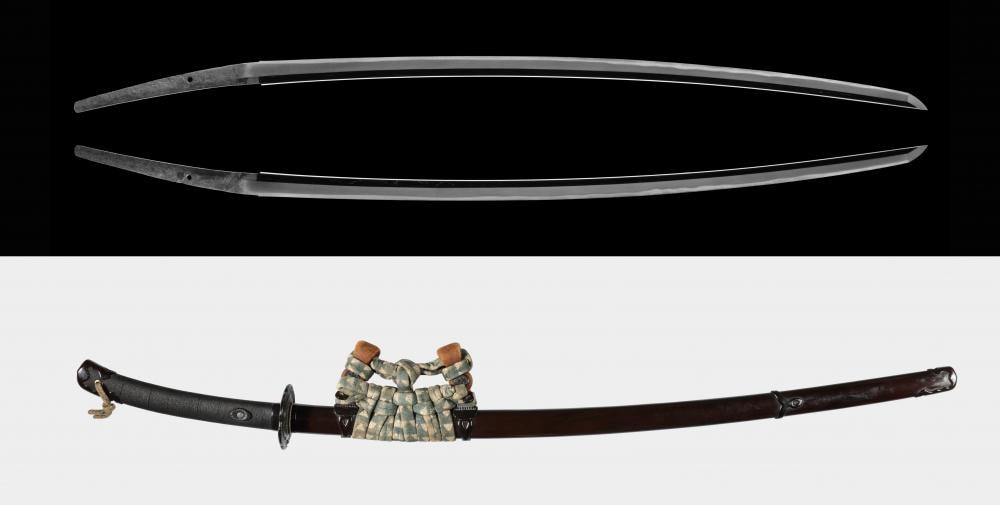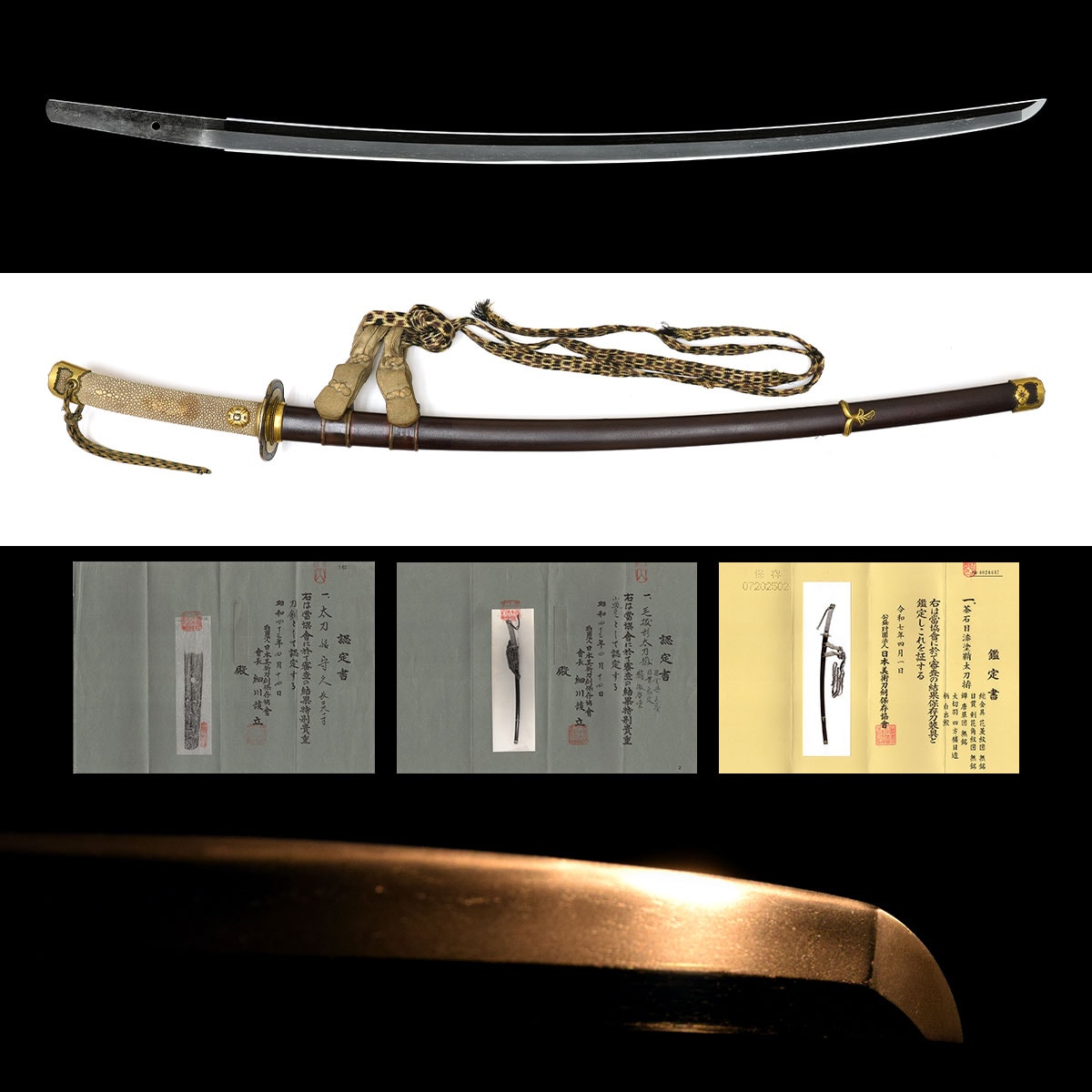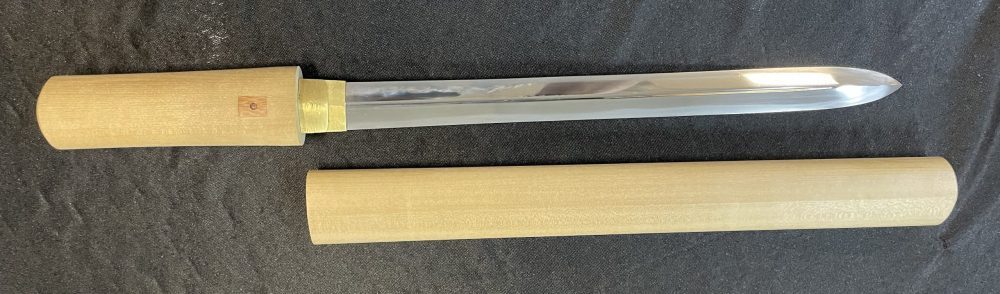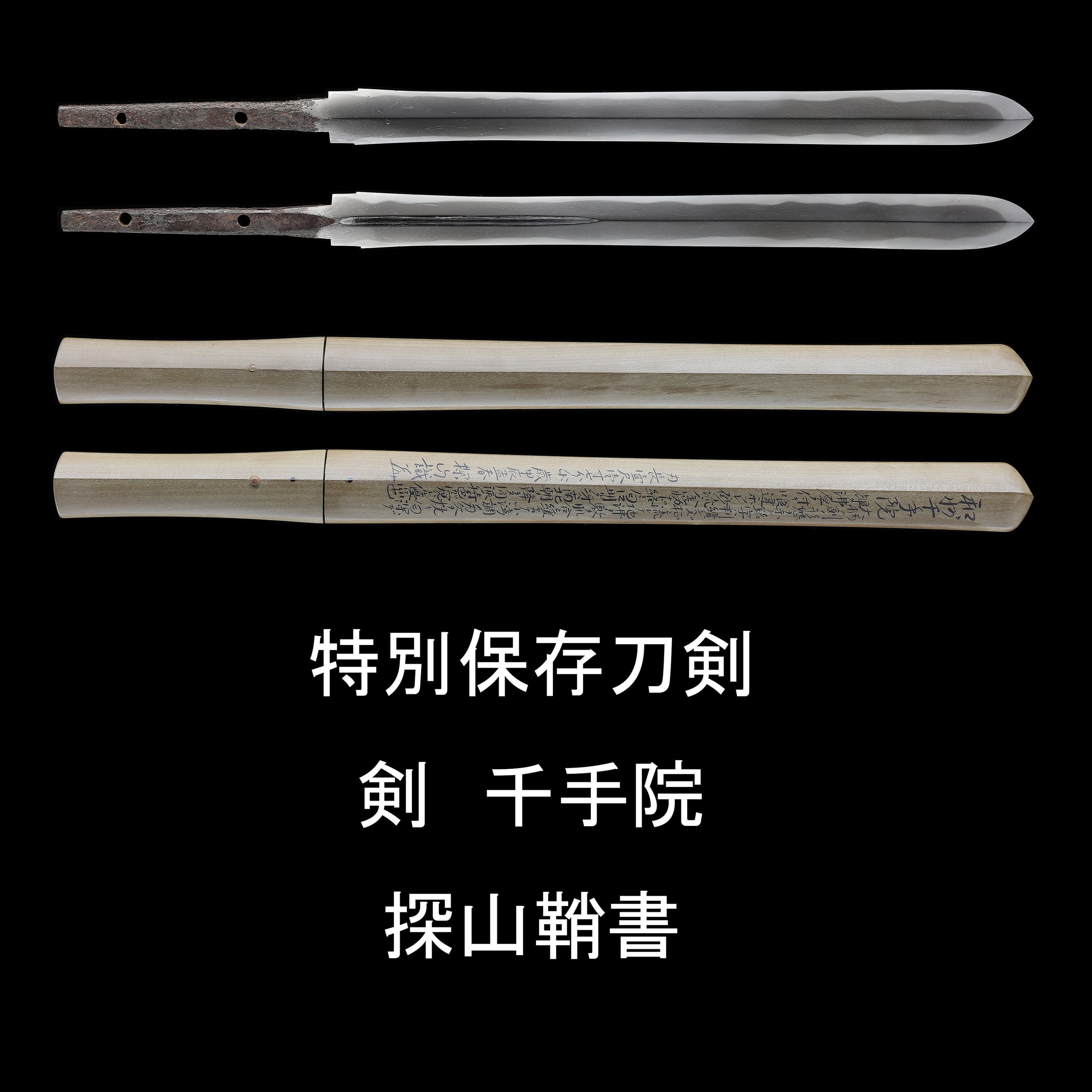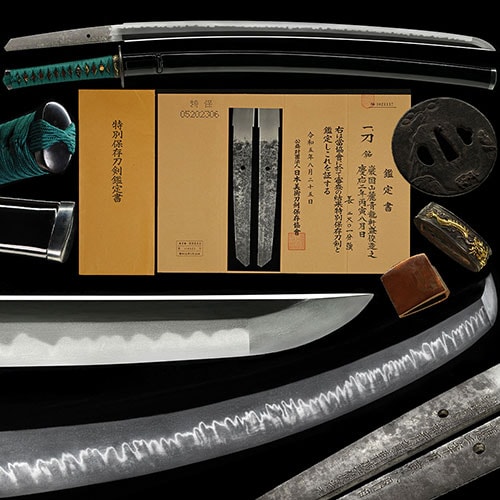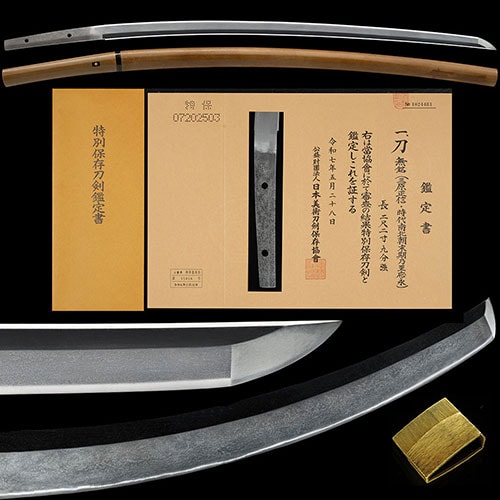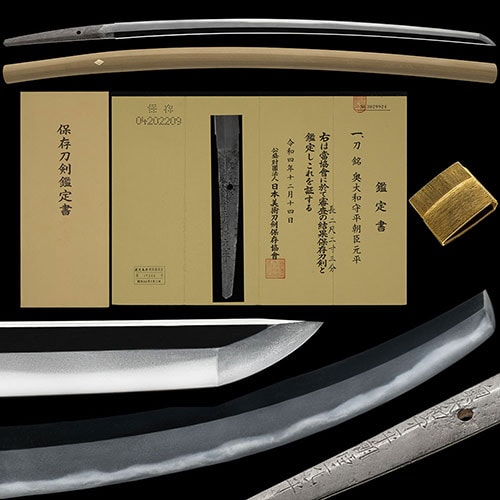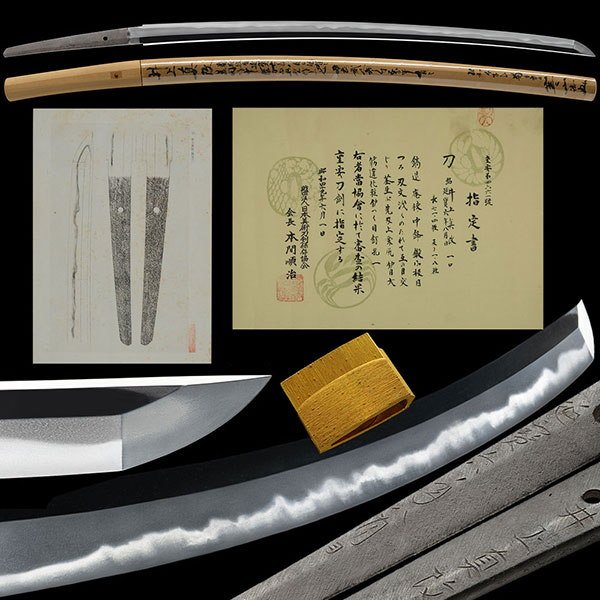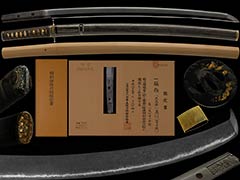
千手院 在銘 刀 特別保存刀剣
SOLD
Tracked across 76 dealers worldwide · price history · sold archive
Specifications
51.6 cm
1 cm
2.7 cm
2 cm
About the maker
Senjuin千手院
The Senjuin school takes its name from the Senjudo, a hall enshrining Senju Kannon (the Thousand-Armed Avalokitesvara) said to have stood at the western foothills of Mt. Wakakusa in Nara. Tradition holds that the group of swordsmiths residing in this area constituted the school, which is regarded as the earliest in origin among the five schools of Yamato. According to old transmitted writings, two master smiths, Yukinobu and Shigehiro, were active in the late Heian period; however, no secure extant works by either have yet been confirmed. For reasons unknown, signed works of the school are scarce even thereafter. The oldest surviving signed example is a tachi bearing the three-character inscription "Senjuin," thought to date to the early Kamakura period. Works prefixed Ko-Senjuin are attributed to the school's earliest phase and display forms that retain the lingering presence of the earlier straight-sword (*chokuto*) tradition, constituting indispensable material for research into the development of the curved *shinogi-zukuri* blade. The school's technical hallmarks are firmly rooted in the Yamato tradition. The *jigane* characteristically shows *itame-hada* mixed with *mokume* and areas of *nagare-masame*, frequently tending toward *hada-dachi*; thick *ji-nie* adheres well, with abundant *chikei*, and in finer examples a faint *nie-utsuri* appears, yielding a steel that is bright and clear. The *hamon* is fundamentally *suguha*-based with a shallow *notare* tendency, mixing *ko-choji*, *ko-gunome*, and *ko-midare*; the *habuchi* is characteristically frayed with *hotsure*, and activities such as *uchi-noke*, *nijuba*, *kuichigai-ba*, and *yubashiri* appear in profusion. Thick *ko-nie* adheres along the *nioiguchi*, which is bright and clear, while *kinsuji* and *sunagashi* run vigorously throughout. The *boshi* typically enters straight, forming *ko-maru* with vigorous *hakikake*, or terminates in *yakizume*. It has been observed from old times that within the Yamato Five Schools, a *hamon* of unusually vigorous and changeable character should be appraised as Senjuin, distinguishing the school from the more restrained temper patterns of the Taima, Tegai, Hosho, and Shikkake groups. The Senjuin school occupies a position of singular importance in the study of early Japanese swordsmithing. Its production spans from the late Heian period through the Nanbokucho era, and the school's close association with temple warrior-monks is thought to account for the rarity of signed works. Surviving blades encompass *tachi*, *katana*, *kodachi*, *ken*, and *yari*, the last of these being exceptionally rare as signed examples from this period. Many works retain their *ubu* nakago, preserving classical forms of pronounced *koshizori* with *funbari* that overflow with an archaic elegance. The school's *ken* served not as weapons of the warrior class but as *goshintai* and ritual implements, and surviving examples in this form are notably numerous among Yamato works. Pieces transmitted through such collections as Tanzan Shrine and Kyoo Gokoku-ji (To-ji) further attest to the school's deep connections with religious institutions. In both *ji* and *ha*, the finest Senjuin works display a powerful forging woven through with thick *ji-nie* and supported by frequent *chikei*, combined with a luminous *hamon* rich in *nie* activity, producing blades that are at once archaic in character and technically outstanding.