After the Ōnin War broke the Ashikaga order, a century of Sengoku warfare armed nearly every province in Japan. The era rewards a discriminating eye: routine work exists in quantity, and beside it stand custom blades of the first rank.
 NihontoWatchNihontoWatch
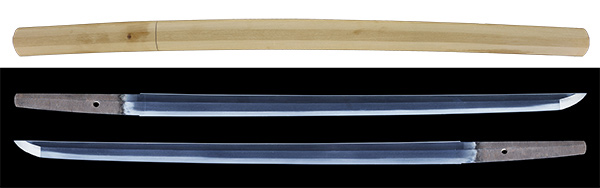
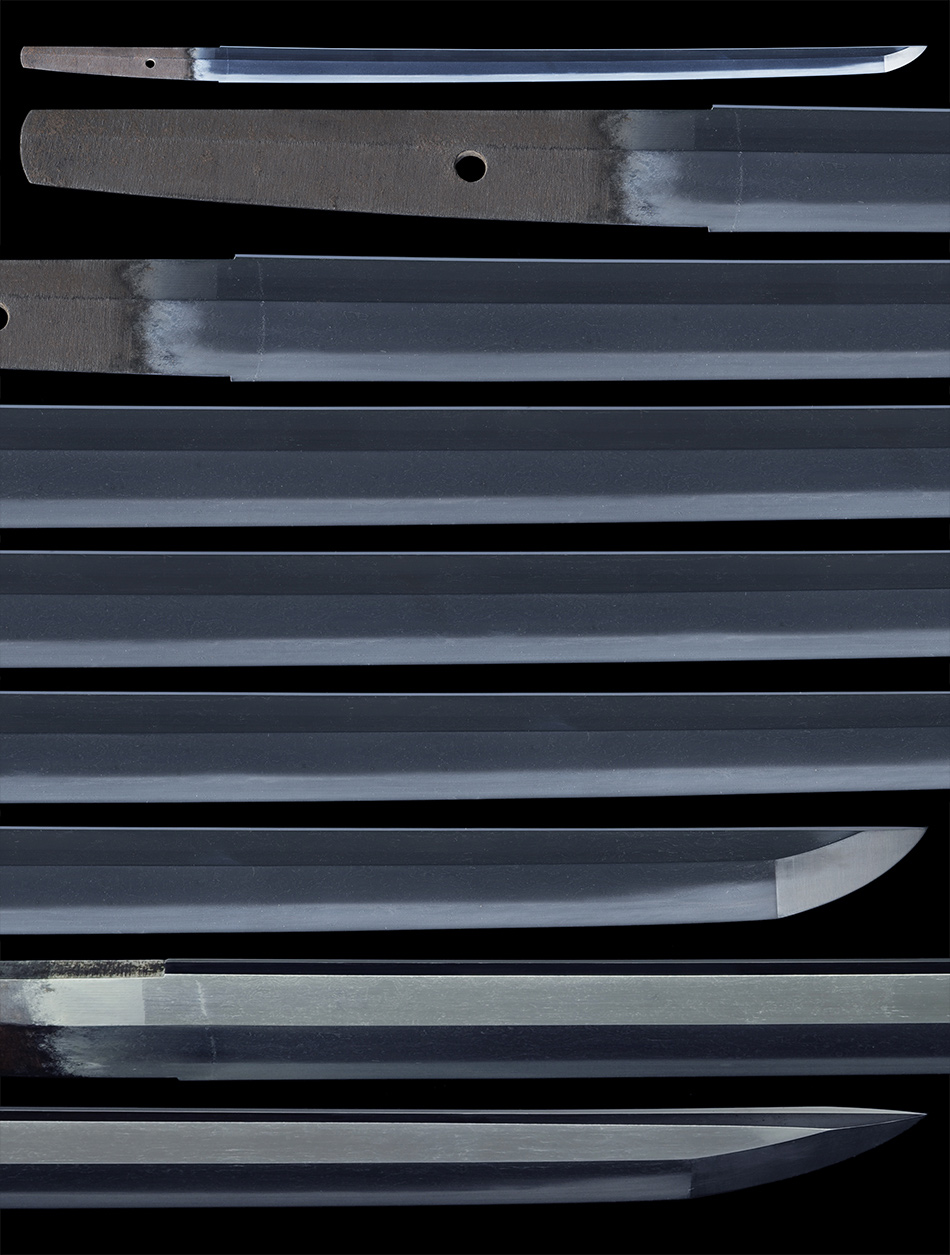
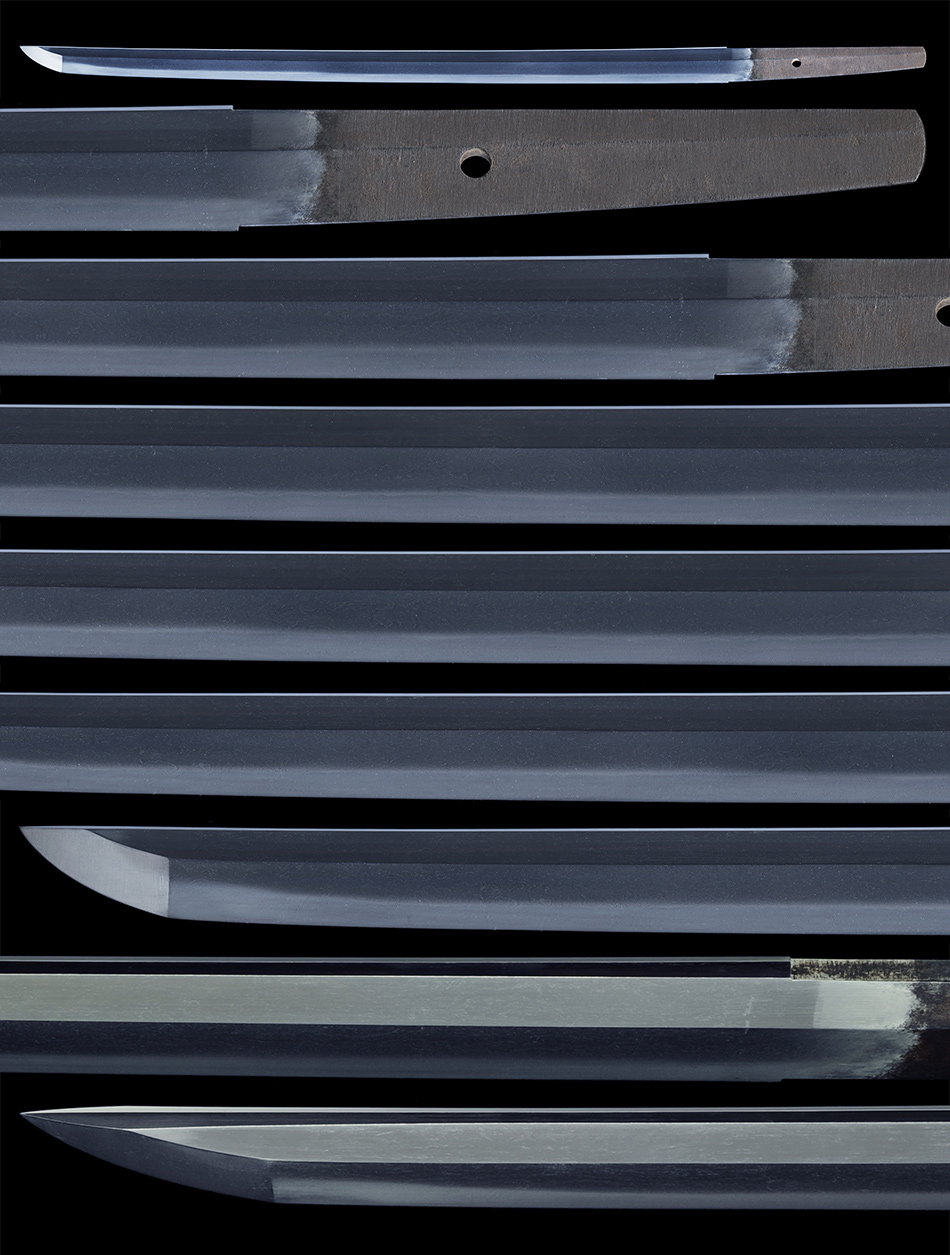
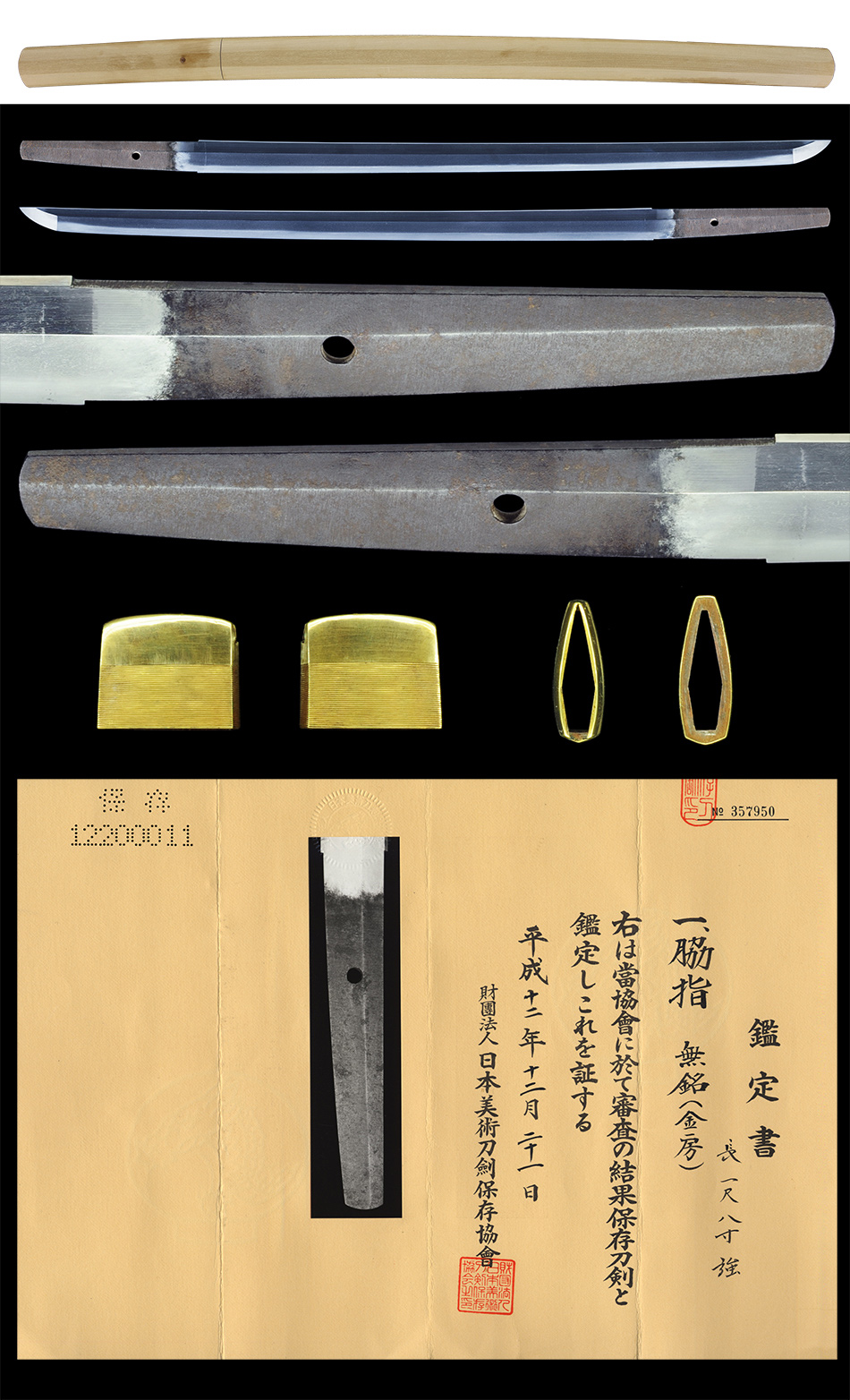
The founder of the Kanabo school, which began around the Daiei era (1521-1527) of the Muromachi period, is said to be Masanaga. Among Yamato works, the works of the Kanabo school have a unique style in which elements of the Bizen-den and Mino-den can be found in addition to the Yamato-den, giving them a mysterious charm and making them very popular. As the main period of sword production for the Kanabo school is the Azuchi-Momoyama period, which marks the boundary between the Koto and Shinto periods, they are often classified as Shinto. The sugata of this piece is a wakizashi with standard mihaba and kasane, a Yamato-den style tsukurikomi with a high shinogi, and a shallow sori. The jigane is itame-hada. The hamon is a chu-suguha with a slight notare, and it is a bright blade with a tight nioiguchi and small nie. Kinsuji and ko-ashi can also be seen along the habuchi. The boshi is hakikake and turns back in a ko-maru. The nakago has katte-sagari yasurime, and the rust is settled, giving it an excellent atmosphere. It is a clean sword with no flaws, and you can enjoy it as it is without any need for restoration. Shirasaya, gold-plated single-layer habaki, Hozon Token kanteisho.
NihontoWatchOffered by World Seiyudo


Machine translation from the shop's Japanese · may contain errors ·
Settsu · around 1684-1688
1 piece on the market now
The Muromachi period (1392 to 1573)
After the Ōnin War broke the Ashikaga order, a century of Sengoku warfare armed nearly every province in Japan. The era rewards a discriminating eye: routine work exists in quantity, and beside it stand custom blades of the first rank.
Certifies a genuine blade worth preserving: a signature confirmed correct, or, if unsigned, an era, province, and school that the NBTHK can reliably identify.
The NBTHK (Nihon Bijutsu Tōken Hozon Kyōkai, the Society for the Preservation of Japanese Art Swords) is a public-interest incorporated foundation founded in 1948 and supervised by Japan’s Agency for Cultural Affairs (Bunkachō); it is based at the Japanese Sword Museum in Tokyo. Its expert panels physically examine each submitted work (shinsa) and issue a certificate (kanteishō) ranking it by artistic and historical merit. NBTHK papers are the most widely recognized standard of authentication for Japanese swords and fittings.
NBTHK official siteNo cooling-off period or returns; refund only if the purchased sword is proven fake, capped at purchase price (excludes commission sales, accessories, auction items).