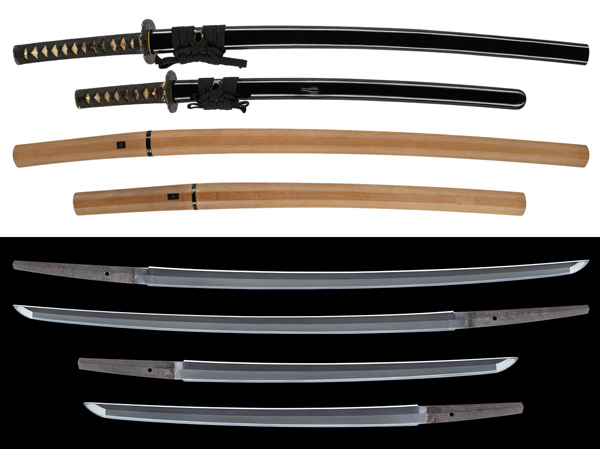
[Katana]
[Wakizashi]
Minryushi Toshizane (Toshizane) was born in the eastern part of Inshu Tottori in Anei 6 (1777) as the son of the famous late Edo period master Hamabe Toshinori, who was a swordsmith retained by the Inaba Domain. His name was Hamabe Gihachiro. His first mei was "Toshikuni," and at the age of 20 in Kansei 8, he went to Edo, and in Kansei 9 (1797) he changed his name to Toshizane (Toshizane). From August of Kyowa 1 (1801), four years later, he took the go of Minryushi. His flamboyant choji hamon, forged with the vigorous spirit of inquiry inherited from his father and his superior technique, led to him gathering many students, and he flourished, raising his fame greatly alongside the Suishinshi Masahide school of Edo. He died on the 25th day of the 12th month of Koka 3 (at the age of 70). Among his students was Kawamura Toshitaka, who is famous as the teacher of Kiyomaro. The mei are Minryushi Toshizane, Inshu ju Toshizane, Toshizane, Toshikuni, Inaba no Kuni Hamabe Gihachiro Toshizane, and Oite Tobu Hamabe Minryushi Toshizane.
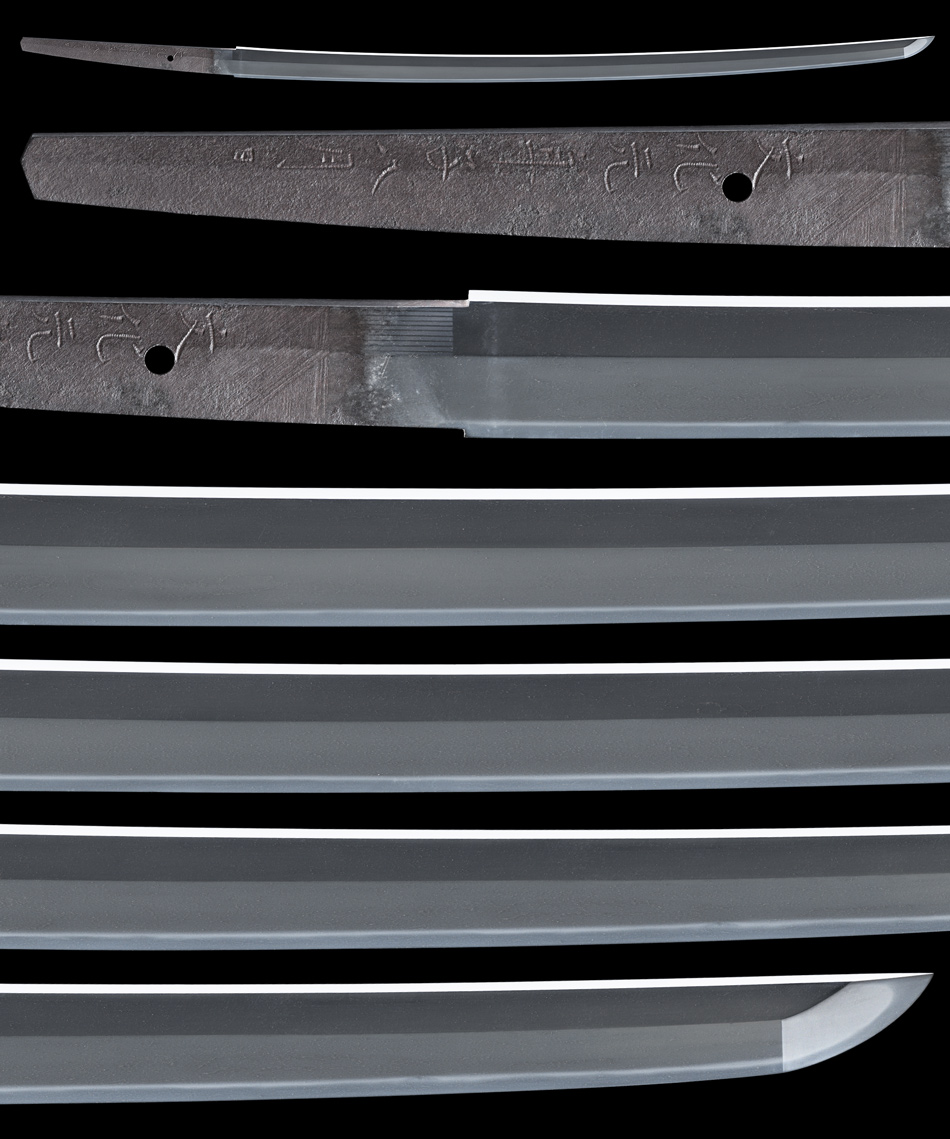
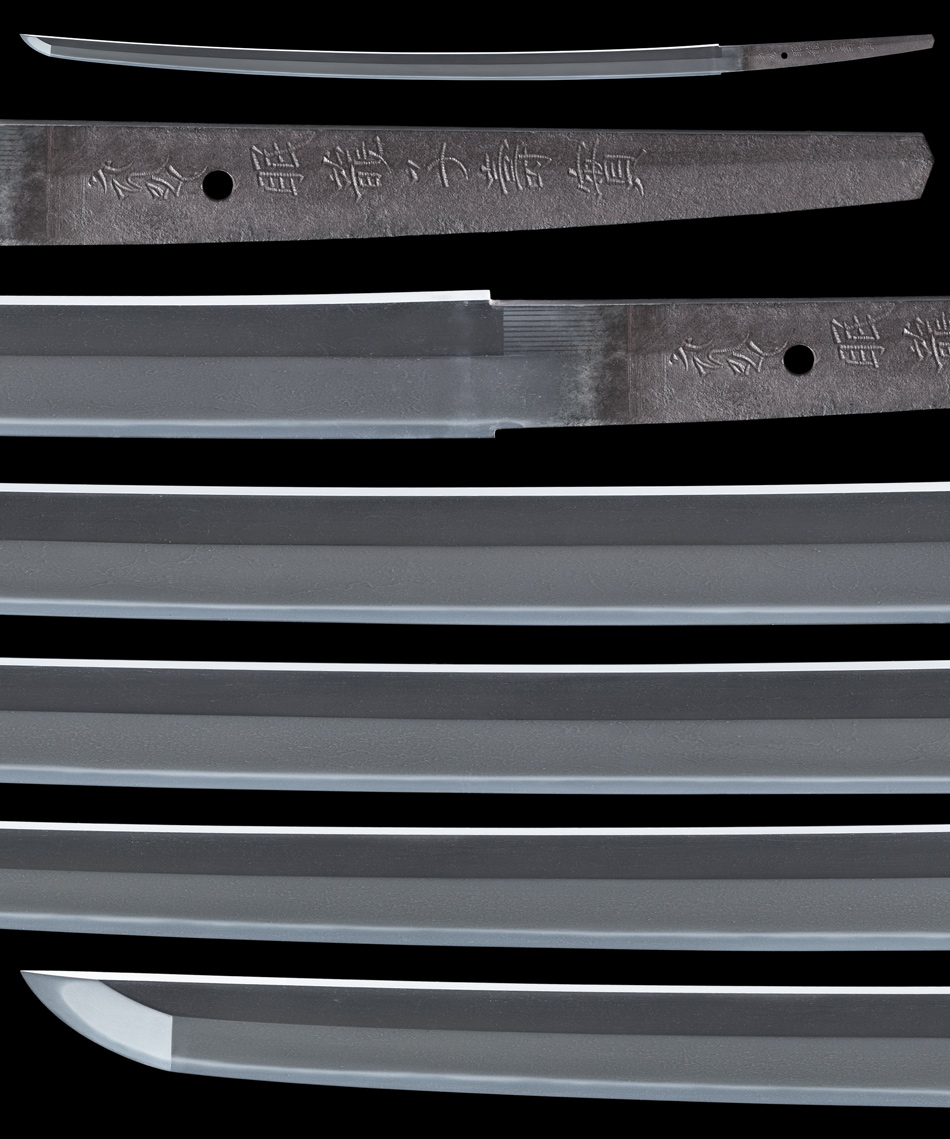
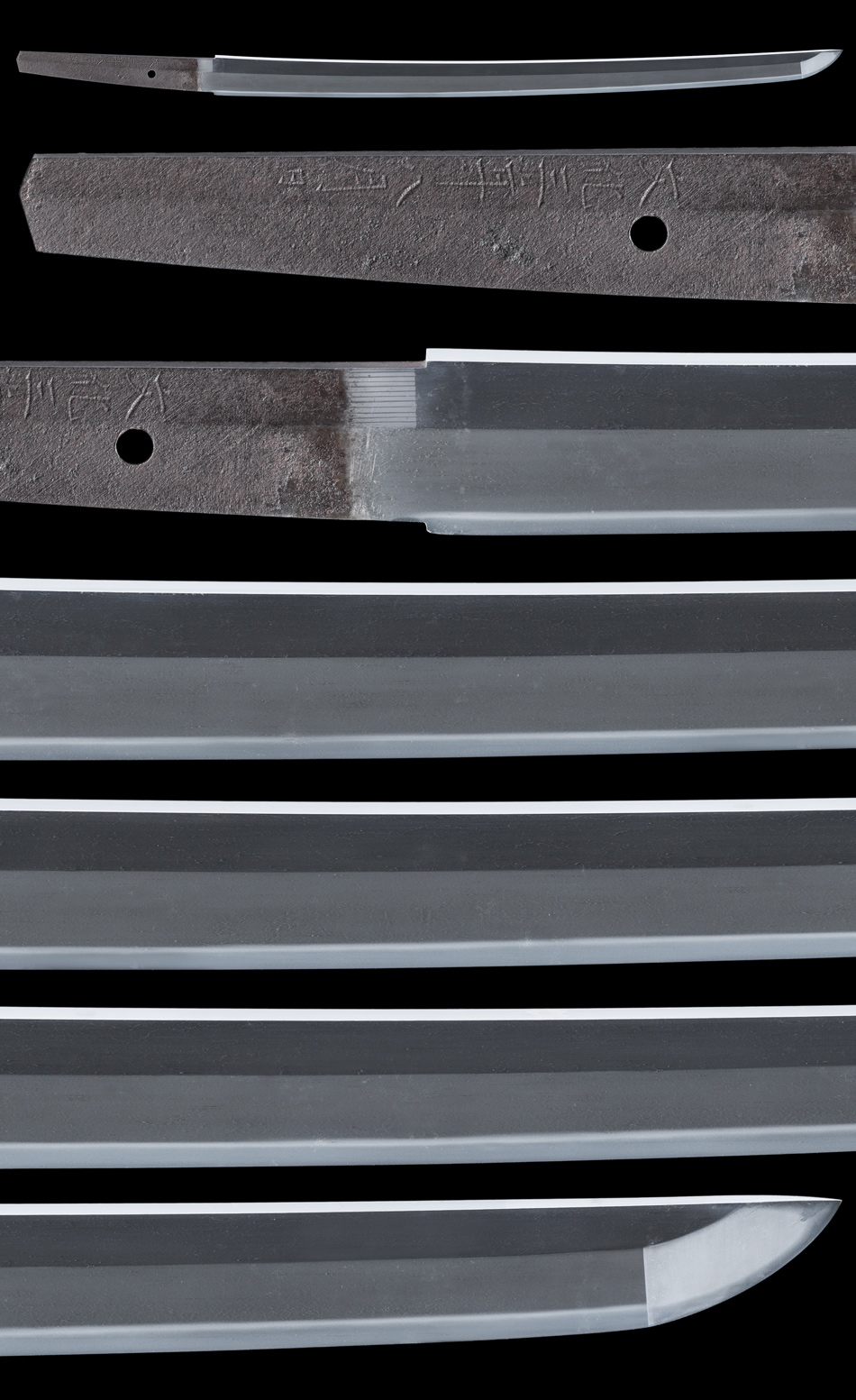
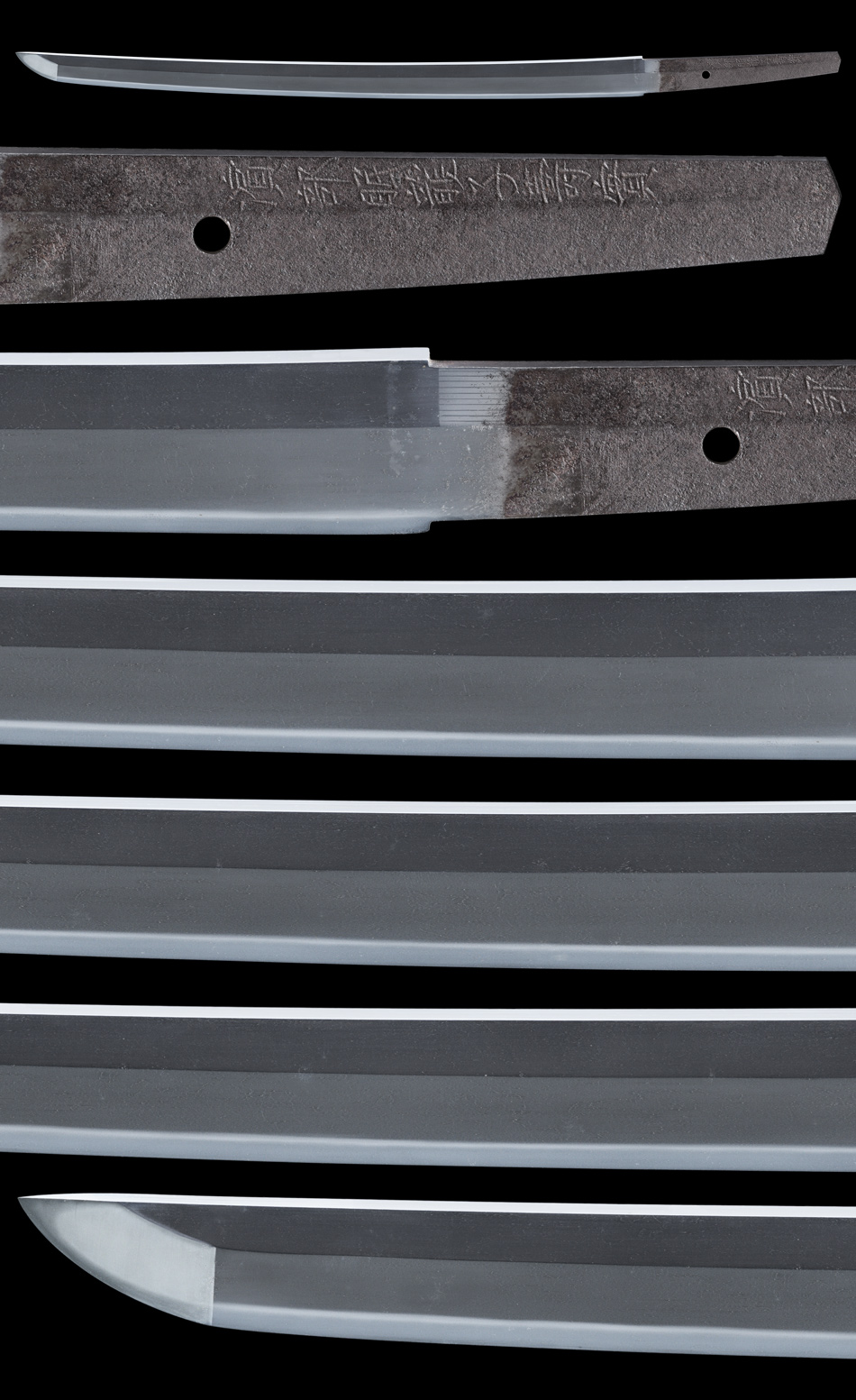
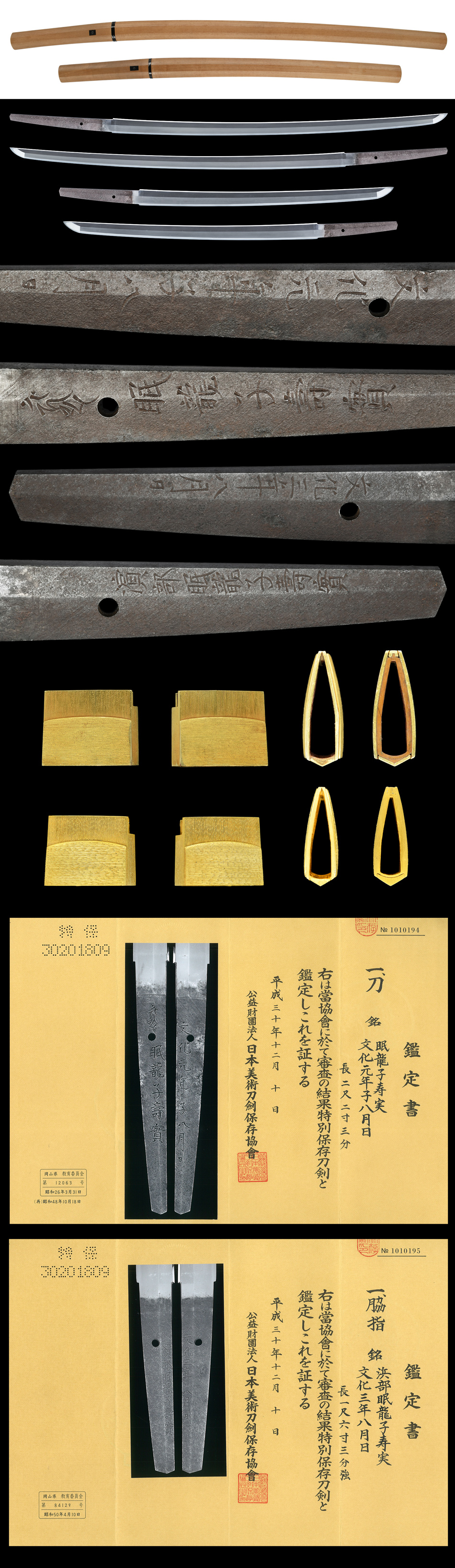
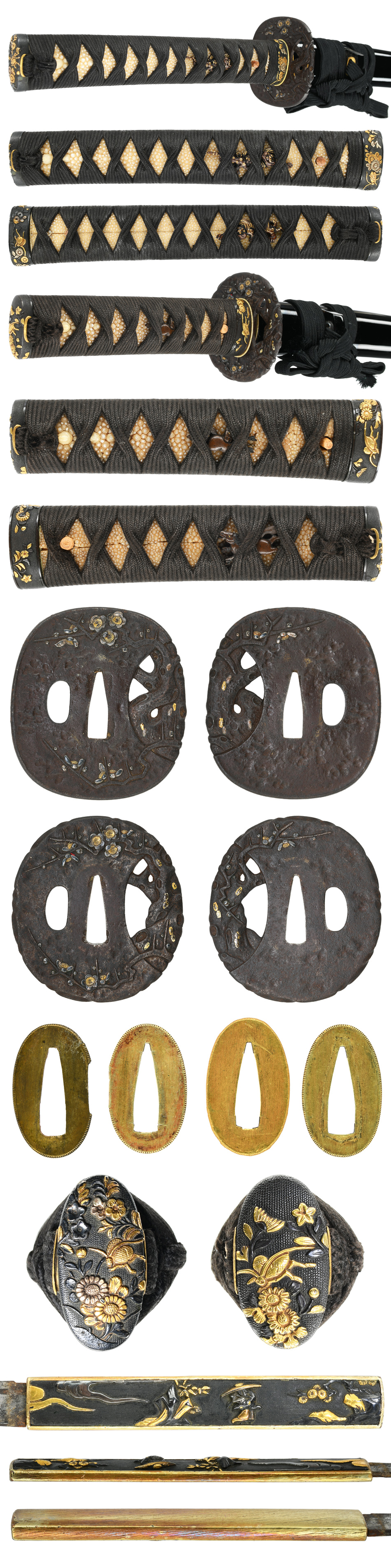
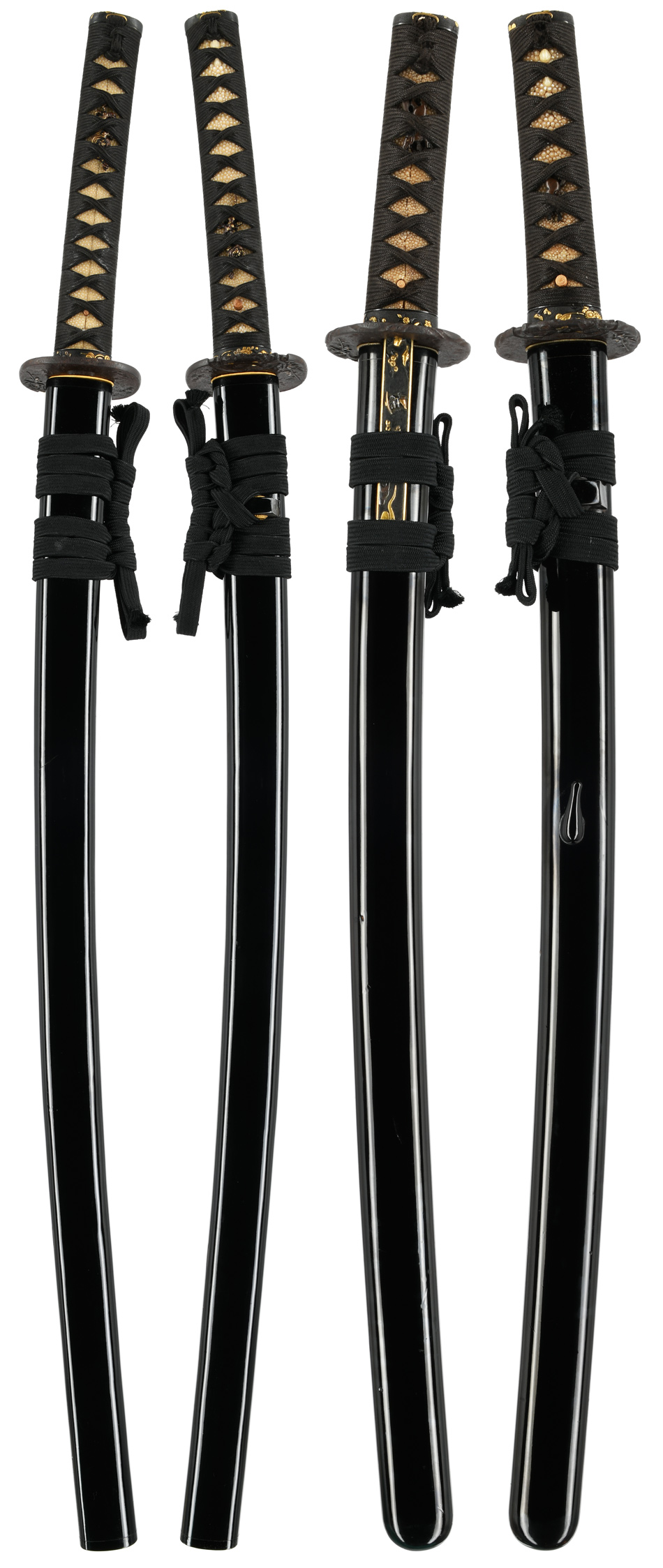
This work is a daisho by Minryushi Toshizane, and it is a fine piece with a well-matched koshirae included. Of course, both the katana and wakizashi come with certificates (Tokubetsu Hozon Token). Regarding the daisho blades, the katana has a nagasa of 2 shaku 2 sun 2 bu, and the wakizashi has a nagasa of about 1 shaku 6 sun 3 bu 6 rin, and they are a set of excellent swords with well-proportioned mihaba and kasane. The jitetsu is a beautiful hada where the itame hada is well-kneaded and tends toward a muji-fu tsumu, with nie attached to increase its strength. The hamon on both is a suguha that is truly skillfully forged. The clarity of the ha-buchi and the hamon, which has no peculiarities in the yaki, gives the viewer a deep impression that this is indeed a sword by Minryushi Toshizane. Of course, the condition of the nakago is also flawless. It is a solid sword set with certificates for both the katana and wakizashi. The accompanying koshirae is as shown in the photograph, in a condition ready to be mounted, and it is very impressive for display. Recently, daisho sets with blades included rarely appear. This item is a truly refined masterpiece with a katana and wakizashi by Minryushi Toshizane, both with Tokubetsu Hozon Token certificates, and a daisho koshirae included. Shirasaya, black ro-nuri saya daisho matching koshirae, Tokubetsu Hozon Token certificates for both katana and wakizashi blades.
Unaltered,Sujikaiyasuri with Keshoyasuri file pattern
Mekugi-ana
1
Shape
Chu-kissaki, Shinogizukuri, Iorimune
Jigane
Itame
Hamon
Suguha
Hamon
Komaru
Registration
Okayama
Saki-kasane
0.61cm
Length of Koshirae
about 76cm
Description from World Seiyudo
Machine translation from the shop's Japanese · may contain errors ·
[Katana]
[Wakizashi]
Minryushi Toshizane (Toshizane) was born in the eastern part of Inshu Tottori in Anei 6 (1777) as the son of the famous late Edo period master Hamabe Toshinori, who was a swordsmith retained by the Inaba Domain. His name was Hamabe Gihachiro. His first mei was "Toshikuni," and at the age of 20 in Kansei 8, he went to Edo, and in Kansei 9 (1797) he changed his name to Toshizane (Toshizane). From August of Kyowa 1 (1801), four years later, he took the go of Minryushi. His flamboyant choji hamon, forged with the vigorous spirit of inquiry inherited from his father and his superior technique, led to him gathering many students, and he flourished, raising his fame greatly alongside the Suishinshi Masahide school of Edo. He died on the 25th day of the 12th month of Koka 3 (at the age of 70). Among his students was Kawamura Toshitaka, who is famous as the teacher of Kiyomaro. The mei are Minryushi Toshizane, Inshu ju Toshizane, Toshizane, Toshikuni, Inaba no Kuni Hamabe Gihachiro Toshizane, and Oite Tobu Hamabe Minryushi Toshizane.
This work is a daisho by Minryushi Toshizane, and it is a fine piece with a well-matched koshirae included. Of course, both the katana and wakizashi come with certificates (Tokubetsu Hozon Token). Regarding the daisho blades, the katana has a nagasa of 2 shaku 2 sun 2 bu, and the wakizashi has a nagasa of about 1 shaku 6 sun 3 bu 6 rin, and they are a set of excellent swords with well-proportioned mihaba and kasane. The jitetsu is a beautiful hada where the itame hada is well-kneaded and tends toward a muji-fu tsumu, with nie attached to increase its strength. The hamon on both is a suguha that is truly skillfully forged. The clarity of the ha-buchi and the hamon, which has no peculiarities in the yaki, gives the viewer a deep impression that this is indeed a sword by Minryushi Toshizane. Of course, the condition of the nakago is also flawless. It is a solid sword set with certificates for both the katana and wakizashi. The accompanying koshirae is as shown in the photograph, in a condition ready to be mounted, and it is very impressive for display. Recently, daisho sets with blades included rarely appear. This item is a truly refined masterpiece with a katana and wakizashi by Minryushi Toshizane, both with Tokubetsu Hozon Token certificates, and a daisho koshirae included. Shirasaya, black ro-nuri saya daisho matching koshirae, Tokubetsu Hozon Token certificates for both katana and wakizashi blades.
Under the Tokugawa peace the daishō became a regulated uniform, and demand gathered in the castle towns, above all Edo itself. The craft split two ways: brilliant display work for connoisseurs, and tested blades whose cutting results were sometimes inlaid in gold.
A Hozon-certified blade judged to show notably superior workmanship and a better state of preservation. The bar is higher: re-tempered blades and most unsigned Muromachi/Edo works are excluded.
About the NBTHK›
The NBTHK (Nihon Bijutsu Tōken Hozon Kyōkai, the Society for the Preservation of Japanese Art Swords) is a public-interest incorporated foundation founded in 1948 and supervised by Japan’s Agency for Cultural Affairs (Bunkachō); it is based at the Japanese Sword Museum in Tokyo. Its expert panels physically examine each submitted work (shinsa) and issue a certificate (kanteishō) ranking it by artistic and historical merit. NBTHK papers are the most widely recognized standard of authentication for Japanese swords and fittings.
No cooling-off period or returns; refund only if the purchased sword is proven fake, capped at purchase price (excludes commission sales, accessories, auction items).



 NihontoWatch