Around 1800 Suishinshi Masahide argued in his writings that the craft must return to the old masters’ methods: the fukkotō revival. His greatest successor Naotane worked convincingly in Bizen and Sōshū manners that had been dead for centuries.
This is a katana made by Takahashi Naganobu from Izumo province during the late Edo period. It has a blade length of 72.7 cm and is certified as a Tokubetsu Hozon Token by the NBTHK. The sword features a suguha hamon and comes with a koshirae and shirasaya.
 NihontoWatch
mei · Tenpo (1830-1844) · nagasa 72.7cm · sori 1.5cm
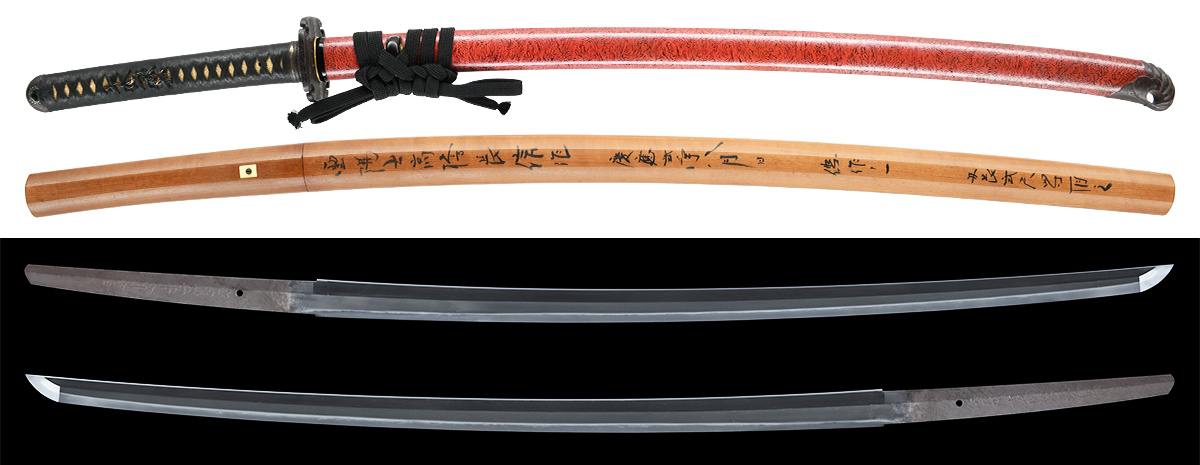

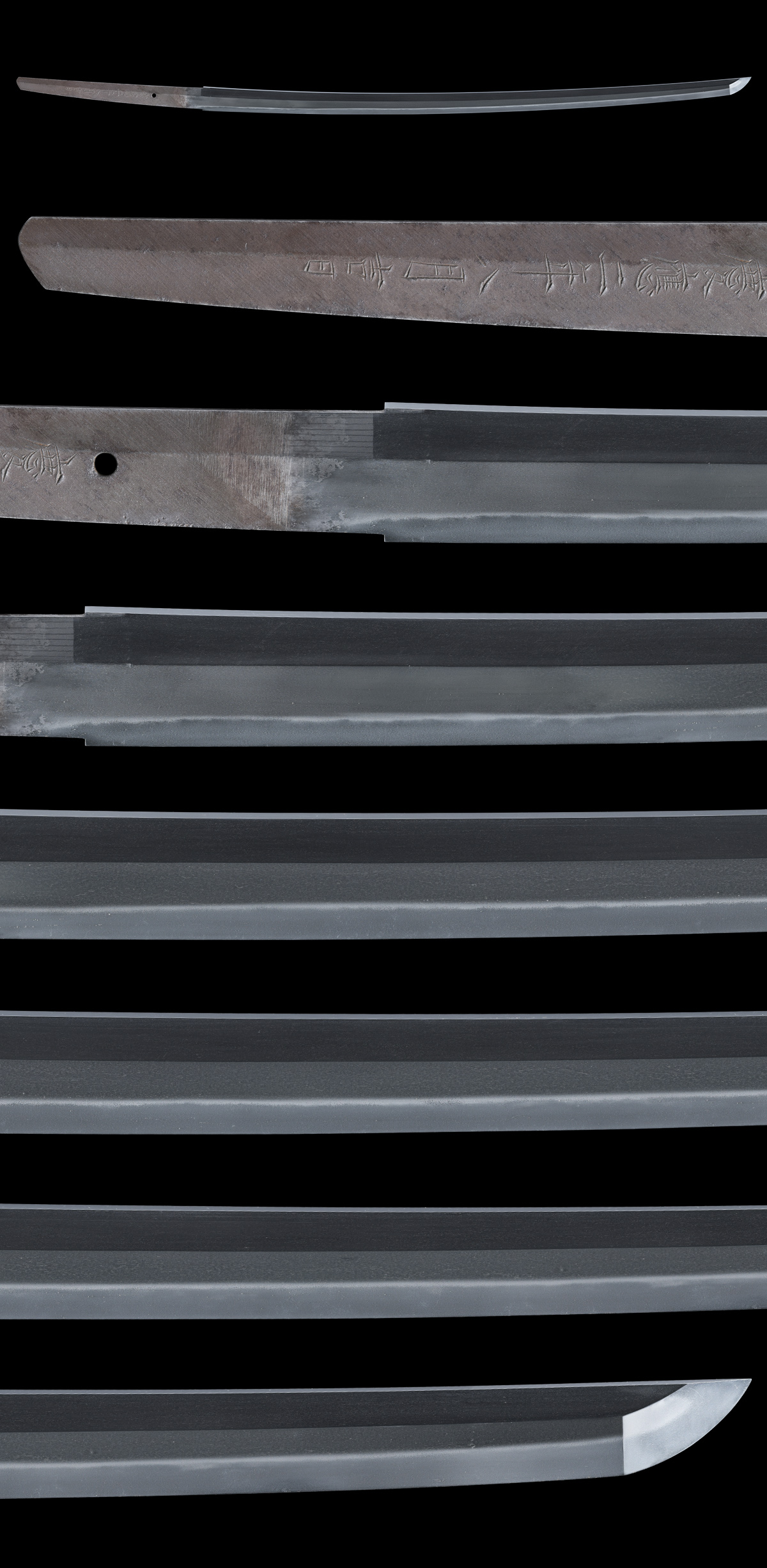
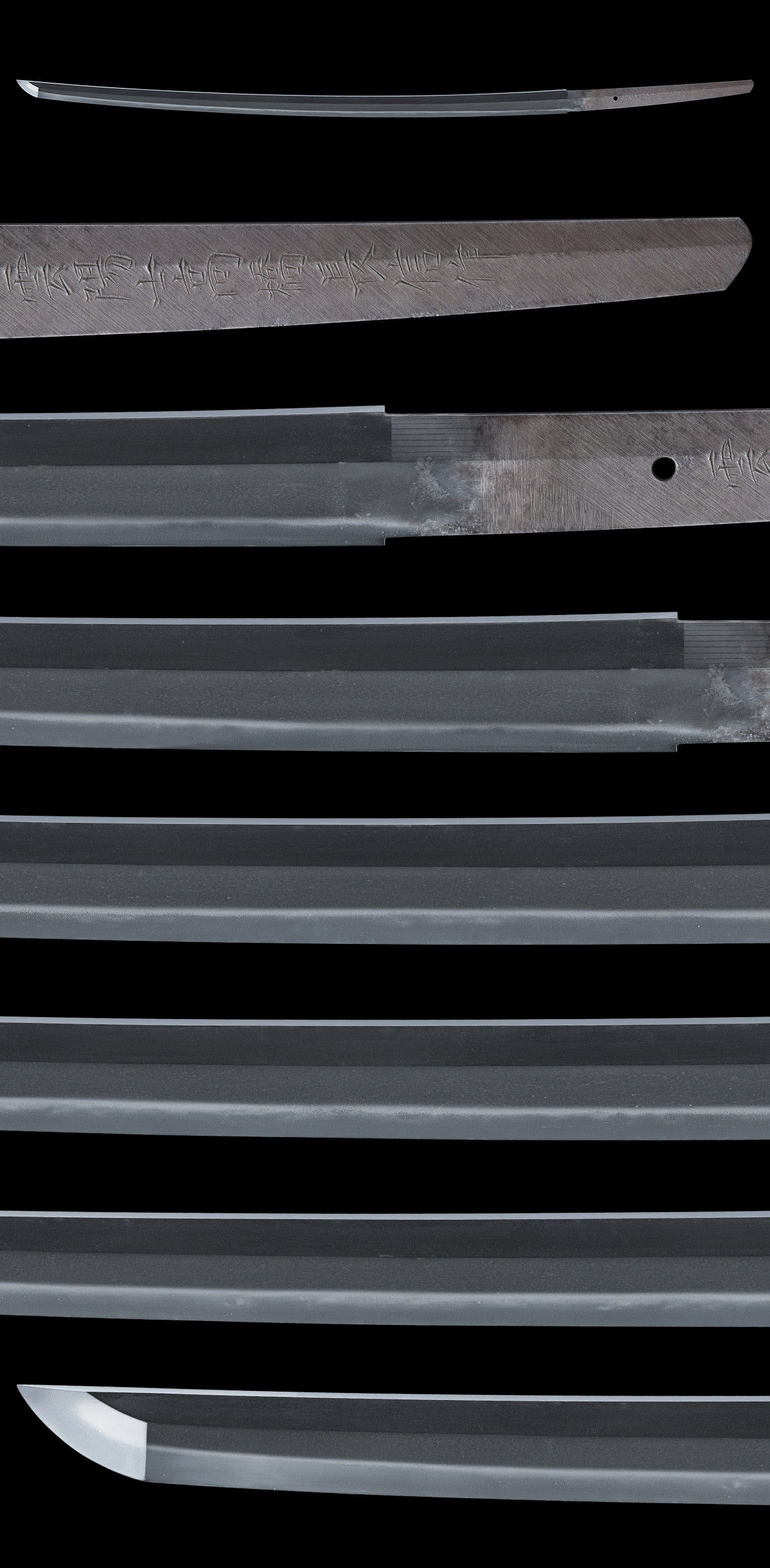
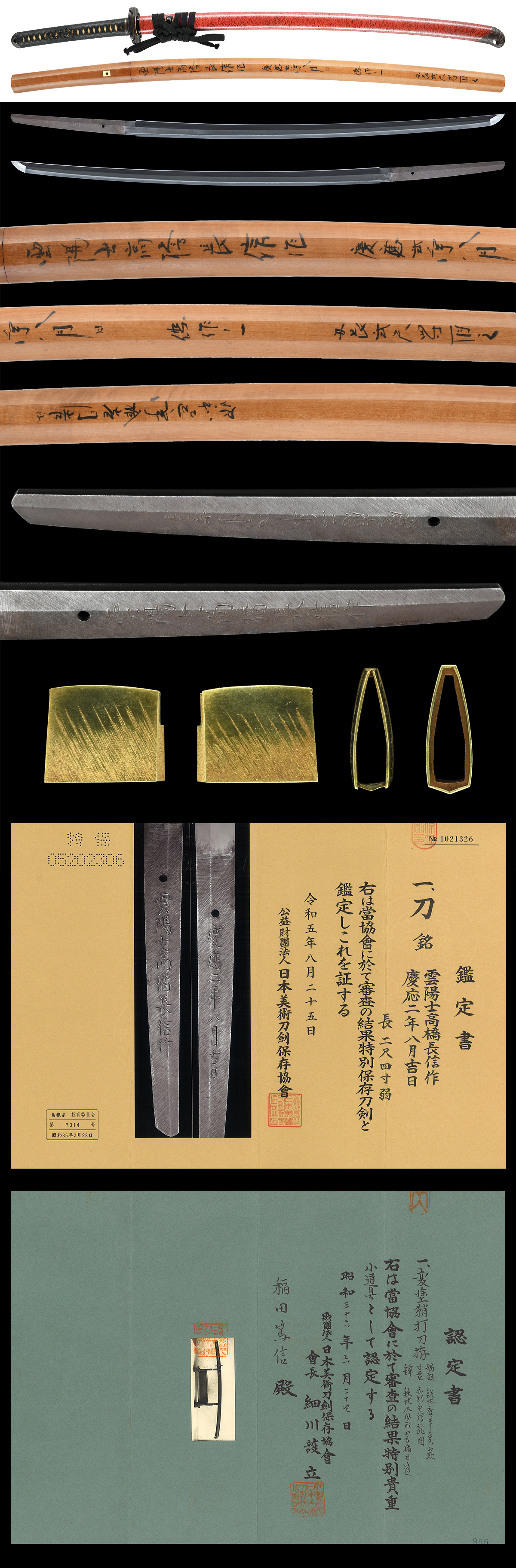
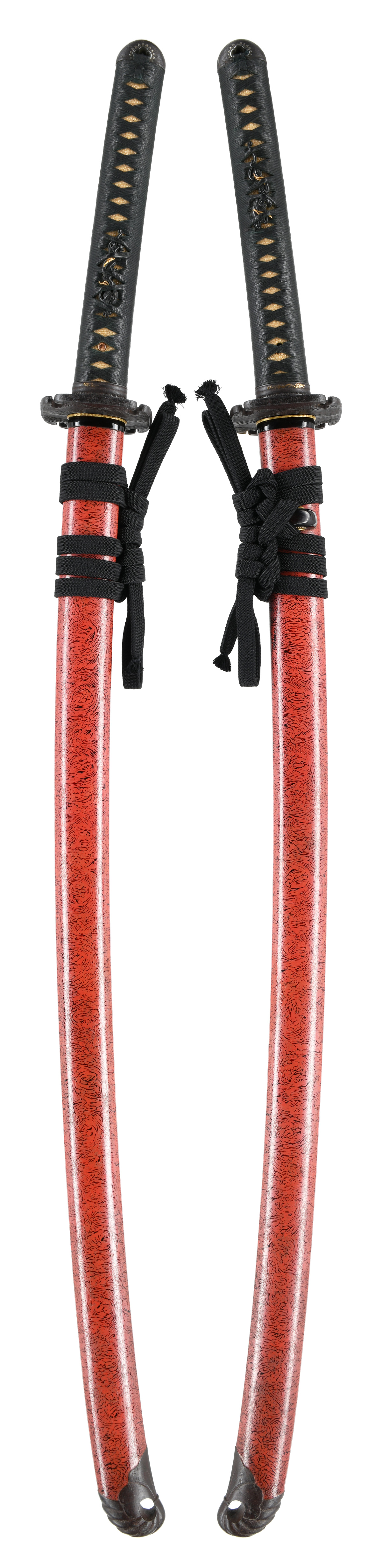
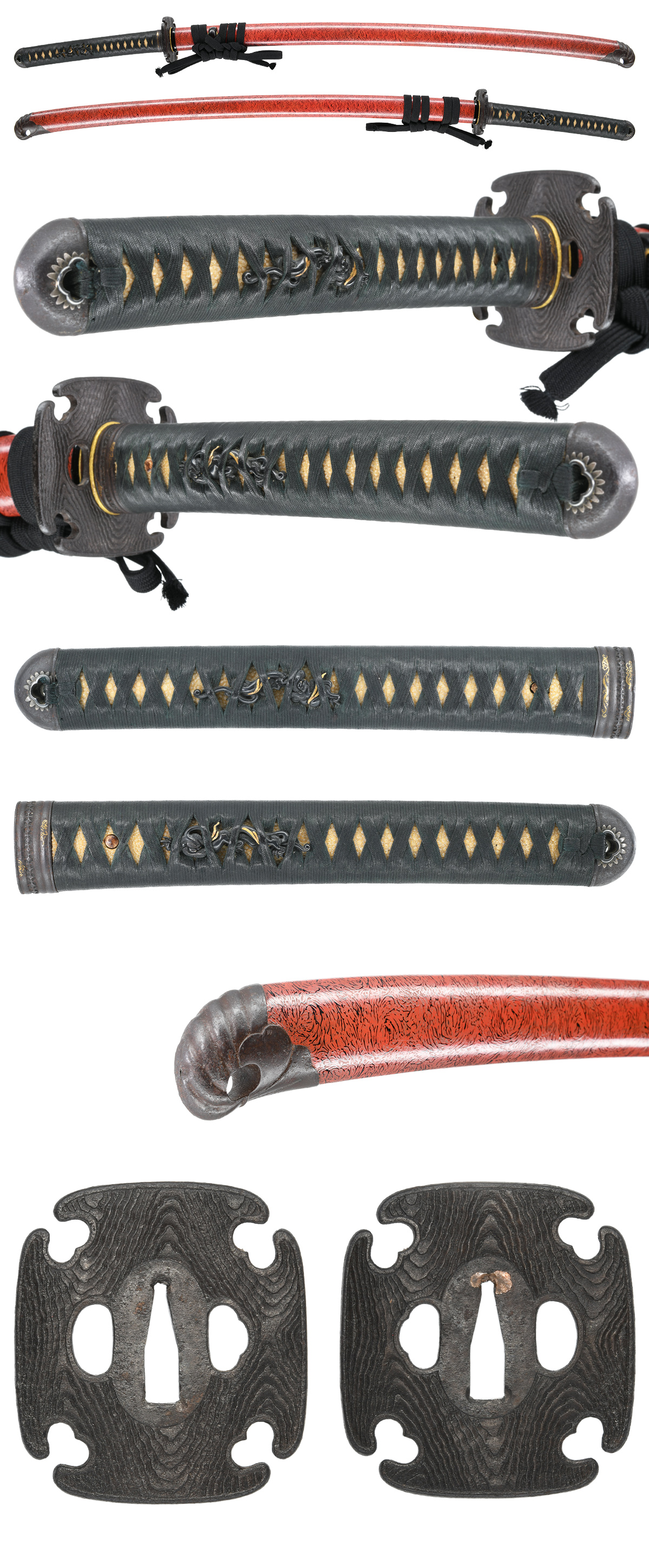
Wakimono · Izumo · around 1830-1860
Fujishiro Jo saku · Tōken Taikan top 31%
2 pieces on the market now
Where Naganobu stands among comparable artisans: across all of nihontō, and within tradition, era, and period. The tiers (Foremost · Leading · Major · Notable) weigh official designations from the NBTHK and Japan's Agency for Cultural Affairs, together with historical honors of lasting repute such as the Sansaku and Meibutsu-chō.
Select a lens to see how it's measured.
Years he was demonstrably active, proven by signed-and-dated blades
Wakimono · Izumo
2 pieces on the market now
The Unshū grouping gathers smiths of Izumo province (Unshū), and the blades carrying this attribution do not form one continuous lineage so much as two widely separated moments in the province's work. The earlier is Unshū Tadazane, a signed katana placed around the Eishō era (1504 to 1521) in the late Muromachi period. The later is Takahashi Naganobu, also recorded as Unshū Naganobu and Takahashi Rihei, a late-Edo smith dated by his own inscriptions to Ansei 3 (1856) and Man'en 1 (1860). Naganobu styled himself the seventeenth-generation successor of Wakasa Fuyuhiro; around the close of the Tenpō era he went to Edo and studied under Chōunsai Tsunatoshi, and after gaining recognition he served as a retained smith (kakae-kō) of the Matsudaira house of Matsue in Unshū until his death in Meiji 12 (1879). Because the two hands belong to different centuries and different stylistic worlds, the group reads as a provincial wakimono gathering rather than a school of fixed transmission. Across these blades the shared ground is a tightly forged ko-itame-hada with ji-nie adhering, after which the two hands diverge. Tadazane's ko-itame packs closely and flows toward the edge with masame mixed in, carrying a wide suguha mingled with small gunome, ashi and yō entering well, ko-nie and sunagashi, and a subdued (shizumi) nioiguchi; his bōshi runs straight to ko-maru with a long kaeri, and the overall effect was read by the NBTHK as sharing features with the Bizen smiths Kiyomitsu and Tadamitsu.
Naganobu instead builds bold, long sugata of wide mihaba with little taper, his ko-itame often taking on an almost plain (muji) look with abundant chikei. His preferred temper is neatly aligned chōji mixed with gunome in nioi-deki, though one of his katana hardens a flamboyant gunome-midare of round heads with a deep, bright nioiguchi and yubashiri. The most reliable signpost to his hand lies in the nakago: reverse ō-sujikai filemarks with keshō, named in the setsumei as a characteristic feature. For kantei the group resolves to its named smiths rather than a collective signature. Tadazane is recognized by his Bizen-leaning suguha-gunome and subdued nioiguchi, his example preserved with a Higo-style shuhen-nuri handachi koshirae. Naganobu is identified through his reverse ō-sujikai tang finishing, his Tsunatoshi-derived chōji, and on occasion a vigorous midare whose assertive spirit the setsumei likens to superior works of the Yamaura lineage; his commissioned blade names Tomono Shigenari of the Matsujō domain and records its making at Kōji Street in the eastern capital. The standing of the group rests on these two distinct workmanships, each documented within the records of its own province. Learn more →
| Smith | Era | Designated |
|---|---|---|
| Naganobu長信 | 1830-1860 | 2 |
| Tadasada忠貞 | 1492-1501 | 1 |
The Shinshintō revival
Around 1800 Suishinshi Masahide argued in his writings that the craft must return to the old masters’ methods: the fukkotō revival. His greatest successor Naotane worked convincingly in Bizen and Sōshū manners that had been dead for centuries.
A Hozon-certified blade judged to show notably superior workmanship and a better state of preservation. The bar is higher: re-tempered blades and most unsigned Muromachi/Edo works are excluded.
The NBTHK (Nihon Bijutsu Tōken Hozon Kyōkai, the Society for the Preservation of Japanese Art Swords) is a public-interest incorporated foundation founded in 1948 and supervised by Japan’s Agency for Cultural Affairs (Bunkachō); it is based at the Japanese Sword Museum in Tokyo. Its expert panels physically examine each submitted work (shinsa) and issue a certificate (kanteishō) ranking it by artistic and historical merit. NBTHK papers are the most widely recognized standard of authentication for Japanese swords and fittings.
NBTHK official siteNo cooling-off period or returns; refund only if the purchased sword is proven fake, capped at purchase price (excludes commission sales, accessories, auction items).
This is a katana made by Takahashi Naganobu from Izumo province during the late Edo period. It has a blade length of 72.7 cm and is certified as a Tokubetsu Hozon Token by the NBTHK. The sword features a suguha hamon and comes with a koshirae and shirasaya.
NihontoWatchmei · Tenpo (1830-1844) · nagasa 72.7cm · sori 1.5cm
Wakimono · Izumo · around 1830-1860
Fujishiro Jo saku · Tōken Taikan top 31%
2 pieces on the market now
Where Naganobu stands among comparable artisans: across all of nihontō, and within tradition, era, and period. The tiers (Foremost · Leading · Major · Notable) weigh official designations from the NBTHK and Japan's Agency for Cultural Affairs, together with historical honors of lasting repute such as the Sansaku and Meibutsu-chō.
Select a lens to see how it's measured.
Years he was demonstrably active, proven by signed-and-dated blades
Wakimono · Izumo
2 pieces on the market now
The Unshū grouping gathers smiths of Izumo province (Unshū), and the blades carrying this attribution do not form one continuous lineage so much as two widely separated moments in the province's work. The earlier is Unshū Tadazane, a signed katana placed around the Eishō era (1504 to 1521) in the late Muromachi period. The later is Takahashi Naganobu, also recorded as Unshū Naganobu and Takahashi Rihei, a late-Edo smith dated by his own inscriptions to Ansei 3 (1856) and Man'en 1 (1860). Naganobu styled himself the seventeenth-generation successor of Wakasa Fuyuhiro; around the close of the Tenpō era he went to Edo and studied under Chōunsai Tsunatoshi, and after gaining recognition he served as a retained smith (kakae-kō) of the Matsudaira house of Matsue in Unshū until his death in Meiji 12 (1879). Because the two hands belong to different centuries and different stylistic worlds, the group reads as a provincial wakimono gathering rather than a school of fixed transmission. Across these blades the shared ground is a tightly forged ko-itame-hada with ji-nie adhering, after which the two hands diverge. Tadazane's ko-itame packs closely and flows toward the edge with masame mixed in, carrying a wide suguha mingled with small gunome, ashi and yō entering well, ko-nie and sunagashi, and a subdued (shizumi) nioiguchi; his bōshi runs straight to ko-maru with a long kaeri, and the overall effect was read by the NBTHK as sharing features with the Bizen smiths Kiyomitsu and Tadamitsu.
Naganobu instead builds bold, long sugata of wide mihaba with little taper, his ko-itame often taking on an almost plain (muji) look with abundant chikei. His preferred temper is neatly aligned chōji mixed with gunome in nioi-deki, though one of his katana hardens a flamboyant gunome-midare of round heads with a deep, bright nioiguchi and yubashiri. The most reliable signpost to his hand lies in the nakago: reverse ō-sujikai filemarks with keshō, named in the setsumei as a characteristic feature. For kantei the group resolves to its named smiths rather than a collective signature. Tadazane is recognized by his Bizen-leaning suguha-gunome and subdued nioiguchi, his example preserved with a Higo-style shuhen-nuri handachi koshirae. Naganobu is identified through his reverse ō-sujikai tang finishing, his Tsunatoshi-derived chōji, and on occasion a vigorous midare whose assertive spirit the setsumei likens to superior works of the Yamaura lineage; his commissioned blade names Tomono Shigenari of the Matsujō domain and records its making at Kōji Street in the eastern capital. The standing of the group rests on these two distinct workmanships, each documented within the records of its own province. Learn more →
| Smith | Era | Designated |
|---|---|---|
| Naganobu長信 | 1830-1860 | 2 |
| Tadasada忠貞 | 1492-1501 | 1 |
The Shinshintō revival
Around 1800 Suishinshi Masahide argued in his writings that the craft must return to the old masters’ methods: the fukkotō revival. His greatest successor Naotane worked convincingly in Bizen and Sōshū manners that had been dead for centuries.
A Hozon-certified blade judged to show notably superior workmanship and a better state of preservation. The bar is higher: re-tempered blades and most unsigned Muromachi/Edo works are excluded.
The NBTHK (Nihon Bijutsu Tōken Hozon Kyōkai, the Society for the Preservation of Japanese Art Swords) is a public-interest incorporated foundation founded in 1948 and supervised by Japan’s Agency for Cultural Affairs (Bunkachō); it is based at the Japanese Sword Museum in Tokyo. Its expert panels physically examine each submitted work (shinsa) and issue a certificate (kanteishō) ranking it by artistic and historical merit. NBTHK papers are the most widely recognized standard of authentication for Japanese swords and fittings.
NBTHK official siteNo cooling-off period or returns; refund only if the purchased sword is proven fake, capped at purchase price (excludes commission sales, accessories, auction items).


